
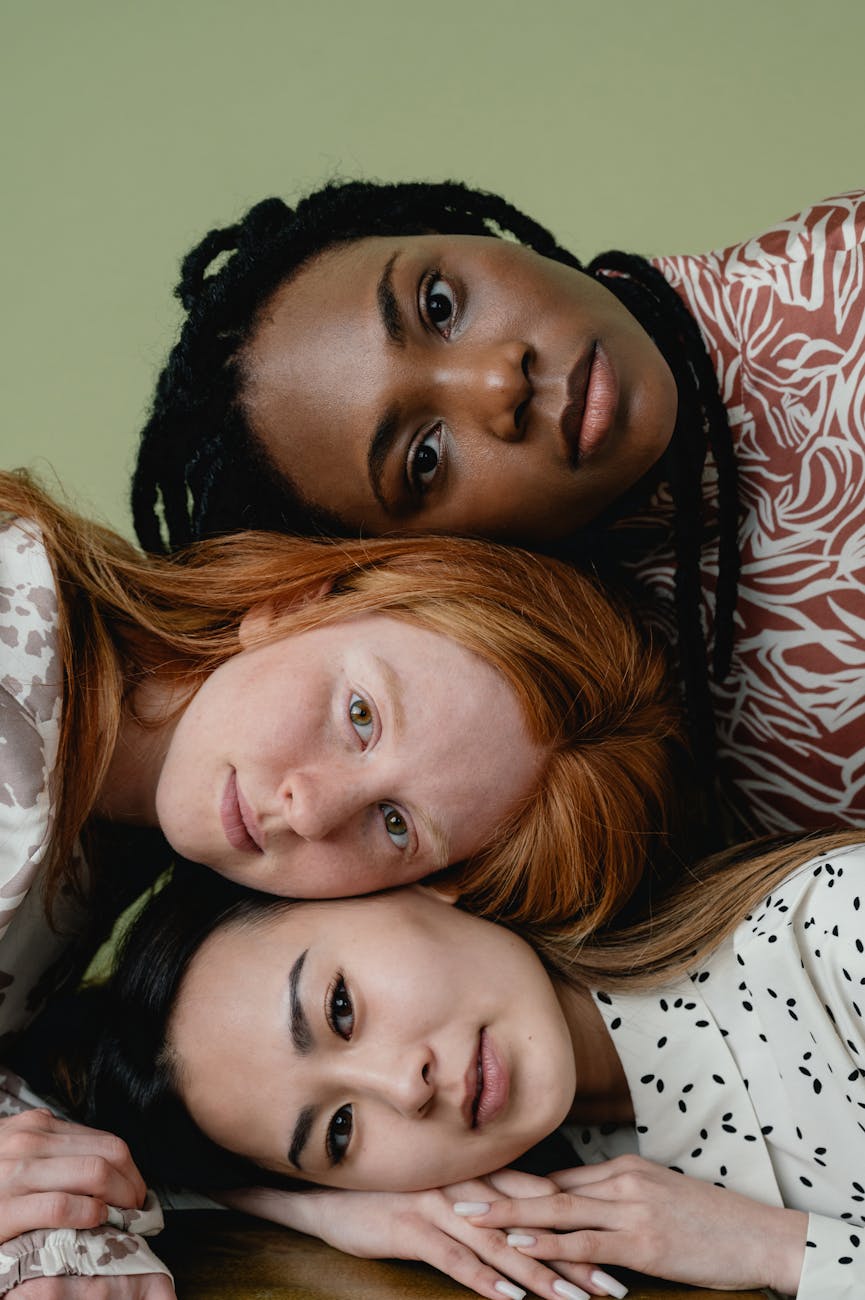
Beauty is one of the most powerful social currencies across cultures. Yet, it is not universal in practice. What is often called the “universal standard of beauty” tends to reflect Eurocentric ideals—light skin, straight or loosely wavy hair, slim but not too thin figures, sharp noses, and symmetry rooted in Western canons. By contrast, the “Black standard of beauty” celebrates features like deep melanin, textured hair, fuller lips, wider hips, and natural curves—features historically marginalized yet increasingly recognized as both beautiful and powerful. The tension between these two standards creates both cultural conflicts and psychological struggles, especially for women navigating global and racialized definitions of beauty.
The universal standard is heavily influenced by colonial history, globalized media, and Western power structures. Fashion runways, Hollywood, and advertising have long promoted whiteness and European features as the ideal. This creates a narrow box for women worldwide, making lightness of skin and straightness of hair aspirational. The problem is not simply preference but the fact that these standards are presented as “neutral” or “natural,” when in reality they are culturally specific and historically constructed.
In contrast, the Black standard of beauty emerges from African heritage, cultural pride, and the resilience of communities resisting erasure. Features like natural hair, darker complexions, broad noses, and fuller bodies reflect an embrace of authenticity and connection to ancestry. While this standard has not always been celebrated in mainstream culture, movements like Black is Beautiful, Black Girl Magic, and the natural hair revolution have shifted the cultural landscape, creating new appreciation for traits once ridiculed or suppressed.
The problem with universal standards is that they often erase diversity. By elevating one aesthetic above all others, they invalidate the beauty of women who do not conform. Black women, in particular, face colorism, hair discrimination, and media exclusion, leading to lower self-esteem, body image struggles, and even the desire for surgical alterations to “fit in.” The psychological toll is compounded by constant comparisons, where Black beauty is deemed desirable only when exoticized or appropriated.
The Black standard, however, also faces challenges. Within Black communities, colorism and texturism can replicate the very hierarchies imposed by Eurocentric ideals. For instance, lighter-skinned Black women or those with looser curls may be celebrated more readily, leaving darker-skinned women with kinkier textures marginalized even within their own cultural space. Thus, the Black standard of beauty, though liberating, is not free from internal tensions.
Psychology helps explain why the universal standard is so dominant. Humans are naturally drawn to symmetry, proportionality, and what evolutionary psychology calls “averageness.” Yet, culture shapes the interpretation of these features. For example, fuller lips may be universally attractive from a biological standpoint, but in Western contexts, they were historically devalued when associated with Blackness. When white celebrities adopt these features—through surgery or makeup—they suddenly become fashionable. This reveals that the problem is not biology but cultural bias.
So, which standard is better? From a cultural and ethical standpoint, the Black standard of beauty is healthier because it embraces diversity, authenticity, and ancestral pride. The universal standard, by contrast, operates under the illusion of neutrality while enforcing a narrow, exclusionary ideal. However, both standards have their flaws. The truest “universal” standard would recognize and celebrate multiple expressions of beauty, free from hierarchy and colonial residue.
The contrast between Charlize Theron and Kenya Moore illustrates these competing standards. Charlize Theron, a South African-born white actress, embodies the Eurocentric ideal: light skin, blonde hair, sharp facial structure, tall and slender physique. Kenya Moore, an American actress, model, and former Miss USA, embodies the Black standard: rich melanin, high cheekbones, full lips, almond-shaped eyes, and natural curves. Both women are undeniably beautiful, but society’s gaze often places them differently.
Psychologically, Theron represents what Western culture has historically defined as “timeless” beauty—symmetry, slenderness, and lightness. She fits seamlessly into Hollywood’s Eurocentric mold and is often cast as elegant, glamorous, or refined. Kenya Moore, while celebrated in Black communities and crowned in pageantry, faces the double bind of being exoticized by some and dismissed by others because her beauty falls outside Western defaults.
When comparing their features, Charlize’s sharp jawline, narrow nose, and fair skin align with universal standards. Kenya’s full lips, brown skin, hourglass figure, and thick hair align with Black standards. Both share high cheekbones and symmetry, which psychology identifies as universally appealing. However, society esteems Theron more highly because she reflects the Eurocentric beauty hierarchy that dominates mainstream culture.
This hierarchy is evident in global branding. Theron is a face for luxury brands like Dior, while Moore’s opportunities are more culturally specific, tied to Black entertainment or niche markets. This reveals how beauty standards translate directly into economic capital and visibility. Theron benefits from a system that rewards Eurocentric features, while Moore must navigate a world where her beauty is simultaneously celebrated and contested.
Yet, in cultural spaces that embrace Black identity, Kenya Moore’s beauty reigns supreme. Pageants like Miss USA crowned her not only for her physical features but also for her confidence and charisma. In Black communities, her melanin, curves, and boldness embody aspirational beauty. Here, Moore’s beauty challenges universal standards and affirms the richness of the Black aesthetic.
The problem, then, is not that one woman is more beautiful than the other but that society attaches higher value to whiteness. This creates a distorted lens where Theron is elevated globally while Moore is compartmentalized. Psychology calls this halo effect—positive qualities are attributed to those who fit dominant beauty standards, giving them advantages in career, relationships, and social status.
Ultimately, beauty should not be a competition between standards but an expansion of them. The universal standard must evolve to truly include the Black standard, recognizing that beauty is not singular but plural. If society continues to privilege one aesthetic over another, it perpetuates inequality and denies humanity the richness of diversity.
Beauty Standards Comparison Chart
| Category | Universal (Eurocentric) Standard of Beauty | Black Standard of Beauty |
|---|---|---|
| Skin Tone | Light, fair, porcelain, often associated with “purity” and elegance. | Deep melanin, radiant dark or brown skin, celebrated as strength, richness, and natural glow. |
| Hair | Straight, wavy, or silky blonde/brunette textures. Long and smooth styles valued. | Kinky, coily, curly, locs, or natural Afro textures. Volume, versatility, and protective styles celebrated. |
| Facial Structure | Narrow nose, sharp jawline, thin lips, angular features. | Broad nose, full lips, strong cheekbones, almond eyes. |
| Body Type | Slim, tall, lean physique; curves downplayed unless subtle. | Curvaceous, hourglass shape with fuller hips, thighs, and bust. |
| Symmetry | High value placed on geometric symmetry, “delicate” features. | Symmetry also prized, but combined with bold and distinctive features. |
| Cultural Associations | Elegance, luxury, global acceptability, high fashion. | Strength, resilience, authenticity, pride in heritage. |
| Psychological Effect | Fits dominant media ideals; often boosts confidence through validation. | Often marginalized, but growing in pride; empowerment movements (“Black is Beautiful,” “Black Girl Magic”). |
| Celebrity Examples | Charlize Theron, Scarlett Johansson, Margot Robbie, Natalie Portman. | Kenya Moore, Lupita Nyong’o, Angela Bassett, Kelly Rowland. |
Example: Charlize Theron vs. Kenya Moore
- Charlize Theron: Represents Eurocentric ideals—blonde, fair-skinned, sharp jawline, tall and slim. Universally marketed as elegant and glamorous, especially in luxury beauty industries.
- Kenya Moore: Represents the Black standard—rich brown complexion, high cheekbones, full lips, voluminous hair, and curvaceous figure. Celebrated in Black spaces as stunning, but less globally esteemed due to systemic beauty hierarchies.
In conclusion, Charlize Theron and Kenya Moore are both stunning examples of beauty, but the esteem they receive reflects systemic bias rather than objective truth. The universal standard favors Theron, while the Black standard affirms Moore. True liberation comes when both women can be equally celebrated without hierarchy, proving that beauty, like humanity, is multifaceted and boundless.
📖 References
- Etcoff, N. (1999). Survival of the prettiest: The science of beauty. Anchor Books.
- Hunter, M. L. (2007). The persistent problem of colorism: Skin tone, status, and inequality. Sociology Compass, 1(1), 237–254.
- Jones, T. (2000). Shades of brown: The law of skin color. Duke Law Journal, 49(6), 1487–1557.
- The Holy Bible, King James Version. (1769/2017). Cambridge University Press.
Discover more from THE BROWN GIRL DILEMMA
Subscribe to get the latest posts sent to your email.
 THE BROWN GIRL DILEMMA