
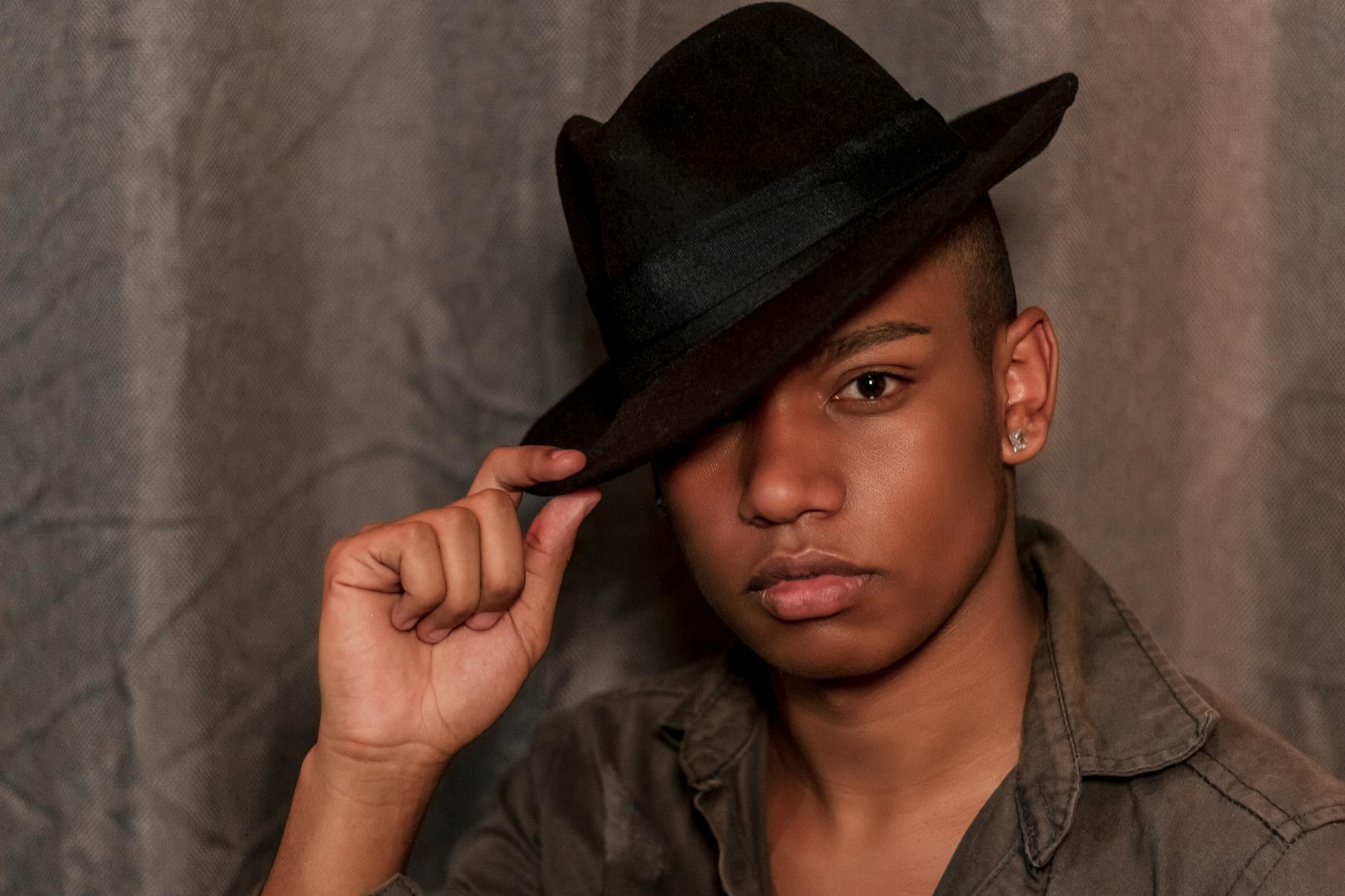
To the Black man,
whose eyes carry storms and suns,
whose silence hides the weight of centuries,
whose steps echo chains yet walk in kingship,
You are more than the world’s lies,
You are God’s reflection in living flesh.
The life of the brown boy—whether African American, Afro-Caribbean, or African diasporic—is marked by a constant negotiation between inner dilemmas and outer realities. While society crafts stereotypes and systems that define him, he simultaneously wrestles with the truth of his worth, identity, and purpose. This conflict, often invisible to outsiders, is both a psychological battle and a spiritual struggle.
Brown boys grow up under the heavy burden of perception. From childhood, they are labeled as threats, troublemakers, or destined for failure (Ferguson, 2000). This creates a dilemma: does one live according to these imposed perceptions, or fight to prove them wrong? The weight of stereotypes alters how boys see themselves, shaping identity in harmful ways.
The reality, however, is that stereotypes are not mere words but policies and structures. Disproportionate rates of school suspensions, policing, and incarceration reflect systemic bias (Alexander, 2010). The “school-to-prison pipeline” becomes less a metaphor and more a lived reality for many brown boys.
Masculinity adds another layer to this struggle. Brown boys are often told that to be a man is to be tough, emotionless, and dominant. Yet reality shows that this narrow definition harms them by suppressing vulnerability and emotional health (Majors & Billson, 1992). Behind the façade of strength often lies a boy struggling in silence, with suppressed emotions manifesting in destructive ways. Studies show higher risks of depression, anxiety, and trauma among young men of color who lack safe outlets for expression (Watkins, Green, Rivers, & Rowell, 2006).
Identity is also contested ground. Society tells brown boys they are less intelligent, less capable, or destined only for sports and entertainment. The dilemma is whether to accept this limited script or break beyond it. Yet history testifies to the brilliance of Black men—figures such as Frederick Douglass, Malcolm X, and countless unnamed scholars, builders, and leaders who defied systemic limitations.
Colorism deepens the wound. Darker-skinned boys often internalize rejection, believing themselves less desirable or less worthy (Hunter, 2007). The dilemma becomes whether to mold themselves to fit Eurocentric standards of beauty and success or embrace their authentic selves. Yet the reality is anchored in divine truth: every brown boy is made in the image of God. Genesis 1:27 (KJV) declares, “So God created man in his own image… male and female created he them.” The reality of divine creation affirms worth beyond society’s lies.
In education, the struggle persists. Teachers and institutions often carry lowered expectations, creating a dilemma: should boys conform to these expectations or resist through excellence? (Noguera, 2008). The reality is that many do resist, excelling academically, pursuing higher education, and breaking generational barriers. Each success story represents resilience against systemic odds.
Belonging becomes yet another tension. Brown boys often feel caught between two worlds—too Black for mainstream society, yet pressured to prove authenticity within their own communities. This double consciousness, described by Du Bois (1903/1994), creates constant tension. Yet strong communities—churches, mentoring programs, cultural institutions—offer belonging. In these spaces, brown boys are affirmed, nurtured, and equipped to thrive.
The question of the future looms heavily. Many fear whether they will live long enough to fulfill their dreams, given the higher risks of violence and premature death among young men of color (CDC, 2020). Yet reality also holds hope. Many become fathers, leaders, pastors, teachers, and entrepreneurs, reshaping narratives for the next generation. Their survival and success testify to resilience and possibility.
For those raised in faith, there is the dilemma of reconciling suffering with belief. How can a just God allow such struggles? Scripture offers perspective: suffering can birth strength and purpose. Romans 8:28 (KJV) affirms, “And we know that all things work together for good to them that love God.” Thus, the struggles of brown boys can become testimonies of endurance and divine calling.
The dilemmas of perception, masculinity, identity, and belonging are real, but so are the realities of resilience, brilliance, and divine worth. The challenge is bridging the two—turning dilemmas into platforms for growth. The brown boy’s dilemma versus reality reveals a complex truth: society’s lies are strong, but his reality is stronger. He is more than stereotypes, more than statistics, and more than systems of oppression. He is a creation of God, a carrier of legacy, and a vessel of possibility. His reality—rooted in resilience and divine image—can always overcome the dilemma.
References
- Alexander, M. (2010). The new Jim Crow: Mass incarceration in the age of colorblindness. The New Press.
- Du Bois, W. E. B. (1994). The souls of Black folk. Dover. (Original work published 1903)
- Ferguson, A. A. (2000). Bad boys: Public schools in the making of Black masculinity. University of Michigan Press.
- Hunter, M. (2007). The persistent problem of colorism: Skin tone, status, and inequality. Sociology Compass, 1(1), 237–254.
- Majors, R., & Billson, J. M. (1992). Cool pose: The dilemmas of Black manhood in America. Lexington Books.
- Noguera, P. (2008). The trouble with Black boys: …And other reflections on race, equity, and the future of public education. Jossey-Bass.
- Watkins, D. C., Green, B. L., Rivers, B. M., & Rowell, K. L. (2006). Depression and Black men: Implications for future research. Journal of Men’s Health and Gender, 3(3), 227–235.
- Centers for Disease Control and Prevention (CDC). (2020). Leading causes of death reports, 1981–2018.
Discover more from THE BROWN GIRL DILEMMA
Subscribe to get the latest posts sent to your email.
 THE BROWN GIRL DILEMMA