
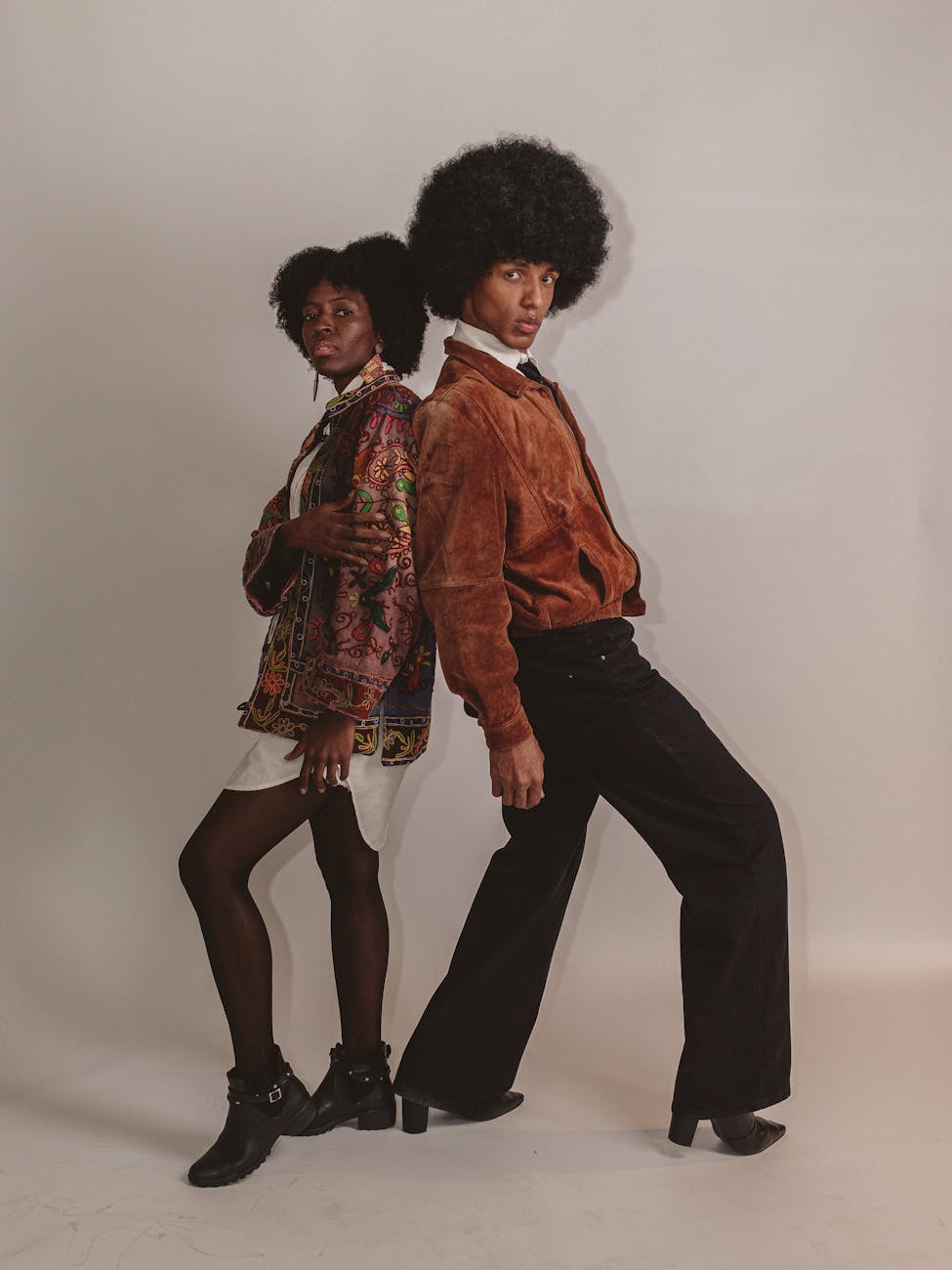
The narrative of the Brown Girl and the Brown Boy is a testimony of shared endurance and resilience across centuries of oppression. While each carries unique burdens shaped by gender, their struggles intertwine within the same framework of racism, systemic inequality, and cultural misrepresentation. The Brown Boy carries the burden of criminalization. From childhood, he is labeled as a threat, his innocence quickly stripped away by the gaze of a society that fears his melanin. He is often over-policed, over-disciplined, and prematurely marked as deviant. This early criminalization sets the stage for a life in which opportunity is constrained, where his existence is seen as something to be managed rather than celebrated. The Brown Girl, in turn, bears the weight of invisibility and hypervisibility at once. Her body is policed, her skin tone scrutinized, and her hair politicized. She is told she must work twice as hard to be seen, yet when she asserts herself, she is cast as angry or difficult. Her womanhood is too often undervalued, her femininity questioned, and her contributions overlooked. Invisibility denies her credit, while hypervisibility subjects her to surveillance.
Historical Roots of Struggle
The struggles of the Brown Girl and Brown Boy are rooted in slavery, where African men and women were simultaneously dehumanized, exploited, and stripped of their personhood. Enslaved men were depicted as dangerous brutes, while enslaved women were hypersexualized or forced into maternal roles without agency. This legacy persists today in stereotypes that continue to shape societal perceptions. The plantation created a blueprint for systemic oppression that both Black men and women still resist.
The Brown Boy is burdened by criminalization. From his youth, society sees him not as a child but as a potential threat. He is over-policed, over-disciplined, and prematurely marked as deviant. This reflects Deuteronomy 28:50 (KJV): “A nation of fierce countenance, which shall not regard the person of the old, nor shew favour to the young.” His innocence is stolen by systemic suspicion, his manhood molded in the shadow of fear.
The Brown Girl’s struggle is invisibility and hypervisibility at once. She is unseen in her brilliance yet overexposed in her body. Her skin, hair, and tone are politicized, making her both target and spectacle. The scriptures foretell this devaluation: “Thy sons and thy daughters shall be given unto another people, and thine eyes shall look, and fail with longing for them all the day long” (Deuteronomy 28:32, KJV). The world covets her beauty but denies her humanity.
Representation and Misrepresentation
Representation has always been a double-edged sword. For the Brown Boy, media often frames him as a criminal or athlete, denying the full spectrum of his humanity. For the Brown Girl, the media either erases her altogether or confines her to caricatures such as the “mammy,” “jezebel,” or “angry Black woman.” Both experience the suffocation of misrepresentation, where society refuses to see them as complex individuals.
Educational Barriers and Discipline
Education becomes a battlefield. Research shows that Black boys are disproportionately suspended and criminalized in classrooms, labeled as “problematic” rather than nurtured (Ferguson, 2000). Black girls, while often excelling academically, face their own policing: their natural hair is deemed “unprofessional,” their assertiveness mistaken for defiance, and their bodies sexualized even in youth. Both genders wrestle with an education system that undermines their potential.
Economic Inequalities
The Brown Boy often confronts systemic barriers to employment and financial stability, including discriminatory hiring practices and wage gaps. Meanwhile, the Brown Girl—despite being the most educated demographic in the U.S.—earns less than both her Black male counterparts and white women. This intersection of racism and sexism is a double bind, yet both find themselves navigating economic structures designed to exploit rather than uplift.
Colorism’s Dividing Line
Colorism deepens the trials of both. Brown Boys may be perceived as more threatening the darker their complexion, while Brown Girls may be considered less desirable. This internalized bias stems from colonial legacies that equated light skin with superiority. Both men and women endure the psychological scars of a hierarchy that measures their worth through proximity to whiteness.
Psychological Weathering
The term “weathering” describes the cumulative effect of systemic oppression on Black bodies, leading to premature aging and health decline (Geronimus, 1992). The Brown Boy often carries the weight of being seen as a target, leading to chronic stress. The Brown Girl shoulders the burden of caretaking, respectability politics, and constant scrutiny. Together, they endure the slow erosion of health by racism’s daily toll.
Police Violence and State Control
For Brown Boys, encounters with police often turn deadly. Mass incarceration and racial profiling remain defining realities. For Brown Girls, vulnerability takes other forms—sexual violence, neglect in medical care, and dismissal in the justice system. Both genders are ensnared in different arms of the same carceral state, one that polices their existence.
Body Politics
The body becomes a site of battle. Black men are hyper-masculinized, their physiques fetishized yet criminalized. Black women’s bodies are policed, objectified, and appropriated—praised when on non-Black women yet ridiculed when naturally theirs. Both genders face dehumanization through the gaze of others.
Faith and Resilience
Despite these struggles, faith traditions have long served as a refuge. From the hush harbors of slavery to today’s Black churches, scripture reminds the Brown Girl and Brown Boy of their worth: “I will praise thee; for I am fearfully and wonderfully made” (Psalm 139:14, KJV). Both draw strength from a spiritual lineage that affirms beauty, dignity, and resilience against a world that denies them.
Love and Partnership
Romantic and communal relationships are also affected by oppression. The stressors of unemployment, incarceration, and societal division often strain bonds between Black men and women. Yet, when the Brown Girl and Brown Boy commit to healing together, their love becomes an act of resistance, a sanctuary in a hostile world.
Cultural Expression
Music, art, and literature serve as outlets of survival. From jazz and hip-hop to spoken word and Afrofuturism, the Brown Girl and Brown Boy reclaim narratives and create new worlds. Through cultural production, they not only resist but also affirm their brilliance.
Generational Trauma
Trauma is not only personal but generational. Children inherit the burdens of systemic oppression, witnessing the struggles of their parents. The Brown Girl and Brown Boy often carry wounds passed down from ancestors who endured slavery, Jim Crow, and structural racism. Healing requires breaking these cycles while honoring ancestral resilience.
The Burden of Exceptionalism
Both genders often feel the pressure to be “twice as good” in order to be deemed worthy. This burden of exceptionalism leaves little room for error or rest. The Brown Boy is expected to defy the odds and avoid stereotypes, while the Brown Girl must embody strength without vulnerability. Both pay the psychological cost of being denied simple humanity.
Resistance in Activism
Black women and men have stood side by side in movements for freedom, from abolition to civil rights to Black Lives Matter. The Brown Girl and Brown Boy recognize that liberation is bound together, for one cannot be free without the other. Their shared activism is a testimony of collective endurance and vision.
Beauty and Affirmation
In a world that tells them otherwise, both must learn to see their beauty. The Brown Girl reclaims her natural hair, dark skin, and full features as symbols of pride. The Brown Boy embraces his strength, his melanin, and his presence as affirmations of worth. Beauty, once defined against them, becomes theirs to define.
Mental Health Struggles
The stigma of mental health persists in Black communities, where seeking therapy is sometimes discouraged. Yet, both men and women battle depression, anxiety, and PTSD from systemic oppression. The Brown Girl and Brown Boy must learn to embrace healing spaces without shame.
Solidarity and Division
Oppression sometimes pits them against each other, but solidarity is essential. The Brown Girl and Brown Boy must recognize that patriarchy and sexism wound as deeply as racism, and healing requires accountability, empathy, and mutual uplift. Their strength lies in unity, not division.
The Role of Media and Social Platforms
In the digital era, social media becomes both a battleground and a platform for empowerment. Hashtags like #BlackGirlMagic and #BlackBoyJoy counter negative narratives. Yet, both also endure online harassment and colorist commentary. The virtual space mirrors the real-world struggle for validation.
Conclusion: Trials, Triumphs, and Togetherness
The story of the Brown Girl and Brown Boy is not a story of defeat but of resilience. Though their trials differ in form, they intersect in meaning. Both endure systemic oppression, cultural erasure, and personal struggles—but both also embody brilliance, creativity, and faith. Their shared journey calls for solidarity, healing, and love. Together, the Brown Girl and Brown Boy prove that resilience runs deep in their skin, their spirit, and their story.
📚 References
- Ferguson, A. A. (2000). Bad Boys: Public Schools in the Making of Black Masculinity. University of Michigan Press.
- Geronimus, A. T. (1992). The weathering hypothesis and the health of African-American women and men: Implications for reproductive strategies and policy analysis. Milbank Quarterly, 70(2), 335–365.
- hooks, b. (1981). Ain’t I a Woman: Black Women and Feminism. South End Press.
- Du Bois, W. E. B. (1903). The Souls of Black Folk. Chicago: A. C. McClurg & Co.
Discover more from THE BROWN GIRL DILEMMA
Subscribe to get the latest posts sent to your email.
 THE BROWN GIRL DILEMMA