
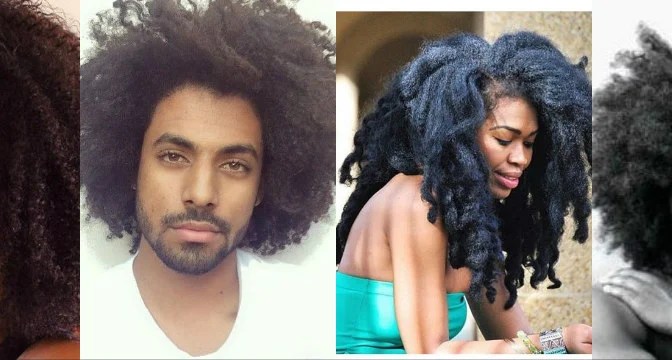
Our hair stands in awe of the Most High, the creator of all creation. The sunbeams of the golden fleece that raptures our skins (no matter the hue) and the heat crystalize the tones in wooly hair. What a fabulous creation we are.
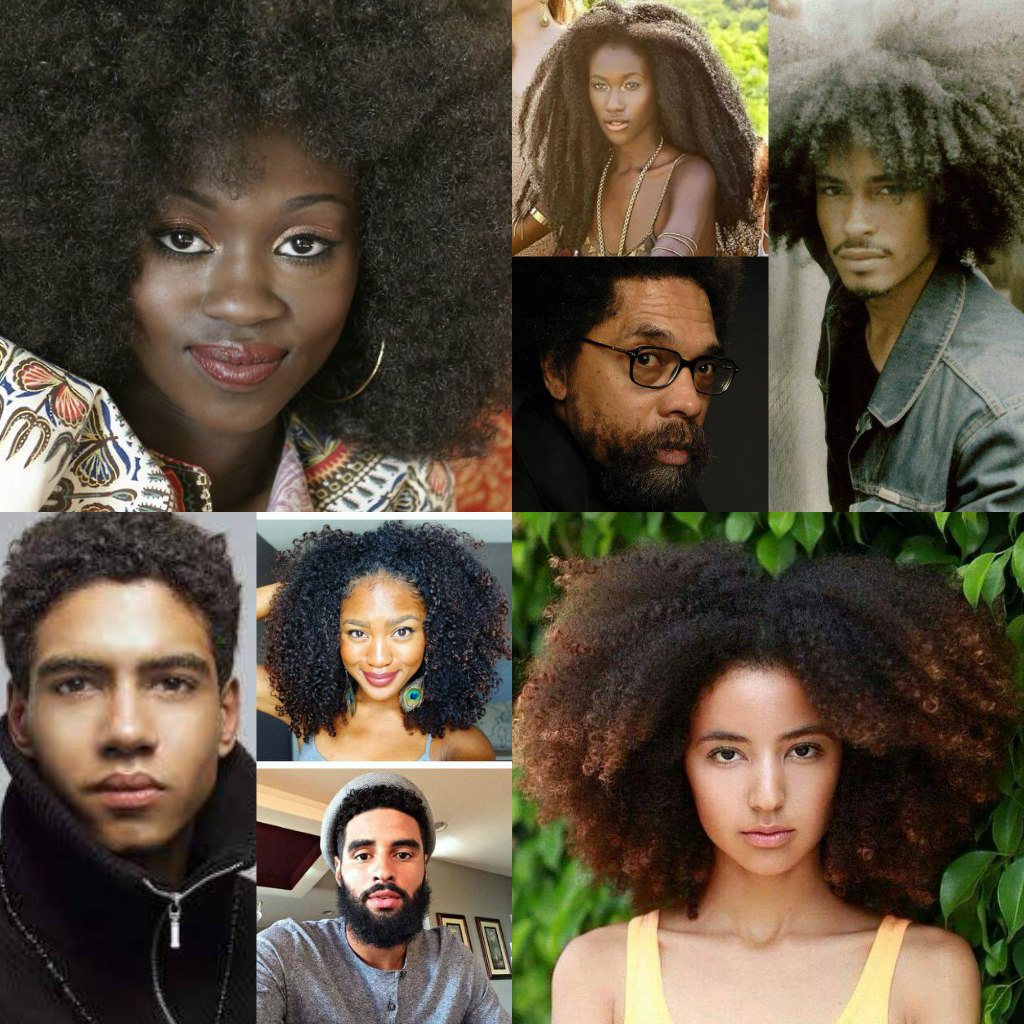
All photographs are the property of their respective owners.
In his book, “The Chemical Key to Black Greatness” American Biochemist, Carol Barnes, described melanin as, “a civilizing chemical that acts as a sedative to help keep the black human calm, relaxed, caring, creative, energetic and civilized.” Research also revealed that melanin enables black skin to actively interact with the sun, to produce Vitamin D from a biochemical substance, 7- dehydrocholesterol. The study also detected that melanin has spiritual dynamics as well as physical since it acts as a sensory ‘receptor’ and ‘transmitter’; communicating with cosmic energy fields in the vast universe converting light energy to sound energy and back. Dr. Richard King, MD, stated that “melanin, by its ability to capture light and hold it in a memory mode, reveals that blackness converts light into knowledge.”
Melanin refines the nervous system in such a way that messages from the brain reach other areas of the body most rapidly in dark people, the primary race. The abundance of melanin in our skin gives us genetic inferiority. We are physically stronger. Mentally sounder. Spiritually more connected.
Wooly hair is the tree that points to the heavens.
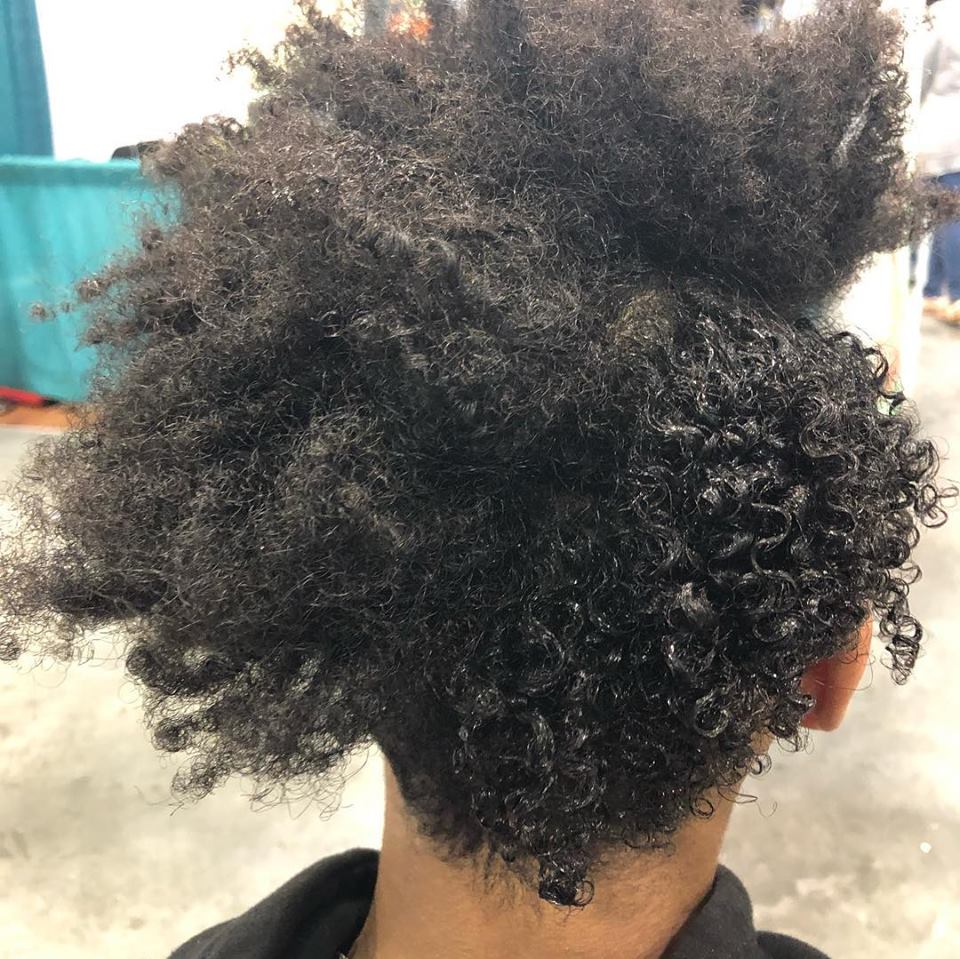
His head and his hairs were white like wool, as white as snow; and his eyes were as a flame of fire; Revelation 1:14 KJV.
Our roots run long straight to the sky. Wooly hair can withstand heat at high temperatures.
‘Although there are no biochemical differences among black, Caucasian, and Asian hair types, there are differences in the hair morphology (8). Black hair appears elliptical or flattened in cross-section, whereas Caucasian hair is oval, and Asian hair is round. The follicle of black hair is curved, in contrast to a straight follicle in Caucasians and Asians.’ – Callender, V. D., McMichael, A. J. and Cohen, G. F. (2004), Medical and surgical therapies for alopecias in black women. Dermatologic Therapy, 17: 164–176. doi:10.1111/j.1396-0296.2004.04017.x
Khumalo NP, Doe PT, Dawber PR, Ferguson DJP.What is healthy black African hair? A light and scanning electron microscopic study. J Am Acad Dermatol 2000: 43:814–820.
‘African hair is curly and frequently exhibits knots ‘However, increased evidence of wearing with some loss of the cuticular pattern was observed towards the tip of the nose in all 3 racial groups most extreme wearing, with complete loss of cuticular structure, was seen toward the tip of the hairs of the Caucasian subject with the most extended hair. However, the hair shafts of the African volunteers did exhibit structural damage with evidence of longitudinal fissures, resulting in the splitting of the hair shafts. The splitting was also associated with knot formation. Longitudinal cracks were not observed in the Caucasian or Asian hairs. It was also found that many of the black African hairs (approximately 40%) were fractured with no attached roots.
‘The African hair shafts were enclosed by a well-preserved cuticle similar to that observed for the other racial groups. ‘The most significant feature was that the majority of the tips of the African hair had fractured ends …Similarly, the basal end also exhibited evidence of breakage in contrast to the Caucasian and Asian samples in which the majority of hairs had attached roots.’
‘From these observations, it could be proposed that any procedure that reduces knotting of hair and/or the need for combing would result in an increase in the length of the hair by reducing the incidence of breaks in the hair shafts.’
Konishi, S., (2008). Tied in rolled knots and powdered with ochre’: Aboriginal hair and eighteenth-century cross-cultural encounters. Borderlands, 7(2), 1-20. Through the influential work of the great taxonomer, Carolus Linnaeus,… Homo europaeus ‘yellow, brown, flowing’, Homo asiaticus ‘abundant black,’ and Homo after ‘black, frizzled’ (cited in Rosenthal, 2004: 2).
This eighteenth-century definition and conceptualization of African hair as ‘woolly’ intersected with slavery discourses that dehumanized the African body to justify its abject treatment. The Oxford English Dictionary indicates that this derogatory term signifying ‘the short, tightly-curled hair of Negroid peoples’ was first used in a runaway slave advertisement in 1697. This type of hair was also ascribed to sexual connotations, according to Allan Peterkin, ‘frizzy’ hair was seen as ‘demonic, licentious, and public.’
… ‘Negro’ possessed ‘wool instead of hair,’ and this difference, in concert with others concerning skin and facial features, suggested that they ‘appear to constitute a new species of man’ (in Diderot and d’Alembert, 1765, v. 11: 76). uaresma, M. V., Martinez Velasco, M. A., & Tosti, A. (2015). Hair Breakage in Patients of African Descent: Role of Dermoscopy. Skin Appendage Disorders, 1(2), 99–104. http://doi.org/10.1159/000436981
In addition to these properties, the water content in African descent hair is slightly lower than in Caucasian hair, and the sebaceous glands often secrete a small amount of sebum, which has an uneven distribution along the shaft due to its spiral shape, leaving the hair with a dry appearance. M [17,20]
When we associate the term “Mixed Race Hair” we get a visual that it is wild, unruly, hard-to-tame hair. The curly, wavy, coiled, or full-bodied curls, are mostly the combination of different genetic factors that contribute to the texture of feel, the length, the volume, and the plethora of different hair textures. the truth is mixed race hair has more ortho-cortical cells which make it less prone to breakage and damage than finely coiled hair from the scalp. However, the bottom strands are closer to the coily nature of an afro.
Mixed hair, curly or wavy is often referred to as “Good Hair,” All hair is good hair, it all was created by the Most High.
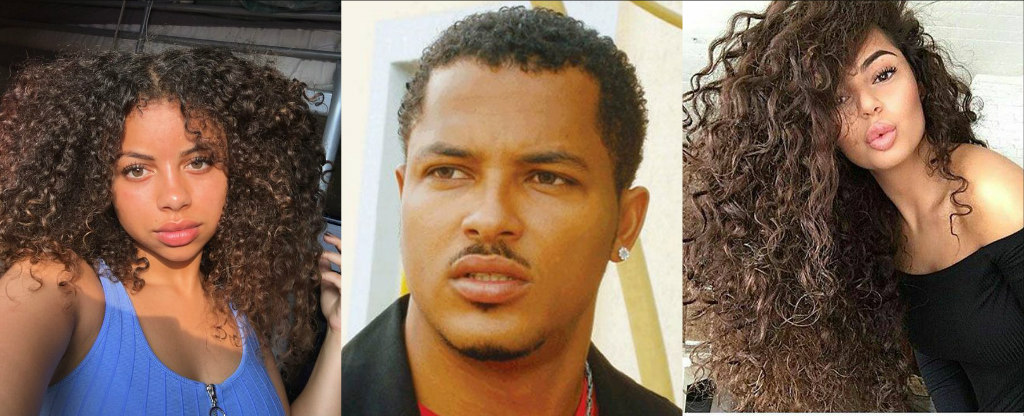
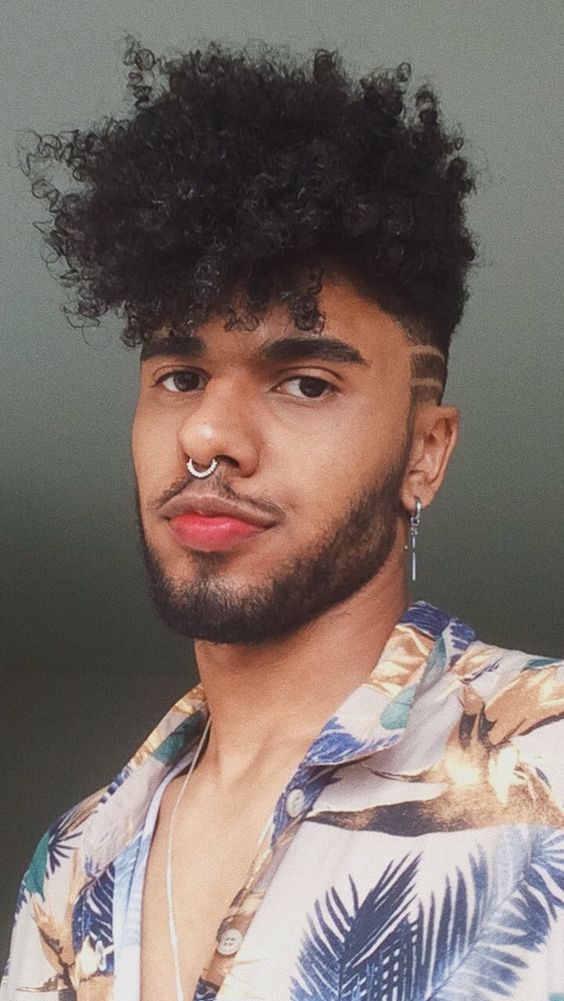
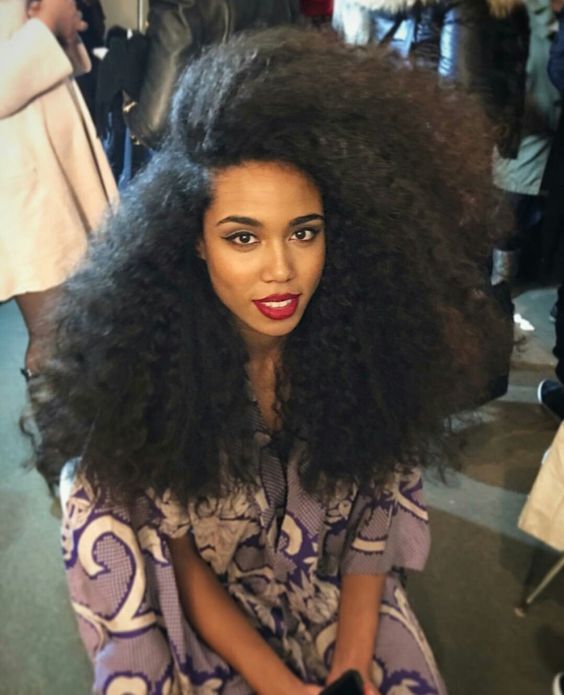
The great phenomenon of wooly hair, the spiral-shaped, tightly coiled, excessive curly mass that tends to hold its shape and grows as a tree straight up on the head. Who are the recipients of such hair? The E1B1A gene carriers – the descendants are the biologically related ancestors far beyond the African diaspora. This is one topic that science has been perplexed by the origin of wooly hair. Geneticists will often say, “The genetic determinants of hair texture in humans are largely not found by science.” It’s either pleiotropic, and selection was for its research fails in comparison to the impact of genetically putting a stamp on its true origin. What genes of phenotypes put together have created such hair type? What is clear is that wooly hair has been passed down from Adam to each generation after his existence.
Most black women testify that perms, pressing combs, and relaxers make their hair more manageable. Who is the inventor of the relaxer? In 1877, the relaxer was created by accident by Garrett A. Morgan the same man that invented the traffic signal. This allowed women and men of color to have straight hair like their white counterparts for hundreds of years. The perm was referred to as “ creamy crack” in Chris Rock’s “Good Hair Documentary” A must-see if you haven’t seen it already it exposes the dangers and chemicals found in the hair treatments. Natural Hair is the best it is at its healthiest, free of chemicals and it grows fast! The chemicals in the relaxer treatments may be damaging but many women will argue the fact that having a relaxer has contributed to their back length hair if it is taken care of.
Black hair is a target of “texturism.” The question is, “Why has the world scrutinized our hair?” While we are burning it with chemicals and heating tools, and tearing it out with weaves and glue. For 400 years +, the general population of black people has been imparted to by white people that their hair texture and skin are superior to that of black hair and black skin. This welcomed the birth of a hair obsession. A majority of blacks perceive straight, silky, and soft hair as best. When in fact, wooly hair is scientifically superior to straight hair. Coiled hair acts as antennae conducting the electromagnetic energies of the sun. These are the benefits that our ancestors had in the cotton fields in intense heat. Kinky, afros, nappy, curly, pressed, permed, weaves, or smooth flow? What is our obsession with hair, and how does it affect our perceptions of what is considered attractive? This differentiation of various textures of hair that disregards our hair as being good sociological programming still continues today.
For as long as I remember people often asked me after examining my mid-back length hair, “Is all that hair yours?” or “Do you have Indian in your family?“ In the literal sense of logic or even common sense what they are saying to me is that a black female can’t have long hair unless she is mixed with something. Now, this thought process was first initiated by Willie Lynch back in slavery times and is still relevant today. So the term “Nappy” was created by the white man and was adopted for centuries by black people, but in reality, our hair has a helix (spiral) pattern. It’s the same pattern as whirlwinds and sound waves and DNA. Our hair is meant to grow outward like a tree, not downward like a cascading waterfall. When our hair is given proper care, it’s fluffy and soft. Not only that, our hair is high-volume, high-definition. Our hair doesn’t hang down, it’s not limp, lifeless, and flat, it never lacks volume, and you’ll never see a sister wearing a “bump-it” to get the illusion of voluminous hair. We don’t need it. We can take our wool from kinky to curly to wavy to straight and back to kinky again if that’s our desire. Our hair can even defy gravity and do so naturally. Others can’t. Our hair is a glorious crown, the “original” crown. Look how a head is designed! So, when you see these so-called European royalty women wearing a top. They are imitating the beauty of our hair! Wow isn’t that amazing! For black women, the straight hair bias is the culprit of texture prejudice that privileges the white woman’s texture as the supreme texture of hair. Black women are not aware that our hair is rich with soil, the color of dark chocolate rises to the sky, vastness as space, coiled to perfection, and a mystery of the Most High.
I must admit I love running my fingers through my hair while showering, the curls embrace my face as the water runs the length of my back. I get attention on the comeliness of my hair they suggest that it’s a prized possession but in reality, to my nation, it’s a god. Yes, it is possible to worship hair, I have never been guilty of such worship.. frankly, I always had long hair. It was never a concern of mine. But for many of my sisters, it is, after all, it’s our crowning glory. Black women have always been guilty of false glory due to the fact that you are adorning your head with someone else’s glory. How do we get our own glory? By nourishing our own glory and owning it. I know we own our cars, clothes, or even homes but we must own our hair. We must be thankful and take care of what the Most High gave us.
My interview with Khalifa Musical, a professor of African American Studies
Q. Do you think that as children we are programmed to say that our hair is bad?
Khalifa: Yes, I remember my mother said to my sister about her kinky hair, you need to get your hair done by that she meant to straighten it with perms of straightening combs. As a man, I grow up conditioned to perceive black hair as something terrible that needed to be fixed. I used to look at the women on the commercial and think that was beauty, it was not until I because a student of consciousness that I realize my thinking was wrong. In fact with most of my students, when asked about black hair – 43% (over 200 black male students) said they prepared black women with their natural hair, apart from wigs, weaves, and perms. While 57 % preferred the look of Caucasian straight hair as most attractive and 90% voted that this was conditioned by slavery misconceptions and fallacies about our hair.
Redefining the standard of beauty in terms of hair.
The hair texture closely associated with European straight hair is considered almost heavenly good and esteemed most attractive. This straight hair blows in the wind, cascading down the back, smooth to the touch, and easy to comb. Is this perfection? How can this hair be the best? Willie Lynch is to blame for this one dividing and conquering the slaves based on hair texture. But who says this is true? The fault lies with the mother who never taught the daughter the beauty of her hair. The world has brought into this lie, pure and simple for some, there is no turning back from this theory. In West Africa, Nigeria to be specific the boys and young girls cut their hair off not to deal with the texture and opt to wear wigs. While in the United States, black women are literally tearing their hair out of their heads through the wearing of the weave so they can slang it back and forth. The ignorance of our people is undoubtedly devastating to know that something that was created with sheer brilliance is a beast of burden to many.
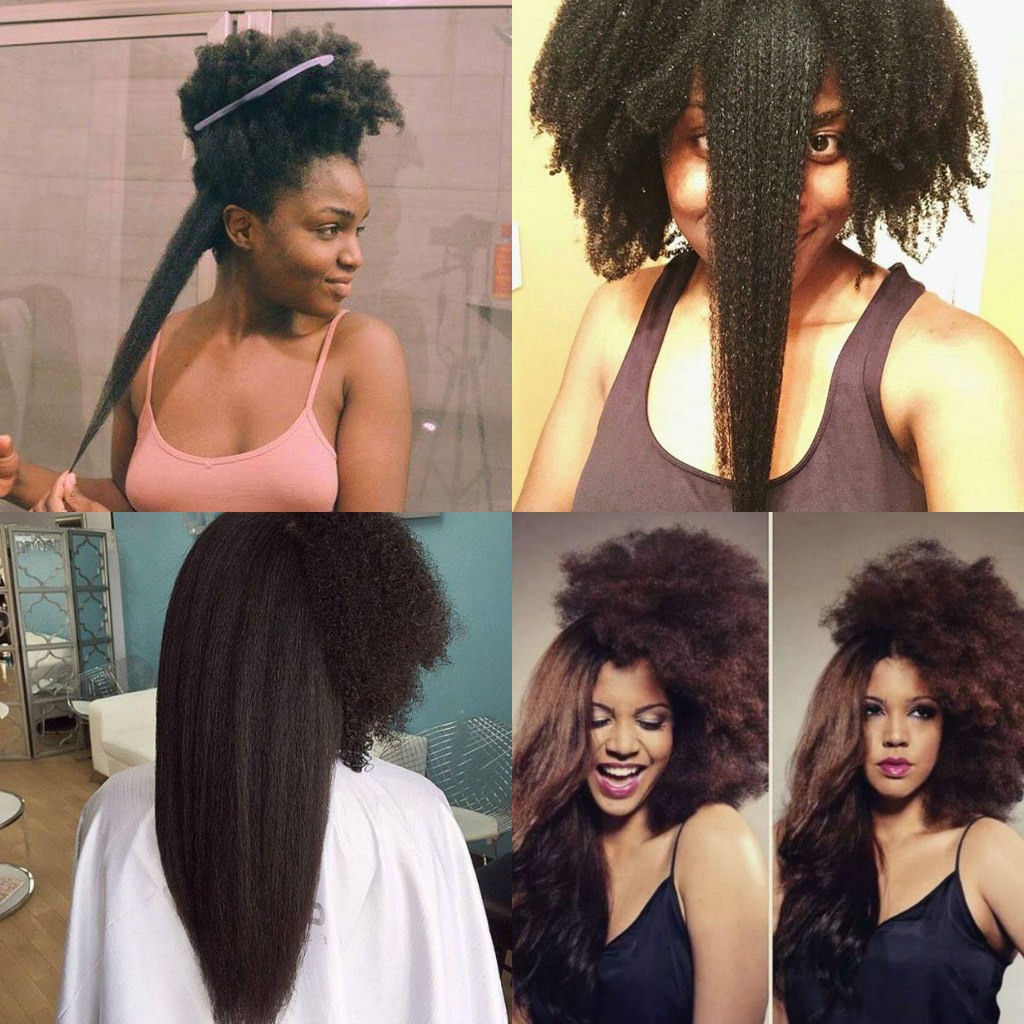
How to take care of black hair?
My Q & A with my hairdresser Diana, note she has natural hair all the way down her back.
Q: What do you think about this Good hair, Bad hair situation among black people?
Diane: I think black people are some of the most ignorant people on earth, surely they have bought into the lie of slavery. All hair is good, if it grows out of your head, it is good. What has ruined our noses is the perms and the weaves.
Q: What are some tips for the maintenance and growth of natural hair?
Diane:
1. There is a huge misconception that black hair is coarse, strong, and can take a beating. That is true, in fact, black hair is the most fragile of every hair type, my Asian clients have the strongest hair very coarse now their hair can take a beating.
2. Co-washes your hair once a week with a natural moisturizing conditioner and not shampoo because it dries out the hair which can cause breakage.
3. Keep your hair moisturized with a natural moisturizer and seal the ends with olive oil. Choose natural organic products and try to avoid products with mineral oils and petroleum oil. Natural oils like almond, coconut oil, olive oil, grape seed oil, and jojoba oils are much better.
4. If you use heat styling products (blow dryers, Flatirons) on your hair, try and cut it down to 1-2 times a month if you can, and make sure you use a heat protection shampoo and/or moisturizer, or a good heat protective serum/spray on your hair before flat ironing or curling.
5. Make sure you sleep on a satin pillowcase or tie your hair up in a silk scarf so your hair can stay healthy and won’t break or tear. Silk or satin pillowcases, bonnets, and scarves will protect your hair from breakage while rubbing against certain fabrics that cause breakage.
6. Moisturize your ends nightly with coconut oil before you go to sleep
7. Once a month only use a protein treatment for deep conditioning.
8. To extend hair growth I recommend a diet of fresh fruits and vegetables and exercised weekly to get the blood flowing to your hair.
9. Massage your scalp a few times a week for extra blood flow for hair growth.
10. Use a wide tooth comb to comb your hair, stop buying bristle brushes or thin combs which will get caught in your hair and snap it off. Go for low maintenance. We should never comb our hair every day just detangle it with your fingers, after applying moisturizer.
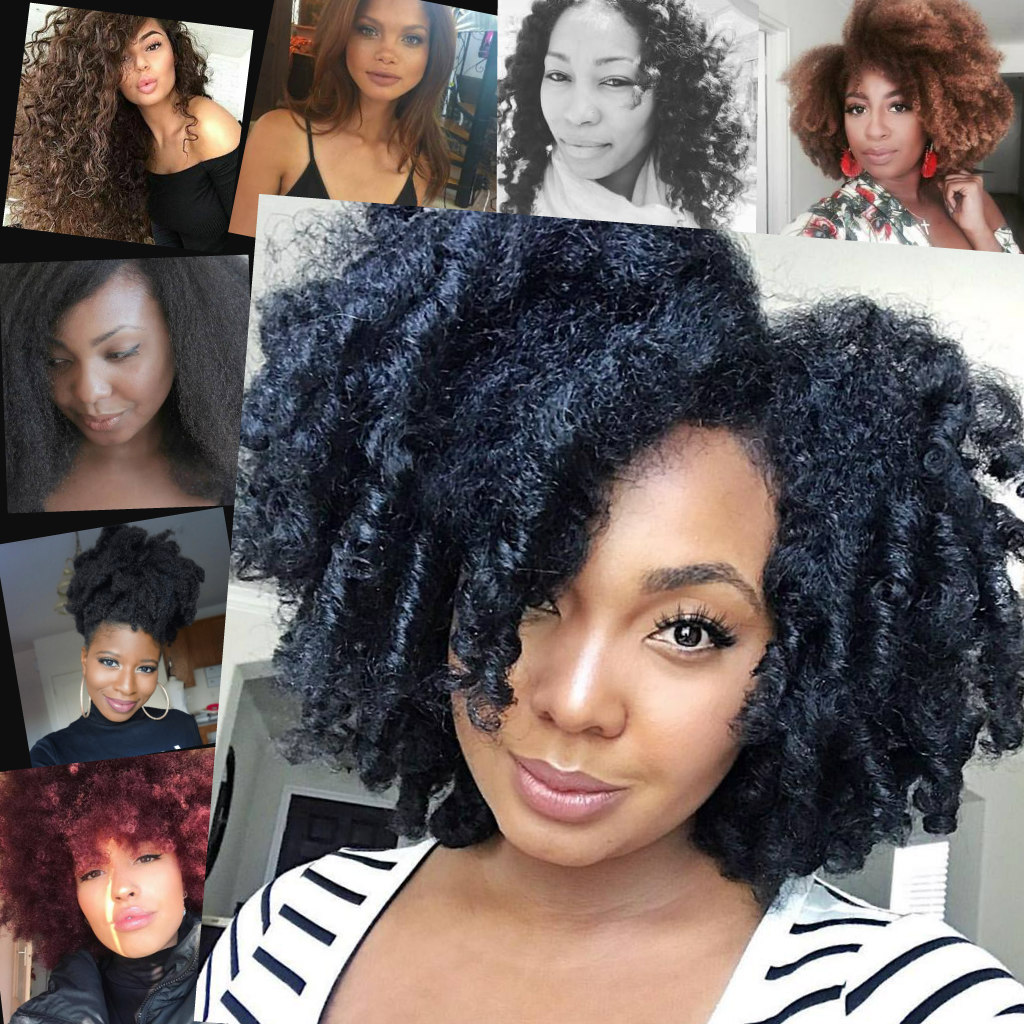
Unfortunately, that is the gospel that most black or brown women preach. The truth is that if you keep all the weaves and chemicals off your hair, it will grow with some easy maintenance, it will grow in no time. A black woman’s hair will grow if she maintains to keep it healthy and nourished with the right natural products, contrary to popular belief, the black woman is not alone, there are some cases where the white woman’s hair won’t grow either, or it’s fragile — Diane (my hairdresser)
The Curse
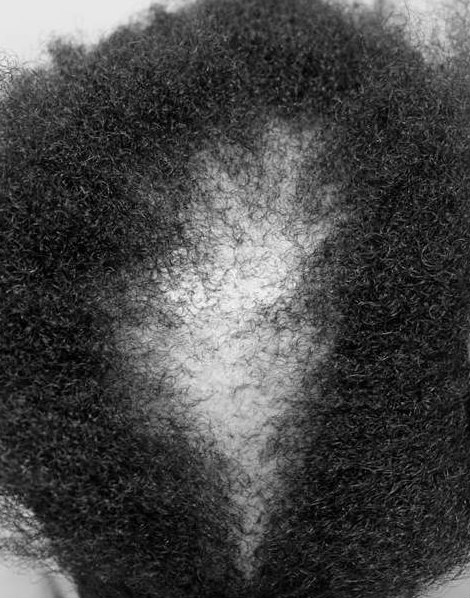
Moreover the LORD saith, Because the daughters of Zion are haughty, and walk with stretched forth necks and wanton eyes, walking and mincing as they go, and making a tinkling with their feet: Therefore the Lord will smite with a scab the crown of the head of the daughters of Zion, and the LORD will discover their secret parts. — Isaiah 3: 16-17 –
Because of the haughtiness toward our men, our head was smitten with baldness, which would explain the lust for long hair. We had the beauty everyone wanted at that time. We are the Daughters of Zion. That was a curse! Now today… I believe that curse is lifted… With all the beautiful hair treatments, perms, hair styling, relaxers, weaves, chemicals from shampoos, our diet, hormones, what we drink, rest, environment, etc. All these elements affect the health of our hair. What is paramount is the way we care for our hair. Is long hair possible? Yes.
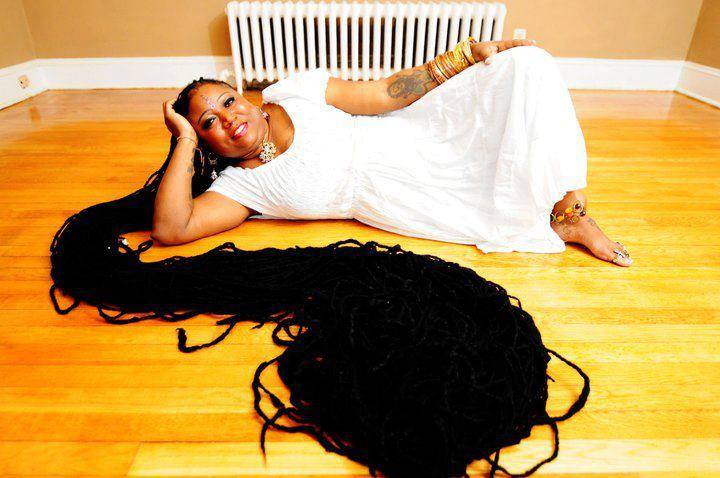
Asha Mandela, who reportedly has the most extended hair, and dreads in the world at a whopping 22 feet long, her extremely long tresses were documented by the Guinness World Record in 2009. Many of us on this day have long hair. Your hair grows! Take care of the hair that grows out of your head. Black women are waking up to their true identity according to the Bible all over the world & learning to love the skin they’re in, wooly hair & all through the natural hair movement and it is absolutely awe-inspiring.
But if a woman has long hair, it is a glory to her: for her hair is given her for a covering.1 Corinthians 11:15 KJV
Black hair is a target of the famous “Ism,” known as “Texturism.” The question is, “Why has the world scrutinized our hair?” While we are burning it with chemicals and heating tools, and tearing it out with weaves and glue. For 400 years +, the general population of black people has been imparted to by white people that their hair texture and skin is superior to that of black hair and black leather. This welcomed the birth of a hair obsession. A majority of blacks perceive straight, silky, and soft hair as best. When in fact, wooly hair is scientifically superior to straight hair. Coiled hair acts as antennae conducting the electromagnetic energies of the sun. These are the benefits that our ancestors had in the cotton fields in intense heat. Kinky, afros, nappy, curly, pressed, permed, weaves, or smooth flow? What is our obsession with hair, and how does it affect our perceptions of what is considered attractive? This differentiation of various textures of hair that disregards our hair as being good sociological programming still continues today.
For as long as I remember people often asked me after examining my mid-back length hair, “Is all that hair yours?” or “Do you have Indian in your family?“ In the literal sense of logic or even common sense what they are saying to me is that a black female can’t have long hair unless she is mixed with something. Now, this thought process was first initiated by Willie Lynch back in slavery times and is still relevant today. So the term “Nappy” was created by the white man and was adopted for centuries by black people, but in reality, our hair has a helix (spiral) pattern. It’s the same pattern as whirlwinds and sound waves and DNA. Our hair is meant to grow outward like a tree, not downward like a cascading waterfall. When our hair is given proper care, it’s fluffy and soft. Not only that, our hair is high-volume, high-definition. Our hair doesn’t hang down, it’s not limp, lifeless, and flat, it never lacks volume, and you’ll never see a sister wearing a “bump-it” to get the illusion of voluminous hair. We don’t need it. We can take our wool from kinky to curly to wavy to straight and back to kinky again if that’s our desire. Our hair can even defy gravity and do so naturally. Others can’t. Our hair is a glorious crown, the “original” crown. Look how a head is designed! So, when you see these so-called European royalty women wearing a top. They are imitating the beauty of our hair! Wow isn’t that amazing! For black women, the straight hair bias is the culprit of texture prejudice that privileges the white woman’s texture as the supreme texture of hair. Black women are not aware that our hair is rich with soil, the color of dark chocolate rises to the sky, vast as space, coiled to perfection, and a mystery of the Most High.
My interview with Khalifa Musfai, a professor of African American Studies
Q. Do you think that as children we are programmed to say that our hair is bad?
Khalifa: Yes, I remember my mother said to my sister about her kinky hair, you need to get your hair done by that she meant to straighten it with perms of straightening combs. As a man, I grow up conditioned to perceive black hair as something terrible that needed to be fixed. I used to look at the women on the commercial and think that was beauty, it was not until I because a student of consciousness that I realize my thinking was wrong. In fact with most of my students, when asked about black hair – 43% (over 200 black male students) said they prepared black women with their natural hair, apart from wigs, weaves, and perms. While 57 % preferred the look of Caucasian straight hair as most attractive and 90% voted that this was conditioned by slavery misconceptions and fallacies about our hair.
Redefining the standard of beauty in terms of hair.
I must admit I love running my fingers through my hair while showering, the curls embrace my face as the water runs the length of my back. I get attention on the comeliness of my hair they suggest that it’s a prized possession, but in reality, to my nation, it’s a god. Yes, it is possible to worship hair, I have never been guilty of such worship.. frankly, I always had long hair. It was never a concern of mine. But for many of my sisters, it is, after all, it’s our crowning glory. Black women have always been guilty of false glory because they are adorning their heads with someone else’s beauty. How do we get our own vision? By nourishing our own glory and owning it. I know we own our cars, clothes, or even homes but we must hold our hair. We must be thankful and take care of what the Most High gave us. The hair texture closely associated with European straight hair is considered almost heavenly good and esteemed most attractive. This straight hair blows in the wind, cascading down the back, smooth to the touch, and easy to comb.
Is this perfection? How can this hair be the best? Willie Lynch is to blame for this one dividing and conquering the slaves based on hair texture. But who says this is true? The fault lies with the mother who never taught the daughter the beauty of her hair. The world has brought into this lie, pure and simple for some, there is no turning back from this theory. In West Africa, Nigeria to be specific the boys and young girls cut their hair off not to deal with the texture and opt to wear wigs. While in the United States, black women are literally tearing their hair out of their heads through the wearing of the weave so they can slang it back and forth. The ignorance of our people is undoubtedly devastating to know that something that was created with sheer brilliance is a beast of pardon to many.
My conversation with a random woman I encountered at a boutique.
Woman: Girl you got some excellent hair —
Me: All hair is good. Woman: I wish my hair were long and pretty like yours. You’re so cute.
Me: Your hair is pretty.
Woman: But not like yours
Me: You know that is a fallacy created by our people that goes back to slavery. There is no right or bad hair. The Most High created all hair and it’s good hair. (That comment left her speechless and puzzled there was no reply)
The contemptuous terms such as ‘good hair’ or ‘bad hair’ came out of the era of slavery, during the Willie Lynch period. Where slaves were put into groups according to the lightness of skin and hair textures the closer your hair was to Caucasian hair the better you were perceived which meant you would be considered “a house negro” and receive preferential treatment than the darker slaves. Our hair is our crowning glory; there are various textures of hair that black people have due to genetics and racial mixing. These textures vary from 3A to 4D, beautiful to tightly curled.
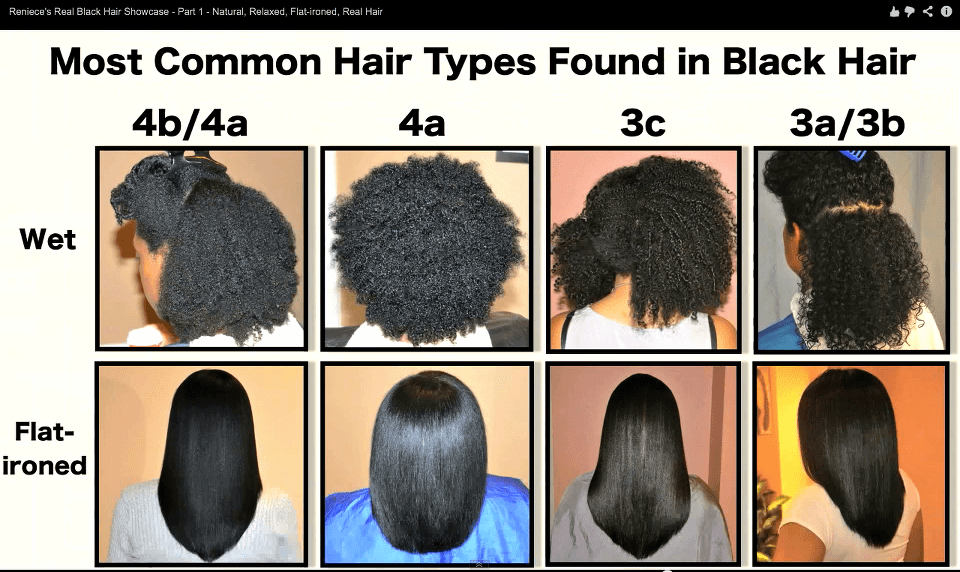
3 a – fine curl pattern
3 b – medium curl pattern
3 c – loose curly pattern
4a – thicker curly pattern
4b – thicker medium pattern
4c – medium curly pattern
4d – excessively tighter curls
COMMON THINGS SPOKEN ABOUT HAIR TYPE 3A – 4C:
Coily Hair
You need to straighten it, unkept! Do something with your hair. It is nappy, you look ugly, and you need a weave, go and rectify it. I like you better with straight hair.
Permed Hair
If you don’t love yourself, go natural! Trying to be something you are not.
Curly Hair
You have some good hair. It is too wild and needs to be straight. What are you mixed with?
Straight Hair
Ideal with the masses, the universal standard of hair beauty.
Facts about black hair:
It keeps you cool and protects you from the sun.
Our hair is our crowning glory; there are many textures of hair that black people have due to genetics and interracial rations.
There is more money spent on hair care around the world than products to actually make the hair grow.
There is no such thing as bad hair, the strains of our hair were created by the Most High, and trust me, he knew what He was doing in creation but through colonization and the media which suggests that long bone straight flowing hair is most attractive.
We as people have bought into that “Lie” Yes I said it, that lie because that is what it is. You have been brainwashed into thinking that excessively curly or wooly hair isn’t as good as straight hair.
The Savior of this world has wooly hair.
My nation is so ignorant, of how they talk about their hair. All hair is good. Embrace your wool.
I was taught I had terrible hair, so I relaxed it and added weave now I am bald-headed — Brittany (a 31-year-old black woman)
I wish my parents would have taught me that my hair wasn’t bad — Erica Wilson (18-year-old female)
There is nothing better than a black woman that wears her natural hair — Jonathan (white male married to a black woman)
Often people ask me if my hair is real because it’s thick and long.
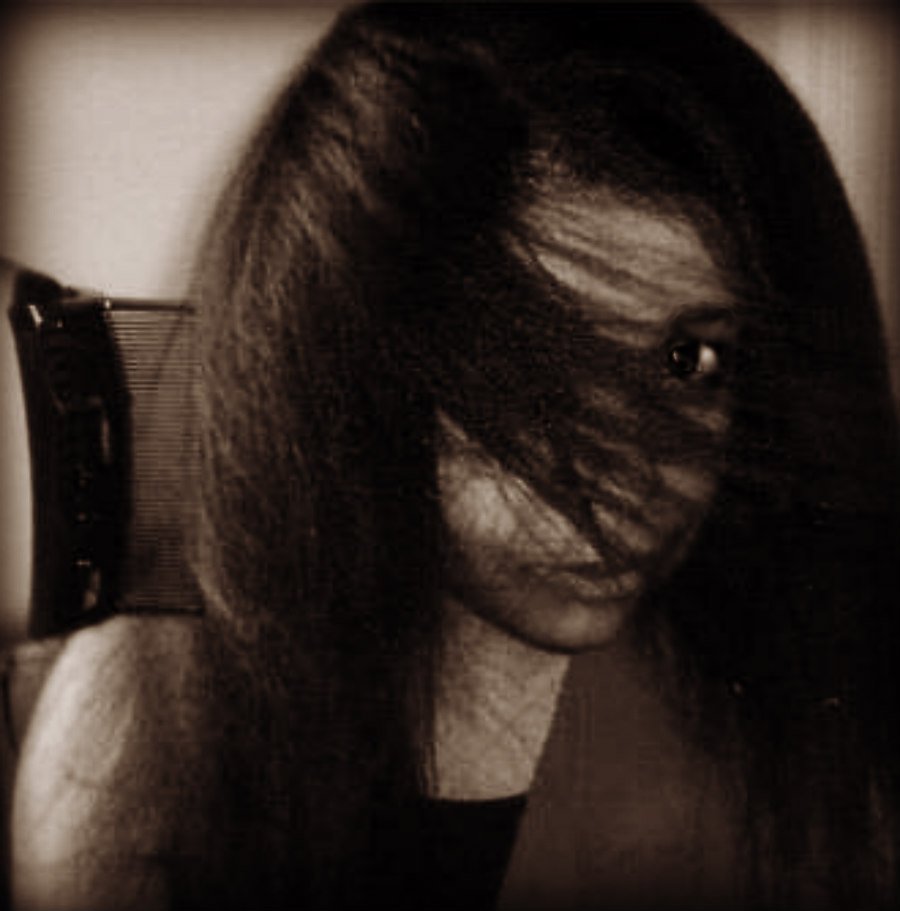
Male Store clerk: Is all that hair yours?
Me: Yes
Male Store clerk: Can I touch it?
Today in 2018, I walk proudly with my hair covered sometimes, it gives the mystery of what is underneath. Is it short or is it long? In late 18th century Louisiana, black women were ordered to cover their hair in public. This system was called the “Bando du Buen Gobierno,” “Edict for Good Government.” These rules were meant to change certain so-called “unacceptable” behaviors of free black women. specifically overly ostentatious hairstyles,(designed to impress or attract notice) which drew the attention of white men, and the jealousy of white women. These rules are called the “Tignon Laws” A tignon (pronounced “yon”) is a headdress. They are still doing this today! Where a lot of people go on interviews and are turned away because of their natural hair, The employers say they must straighten their hair. But finally, we are waking back up to our beauty! They even fear our hair!
When wearing a weave or perming your hair, you are playing roulette with your hair, please handle it with care. — Diane (my hairdresser)
ALL HAIR IS GOOD!
LITTLE GIRL IN THE STORE: Look at her hair Mom. LITTLE GIRL’S MOM: That is a weave. ME: No, it’s my hair.
It is a mere fact that we women that have long natural hair like me that grow out of our heads, always manage to get a hater or naysayers that believe that our hair is not real. In a society with all the fakers, weave wearers, and wig junkies it makes it hard for those of us that like to keep it real. It is also true that we were conditioned through slavery to hate ourselves and the texture of our hair so we commit our scalps to abusive chemicals and hair that did not grow from our scalp. The truth of the matter is that all hair is good, the creator of all made it. This hate is correlated with the term “Texturism.”
Good Hair (we have it.)
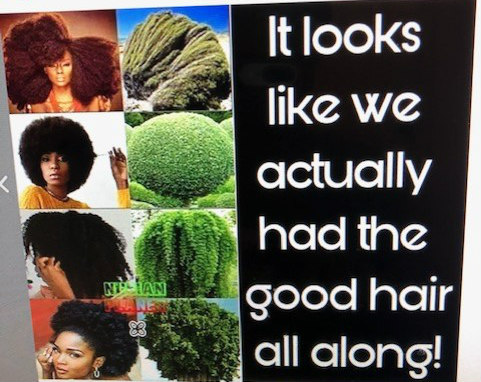
Reference: The Brown Girl Dilemma Book, 2017
Discover more from THE BROWN GIRL DILEMMA
Subscribe to get the latest posts sent to your email.
 THE BROWN GIRL DILEMMA