
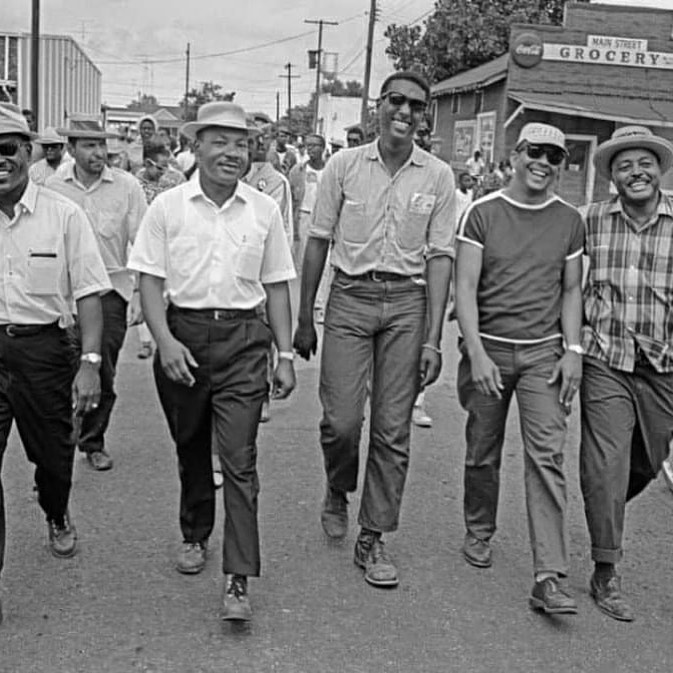
The Civil Rights Movement was more than a social revolution—it was a psychological awakening. For Black men in America, it reshaped not only how they were seen but also how they saw themselves. Decades of racial oppression, legal segregation, and economic disenfranchisement had fractured the male identity of many African American men, forcing them to exist between strength and survival. The fight for equality became a fight for restoration of dignity and manhood.
Before the movement, systemic racism and Jim Crow laws limited Black men’s ability to fulfill the traditional male role as provider and protector. Economic exclusion, racial terror, and criminalization created barriers to employment, education, and mobility. Sociologist E. Franklin Frazier (1939) wrote that the Black family was under “continuous economic and psychological assault.” These forces stripped Black men of the power to lead in their own homes and communities.
The male psyche under oppression developed a dual consciousness—what W. E. B. Du Bois (1903) called “two-ness.” Black men were forced to measure themselves by the white gaze while yearning to live authentically. They navigated a society that demanded compliance yet punished ambition. This internal tension bred both resilience and rage—a quiet storm of masculinity seeking meaning in a hostile world.
When the Civil Rights Movement emerged in the 1950s and 1960s, it reawakened something deeply spiritual within the Black male psyche. Marching, protesting, and organizing became acts of reclaiming agency. Leaders like Martin Luther King Jr., Malcolm X, and Medgar Evers embodied new models of manhood rooted in courage, discipline, and purpose. Their visibility and sacrifice redefined masculinity—not through dominance, but through moral strength and communal love.
Martin Luther King Jr. offered a model of nonviolent strength. His philosophy of love and moral courage required enormous self-control—a distinctly masculine restraint that challenged stereotypes of Black men as angry or animalistic. In contrast, Malcolm X represented the righteous fire of self-defense and Black pride. Together, they symbolized the balance between peace and power, intellect and instinct—two halves of the same wounded but rising psyche.
The televised brutality of the movement—the beatings, dogs, and police violence—also traumatized the male psyche. While the world saw Black men demanding justice, those same men carried unseen emotional scars. Psychologists today might recognize symptoms of racial trauma, including hypervigilance, anger, and internalized shame. The Civil Rights Movement both healed and hurt: it empowered men to stand tall, yet exposed them to violence that often lingered in their minds and bodies.
For many men, activism replaced silence with purpose. Protesting became therapy. The collective struggle provided identity, community, and pride that counteracted centuries of emasculation. The image of Black men marching in unity—dressed sharply, singing freedom songs—restored the psychological dignity that slavery and segregation had long denied. This was not just political; it was existential.
Yet, the post-movement era brought new challenges. The assassination of key leaders fractured the psyche again, creating a void in leadership and trust. The promised economic gains of civil rights legislation did not always reach Black men equally, and systemic barriers persisted through mass incarceration and job discrimination. Sociologist William Julius Wilson (1987) later argued that structural economic changes left many urban Black men in “social isolation,” fueling frustration and identity confusion.
This disillusionment led to a psychological shift. The same men who once marched for justice watched as drugs, unemployment, and violence eroded their communities in the 1970s and 1980s. The masculine pride awakened during the movement was now tested by a new kind of oppression—economic rather than legal, psychological rather than physical.
Still, the legacy of the Civil Rights Movement continued to shape Black male identity. It instilled a sense of purpose, pride, and intellectualism. Movements like Black Power and later Black Lives Matter drew from that foundation, redefining manhood yet again for new generations. Today’s Black men inherit both the pain and the pride of that era.
Psychologically, the Civil Rights Movement demonstrated that masculinity could coexist with compassion. It taught that being a man was not about control or dominance, but about courage, moral integrity, and service to one’s people. It showed that liberation was not only external but internal—a renewal of the mind.
Spirituality also played a central role in restoring the Black male psyche. Churches became safe spaces for leadership and self-expression. Men preached, organized, sang, and strategized under the belief that God was on their side. This faith-centered masculinity anchored many during times of despair and humiliation.
At the same time, the movement’s gender dynamics revealed tension. While men were often in leadership roles, women were the backbone of the struggle. This imbalance sometimes reinforced patriarchal norms, shaping how Black men viewed leadership and emotional vulnerability. Healing the male psyche also meant confronting these inherited notions of power.
The Civil Rights Movement thus reshaped the psychology of Black manhood into something complex and evolving. It created space for vulnerability, empathy, and collective identity—qualities once dismissed as weakness. It also forced men to reckon with their trauma, to define strength beyond stoicism.
In today’s society, echoes of that psychological transformation remain. The modern Black man carries both the strength of his ancestors and the scars of their struggles. He is a product of resilience—a living testament to survival against systems designed to destroy his mind, spirit, and masculinity.
Ultimately, the Civil Rights Movement did more than change laws—it changed men. It birthed a new consciousness that redefined what it means to be a man under oppression. The movement proved that liberation begins first in the mind, then in the world. The fight for civil rights was—and remains—a fight for psychological freedom.
References
Du Bois, W. E. B. (1903). The Souls of Black Folk. Chicago: A. C. McClurg & Co.
Frazier, E. F. (1939). The Negro Family in the United States. Chicago: University of Chicago Press.
King, M. L. Jr. (1963). Strength to Love. New York: Harper & Row.
Wilson, W. J. (1987). The Truly Disadvantaged: The Inner City, the Underclass, and Public Policy. Chicago: University of Chicago Press.
Watkins, W. H. (2005). The Assault on Public Education: Confronting the Politics of Corporate School Reform. New York: Teachers College Press.
Discover more from THE BROWN GIRL DILEMMA
Subscribe to get the latest posts sent to your email.
 THE BROWN GIRL DILEMMA