
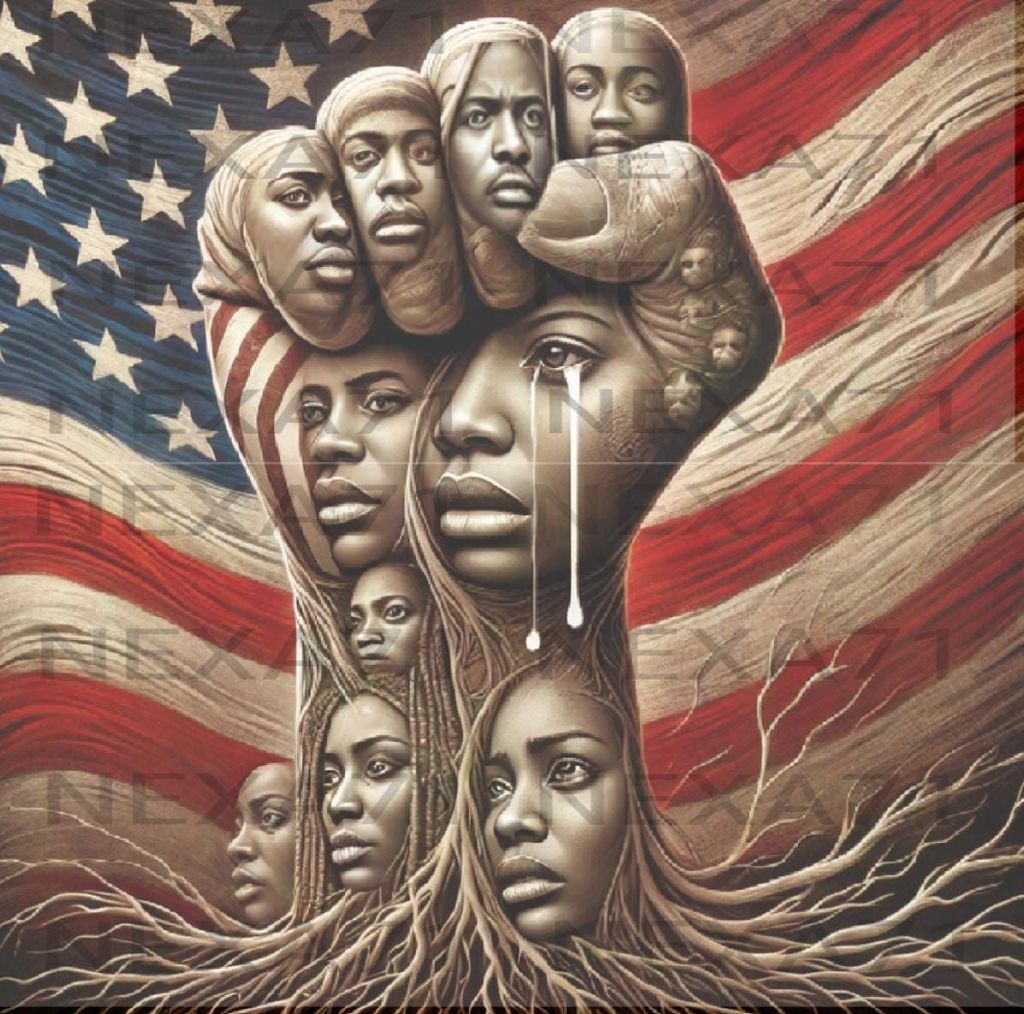
America has long been celebrated as a beacon of freedom, democracy, and opportunity. The phrase “America the Great” echoes through political speeches, national anthems, and cultural narratives. Yet beneath this polished identity lies a complex and often troubling history shaped by conquest, exploitation, racial hierarchy, and systemic inequality. To understand why America considers itself “great,” one must examine both its achievements and the deeply rooted injustices that have defined its development.
The notion of American greatness is largely tied to its economic power, global influence, and foundational ideals of liberty outlined in the Declaration of Independence. These ideals, however, were not extended to all people. From its inception, the nation operated within contradictions—proclaiming freedom while institutionalizing slavery.
The economic foundation of the United States was built significantly through the exploitation of enslaved Africans during the Transatlantic Slave Trade. Millions of Black bodies were commodified, stripped of identity, and subjected to chattel slavery, a system in which human beings were treated as property. This system fueled agricultural wealth, particularly in cotton and tobacco industries, making America a global economic force.
Chattel slavery in America was uniquely brutal. Enslaved people were denied legal rights, family stability, and bodily autonomy. Their labor was extracted without compensation, and violence was used to maintain control. The wealth generated from slavery directly contributed to the nation’s infrastructure, banking systems, and early industrialization.
The myth of meritocracy often overshadows the reality that America’s prosperity was not built on equal opportunity but on unequal exploitation. Black labor laid the foundation of American capitalism while Black people themselves remained excluded from its benefits.
The presidency of Abraham Lincoln is often highlighted as a turning point in American history. Lincoln’s issuance of the Emancipation Proclamation symbolized a shift toward ending slavery. However, it is important to recognize that this act was as much a strategic wartime decision as it was a moral one.
While Lincoln played a role in the abolition of slavery, freedom did not equate to equality. The end of slavery ushered in a new era of oppression through systems like Black Codes and later the Jim Crow Laws, which legally enforced racial segregation and disenfranchisement.
The Jim Crow era institutionalized racial inequality across the South and beyond. Black Americans were subjected to separate and unequal facilities, denied voting rights, and lived under constant threat of racial violence. Lynching became a tool of terror, reinforcing white supremacy.
The Civil Rights Movement emerged as a response to these injustices. Leaders like Martin Luther King Jr., Malcolm X, and Rosa Parks challenged systemic racism and demanded equal rights under the law.
Legislation such as the Civil Rights Act of 1964 and the Voting Rights Act of 1965 marked significant victories. However, these legal gains did not dismantle the structural inequalities embedded within American society.
The concept of “shadow slavery” refers to modern systems that disproportionately affect Black communities, such as mass incarceration, economic disenfranchisement, and exploitative labor practices. These systems mirror aspects of slavery by controlling bodies and limiting freedom through institutional mechanisms.
Mass incarceration, often referred to as the “New Jim Crow,” disproportionately targets Black men, perpetuating cycles of poverty and marginalization. Policies such as the War on Drugs intensified these disparities, criminalizing entire communities.
Economic inequality remains a defining feature of American society. Despite being one of the wealthiest nations in the world, millions of Americans live in poverty. Black Americans, in particular, face systemic barriers to wealth accumulation, including discriminatory housing practices like redlining.
The American Dream promises upward mobility through hard work, yet this ideal is not equally accessible. Structural inequalities in education, employment, and healthcare continue to hinder progress for marginalized groups.
America’s global image as a land of opportunity often obscures the lived realities of its most vulnerable populations. Homelessness, food insecurity, and wage stagnation challenge the narrative of greatness.
The treatment of Black people in America cannot be divorced from its history. From slavery to segregation to systemic racism, each era has left an indelible mark on the social and economic fabric of the nation.
In recent years, Diversity, Equity, and Inclusion (DEI) initiatives have attempted to address these disparities. However, there has been significant backlash, with many institutions rolling back or eliminating such programs.
The dismantling of DEI efforts reflects a broader resistance to acknowledging and addressing systemic inequality. Critics argue that these programs are divisive, while proponents see them as necessary for achieving equity.
The tension surrounding DEI highlights the ongoing struggle over America’s identity. Is it a nation committed to equality, or one that resists confronting its past?
Education plays a critical role in shaping national narratives. The omission or sanitization of historical truths in curricula perpetuates ignorance and hinders progress.
The legacy of slavery and segregation continues to influence contemporary issues such as police brutality, racial profiling, and voter suppression.
Movements like Black Lives Matter have brought renewed attention to these injustices, challenging the notion that America has moved beyond its racist past.
The concept of greatness is often tied to power and dominance. America’s military strength and economic influence contribute to its global standing, but these factors do not necessarily equate to moral or ethical superiority.
Patriotism can sometimes function as a barrier to critical reflection. Questioning America’s history is often met with resistance, as it challenges deeply held beliefs about national identity.
The idea of American exceptionalism suggests that the United States is inherently different from and superior to other nations. This belief can obscure the need for accountability and reform.
Historical amnesia allows injustices to persist. Without a full reckoning with the past, systemic inequalities remain entrenched.
The labor of enslaved Africans was not merely a footnote in American history—it was central to the nation’s development. Acknowledging this truth is essential to understanding present-day disparities.
Reparations have been proposed as a means of addressing the enduring impact of slavery and systemic racism. This debate continues to spark controversy and resistance.
The criminal justice system reflects broader societal inequalities. Disparities in sentencing, policing, and incarceration rates reveal deep-rooted biases.
Healthcare inequality is another manifestation of systemic racism. Black Americans face higher rates of chronic illness and lower access to quality care.
Housing discrimination has long-term effects on wealth accumulation and community stability. Redlining and discriminatory lending practices have created lasting disparities.
Education inequality limits opportunities for upward mobility. Underfunded schools in predominantly Black communities perpetuate cycles of disadvantage.
The media plays a role in shaping perceptions of Black people, often reinforcing stereotypes and biases.
Cultural contributions of Black Americans—music, art, language—have profoundly influenced American identity, yet the creators are often marginalized.
The resilience of Black communities in the face of systemic oppression is a testament to strength and perseverance.
America’s greatness, if it exists, may lie not in its perfection but in its potential for growth and transformation.
True greatness requires accountability, justice, and a commitment to equity. Without these, the label becomes hollow.
The question is not whether America is great, but for whom it has been great—and at what cost.
A nation cannot fully realize its ideals while ignoring the suffering that built it.
The path forward requires honest dialogue, systemic change, and a willingness to confront uncomfortable truths.
Only then can America begin to reconcile its identity with its reality.
References
Alexander, M. (2010). The New Jim Crow: Mass incarceration in the age of colorblindness. The New Press.
Anderson, C. (2016). White Rage: The unspoken truth of our racial divide. Bloomsbury.
Baptist, E. E. (2014). The half has never been told: Slavery and the making of American capitalism. Basic Books.
Du Bois, W. E. B. (1903). The souls of Black folk. A.C. McClurg & Co.
Foner, E. (2010). The fiery trial: Abraham Lincoln and American slavery. W.W. Norton.
Hannah-Jones, N. (2019). The 1619 Project. The New York Times Magazine.
Massey, D. S., & Denton, N. A. (1993). American apartheid: Segregation and the making of the underclass. Harvard University Press.
Muhammad, K. G. (2010). The condemnation of Blackness: Race, crime, and the making of modern urban America. Harvard University Press.
Omi, M., & Winant, H. (2014). Racial formation in the United States. Routledge.
Wilkerson, I. (2020). Caste: The origins of our discontents. Random House.
 THE BROWN GIRL DILEMMA