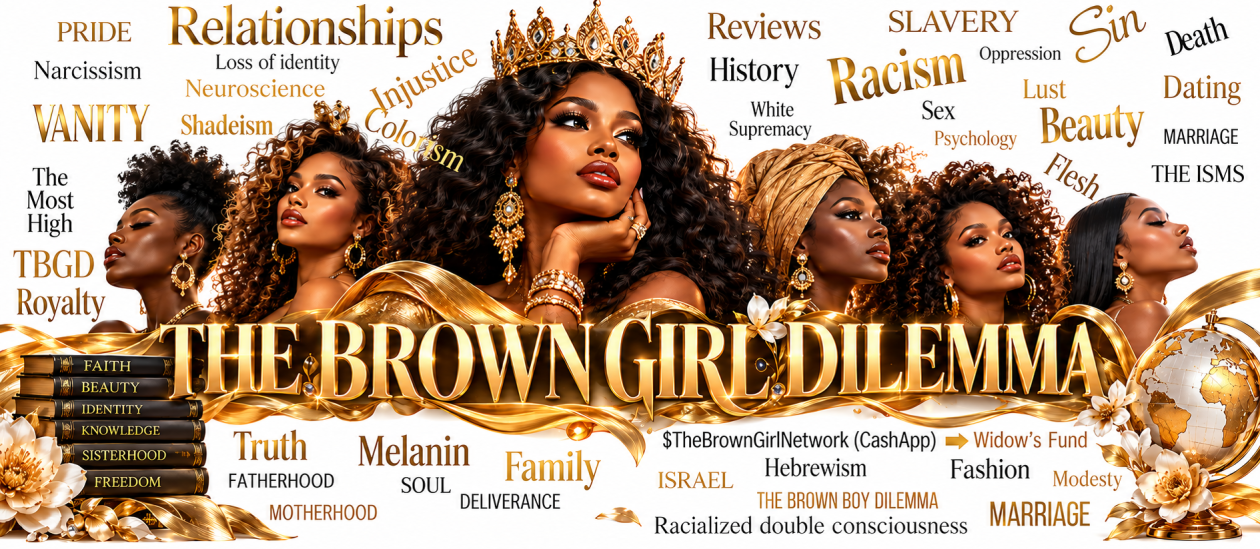

To every Black woman, your existence carries a depth of history, resilience, and sacred identity that transcends societal definitions. You are not merely navigating the present—you are the embodiment of generations who endured, survived, and created beauty in the face of adversity. Your story is not marginal; it is foundational.
Historically, Black women have stood at the intersection of race and gender, experiencing a unique form of marginalization that scholars identify as intersectionality. Yet within this space of challenge, there has also been extraordinary strength, creativity, and leadership that continues to shape culture, family, and community.
Your beauty has often been misdefined by systems that were never designed to affirm you. Eurocentric standards have long attempted to narrow the definition of beauty, privileging features that exclude the fullness of Black identity. Yet these imposed standards do not diminish your beauty—they reveal the limitations of the systems that created them.
In truth, your beauty is expansive. It is found in the richness of your skin, whether deep, dark, golden, or light. It is present in your features, your hair in all its textures, and the way you carry yourself with dignity. Beauty is not something you must conform to—it is something you already embody.
Beyond physical attributes, your beauty is also intellectual, emotional, and spiritual. Black women have been at the forefront of movements for justice, education, and cultural transformation. Your voice has challenged systems, redefined narratives, and opened doors for future generations.
Scripture affirms a deeper understanding of your worth. Psalm 139 declares that you are “fearfully and wonderfully made,” a reminder that your value is divinely assigned, not socially constructed. This truth stands in contrast to any narrative that seeks to diminish you.
There is also strength in your resilience. From historical struggles to modern challenges, Black women have consistently demonstrated the ability to endure and rise. This resilience is not merely survival—it is a form of resistance and power.
However, resilience should not be romanticized to the point where your pain is overlooked. You deserve rest, care, and softness. Strength does not mean you must carry everything alone. Your humanity includes the right to be supported, loved, and protected.
In relationships, your worth is not determined by how you are treated by others. You are not defined by rejection, neglect, or misunderstanding. Your value exists independently of external validation, rooted in both your identity and your divine creation.
Culturally, Black women have influenced global standards of style, language, and expression. From fashion to music to social movements, your contributions are undeniable. Yet recognition has often lagged behind influence, highlighting the need for continued affirmation and visibility.
The concept of self-definition is critical. Rather than internalizing imposed narratives, there is power in defining yourself on your own terms. This includes embracing your identity, your voice, and your unique journey without comparison or apology.
Community also plays a vital role. The collective strength of Black women—through sisterhood, mentorship, and shared experience—creates spaces of healing and empowerment. In these spaces, affirmation replaces competition, and unity strengthens identity.
Education and awareness further contribute to empowerment. Understanding the historical and social forces that have shaped perceptions of Black women allows for intentional resistance and redefinition. Knowledge becomes a tool for liberation.
Faith, for many, serves as an anchor. A relationship with God provides not only spiritual grounding but also a framework for understanding worth beyond societal limitations. In this context, identity is not negotiated—it is received.
It is also important to celebrate joy. Black womanhood is not solely defined by struggle. It is also laughter, creativity, love, and expression. Joy itself becomes an act of resistance in a world that has often tried to suppress it.
Representation matters, and the increasing visibility of diverse Black women in media, academia, and leadership is a step toward broader recognition. However, true representation goes beyond visibility—it includes authenticity and respect.
Healing is an ongoing process. Whether from personal experiences or generational trauma, healing requires intentionality, patience, and support. It is not linear, but it is essential for growth and wholeness.
You are allowed to evolve. Your identity is not fixed by past versions of yourself or by societal expectations. Growth is a sign of life, and transformation is a testament to your strength and adaptability.
To every Black woman, your presence is necessary. You are not an afterthought or an exception—you are central to the human story. Your voice, your beauty, and your existence carry meaning that cannot be erased.
In conclusion, your worth is inherent, your beauty is multidimensional, and your strength is undeniable. No system, narrative, or individual has the authority to define you outside of the truth that you are valuable, powerful, and divinely created.
References
The Holy Bible, King James Version. (1769/2017). Cambridge University Press.
Collins, P. H. (2000). Black feminist thought: Knowledge, consciousness, and the politics of empowerment (2nd ed.). Routledge.
Crenshaw, K. (1989). Demarginalizing the intersection of race and sex. University of Chicago Legal Forum, 1989(1), 139–167.
hooks, b. (2000). All about love: New visions. William Morrow.
Lorde, A. (1984). Sister outsider: Essays and speeches. Crossing Press.
Hunter, M. (2007). The persistent problem of colorism: Skin tone, status, and inequality. Sociology Compass, 1(1), 237–254.
West, C. (1993). Race matters. Beacon Press.