
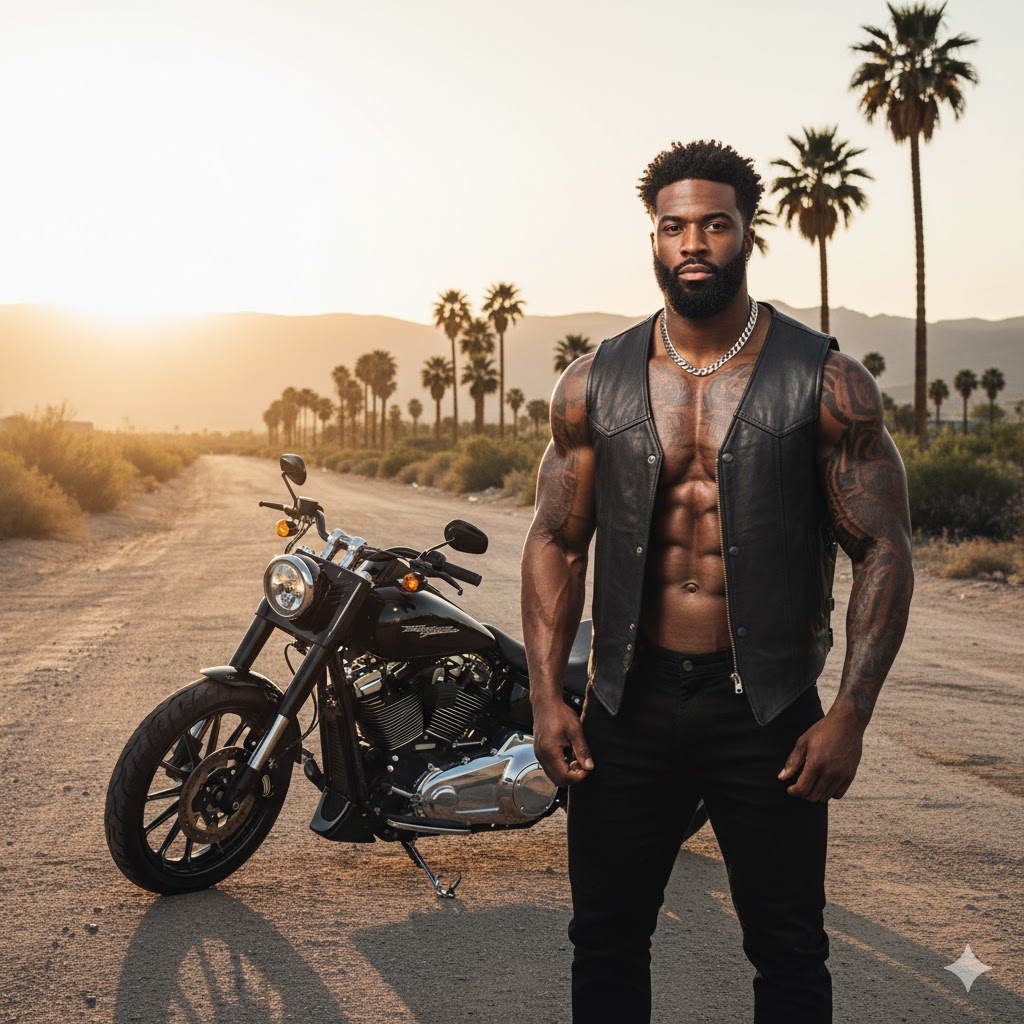
Black masculinity exists at the nexus of biology, psychology, and ancestral memory. While society often tries to flatten Black manhood into stereotypes—either hyper-aggressive or broken—scholarship and science reveal a far richer, dignified, and evolutionarily purposeful reality. Biological design, ancestral environments, and spiritual legacy together form a multidimensional model of strength, resilience, and divine identity.
Evolutionary anthropology demonstrates that ancestral African populations developed phenotypes shaped by millions of years in equatorial environments. Higher bone density, robust musculature, and facial structure associated with ancestral African lineages reflect adaptation to intense physical demands and climatic conditions. Powerful mandibles, pronounced zygomatic arches, broader nasal passages, and strong orbital rims supported survival in heat, physical exertion, and resistance to environmental pathogens (Boyd & Silk, 2021). These features, rather than being stigmatized, represent evolutionary excellence.
Facial structure in African-descended men often displays high cheekbones, deep-set eyes, defined brow ridges, and strong mandibles. These characteristics are associated in anthropology with warrior morphology: the ability to chew fibrous foods, protect facial structure under physical force, and maintain respiratory efficiency in hot climates (Lieberman, 2011). What media sometimes distorts as “threatening” is, in truth, evidence of ancestral adaptation and power.
Melanin physiology also plays a central role. Eumelanin, the dominant pigment in African populations, protects DNA from ultraviolet radiation, reduces oxidative stress, and enhances immune defense (Yamaguchi & Hearing, 2014). Beyond physical protection, melanin has been the subject of spiritual and symbolic interpretation in African and diasporic cultures, connecting biological function to metaphysical significance. While science acknowledges melanin’s biochemical role, cultural memory acknowledges it as a sign of divine selection and earthly royalty.
Neuromelanin—located in the brain’s substantia nigra—plays a role in cognitive processing, motor function, and stress response regulation. While all humans possess neuromelanin, research shows variability in distribution and concentration influenced by ancestry (Zecca et al., 2008). This has led some scholars and cultural thinkers to explore how neurological adaptation and stress resistance shaped African-descended populations’ resilience through historical trauma.
Black muscle composition often includes higher proportions of fast-twitch fibers, reflecting evolutionary specialization in explosive strength, sprinting, and physical stamina (Ama et al., 1986). These traits supported hunting, evasion, and battle—skills central to ancestral survival and tribal protection. Modern athletic excellence echoes ancient warrior lineage, though society frequently exploits this ability without honoring its roots in divine design and cultural stewardship.
Black masculinity also carries a spiritual archetype of protector and provider rooted in African kingdoms and biblical lineage. From Zulu impi warriors to West African empire generals to Hebrew patriarchs, masculine identity was defined by guardianship, leadership, and moral responsibility. Scripture reinforces this sacred authority, declaring, “Ye are gods; and all of you are children of the most High” (Psalm 82:6, KJV). Biological strength and divine calling intersect here—physical excellence as temple and instrument of God’s purpose.
Psychological research notes that masculinity in African-descended men frequently emphasizes community loyalty, emotional guardedness born from generational trauma, and profound spiritual grounding (Akbar, 1996). Black men often navigate a dual battle: the fight to embody ancestral strength and the struggle against systems that pathologize that strength. This creates unique resilience, endurance, and inner discipline.
Ancestral power—carried through epigenetic inheritance—reflects survival across slavery, colonization, and oppression. Epigenetic studies show trauma can encode resilience and biological adaptation across generations (Yehuda et al., 2016). Black masculinity thus embodies both inherited scars and inherited strength—evidence of God’s preservation and ancestral memory.
Cultural archetypes of Black kingship—Shaka, Menelik, Mansa Musa—establish aesthetics of leadership rather than dominance, honor rather than brutality. Biblical ancestry deepens this archetype: Davidic courage, Joseph-like purity, Boaz-like covering, and Christ-like sacrificial love become models for righteous Black manhood. True strength is not predatory—it is protective, disciplined, and spiritually anchored.
Modern media often attempts to weaponize biology against Black men, reducing warrior features into criminal suggestions. Yet when placed within evolutionary, historical, and theological context, these same features represent strength, intelligence, resilience, and chosen identity. Storytelling must reclaim—not just defend—Black masculine biology as evidence of divine craftsmanship.
In essence, the science of Black masculinity is a study in sacred design: bone that remembers battle, melanin that absorbs the sun like a blessing, muscles crafted for movement and survival, hearts forged through generational fire, and spirits anchored in ancient covenant. Black male embodiment is not simply genetic architecture—it is a living archive of God’s breath, ancestral warfare, and cosmic intention.
To honor Black masculine biology is to honor creation. To understand ancestral strength is to understand divine engineering. To embrace Black masculine identity fully is to reclaim a throne history attempted to topple—but God preserved through body, mind, and spirit.
References
Akbar, N. (1996). Breaking the chains of psychological slavery. Mind Productions.
Ama, P. F., Simoneau, J. A., Boulay, M. R., Serresse, O., Thériault, G., & Bouchard, C. (1986). Skeletal muscle characteristics in sedentary Black and Caucasian males. European Journal of Applied Physiology, 55(5), 389–395.
Boyd, R., & Silk, J. (2021). How humans evolved (9th ed.). W. W. Norton.
Lieberman, D. (2011). The evolution of the human head. Harvard University Press.
Yamaguchi, Y., & Hearing, V. J. (2014). Melanocytes and melanosomes: Physiology, pharmacology, and pathology. Annual Review of Pharmacology and Toxicology, 54, 297–323.
Yehuda, R. et al. (2016). Holocaust exposure induced intergenerational effects on FKBP5 methylation. Biological Psychiatry, 80(5), 372–380.
Zecca, L. et al. (2008). The role of iron and neuromelanin in Parkinson’s disease. Progress in Neurobiology, 84(3), 227–239.
 THE BROWN GIRL DILEMMA