
Tag Archives: The Politics of Pretty

The Politics of Pretty: Brown Girls and Beauty Hierarchies. #thebrowngirldilemma

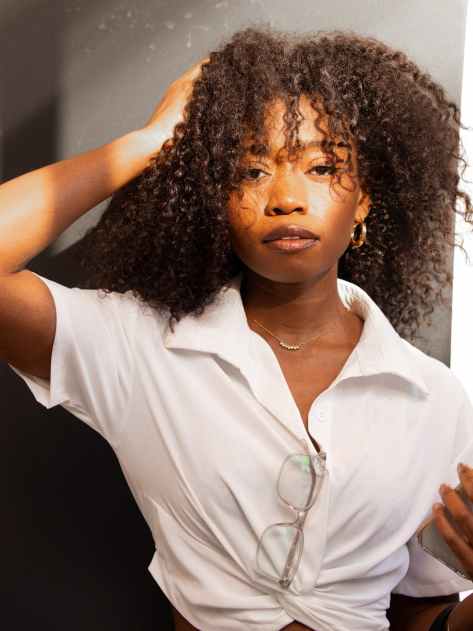
Photo by Sherman Trotz on Pexels.com

Beauty has never existed in a vacuum; it is deeply political, intertwined with power, culture, and societal hierarchy. For Brown girls, the politics of pretty are particularly complex, as beauty standards are often constructed to privilege lighter skin, Eurocentric features, and Western ideals. These hierarchies shape not only social perception but also opportunities, self-esteem, and cultural identity, producing both overt and subtle forms of discrimination (Hunter, 2007).

Historical legacies of colonialism and slavery play a central role in these hierarchies. Lighter-skinned individuals were historically afforded social, economic, and educational advantages, while darker-skinned people were marginalized. These structures created lasting beauty hierarchies in which skin tone, facial features, and hair texture became markers of status and desirability. Brown girls inherit these dynamics, navigating social spaces that often value proximity to whiteness over authentic cultural identity (Byrd & Tharps, 2014).

The media reinforces these hierarchies by promoting narrow definitions of beauty. Television, film, fashion, and social media often highlight lighter-skinned women as aspirational figures while darker-skinned women remain underrepresented or stereotyped. Celebrities like Yara Shahidi, Salli Richardson, and Mari Morrow illustrate the visibility and privilege associated with lighter skin, whereas Lupita Nyong’o, Kenya Moore, and Issa Rae challenge conventional beauty hierarchies by embracing melanin-rich skin, natural hair, and culturally distinct features (Fardouly et al., 2015).

Psychologically, these hierarchies impact self-perception and identity. Social comparison theory demonstrates that individuals evaluate themselves against societal standards, often internalizing bias. For Brown girls, repeated exposure to hierarchical standards of beauty can produce low self-esteem, body dissatisfaction, and feelings of exclusion. However, mentorship, representation, and culturally affirming environments can counteract these pressures, fostering resilience, confidence, and pride in one’s natural features (Festinger, 1954).

Economic implications of beauty hierarchies are equally significant. Lighter-skinned women often experience advantages in employment, income, and social mobility, demonstrating that beauty standards are not purely aesthetic but are tied to systemic privilege and opportunity. This inequity underscores how societal valuation based on appearance intersects with broader structures of power and access, perpetuating disadvantage for darker-skinned individuals (Hunter, 2007).

Cultural affirmation and advocacy provide pathways for resistance. Celebrating African and diasporic heritage, highlighting achievements of dark-skinned women, and promoting inclusive representation in media and education empower Brown girls to challenge hierarchical standards. Initiatives like #BlackGirlMagic, #MelaninPoppin, and #UnapologeticallyBrown amplify voices historically marginalized, affirming that beauty is multidimensional and not dictated by proximity to Eurocentric ideals (Banks, 2015).

Spiritual grounding complements cultural and social strategies. Proverbs 31:30 (KJV) declares, “Favour is deceitful, and beauty is vain: but a woman that feareth the LORD, she shall be praised.” Faith provides an enduring lens through which Brown girls can measure worth by character, integrity, and divine purpose rather than societal approval. Spiritual perspective reinforces resilience and affirms that authentic beauty emerges from self-awareness, virtue, and confidence.

In conclusion, the politics of pretty create hierarchical structures that privilege lighter skin and Eurocentric features, influencing perception, opportunity, and self-worth for Brown girls. Yet through cultural affirmation, representation, mentorship, and spiritual grounding, these hierarchies can be challenged. By redefining beauty on their own terms, Brown girls assert agency, embrace authentic features, and inspire a new paradigm in which melanin-rich beauty is celebrated, affirmed, and empowered.


References

Banks, J. A. (2015). Cultural diversity and education: Foundations, curriculum, and teaching. Routledge.

Byrd, A. D., & Tharps, L. L. (2014). Hair Story: Untangling the Roots of Black Hair in America. St. Martin’s Press.

Fardouly, J., Diedrichs, P. C., Vartanian, L. R., & Halliwell, E. (2015). Social comparisons on social media: The impact of Facebook on young women’s body image concerns and mood. Body Image, 13, 38–45.

Festinger, L. (1954). A theory of social comparison processes. Human Relations, 7(2), 117–140.

Hunter, M. (2007). The persistent problem of colorism: Skin tone, status, and inequality. Sociology Compass, 1(1), 237–254.
The Politics of Pretty and the Brown Girl #thescienceofblackbeauty

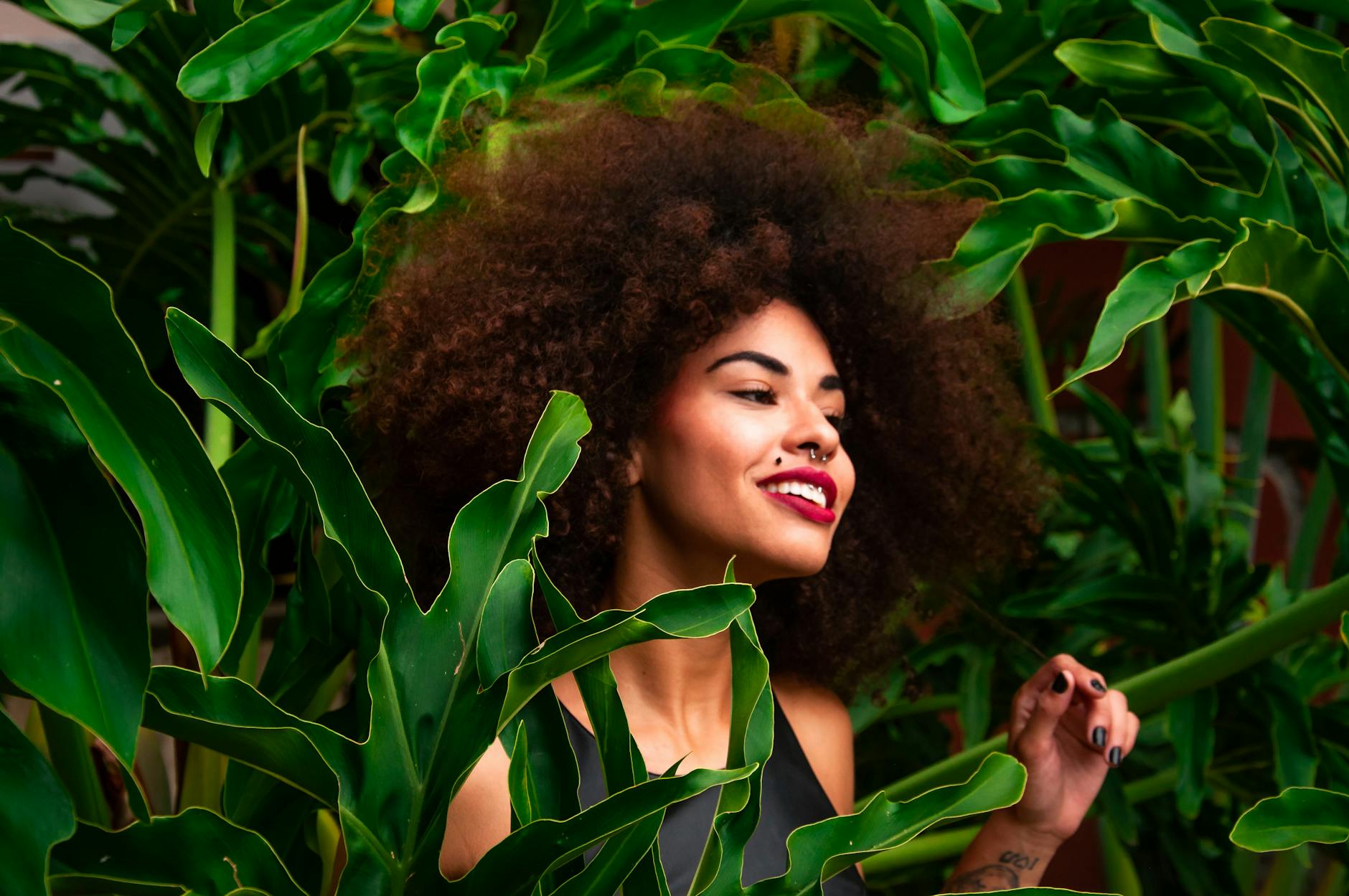
Photo by Giulia Freitas on Pexels.com

Beauty has never been a neutral concept. It has always been political, deeply intertwined with power, race, and identity. For the Brown girl, beauty is not simply a matter of style or preference—it is a site of negotiation, resistance, and survival. Living in a world where Eurocentric standards dominate, the Brown girl’s face, hair, and skin are often scrutinized, diminished, or exoticized. To be considered “pretty” in this context is not a simple compliment; it is a measure shaped by systemic bias, cultural narratives, and centuries of colonial influence.

The phrase “politics of pretty” captures the social and cultural forces that determine which bodies are valued and which are marginalized. For Brown girls—women of darker complexions, textured hair, and features often dismissed by dominant culture—beauty becomes less about personal choice and more about fitting into or rejecting the molds society constructs. Being told one is “pretty for a dark-skinned girl” is a backhanded compliment that reveals how beauty is still filtered through racial hierarchies. Such comments reinforce the notion that prettiness is not expected of the Brown girl but rather an exception to a biased rule.

Psychologically, these beauty politics can carry heavy consequences. Studies on colorism reveal how internalized bias leads to lower self-esteem, body image struggles, and even strained relationships among women of color (Hunter, 2007). The Brown girl may feel pressure to straighten her hair, lighten her skin, or alter her features to align more closely with accepted ideals. These acts are not merely aesthetic—they reflect deep systemic forces that punish authenticity while rewarding conformity. Yet, despite these pressures, many Brown girls have chosen reclamation over assimilation, celebrating melanin, curls, and natural features as radical acts of self-love.

Culture and media play central roles in shaping how the Brown girl is seen. Hollywood, fashion industries, and social media influencers often perpetuate narrow standards of beauty, elevating lighter skin, looser curls, and Eurocentric features. When Brown girls do appear, they are frequently cast as exotic, hypersexualized, or secondary characters. However, the rise of movements such as #MelaninMagic and #BlackGirlMagic has shifted this narrative, carving space for Brown girls to redefine “pretty” on their own terms. These campaigns celebrate diverse shades, textures, and features, challenging the idea that beauty must fit within Eurocentric boundaries.

Biblically, the politics of beauty are also addressed. Scripture reminds us that true worth is not measured by outward appearance but by the heart: “Whose adorning let it not be that outward adorning of plaiting the hair, and of wearing of gold, or of putting on of apparel; But let it be the hidden man of the heart” (1 Peter 3:3–4, KJV). For the Brown girl, this message affirms that while society may politicize her body and her beauty, her value in God’s eyes is rooted in character, wisdom, and faith. This spiritual truth provides a counterweight to cultural lies, offering grounding in divine affirmation.

The politics of pretty also extend into economics and social mobility. Research shows that lighter-skinned women often receive preferential treatment in hiring, salary, and even dating markets (Hersch, 2006). For Brown girls, this creates an additional layer of struggle: their looks can impact not only their social experiences but also their material opportunities. This demonstrates how beauty standards are not superficial but structurally impactful. They determine access, privilege, and even wealth distribution.

Yet within these struggles lies a profound resilience. Brown girls have historically been at the forefront of cultural innovation, from music and dance to style and language. What was once mocked or dismissed—from full lips to natural hairstyles—has often been appropriated and celebrated when adopted by others. This irony highlights the cultural hypocrisy of beauty politics, where features belonging to Brown girls are simultaneously devalued and commodified. Despite this, the Brown girl continues to set trends and reshape culture, forcing society to confront its contradictions.

The healing journey for the Brown girl involves unlearning toxic beauty scripts and embracing authenticity. Psychology emphasizes the importance of positive identity formation, affirmations, and community support (Cross, 1991). Spiritually, it involves resting in God’s truth rather than society’s approval. Culturally, it means celebrating diversity and rejecting monolithic beauty standards. When the Brown girl embraces her radiance, she not only heals herself but also challenges a system that has historically sought to erase her.

In the end, the politics of pretty reveals more about society than it does about the Brown girl. It exposes racialized hierarchies, systemic inequities, and cultural insecurities. Yet the Brown girl stands as a living testimony to resilience, creativity, and grace. She is not “pretty for a dark-skinned girl.” She is beautiful, period—because her beauty transcends comparison, rooted in history, faith, and the fullness of her identity.

The task for all of us is not to reshape the Brown girl to fit beauty politics, but to reshape politics to honor her as she is. When society expands its definition of beauty, it creates space for truth, healing, and justice. Until then, the Brown girl will continue to resist, radiate, and redefine what it means to be “pretty” on her own terms.


📖 References

Cross, W. E. (1991). Shades of Black: Diversity in African-American identity. Temple University Press.

Hersch, J. (2006). Skin tone effects among African Americans: Perceptions and reality. American Economic Review, 96(2), 251–255.

Hunter, M. L. (2007). The persistent problem of colorism: Skin tone, status, and inequality. Sociology Compass, 1(1), 237–254.

The Holy Bible, King James Version. (1769/2017). Cambridge University Press.