
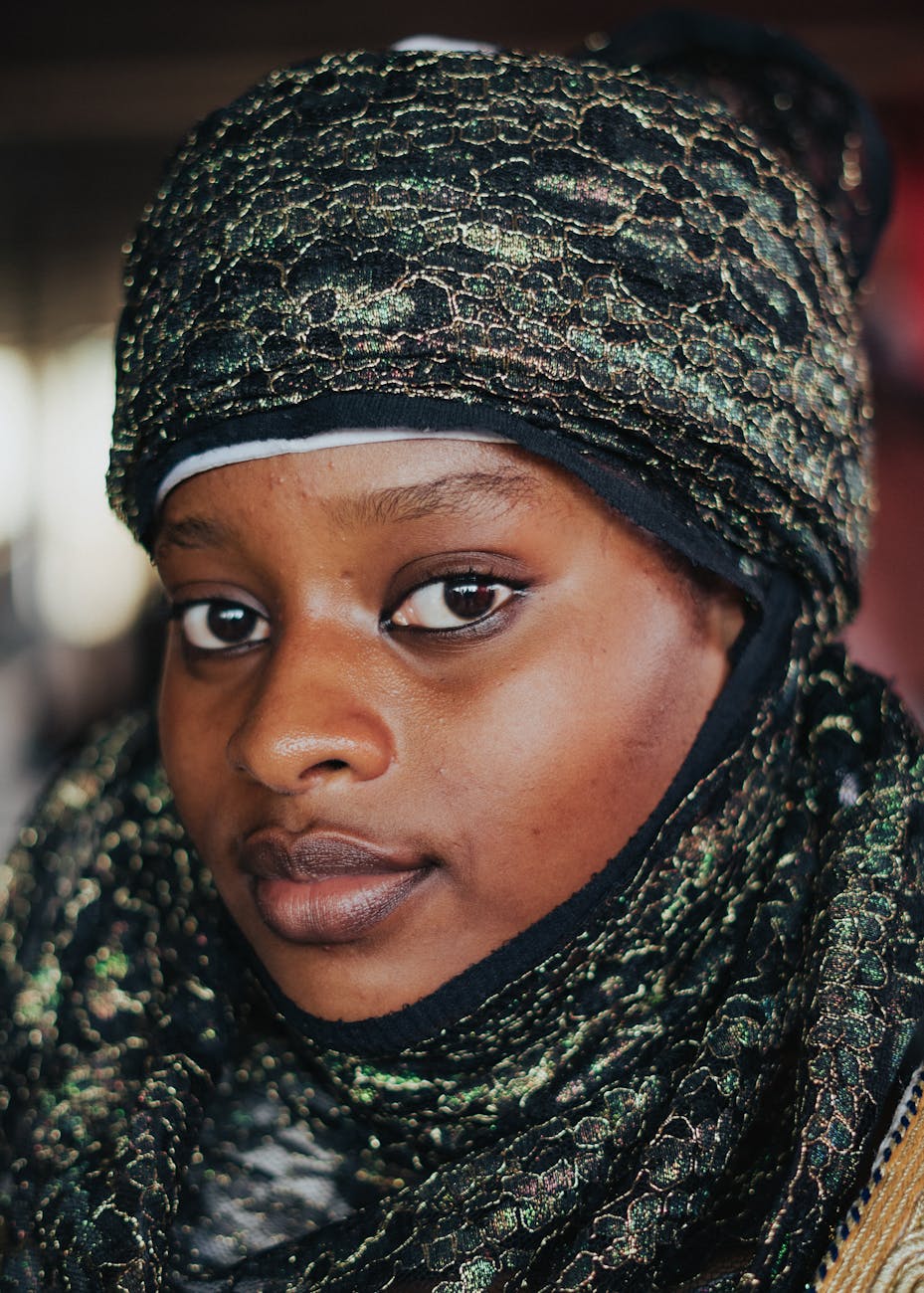
Beauty, once a divine reflection of the Creator’s artistry, has been reduced to a calculated illusion—a “beautiful lie” designed to manipulate desire, monetize insecurity, and manufacture self-doubt. In today’s global marketplace, appearance has become currency, and perfection is the most profitable deception of all. Beneath the gloss of glamour lies a darker truth: entire industries thrive because people have been taught to hate themselves.
The business of insecurity is one of the most lucrative empires in history. From cosmetic conglomerates to social media platforms, corporations profit from the human yearning to feel valuable. Advertisers do not sell products—they sell the promise of acceptance. Their genius lies in first convincing consumers that something is wrong with them, then offering a remedy. As Jean Kilbourne famously noted, advertising doesn’t just reflect culture—it creates it. The beauty industry’s success depends on perpetual dissatisfaction.
From a young age, people are conditioned to equate worth with appearance. Billboards, television ads, and digital influencers bombard the psyche with unrealistic standards. Women are told that youth equals beauty and that aging is failure. Men are taught that strength equals worth and vulnerability equals weakness. This conditioning shapes self-perception long before individuals are conscious of it. In essence, society manufactures insecurity, then monetizes the cure.
The “beautiful lie” is reinforced through repetition and aspiration. The more we see an image, the more we internalize it as truth. The faces on magazine covers, filtered social media feeds, and cosmetic advertisements become the blueprint for desirability. Yet these images are often digitally manipulated, creating an unattainable ideal. When people fail to live up to these illusions, they blame themselves instead of the system designed to deceive them.
In this way, insecurity becomes an economic engine. The global beauty and self-improvement industry generates hundreds of billions annually, feeding off dissatisfaction. Each wrinkle cream, diet pill, or surgical enhancement is marketed as liberation, yet it only deepens bondage. As Naomi Wolf (1991) argued, the beauty myth keeps people, especially women, distracted from power by keeping them preoccupied with appearance. What masquerades as empowerment often conceals economic exploitation.
Social media has intensified this cycle by transforming self-presentation into performance. Platforms like Instagram and TikTok reward conformity to specific aesthetics. Filters erase imperfections, while algorithms amplify idealized content. Users learn to edit their own faces and lives in real time, curating an image that aligns with societal approval. This performative culture traps millions in digital mirrors—comparing, competing, and consuming in pursuit of validation that never satisfies.
For communities of color, the beautiful lie carries an additional layer of violence. Eurocentric standards have long defined beauty as whiteness, rendering African, Asian, and Indigenous features “other.” Colorism, hair discrimination, and body shaming are not accidental—they are the residual tools of colonialism, weaponized to enforce inferiority. The global skin-lightening industry, worth billions, proves that racialized beauty standards remain profitable centuries after slavery’s end.
The irony is that the traits once mocked—full lips, darker skin, textured hair—are now commodified when worn by non-Black bodies. This cultural theft exposes how beauty capitalism does not celebrate diversity; it exploits it. By extracting elements of Blackness without acknowledging Black humanity, society continues to profit from the same features it historically oppressed. The beautiful lie thus perpetuates both aesthetic and racial inequality.
Psychologically, this system operates like an addiction. Each purchase offers temporary relief from insecurity but deepens dependency on external validation. The mirror becomes a site of anxiety rather than appreciation. As bell hooks (1992) observed, this psychological colonization convinces people to view themselves through the eyes of the oppressor. True liberation requires breaking the gaze—learning to see oneself as God intended, not as marketing demands.
Spiritually, the beautiful lie represents the fall of humanity’s original design. In Genesis 1:27, Scripture declares that mankind was created in the image of God. This divine image (imago Dei) bestowed inherent worth and beauty upon every soul. Yet the serpent’s deception in the Garden of Eden was rooted in the same strategy that drives today’s marketing: convincing people that what God made was not enough. The modern beauty industry continues this ancient lie—“You will be better if you buy.”
When appearance replaces character as the measure of worth, society loses its moral compass. The culture of comparison breeds envy, pride, and despair. People are no longer content to be; they must appear. This illusion of perfection erodes authenticity and replaces identity with branding. In this context, beauty becomes not an expression of individuality, but a performance for approval.
The consequences extend beyond the psychological to the economic. Billions are spent annually on products and procedures that promise transformation but deliver dependence. Corporations profit most when consumers are never satisfied. The model is designed not for fulfillment but for repetition. Insecurity is thus not a flaw of the system—it is the system. Without self-doubt, capitalism would lose one of its most reliable markets.
In the African diaspora, the rejection of this system has become an act of resistance. Movements like “Black is Beautiful,” “Melanin Magic,” and “Love Your Hair” reclaim identity from colonial deception. They remind the world that beauty is not the property of whiteness but the reflection of divine diversity. To love oneself as God created is a radical act in a world that profits from self-hate.
For men, too, the lie is evolving. The rise of male beauty industries and gym culture has produced a new kind of insecurity. Men are now taught to chase hypermasculine physiques and external success at the expense of emotional wholeness. The result is silent suffering masked by muscle and materialism. Cosmetic capitalism thus exploits all genders, reshaping the soul through the scalpel of profit.
Breaking free from the beautiful lie requires reclaiming truth. The truth that beauty is not a currency, but a calling. That self-worth is not purchased, but inherited from divine origin. The book of Psalms declares, “I will praise thee; for I am fearfully and wonderfully made” (Psalm 139:14, KJV). This is not poetic sentiment—it is spiritual revelation. To accept oneself as God made is the ultimate rejection of the capitalist lie.
Communities, educators, and faith leaders must play a role in restoring healthy identity. Teaching children to value character over cosmetics, and purpose over popularity, reclaims the narrative from corporations that exploit innocence. Spiritual formation must replace self-marketing; self-acceptance must triumph over self-alteration. In this way, beauty becomes testimony, not transaction.
Ultimately, the beautiful lie thrives only as long as people believe they are broken. The moment individuals rediscover their divine reflection, the illusion collapses. The mirrors of capitalism shatter when faced with the light of truth. True beauty—rooted in integrity, compassion, and divine creation—cannot be sold, filtered, or franchised. It is freedom made visible.
In rejecting the beautiful lie, humanity rediscovers its original design: whole, worthy, and radiant in the image of God. When we stop buying insecurity and start living truth, beauty ceases to be an industry—and becomes what it was always meant to be: the visible echo of the Creator’s love.
References
Blay, Y. (2017). Pretty. Period.: The politics of being Black and beautiful. Blackprint Press.
Davis, A. Y. (1981). Women, race, & class. Random House.
Fanon, F. (1952). Black skin, white masks. Grove Press.
hooks, b. (1992). Black looks: Race and representation. South End Press.
Kilbourne, J. (1999). Can’t buy my love: How advertising changes the way we think and feel. Touchstone.
Mercer, K. (1994). Welcome to the jungle: New positions in Black cultural studies. Routledge.
Nyong’o, L. (2014). Lupita Nyong’o’s speech on beauty and self-love [Video]. Essence Black Women in Hollywood.
Tate, S. (2016). Black beauty: Aesthetics, stylization, politics. Routledge.
Thomas, C. (2019). God, image, and identity: Reclaiming beauty from a biblical lens. Faith & Reason Press.
Walker, A. (1983). In search of our mothers’ gardens: Womanist prose. Harcourt Brace Jovanovich.
Wilkerson, I. (2020). Caste: The origins of our discontents. Random House.
Wolf, N. (1991). The beauty myth: How images of beauty are used against women. HarperCollins.
Wynter, S. (2003). Unsettling the coloniality of being/power/truth/freedom. The New Centennial Review, 3(3), 257–337.
The Holy Bible, King James Version. (1611). Thomas Nelson.
West, C. (1993). Race matters. Beacon Press.
Johnson, K. (2021). Beauty in resistance: Black aesthetics and cultural power. Duke University Press.
 THE BROWN GIRL DILEMMA