Tag Archives: technology

The Colorism Series: Office Politics of Skin Tone.

Colorism, a system of inequality that privileges lighter skin tones over darker ones within the same racial or ethnic group, continues to shape workplace dynamics in subtle yet profound ways. Rooted in colonial hierarchies and reinforced through media representation, colorism operates as a silent determinant of perceived professionalism, beauty, and competence.

Colorism operates as a quiet yet powerful force within professional environments, shaping workplace dynamics, opportunities, and perceptions of competence. “Office politics of skin tone” reflects the subtle negotiations of power, favoritism, and bias that occur not just across racial lines, but within them.

Historically rooted in colonial hierarchies and slavery, colorism established a system where lighter skin was associated with proximity to power and privilege. These historical foundations continue to influence modern workplace structures, often in ways that are difficult to detect yet deeply impactful (Hunter, 2007).

In hiring practices, lighter-skinned candidates are frequently perceived as more “professional” or “polished,” reflecting internalized standards tied to Eurocentric beauty ideals. These perceptions are rarely explicit but are reinforced through unconscious decision-making processes.

The role of implicit bias is central to understanding how these dynamics persist. Employers and colleagues may unknowingly favor individuals who align more closely with socially constructed ideals of attractiveness and acceptability (Greenwald & Krieger, 2006).

Once hired, workplace treatment often diverges along color lines. Lighter-skinned employees may receive more mentorship opportunities, positive feedback, and visibility in high-profile projects, all of which are critical for career advancement.

Conversely, darker-skinned employees may face increased scrutiny and harsher evaluations. Their mistakes are more likely to be highlighted, while their achievements may be overlooked or minimized, contributing to slower career progression (Keith & Herring, 1991).

Public figures such as Viola Davis have spoken about being overlooked in favor of lighter-skinned counterparts, illustrating how these biases extend beyond corporate offices into broader professional industries.

Similarly, Lupita Nyong’o has addressed the barriers she faced due to her skin tone, emphasizing the global nature of colorism and its influence on professional recognition.

Office politics often involve informal networks—social gatherings, mentorship circles, and alliances—that play a crucial role in career mobility. Lighter-skinned individuals are more likely to be included in these networks, granting them access to information and opportunities not equally available to others.

Colorism also affects leadership perceptions. Lighter-skinned employees are often seen as more “leadership-ready,” a bias that influences promotion decisions and reinforces disparities in executive representation (Rosette & Dumas, 2007).

In client-facing roles, companies may consciously or unconsciously select lighter-skinned employees to represent their brand, reinforcing narrow definitions of professionalism and appeal. This practice not only marginalizes darker-skinned employees but also perpetuates harmful societal standards.

The economic implications of these dynamics are significant. Research indicates that lighter-skinned individuals within the same racial group often earn higher wages and experience greater occupational mobility (Goldsmith, Hamilton, & Darity, 2007).

The psychological toll on darker-skinned employees is profound. Constant exposure to bias and exclusion can lead to stress, decreased job satisfaction, and a sense of isolation within the workplace (Thompson & Keith, 2001).

Colorism can also create tension and division among employees, as perceived favoritism based on skin tone undermines trust and collaboration. These divisions weaken organizational culture and hinder collective success.

Despite increasing awareness of diversity and inclusion, many corporate initiatives fail to address colorism explicitly. By focusing solely on race, organizations overlook the nuanced ways in which inequality operates within racial groups.

Addressing the office politics of skin tone requires intentional strategies, including bias training that specifically addresses colorism and its manifestations in professional settings.

Transparent evaluation and promotion processes are essential in minimizing subjective judgments influenced by skin tone. Standardized criteria can help ensure that decisions are based on performance rather than perception.

Mentorship and sponsorship programs that prioritize equity can help bridge the gap, providing darker-skinned employees with access to the guidance and opportunities necessary for advancement.

Representation at all levels of leadership is also critical. When diverse skin tones are visible in positions of power, it challenges existing biases and redefines standards of professionalism and success.

Faith-based perspectives offer an additional lens, reminding individuals and organizations that true worth is not determined by outward appearance but by character and integrity (1 Samuel 16:7, KJV).

Ultimately, dismantling the office politics of skin tone requires both individual accountability and systemic change. It demands a commitment to recognizing and challenging biases, fostering inclusivity, and redefining standards of excellence.

Only through deliberate action can workplaces move toward equity—where opportunity is not influenced by complexion, and all individuals are valued for their contributions rather than the shade of their skin.

In many professional environments, lighter-skinned individuals are often unconsciously associated with traits such as approachability, intelligence, and trustworthiness. These perceptions are not accidental but are deeply embedded in historical frameworks that elevated proximity to whiteness as a social advantage (Hunter, 2007).

Scholarly research has consistently demonstrated that lighter-skinned employees, particularly women, are more likely to be hired, promoted, and perceived favorably by employers. This phenomenon reflects what implicit bias scholars identify as unconscious attitudes that influence decision-making processes without deliberate intent (Greenwald & Krieger, 2006).

Within corporate spaces, beauty standards often mirror Eurocentric ideals, privileging straighter hair textures, lighter complexions, and narrower facial features. These standards influence not only hiring decisions but also workplace culture, shaping who is deemed “polished” or “presentable.”

The experiences of darker-skinned women highlight the emotional and professional toll of colorism. Actresses such as Lupita Nyong’o and Viola Davis have publicly discussed how colorism has affected their careers, shedding light on the broader systemic biases that extend beyond Hollywood into corporate America.

Colorism also intersects with gender, creating compounded disadvantages for dark-skinned women. They are often subjected to harsher scrutiny, lower performance evaluations, and fewer leadership opportunities compared to their lighter-skinned counterparts (Keith & Herring, 1991).

In contrast, lighter-skinned employees may benefit from what researchers term the “halo effect,” where physical appearance positively influences perceptions of unrelated traits such as competence and leadership ability (Dion, Berscheid, & Walster, 1972).

The preference for lighter skin can manifest in workplace social dynamics, where lighter-skinned individuals are more likely to be included in networking opportunities, mentorship relationships, and informal social circles that are critical for career advancement.

Historically, these biases can be traced back to slavery and colonial systems, where lighter-skinned individuals were often given preferential treatment due to their proximity to whiteness, sometimes receiving domestic roles instead of field labor. These historical patterns have evolved but not disappeared (Hunter, 2007).

In modern workplaces, colorism may appear in performance reviews, where darker-skinned employees are described with more negative or neutral language, while lighter-skinned employees receive more positive descriptors, even when performance levels are comparable.

Additionally, customer-facing roles often reveal colorist preferences, with lighter-skinned employees more frequently placed in positions that represent the company externally, reinforcing narrow standards of acceptability and professionalism.

The psychological impact of colorism in the workplace cannot be overlooked. Darker-skinned employees may experience decreased self-esteem, increased stress, and a heightened need to overperform to counteract biased perceptions (Thompson & Keith, 2001).

Colorism also affects wage disparities. Studies have shown that lighter-skinned individuals within the same racial group can earn significantly higher wages than their darker-skinned peers, highlighting the economic implications of this bias (Goldsmith, Hamilton, & Darity, 2007).

Corporate diversity initiatives often fail to address colorism explicitly, focusing instead on broader racial categories. This oversight allows intra-racial inequalities to persist unchallenged within organizations.

Media representation continues to reinforce workplace colorism by consistently elevating lighter-skinned individuals as the standard of success and desirability. This cultural messaging influences both employers and employees, shaping expectations and behaviors.

Despite these challenges, there has been a growing movement to confront colorism in professional spaces. Advocacy, research, and open dialogue are beginning to expose these biases and push organizations toward more equitable practices.

Leadership plays a critical role in dismantling colorism. Organizations that actively train managers to recognize and mitigate implicit bias are better positioned to create inclusive environments where all employees can thrive.

Mentorship and sponsorship programs that intentionally include darker-skinned employees can help counteract systemic disadvantages, providing access to opportunities that might otherwise be withheld.

Policy changes, such as standardized hiring practices and transparent promotion criteria, are essential in reducing the influence of subjective biases tied to skin tone.

Ultimately, addressing colorism in the workplace requires a cultural shift that challenges deeply ingrained notions of beauty, professionalism, and worth. It demands accountability from individuals and institutions alike.

By acknowledging and confronting colorism, workplaces can move toward a more just and equitable future—one where success is determined by ability and character rather than the shade of one’s skin.


References

Dion, K., Berscheid, E., & Walster, E. (1972). What is beautiful is good. Journal of Personality and Social Psychology, 24(3), 285–290. https://doi.org/10.1037/h0033731

Goldsmith, A. H., Hamilton, D., & Darity, W. (2007). From dark to light: Skin color and wages among African Americans. Journal of Human Resources, 42(4), 701–738.

Greenwald, A. G., & Krieger, L. H. (2006). Implicit bias: Scientific foundations. California Law Review, 94(4), 945–967.

Hunter, M. (2007). The persistent problem of colorism: Skin tone, status, and inequality. Sociology Compass, 1(1), 237–254.

Keith, V. M., & Herring, C. (1991). Skin tone and stratification in the Black community. American Journal of Sociology, 97(3), 760–778.

Thompson, M. S., & Keith, V. M. (2001). The blacker the berry: Gender, skin tone, self-esteem, and self-efficacy. Gender & Society, 15(3), 336–357.

Rosette, A. S., & Dumas, T. L. (2007). The hair dilemma: Conform to mainstream expectations or emphasize racial identity. Duke Journal of Gender Law & Policy, 14(2), 407–421.

AI and Dating

AI and dating represent a new chapter in how human beings seek connection, compatibility, and companionship. Artificial intelligence refers to computer systems designed to simulate aspects of human intelligence, such as learning, pattern recognition, and decision-making. In the context of dating, AI is used to analyze behavior, preferences, communication styles, and values to help people form more compatible matches.

Unlike traditional dating methods rooted in proximity, family networks, or chance encounters, AI-driven dating relies on data. Algorithms examine user input, past interactions, and psychological indicators to predict relational compatibility. This shift marks a movement from intuition-led matching to evidence-informed pairing.

One of the primary promises of AI in dating is efficiency. AI reduces the overwhelming nature of modern dating by filtering options and narrowing choices. Rather than endlessly scrolling through profiles, users are presented with matches that are more closely aligned with their stated and demonstrated preferences.

AI can also improve self-awareness. Many platforms use reflective questions, behavioral feedback, and pattern analysis to help users understand their dating habits, attachment styles, and relational blind spots. This can encourage personal growth alongside the selection of a partner.

Compared to traditional online dating, AI goes beyond static profiles and surface-level traits. Online dating typically relies on photos, short bios, and user-selected preferences, which are often aspirational rather than accurate. AI, by contrast, evaluates behavior over time, including communication patterns and decision-making tendencies.

AI-driven systems can also reduce some forms of bias present in human judgment. By focusing on compatibility metrics rather than immediate attraction alone, AI has the potential to elevate values such as shared goals, emotional intelligence, and communication alignment.

For individuals with limited social circles, demanding careers, or geographic isolation, AI offers access to a wider pool of potential partners. This expanded reach can be particularly beneficial for people seeking intentional, long-term relationships rather than casual encounters.

AI may also support safety in dating. Some platforms use AI to detect harassment, deception, or harmful behavior by analyzing language patterns and reported activity. This creates a more moderated environment compared to unregulated social interactions.

Despite its benefits, AI in dating is not without danger. Overreliance on algorithms can reduce human agency, causing individuals to trust machine recommendations more than their own discernment. Relationships, however, involve mystery, growth, and unpredictability that no algorithm can fully capture.

Another concern is emotional detachment. When dating becomes overly optimized, people may begin to treat partners as data points rather than whole human beings. This commodification risks undermining empathy, patience, and grace.

Privacy is also a significant issue. AI dating platforms collect sensitive personal data, including emotional responses, preferences, and behavioral patterns. Misuse or breaches of this information pose ethical and psychological risks.

AI can unintentionally reinforce existing biases if trained on flawed or limited datasets. If societal inequalities are embedded in the data, algorithms may replicate or amplify them, particularly in areas related to race, class, and attractiveness norms.

There is also the danger of false precision. Compatibility scores may create an illusion of certainty, leading users to prematurely dismiss potentially meaningful relationships that do not meet algorithmic thresholds.

The difference between AI and traditional online dating lies in depth and adaptability. Online dating platforms typically remain static, while AI systems evolve, learning from user behavior and refining recommendations over time. This adaptability can enhance accuracy but also increase dependency.

AI cannot replace emotional wisdom, spiritual discernment, or moral alignment. While it can suggest compatibility, it cannot evaluate character over time, test commitment under pressure, or measure sacrificial love.

Healthy use of AI in dating requires balance. AI should function as a tool, not an authority. It can assist in introductions and insights, but human judgment must remain central in deciding relational direction.

From a relational ethics perspective, intentional dating still requires honesty, accountability, and respect. AI does not absolve individuals from personal responsibility or moral conduct.

AI also raises questions about divine order and human agency. For faith-centered individuals, technology must be subordinated to values, prayer, and discernment rather than replacing them.

When used wisely, AI can serve as a benefit rather than a barrier. It can reduce noise, highlight compatibility, and encourage intentionality, especially for those seeking marriage or a long-term partnership.

Ultimately, AI and dating reflect humanity’s ongoing attempt to reconcile technology with intimacy. The success of AI in dating will not be determined by algorithms alone, but by whether users remain committed to authenticity, dignity, and meaningful connection.


References

Ansari, A. (2015). Modern romance. New York, NY: Penguin Press.

Finkel, E. J., Eastwick, P. W., Karney, B. R., Reis, H. T., & Sprecher, S. (2012). Online dating: A critical analysis from the perspective of psychological science. Psychological Science in the Public Interest, 13(1), 3–66.

Guzman, L., & Lewis, A. (2020). Artificial intelligence and intimacy: Ethical considerations in digital matchmaking. Journal of Social and Personal Relationships, 37(8–9), 2401–2419.

Hutson, J. A., Taft, J. G., Barocas, S., & Levy, K. (2018). Debiasing desire: Addressing bias and discrimination on intimate platforms. Proceedings of the ACM on Human-Computer Interaction, 2(CSCW), 1–18.

Turkle, S. (2011). Alone together: Why we expect more from technology and less from each other. New York, NY: Basic Books.

The Legacy of Black Excellence: From Ancestry to Modern Influence

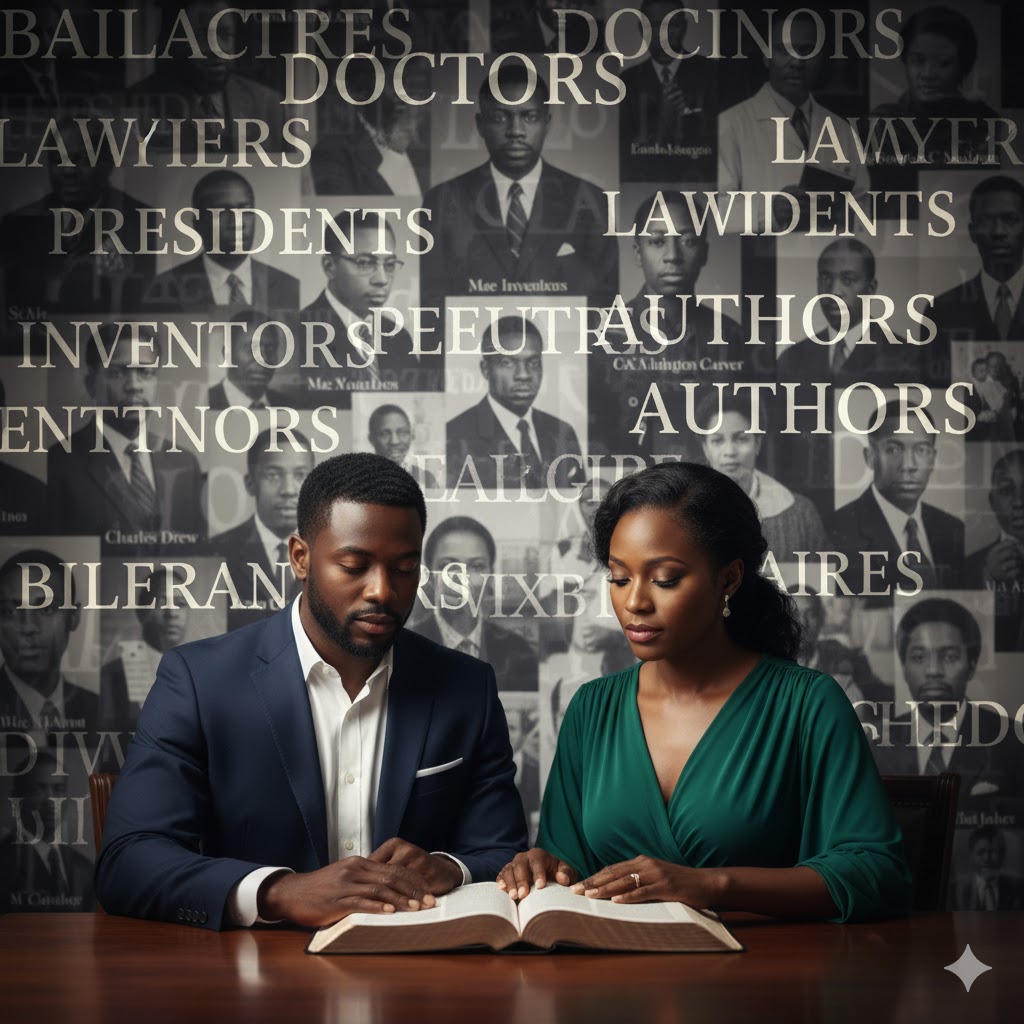
Black excellence is not a new phenomenon; it is rooted in ancestral achievement, resilience, and intellect. From ancient African kingdoms to contemporary leaders, Black people have consistently demonstrated creativity, leadership, and innovation.

Ancient African civilizations, such as Egypt, Mali, and Songhai, illustrate early examples of Black excellence. Scholars, architects, and leaders established governance, education, and culture that influenced the world for centuries.

Mansa Musa of Mali exemplifies wealth, diplomacy, and vision. His pilgrimage to Mecca in the 14th century demonstrated both economic and spiritual influence, leaving a legacy of leadership and philanthropy that inspires to this day.

Black excellence also manifests in scholarship. Thinkers like W.E.B. Du Bois and Carter G. Woodson challenged oppressive narratives, documented history, and created intellectual foundations for future generations.

In the arts, Black people have transformed music, literature, and visual culture. The Harlem Renaissance marked a period where artists like Langston Hughes and Zora Neale Hurston defined cultural expression and intellectual pride.

Science and innovation reveal Black excellence in problem-solving and creativity. Katherine Johnson’s calculations were critical to NASA missions, while George Washington Carver revolutionized agriculture through research and innovation.

Athletics has provided another platform for Black excellence. Athletes like Jackie Robinson, Serena Williams, and Usain Bolt have combined talent with resilience, breaking barriers while inspiring global audiences.

In politics, figures such as Nelson Mandela and Barack Obama have reshaped leadership paradigms. Mandela’s struggle against apartheid demonstrated moral and strategic excellence, while Obama’s presidency represented historic achievement on a global scale.

Black excellence is spiritual as well as practical. Leaders like Martin Luther King Jr. and Fannie Lou Hamer combined faith with activism, demonstrating that moral courage and spiritual conviction are integral to leadership.

In entertainment, actors, musicians, and filmmakers have redefined representation. Figures like Sidney Poitier, Lupita Nyong’o, and Kendrick Lamar have showcased Black creativity, storytelling, and cultural depth.

Education remains a key area of influence. Historically Black Colleges and Universities (HBCUs) have nurtured excellence for generations, producing scholars, leaders, and professionals who continue to shape society.

Entrepreneurship highlights resilience and ingenuity. Black-owned businesses, past and present—from the Greenwood District of Tulsa to modern ventures—demonstrate wealth creation, innovation, and community empowerment.

Fashion and beauty illustrate cultural influence. Black designers and models have challenged Eurocentric standards, celebrating diversity, creativity, and aesthetic innovation while inspiring global trends.

Literature continues to shape thought and culture. Contemporary writers like Chimamanda Ngozi Adichie, Ta-Nehisi Coates, and Colson Whitehead explore identity, history, and social critique, continuing a legacy of intellectual excellence.

Black excellence is global. From African leaders to diasporic creatives, Black influence spans continents, demonstrating a shared heritage of achievement and innovation that transcends borders.

Technology and STEM fields are modern arenas of Black excellence. Innovators in AI, medicine, and engineering challenge stereotypes and contribute meaningfully to global progress while inspiring the next generation.

Black excellence is also communal. Mentorship, advocacy, and activism show that achievement is not just personal but collective. Leaders invest in the growth and empowerment of others, ensuring that excellence multiplies across generations.

The spiritual dimension of excellence emphasizes integrity, vision, and resilience. True Black excellence harmonizes personal talent with service, using gifts for community upliftment and societal transformation.

Black excellence endures despite adversity. Generations of oppression, discrimination, and marginalization have not diminished Black brilliance; they have refined it, producing leaders, creatives, and thinkers of exceptional character.

Ultimately, the legacy of Black excellence is both inspiration and responsibility. It reminds communities and the world that Black people have always contributed to civilization, culture, and human progress, and they continue to shape the future through intellect, creativity, and resilience.


References

Diop, C. A. (1989). The African origin of civilization: Myth or reality. Lawrence Hill Books.

Gates, H. L. (2011). In search of our roots: How 19 extraordinary African Americans reclaimed their past. Crown.

Hine, D. C., McCluskey, A. T., & McDaniel, A. (2012). The African American odyssey. Pearson.

Woodson, C. G. (2021). The mis-education of the Negro. Dover.

West, C. (2017). Race matters. Beacon Press.

Tutu, D., & Tutu, M. (2014). The book of forgiving: The fourfold path for healing ourselves and our world. HarperOne.

The Proper Etiquette Series: How to Sit Properly?

Sitting properly is one of the most foundational elements of etiquette, communicating poise, confidence, and self-respect without a single word spoken. Whether in professional, social, or formal settings, the way a woman sits creates an immediate impression. Proper posture reflects inner discipline, elegance, and an understanding of decorum—qualities that never go out of style.

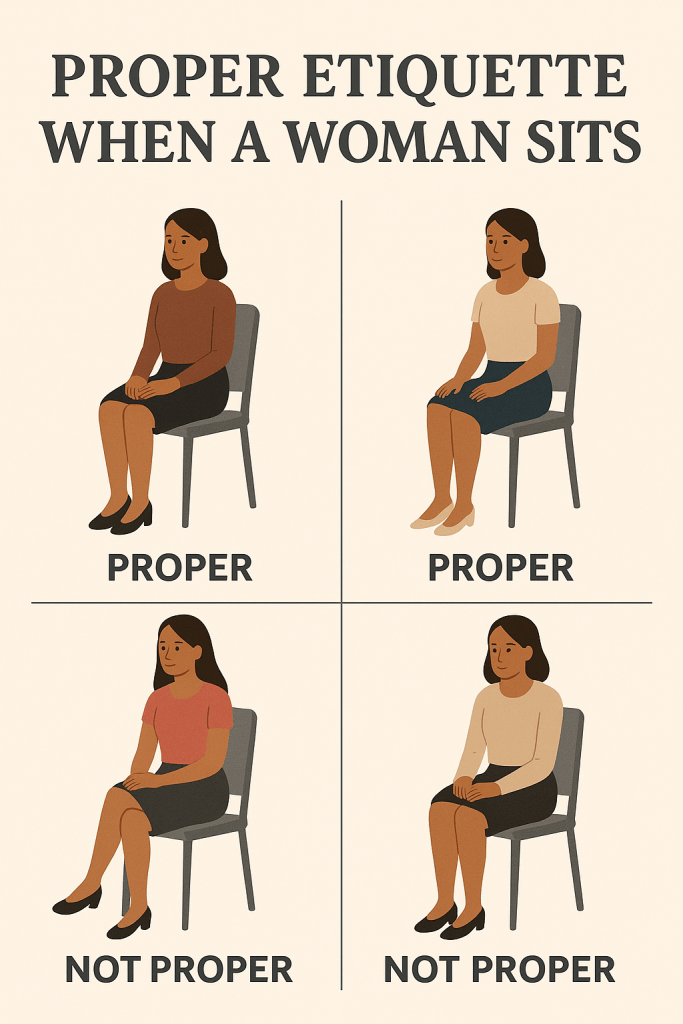
A proper seated posture begins with how one approaches the chair. Instead of collapsing into the seat or sitting hastily, a woman should move with intention and grace. She steps toward the chair, turns slightly, and lowers herself gently with control, keeping her back straight as she sits. This simple act sets the tone for polished behavior.

Once seated, posture becomes key. The back should remain straight with the shoulders relaxed, avoiding both stiffness and slouching. Good posture not only looks refined but also conveys attentiveness and dignity. It supports healthy breathing and reduces strain on the spine, merging etiquette with physical wellness.

Leg placement is one of the most important elements of proper sitting etiquette. There are two traditionally accepted positions: the “duchess slant” and the “ankle cross.” In the duchess slant, the knees are kept together while the legs are angled slightly to one side—soft, feminine, and modest. In the ankle cross, the knees remain together while the ankles are crossed discreetly. Both positions maintain modesty and balance.

What should be avoided are positions that convey carelessness or lack of awareness. This includes sitting with knees apart, legs wide, or slouching deeply into the seat. While modern culture sometimes normalizes casual posture, traditional etiquette emphasizes composure, especially in settings requiring professionalism or formality. How one sits reflects how one values the environment and the company present.

Hand placement also contributes to overall poise. Hands should rest lightly on the lap—never fidgeting, tapping, or gripping the seat. Gentle stillness communicates confidence and calm. Avoiding restless movements prevents unnecessary distractions and keeps the posture looking serene and controlled.

In skirt or dress attire, proper sitting technique becomes even more essential. A woman should subtly smooth her clothing beneath her as she sits to avoid wrinkling and to maintain coverage. Crossing the legs at the knee is traditionally discouraged for formal settings because it may appear overly casual or create wardrobe challenges, whereas the duchess slant remains universally polished.

Awareness of one’s environment is also part of correct etiquette. Whether at dinner, in a meeting, or at a ceremony, a woman should sit in a way that does not intrude upon the space of others. Leaning excessively, swinging legs, or resting arms over chair backs can appear disrespectful. Elegance remains controlled, balanced, and contained.

Body language completes the picture. A proper seated posture includes calm facial expression, gentle eye engagement, and a composed presence. Sitting correctly enhances communication by allowing others to see the individual as attentive, confident, and respectful. Etiquette is as much about what one conveys silently as what one speaks aloud.

Ultimately, sitting properly is an art that merges modesty, poise, and mindfulness. It elevates everyday behavior into purposeful elegance. When a woman understands how to sit with grace, she communicates not only refinement but also self-dignity—two traits that remain timeless across cultures and eras. Proper etiquette is not about restriction; it is about presenting oneself with honor and intentionality.


References

Bixler, S. (2018). The etiquette edge: Modern manners for business success. HarperCollins.

Forni, P. M. (2002). Choosing civility: The twenty-five rules of considerate conduct. St. Martin’s Press.

Hixson, K. (2016). The art of poise: Graceful living in a modern world. Etiquette Press.

Post, P. (2021). Emily Post’s etiquette (19th ed.). HarperCollins.

Udall, A. (2015). The essentials of modern etiquette: Social graces for contemporary women. Silver Leaf Press.

Algorithmic Colorism: Digital Bias, Beauty Hierarchies, and the New Face of Discrimination.

Colorism has long shaped social, economic, and psychological realities within the global Black and Brown diaspora. But today, the battlefield has shifted into a new arena: technology. Algorithmic colorism refers to the ways digital systems — from social media filters to AI beauty ranking tools to facial recognition — reinforce, re-normalize, and amplify historic hierarchies based on skin tone. This phenomenon merges old prejudice with modern power, cloaking racial bias in the seeming objectivity of data and mathematics.

Historically, colorism was expressed through colonial power structures, slavery, caste systems, and Western beauty standards that privileged fair-skinned individuals. Digital technology, instead of dismantling these hierarchies, frequently embeds them deeper. The algorithm becomes the new overseer — sorting, elevating, suppressing, and shaping perceptions of beauty and humanity. What was once plantation logic now exists as platform logic.

Social media platforms reward certain facial types and color tones. Lighter skin often receives more visibility, engagement, and algorithmic boosting, while darker skin tones are frequently filtered out, shadow-suppressed, or made to appear lighter via “beauty” filters. These filters normalize Eurocentric features — slender noses, lighter skin, narrower jawlines — subtly training young users to internalize standards that privilege whiteness and proximity to whiteness.

Facial recognition systems also demonstrate measurable racial bias, particularly against dark-skinned women. MIT researcher Joy Buolamwini famously revealed that some systems misclassified darker-skinned women up to 35% more frequently than lighter-skinned men. In essence, the darker the skin, the less “visible” the person in digital systems. Invisibility becomes digital erasure — an electronic version of saying “you do not exist” or “you do not belong.”

This bias affects how people experience everyday life. From phone cameras that fail to recognize darker faces to auto-tagging tools misidentifying Black individuals as threats, algorithmic colorism has real-world consequences. It shapes hiring software, law enforcement databases, beauty industry AI, and academic proctoring tools that cannot detect the faces of darker-skinned test-takers. Prejudice becomes code.

Beauty, historically shaped by white supremacy and colonial order, is now shaped by machine learning. AI “beauty scoring” systems — often trained on databases of overwhelmingly white faces — routinely rank lighter-skinned individuals higher. In turn, these systems feed back into social media feedback loops, determining who is labeled “beautiful,” who gets platform attention, and who is pushed to the margins.

Colorism intersects with desirability politics. Young users internalize digital reinforcement, believing that lightness equals attractiveness and darker tones equal less value. As a result, algorithmic systems become silent teachers — instructing generations to view beauty through a skewed, Eurocentric lens. Thus, algorithmic colorism does not just reflect bias; it manufactures it.

Even within communities of color, digital platforms multiply existing color hierarchies. “Brown-skinned” and “yellow-bone” filters flood platforms, enabling the synthetic lightening of melanin and the idealization of mixed-race aesthetics. While dark skin remains celebrated in certain empowering artistic and cultural circles, algorithms often work counter to this empowerment, drowning out dark-skinned beauty under the weight of digital preference.

For the entertainment industry, algorithmic bias determines who is cast, whose music goes viral, and whose aesthetic the machine recognizes as marketable. Lighter-skinned artists often benefit from platform amplification. Meanwhile, darker-skinned artists — especially women — battle invisibility, tokenism, and algorithmic suppression. Technology becomes a gatekeeper and taste-maker.

This digital inequity extends to product design. Filters created primarily for lighter skin produce distortions on darker tones. Lighting and photography technologies in devices often privilege lighter subjects. Developers’ unconscious biases surface in pixels and code, shaping cultural preferences without public debate or consent. Invisibility becomes system design.

Algorithmic colorism also reinforces patriarchal beauty hierarchies. Women bear disproportionate burden as beauty-focused systems magnify color bias in dating algorithms, social media ranking, and digital marketplaces for modeling and branding. Dark-skinned women once again endure dual oppression — racism layered with colorism, now automated.

But resistance rises. Scholars, technologists, and activists call for algorithmic transparency, diverse coding teams, and ethical AI design. Movements centering melanin — from #MelaninMagic to #Unbothered — challenge the narrative. Yet resistance alone cannot match corporate scale; regulation, equity engineering, and truthful representation must follow.

The biblical warning in Psalm 82:2–4 resonates: “How long will ye judge unjustly, and accept the persons of the wicked? Defend the poor and fatherless: do justice to the afflicted and needy.” Injustice coded into digital systems becomes modern oppression requiring moral response, not just technological fixes.

True equity demands confronting the myth of algorithmic neutrality. Algorithms inherit human prejudice unless intentionally purified. Diversity in technology leadership is not cosmetic — it is mandatory for fairness. Ethical coding becomes civil rights work. Data justice becomes a spiritual and social mandate.

The next era of discrimination will not always wear white robes or badges. It will live in lines of code, camera lenses, and AI systems deciding who is visible, desirable, and worthy. The battleground is digital; the stakes are human. Society must choose whether technology reflects our worst biases or our highest ideals.

At stake is more than beauty — it is belonging, self-worth, and humanity’s reflection back to itself. Algorithmic colorism reveals a truth: systems are not neutral. They either liberate or oppress. The fight for melanin dignity continues — not only in streets and classrooms, but in servers, datasets, and screens shaping the modern soul.

Artificial intelligence must evolve beyond artificial bias. The future must honor melanin, not erase it. Beauty must expand beyond filters and code. And the digital world must reflect the full spectrum of humanity — in truth, not distortion.

The Digital Plantation

Colorism—the preferential treatment of lighter-skinned individuals within the same racial or ethnic group—has been a pervasive feature of Black history, tracing back to slavery, colonial hierarchies, and social stratification (Hunter, 2007). In contemporary society, this prejudice has evolved into digital forms, embedded within artificial intelligence, social media algorithms, and beauty standards. These manifestations continue to reinforce oppressive narratives that devalue darker-skinned Black individuals while elevating Eurocentric features.

Theologically, colorism mirrors the human tendency toward superficial judgment condemned in Scripture. The King James Version warns against favoritism: “My brethren, have not the faith of our Lord Jesus Christ, the Lord of glory, with respect of persons” (James 2:1, KJV). Similarly, the Apocrypha highlights the spiritual danger of human vanity and superficial valuation: “For the wickedness of man is great upon the earth” (Wisdom of Solomon 14:12, Apocrypha). Understanding the historical roots of colorism allows for meaningful reflection on both spiritual and societal dimensions of human prejudice.


Historical Roots of Colorism

1. Pre-Colonial African Societies

In many pre-colonial African societies, beauty and social status were complexly coded through hair, skin tone, and body adornment rather than strict hierarchies privileging lighter skin. However, as European colonial powers advanced, notions of skin tone became intertwined with proximity to power, wealth, and survival, laying the foundation for systemic colorism (Harris, 2015).

2. Slavery and the Plantation Hierarchy

During the transatlantic slave trade, slaveholders leveraged colorism as a tool of division. Mixed-race children of European slave owners and enslaved African women were often granted preferential treatment, lighter work duties, and social advantages (Hunter, 2007). This stratification fostered internalized oppression and a hierarchy privileging lighter skin that persisted long after emancipation.

3. Post-Emancipation and Media Representation

Colorism intensified in the 20th century through media, film, and advertising, which predominantly celebrated lighter-skinned Black individuals (Russell, Wilson, & Hall, 2016). The rise of Hollywood, beauty pageants, and commercialized ideals codified skin-tone biases that informed social mobility and cultural capital.


The Digital Plantation: AI and Modern Colorism

The metaphor of “The Digital Plantation” captures how contemporary technology—AI algorithms, facial recognition, and social media filters—perpetuates historical biases. AI systems trained on Eurocentric datasets tend to misclassify, underrepresent, or render invisible darker-skinned individuals (Buolamwini & Gebru, 2018). This represents a digital reincarnation of the same hierarchical systems that defined plantations, enforcing standards of beauty, intelligence, and value based on skin tone.

Visual Concept: The Digital Plantation

  • Foreground: Diverse Black individuals of varying skin tones interacting with smartphones and screens, some celebrated, some obscured by digital shadows.
  • Background: A plantation-like grid subtly overlaid with algorithmic code, symbolizing surveillance, ranking, and control.
  • Lighting: Warm golden light highlights lighter-skinned figures while darker-skinned figures sit in subtle shadow, representing algorithmic bias.
  • Symbolism: Broken chains and floating pixels suggest the potential for liberation from both historical and digital oppression.

Scriptural Reflection

Colorism and AI bias can be seen as modern manifestations of humanity’s spiritual blindness to equality and divine worth. The Scriptures provide moral guidance:

  • James 2:1 (KJV): Condemns favoritism based on appearance.
  • Wisdom of Solomon 14:12 (Apocrypha): Warns against the corruption of judgment by superficial values.
  • Genesis 1:27 (KJV): Affirms that all humans are made in God’s image, irrespective of skin tone.

From a theological perspective, resisting algorithmic colorism is not only a social imperative but a spiritual one, emphasizing justice, discernment, and honoring God’s creation.


Historical Timeline of Colorism → AI

EraManifestationEvidence & Scripture Integration
Pre-1500sCultural beauty diversity in AfricaHighlighted by ethnographic studies (Harris, 2015)
1500s-1800sSlavery, mixed-race privileging, plantation hierarchies“Owe no man any thing, but to love one another” (Rom 13:8, KJV)
1900sHollywood, advertisements, colorism in mediaSocial stratification codified, mirrors James 2:1 warnings
2000sSocial media, digital beauty filtersAlgorithmic reinforcement of bias, e.g., Buolamwini & Gebru (2018)
2020sAI and facial recognitionModern “Digital Plantation” reflecting historical hierarchies

Conclusion

Colorism, historically rooted in slavery and colonialism, persists today in digital landscapes through biased algorithms and representation systems. Addressing these inequities requires historical understanding, technical interventions in AI, and a theological commitment to justice and equality. Scripture, both canonical and apocryphal, provides a moral framework condemning favoritism and promoting the inherent dignity of every human being. The concept of the Digital Plantation visualizes these ongoing struggles, connecting past and present while advocating for liberation in both spiritual and technological realms.


References

  • Buolamwini, J., & Gebru, T. (2018). Gender shades: Intersectional accuracy disparities in commercial gender classification. Proceedings of Machine Learning Research, 81, 1–15.
  • Harris, A. P. (2015). Skin tone stratification and social inequality: Historical and contemporary perspectives. Oxford University Press.
  • Hunter, M. (2007). The persistent problem of colorism: Skin tone, status, and inequality. Sociology Compass, 1(1), 237–254.
  • Russell, K., Wilson, M., & Hall, R. (2016). The color complex: The politics of skin color in a new millennium. Anchor Books.

The Ebony Dolls: Rachel Stuart Baker

The Face of Island Stylee

These photographs are the property of their respective owners. No copyright infringement intended.

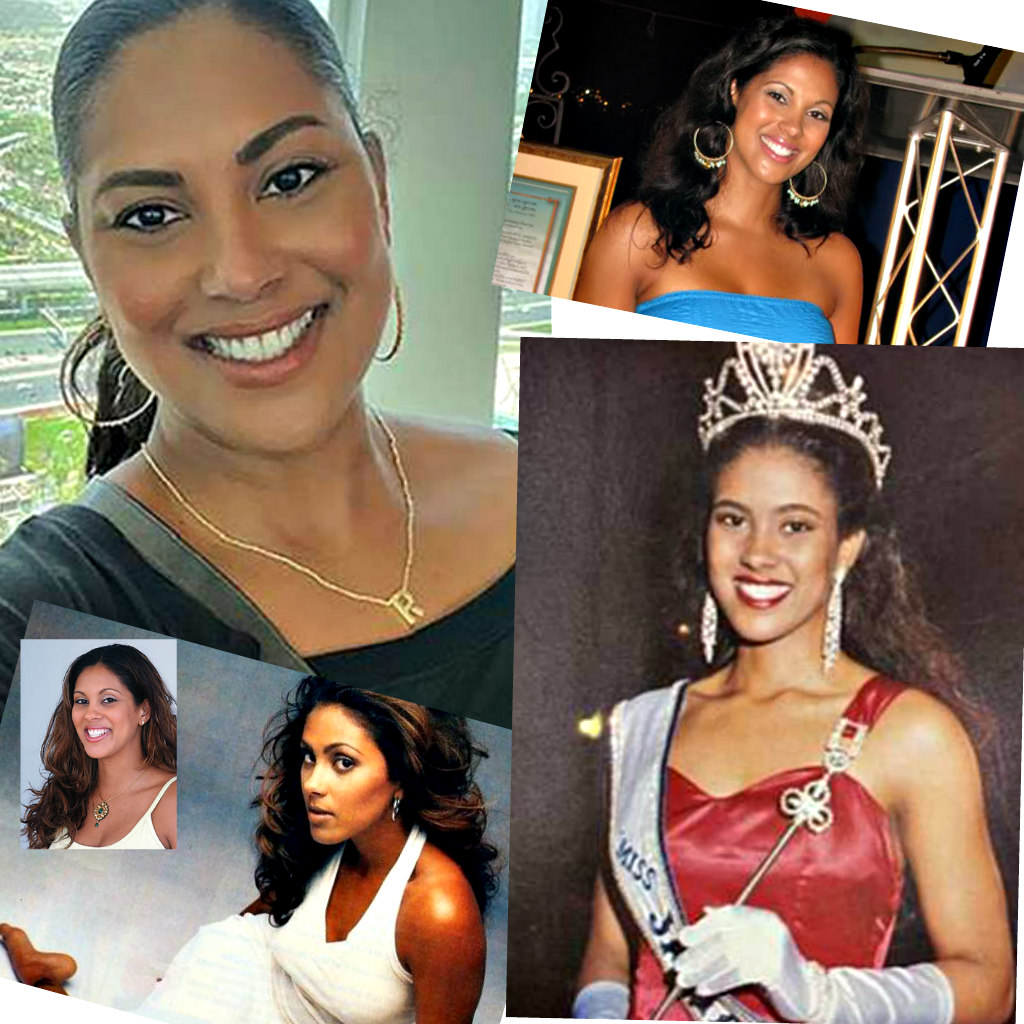
Born in the early 1970s, Rachel Stuart was born in Kingston, Jamaica. Rachel’s early life unfolded amidst vibrant island rhythms and a cross-cultural upbringing. She spent a portion of her childhood years in Canada before returning to Jamaica for her high school education, attending Stella Maris Preparatory School and Immaculate Conception High School. Jamaica Observer+1 Later, Mohawk College in Canada. As a young woman, she embraced both modelling and academic pursuits, eventually studying television broadcasting in Canada. Jamaica Observer

Rachel Stuart Baker stands as one of the most beloved television personalities of the 1990s, celebrated for her beauty, charisma, and cultural pride. Before she became the radiant face of BET, Rachel served in the Canadian Armed Forces—a little-known fact that highlights her strength, discipline, and patriotism. Her time in the military gave her a sense of order and confidence that later translated effortlessly onto television screens. It was this rare combination of elegance and resilience that made Rachel a standout figure in both media and life.

Her beauty and poise were recognized early on. In 1993, she claimed the title of Miss Jamaica Universe and represented her country at the 42nd Miss Universe pageant in Mexico. Jamaica Observer+1 Before that, she also won the Miss Caraïbes pageant, showcasing her regional prominence in Caribbean beauty competitions. Jamaica Observer+1

Transitioning from pageantry to media, Rachel brought her charm and credibility to the U.S. cable-television stage through BET (Black Entertainment Television). She became the host of Caribbean Rhythms, a pioneering program that spotlighted musicians and musical culture from across the Caribbean. Our Today+1 Her role on the show made her a cultural bridge—bringing Caribbean reggae, dance-hall, and soca artists into the American media consciousness.

Following her success on Caribbean Rhythms, Rachel also hosted BET’s Planet Groove, a show that leaned into music-video culture across R&B, soul, and urban genres. Our Today, these television roles leveraged both her polished on-screen presence and her deep connection to Caribbean heritage, making her a memorable personality in 1990s music television.

Rachel’s background as a Jamaican-Canadian model and actress further enriched her on-screen persona. She used her pageant experience, modelling background, and television training to navigate the entertainment industry with grace. Wikipedia+1 Her success underscored how beauty and brains can combine to create influence, especially as a woman of Caribbean descent on a major network.

Her impact on Caribbean music’s exposure to U.S. audiences cannot be understated. As one profile observed, via Caribbean Rhythms, she helped bring artists like Buju Banton and Beenie Man into greater visibility, contributing to the broader global recognition of Caribbean music. Our Today, this cultural-curation role positioned her as more than a host—she became an ambassador of Caribbean entertainment.

In the 1990s, Rachel became synonymous with Black Entertainment Television (BET), emerging as one of the network’s most iconic hosts. She first gained recognition as the host of Caribbean Rhythms, a vibrant program that spotlighted the beauty and beats of the Caribbean diaspora. With her smooth voice, radiant smile, and island flair, she brought reggae, soca, and dancehall into millions of American homes. Rachel wasn’t just a host—she was a cultural ambassador, connecting Caribbean talent to the world stage.

Her presence on Caribbean Rhythms made her the heartbeat of Caribbean representation in American television. Men across the United States and the Caribbean often called her their “#1 crush,” captivated by her exotic beauty, warm energy, and natural charm. She embodied the ideal of feminine confidence—never forced, never pretentious, but authentically radiant. Whether she was interviewing Shabba Ranks, Buju Banton, or Beenie Man, Rachel exuded joy and pride in showcasing the rhythms of her heritage.

As her popularity soared, Rachel expanded her reach within BET. She hosted Planet Groove, Live from LA, and appeared on BET Soundstage and Video Vibrations, each show adding to her dynamic portfolio. With every role, she left an indelible mark—her laughter, elegance, and Caribbean cadence became part of the network’s golden era. Fans tuned in not only for the music but for Rachel herself, whose magnetic personality brought warmth and authenticity to every broadcast.

Beyond her television career, Rachel’s background as a Jamaican-born, Canadian-raised woman gave her a unique cultural identity. Her journey from Kingston, Jamaica, to Canada, and then to American television reflected the vibrant intersection of cultures that shaped her worldview. She had already made history in 1993 as Miss Jamaica Universe, proudly representing her island on the global stage. Her military experience in Canada only deepened her resilience and discipline, traits that served her well in the competitive entertainment industry.

Rachel’s beauty was never merely external—it was a reflection of her confidence and spirit. With her caramel complexion, radiant smile, and captivating presence, she redefined what it meant to be a Caribbean woman in mainstream media. She embodied both sophistication and island fire, inspiring young women to embrace their cultural roots while pursuing global excellence.

Off-screen, Rachel found love and marriage with Paxton Baker, a respected and prominent executive at BET who served as President of BET Event Productions and other leadership roles within the network. Their union symbolized not only romance but also shared purpose, as both were instrumental in elevating Black entertainment and music television. Together, they have three children and have built a family rooted in faith, creativity, and service. The family has maintained a connection to Rachel’s Jamaican roots, as Rachel continues to visit Jamaica and participate in cultural engagements. Jamaica Observer+1 Rachel later chose to step away from the spotlight to focus on motherhood and community work, demonstrating that fulfillment goes beyond fame.

Even after leaving BET, her legacy endures. Fans from across the diaspora still recall her laughter, her energy, and her trailblazing presence that opened doors for future Caribbean hosts and artists. In interviews, Rachel has expressed gratitude for her years on BET, calling them some of the most exciting times of her life. Her voice and influence continue to echo across generations of Black entertainment and Caribbean pride.

Today, Rachel Stuart Baker remains a symbol of timeless beauty, poise, and authenticity. Her journey—from a disciplined Canadian soldier to a beloved Caribbean media star—is one of resilience, grace, and purpose. She proved that a woman could be beautiful, bold, and brilliant all at once, without compromising her values or cultural identity.

Rachel’s name evokes nostalgia for an era when BET was a cultural hub for music, pride, and Black excellence. She remains, to many, the unforgettable face of that time—the Caribbean queen who lit up screens and hearts alike, with a smile that still defines an entire generation of television magic.

In recent years, Rachel has shifted from high-profile television hosting to focus more on her family, charitable work, and cultural advocacy. According to interviews, she left BET to “grow my family” and has since been involved with theatre programs, food banks, orphanages, and school fundraising. Jamaica Observer Despite stepping back from daily television, her past work remains influential among Caribbean and urban media audiences.

Her legacy is one of beauty, substance, and cultural connectivity—a woman who moved from pageant queen to media host to family advocate, all while maintaining authenticity and pride in her heritage. Rachel Stuart Baker remains a symbol of how Caribbean-born talent has impacted mainstream U.S. entertainment, especially in amplifying the voices of Caribbean artists and culture.

References

  • “Rachel Stuart Baker: 30 years after Miss Jamaica Universe.” Jamaica Observer, March 12, 2023. Jamaica Observer
  • “Whatever happened to Rachel? … former Caribbean Rhythms host enjoying family life.” Our.Today, October 15, 2025. Our Today
  • “Rachel Stuart – Wikipedia.” Wikipedia
  • “Catchin’ Up With BET Alumnus Rachel Stuart-Baker of ‘Caribbean Rhythms’.” WHUR, date unspecified. whur.com
  • BET Archives: Caribbean Rhythms, Planet Groove, Live from LA, BET Soundstage (1993–2000).

Dating in the Digital Age: Social Media, Apps, and Pressure.

Photo by Tochukwu Ekeh on Pexels.com

The landscape of modern dating has been dramatically reshaped by technology, particularly social media and dating apps. While these platforms provide unprecedented access to potential partners, they also introduce new pressures, expectations, and psychological challenges. For Black women navigating this digital terrain, the intersection of race, beauty standards, and social perception adds additional layers of complexity to dating and relationship-building.

Social media platforms such as Instagram, TikTok, and Facebook function as public stages where attractiveness, social status, and desirability are constantly evaluated. Users curate idealized versions of themselves through carefully selected photos, filters, and content. This environment creates pressure to conform to socially approved beauty standards and to appear perpetually attractive and engaging. The curated nature of these profiles can lead to unrealistic expectations, social comparison, and a heightened focus on physical appearance rather than character or compatibility (Valkenburg & Peter, 2009).

Dating apps such as Tinder, Bumble, and Hinge promise convenience and a broader dating pool but often reinforce shallow or appearance-based judgments. The swipe-based interface encourages rapid assessment of potential partners based primarily on photos, while algorithms may perpetuate biases, including racial preferences or skin-tone bias (Toma et al., 2008). For Black women, this means navigating a dating environment where colorism and Eurocentric beauty ideals may influence who engages with them and who ignores them, affecting self-esteem and perceived desirability.

Digital Dating Toolkit: Navigating Social Media and Apps with Confidence

1. Ground Yourself in Self-Worth

  • Remember that your value is rooted in your character, faith, and God-given identity, not in likes, matches, or comments.
  • “Charm is deceitful, and beauty is vain: but a woman that feareth the Lord, she shall be praised” (Proverbs 31:30, KJV).
  • Practice daily affirmations: “I am fearfully and wonderfully made” (Psalm 139:14).

2. Set Clear Boundaries

  • Decide in advance what behaviors are acceptable and what is not (e.g., respect for your time, communication style, language).
  • Avoid engaging with individuals who pressure you into sharing personal information too quickly.
  • Limit the time spent scrolling or swiping to avoid decision fatigue and emotional drain.

3. Identify Red Flags

  • Excessive focus on appearance over personality, faith, or values.
  • Rushing intimacy or pressuring you to meet offline too soon.
  • Lack of respect for boundaries or consistent inconsistency in communication.
  • Evidence of past infidelity, controlling behavior, or narcissistic tendencies.

4. Evaluate Character, Not Just Photos

  • Use apps as a tool, but prioritize conversations that reveal values, emotional intelligence, and life goals.
  • Ask questions about faith, family, career, and ethics to assess compatibility.
  • Avoid assuming that digital charm equates to sincerity.

5. Protect Emotional Health

  • Take breaks from apps when feeling drained or discouraged.
  • Avoid comparing your profile, looks, or desirability to others online.
  • Seek therapy or support groups if feelings of rejection, low self-esteem, or anxiety arise.

6. Navigate Colorism and Bias Awareness

  • Be aware that racial and skin-tone biases may influence interactions online.
  • Celebrate your natural beauty, skin tone, and authentic self through hashtags or communities like #BlackGirlMagic and #MelaninMagic.
  • Avoid internalizing negative feedback or lack of engagement based on appearance.

7. Prioritize Safety

  • Keep personal information private until trust is established.
  • Meet in public spaces if you decide to meet someone offline.
  • Inform a trusted friend or family member of your plans.

8. Faith-Based Practices

  • Pray for discernment in evaluating potential partners: “Trust in the Lord with all thine heart; and lean not unto thine own understanding” (Proverbs 3:5, KJV).
  • Meditate on scriptures about love, patience, and wisdom before engaging in dating.
  • Seek guidance from a faith community or mentor when unsure about a relationship.

9. Celebrate Wins and Self-Care

  • Acknowledge small victories: meaningful conversations, consistent boundaries, and self-respect.
  • Engage in self-care routines that reinforce confidence: exercise, grooming, journaling, and pursuing passions.
  • Remember: being single while maintaining standards is a strength, not a weakness.

10. Keep Perspective

  • Dating apps are a tool, not a measure of worth.
  • Focus on long-term compatibility rather than instant validation.
  • Trust that the right partner will value your character, faith, and authenticity.

The psychological pressures of digital dating are significant. Constant exposure to profiles and potential matches can create decision fatigue, where the abundance of choice makes commitment more difficult. Additionally, the instant nature of communication encourages rapid emotional investment and can exacerbate rejection sensitivity. For Black women, who already contend with societal biases, these pressures may intensify feelings of inadequacy or invisibility (Finkel et al., 2012).

Social media also amplifies the fear of missing out (FOMO), as individuals witness curated portrayals of others’ relationships, vacations, and successes. These comparisons can lead to anxiety, self-doubt, and impatience in the pursuit of a partner. The need to present a polished, “dateable” persona online may conflict with authentic self-expression, creating cognitive dissonance and emotional stress.

Moreover, digital platforms can foster superficiality in partner selection. Research suggests that users prioritize appearance and performative qualities over deeper compatibility factors such as values, faith, or emotional intelligence (Ward, 2016). For women seeking long-term, meaningful partnerships, this dynamic can result in frustration, repeated short-term relationships, and difficulty discerning sincere intentions.

The Bible provides guidance that counters these modern pressures. “Charm is deceitful, and beauty is vain: but a woman that feareth the Lord, she shall be praised” (Proverbs 31:30, KJV). This verse emphasizes that enduring value comes from character and spiritual integrity, not physical appearance or online popularity. For women navigating the digital dating landscape, grounding self-worth in faith rather than external validation is essential.

Strategies to mitigate the pressures of digital dating include setting clear personal boundaries, limiting time spent on apps, and focusing on values-based criteria for evaluating potential partners. Mindful social media consumption, self-affirmation practices, and prioritizing offline connections can reduce the anxiety associated with online dating. Psychological research also supports the importance of self-compassion and resilience in managing rejection and perceived inadequacy (Neff, 2003).

It is also critical for Black women to recognize how systemic biases may influence digital interactions. Awareness of colorism, racial fetishization, and gendered stereotypes empowers women to navigate the online dating world without internalizing harmful messages. Communities and movements that celebrate Black beauty, such as #MelaninMagic and #BlackGirlMagic, provide affirmation and counteract societal pressures.

In conclusion, dating in the digital age presents both opportunities and challenges. While social media and dating apps expand access to potential partners, they also amplify pressures related to appearance, social validation, and racial bias. By grounding self-worth in character and faith, establishing boundaries, and cultivating self-awareness, Black women can navigate these platforms with confidence, resilience, and intentionality. The integration of psychological insight and biblical guidance provides a framework for pursuing meaningful, authentic relationships in an era dominated by digital perception.


References

  • Finkel, E. J., Eastwick, P. W., Karney, B. R., Reis, H. T., & Sprecher, S. (2012). Online dating: A critical analysis from the perspective of psychological science. Psychological Science in the Public Interest, 13(1), 3–66.
  • Hunter, M. (2002). If you’re light you’re alright: Light skin color as social capital for women of color. Gender & Society, 16(2), 175–193.
  • Neff, K. D. (2003). Self-compassion: An alternative conceptualization of a healthy attitude toward oneself. Self and Identity, 2(2), 85–101.
  • Toma, C. L., Hancock, J. T., & Ellison, N. B. (2008). Separating fact from fiction: An examination of deceptive self-presentation in online dating profiles. Personality and Social Psychology Bulletin, 34(8), 1023–1036.
  • Valkenburg, P. M., & Peter, J. (2009). Social consequences of the internet for adolescents: A decade of research. Current Directions in Psychological Science, 18(1), 1–5.
  • Ward, J. (2016). Swiping, liking, and connecting: Understanding the psychology of online dating. Current Opinion in Psychology, 9, 30–35.
  • The Holy Bible, King James Version.