
Tag Archives: Smart Brown Girl Series

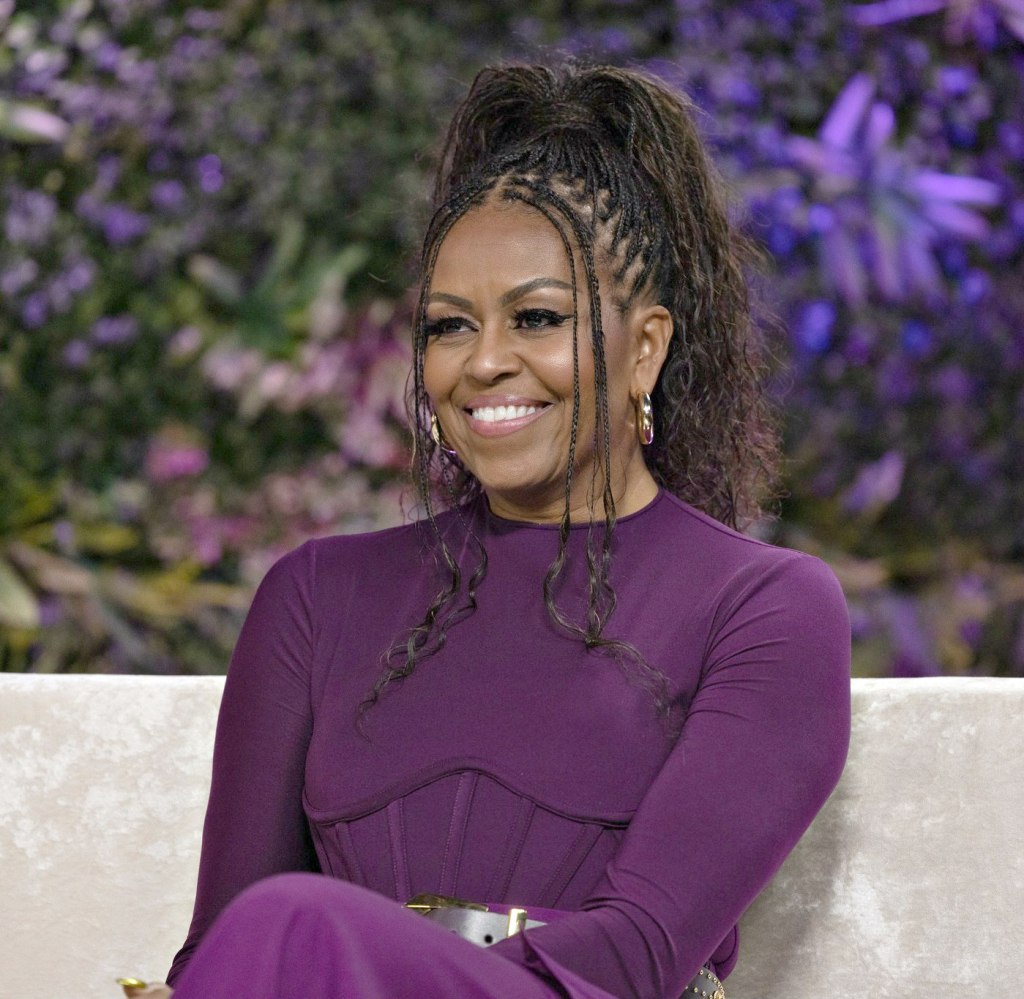
Smart Brown Girl Series: Michelle Obama – Grace in Leadership. Power in Purpose

This photograph is the property of its respective owner. No copyright infringement intended.

Michelle LaVaughn Robinson Obama is one of the most inspirational figures of our era—a woman whose intellect, leadership, and voice have resonated globally. Born on January 17, 1964, on Chicago’s South Side, Michelle was raised by hardworking parents who valued education, discipline, and service. From an early age, she exhibited academic promise and a commitment to excellence.

She attended Princeton University, where she majored in sociology and minored in African American studies, graduating with distinction. She went on to earn her Juris Doctor (J.D.) degree from Harvard Law School, where she further refined her analytical skills and deepened her understanding of the law and society. After law school, Michelle began her legal career in Chicago, where she also met her future husband, Barack Obama.

Michelle’s career has spanned law, public service, education, and advocacy. Early in her professional life, she worked in the Chicago city government and with nonprofit organizations focused on youth and community development. Her leadership abilities were evident long before she stepped onto the national stage.

Her role as First Lady of the United States (2009–2017) elevated her platform and impact. During her tenure, she championed evidence‑based public health initiatives, most notably Let’s Move!, a campaign addressing childhood obesity and promoting nutrition and physical activity nationwide. She also co‑founded the Joining Forces initiative to support military families and launched Reach Higher and Let Girls Learn to expand educational opportunities for youth, especially girls, around the world.

Michelle used her influence to reshape how Americans think about health, education, and family. She also established the White House vegetable garden to educate communities about healthy eating and food justice—an innovative and symbolic project that highlighted her commitment to communal well‑being.

Her communication skills—marked by clarity, warmth, and conviction—made her an admired public speaker. Her 2016 Democratic National Convention address, which included the phrase “When they go low, we go high,” became emblematic of her approach to adversity: principled, gracious, and resilient.

After her tenure in the White House, Michelle channeled her creativity and leadership into writing and media. Her 2018 memoir Becoming became a global bestseller, resonating with millions for its candid exploration of identity, purpose, and resilience. She later published The Light We Carry: Overcoming in Uncertain Times, offering reflections on confidence, community, and navigating life’s uncertainties.

Her storytelling extended into audio media. Michelle launched The Michelle Obama Podcast in 2020, featuring conversations with family, friends, and thought leaders about relationships, community, and personal development. She also developed Michelle Obama: The Light Podcast, based on her book The Light We Carry, which explored similar themes through personal narratives and interviews.

In 2025, Michelle expanded her media presence with a new podcast co‑hosted with her older brother, Craig Robinson, titled IMO with Michelle Obama & Craig Robinson. On this project, they bring their sibling bond to bear on everyday dilemmas, life lessons, and candid conversations about relationships, family, purpose, and personal growth. The podcast is produced by Higher Ground Productions and features a range of guests and topics that emphasize authenticity, humor, and wisdom. The show is available on platforms like YouTube, Apple Podcasts, and Spotify and includes episodes where even former President Barack Obama appears as a guest, illustrating the depth of conversation and familial rapport.

This sibling venture offers Michelle at her most relaxed and relational, demonstrating how her intelligence and insight translate beyond policy and into everyday life.

Michelle continues to engage in philanthropy, storytelling, and mentorship through the Obama Foundation, promoting leadership, civic engagement, and global outreach. Her work focuses on empowering girls and young women through education and opportunity, reinforcing the idea that inclusive leadership is vital to societal progress.

In addition to her media and nonprofit efforts, Michelle remains a cultural influencer. Through public speaking, live events, and social media engagement, she continues to shape discourse on equity, resilience, and intentional living. Her candid discussions about identity, confidence, and community foster connection and inspiration across generations.

Michelle’s legacy is also firmly rooted in her partnership with Barack Obama. Together, they co‑founded Higher Ground Productions, a media company dedicated to uplifting diverse voices and sharing stories that entertain, educate, and inspire. Under their leadership, Higher Ground has produced acclaimed projects, including documentaries and series that highlight underrepresented narratives.

As a mother of two girls, Sasha & Malia, author, advocate, and communicator, Michelle’s journey reflects disciplined intelligence, emotional depth, and the power of service over self. Her story models how individuals can leverage intellect and empathy to create meaningful impact in both private and public arenas.

Her inclusion in the Smart Brown Girl Series honors her scholastic achievement, cultural influence, and dedication to uplifting others—especially young women who see in her example a template for leadership without compromise.

Today, Michelle remains an active voice in public life. Beyond her podcast work with her brother Craig Robinson, she engages audiences through speaking engagements, literary events, and community partnerships, continually advocating for education, empowerment, and thoughtful engagement with the world around us.

Her life demonstrates that true influence flows not just from titles held but from the courage to speak honestly, the wisdom to listen deeply, and the commitment to serve others with integrity and heart.

References

  • Michelle Obama (personal biography and career overview). Wikipedia. en.wikipedia.org
  • IMO with Michelle Obama & Craig Robinson podcast (Apple Podcasts & Spotify description). podcasts.apple.com
  • IMO with Michelle Obama & Craig Robinson launch and details on YouTube. youtube.com
  • Higher Ground Productions background and media activities. en.wikipedia.org
  • The Light We Carry book by Michelle Obama. en.wikipedia.org
  • Obama Foundation YouTube (general involvement and appearances). youtube.com

Smart Brown Girl Series: Introduction

Smart brown girls have always existed in a world that questions their intellect before it celebrates it. From early childhood, many learn that their intelligence must be proven repeatedly, often under scrutiny that their peers do not face. The phrase “smart brown girl” itself challenges stereotypes that have long attempted to separate Blackness from brilliance.

Historically, the intellectual capacities of brown girls were deliberately denied during slavery and segregation, when laws and customs criminalized their education. Yet even under such oppression, Black women taught themselves and others to read, preserved knowledge through oral traditions, and laid the foundations for future scholarship. Intelligence became an act of resistance rather than a luxury.

In modern educational spaces, smart brown girls frequently navigate conflicting expectations. Excellence is praised, but confidence is often misread as arrogance. Curiosity may be labeled as defiance, and leadership interpreted as aggression. These misinterpretations create emotional labor that smart brown girls must manage alongside academic demands.

Research shows that stereotype threat continues to impact Black girls’ educational experiences. When society expects less, achievement can feel isolating rather than empowering. Many smart brown girls learn to downplay their abilities to avoid social penalties, a phenomenon that reflects broader structural inequities rather than individual shortcomings.

Despite these barriers, smart brown girls consistently outperform expectations when given equitable support. Culturally responsive teaching and affirming environments reveal what has always been true: intelligence is not scarce among brown girls, opportunity is. When brilliance is nurtured rather than policed, confidence flourishes.

Media representation rarely reflects the full spectrum of brown girl intellect. Characters are often portrayed as sidekicks, caretakers, or comic relief rather than thinkers, innovators, and visionaries. This absence subtly informs public perception and shapes how brown girls imagine their own futures.

Psychologically, being both smart and brown requires resilience. Constantly navigating assumptions can lead to internalized doubt, even among high achievers. Yet many brown girls develop strong self-awareness and adaptability, skills forged through necessity rather than ease.

Family and community often serve as critical sources of affirmation. Intergenerational encouragement counters societal messages that question worth and capability. Grandmothers, mothers, teachers, and mentors have historically acted as intellectual guardians, reminding brown girls of who they are.

Faith traditions also play a powerful role in affirming intelligence. Scripture consistently associates wisdom with virtue, discernment, and divine favor. The Bible does not present wisdom as gendered or racialized but as a gift from God, accessible to those who seek it.

Proverbs declares wisdom to be the principal thing, emphasizing its supreme value. For smart brown girls, this challenges narratives that prioritize appearance or compliance over thoughtfulness and insight. Their minds are not incidental; they are sacred.

Womanist theology further affirms that Black women’s knowledge emerges from lived experience. Smart brown girls carry cultural, spiritual, and historical intelligence that textbooks often overlook. Their understanding of survival, justice, and care expands what counts as knowledge.

In classrooms, recognizing multiple forms of intelligence is essential. Academic success should not require cultural erasure. When brown girls are allowed to bring their full selves into learning spaces, their engagement deepens and their confidence strengthens.

Socially, smart brown girls are often expected to be strong without support. The “Strong Black Woman” trope can mask the emotional needs of intellectually gifted girls, discouraging vulnerability. True empowerment allows room for rest, curiosity, and joy.

Mentorship plays a transformative role in sustaining intellectual confidence. Seeing women who look like them thriving in academic, scientific, theological, and creative fields reinforces the possibility. Representation, when authentic, disrupts internalized limits.

Economically and politically, investing in smart brown girls yields collective benefit. Education, leadership training, and creative freedom strengthen communities. History repeatedly shows that when Black women advance, entire societies move forward.

Reclaiming the title “smart brown girl” is not about exceptionalism but truth-telling. It refuses deficit-based narratives and asserts that intelligence has always lived in brown skin. This reclamation is both personal and communal.

Self-definition is a radical act. When smart brown girls name themselves, they resist being defined by test scores, stereotypes, or external validation. Their worth is not contingent upon performance but inherent.

Healing involves unlearning the belief that brilliance must be hidden to be safe. Smart brown girls deserve environments where curiosity is welcomed and intellect is celebrated without penalty. Visibility should not require self-sacrifice.

Ultimately, the story of the smart brown girl is one of continuity. She is the descendant of women who learned in secret, taught in defiance, and dreamed without permission. Her intelligence is inherited, cultivated, and enduring.

To affirm smart brown girls is to honor truth. Their minds are powerful, their insights necessary, and their presence transformative. They are not anomalies; they are evidence. Smart brown girls are not becoming intelligent—they have always been so.


References

Collins, P. H. (2000). Black feminist thought: Knowledge, consciousness, and the politics of empowerment (2nd ed.). Routledge.

Crenshaw, K. (1991). Mapping the margins: Intersectionality, identity politics, and violence against women of color. Stanford Law Review, 43(6), 1241–1299.

Fordham, S., & Ogbu, J. U. (1986). Black students’ school success: Coping with the “burden of acting white.” The Urban Review, 18(3), 176–206.

hooks, b. (1994). Teaching to transgress: Education as the practice of freedom. Routledge.

Morris, M. W. (2016). Pushout: The criminalization of Black girls in schools. The New Press.

Muhammad, G. E. (2020). Cultivating genius: An equity framework for culturally and historically responsive literacy. Scholastic.

Steele, C. M. (2010). Whistling Vivaldi: How stereotypes affect us and what we can do. W. W. Norton & Company.

The Holy Bible, King James Version.

Williams, D. S. (1993). Sisters in the wilderness: The challenge of womanist God-talk. Orbis Books.

Cooper, A. J. (1892). A voice from the South. Aldine Printing House.