
Lightism, commonly referred to as colorism, is the systemic privileging of lighter skin within the Black community. Unlike racism, which operates across racial lines, colorism functions within the racial group, placing value on lighter pigmentation while devaluing darker skin tones. It manifests socially, economically, and psychologically, shaping perceptions of beauty, intelligence, and status.
Historically, light skin became esteemed due to colonialism and slavery. Enslaved Africans with lighter skin, often mixed-race offspring of enslaved women and European men, were sometimes granted preferential treatment, such as domestic roles instead of field labor. This hierarchy created a social precedent in which lighter skin was associated with proximity to power and privilege.
The legacy of slavery and colonialism established a generational hierarchy within the Black community. Light-skinned individuals were sometimes allowed greater access to education, resources, or social mobility. Over time, these historical inequities translated into cultural norms that valorize lighter skin.
Spike Lee’s film School Daze (1988) explores this phenomenon vividly. Set on a historically Black college campus, the film depicts a divide between light-skinned and dark-skinned students, highlighting intra-racial prejudice, social fragmentation, and internalized oppression. The narrative exposes how colorism affects relationships, self-esteem, and group solidarity.
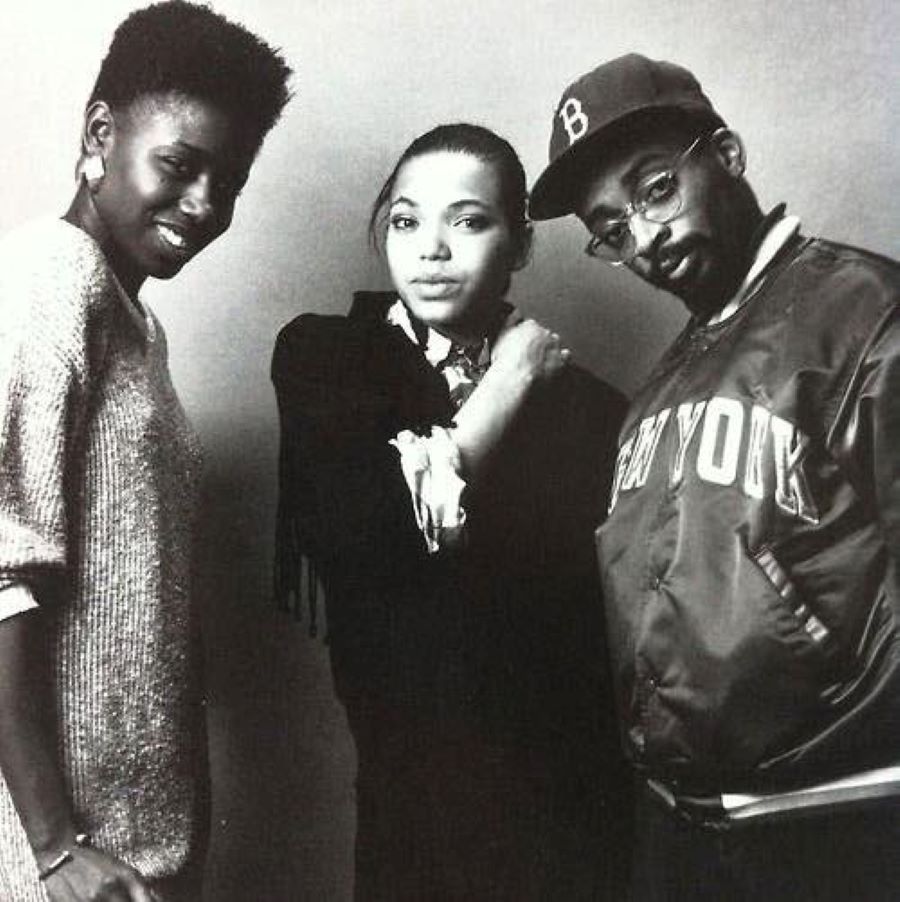
The message of School Daze is multifaceted. It critiques the ways Black people internalize societal beauty standards, encouraging audiences to recognize and resist internalized lightism. By portraying conflict between “pretty girls” with lighter skin and darker-skinned counterparts, Lee emphasizes the psychological and cultural damage of color-based favoritism.
Social psychology suggests that colorism impacts dating preferences, career opportunities, and media representation. Studies indicate that lighter-skinned Black women often receive more positive attention from peers and employers, perpetuating societal biases and reinforcing the notion that light skin equates to desirability or social capital.
Within the Black male dating paradigm, preferences often reflect internalized colorist ideals. While personal preference varies, research shows a disproportionate attraction to light-skinned women, influenced by media portrayal, historical conditioning, and societal messaging (Hunter, 2011). This preference affects self-perception and romantic dynamics within the community.
Skin-Lightening and Lightismlorism in the Black Community
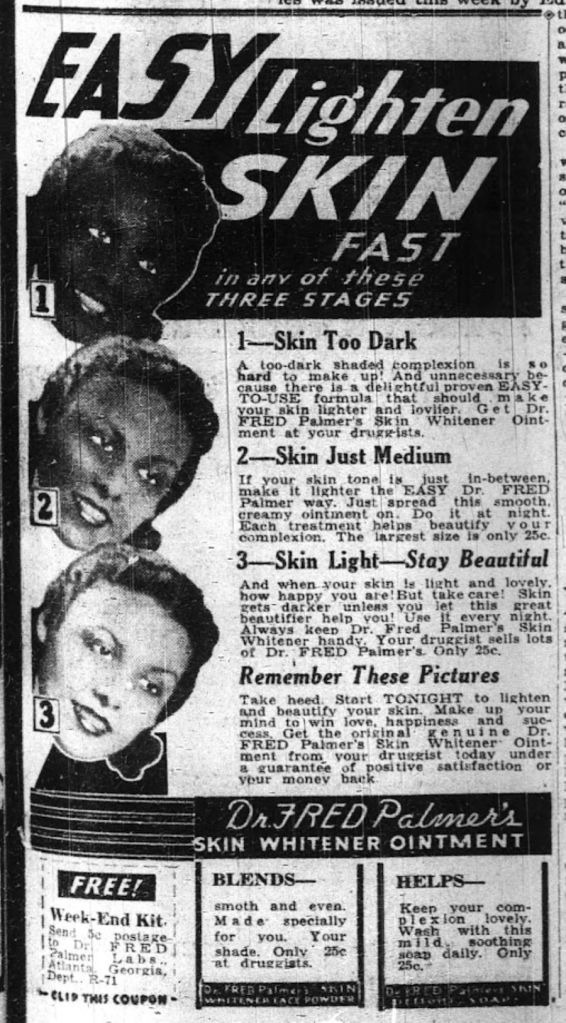
Skin-lightening, also called skin bleaching, is the practice of using chemical products, creams, or procedures to reduce melanin in the skin. Within the Black community, it often reflects internalized lightism: the belief that lighter skin confers beauty, social status, or economic advantage. Psychologically, this practice is linked to low self-esteem, internalized racism, and social pressure (Hunter, 2011).
Celebrities and ordinary individuals alike have historically felt pressure to conform to lighter-skinned beauty ideals. Skin-lightening can temporarily change appearance but does not address the underlying social and cultural biases. It is also associated with health risks, including skin irritation, scarring, and long-term systemic effects from chemical exposure.
Biblically, true beauty is not skin-deep. Psalm 139:14 (KJV) states: “I will praise thee; for I am fearfully and wonderfully made: marvellous are thy works; and that my soul knoweth right well.” This reinforces that self-worth and beauty come from God’s design, not pigmentation.
Celebrities have long commented on light vs. dark skin tensions. Lena Horne, an iconic performer, spoke openly about the privileges she experienced as a lighter-skinned Black woman and the societal biases she observed against darker-skinned peers. Horne’s reflections highlight the complex interplay of skin tone, opportunity, and discrimination within the Black community.
Vanessa L. Williams and Halle Berry, both light-skinned women who achieved international fame, have also discussed colorism. Berry acknowledged the rarity of dark-skinned lead actresses in Hollywood, while Williams spoke on the pressures to conform to Eurocentric beauty standards, revealing a tension between personal pride and societal expectation.
Lightism Companion Table
| Category | Example / Individual | Impact / Practice | Psychological Effect | Cultural / Media Reference |
|---|---|---|---|---|
| Celebrity Commentary | Lena Horne | Discussed privileges as light-skinned; highlighted colorism against darker peers | Awareness, advocacy for darker-skinned equality | Interviews, autobiographies |
| Celebrity Commentary | Halle Berry | Acknowledged rarity of dark-skinned actresses; faced pressure to conform to Eurocentric beauty | Identity negotiation, professional pressure | Public interviews, award speeches |
| Celebrity Commentary | Vanessa L. Williams | Experienced both acclaim and bias; criticized Hollywood’s narrow beauty standards | Stress, advocacy for diversity | Interviews, memoirs |
| Media Portrayal | School Daze (Spike Lee) | Light-skinned vs dark-skinned students; social division on campus | Low self-esteem, rivalry, internalized bias | 1988 film |
| Historical Influence | Colonial / Slavery Era | Lighter-skinned enslaved individuals often favored | Internalized hierarchy within the Black community | Hall, 2010; Hunter, 2011 |
| Skin-Lightening Practices | General population | Chemical creams, cosmetic procedures | Temporary perceived social advantage, long-term self-esteem issues, health risks | Hunter, 2011; Joseph, 2019 |
| Dating Preferences | Black men / studies | Higher attraction to light-skinned women in some surveys | Reinforces color-based desirability hierarchy | Hunter, 2011; Joseph, 2019 |
| Social Hierarchies | Workplace / media | Lighter skin receives more visibility and opportunity | Job access, promotion disparity, perceived intelligence | Hall, 2010; Encyclopedia of African-American Society, 2005 |
| Psychological Effects | Adolescents & adults | Internalized colorism | Depression, self-consciousness, peer rivalry | Joseph, 2019; Hunter, 2011 |
| Counter-Movement | Natural hair & melanin pride | Celebrates darker skin tones and natural beauty | Self-acceptance, cultural pride | Social media campaigns, cultural movements |
Light-skinned Black women have offered varied perspectives. Some recognize the privileges light skin confers but advocate for solidarity and consciousness-raising around colorism. Others admit to internalizing societal messages, reflecting the pervasive nature of beauty hierarchies and the difficulty of transcending ingrained biases.
Media and pop culture amplify lightism by consistently favoring lighter-skinned Black actors, models, and singers. This visibility reinforces perceptions of desirability tied to pigmentation, marginalizing darker-skinned individuals and perpetuating social inequities in representation.
Colorism also intersects with economics. Studies indicate that lighter-skinned individuals often earn higher wages and experience more upward mobility than their darker-skinned peers, a phenomenon documented in both the U.S. and globally (Hall, 2010). This reinforces lightism as a systemic issue beyond personal preference.
School Daze illustrates that colorism also affects mental health. Characters experience insecurity, rivalry, and alienation due to skin tone, reflecting real-life experiences where darker-skinned Black individuals internalize negative societal messaging, leading to depression, low self-esteem, or identity conflict.
Psychologically, colorism reinforces intra-racial hierarchies, which can fracture community cohesion. When lighter skin is idealized, it creates an implicit standard of value, marginalizing those who do not conform and perpetuating shame for darker-skinned members.
Biblically, all humans are created in the image of God (Genesis 1:27, KJV). This principle underscores the spiritual equality of all individuals, countering societal messages that link worth to pigmentation. Scriptures remind believers that true beauty is rooted in righteousness and character, not skin tone (1 Samuel 16:7, KJV).
Racism and colorism together compound disadvantage. While racism targets Black people from outside the community, colorism enforces internal stratification, creating layers of oppression that influence education, relationships, and self-perception.
Historically, colorism shaped Hollywood and entertainment industries. Darker-skinned actors were often cast in villainous or subservient roles, while light-skinned performers received leading roles, reinforcing social hierarchies through media narratives.
School Daze also addresses economic implications. Lighter-skinned characters are depicted as more socially and professionally favored, reflecting real-world dynamics where pigmentation can affect employment, income, and status within Black institutions.
Black men’s stated preferences for lighter-skinned women are influenced by media, history, and internalized oppression, but there is also a counter-narrative of embracing darker beauty. Movements like the natural hair movement and campaigns celebrating melanin-rich skin attempt to challenge these biases and uplift all shades of Black beauty.
In conclusion, lightism is a complex cultural, psychological, and historical phenomenon. Its effects permeate self-esteem, interpersonal relationships, media representation, and economic opportunity within the Black community. Addressing colorism requires conscious reflection, cultural awareness, and a return to biblical and ethical principles that affirm the worth of all individuals, regardless of skin tone.
References
References
- Hall, R. E. (2010). The Melanin Millennium: Skin Color as 21st Century International Discourse.
- Hunter, M. (2011). Buying Racial Capital: Skin-bleaching and Cosmetic Surgery in a Globalized World.
- Lee, S. (Director). (1988). School Daze [Film]. Columbia Pictures.
- Encyclopedia of African-American Society. (2005). Colorism in the Black Community. Sage Publications.
- The Holy Bible, King James Version. Genesis 1:27; 1 Samuel 16:7; James 2:1–4.
- Joseph, A. (2019). Black Beauty Standards and Colorism in America. Journal of African-American Studies, 23(4), 456–472.
- Hall, R., & Hunter, M. (2009). Skin Tone, Identity, and Social Stratification in African-American Communities.
- The Holy Bible, King James Version. Genesis 1:27; 1 Samuel 16:7; James 2:1–4; Psalm 139:14.
- Tate, S. (2009). Black Beauty: Aesthetics, Colorism, and Identity in African-American Culture. University Press of Mississippi.
- Russell-Cole, K., Wilson, M., & Hall, R. (2013). The Color Complex: The Politics of Skin Color in a New Millennium. Anchor Books.
- Namey, E. (2018). The Psychological Impacts of Colorism on Black Youth. Journal of Multicultural Counseling and Development, 46(3), 180–192.
 THE BROWN GIRL DILEMMA