
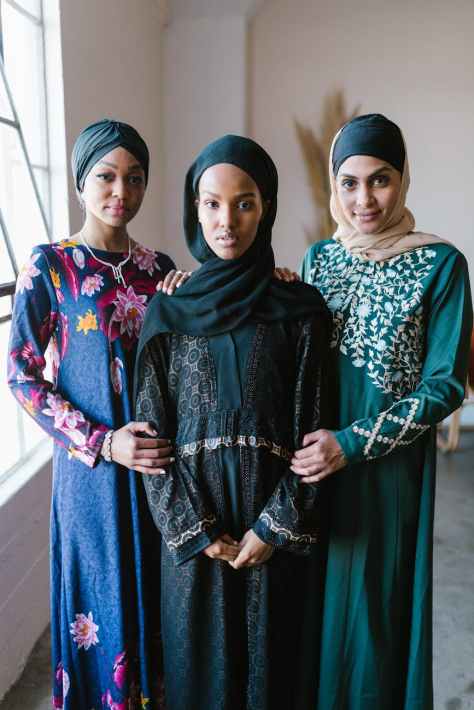
Judy, Sadia, and Shelia—three women whose stories weave together like strands of the same braid, bound by shared ancestry yet separated by shade. Each carries a different hue of experience, shaped by the silent social hierarchies that color their worlds. In their melanin lies both blessing and burden, truth and tension, confession and revelation.
Judy, the light-skinned woman, grew up praised for her complexion. Family and strangers alike told her she was “lucky,” as if her proximity to whiteness were an achievement. Yet beneath the compliments lived guilt and confusion. She felt both adored and resented, accepted yet alienated. Men desired her, women envied her, and she struggled to understand why her beauty caused division. In church, she prayed for humility, whispering the words of 1 Samuel 16:7—“for man looketh on the outward appearance, but the Lord looketh on the heart.” Her revelation came when she realized that lightness without love was still darkness.
Sadia’s story rests on the other side of the same mirror. Her dark skin was her inheritance—deep, rich, and radiant—but the world called it “too much.” She remembers being teased as a child, overlooked as a woman, and underestimated as a professional. Her reflection became a battlefield, and every insult left a scar. Yet God met her in the valley of rejection. Song of Solomon 1:5 echoed through her spirit: “I am black, but comely.” What once felt like a curse became her crown. Her revelation was that divine beauty is not subject to human approval—it is anchored in divine design.
Shelia, another light-skinned woman, experienced colorism differently. While her complexion opened doors, it also invited suspicion. She was often told she “wasn’t Black enough,” accused of privilege she didn’t seek and exclusion she didn’t deserve. She spent years trying to prove her authenticity, overcompensating in her speech, dress, and demeanor. The weight of identity politics exhausted her spirit. One night, she opened her Bible to Galatians 3:28—“There is neither Jew nor Greek… for ye are all one in Christ Jesus.” Her revelation was that belonging was never about performance; it was about purpose.
The confessions of these women expose the emotional complexity of color within the Black community. Their pain is not born from nature but from the historical distortion of beauty and worth. Colonialism planted the seed of colorism, teaching generations to measure themselves by how close they stood to whiteness. Yet in their honesty, Judy, Sadia, and Shelia began to uproot the lies that once divided them.
They met one evening for tea—three shades of sisterhood in a single circle. Judy confessed how she used to avoid dark-skinned friends out of fear of losing attention. Sadia admitted how bitterness had crept into her prayers. Shelia broke down, admitting she often felt invisible in her own family. The air grew heavy, yet healing hovered in their midst. Sadia reached out her hand, and the simple act of touch became sacred. “We are all His,” she whispered. It was no longer confession—it was communion.
The revelation that followed was collective: their differences were divine, not divisive. Each shade reflected a different aspect of God’s creativity. Genesis 1:27 came alive in them: “So God created man in His own image.” Their melanin was not a measure of value but a manifestation of His artistry. Together, they began to dismantle the emotional walls colorism had built.
Judy’s journey became one of advocacy. She started mentoring young girls, teaching them that beauty has no hierarchy. “True beauty begins where comparison ends,” she would say, quoting Proverbs 31:30: “Favour is deceitful, and beauty is vain: but a woman that feareth the Lord, she shall be praised.” She found purpose in using her influence to uplift, not outshine.
Sadia began journaling her experiences, turning pain into poetry. Her words spoke of triumph over trauma, and soon, women who once hid in shame found themselves reflected in her verses. Each stanza became a revelation of divine confidence. Her solution was not to retaliate against colorism but to rise above it through education, affirmation, and spiritual restoration.
Shelia dedicated herself to bridging the gap between light and dark women in her church. She organized “Sister Circles” where women shared testimonies, cried, and prayed together. There, unity was reborn—not through sameness, but through shared healing. Her work echoed Romans 12:5: “So we, being many, are one body in Christ, and every one members one of another.”
Together, the three women began leading workshops for young girls. Their message was clear—your worth is not in your tone but in your testimony. They taught that healing colorism requires confession, compassion, and Christ. The movement spread, reminding women everywhere that they were fearfully and wonderfully made (Psalm 139:14).
Through their journeys, the women learned that colorism could not survive in the presence of truth. When confronted by love, it withers. They realized that Satan thrives on division, but unity is the weapon that disarms him. Their revelations became their resistance.
Their community began to change. Mothers stopped comparing their daughters’ shades, and men learned to love without bias. The light-skinned woman no longer felt superior; the dark-skinned woman no longer felt unseen. Together, they reflected the full image of God—an infinite spectrum of grace and glory.
The confessions of Judy, Sadia, and Shelia are more than stories; they are scriptures in motion—modern parables of redemption. Each woman found her revelation in surrender, realizing that melanin was never meant to divide but to testify of divine diversity.
In the end, they stood side by side, no longer light or dark—just daughters. They looked in the mirror and finally saw what God always saw: beauty beyond measure, unity beyond color, and faith beyond fear. Their melanin was not just a pigment but a promise—a reminder that every shade of Blackness carries the fingerprint of Heaven.
References
- The Holy Bible, King James Version. (1611).
- Banks, T. A. (2019). Colorism and the politics of beauty. Journal of Black Studies, 50(3), 243–261.
- Hunter, M. (2007). The persistent problem of colorism: Skin tone, status, and inequality. Sociology Compass, 1(1), 237–254.
- Walker-Barnes, C. (2020). Too heavy a yoke: Black women and the burden of strength. Cascade Books.
- West, C. (1993). Race matters. Beacon Press.

 THE BROWN GIRL DILEMMA