

Tag Archives: sharecropping

From Sharecropping to Stock Markets: Redefining Black Economic Power Through Land Ownership, Financial Literacy, and Housing Justice.

Photo by Anna Nekrashevich on Pexels.com

The trajectory of Black economic empowerment in America has been profoundly shaped by historical and contemporary policies that have systematically marginalized African American communities. From the exploitative practices of sharecropping to the discriminatory housing policies of redlining, these structural inequities have hindered wealth accumulation and economic mobility for Black families. This essay explores the evolution of Black economic experiences, emphasizing the pivotal roles of land ownership, financial literacy, and equitable housing policies in dismantling the persistent chains of poverty.


The Legacy of Sharecropping

Following the Civil War, many formerly enslaved African Americans entered into sharecropping agreements, a system that ostensibly offered economic independence but often resulted in perpetual indebtedness. Sharecroppers typically lacked access to credit and were forced to purchase supplies from landowners at inflated prices, trapping them in cycles of debt and poverty. This system effectively replaced slavery with a form of economic exploitation that deprived Black families of the opportunity to accumulate wealth and assets.


Redlining and Housing Discrimination

In the 1930s, the federal government, through the Home Owners’ Loan Corporation (HOLC), implemented redlining practices that systematically denied mortgage loans to residents of predominantly Black neighborhoods. These areas were deemed “hazardous” due to racial composition, leading to disinvestment and the stifling of economic growth. Despite the Fair Housing Act of 1968, the legacy of redlining persists, with many formerly redlined neighborhoods continuing to experience lower property values and limited access to financial resources.


The Importance of Land Ownership

Land ownership has historically been a cornerstone of wealth accumulation in America. For Black families, acquiring land has been both a symbol of freedom and a means of economic stability. However, discriminatory practices such as land theft, legal barriers, and lack of access to capital have impeded Black ownership. Efforts to reclaim and preserve Black-owned land are crucial in reversing historical injustices and fostering economic independence within the community.


Financial Literacy as Liberation

Financial literacy is an essential tool for economic empowerment. Understanding financial principles, such as budgeting, investing, and credit management, equips individuals to make informed decisions that can lead to wealth accumulation. Initiatives aimed at enhancing financial literacy within Black communities are vital in breaking the cycles of poverty and fostering long-term economic stability.


The Role of Black-Owned Banks

Black-owned banks have played a significant role in providing financial services to underserved communities. By offering loans, credit, and financial education, these institutions have been instrumental in supporting Black entrepreneurship and homeownership. Strengthening and expanding Black-owned banks can enhance economic opportunities and contribute to the dismantling of systemic financial inequities.


Healthcare Inequities and Economic Impact

Access to quality healthcare is a fundamental aspect of economic well-being. However, Black communities often face disparities in healthcare access and outcomes, stemming from factors such as economic instability, discrimination, and lack of insurance. Addressing these healthcare inequities is essential for improving the overall economic health of Black families and communities.


Educational Disparities and Economic Mobility

Education serves as a pathway to economic mobility. Yet, Black students frequently encounter disparities in educational resources, quality, and outcomes. These educational inequities limit career opportunities and perpetuate cycles of poverty. Reforming educational systems to ensure equitable access and quality education is critical for fostering economic advancement in Black communities.


The Interconnection of Housing, Wealth, and Health

The intersections of housing, wealth, and health are profound. Stable and affordable housing contributes to better health outcomes and economic stability. Conversely, housing instability can lead to poor health and economic insecurity. Policies that promote affordable housing and address housing discrimination are vital in improving the economic and health prospects of Black families.


Policy Recommendations for Economic Equity

To address the systemic barriers hindering Black economic empowerment, comprehensive policy reforms are necessary. These should include:

  • Implementing reparations programs to compensate for historical injustices.
  • Enforcing fair housing laws to eliminate discriminatory practices.
  • Investing in education and workforce development to enhance economic opportunities.
  • Supporting Black-owned businesses and financial institutions to foster community wealth.

Conclusion

The journey from sharecropping to stock markets reflects the resilience and determination of Black Americans in the face of systemic oppression. By prioritizing land ownership, financial literacy, and equitable housing policies, society can work towards dismantling the enduring legacies of economic injustice. Empowering Black communities economically is not only a matter of rectifying historical wrongs but also of building a more equitable and prosperous future for all.


References

  • “Homeownership, Racial Segregation, and Policies for Racial Wealth Equity.” Brookings Institution. [link]
  • “Systemic Inequality: Displacement, Exclusion, and Segregation.” Center for American Progress. [link]
  • “How Sharecropping Robbed Black Americans of Generational Wealth.” Medium. [link]
  • “Racism, Inequality, and Health Care for African Americans.” The Century Foundation. [link]
  • “The Widening Racial Wealth Divide.” The New Yorker. [link]
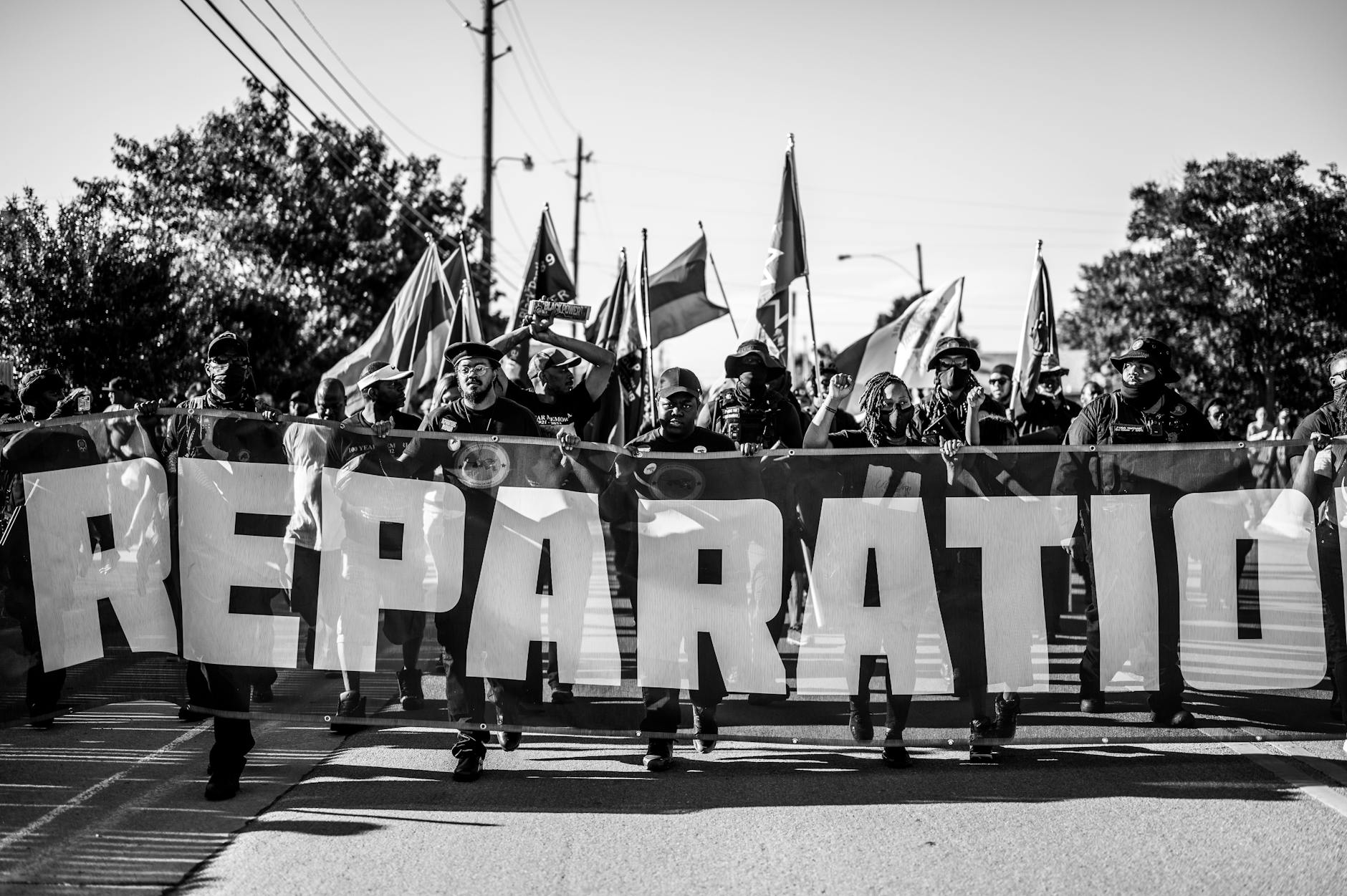
America’s Ten Unpaid Debts to Black Citizens.

A Historical and Moral Reckoning

Photo by Alfo Medeiros on Pexels.com

The history of the United States is marked by both the rhetoric of liberty and the reality of systemic exclusion. From slavery to present-day racial inequities, the nation has accumulated what Dr. Martin Luther King Jr. famously described as a “promissory note” to Black Americans—an unfulfilled promise of equality, justice, and opportunity (King, 1963). These unpaid debts are not merely metaphorical; they are tangible, measurable, and rooted in centuries of institutionalized oppression. This essay examines ten of the most significant debts owed to Black citizens, explaining their historical origins and ongoing impact.


1. Reparations for Slavery

From 1619 to 1865, millions of African people were enslaved, generating immense wealth for the United States without receiving wages, property, or restitution (Baptist, 2014). The labor of enslaved Africans built the economic foundation of the nation, particularly in agriculture and trade. The failure to provide “forty acres and a mule” after emancipation represents a broken promise (Foner, 1988). Today, the racial wealth gap is a direct legacy of this uncompensated labor.


2. Unpaid Wages of Sharecropping and Convict Leasing

After slavery, sharecropping and convict leasing perpetuated forced labor under exploitative contracts, often leaving Black workers in perpetual debt (Blackmon, 2008). This system enriched landowners, railroads, and industrialists while trapping Black families in generational poverty. Psychological trauma from this economic exploitation remains embedded in communities.


3. Land Theft and Dispossession

Throughout the late 19th and early 20th centuries, Black farmers lost millions of acres through discriminatory lending practices, violence, and fraudulent legal tactics (Mitchell, 2005). Entire Black towns—such as Rosewood, Florida, and Tulsa’s Greenwood District—were destroyed by white mobs, erasing economic gains and property inheritance.


4. Denial of GI Bill Benefits

Following World War II, the GI Bill offered veterans home loans, education, and business assistance. However, discriminatory administration by banks and colleges meant Black veterans were largely excluded (Katznelson, 2005). This hindered upward mobility and the ability to pass wealth to future generations.


5. Housing Discrimination and Redlining

From the 1930s through the 1970s, the federal government sanctioned redlining—refusing mortgages in Black neighborhoods—which restricted home ownership and property value appreciation (Rothstein, 2017). This structural exclusion solidified racial segregation and the wealth divide.


6. Unequal Education

For centuries, Black children were denied equal education, from the prohibition of literacy under slavery to segregated and underfunded schools after Brown v. Board of Education (1954). Even today, predominantly Black school districts receive significantly less funding, perpetuating educational inequities (Darling-Hammond, 2010).


7. Mass Incarceration

The disproportionate policing, arrest, and imprisonment of Black Americans—especially since the 1970s “War on Drugs”—represents another unpaid debt. Mass incarceration has stripped millions of voting rights, broken families, and drained economic potential (Alexander, 2010). Biblically, this parallels unjust imprisonment condemned in Isaiah 10:1–2 (KJV).


8. Healthcare Inequities

Black Americans have historically faced medical neglect, from the Tuskegee Syphilis Study to present disparities in maternal mortality and access to care (Washington, 2006). Structural racism in healthcare has cost countless lives, a debt measured in both mortality and moral failure.


9. Cultural Appropriation without Compensation

Black creativity has been a driving force in American music, fashion, sports, and art. Yet, cultural appropriation often strips Black innovators of credit and financial benefit, enriching corporations and others while leaving the originators marginalized (Love, 2019).


10. Political Disenfranchisement

From poll taxes and literacy tests to modern voter ID laws and gerrymandering, Black citizens have been systematically denied full political participation (Anderson, 2018). This exclusion undermines the democratic promise of equal representation and self-determination.


Conclusion

These ten unpaid debts—spanning economic, political, social, and cultural domains—reveal that the promise of America remains partially unfulfilled for Black citizens. Addressing them is not merely about restitution but about moral accountability and the biblical imperative to “do justly, and to love mercy” (Micah 6:8, KJV). Until these debts are acknowledged and addressed, the dream of a truly equal America will remain deferred.


References

Alexander, M. (2010). The new Jim Crow: Mass incarceration in the age of colorblindness. The New Press.
Anderson, C. (2018). One person, no vote: How voter suppression is destroying our democracy. Bloomsbury Publishing.
Baptist, E. E. (2014). The half has never been told: Slavery and the making of American capitalism. Basic Books.
Blackmon, D. A. (2008). Slavery by another name: The re-enslavement of Black Americans from the Civil War to World War II. Anchor Books.
Darling-Hammond, L. (2010). The flat world and education. Teachers College Press.
Foner, E. (1988). Reconstruction: America’s unfinished revolution, 1863–1877. Harper & Row.
Katznelson, I. (2005). When affirmative action was white: An untold history of racial inequality in twentieth-century America. W.W. Norton & Company.
Love, B. L. (2019). We want to do more than survive: Abolitionist teaching and the pursuit of educational freedom. Beacon Press.
Mitchell, T. (2005). From reconstruction to deconstruction: Undermining black landownership, political independence, and community through partition sales of tenancies in common. Northwestern University Law Review, 95(2), 505–580.
Rothstein, R. (2017). The color of law: A forgotten history of how our government segregated America. Liveright Publishing.
Washington, H. A. (2006). Medical apartheid: The dark history of medical experimentation on Black Americans from colonial times to the present. Doubleday.