
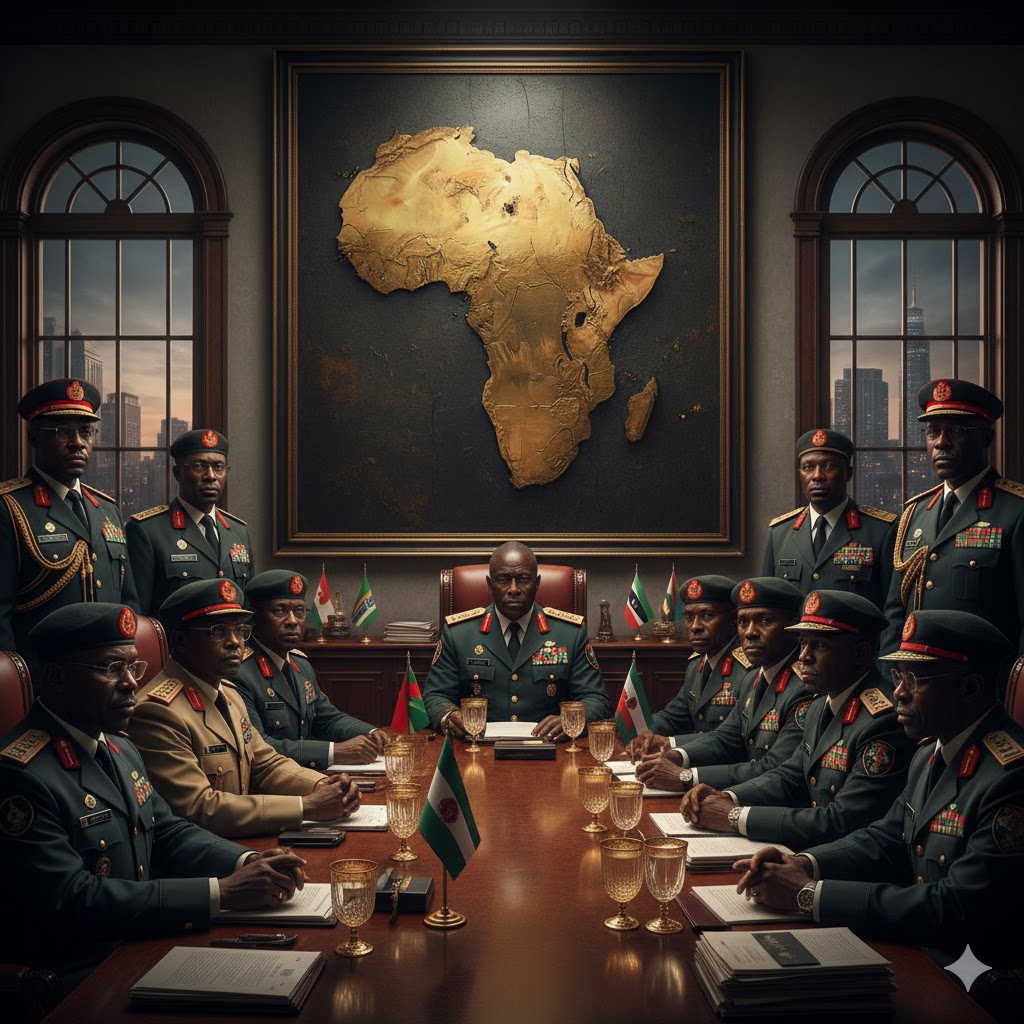
The Afrocentric Reclamation represents a global awakening among people of African descent—an intentional return to ancestral identity, cultural memory, spiritual heritage, and historical truth. It is a movement born from centuries of erasure, distortion, and colonial narratives that sought to diminish the contributions of African civilizations. Yet in the twenty-first century, this reclamation signals a collective turning of the tide: a restoring of dignity, a rewriting of narratives, and a reconnection to the intellectual, artistic, and spiritual genius of Africa’s past. At its core, Afrocentric reclamation is not merely about remembering history; it is about repositioning Africa at the center of its own story.
This reclamation emerged as a corrective to Eurocentric frameworks that portrayed Africa as primitive or culturally inferior. Scholars, activists, and artists recognized that the continent’s civilizations—Kemet, Nubia, Mali, Songhai, Axum, Benin, and countless others—were pillars of human development. By reinserting Africa into global historical narratives, Afrocentric thinkers challenged stereotypes and offered a fuller, more truthful account of African ingenuity. This reclamation affirms that African identity is not a legacy of slavery but a legacy of civilization.
The Afrocentric perspective emphasizes agency—the understanding that African people shaped their own destinies rather than being passive subjects of history. This shift in thinking allows descendants of the African diaspora to see themselves as inheritors of wisdom, strength, and resilience. Through Afrocentric reclamation, the Black world finds empowerment in continuity rather than rupture, seeing diaspora identity as spiritually and culturally connected to the continent despite forced displacement.
A crucial part of this reclamation involves reexamining the psychological effects of colonization, enslavement, and racial narratives. Scholars such as Frantz Fanon and Carter G. Woodson exposed how systems of domination created internalized oppression, teaching Black people to undervalue their culture and identity. Afrocentric reclamation disrupts these psychological chains by cultivating a renewed pride in African languages, fashions, traditions, and worldviews.
Language itself becomes a radical act of reclamation. From the restoration of Swahili and Yoruba in the diaspora to the resurgence of Kemetian linguistic studies, language reacquaints African-descended people with the philosophies embedded in ancient words. Language offers access to African concepts of community, spirituality, and cosmology—ideas that are often absent in Western discourse but foundational in African thought.
Spiritual reclamation is another crucial dimension. Many reconnect with African spirituality, whether through traditional religions, Ethiopian Christianity, Hebraic identity frameworks, or African interpretations of the Christian faith. This spiritual renaissance asserts that African people have always possessed deep relationships with the divine—relationships that predate colonial missionary efforts. Afrocentric spirituality highlights harmony, ancestry, communal ethics, and the sacredness of life.
The arts—music, literature, dance, and visual expression—play a powerful role in this cultural resurgence. From Afrobeat to Afrofuturism, from Pan-African literature to contemporary African film, the creative world reflects a growing pride in African aesthetics. The arts become a gateway for younger generations who may not have direct access to historical scholarship but feel the reclamation in rhythm, style, and imagery.
Education is a key battleground for Afrocentric reclamation. Afrocentric curriculum movements challenge the absence or misrepresentation of Africa in textbooks. Instead of centering Europeans as global discoverers or innovators, Afrocentric education highlights African contributions in mathematics, architecture, metallurgy, astronomy, medicine, and governance. This educational shift is vital for reshaping how Black children see themselves and how the world sees Africa’s genius.
Diaspora communities—from the Caribbean to the Americas to Europe—participate in this reclamation by reconnecting with African roots through genealogical research, DNA testing, and travel. DNA analysis, despite limitations, has helped millions rediscover ancestral regions, validating intuitions of identity that survived slavery and dislocation. This reconnection strengthens the spiritual and emotional ties between Africa and its global descendants.
Afrocentric reclamation also challenges global power structures that maintain racial inequality. By reclaiming African historical centrality, the movement exposes how colonialism, capitalism, and racism collaborated to strip Africa of power and resources. Reclamation becomes a political act, pushing the world to confront ongoing injustices in economics, land theft, global trade, and media representation.
Furthermore, Afrocentric reclamation empowers Black women, whose contributions have often been doubly erased—both by racism and patriarchy. Reclaiming African matriarchal traditions, warrior queens, philosophers, and leaders restores balance to narratives that once sidelined them. This reclamation allows Black women to step into ancestral identities that affirm their strength, wisdom, and divinity.
The movement also reshapes concepts of beauty. Instead of Western beauty standards that devalued African features, the Afrocentric perspective celebrates melanin, coils, braids, full lips, and ancestral aesthetics. Beauty becomes political, spiritual, and historical—an affirmation of the sacredness of African bodies.
Economically, Afrocentric reclamation encourages Pan-African cooperation. Black-owned businesses, global trade networks, and cross-continental partnerships reflect a renewed commitment to economic self-sufficiency. This economic revival echoes earlier movements such as Garveyism but adapts to modern digital and global realities.
Politically, Afrocentric reclamation supports unity across national borders. Pan-Africanism urges African-descended people to collaborate in addressing issues such as police violence, neocolonialism, environmental injustice, and educational barriers. This unity strengthens global activism and amplifies the voices of African people worldwide.
Afrocentric reclamation redefines the African diaspora not as a scattered people but as a global community connected by history, struggle, and destiny. It fosters a shared consciousness that transcends nationality, tribe, or language. This collective identity resists fragmentation and builds strength through shared purpose and memory.
The movement also challenges academia to reconsider long-held assumptions. Archaeologists, geneticists, historians, and theologians are increasingly interrogating Eurocentric biases and expanding their frameworks to include African perspectives. Afrocentric inquiry elevates indigenous knowledge systems and reevaluates the origins of civilization.
At its core, Afrocentric reclamation is a healing process. It addresses historical trauma by giving African descendants the tools to name their pain, reclaim their dignity, and restore their cultural inheritance. Healing occurs when people reconnect with roots that were forcibly severed, discovering that ancestral pride is stronger than oppression.
Finally, the Afrocentric Reclamation is a vision for the future. It imagines a world where Africa is recognized not for its suffering but for its contributions, leadership, and promise. It envisions a global Black community grounded in unity, consciousness, and empowerment—standing tall in the knowledge that Africa is not a footnote to history but a foundation of humanity.
References
Asante, M. K. (2007). An Afrocentric manifesto: Toward an African renaissance. Polity Press.
Asante, M. K. (1998). The Afrocentric idea (2nd ed.). Temple University Press.
Diop, C. A. (1989). The African origin of civilization: Myth or reality. Lawrence Hill Books.
Fanon, F. (2004). Black skin, white masks (R. Philcox, Trans.). Grove Press. (Original work published 1952)
Karenga, M. (2010). Introduction to Black studies (4th ed.). University of Sankore Press.
Woodson, C. G. (2006). The mis-education of the Negro. Classic House Books. (Original work published 1933)
Wright, J. (2018). The transatlantic slave trade: A history in documents. Hackett Publishing.
Mazama, A. (Ed.). (2003). The Afrocentric paradigm. Africa World Press.
Obenga, T. (2004). African philosophy: The Pharaonic period: 2780–330 BC. Per Ankh.
Thornton, J. K. (1998). Africa and Africans in the making of the Atlantic world, 1400–1800 (2nd ed.). Cambridge University Press.
 THE BROWN GIRL DILEMMA