
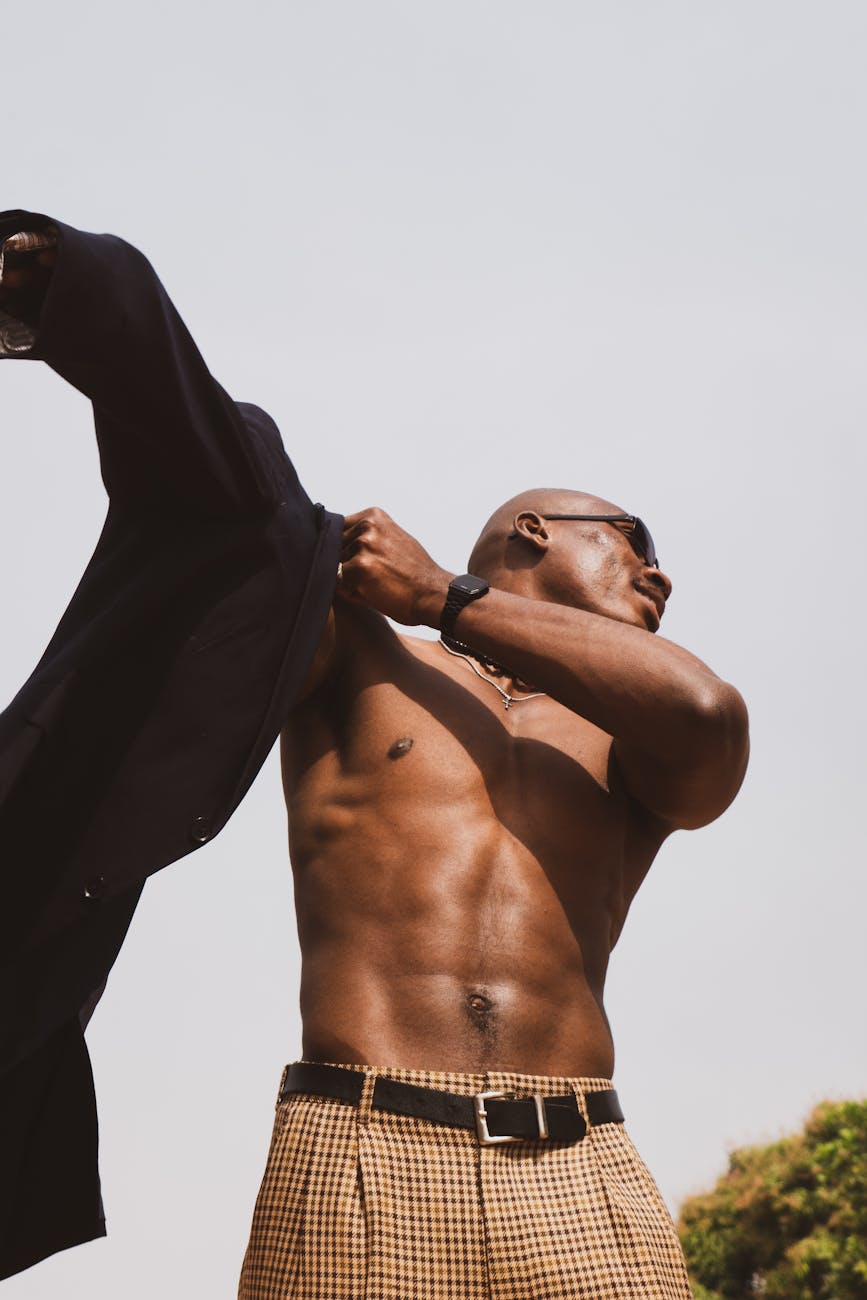
The Black man stands as a visual phenomenon—an embodiment of strength, resilience, and beauty shaped by genetics, culture, and divine design. His presence commands attention, not only for the physical frame that history has often celebrated or feared, but also for the character, spirit, and royal essence within him. From the warrior traditions of Africa to the modern world stage, the Black man continues to reflect the image of God in both body and soul.
Genetics has played a significant role in the body frame and athletic performance of many Black men. With higher bone density, muscle fiber composition, and natural endurance, studies suggest that individuals of African descent often excel in sports and physical performance (Entine, 2000). Yet this strength is not merely physical—it is historical and spiritual, rooted in generations of survival and perseverance. The Bible affirms strength as a divine gift: “The glory of young men is their strength: and the beauty of old men is the gray head” (Proverbs 20:29, KJV).
The aesthetics of the Black man go beyond strength. His melanin skin, rich in tone and resilience, is not only a protective biological gift against the sun’s harsh rays but also a marker of beauty and identity. Melanin is a crown of survival, a natural armor, and a canvas of radiance. It reflects the divine artistry of creation, as Psalm 139:14 (KJV) declares, “I will praise thee; for I am fearfully and wonderfully made: marvellous are thy works.”
Stature is another defining feature. The posture and bearing of the Black man carry the weight of royalty, often likened to kingship. Historically, African warriors and leaders were revered for their physical presence and authority. Psychology affirms that posture, symmetry, and physical form are often subconsciously associated with leadership and dominance (Perrett, 2010). The golden ratio, a mathematical principle of beauty, can often be seen in the symmetry of Black men’s faces and bodies—proportions that align with universal standards of aesthetic appeal.
Muscular structure also speaks volumes about the design of the Black man. Broad shoulders, strong chests, and well-formed musculature communicate power and capability. This does not diminish gentleness but enhances it, reminding us that strength and tenderness can coexist. The apostle Paul writes, “Watch ye, stand fast in the faith, quit you like men, be strong” (1 Corinthians 16:13, KJV). Psychology echoes this truth, suggesting that confidence rooted in body awareness contributes to mental well-being and healthy identity (Cash & Pruzinsky, 2002).
Facial features—the lips, eyes, and nose—further highlight the aesthetics of the Black man. Full lips are often regarded as symbols of sensuality and expression, while deep-set eyes convey depth, wisdom, and intensity. Strong noses, broad and defined, represent heritage and identity. Taken together, these features create a visage that is both striking and unforgettable, challenging narrow Eurocentric beauty standards.
Celebrity Examples:
Kenneth Okolie exemplifies this phenomenon through his tall, commanding frame and model-like proportions. As a Nigerian actor and model, his physicality echoes the presence of African royalty. His symmetry and strong jawline capture the golden ratio, while his grounded demeanor highlights not only aesthetics but also discipline and cultural pride.
Billy Dee Williams, with his legendary career, reshaped the image of the Black man in Hollywood. His suave charm, captivating smile, and smooth voice combined charisma with elegance. Williams’ style in the 1970s became symbolic of Black sophistication, showing that masculinity could be both powerful and tender. He represented not only physical allure but also psychological presence—the ability to command a room with grace.
Jimmy Jean-Louis, known as “the Haitian Hollywood star,” carries a global appeal. His sculpted body, expressive eyes, and deep complexion embody the resilience of a warrior. Beyond his acting career, his humanitarian work in Haiti speaks to a beauty that extends beyond appearance—rooted in compassion, responsibility, and service. His life echoes Proverbs 31:8-9 (KJV), “Open thy mouth for the dumb in the cause of all such as are appointed to destruction. Open thy mouth, judge righteously, and plead the cause of the poor and needy.”
Redaric Williams, with his chiseled muscles, striking symmetry, and expressive features, represents the modern standard of Black male aesthetics in entertainment. His physique mirrors the artistry of strength, while his acting and modeling career emphasize versatility and adaptability. Redaric embodies the psychological principle that beauty fused with confidence and determination amplifies influence (Riggio, 2010).
Biblical Figures as Archetypes of the Black Man
The aesthetics of the Black man today are mirrored in biblical figures who exemplified strength, wisdom, and divine favor. David, for instance, was both a warrior and a man after God’s heart (1 Samuel 16:12-13, KJV). He combined physical skill with courage, integrity, and leadership—qualities reflected in contemporary Black men who aspire to honor, protection, and excellence. Samson, described as a man of immense strength, also carried the mark of God’s favor in his body (Judges 16). His muscular prowess and stature symbolize the God-given potential inherent in Black men. King Solomon, though not described in physical detail, represents wisdom, wealth, and character, showing that beauty and influence extend beyond the physical to intellect, leadership, and moral authority (1 Kings 4:29-34, KJV).
These biblical archetypes emphasize that the Black man’s worth is a combination of body, mind, and spirit. Muscular bodies, symmetrical features, and commanding presence are meaningful when paired with wisdom, faith, and moral character. Psychology supports this holistic view, suggesting that confidence, empathy, and integrity enhance attractiveness and social influence (Goleman, 1995; Riggio, 2010).
In conclusion, the Black man is more than body and bone—he is vision and value, a warrior and a king. His melanin, symmetry, muscles, and stature reveal a divine design, while his heart, mind, and character testify to God’s greater purpose. From Kenneth Okolie to biblical figures like David, Samson, and Solomon, the Black man embodies aesthetics, strength, and wisdom. Truly, he is a visual and spiritual phenomenon.
References
- Cash, T. F., & Pruzinsky, T. (2002). Body image: A handbook of theory, research, and clinical practice. Guilford Press.
- Entine, J. (2000). Taboo: Why Black athletes dominate sports and why we’re afraid to talk about it. PublicAffairs.
- Goleman, D. (1995). Emotional intelligence: Why it can matter more than IQ. Bantam Books.
- Perrett, D. (2010). In your face: The new science of human attraction. Palgrave Macmillan.
- Riggio, R. E. (2010). The charisma quotient: The psychology of leadership, persuasion, and social influence. Routledge.
- The Holy Bible, King James Version (KJV).
 THE BROWN GIRL DILEMMA