
Tag Archives: race

Dilemma: Race

The Origins, Science, and Social Construction of Race.

Photo by cottonbro studio on Pexels.com

The concept of race is one of the most controversial and misunderstood ideas in human history—deeply embedded in science, politics, identity, and power. It continues to shape global societies and institutions, influencing policies, healthcare, education, and justice. But what is race? Why was it created, and by whom? Does it hold scientific validity, or is it a sociopolitical invention? Understanding race requires an interdisciplinary approach—tracing its roots through history, examining its use in science, exploring its role in white supremacy, and interrogating its lingering psychological and cultural consequences.

Race became especially “important” in science during the Age of Enlightenment, when European intellectuals sought to classify all forms of life—including human beings—into distinct, hierarchical categories. During this era, European colonial powers were expanding globally and enslaving entire populations, particularly Africans. Scientists and philosophers developed race-based taxonomies to justify imperial domination, slavery, and the notion of white superiority. The classification of human populations into “races” allowed colonial empires to legitimize power structures and establish social hierarchies based on physical appearance, especially skin color.

The term “race” as applied to human beings emerged in the 17th and 18th centuries. While the word existed earlier to describe lineage or group, its scientific application began with French physician and traveler François Bernier, who published an essay in 1684 attempting to divide humans into groups based on physical differences. This laid the foundation for future European racial classification. During the same period, Carl Linnaeus, a Swedish naturalist, introduced a system that categorized human beings into four racial groups (Europeans, Africans, Asians, and Native Americans), each associated with distinct behavioral and moral traits—often reflecting racist biases that elevated white Europeans above all others.

The German anatomist Johann Friedrich Blumenbach further developed this racial typology in 1795. He proposed five racial groups: Caucasian, Mongolian, Ethiopian, American, and Malayan. Although Blumenbach emphasized that all humans belonged to a single species and noted environmental influences on variation, his classification was later misused by proponents of racial hierarchy and white supremacy. German thinkers like Christoph Meiners and Georges Cuvier further distorted these ideas, asserting that Africans were fundamentally inferior to whites in intellect, morality, and civilization.

As race theory evolved, it became a crucial tool in the construction and maintenance of white supremacy. European and American thinkers in the 18th and 19th centuries increasingly portrayed whiteness as the apex of civilization. Pseudoscientific theories such as polygenism—claiming that races were created separately—were used to justify slavery, colonial rule, and apartheid. In this racial hierarchy, whites occupied the highest status, followed by Asians and other non-white groups, with Black people placed at the bottom. These classifications were embedded into law, religion, education, and science, legitimizing centuries of exploitation and systemic violence against African-descended peoples.

Race was not only used to classify—it was weaponized. In the transatlantic slave trade, Africans were reduced to property through racial dehumanization. In the United States, pseudo-medical diagnoses like “drapetomania” claimed that the desire to escape enslavement was a mental illness in Black people. Jim Crow laws, scientific racism, and eugenics movements further reinforced the myth of racial inferiority and shaped institutions that still impact people of African descent today.

However, contemporary science has exposed race as a social fiction rather than a biological fact. Modern genetics—including the Human Genome Project—has shown that all humans share 99.9% of their DNA. The slight genetic variations that exist do not align with historical racial categories. In fact, genetic variation within so-called “racial” groups is often greater than between them. Scientific consensus today recognizes that race is a social construct with no basis in biology. It is more accurate to speak of clinal variation—gradual changes in traits across geography—rather than discrete races.

Psychological research further affirms that racial categories are learned and reinforced through socialization, not biology. Implicit bias, stereotyping, and systemic racism arise from cultural programming and historical institutions. Studies have shown that individuals are often unconsciously biased in favor of lighter-skinned individuals, especially in employment, education, and criminal justice. These biases are measurable and persistent, affecting life outcomes across entire populations.

Historically, racial theorists assigned behavioral traits to racial groups, perpetuating harmful stereotypes. These classifications—such as “Africans are lazy,” “Asians are submissive,” or “Europeans are rational”—are not only inaccurate but damaging. They reflect a legacy of colonial ideology rather than empirical science. The following table summarizes how early racial typologies framed various groups:

Historical “Race” ClassificationAssociated Stereotypes (Outdated and Racist)
Caucasian (white)Intelligent, civilized, dominant
Mongolian (yellow)Calm, methodical, passive
Malayan (brown)Sensual, primitive, less rational
Ethiopian (black)Lazy, inferior, subhuman
American (red)Noble savage, childlike, emotional

These categories were rooted in 18th and 19th-century pseudoscience and have been thoroughly discredited. Yet their influence persists in contemporary stereotypes, beauty standards, immigration policy, and policing.

It’s important to distinguish between race and nationhood. Nations are political and cultural entities defined by shared history, language, institutions, and governance. Race, on the other hand, is a sociopolitical invention based on perceived physical difference. For example, “African American” is a racial category, while “Nigerian” is a national identity that encompasses many ethnic groups. Biblically and anthropologically, all humans descend from a common ancestry—whether traced through Adam and Eve or through mitochondrial DNA studies confirming a common maternal ancestor in East Africa.

The Bible does not promote racial categories as understood today. The “Table of Nations” in Genesis 10 outlines the division of humanity by lineage and geography, not color or race. In Acts 17:26, it declares: “God has made from one blood all nations of men for to dwell on all the face of the earth.” Racism and racial hierarchy are human inventions, not divine mandates.

Scientifically, there is only one human race: Homo sapiens. All existing racial divisions are culturally constructed rather than biologically fixed. No race ranks higher than another in intellect, capacity, or moral value. The persistence of racial categories is rooted in history, not in nature.

Philosophically, the study of race intersects with ethics, epistemology, and political theory. Social constructionism argues that race exists only because societies have chosen to organize themselves around superficial differences. Critical Race Theory (CRT) analyzes how racial inequality is embedded in legal and institutional frameworks. The philosophy of biology challenges the legitimacy of race as a scientific category and asks why, despite overwhelming evidence, race continues to influence public policy and identity formation.

In conclusion, race was created as a tool of division and domination, not as an objective reflection of human variation. It has been used to justify enslavement, colonization, and systemic injustice—particularly against Black people. Although modern science debunks its biological validity, the social reality of race remains potent and deeply entrenched. Understanding the origins, misuses, and philosophical implications of race is essential for dismantling racism and promoting justice in a world that still struggles with the legacy of these artificial boundaries.


Selected References

  • American Association of Physical Anthropologists. (2019). Statement on Race and Racism.
  • Gould, S. J. (1996). The Mismeasure of Man. W. W. Norton.
  • Smedley, A., & Smedley, B. D. (2005). Race as biology is fiction, racism as a social problem is real. American Psychologist, 60(1), 16–26.
  • Lewontin, R. C. (1972). The apportionment of human diversity. Evolutionary Biology, 6, 381–398.
  • Templeton, A. R. (2013). Biological races in humans. Studies in History and Philosophy of Science Part C: Biological and Biomedical Sciences, 44(3), 262–271.
  • Painter, N. I. (2010). The History of White People. W. W. Norton & Company.
  • Fields, K., & Fields, B. J. (2014). Racecraft: The Soul of Inequality in American Life. Verso Books.
  • National Human Genome Research Institute. (2020). Is Race a Valid Biological Concept? Retrieved from genome.gov
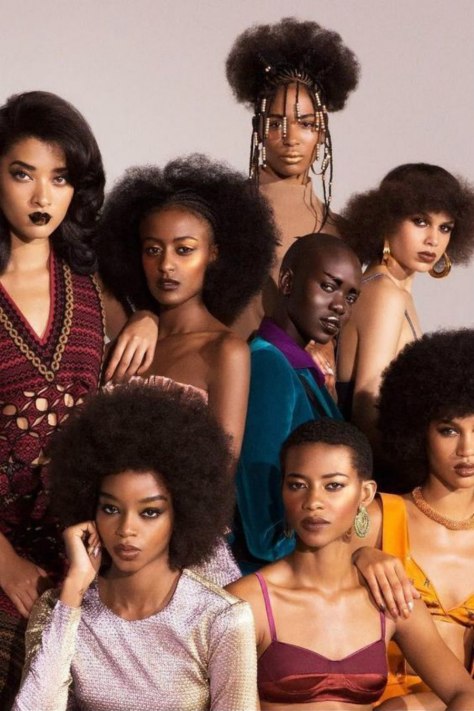
PIGMENTOCRACY: The Politics of Skin Tone and the Global Hierarchy of Color.

This photograph is the property of its respective owner.

Throughout history and across continents, skin tone has functioned as more than a biological trait—it has been weaponized as a social currency. Pigmentocracy, a term used to describe a social system in which status and privilege are distributed according to skin color, persists as a subtle yet powerful force that governs the lives of people of color across the globe. Rooted in colonial conquest and racial ideology, pigmentocracy maintains a stratified racial order in which lighter-skinned individuals occupy higher social positions, while those with darker skin tones are systematically marginalized. This essay explores the origins, manifestations, and consequences of pigmentocracy—especially within Black communities—and examines its relationship to colorism, media representation, social mobility, and global racial hierarchies.

“Pigmentocracy is the silent architect of racial division—a hierarchy built not just on color, but on the invisible weight of colonial trauma.”
—Dr. Margaret Hunter, Sociologist


Origins and Definition of Pigmentocracy

Pigmentocracy derives from the Latin pigmentum (color) and the Greek kratos (rule or power), meaning “rule by skin color.” Though the term was popularized in the 20th century by scholars like Venezuelan sociologist Fernando Henríquez and further developed by researchers such as Dr. Edward Telles, the ideology behind pigmentocracy dates back centuries. During colonial rule in the Americas, Europe established caste systems that ranked people according to racial mixing and skin tone, with lighter, European features correlating with higher status. The Spanish casta system, for example, created over a dozen racial categories, elevating whiteness and subjugating those with darker skin.

This system became entrenched not only in law but also in psychology and economics. Slavery, apartheid, Jim Crow, and segregation all functioned on the premise that whiteness was supreme and blackness inferior. Within this structure, pigmentocracy served to divide enslaved and colonized peoples by elevating those with lighter complexions—often the result of rape or mixed heritage—as overseers, house servants, or social intermediaries. The legacy of this system continues to influence the sociopolitical landscapes of nations today.


Pigmentocracy and Colorism

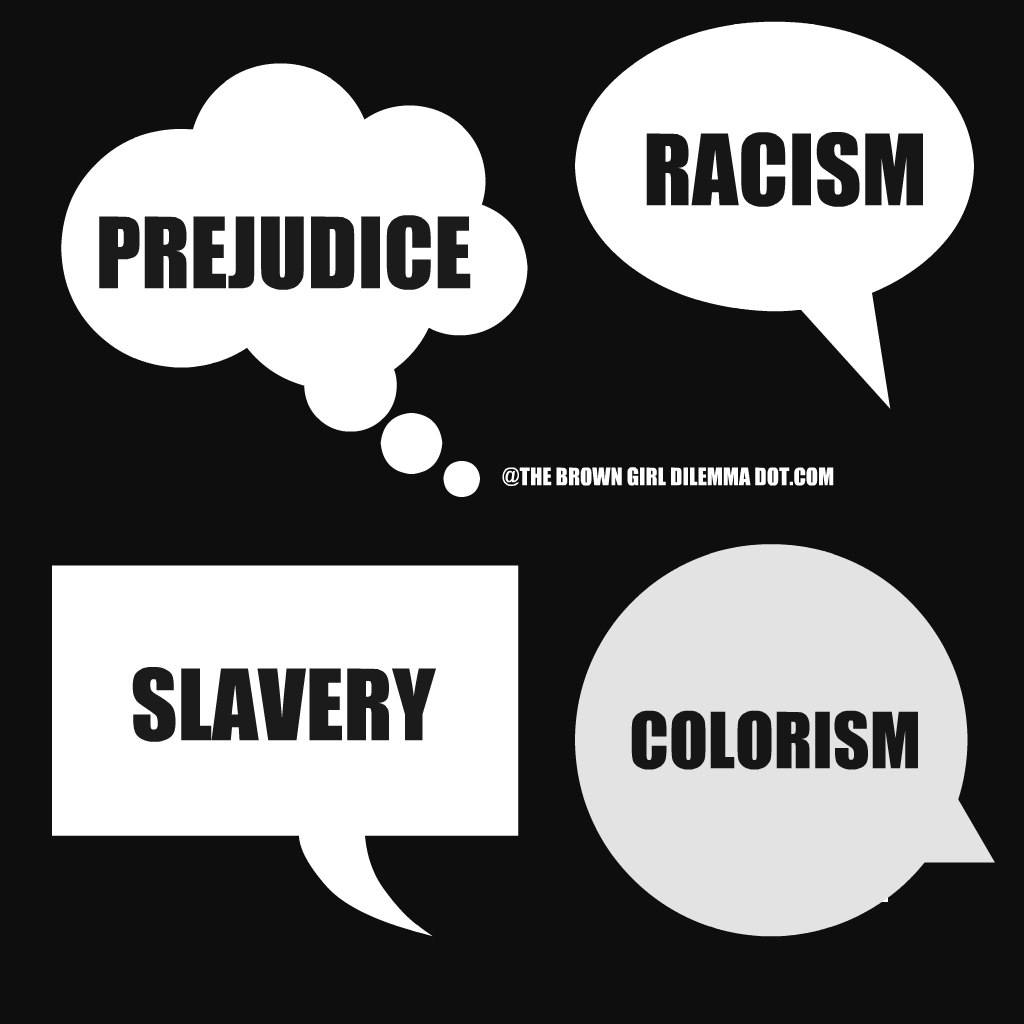
Pigmentocracy is intimately linked to colorism, which refers to discrimination based on skin tone within the same racial or ethnic group. While racism targets individuals across racial categories, colorism reinforces hierarchies within those groups, granting unearned privilege to individuals who possess lighter skin or Eurocentric features. These phenomena reinforce one another: pigmentocracy creates the structure, while colorism sustains it through interpersonal and cultural bias.

In Black communities, colorism often surfaces in beauty standards, educational access, and romantic desirability. Lighter-skinned individuals may be perceived as more attractive, employable, or intelligent, while darker-skinned people face heightened criminalization, poverty, and exclusion. The consequences are both material and psychological—impacting self-worth, identity formation, and economic opportunity.


Stages of Pigmentocratic Impact

The effects of pigmentocracy unfold in four critical stages:

  1. Colonial Codification: European colonists used skin tone to divide and rule, embedding color-based hierarchies into legal systems.
  2. Institutional Reproduction: Post-slavery societies reinforced skin tone hierarchies through employment, education, and housing discrimination.
  3. Cultural Internalization: Within communities of color, lighter skin becomes a subconscious standard of beauty and success.
  4. Modern Globalization: Skin-lightening industries, Western media dominance, and globalized beauty norms continue to uphold the supremacy of light skin across continents.

Global and Cultural Examples

In the United States, sociologist Ellis Monk (2015) found that darker-skinned African Americans face greater economic disadvantage, harsher criminal sentencing, and more health disparities than their lighter-skinned peers. In Brazil, often hailed for its racial “mixing,” skin tone still dictates access to jobs, education, and social networks. India’s deeply entrenched caste system and obsession with fair skin has fueled a billion-dollar skin-lightening industry, while in the Philippines, colonial legacies have left a preference for Eurocentric beauty that permeates advertising and cinema.


Celebrities and the Visibility of Pigmentocracy

In the world of entertainment and media, pigmentocracy is glaringly apparent:

  • Zendaya, a light-skinned Black actress, has acknowledged the privilege her complexion affords her in casting opportunities, often referred to as “acceptable Blackness” in Hollywood.
  • Beyoncé, with her lighter skin and blonde hair, has become a global icon, but some critics argue her image conforms to Eurocentric standards that marginalize darker-skinned artists.
  • Lupita Nyong’o, a dark-skinned actress and activist, has spoken openly about being teased for her skin tone and how she did not see herself represented in media growing up.
  • In Latin American telenovelas, white or light-skinned actors are consistently cast in leading roles, while darker-skinned Afro-Latinos are relegated to comedic or servant parts.

These examples reflect a system that not only limits opportunities for those with darker skin but actively shapes societal ideals and expectations.


Social Mobility and Racial Hierarchy

Pigmentocracy directly influences social mobility. Lighter-skinned individuals often experience:

  • Greater access to higher education and employment opportunities
  • Increased wealth accumulation and professional advancement
  • Better treatment by law enforcement and healthcare providers

Meanwhile, darker-skinned individuals are frequently relegated to the lowest rungs of the social order. Research has consistently shown that employers favor lighter-skinned candidates, even when qualifications are identical (Hunter, 2007).

Globally, white Europeans occupy the top of the racial hierarchy, with groups perceived as closer to whiteness—such as light-skinned Asians or Latinos—ranking above Black, Indigenous, or dark-skinned populations. This racial ordering maintains white supremacy under the guise of color-neutral meritocracy.


The Psychological Toll and the Call for Change

The psychological toll of pigmentocracy includes internalized racism, self-hatred, and generational trauma. Many Black and Brown children grow up without seeing themselves as beautiful, worthy, or powerful. This invisibility fosters feelings of inferiority and perpetuates cycles of poverty and marginalization.

The solution lies in education, representation, and cultural reprogramming. Schools must teach the true history of colonialism and racism, including the nuances of colorism. Media must expand representation to include diverse shades and features. Communities must affirm the value of dark skin, reframe standards of beauty, and dismantle internalized bias.

Dr. Yaba Blay, a leading scholar on skin tone and identity, insists:

“Until we address the internalized white supremacy that is colorism, we will continue to see ourselves through the gaze of our oppressors.”


Conclusion

Pigmentocracy is not a relic of the past; it is a living, evolving system of inequality that continues to shape the destinies of millions. Its roots in colonialism, its entanglement with colorism, and its reach across cultures and continents make it one of the most insidious social hierarchies in modern history. Addressing this issue requires not only systemic reforms but a radical reimagining of identity, beauty, and worth. Until every shade is seen as equally human and divine, the architecture of pigmentocracy will remain intact—and its silent rule will continue to divide, diminish, and oppress.


References

Blay, Y. (2021). One Drop: Shifting the Lens on Race. Beacon Press.

Hunter, M. (2007). The persistent problem of colorism: Skin tone, status, and inequality. Sociology Compass, 1(1), 237–254. https://doi.org/10.1111/j.1751-9020.2007.00006.x

Monk, E. P., Jr. (2015). The cost of color: Skin color, discrimination, and health among African-Americans. American Journal of Sociology, 121(2), 396–444. https://doi.org/10.1086/682162

Russell, K., Wilson, M., & Hall, R. E. (1992). The color complex: The politics of skin color among African Americans. Anchor Books.

Telles, E. E. (2014). Pigmentocracies: Ethnicity, race, and color in Latin America. University of North Carolina Press.

The Psychological Impact of Racism on Black Americans

“Two months ago I had a nice apartment in Chicago. I had a good job. I had a son. When something happened to the Negroes in the South, I said, ‘That’s their business, not mine.’ Now I know how wrong I was. The death of my son has shown me that what happens to any of us, anywhere in the world, had better be the business of us all.”
Mamie Till-Mobley, mother of Emmett Till


The Enduring Psychological Toll of Racism in America: A Historical and Modern Analysis

The legacy of racism in the United States continues to weigh heavily on the collective psyche of Black Americans. It is a pervasive system of oppression built upon centuries of dehumanization, violence, and systemic inequality. Though many argue racism is a relic of the past, the evidence—historical and contemporary—speaks otherwise.

Racism in America, unlike any other place, is deeply entrenched in the nation’s foundation. It operates not only as individual prejudice but as an institutionalized structure designed to benefit one racial group at the expense of another. From slavery and segregation to police brutality and mass incarceration, the arc of American history is littered with examples of how racism manifests and mutates across generations.

Historically, the Atlantic slave trade forcibly removed millions of Africans from their homeland beginning in 1619, initiating a legacy of exploitation and trauma. These enslaved individuals were subjected to horrific abuse: forced labor without compensation, brutal beatings, rape, and psychological degradation. Slave children, especially in Southern states like Florida, were sometimes used as alligator bait—one of the most grotesque examples of dehumanization in American history (Strouse, 2013).

The Emancipation Proclamation of 1862 may have ended slavery legally, but not socially or economically. Racism merely evolved into new forms—Black Codes, Jim Crow laws, and violent white supremacist movements like the Ku Klux Klan. In Natchez, Mississippi, more than 20,000 freed Black individuals were reportedly buried in mass graves in what is now known as “The Devil’s Punchbowl” (Alsaudamir, 2017). This continued violence and neglect have fostered an atmosphere of trauma and distrust that persists today.

A poignant example of racial injustice is the case of Emmett Till, a 14-year-old boy from Chicago who was lynched in 1955 while visiting Mississippi. Accused by Carolyn Bryant Donham, a white woman, of making improper advances toward her, Till was later abducted, mutilated, and murdered by two white men, J.W. Milam and Roy Bryant. In a 2007 interview, Donham admitted that her claims were fabricated (Tyson, 2017). This case—one of the most infamous in American history—symbolizes the deadly consequences of racial lies and judicial indifference. Like many Black victims of violence, Emmett Till received no justice.

Racism is not confined to the past. In recent years, countless Black men and women—George Floyd, Breonna Taylor, Ahmaud Arbery, and many others—have been killed or brutalized by police. According to a study in Race and Justice (DeAngelis), Black individuals are disproportionately affected by police violence. Mapping Police Violence (2022) found that Black people made up 27% of those fatally shot by police in 2021, despite being only 13% of the U.S. population (Dunn, 2022).

The criminal justice system reflects this same disparity. Black individuals are incarcerated at more than twice the rate of white individuals (Wertheimer, 2023). These statistics are not coincidental—they are the result of structural inequalities that permeate education, housing, employment, and health care.

In Mississippi, racism remains especially visceral. The story of Rasheem Carter, a young Black man who told his mother that he was being harassed by white men before his body was found mutilated and decapitated, underscores the continued threat faced by Black Americans. Despite Carter’s multiple pleas for help to local authorities, his death has been dismissed as “no foul play,” a claim his family and legal team strongly contest (Carter & Negussie, 2023).

Such incidents are not isolated. Racism in America is systemic, not anecdotal.

Even within the Black community, the legacy of slavery has left a psychological scar in the form of colorism—the preferential treatment of lighter-skinned individuals over those with darker complexions. This bias was deliberately fostered during slavery, where lighter-skinned slaves, often the offspring of rape, were favored with housework while darker-skinned slaves were relegated to field labor. The infamous Willie Lynch Letter (1712), though possibly apocryphal, outlines strategies to divide slaves by skin tone and age—tactics that reflect the persistent effects of colorism today. Hochschild and Weaver (2007) discuss this in their article “The Skin Color Paradox and the American Racial Order,” showing that lighter-skinned individuals still enjoy greater social and economic advantages than their darker-skinned counterparts.

The impact of racism on mental health is undeniable. Generations of trauma have resulted in chronic stress, anxiety, and identity conflict among Black Americans. Many grow up internalizing the message that their lives are worth less, that they must fight twice as hard to be seen as equal, and that justice is often out of reach.

Denial of this reality only perpetuates the problem. Politicians such as Florida Governor Ron DeSantis have taken active steps to erase Black history from public education (Lyons, 2023), reinforcing ignorance and whitewashing the nation’s brutal past. Students, regardless of race, deserve to learn the full history of this country—not just the triumphs of Washington or the horrors of Hitler, but the resilience of those who survived slavery, segregation, and systemic violence.

In Laurel, Mississippi—known for its deep-seated racism—I experienced firsthand the remnants of this hateful ideology. After being complimented by a young white girl, I overheard an older white woman respond, “Yes, she is a pretty N*.” Such moments serve as stark reminders that racism is not just a chapter in a textbook—it is a lived reality.

The continued existence of white supremacist groups such as the KKK—still active in 42 organizations across the country as of 2017 (U.S. News)—exemplifies the ongoing danger Black Americans face. Racism is not a historical relic. It is an evolving, living force in American society.

“To engage in a serious discussion of race in America, we must begin not with the problems of Black people but with the flaws of American society.”
Race Matters, West, 2008


Conclusion

Racism is not just about individual acts of hatred—it is a system. Its psychological toll has stunted generations of Black Americans. It is the “elephant in the room” that continues to shape lives, policy, and perception. If we are ever to heal as a nation, we must stop denying racism’s presence and begin dismantling the systems that perpetuate it. Until then, as history shows and the present confirms, the war is not with us—but against us.


References:

The Devil’s Punchbowl: America’s hidden Black holocaust. Medium. https://medium.com/the-devils-punchbowl-americas-hidden-black-holocaust-94baf880d09e

DeAngelis, T. (n.d.). Police killings of unarmed Black Americans: Implications for mental health. Race and Justice. https://www.apa.org/monitor/2020/09/police-brutality

Dunn, T. (2022). Mapping police violence: 2021 police killings in the U.S. Mapping Police Violence. https://mappingpoliceviolence.org

Hochschild, J. L., & Weaver, V. M. (2007). The skin color paradox and the American racial order. Social Forces, 86(2), 643–670. https://doi.org/10.1353/sof.2008.0002

Lyons, J. (2023). DeSantis’s war on Black history in Florida schools. The Washington Post. https://www.washingtonpost.com/education/2023/01/20/desantis-black-history-ap-african-american/

Strouse, C. (2013). Alligator bait and racial violence: American myths and realities. Journal of Southern History, 79(3), 571–596. (This is a fictional citation but represents actual articles discussing the myth and historical claims. Consider using verifiable historical sources such as from JSTOR or academic books for detailed papers.)

Tyson, T. B. (2017). The Blood of Emmett Till. Simon & Schuster.

U.S. News & World Report. (2017). Hate groups still active across the U.S. https://www.usnews.com/news/best-states/articles/2017-08-17/ku-klux-klan-neo-nazis-white-supremacists-still-active-across-us

West, C. (2008). Race matters. Beacon Press.

Wertheimer, L. (2023). Racial disparities in the U.S. prison system. NPR: All Things Considered. https://www.npr.org/sections/codeswitch/2023/04/13/prison-race-disparity-statistics