
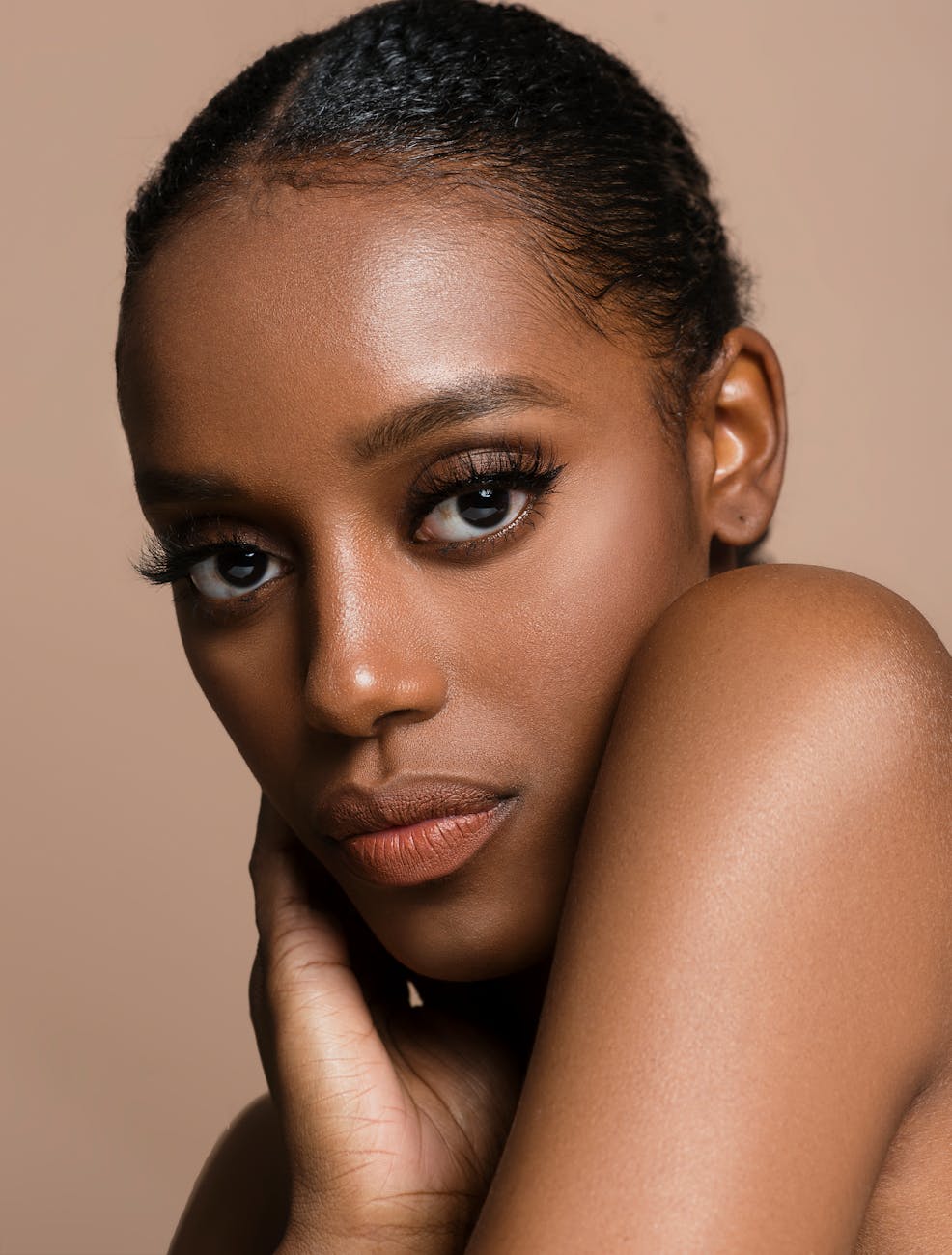
Beauty has fascinated philosophers, scientists, artists, and theologians for centuries. Across cultures, it is both a subjective experience and an objective set of measurable traits, shaped by biology, culture, and history. The word beauty takes different forms across languages: in German, Schönheit; in Italian, Bellezza; in French, Beauté; and in Hebrew, יֹפִי (Yofi). Although the term varies linguistically, the concept is universally recognized and often linked to status, desirability, and social capital.
From evolutionary theory to biblical scripture, beauty carries implications for survival, reproduction, and morality. For Black individuals, the perception and valuation of beauty are shaped not only by universal human psychology but also by historical systems of racism and Eurocentric standards that privilege whiteness (Hunter, 2011).
Defining Beauty: Science and Subjectivity
Biologically, beauty often aligns with symmetry, sexual dimorphism, skin clarity, and adherence to cultural averages (Rhodes, 2006; Little et al., 2011). Symmetry is thought to signal genetic health, while features near the population average (the “averageness hypothesis”) are often rated as more attractive because they may indicate genetic diversity (Perrett et al., 1999).
Culturally, beauty is not purely universal. Preferences vary by region, era, and ideology. While one society might favor lighter skin or smaller noses, another might value fuller figures or darker skin tones. The aphorism “beauty is in the eye of the beholder” captures the subjectivity, yet research shows consistent cross-cultural agreement on certain features — suggesting that beauty is both subjective and partly objective (Langlois et al., 2000).
Elizabeth Taylor and Lena Horne: A Comparative Analysis of Beauty Across Race and Culture
Beauty, while often described as subjective, is shaped by cultural, historical, and biological influences. Two of the most celebrated women of the 20th century—Elizabeth Taylor and Lena Horne—exemplify distinct yet overlapping paradigms of feminine beauty. While Taylor’s features have been canonized within Eurocentric beauty standards, Horne’s beauty embodied the elegance, poise, and resilience of African-American womanhood during a time when Black women were systematically excluded from mainstream beauty recognition.
Physical Aesthetics and Genetic Markers
Elizabeth Taylor (1932–2011) possessed what many beauty scientists and historians consider near-classical facial proportions, with high cheekbones, a defined jawline, symmetrical features, and an extremely rare genetic trait: violet eyes caused by a unique melanin distribution in the iris. Her bone structure conformed closely to the neoclassical canons of beauty documented in Renaissance art, and her face demonstrated a high degree of symmetry—an attribute frequently linked to perceived attractiveness in evolutionary psychology (Little, Jones, & DeBruine, 2011). Taylor’s skin tone, luminous under Hollywood lighting, also benefited from color contrast theory, making her eyes appear even more striking.
Lena Horne (1917–2010) exhibited a different but equally powerful beauty, shaped by African, Native American, and European ancestry. Her facial structure combined almond-shaped eyes, high cheekbones, and a soft yet defined jawline. Her golden-brown complexion and natural grace challenged the prevailing stereotypes of Black women in mid-20th-century America, where lighter skin often provided more access to mainstream platforms (Hunter, 2007). Yet Horne’s beauty was not just genetic—it was amplified by her regal posture, distinctive smile, and the way she carried herself with understated elegance, which aligned with what psychologists call “aesthetic charisma” (Etcoff, 1999).
Cultural and Media Representation
In Hollywood’s Golden Age, Elizabeth Taylor was groomed for stardom in a system that celebrated and exported white feminine ideals globally. She was cast in romantic leads, her image plastered across magazines, and her beauty positioned as both timeless and universal. Taylor’s roles often reinforced a “classic Western beauty archetype”, allowing her to become a symbol of luxury, glamour, and desirability.
By contrast, Lena Horne faced a segregated entertainment industry that limited the roles available to Black actresses. Even with her extraordinary beauty, she was often typecast as a nightclub singer or exotic beauty, with her speaking roles heavily censored in films shown in the American South. Still, Horne became a trailblazer—one of the first Black women to secure a Hollywood contract—and her beauty took on symbolic meaning, representing Black dignity, resilience, and sophistication during the Civil Rights era.
Psychological and Social Impact of Beauty
Research indicates that beauty can yield tangible advantages—higher earning potential, greater social mobility, and preferential treatment (Hamermesh & Biddle, 1994). Both Taylor and Horne benefited from this to some extent, but within very different racial contexts. Taylor’s beauty translated into major film contracts, media control over her public image, and the freedom to navigate high society without racial barriers. Horne’s beauty, while granting her visibility and influence, was constantly negotiated against the backdrop of racism, where beauty could not shield her from discrimination but could amplify her role as a cultural icon and activist.
Biblical and Philosophical Dimensions of Beauty
From a biblical perspective, beauty is acknowledged as a divine gift yet accompanied by the caution that it is fleeting and secondary to character (Proverbs 31:30, KJV). While Taylor’s beauty was often framed in terms of physical perfection, Horne’s public image intertwined beauty with moral substance, dignity, and perseverance—attributes more aligned with scriptural ideals of beauty that transcend physical form.
Elizabeth Taylor’s beauty represented the pinnacle of mid-century Eurocentric standards—symmetry, rarity, and glamour—while Lena Horne’s beauty redefined the visibility and elegance of Black womanhood in a racially exclusive industry. Both women captivated audiences, but their experiences underscore how race shapes the reception, representation, and social capital of beauty. Taylor’s beauty was universally marketed; Horne’s was both celebrated and politicized, making her an enduring figure in conversations about beauty, representation, and equality.
Beauty and Life Outcomes
Numerous studies have shown that physical attractiveness correlates with higher earnings, more favorable job evaluations, and perceived competence (Hamermesh & Biddle, 1994). Attractive individuals are more likely to be hired, earn higher salaries, and are perceived as more persuasive in leadership roles (Judge et al., 2009).
Marriage outcomes are also affected: physically attractive women are more likely to marry and to marry men with higher socioeconomic status, though beauty does not necessarily guarantee marital stability (Rosenfeld, 2014). For men, handsomeness may boost dating and early relationship opportunities but appears to have a smaller effect on marriage duration compared to women (Udry & Eckland, 1984).
Race and Beauty in a Global Context
In a world where Eurocentric beauty standards dominate global media, white women often receive disproportionate exposure and are perceived as the “default” beauty in Western societies (Craig, 2006). This media bias means that, historically, white actresses such as Angelina Jolie have enjoyed greater international visibility compared to Black actresses like Jayne Kennedy, despite Kennedy’s extraordinary beauty and talent.
Similarly, men like Brad Pitt benefit from globalized ideals of male beauty, while Black male icons like Billy Dee Williams are celebrated but often within more limited cultural frames. The imbalance reflects systemic bias in casting, advertising, and fashion industries.
For Black women, beauty is often filtered through both racialized and gendered stereotypes. The cultural fetishization of certain features (e.g., full lips, curvaceous bodies) has been appropriated and celebrated when exhibited by white women, while historically devalued when associated with Black women (Patton, 2006).
Psychological Factors and Perception
Psychologically, beauty influences first impressions, social status, and interpersonal trust. The “halo effect” describes how people assume that attractive individuals also possess other positive traits, such as intelligence or kindness (Dion et al., 1972). Beauty can boost self-esteem and social mobility, but it may also lead to objectification or jealousy, particularly for women.
For men, attractiveness can yield similar advantages in social and professional settings, though the emphasis in male beauty tends to favor indicators of strength, symmetry, and social dominance rather than youthfulness (Grammer et al., 2003). Comparisons between attractive men and women show that while both benefit from the halo effect, women’s beauty tends to be more heavily sexualized and tied to reproductive-age cues, whereas male beauty is linked more to status and resource acquisition (Puts, 2010).
Biblical Perspective on Beauty
The KJV Bible recognizes beauty but warns against its fleeting nature:
- Proverbs 31:30 — “Favour is deceitful, and beauty is vain: but a woman that feareth the LORD, she shall be praised.”
- 1 Peter 3:3-4 — Beauty should not be merely outward adornment but the inner character of a “meek and quiet spirit.”
- Song of Solomon celebrates beauty poetically, showing that physical attraction has a rightful place in love and marriage.
The biblical approach balances the appreciation of beauty with the reminder that moral character outweighs physical appearance in eternal value.
Beauty Markers in Science and Culture
Beauty markers are features consistently associated with attractiveness across studies:
- Facial symmetry
- Clear, even-toned skin
- Facial averageness
- Youthful appearance
- Proportionate facial features (e.g., adherence to the golden ratio)
- Cultural grooming and adornment practices
In some cultures, markers include skin tone, hair texture, body shape, and even ritual scars or tattoos, showing the cultural plasticity of beauty ideals (Etcoff, 1999).
Beauty: Advantage or Double-Edged Sword?
While beauty can bring social advantages, it is also double-edged. Attractive individuals may face greater scrutiny, unwanted attention, or assumptions about vanity. For Black individuals, beauty may sometimes be exoticized or tokenized, reducing their identity to aesthetics rather than holistic humanity.
Ultimately, science suggests that beauty is neither fully in the beholder’s eye nor fully fixed by biology. It is a dynamic interplay of innate human preferences, cultural conditioning, and personal expression.
References
Craig, M. L. (2006). Race, beauty, and the tangled knot of a guilty pleasure. Feminist Theory, 7(2), 159–177. https://doi.org/10.1177/1464700106064412
Dion, K., Berscheid, E., & Walster, E. (1972). What is beautiful is good. Journal of Personality and Social Psychology, 24(3), 285–290. https://doi.org/10.1037/h0033731
Etcoff, N. (1999). Survival of the prettiest: The science of beauty. Anchor Books.
Grammer, K., Fink, B., Møller, A. P., & Thornhill, R. (2003). Darwinian aesthetics: Sexual selection and the biology of beauty. Biological Reviews, 78(3), 385–407. https://doi.org/10.1017/S1464793102006085
Hamermesh, D. S., & Biddle, J. E. (1994). Beauty and the labor market. American Economic Review, 84(5), 1174–1194.
Hunter, M. (2011). Buying racial capital: Skin-bleaching and cosmetic surgery in a globalized world. The Journal of Pan African Studies, 4(4), 142–164.
Judge, T. A., Hurst, C., & Simon, L. S. (2009). Does it pay to be smart, attractive, or confident? Psychological Science, 20(10), 1225–1233. https://doi.org/10.1111/j.1467-9280.2009.02423.x
Langlois, J. H., et al. (2000). Maxims or myths of beauty? A meta-analytic and theoretical review. Psychological Bulletin, 126(3), 390–423. https://doi.org/10.1037/0033-2909.126.3.390
Little, A. C., Jones, B. C., & DeBruine, L. M. (2011). Facial attractiveness: Evolutionary based research. Philosophical Transactions of the Royal Society B, 366(1571), 1638–1659. https://doi.org/10.1098/rstb.2010.0404
Patton, T. O. (2006). Hey girl, am I more than my hair?: African American women and their struggles with beauty, body image, and hair. NWSA Journal, 18(2), 24–51.
Perrett, D. I., et al. (1999). Symmetry and human facial attractiveness. Evolution and Human Behavior, 20(5), 295–307. https://doi.org/10.1016/S1090-5138(99)00014-8
Puts, D. A. (2010). Beauty and the beast: Mechanisms of sexual selection in humans. Evolution and Human Behavior, 31(3), 157–175. https://doi.org/10.1016/j.evolhumbehav.2010.02.005
Rhodes, G. (2006). The evolutionary psychology of facial beauty. Annual Review of Psychology, 57, 199–226. https://doi.org/10.1146/annurev.psych.57.102904.190208
Rosenfeld, M. J. (2014). Couple longevity in the era of same-sex marriage in the United States. Journal of Marriage and Family, 76(5), 905–918. https://doi.org/10.1111/jomf.12141
Udry, J. R., & Eckland, B. K. (1984). Benefits of being attractive: Differential payoffs for men and women. Psychological Reports, 54(1), 47–56. https://doi.org/10.2466/pr0.1984.54.1.47
 THE BROWN GIRL DILEMMA