
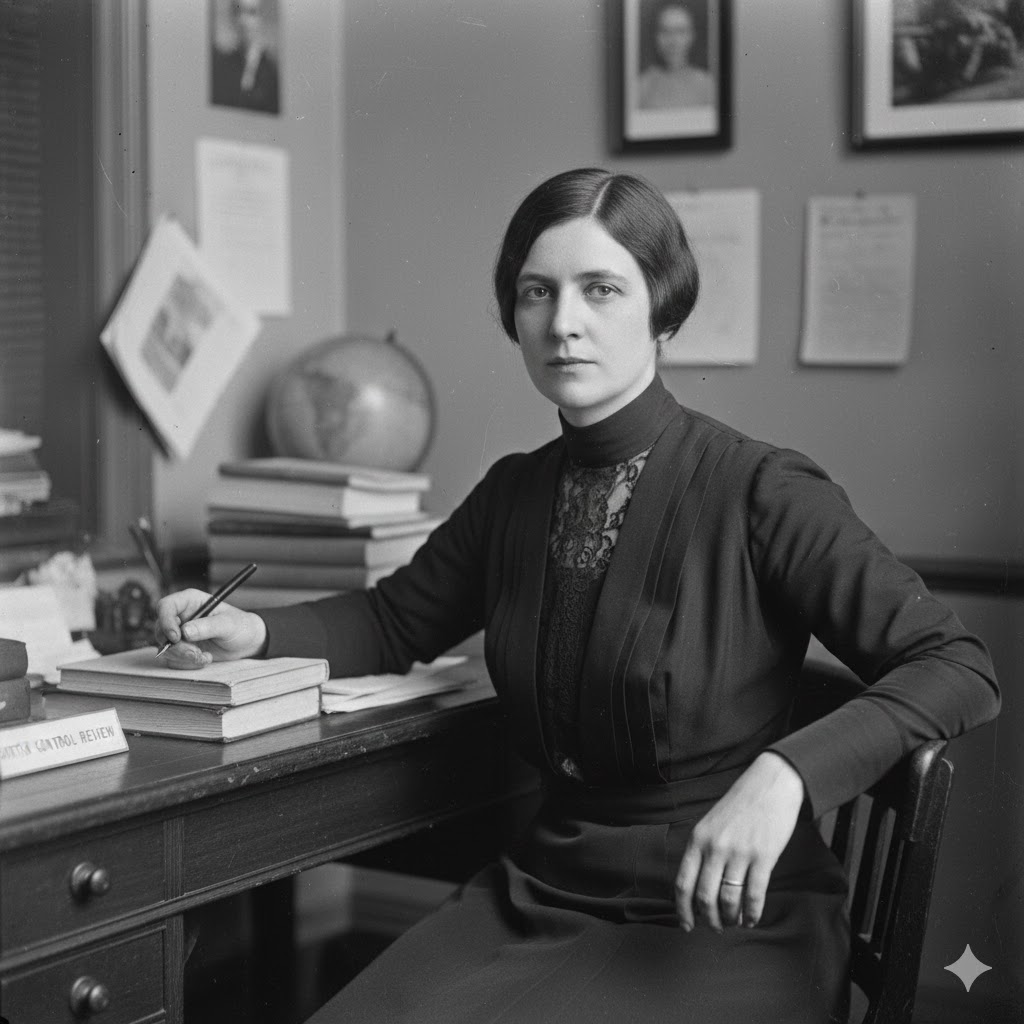
Margaret Louise Higgins Sanger (1879–1966) is a highly influential but deeply controversial figure in American history. As a nurse, educator, and activist, she is best known for pioneering the birth control movement in the United States. In 1916, she opened what’s recognized as the first U.S. birth control clinic, and she played a key role in founding organizations that later became Planned Parenthood. Her advocacy significantly widened access to contraception for women, especially those in under-resourced communities.
However, Sanger’s legacy is marred by her association with the eugenics movement — a widespread but now-discredited ideology in the early 20th century that sought to improve society by encouraging reproduction among people deemed “fit” and discouraging it among those considered “unfit.” She believed that birth control could curb “over‑fertility” and reduce the number of people she viewed as biologically or socially unfit. Critics argue that these beliefs dehumanized the poor, the disabled, and racial minorities.
One of the most controversial aspects of her work was the so-called “Negro Project”, launched in the late 1930s. Its stated goal was to deliver family-planning services to Black communities in the rural American South. In a 1939 letter to Dr. Clarence Gamble, Sanger wrote, “We do not want word to go out that we want to exterminate the Negro population, and the minister is the man who can straighten out that idea if it ever occurs to any of their more rebellious members.” She proposed recruiting Black ministers — because, she argued, they could engage their communities more effectively than white doctors.
Critics interpret her language as evidence that she saw Black people’s reproduction as problematic or even dangerous. Defenders, on the other hand, argue that she was responding to real mistrust among Black Americans toward white-led medical institutions. According to some historical accounts, Sanger’s strategy was pragmatic: she believed that if Black community leaders were on board, they could help dispel fears that her birth control work was a covert attempt to reduce the Black population.
Her relationship with Martin Luther King Jr. reflects another layer of complexity. In 1966, King received the Margaret Sanger Award from Planned Parenthood, acknowledging his support for family planning. King saw contraception as part of promoting economic justice and improving the well-being of Black families. While some applaud this alignment as a pragmatic partnership to promote social good, others criticize King for not addressing Sanger’s eugenic associations. The relationship highlights the tension between Sanger’s contributions to reproductive autonomy and the problematic aspects of her ideology.
Further complicating her legacy is her connection to white supremacist groups. Sanger once spoke to the women’s auxiliary of the Ku Klux Klan — a fact that alarms many. She also urged the sterilization of people she regarded as “unfit,” language that aligns with the darker edges of the eugenics movement. Her writings and speeches often reflect a belief in “racial betterment” — a concept common among many eugenicists of her day but deeply offensive (and harmful) in hindsight.
Yet, historical documentation also shows she did more than simply disparage: she opened birth control clinics in Harlem and worked with prominent Black leaders like W.E.B. Du Bois and Mary McLeod Bethune. According to Planned Parenthood’s own history, Sanger sought to make contraception accessible for marginalized women — though how she pursued that goal remains suspect to many.
For a follower of Christ or a biblical evaluation of Sanger’s life and work, several ethical concerns arise:
- The sanctity of human life: From a biblical worldview, every human being bears the image of God (e.g., Genesis 1:27). Ideologies that treat certain lives as “less worthy” or “unfit” clash with that fundamental doctrine.
- The dignity of the vulnerable: The Bible calls believers to defend and care for the weak and marginalized (see Proverbs 31:8–9). If birth control or eugenics is used to suppress disadvantaged populations rather than truly empower them, it raises serious moral red flags.
- Repentance and legacy: Scripture shows that people are complex; even those who do great good can do serious harm (and vice versa). Christians should neither whitewash Sanger’s controversies nor dismiss her contributions outright — but they should confront them honestly.
Abortion in Sanger’s era was largely illegal and dangerous. Women who sought to terminate pregnancies often faced life-threatening procedures, performed in unsafe and unregulated conditions. Sanger’s primary focus, however, was not on legalizing abortion but on promoting contraception as a safer and more effective alternative. She viewed birth control as “the better way” to prevent unwanted pregnancies and to reduce the need for back-alley abortions. Contraception, according to Sanger, was simpler, safer, and more humane compared to the dangerous methods of illegal abortion prevalent at the time.
In her 1914 pamphlet Family Limitation, Sanger included some early advice on abortion using quinine, which was risky and primitive, but later editions of the pamphlet removed much of this content. Over time, she became more cautious about abortion, publicly discouraging it while continuing to advocate for preventive methods. She described abortion as “taking life” and consistently urged women to prevent pregnancy rather than resort to termination. According to Planned Parenthood, Sanger did not promote abortion as her main agenda; instead, she focused on contraception as a way to reduce the number of abortions necessary in society.
Sanger “marketed” contraception through education and public advocacy. She wrote pamphlets, including Family Limitation, that provided practical advice on birth control. She framed access to contraception as a women’s rights issue, emphasizing the importance of giving women control over their bodies, families, and futures. Additionally, she highlighted the social and economic consequences of unwanted pregnancies and large families, particularly among poor and immigrant populations, presenting birth control as part of broader social reform.
Her advocacy included civil disobedience: she opened clinics at legal risk and distributed contraceptive literature, even when it was considered “obscene” by contemporary standards. She also aligned birth control with science and public health, emphasizing the role of contraception in medical progress, hygiene, and the well-being of future generations.
From a biblical perspective, the question of abortion raises critical ethical considerations. The Sixth Commandment, commonly translated as “Thou shalt not kill,” is more precisely understood as prohibiting unjust or premeditated murder. In Matthew 5:21–22, Jesus expands this teaching, linking anger, insult, and hatred to the same moral seriousness as murder. The Bible differentiates between types of killing, acknowledging contexts like capital punishment and war in the Old Testament, yet consistently upholds the sanctity and dignity of human life, made in the image of God. Murder, in the biblical sense, is a grave sin and violates this divine image.
Evaluating Sanger from a follower of Christ’s ethical perspective presents a tension. On one hand, her work expanded access to contraception, potentially reducing harm, unwanted pregnancies, and deaths from unsafe abortions. On the other hand, her association with eugenics and her rhetoric about “unfit” populations raise serious moral questions about the value she placed on certain lives. Followers of Christ might ask whether her intentions to reduce suffering were morally justified if her means undermined the dignity of all people. Her legacy challenges us to consider how to remember individuals who have done both good and harm, balancing recognition of positive contributions with honest acknowledgment of flawed beliefs. The biblical prohibition on murder emphasizes that any ideology advocating population control must be carefully scrutinized through the lens of human dignity.
In short, Margaret Sanger was not a hero. Her embrace of eugenics, birth control, abortions,and problematic racial strategies cannot be ignored. Her story is a cautionary tale: powerful social reform can be tainted when it intersects with dehumanizing ideologies.
References
- Snopes, “Margaret Sanger Did Not Advocate ‘Exterminating the Negro Population’” Snopes
- Time, “What Margaret Sanger Really Said About Eugenics and Race” TIME
- ALL.org, “Margaret Sanger” ALL
- Politifact, “Founder of Planned Parenthood did not refer to Black women as weeds, was not Ku Klux Klan supporter” PolitiFact
- Live Action, “7 shocking quotes by Planned Parenthood’s founder” Live Action
- Michael Journal, “Margaret Sanger – The Founder of Planned Parenthood” Michael Journal
- U.S. Supreme Court amicus brief / Opposition Claims document, “We do not want word to get out that we want to exterminate the Negro population.” supremecourt.gov
- PAPRO Life “Important Points to Remember: Margaret Sanger” factsheet paprolife.org
- Congressional hearing document quoting Sanger about fearing Black opposition to extermination claim docs.house.gov
- Wikipedia, “Margaret Sanger” (en.wikipedia.org)
- Wikipedia, “Family Limitation” (en.wikipedia.org)
- Wikipedia, “Negro Project” (en.wikipedia.org)
- Planned Parenthood, “Opposition Claims About Margaret Sanger” (plannedparenthood.org)
- Feminist Majority Foundation, “The Real Story of Margaret Sanger” (feminist.org)
- The Persistent, “Margaret Sanger and Birth Control” (thepersistent.com)
- Encyclopedia Britannica, “Margaret Sanger” (britannica.com)
- Wikipedia, “Thou shalt not kill” (en.wikipedia.org)
 THE BROWN GIRL DILEMMA