
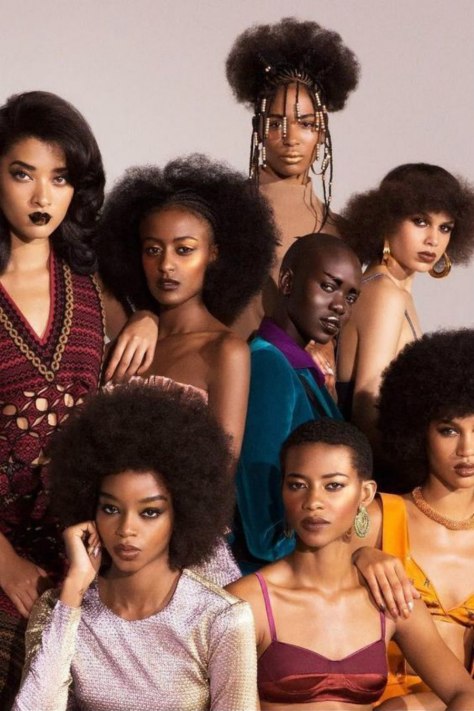
Throughout history and across continents, skin tone has functioned as more than a biological trait—it has been weaponized as a social currency. Pigmentocracy, a term used to describe a social system in which status and privilege are distributed according to skin color, persists as a subtle yet powerful force that governs the lives of people of color across the globe. Rooted in colonial conquest and racial ideology, pigmentocracy maintains a stratified racial order in which lighter-skinned individuals occupy higher social positions, while those with darker skin tones are systematically marginalized. This essay explores the origins, manifestations, and consequences of pigmentocracy—especially within Black communities—and examines its relationship to colorism, media representation, social mobility, and global racial hierarchies.
“Pigmentocracy is the silent architect of racial division—a hierarchy built not just on color, but on the invisible weight of colonial trauma.”
—Dr. Margaret Hunter, Sociologist
Origins and Definition of Pigmentocracy
Pigmentocracy derives from the Latin pigmentum (color) and the Greek kratos (rule or power), meaning “rule by skin color.” Though the term was popularized in the 20th century by scholars like Venezuelan sociologist Fernando Henríquez and further developed by researchers such as Dr. Edward Telles, the ideology behind pigmentocracy dates back centuries. During colonial rule in the Americas, Europe established caste systems that ranked people according to racial mixing and skin tone, with lighter, European features correlating with higher status. The Spanish casta system, for example, created over a dozen racial categories, elevating whiteness and subjugating those with darker skin.
This system became entrenched not only in law but also in psychology and economics. Slavery, apartheid, Jim Crow, and segregation all functioned on the premise that whiteness was supreme and blackness inferior. Within this structure, pigmentocracy served to divide enslaved and colonized peoples by elevating those with lighter complexions—often the result of rape or mixed heritage—as overseers, house servants, or social intermediaries. The legacy of this system continues to influence the sociopolitical landscapes of nations today.
Pigmentocracy and Colorism
Pigmentocracy is intimately linked to colorism, which refers to discrimination based on skin tone within the same racial or ethnic group. While racism targets individuals across racial categories, colorism reinforces hierarchies within those groups, granting unearned privilege to individuals who possess lighter skin or Eurocentric features. These phenomena reinforce one another: pigmentocracy creates the structure, while colorism sustains it through interpersonal and cultural bias.
In Black communities, colorism often surfaces in beauty standards, educational access, and romantic desirability. Lighter-skinned individuals may be perceived as more attractive, employable, or intelligent, while darker-skinned people face heightened criminalization, poverty, and exclusion. The consequences are both material and psychological—impacting self-worth, identity formation, and economic opportunity.
Stages of Pigmentocratic Impact
The effects of pigmentocracy unfold in four critical stages:
- Colonial Codification: European colonists used skin tone to divide and rule, embedding color-based hierarchies into legal systems.
- Institutional Reproduction: Post-slavery societies reinforced skin tone hierarchies through employment, education, and housing discrimination.
- Cultural Internalization: Within communities of color, lighter skin becomes a subconscious standard of beauty and success.
- Modern Globalization: Skin-lightening industries, Western media dominance, and globalized beauty norms continue to uphold the supremacy of light skin across continents.
Global and Cultural Examples
In the United States, sociologist Ellis Monk (2015) found that darker-skinned African Americans face greater economic disadvantage, harsher criminal sentencing, and more health disparities than their lighter-skinned peers. In Brazil, often hailed for its racial “mixing,” skin tone still dictates access to jobs, education, and social networks. India’s deeply entrenched caste system and obsession with fair skin has fueled a billion-dollar skin-lightening industry, while in the Philippines, colonial legacies have left a preference for Eurocentric beauty that permeates advertising and cinema.
Celebrities and the Visibility of Pigmentocracy
In the world of entertainment and media, pigmentocracy is glaringly apparent:
- Zendaya, a light-skinned Black actress, has acknowledged the privilege her complexion affords her in casting opportunities, often referred to as “acceptable Blackness” in Hollywood.
- Beyoncé, with her lighter skin and blonde hair, has become a global icon, but some critics argue her image conforms to Eurocentric standards that marginalize darker-skinned artists.
- Lupita Nyong’o, a dark-skinned actress and activist, has spoken openly about being teased for her skin tone and how she did not see herself represented in media growing up.
- In Latin American telenovelas, white or light-skinned actors are consistently cast in leading roles, while darker-skinned Afro-Latinos are relegated to comedic or servant parts.
These examples reflect a system that not only limits opportunities for those with darker skin but actively shapes societal ideals and expectations.
Social Mobility and Racial Hierarchy
Pigmentocracy directly influences social mobility. Lighter-skinned individuals often experience:
- Greater access to higher education and employment opportunities
- Increased wealth accumulation and professional advancement
- Better treatment by law enforcement and healthcare providers
Meanwhile, darker-skinned individuals are frequently relegated to the lowest rungs of the social order. Research has consistently shown that employers favor lighter-skinned candidates, even when qualifications are identical (Hunter, 2007).
Globally, white Europeans occupy the top of the racial hierarchy, with groups perceived as closer to whiteness—such as light-skinned Asians or Latinos—ranking above Black, Indigenous, or dark-skinned populations. This racial ordering maintains white supremacy under the guise of color-neutral meritocracy.
The Psychological Toll and the Call for Change
The psychological toll of pigmentocracy includes internalized racism, self-hatred, and generational trauma. Many Black and Brown children grow up without seeing themselves as beautiful, worthy, or powerful. This invisibility fosters feelings of inferiority and perpetuates cycles of poverty and marginalization.
The solution lies in education, representation, and cultural reprogramming. Schools must teach the true history of colonialism and racism, including the nuances of colorism. Media must expand representation to include diverse shades and features. Communities must affirm the value of dark skin, reframe standards of beauty, and dismantle internalized bias.
Dr. Yaba Blay, a leading scholar on skin tone and identity, insists:
“Until we address the internalized white supremacy that is colorism, we will continue to see ourselves through the gaze of our oppressors.”
Conclusion
Pigmentocracy is not a relic of the past; it is a living, evolving system of inequality that continues to shape the destinies of millions. Its roots in colonialism, its entanglement with colorism, and its reach across cultures and continents make it one of the most insidious social hierarchies in modern history. Addressing this issue requires not only systemic reforms but a radical reimagining of identity, beauty, and worth. Until every shade is seen as equally human and divine, the architecture of pigmentocracy will remain intact—and its silent rule will continue to divide, diminish, and oppress.
References
Blay, Y. (2021). One Drop: Shifting the Lens on Race. Beacon Press.
Hunter, M. (2007). The persistent problem of colorism: Skin tone, status, and inequality. Sociology Compass, 1(1), 237–254. https://doi.org/10.1111/j.1751-9020.2007.00006.x
Monk, E. P., Jr. (2015). The cost of color: Skin color, discrimination, and health among African-Americans. American Journal of Sociology, 121(2), 396–444. https://doi.org/10.1086/682162
Russell, K., Wilson, M., & Hall, R. E. (1992). The color complex: The politics of skin color among African Americans. Anchor Books.
Telles, E. E. (2014). Pigmentocracies: Ethnicity, race, and color in Latin America. University of North Carolina Press.
 THE BROWN GIRL DILEMMA