
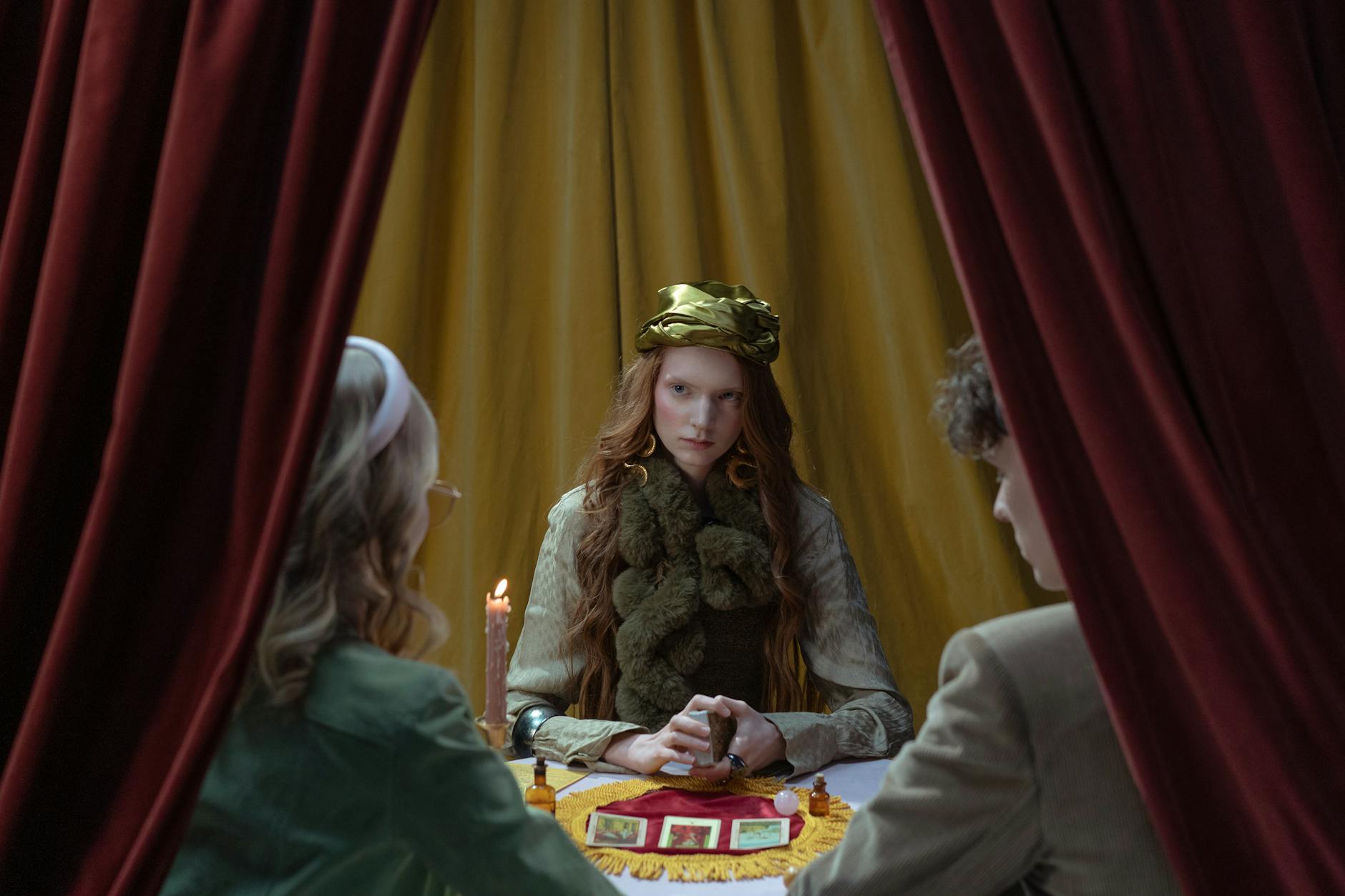
Throughout human history, death has evoked both fear and fascination. While most cultures honor the dead with reverence, some have crossed moral and spiritual boundaries by attempting to communicate with or even engage intimately with the dead. This essay explores two disturbing yet historically significant phenomena—necromancy (communication with the dead) and necrophilia (sexual attraction to corpses)—from both a biblical and psychological standpoint.
In the Bible, necromancy is strictly forbidden. Deuteronomy 18:10–12 (KJV) declares, “There shall not be found among you any one that maketh his son or his daughter to pass through the fire, or that useth divination, or an observer of times, or an enchanter, or a witch, or a charmer, or a consulter with familiar spirits, or a wizard, or a necromancer.” Such practices were considered abominations before God because they defiled the purity of spiritual worship and invited demonic deception.
The most famous biblical account of necromancy occurs in 1 Samuel 28, where King Saul, desperate for guidance, consults the Witch of Endor to summon the spirit of the prophet Samuel. Although the spirit appeared and rebuked Saul, this act marked Saul’s spiritual downfall. His decision to seek the dead rather than God demonstrated how fear, desperation, and disobedience lead to spiritual corruption.
Necromancy, at its core, is a rebellion against divine order. It attempts to bridge a boundary that God has firmly set: the separation between the living and the dead. Ecclesiastes 9:5 (KJV) teaches, “For the living know that they shall die: but the dead know not any thing.” Seeking wisdom or comfort from the dead implies mistrust in God’s sovereignty and a reliance on forbidden spiritual sources.
In the ancient world, necromancy was not uncommon. Egyptian priests, Babylonian magicians, and Greco-Roman mystics practiced rituals to speak with the dead or use corpses in spiritual ceremonies. Archaeological evidence from Mesopotamia and Egypt reveals tomb inscriptions and magical texts invoking spirits for divination. These ancient forms of necromancy often merged with ancestor worship and early occultism.
From a psychological perspective, necromancy can be seen as a manifestation of unresolved grief or obsession with control. Carl Jung interpreted such fascination with death as a projection of humanity’s shadow—the repressed part of the psyche that seeks power through forbidden means. This aligns with Romans 1:21–23 (KJV), which describes how humans, “professing themselves to be wise,” became vain and turned to idolatry and corruption.
Necrophilia, though distinct from necromancy, shares similar spiritual and psychological roots in death obsession and moral decay. It represents a severe deviation from natural affection and empathy. Psychologically, necrophilia is classified as a paraphilia—a disorder involving intense sexual attraction to corpses (American Psychiatric Association, 2013). It reflects an inability to form healthy relationships, often rooted in control, dominance, or fear of rejection.
In biblical terms, necrophilia parallels the corruption described in Romans 1:26–27, where individuals “changed the natural use into that which is against nature.” The act defies both morality and biology, reflecting a complete breakdown of conscience and spiritual discernment. It exemplifies the result of a reprobate mind—a mind devoid of divine guidance and moral restraint.
Historical accounts show that necrophilia has appeared in various eras and societies. Ancient Egyptian embalming practices, where priests prepared royal corpses, sometimes included violations of the deceased. In medieval Europe, grave robbers and certain occult sects used corpses in rituals claiming to harness death’s power. These acts often combined sexual perversion with spiritual deception.
The modern fascination with death persists in subtle forms through pop culture, horror films, and gothic subcultures. Television shows romanticizing vampires or communicating with spirits normalize necromantic ideas. Psychologically, repeated exposure desensitizes the public to death’s sacredness. Spirit boards, séances, and “ghost-hunting” entertainment echo ancient necromantic rituals, blurring moral and spiritual boundaries.
Biblically, such practices are spiritual contamination. Isaiah 8:19 (KJV) warns, “And when they shall say unto you, Seek unto them that have familiar spirits, and unto wizards that peep, and that mutter: should not a people seek unto their God?” This verse rebukes the human tendency to seek the supernatural through forbidden means rather than trusting the Creator.
The allure of necromancy lies in the human desire for control over the unknown. People often turn to it out of grief, curiosity, or power hunger. Yet, Scripture reminds believers that death belongs to God alone: “It is appointed unto men once to die, but after this the judgment” (Hebrews 9:27, KJV). Attempting to manipulate or communicate beyond that divine order opens the soul to deception.
From a clinical psychology viewpoint, necromantic or necrophilic tendencies often arise from trauma, loss, or deep-seated fear of abandonment. Freud associated such behavior with Thanatos, the death drive—a subconscious compulsion toward destruction or reunion with the dead. It is an extreme manifestation of emotional stagnation and moral disorder.
Spiritually, necromancy and necrophilia mirror the broader human rebellion against God. Both represent attempts to redefine life and death outside divine authority. In doing so, individuals open themselves to unclean influences. Ephesians 5:11 (KJV) instructs, “Have no fellowship with the unfruitful works of darkness, but rather reprove them.”
Throughout church history, necromancy was considered a major form of witchcraft. Early Christian theologians like Augustine and Tertullian condemned all attempts to summon the dead as demonic illusions. They taught that any spirit appearing in such rituals was not the deceased but an impersonating demon meant to deceive the living.
The Bible repeatedly connects necromancy with judgment. King Manasseh practiced it and “wrought much wickedness in the sight of the Lord” (2 Kings 21:6, KJV), leading to Judah’s eventual downfall. Similarly, necromantic practices among the Canaanites led God to command Israel to destroy their altars and idols (Deuteronomy 12:2–3).
Modern forms of necromancy include spiritism, channeling, and ancestor veneration when conducted outside of biblical faith. These practices may appear innocent or comforting but carry spiritual risk. They shift the focus from God’s Word to unseen forces that can manipulate emotions and beliefs.
Even literature and media glamorize necromantic powers through characters like witches, mediums, and “dark magicians.” While often fictional, they desensitize society to the gravity of death and spiritual deception. The fascination with the “undead” reflects humanity’s denial of mortality and desire to transcend divine boundaries through artificial means.
Psychologically, necrophilic attraction symbolizes the death of empathy and moral conscience. Individuals exhibiting such behaviors often display antisocial traits, lack of remorse, and detachment from reality (Holmes, 1998). Spiritually, it parallels the “living dead” described in Ephesians 2:1 (KJV): “And you hath he quickened, who were dead in trespasses and sins.”
Ultimately, both necromancy and necrophilia signify humanity’s corruption when detached from divine truth. They expose the spiritual void that arises when God is removed from the understanding of life and death. Only faith in Christ offers redemption from such darkness, as He declares in John 11:25 (KJV), “I am the resurrection, and the life.”
The fascination with death is not new, but its persistence reveals humanity’s ongoing struggle with mortality and sin. Rather than seeking forbidden contact with the dead, believers are called to honor the sanctity of life and trust in God’s control over death and the afterlife.
In conclusion, necromancy and necrophilia, though distinct, share a spiritual root of rebellion and moral decay. Both attempt to merge life and death in ways that pervert divine order. The Bible warns against these practices not only for moral reasons but to protect the soul from deception. As Ephesians 6:12 (KJV) reminds, “For we wrestle not against flesh and blood, but against principalities, against powers, against the rulers of the darkness of this world.” The only true safeguard against such darkness is the light of God’s Word and the renewing of the mind through Christ.
References
- American Psychiatric Association. (2013). Diagnostic and Statistical Manual of Mental Disorders (5th ed.). Washington, DC.
- Freud, S. (1920). Beyond the Pleasure Principle. London: International Psychoanalytic Press.
- Holmes, R. M. (1998). Sex Crimes: Patterns and Behavior. SAGE Publications.
- Jung, C. G. (1959). Aion: Researches into the Phenomenology of the Self. Princeton University Press.
- The Holy Bible, King James Version (KJV).
- Tertullian, Q. S. F. (197 CE). On the Soul.
- Augustine of Hippo. (426 CE). City of God.
 THE BROWN GIRL DILEMMA