Tag Archives: movies

The Ebony Dolls: Dorothy Dandridge

Otherworldly black muse of Cinema
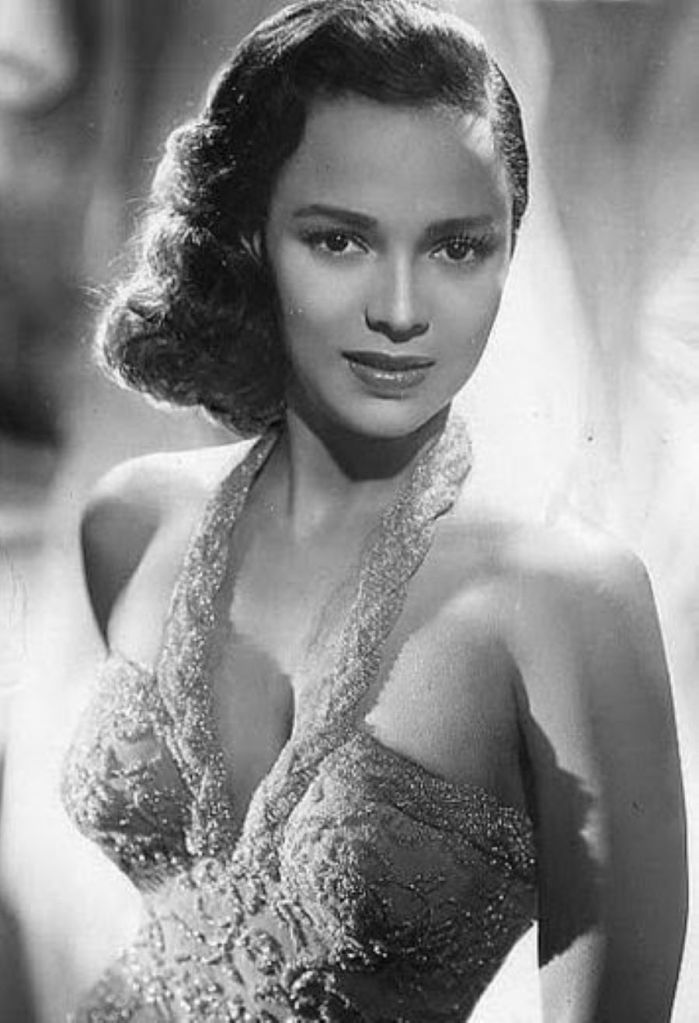
This photograph is the property of its respective owner.

Dorothy Jean Dandridge remains one of the most luminous figures in the history of American cinema—a woman of breathtaking beauty, extraordinary talent, and profound courage who broke barriers for generations of Black actresses. Born on November 9, 1922, in Cleveland, Ohio, she emerged from humble beginnings to become the first African American woman nominated for an Academy Award for Best Actress. Her life was both a triumph and a tragedy, defined by grace, resilience, and the painful realities of racism and colorism in Hollywood’s golden age. With her flawless caramel complexion, delicate features, full lips, and almond-shaped eyes, she became the archetype of cinematic beauty—the original “Black Marilyn Monroe,” yet far deeper and more soulful.

Dorothy’s early life was marked by struggle and instability. Her parents separated before her birth, and she and her sister Vivian were raised by their mother, Ruby Dandridge, a stage performer who recognized her daughters’ natural talent. Ruby was determined that her children would escape poverty through performance. She created an act called “The Wonder Children,” in which Dorothy and Vivian sang and danced in churches throughout the South during the Great Depression. It was a tough childhood filled with long hours and racial discrimination, but it gave Dorothy a foundation in showmanship that would shape her later stardom.

As she grew older, Dorothy’s passion for performance evolved into a desire to act. Her beauty caught the attention of filmmakers, but Hollywood was not ready to embrace a Black actress in leading roles. Her earliest film appearances were minor, often uncredited, and she was typecast as a maid, chorus girl, or “exotic” background beauty. Despite the limited opportunities, her undeniable screen presence shone through. She soon realized that she would need to fight harder than most to be seen not just as a singer or a dancer, but as a serious actress.
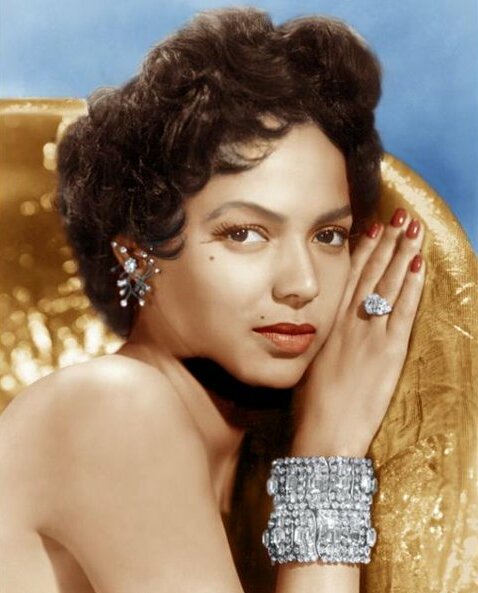
This photograph is the property of its respective owner.

In the 1940s, Dorothy performed with the musical trio “The Dandridge Sisters,” alongside her sister Vivian and their friend Etta Jones. The group performed at the Cotton Club and other prestigious venues, dazzling audiences with their harmonies and elegance. These performances brought Dorothy into the orbit of Hollywood elites and introduced her to industry power players. Yet even as her popularity grew, she was often subjected to the cruelty of racism—barred from staying in the very hotels she performed in and forced to use side entrances to glamorous clubs that showcased her talent.

Her breakthrough came in 1954 when she starred as the seductive and complex Carmen Jones in Otto Preminger’s adaptation of Bizet’s opera Carmen. Her portrayal of Carmen was electrifying—sensual, intelligent, and layered with vulnerability. It was a defining performance that earned her an Academy Award nomination for Best Actress, making her the first Black woman in history to receive such an honor. Her role in Carmen Jones shattered Hollywood’s color barrier and proved that Black women could carry major motion pictures with the same magnetism and skill as their white counterparts.

Dorothy’s beauty was both her blessing and her curse. She was often described as “too beautiful for a Black actress” by studio executives who struggled to fit her into the narrow roles Hollywood reserved for women of color. Colorism played a cruel role in her career—she was considered light enough to be “acceptable” to white audiences but still Black enough to face discrimination from the industry. Directors and producers often fetishized her appearance, exoticizing her rather than recognizing her as a woman of depth and intellect.
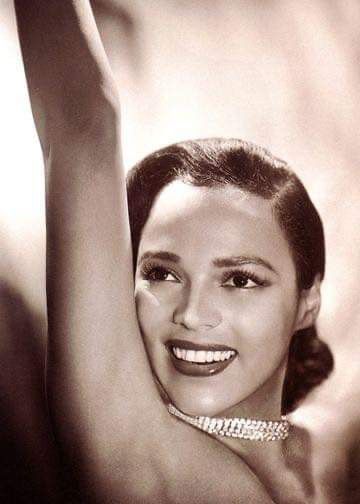
This photograph is the property of its respective owner.

Her personal life reflected the same turbulence she faced professionally. Dorothy married dancer Harold Nicholas of the famed Nicholas Brothers in 1942. The marriage produced one child, Harolyn Suzanne Nicholas, who was born with brain damage and required lifelong care. The emotional and financial strain of caring for her daughter deeply affected Dorothy, contributing to the collapse of her marriage. She later had a relationship with director Otto Preminger, who cast her in Carmen Jones and later Porgy and Bess (1959), but their affair was marred by the racial politics of the time and his refusal to publicly acknowledge their relationship.

Her portrayal in Porgy and Bess alongside Sidney Poitier and Sammy Davis Jr. was another milestone in her career, though it was overshadowed by behind-the-scenes tension and the studio’s handling of the film. Despite the challenges, her performance once again displayed her remarkable ability to infuse complex emotion into her roles. She was not merely acting—she was expressing the frustrations, desires, and dreams of an entire generation of Black women who longed to be seen and respected.

Dorothy’s journey in Hollywood was marked by systemic racism and sexism. She was denied the roles her talent deserved, often replaced by white actresses in films she had been promised. She was invited to glamorous parties but forbidden to swim in hotel pools. Hollywood, while dazzled by her beauty, refused to offer her the humanity it extended to her white peers. She became a tragic symbol of a racist system that could idolize a Black woman’s image while destroying her spirit.

Behind the glamour, Dorothy struggled with loneliness and depression. Her finances suffered due to poor management, and her once-promising career began to fade in the 1960s. Yet even as her circumstances worsened, she continued to fight for her dignity and her art. She performed in nightclubs and continued to act in smaller roles, holding onto her dream that Hollywood would one day recognize her true worth.

Dorothy Dandridge’s untimely death in 1965 at the age of 42 shocked the world. Officially ruled an accidental overdose of antidepressants, many believed her death was a result of exhaustion and despair. She was buried in Los Angeles’ Forest Lawn Cemetery, leaving behind a legacy that was only fully appreciated decades later.
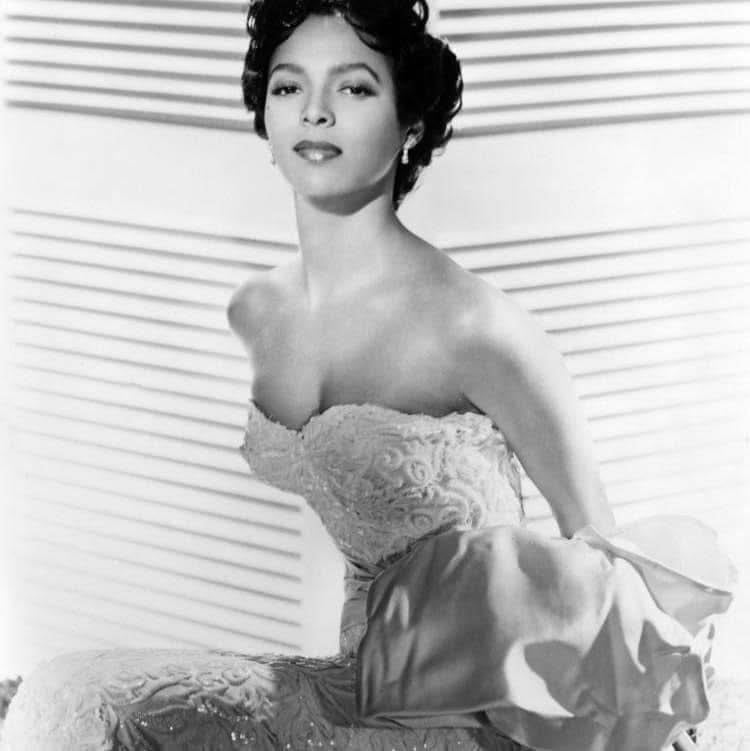
This photograph is the property of its respective owner.

Her influence, however, endured. In 1999, Halle Berry portrayed Dorothy Dandridge in the HBO film Introducing Dorothy Dandridge, a performance that earned Berry both an Emmy and a Golden Globe Award. Halle Berry credited Dorothy as a personal inspiration, saying that her own success as the first Black woman to win an Oscar for Best Actress in 2002 was possible because Dorothy had walked that difficult path first. In many ways, Halle’s triumph was the completion of Dorothy’s interrupted dream.

Dorothy Dandridge contributed to the world not just through her artistry but through her courage. She challenged Hollywood’s racist boundaries, bringing dignity, sensuality, and sophistication to roles previously denied to Black women. She paved the way for actresses like Diahann Carroll, Cicely Tyson, Halle Berry, and countless others who followed in her footsteps.

She also redefined Black beauty on the global stage, making her one of the epitomes of the Ebony Dolls series. Her elegance, grace, and poise influenced fashion, music, and film aesthetics, introducing a new archetype of the Black leading lady—refined, sensual, and complex. Her beauty was not just physical; it was spiritual and artistic, a reflection of her intelligence and emotional depth.

In her lifetime, Dorothy received numerous accolades, including a historic Academy Award nomination, a Golden Globe nomination, and multiple posthumous honors recognizing her contributions to cinema. In 1962, she was awarded a Hollywood Walk of Fame star, ensuring her name would remain immortalized among the legends of film.

Today, Dorothy Dandridge is remembered as more than an actress—she is a symbol of perseverance, artistry, and grace under oppression. Her story is one of triumph over systemic injustice, of beauty and brilliance in a world that often sought to dim her light.
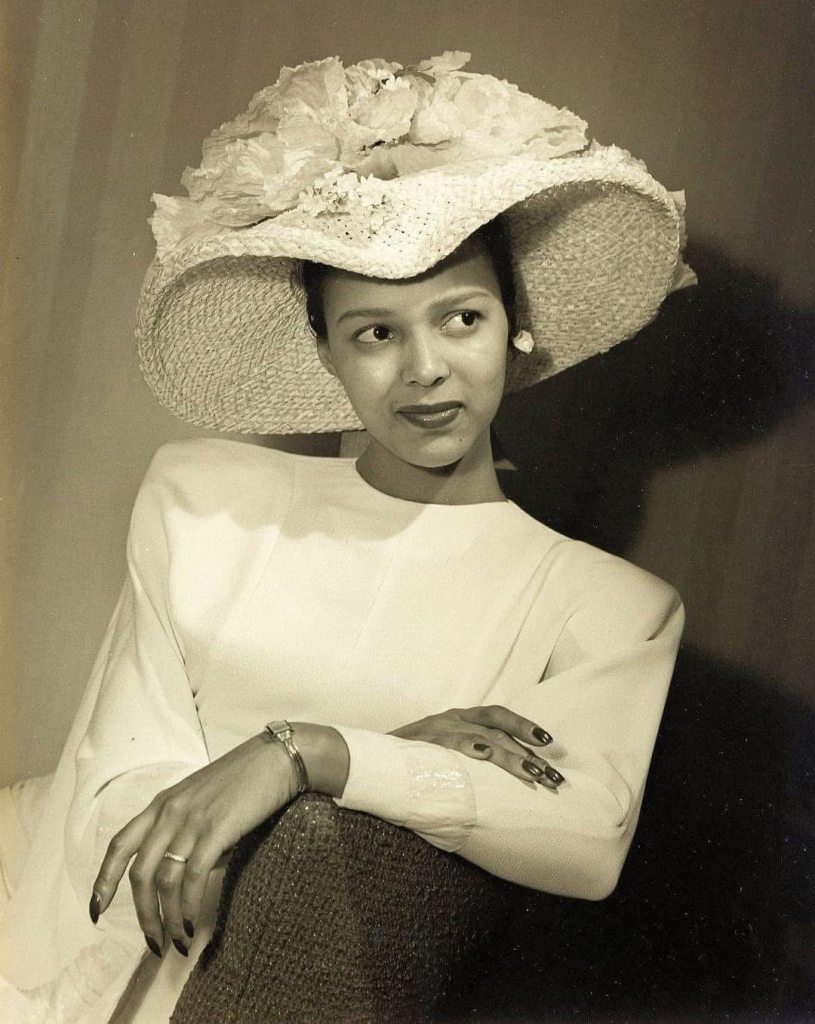
This photograph is the property of its respective owner.

Through her voice, her movement, and her gaze, Dorothy gave dignity to desire, humanity to glamour, and truth to the illusion of Hollywood. She opened doors that others would one day walk through freely. Her beauty was never merely skin deep—it was the radiance of a soul that refused to be silenced.

Dorothy Dandridge’s legacy remains a beacon for artists and dreamers worldwide. She proved that even in a world built to deny her light, she could still shine—and in doing so, she illuminated the path for every Black woman who dared to dream after her.

References

  • Donald Bogle. (2006). Dorothy Dandridge: A Biography. Amistad Press.
  • Berry, H. (Producer). (1999). Introducing Dorothy Dandridge [Film]. HBO Films.
  • Encyclopedia Britannica. (2024). Dorothy Dandridge. Retrieved from https://www.britannica.com
  • IMDB. (2024). Dorothy Dandridge Biography. Retrieved from https://www.imdb.com
  • Bogle, D. (2017). Toms, Coons, Mulattoes, Mammies, and Bucks: An Interpretive History of Blacks in American Films. Bloomsbury Publishing.
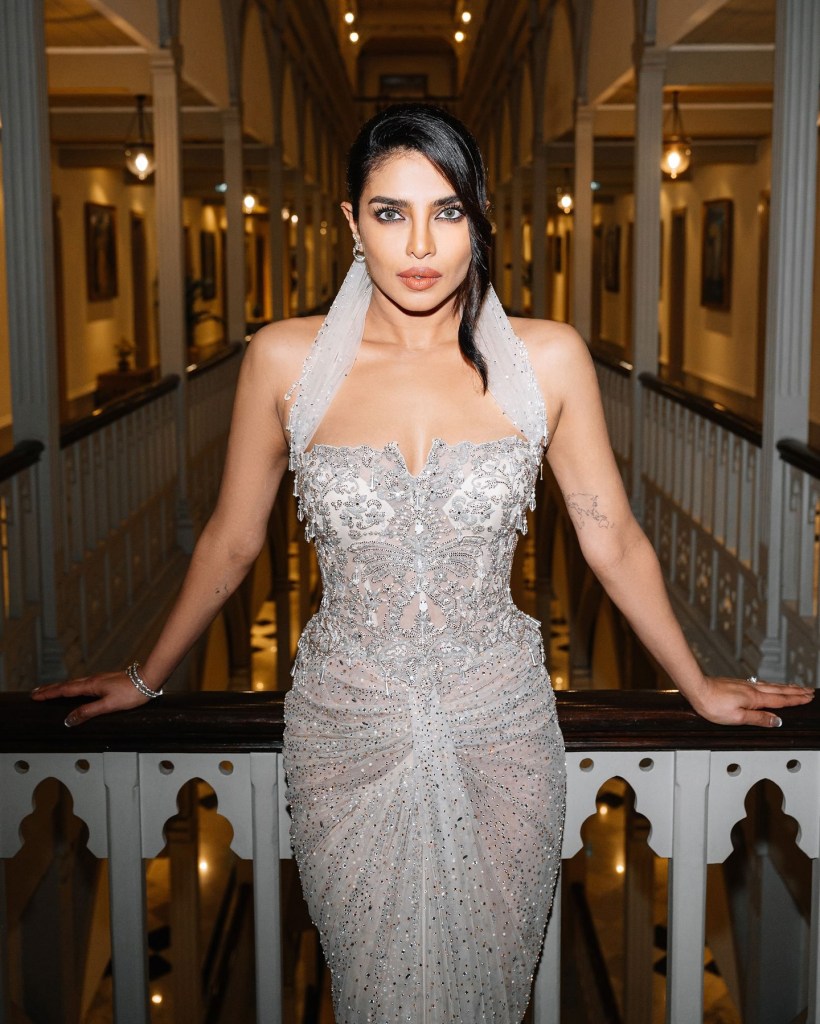

The Indian Dolls: Priyanka Chopra Jonas, Deepika Padukone, and Aishwarya Rai Bachchan.

South Asian women have long occupied a complicated space in global beauty culture—simultaneously admired, stereotyped, and under-represented. The idea of the “Indian doll” does not symbolize artificial imitation, but rather a woman whose aesthetics appear richly crafted, emotionally expressive, culturally rooted, and globally captivating. Priyanka Chopra Jonas embodies radiant, healthy skin and facial sculpting that reads as cinematic perfection. Deepika Padukone brings a commanding, statuesque elegance—runway poise blended with emotional vulnerability and strength. Aishwarya Rai Bachchan’s green-blue colored eyes make her instantly recognizable in the Indian community. Together, these women represent cultural range, ancestral depth, family stability, global success, and physical beauty that still feels human and warm, a spectrum that modern South Asian girls can both aspire to and see themselves in.

They are a powerful representation of Indian “doll” imagery because:

  • Their beauty is distinct, not uniform
  • They reflect mixed influences from colonization, migration, and heritage without losing their Indianness
  • They succeeded in global media without abandoning marriage, motherhood, or cultural identity
  • They entered Hollywood and international cinema as fully formed stars, not novelties
  • They shifted the lens from “exotic stereotype” to “global admiration.”


Priyanka Chopra Jonas — The Exotic Global Doll with Glowing Skin

Early Life & Family

  • Born July 18, 1982, in Jamshedpur, Jharkhand, India
  • Parents: Dr. Ashok Chopra and Dr. Madhu Chopra, both physicians in the Indian Army
  • Frequent relocation during childhood due to military assignments gave her exposure to multilingual and multicultural environments
  • Attended school in India and the United States
  • At age 13, she lived in the U.S. for studies before returning to India to complete her education

Ethnicity / Race

  • She is Indian (South Asian), primarily of Punjabi descent
  • Identifies culturally as Desi and maintains a strong affiliation with Indian identity despite a global career trajectory

Marriage & Children

  • Married American singer/actor Nick Jonas in December 2018
  • Child: Malti Marie Chopra Jonas (born January 2022 via surrogate)
  • Priyanka and Nick have displayed a public narrative of cross-cultural admiration, blended tradition, and committed partnership, including a Hindu and Christian wedding celebration

Career Beginnings & Hollywood Entry

  • Crowned Miss World 2000, which launched her national visibility
  • Bollywood film debut: The Hero: Love Story of a Spy (2003)
  • Rose rapidly through Hindi cinema with a commercial and dramatic range
  • U.S. breakthrough: TV series Quantico (2015–2018), making her the first South Asian woman to lead an American network drama
  • Hollywood films include Baywatch (2017) and The Matrix Resurrections (2021)

Awards & Honors

  • National Film Award for Best Actress (India, 2008)
  • 5 Filmfare Awards
  • Padma Shri (Government of India, 2016)
  • Serves as UNICEF Goodwill Ambassador
  • Featured in Time 100 Most Influential People

Beauty Representation

Priyanka represents the modern Indian doll archetype—her golden-bronze complexion, healthy, glowing skin, and beauty rooted in self-care rituals offer representation for Indian girls who seldom saw their natural skin tone elevated in global media before her.


Deepika Padukone — The piercing-eyed Statuesque beauty, the Runway-Doll

Early Life & Family

  • Born January 5, 1986 in Copenhagen, Denmark
  • Raised in Bangalore, India
  • Father: Prakash Padukone, one of India’s greatest badminton champions
  • Mother: Ujjala Padukone, travel agent
  • Younger sister: Anisha Padukone, professional golfer
  • Originally trained in sports before transitioning into modeling

Ethnicity / Race

  • Indian (South Asian), of Konkani ancestry
  • Her upbringing merges Nordic birth geography with a deeply Indian childhood cultural imprint

Marriage & Children

  • Married Bollywood actor Ranveer Singh in November 2018
  • Child: Dua Padukone Singh, born 2024

Career Beginnings & Hollywood Entry

  • Started career in professional modeling and fashion campaigns
  • Bollywood debut: Om Shanti Om (2007), which transformed her into a national sensation
  • Hollywood debut: xXx: Return of Xander Cage (2017)
  • Regular presence at the Cannes Film Festival
  • Built a parallel career as a mental health advocate, founding the Live Love Laugh Foundation

Major Awards & Honors

  • 3 Filmfare Best Actress Awards
  • Cannes 2022 Jury Member
  • Time 100 Impact Award
  • Multiple global honors for fashion and influence

Beauty Representation

Her towering height, flawless beauty, sculpted bone structure, and bronzed, warm skin give her the presence of a living couture doll. She reflects beauty that is bold, visible, and undeniable, inspiring Indian girls to see power in presence, not just prettiness.


Aishwarya Rai Bachchan — The Iconic Bollywood Doll

  • Born November 1, 1973 in Mangalore, Karnataka, India
  • Raised in Mumbai
  • Father: Krishnaraj Rai, marine biologist
  • Mother: Brindya Rai, writer/author
  • Fluent in Tulu, Hindi, English, Tamil, and Bengali
  • Academically gifted; originally studied architecture before pivoting to modeling and film

Ethnicity / Race

  • Indian (South Asian), from a Tulu-speaking community
  • Represents intelligence and cultural rootedness underneath global beauty admiration

Marriage & Children

  • Married Bollywood actor Abhishek Bachchan in April 2007
  • Daughter: Aaradhya Bachchan (born 2011)

Career Beginnings & Hollywood Entry

  • Won Miss World 1994
  • Bollywood debut: Aur Pyaar Ho Gaya (1997)
  • International film visibility early, making her India’s first major crossover global film star
  • Major English-language roles:
    • Bride & Prejudice (2004)
    • The Last Legion (2007)
    • The Pink Panther 2 (2009)
  • Longstanding Cannes red carpet presence since 2002

Major Awards & Honors

  • 2 Filmfare Awards
  • Padma Shri
  • Ordre des Arts et des Lettres (France, 2012)
  • Numerous global beauty and cinema honors

Beauty Representation

Her eyes are her signature—not common in India. She became the blueprint for success in Bollywood – unforgettable and delicate-fierce.


Why They Represent the “Indian Doll” Legacy Well

They are not a monolith. They represent a trinity of Hispanic-style inspiration in South Asian form:

WomanDoll EssenceRepresentation Value
Priyankaglowing skin, sculpted face, golden toneModern global Desi woman + cross-cultural beauty
Deepikastatuesque runway statue brought to lifeTall South Asian beauty + mental health voice
Aishwaryagreen-blue eyesIndia’s first global beauty

Their representation matters because:

  • They reflect the true multiracial and multi-textural harmony of South Asian populations
  • They preserve long-term marriage and motherhood narratives, resisting Hollywood instability tropes
  • They carried their languages, traditions, and ancestry onto global screens
  • They embody beauty that is ornamental, aspirational, emotional, political, cultural, and personal

They are a good representation of the idea of Indian dolls because they show the world that South Asian beauty is not factory-made—it is lineage-made, climate-born, grace-carried, and culturally embodied.


References

Chopra Jonas, P. (2019). Unfinished: A Memoir. Ballantine Books.

Live Love Laugh Foundation. (2021). Mental health advocacy research and campaigns.

Cannes Film Festival Archives. (2003, 2022). Jury member and red carpet documentation.

Nayar, P. K. (2014). The Indian Cinematic Imagination. Routledge.

Dudrah, R. (2006). Bollywood and Globalization: The Global Power of Popular Hindi Cinema. Manchester University Press.

ChatGPT can make mistakes. Check important info.

Masculine Perfection Series: Introduction

The Masculine Perfection series is a curated celebration of Black male excellence — a tribute to the men whose presence, talent, and character embody strength, beauty, purpose, and divine craftsmanship. This collection goes beyond surface-level admiration. It explores the full essence of manhood: physical allure, emotional depth, artistic mastery, spiritual grounding, intellectual achievement, and the cultural impact each man leaves on the world.

At its core, the series highlights Black men who have become icons in film, music, athletics, literature, leadership, and entertainment. These men possess magnetic features, powerful physiques, regal bearing, and the kind of inner discipline that shapes greatness. Each profile honors not only their looks, but the stories, struggles, victories, and virtues that forged them.

Through richly written biographies, career retrospectives, personal-life insights, and social commentary, the Masculine Perfection series elevates these men as examples of Black masculine brilliance — men who inspire, protect, create, lead, and shine. Each installment is crafted to showcase the unique beauty of the Black man: his heritage, his endurance, his artistry, his fatherhood, his relationships, his impact, and his legacy.

Masculine Perfection is more than admiration.
It is a declaration:
Black men are powerful.
Black men are exceptional.
Black men are worthy of honor.
Black men are divine masterpieces.

Examples of some of the (Celebrities) from the series:

1. Billy Dee Williams (Actor & Cultural Icon)

  • Traits & Career: Charisma, elegance, confidence, grace, relational charm.
  • Looks & Appeal: Known as one of the most handsome men of his era, with smooth features, a commanding presence, and a style that exudes sophistication. His facial symmetry, warm smile, and refined demeanor made him instantly recognizable and admired.
  • Why masculine perfection: Blends style, poise, and gravitas with charm and professionalism.
  • Reference: IMDb, Williams, B. D. biography

2. Shemar Moore (Actor & Model)

  • Traits & Career: Charismatic, disciplined, hardworking, compassionate, philanthropic. Famous for Criminal Minds and S.W.A.T.
  • Looks & Appeal: Tall, athletic, and exceptionally handsome, with chiseled features, deep expressive eyes, and a warm, magnetic smile. His presence exudes confidence, strength, and charm, making him a modern heartthrob.
  • Why masculine perfection: Combines talent, discipline, charm, and physical appeal with a relatable, grounded personality.
  • Reference: IMDb, Biography.com

3. L.L. Cool J (Actor & Musician)

  • Traits & Career: Discipline, resilience, versatility, family devotion, mentorship.
  • Looks & Appeal: Athletic build, strong jawline, and magnetic presence. His combination of rugged masculinity and refined style—often in tailored suits or casual street-smart fashion—makes him visually striking and iconic.
  • Family: Has 4 children.
  • Why masculine perfection: Strength, charisma, and physical appeal complement his integrity and career success.
  • Reference: IMDb, Biography.com

4. Omari Hardwick (Actor & Philanthropist)

  • Traits & Career: Spiritual grounding, emotional intelligence, responsibility, leadership, mentorship.
  • Looks & Appeal: Tall, muscular, and statuesque with chiseled features and expressive eyes that convey depth and intensity. His presence is both commanding and approachable, combining strength with refinement.
  • Why masculine perfection: Physical prowess and striking appearance enhance his inner integrity and leadership qualities.
  • Reference: IMDb, Essence magazine interviews

5. Phillip Michael Thomas (Actor & Musician)

  • Traits & Career: Charisma, professionalism, cultural influence, vision.
  • Looks & Appeal: Handsome, smooth, and stylish with a classic 1980s charm. His expressive eyes, warm smile, and elegant posture made him a standout on screen and in public appearances.
  • Why masculine perfection: Blends charm, elegance, and talent with visual appeal that commands attention.
  • Reference: IMDb, Biography.com

6. Kenneth Okolie (Actor & Model)

  • Traits & Career: Discipline, elegance, resilience, cultural representation.
  • Looks & Appeal: Tall, well-built, and photogenic with strong facial symmetry and an elegant style. His modeling background amplifies his visual appeal, blending physical beauty with professionalism.
  • Why masculine perfection: Exemplifies modern African masculinity through talent, charm, and striking appearance.
  • Reference: IMDb, Nollywood archives