
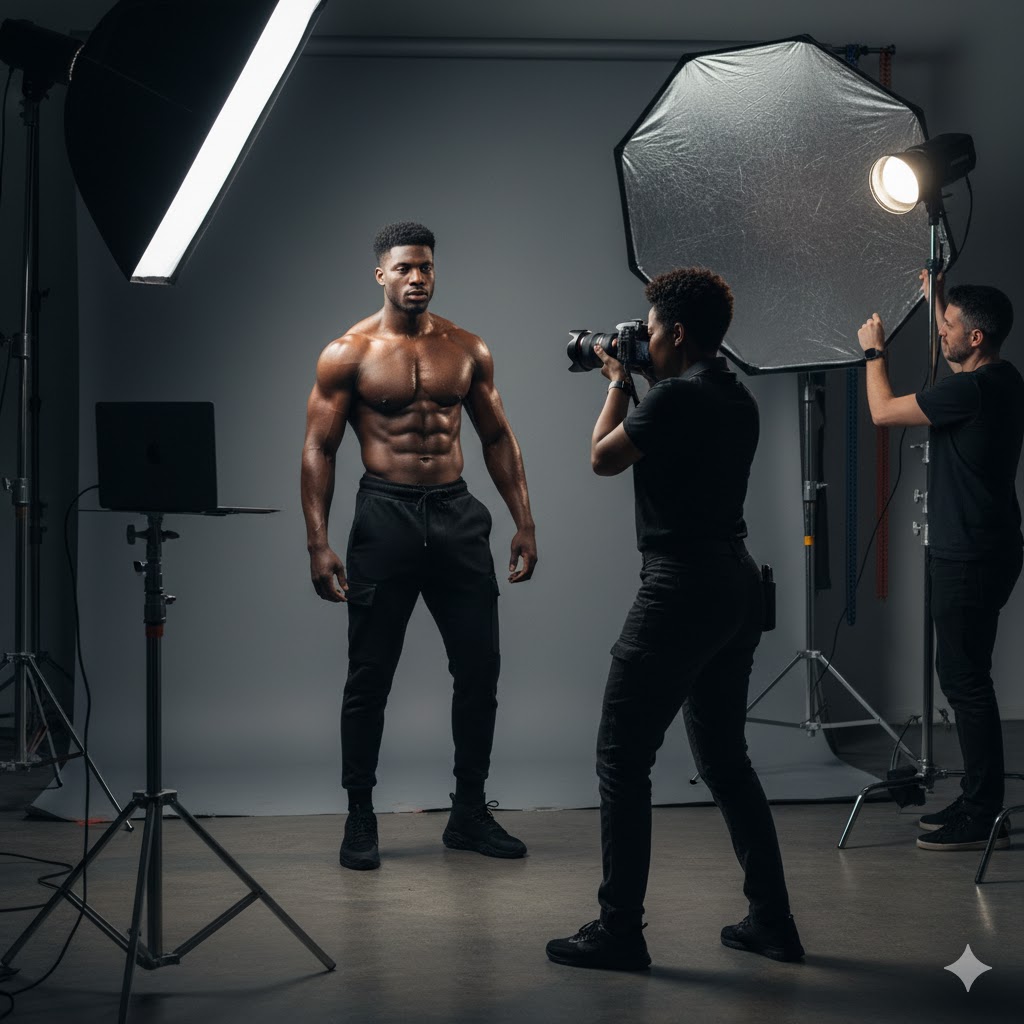
Black masculinity has often been misrepresented or devalued in mainstream narratives. Scientific study, historical analysis, and biblical perspectives reveal the unique anatomical, physiological, and spiritual traits of Black men. Understanding skull structure, melanin physiology, and ancestral heritage allows a fuller appreciation of strength, beauty, and identity in the Black male body.
Skull Structure and Craniofacial Anatomy
Craniofacial features among Black men display diversity shaped by genetics and ancestral adaptation. Prominent jawlines, higher cheekbones, and specific cranial widths contribute to strength, endurance, and aesthetic uniqueness. Anthropological studies show these features were naturally selected for functional adaptation to climate and environment, illustrating both beauty and resilience (Farkas, 1994).
Melanin Physiology
Melanin is more than skin deep. Higher melanin concentration in Black men provides natural protection against UV radiation, reduces the risk of sun-related damage, and influences vitamin D metabolism. Melanin also affects perception and contributes to the radiant appearance of healthy skin. This biological adaptation is a marker of ancestral survival and vitality.
Muscularity and Skeletal Strength
Bone density and muscular structure among Black men often exceed average population measures, contributing to natural athleticism and endurance. Studies indicate that higher bone mineral density is a genetic adaptation seen across African-descended populations, conferring both functional strength and aesthetic proportion (Brown et al., 2016).
Facial Symmetry and Perceived Attractiveness
Facial symmetry is strongly correlated with perceptions of attractiveness, health, and strength. Black men often exhibit pronounced symmetry in conjunction with strong craniofacial features, contributing to what is culturally recognized as “regal” or “commanding” presence. This reinforces ancestral markers of vitality and genetic fitness.
The Role of the Eyes and Expression
Eye structure, including brow prominence, eyelid shape, and orbital depth, adds to the expressive power of Black male faces. Combined with facial musculature, these features communicate authority, confidence, and emotional depth—qualities that have been revered in ancestral societies and remain culturally significant today.
Hair and Physiological Adaptations
Afro-textured hair is a remarkable evolutionary adaptation. Its structure protects the scalp from sun damage, assists with thermoregulation, and contributes to identity and cultural heritage. Hair patterns among Black men are diverse and symbolically connected to history, culture, and spiritual expression.
Ancestral Power and Heritage
Understanding Black masculinity requires honoring the legacy of ancestors. African kingdoms, warrior societies, and historical figures reflect a heritage of leadership, resilience, and intellectual achievement. This ancestral power informs modern Black masculinity beyond physical attributes, encompassing spiritual strength and moral responsibility.
Psychological Resilience
Black men often navigate systemic oppression, colorism, and societal stereotypes. Resilience, self-confidence, and adaptability are traits cultivated through both biology and culture, reflecting ancestral survival strategies. Psychological studies confirm that identity rooted in heritage and faith enhances emotional stability and leadership capacity.
Faith and Masculine Identity
Biblical masculinity highlights strength, leadership, and humility. Black men who embrace spiritual development align their ancestral power with God’s guidance. Scripture underscores the importance of the heart over outward appearance, but also celebrates natural gifts as instruments of purpose (1 Samuel 16:7; Psalm 112:1-3).
Health Considerations
Awareness of physiological strengths and vulnerabilities allows Black men to optimize health. Cardiovascular wellness, bone strength, and metabolic function are all impacted by genetics and lifestyle. Recognizing these biological traits empowers proactive health strategies, extending vitality and longevity.
Cultural Misrepresentation and Reclamation
Society often distorts Black male anatomy and intellect, reducing it to stereotypes. Understanding the science behind Black masculinity reclaims truth, emphasizing beauty, power, and intelligence rooted in both biology and heritage.
The Intersection of Science and Aesthetics
Scientific insight validates cultural and aesthetic appreciation. Facial features, symmetry, and muscularity are not mere visual markers—they are reflections of survival, adaptation, and ancestral ingenuity. Recognizing these traits counters Eurocentric beauty standards and affirms Black excellence.
Athleticism and Functional Strength
Black men often excel in sports and physical endeavors due to natural skeletal structure, muscle fiber composition, and cardiovascular adaptation. These traits, historically leveraged in survival and defense, now contribute to cultural recognition of strength and stamina.
Melanin and Perceived Authority
Melanin-rich skin conveys health, resilience, and vitality. Combined with expressive facial features and symmetrical anatomy, it contributes to perceived authority and presence in both interpersonal and societal contexts.
Identity Beyond the Physical
True Black masculinity transcends physiology. Knowledge, moral integrity, spiritual alignment, and ancestral awareness are equally vital in defining masculine identity. Physical traits are enhanced when paired with wisdom and purpose.
The Role of Community and Brotherhood
Male mentorship, familial guidance, and cultural community reinforce masculine identity. Connecting with ancestry, heritage, and communal values strengthens self-concept and nurtures leadership skills.
Historical Figures and Exemplars
Figures such as Mansa Musa, Shaka Zulu, and contemporary leaders exemplify the integration of physical, mental, and spiritual power. Their lives reflect both biological traits and cultivated virtue, providing a blueprint for modern Black masculinity.
Challenging Stereotypes
Misrepresentations of Black men in media and society ignore anatomical, intellectual, and cultural achievements. Understanding skull structure, melanin physiology, and ancestral heritage counters stereotypes, fostering respect, self-esteem, and empowerment.
Spiritual Alignment and Purpose
When Black men align physical, mental, and spiritual attributes with divine purpose, they exemplify holistic masculinity. Strength, beauty, and leadership become instruments for God’s work, ancestral honor, and societal contribution.
Conclusion
Black masculinity is a blend of biology, heritage, and spirituality. Skull structure, melanin physiology, and ancestral power are markers of resilience, beauty, and potential. Recognizing and embracing these traits challenges societal misconceptions, affirms Black excellence, and empowers men to walk in faith, purpose, and holistic strength.
References
- Brown, T., Barden, R., & Johnson, M. (2016). Bone density and muscle composition among African-descended populations. Journal of Human Evolution, 91, 12–22.
- Farkas, L. G. (1994). Anthropometry of the head and face. Raven Press.
- Hunter, M. L. (2007). The persistent problem of colorism: Skin tone, status, and inequality. Sociology Compass, 1(1), 237–254.
- Rhodes, G. (2006). The evolutionary psychology of facial beauty. Annual Review of Psychology, 57, 199–226. https://doi.org/10.1146/annurev.psych.57.102904.190208
- 1 Samuel 16:7 (KJV) – “Man looketh on the outward appearance, but the LORD looketh on the heart.”
- Psalm 112:1-3 (KJV) – The blessings of the righteous and virtuous.
 THE BROWN GIRL DILEMMA