Tag Archives: marriage

Dilemma: Leveling Up as a Godly Wife

Biblical Principles, Intellectual Partnership, and the Role of Support in Marriage

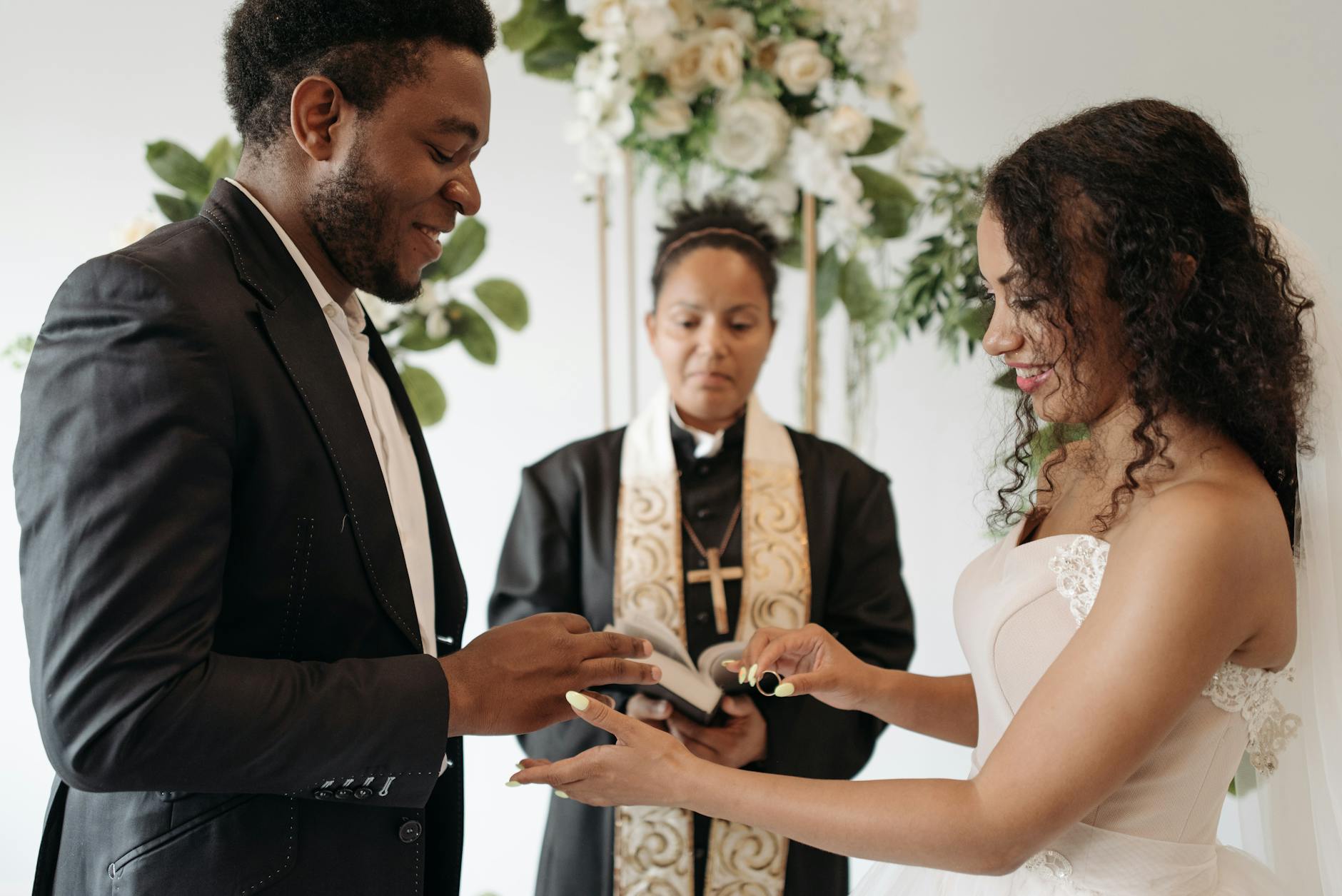
Photo by Pavel Danilyuk on Pexels.com

In modern discourse, the phrase “leveling up” often describes personal growth, self-improvement, and the intentional pursuit of higher standards in one’s life. While secular definitions may focus on financial status, aesthetics, or social capital, within the biblical framework, “leveling up” as a wife is rooted in character, spiritual maturity, and the ability to nurture a godly and harmonious home. Proverbs 18:22 (KJV) declares, “Whoso findeth a wife findeth a good thing, and obtaineth favour of the Lord.” This statement highlights not only the blessing of marriage but also the intrinsic value of a godly wife to her husband’s life, mission, and spiritual walk.


The Meaning of “Leveling Up” in a Biblical Marriage

“Leveling up” in the context of biblical womanhood is the intentional act of aligning one’s actions, mindset, and spirit with God’s standards for marriage. This involves spiritual growth (2 Peter 3:18), emotional maturity (Proverbs 31:25), and the cultivation of virtues such as kindness, humility, and wisdom. It is not about material perfection but about embodying the qualities that make a wife a source of stability, inspiration, and strength.


Biblical Principles of Being a Wife

The Bible presents a multi-dimensional view of the role of a wife. Key passages include:

  • Submission and Respect: “Wives, submit yourselves unto your own husbands, as unto the Lord” (Ephesians 5:22, KJV). Biblical submission is not about oppression but about honoring the divine order and supporting the husband’s leadership.
  • Helper and Partner: Genesis 2:18 identifies the wife as a “help meet,” meaning a suitable helper, complementing her husband’s mission and vision.
  • Virtue and Diligence: Proverbs 31 describes a wife who is industrious, wise, and compassionate, managing her home well and caring for her household’s needs.
  • Faithfulness: Hebrews 13:4 emphasizes marital fidelity as a covenant before God.

Practical Ways to Level Up as a Wife

  1. Listening and Communication Skills – James 1:19 advises being “swift to hear, slow to speak.” Effective listening fosters trust, minimizes conflict, and helps a wife better understand her husband’s emotional and spiritual needs.
  2. Culinary and Home Management Skills – Providing healthy, well-prepared meals (Proverbs 31:15) and maintaining a clean, peaceful home environment demonstrate care and respect for the family.
  3. Supportive Partnership – A wife’s encouragement can uplift a man in moments of doubt (Ecclesiastes 4:9–10). She helps him focus on his calling by providing stability and reassurance.
  4. Emotional and Spiritual Encouragement – Praying together and for each other strengthens the spiritual bond (1 Thessalonians 5:11).

Choosing a Husband: Beyond Looks

The Bible warns against relying solely on appearances: “Favour is deceitful, and beauty is vain: but a woman that feareth the Lord, she shall be praised” (Proverbs 31:30). Compatibility, shared faith, integrity, and a man’s commitment to God’s purpose are more important than physical attraction alone.


What Godly Men Look For

Research and biblical teaching suggest that godly men often value:

  • Spiritual maturity (Proverbs 31:10–12)
  • Trustworthiness
  • Emotional support
  • Intellectual companionship
  • Respect and admiration

The Five Love Languages in Marriage

Dr. Gary Chapman (1992) identifies five primary ways people express and receive love:

  1. Words of Affirmation
  2. Acts of Service
  3. Receiving Gifts
  4. Quality Time
  5. Physical Touch

Understanding a husband’s primary love language allows a wife to meet his emotional needs more effectively, fostering deeper intimacy and connection.


Conclusion

Leveling up as a wife means committing to personal growth, aligning with biblical values, and becoming a partner who nurtures her husband’s well-being spiritually, emotionally, and physically. Proverbs 18:22 is not merely a poetic line but a reminder that a godly wife is both a blessing and a source of divine favor. By embracing biblical principles, practical skills, and emotional intelligence, a wife can create a marriage that reflects God’s design and thrives in love and unity.


References

  • Chapman, G. (1992). The five love languages: How to express heartfelt commitment to your mate. Northfield Publishing.
  • Holy Bible, King James Version.
  • Peters, R. (2020). Marriage God’s Way: A Biblical Recipe for Healthy, Joyful Relationships. Christian Focus Publications.
  • Thomas, G. (2015). Sacred marriage: What if God designed marriage to make us holy more than to make us happy? Zondervan.

Dilemma: I DON’T NEED A MAN!?

Photo by Tony Meyers on Pexels.com

The popular phrase “I don’t need a man” echoes through modern culture, often touted as a badge of strength, independence, and self-reliance. While independence has its virtues, the sentiment frequently masks deep cultural wounds, spiritual misalignment, and historical shifts that have led to the breakdown of the biblical model of love, marriage, and mutual support. From the Genesis account of Adam and Eve to the apostolic teachings of Christ and the Church, Scripture consistently affirms that it is not good for man—or woman—to be alone.


I Need a Man: To My Black Brother
By Paper Doll (with love and truth)

I need a man—
Not just any man, but my brother, my king,
A soul forged in the fire of trials,
A lion with purpose,
A priest of his home,
A warrior of the Most High.

I need a man—
Not to complete me, but to stand beside me,
To speak life into dry places,
To cover me in prayer when the night grows cold,
To hold my hand as we walk this narrow road,
Both flawed, but chosen.

I need a man—
Not to dominate, but to lead,
With love as his language and wisdom as his seed.
I need the thunder in your voice to silence fear,
The strength of your arms to draw me near.
I need your presence, your covering, your gaze,
Your commitment, not just your praise.

To my Black brother—
We need you.
Not the world’s version of you,
But the real you:
Head bowed in prayer,
Hands lifted in praise,
Feet firm in faith.

I want you—
Your mind, your spirit, your legacy.
I want your protection, your counsel,
Your vision that sees beyond the storm,
Your heart that beats in rhythm with heaven.

We were never meant to do this alone.
Even Eden knew no joy until Eve had Adam—
Flesh of his flesh, bone of his bone.
I am your rib, and you are my frame.
We are not enemies. We are flame.

I need a man—
One who will stand when others fall,
Who loves hard, forgives deep, and fears God above all.
A man who will teach sons how to be just,
And daughters how to trust.

I need a man—
To laugh with, pray with, build with, grow with,
To cry with, dream with, raise nations with.
To love me like Christ loves His bride—
Not as property, but in power.
Not as servant, but with honor.

To my Black king,
Come home.
We need you.
I need you.
And I will wait—not for perfection,
But for your return to purpose.

Genesis: God’s Blueprint for Companionship

In Genesis 2:18 (KJV), God declared, “It is not good that the man should be alone; I will make him an help meet for him.” This foundational statement affirms that man was never intended to live in isolation. The woman was not an afterthought, but a divine counterpart—a reflection of man’s need for relational, emotional, and spiritual partnership. Eve was taken from Adam’s side—not his head, to rule over him, nor his feet, to be trampled—but from his rib, to walk beside him in purpose and covenant (Genesis 2:21-24).

Marriage, in its purest form, is not just a social contract but a living testament of divine love. Ephesians 5:25 (KJV) declares, “Husbands, love your wives, even as Christ also loved the church, and gave himself for it.” Here, Paul equates the sacrificial love of Christ with the love a man must show his wife—protective, selfless, and enduring. This relationship is not built on domination or servitude but mutual honor and spiritual reflection.


The Dangers of Radical Independence and Isolation

While independence in women has its place—particularly in resilience, wisdom, and strength—it becomes spiritually and emotionally dangerous when it fosters isolation, pride, or rebellion against God’s order. Proverbs 14:12 reminds us, “There is a way which seemeth right unto a man, but the end thereof are the ways of death.” The idea that one does not need a man, often born out of trauma or disappointment, may seem empowering but ultimately undermines the divine need for interdependence.

In Ecclesiastes 4:9-10 (KJV), the Word declares: “Two are better than one… For if they fall, the one will lift up his fellow: but woe to him that is alone when he falleth.” Emotional, spiritual, and physical support is best found in companionship and community. When women believe they can “do it all,” they often face burnout, loneliness, and spiritual disconnection, especially if they are raising children or managing households without godly support.


Lesbianism: A Symptom of Rebellion and Woundedness

The rise of lesbianism in modern society is not just a cultural shift but a spiritual misalignment with God’s design for human relationships. Romans 1:26-27 (KJV) speaks directly to this: “For this cause God gave them up unto vile affections: for even their women did change the natural use into that which is against nature.” While society affirms same-sex unions, Scripture warns of the spiritual consequences of rejecting God’s established order.

In many cases, lesbianism arises from deep wounds—neglect, abuse, betrayal by men, or unresolved trauma. Instead of turning to God for healing, some women turn to one another in an effort to escape the hurt men have caused. Yet, counterfeit love cannot fill the void that only God’s truth can satisfy.


Black Love: A Sacred Partnership in Need of Restoration

In the Black community, centuries of slavery, systemic racism, and generational trauma have torn apart the image of strong, unified Black families. From being sold apart on plantations to the government policies of the 20th century that incentivized fatherless homes, the erosion of the Black family has been strategic. Now more than ever, Black men and women must reject the culture of division and embrace one another in truth, healing, and covenant love.

Ephesians 4:2-3 encourages believers to walk “with all lowliness and meekness, with longsuffering, forbearing one another in love; Endeavouring to keep the unity of the Spirit in the bond of peace.” Black love must not be based on transactional convenience but on godly servanthood and mutual respect.


The Working Woman vs. The Stay-at-Home Mother: Honoring Both Roles

A woman who works outside the home brings financial support, creativity, and independence to the family. Proverbs 31:16 describes the virtuous woman: “She considereth a field, and buyeth it.” However, the same passage also honors her role within the home: “She looketh well to the ways of her household” (v. 27). A stay-at-home mother nurtures, educates, and spiritually molds the next generation—a full-time calling that should not be belittled.

Both paths require balance, grace, and godly alignment, and neither is superior if done in submission to God’s will. The danger lies in comparison, pride, or the belief that motherhood or homemaking is lesser in value.


The Fall of Feminism and the Illusion of Superiority

Modern feminism, while originally rooted in the pursuit of equal rights, has gradually evolved into a movement of superiority, not equality. The second and third waves of feminism especially encouraged women to reject traditional gender roles, marriage, and male leadership, positioning men as inherently oppressive. This ideology has led to division, confusion, and a deep identity crisis in many women.

Isaiah 3:12 (KJV) warns, “As for my people, children are their oppressors, and women rule over them.” The breakdown of order, where men are devalued and women exalt themselves above them, creates societal instability. God’s order is not patriarchal oppression—it is divine harmony.


Conclusion: We Need Each Other

God never intended for men or women to be alone or independent from one another. We were created for covenant—for marriage, family, and divine partnership. Hebrews 13:4 (KJV) declares: “Marriage is honourable in all, and the bed undefiled: but whoremongers and adulterers God will judge.” Marriage mirrors the heart of God, His love for His people, and the unity of the body of Christ.

It is not weakness to need a man—it is wisdom. And for men, it is not weakness to need a woman—it is God’s design. As Black men and women, the healing of our community depends on us choosing love, honor, and unity over pride, pain, and division.


References

  • The Holy Bible, King James Version (KJV)
  • Ephesians 5:25
  • Genesis 2:18-24
  • Ecclesiastes 4:9-10
  • Romans 1:26-27
  • Proverbs 31
  • Isaiah 3:12
  • Hebrews 13:4

🤍A NEEDLE IN THE HAYSTACK🤍

The Measure of a Godly Man: Provider, Priest, and Protector


Photo by Luca Nardone on Pexels.com

A Needle in the Haystack: Honoring the Rare Man After God’s Own Heart

In a world of shifting values and shallow definitions of masculinity, the Godly man stands out—not for his noise, but for his depth. He is not easily found, nor is he loudly celebrated. He is rare—a needle in the haystack, a living testimony to what it means to be a man after God’s own heart.

The Quiet Strength of a Godly Man

He does not lead with arrogance or ego. His strength is measured in silence, in discipline, in the weight he bears for those he loves. He is not shaped by culture, but by covenant. He walks with quiet fire, with vision that reaches generations. This man lives beneath the surface of trends and hype, rooted instead in biblical truth and eternal values.

“A needle in the haystack’s maze,
A rare gem in a reckless age.”

A Lover of God, First and Foremost

Above all else, this man is devoted to God. His intimacy with the Father defines every other role he plays. He does not seek approval from men, but walks humbly before the throne of grace. Like King David, he is not perfect—but he is penitent, pursuing God with a whole heart.

“A lover of the Lord Most High,
With tear-stained prayers and lifted eyes.
He bends his knee before the throne,
Before he leads, he’s led alone.”

Priest, Provider, and Protector of the Home

He embraces his God-ordained role as priest of the home, standing in spiritual authority while washing his family in love and wisdom. He provides—not just materially, but emotionally, mentally, and spiritually. He is a safe place and a strong tower for his wife and children.

“He is a priest, he is a shield,
A man whose heart has been revealed.
Through trials fierce and battles deep,
He sows the Word, his children reap.”

“A provider, not by wealth alone,
But through the seeds of love he’s sown.
He leads with action, not with talk—
His life, a sermon when he walks.”

A Husband Who Honors and Cherishes

To his wife, he is gentle yet strong, a man who knows how to cover and nurture. His love is not performance-based; it is rooted in covenant. He honors her role, values her voice, and builds her up with his words and actions.

“He is a husband, strong yet kind,
Who cherishes his bride’s design.
Not just in touch, but in his tone—
He makes her feel safe, seen, and known.”

A Father Who Shapes Destiny

This man understands the weight of fatherhood. He doesn’t just father children—he fathers futures. He teaches, corrects, affirms, and protects. His children rise blessed because he walks in integrity (Proverbs 20:7, KJV).

“He is a father, wise and true,
Who builds with faith and labors too.
He trains his sons, he lifts his girls,
He guides with grace in a shaking world.”

A Man of Integrity, Not Image

Unlike the “dusty” man—who refuses to provide, demands 50/50, and dodges responsibility—this man shows his love through action. He doesn’t just speak of loyalty and vision—he lives it. He leads not to be served, but to serve. He chooses legacy over lust, and covenant over convenience.

“He doesn’t just command respect—he earns it.”

Conclusion: Blessed is She Who Finds Him

Men like this are not found every day. They are formed in fire, refined by grace, and led by Spirit. They are the exception, not the rule. For the woman who finds such a man, she has found more than a husband—she has found a reflection of God’s own heart.

“So rare he is, so few remain—
A remnant in a world profane.
A man of covenant, not charm—
Whose life is shelter, truth, and calm.”

“A needle in the haystack’s depth,
A holy flame, a living breath.
A Godly man, so few will find—
But blessed is she who calls him mine.”


A Godly man is not defined by charm, charisma, or credentials—but by his commitment to righteousness, his faithfulness to God’s Word, and his unwavering love for his family. He is the anchor of the home, the pillar of wisdom, and the guardian of legacy. He is a rare find—a needle in a haystack—whose presence reflects the strength and spirit of the Most High.


The Divine Duty: Man as Provider and Priest

God created man to lead, provide, and protect. From the beginning, Adam was placed in the garden to “dress it and keep it” (Genesis 2:15, KJV)—a calling of labor, stewardship, and responsibility. The New Testament echoes this eternal charge: “But if any provide not for his own, and specially for those of his own house, he hath denied the faith, and is worse than an infidel” (1 Timothy 5:8, KJV).

Provision is not merely financial. A Godly man provides security, vision, wisdom, and love. He covers his wife in prayer, counsels his children in truth, and builds a legacy rooted in faith. Like Joshua, he declares, “But as for me and my house, we will serve the Lord” (Joshua 24:15, KJV). He is the priest of the home, walking in integrity, standing in the gap, and leading his household in righteousness.


The Dusty Man: A Counterfeit Masculinity

In stark contrast stands the dusty man—a modern byword for the irresponsible, entitled, and unprincipled male. He is not just poor in finances—he is poor in character. He demands 50/50 from a woman while offering nothing in spiritual leadership, monetary, or covering. He wants partnership without sacrifice, intimacy without commitment, benefits without burden. He is like the man described in Proverbs: “As a bird that wandereth from her nest, so is a man that wandereth from his place” (Proverbs 27:8, KJV).

The dusty man wants a Proverbs 31 woman but fails to be an Ephesians 5 husband. He speaks of love but shows no action. Yet the Word is clear: “My little children, let us not love in word, neither in tongue; but in deed and in truth” (1 John 3:18, KJV). Love is an action word. It is not proven by gifts or words alone, but by consistent self-sacrifice and the pursuit of the other’s good.

He lies in wait for women to build with him, only to later abandon them. He fathers children but forsakes the role of fatherhood. The Word warns: “He that troubleth his own house shall inherit the wind” (Proverbs 11:29, KJV). This man builds nothing because he invests in nothing but himself.


Faithful Men vs. The Unfaithful: Fruit vs. Failure

A faithful man is not ruled by lust but led by love. He is a man who resists temptation and honors covenant. “The just man walketh in his integrity: his children are blessed after him” (Proverbs 20:7, KJV). He builds trust over time and leads his home with dignity and strength. His love is patient, long-suffering, kind, and consistent (1 Corinthians 13:4–7).

In contrast, the unfaithful man is unstable in all his ways. He may charm with his words, but his actions betray him. He leaves broken homes, broken hearts, and broken children behind. The Bible is clear that “A double minded man is unstable in all his ways” (James 1:8, KJV). A man that does not take care of his family, in heart or in hand, has rejected the very image of the Father—for our heavenly Father never abandons His children.


Strength Over the Flesh: Becoming a Man of Discipline

A strong man is not one who dominates others—but one who governs himself. “He that is slow to anger is better than the mighty; and he that ruleth his spirit than he that taketh a city” (Proverbs 16:32, KJV). Overcoming the flesh is not easy, but it is essential. The Godly man crucifies his desires daily (Galatians 5:24), submits his mind to Christ (Romans 12:2), and disciplines his eyes, thoughts, and body for the glory of God.

He knows the price of obedience, and he pays it—because eternity is more valuable than momentary pleasure.


What a Godly Man Looks for in a Godly Woman

A man of the Most High does not seek vanity but virtue. He desires a woman with modesty of heart, not just modesty of dress. A woman who fears the Lord (Proverbs 31:30), whose speech is seasoned with grace, and whose spirit is clothed in humility (1 Peter 3:4). She is not loud and clamorous, but wise and peaceable. She edifies, she uplifts, and she understands that submission is strength, not slavery.

He does not fear a strong woman—but he honors one who knows when to lead and when to follow. He seeks a helpmeet, not a hindrance—a partner in purpose, a warrior in prayer, and a queen who walks in the fear of the Lord.


The True Leader: A Man After God’s Own Heart

The Godly man is open-hearted, yet discerning. Open-minded, yet grounded in Scripture. He is a student of truth, a lover of wisdom, and a man who leads with clarity and conviction. He is faithful, generous, and honest—even when it costs him. He is a shepherd to his family, not a tyrant; a servant-leader who lays down his life, just as Christ did for the Church (Ephesians 5:25).

He doesn’t just command respect—he earns it.


Final Word: The Legacy of a Righteous Man

The Godly man is a rare jewel in a generation of dust and deceit. He builds, he prays, he stays. He doesn’t run from responsibility—he embraces it. He is a father to the fatherless, a husband of honor, and a man after God’s own heart (Acts 13:22).

Final Thoughts

In a time where masculinity is often misunderstood or misrepresented, the world desperately needs fathers, husbands, and leaders who reflect the love, discipline, and courage of Christ. These men may not trend online—but they will transform families, strengthen communities, and shake generations.

They are the few.
They are the faithful.
They are the rare

Let men rise to the calling. Let them walk as kings and priests in their homes (Revelation 1:6). Let them forsake childish ways, overcome the flesh, and love not in word only, but in deed and truth.

Because real men don’t just say they love—they show it.

Dilemma: Online Dating

“He Who Finds a Wife”: Navigating Online Dating Through a Biblical and Real-World Lens

Photo by Antoni Shkraba Studio on Pexels.com

Introduction

In the age of swipes and algorithms, many people are seeking love through apps like Tinder, Plenty of Fish (POF), Bumble, and Hinge. But for Christian women—those striving for godly relationships—this question arises:

“If ‘he who finds a wife findeth a good thing,’ are we supposed to be on dating sites actively searching?”

This article explores the biblical principles, benefits and drawbacks of online dating, the dangers of hookup culture, and the psychological and spiritual consequences of seeking love in the digital age.


📖 Biblical Perspective: Should Women Be Looking or Waiting?

Proverbs 18:22 (KJV)
“Whoso findeth a wife findeth a good thing, and obtaineth favour of the Lord.”

This verse has long been interpreted to mean that a man is to pursue and a woman is to be found—not hidden, but positioned wisely and modestly, aligning her life with purpose so that a godly man recognizes her worth.

The Bible does not forbid technology or meeting people outside of traditional settings, but it emphasizes wisdom, purity, discernment, and the roles of pursuit and preparation in relationships.


💬 Should Christian Women Be on Dating Apps?

There is no one-size-fits-all answer. Some have met godly spouses through online platforms. Others have encountered manipulation, heartbreak, or spiritual compromise.

Online dating can be a tool, but like all tools, it must be used with prayer, discernment, and boundaries. The key question isn’t just “Am I looking?” but “Why am I here, and who am I becoming while I wait?”


🌐 The Good and the Bad of Online Dating

Potential Benefits

  • Wider pool of people—especially for those in small towns or with limited social circles
  • Faith-based platforms like Christian Mingle or Upward cater to spiritual alignment
  • Can lead to real, lasting relationships if approached with caution and intention

⚠️ Setbacks and Dangers

  1. False representation – Many users lie about their age, intentions, or relationship status.
  2. Delayed red flags – It’s easier to hide manipulation or abuse online.
  3. Hookup culture pressure – Even on serious apps, many users expect sex early on.
  4. Disconnection from reality – Chemistry in text rarely reflects real-life compatibility.
  5. Emotional burnout – Constant rejection or ghosting can lower self-worth.

🔥 What Is Hookup Culture?

Hookup culture refers to a social norm where casual sex and minimal emotional connection are encouraged, often without commitment. It is driven by:

  • Apps like Tinder promoting “matches” based on physical appeal
  • Cultural media celebrating no-strings-attached relationships
  • Fear of vulnerability or deep emotional connection

Hookup culture contradicts biblical views on intimacy, which are rooted in covenant (Hebrews 13:4) and purpose—not temporary pleasure.


👥 Desperation and Digital Dating

Desperation online often shows through:

  • Over-sharing personal trauma early
  • Ignoring red flags for fear of being alone
  • Accepting disrespect or manipulation
  • Chasing validation instead of seeking alignment

Proverbs warns us about haste:

Proverbs 19:2 (KJV):
“He that hasteth with his feet sinneth.”

Moving too quickly in romance, especially under pressure, can lead to pain that takes years to heal.


🍭 What Is a Sugar Daddy/Sugar Baby Relationship?

A sugar daddy is typically an older man who provides money, gifts, or financial support in exchange for companionship—often sexual—with a younger “sugar baby.”

Dangers Include:

  • Emotional and financial dependency
  • Exploitation or coercion
  • Legal and moral consequences
  • Disconnection from biblical values of love, mutual respect, and covenant

These arrangements mimic prostitution under the guise of “mutual benefit.” Scripture clearly warns against using the body for profit or manipulation (1 Corinthians 6:18-20).


👀 What Should We Look for Biblically in a Relationship?

Character Over Charm

“Favour is deceitful, and beauty is vain: but a woman that feareth the Lord, she shall be praised.” — Proverbs 31:30

Fruit of the Spirit (Galatians 5:22-23)

Does the person show love, joy, peace, patience, kindness, faithfulness?

Mutual purpose and spiritual leadership

2 Corinthians 6:14 reminds us:

“Be ye not unequally yoked together with unbelievers.”

A godly relationship is not just romantic—it is spiritually aligned and mission-focused.


🛡️ Red Flags and Safety Tips for Online Dating

  • Profiles with no pictures or vague descriptions
  • Pressuring for quick intimacy or financial help
  • Avoids meeting in person or always has excuses
  • Doesn’t respect boundaries or spiritual beliefs
  • Love-bombing early on (excessive flattery + fast attachment)

Protect Yourself:

  • Meet in public places
  • Tell someone your location
  • Do not share financial or personal information early
  • Pray and trust your discernment
  • Final Thought
    Online dating isn’t inherently wrong—but it’s dangerous when pursued without discernment. Ask yourself:
    “Does this relationship align with God’s will for my life, or is it feeding my fear of being alone?”
    A godly relationship is built—not on convenience or charm—but on character, covenant, and Christ.

📚 References & Further Reading

  1. Proverbs 18:22, 31:30, 19:2; 2 Corinthians 6:14; Hebrews 13:4; 1 Corinthians 6:18-20 — King James Bible
  2. Wilkins, A. (2022). Hookup Culture: The Unspoken Rules of Sex and Dating. Oxford University Press.
  3. Rhoades, G. K., Stanley, S. M., & Markman, H. J. (2011). “The impact of the transition into cohabitation on relationship functioning: Cross-sectional and longitudinal findings.” Journal of Family Psychology.
  4. Finkel, E. J., et al. (2012). “Online Dating: A Critical Analysis from the Perspective of Psychological Science.” Psychological Science in the Public Interest, 13(1), 3–66.
  5. The National Center on Sexual Exploitation (NCOSE): https://endsexualexploitation.org – Covers the risks and exploitative nature of “sugar dating.”