Tag Archives: mankind

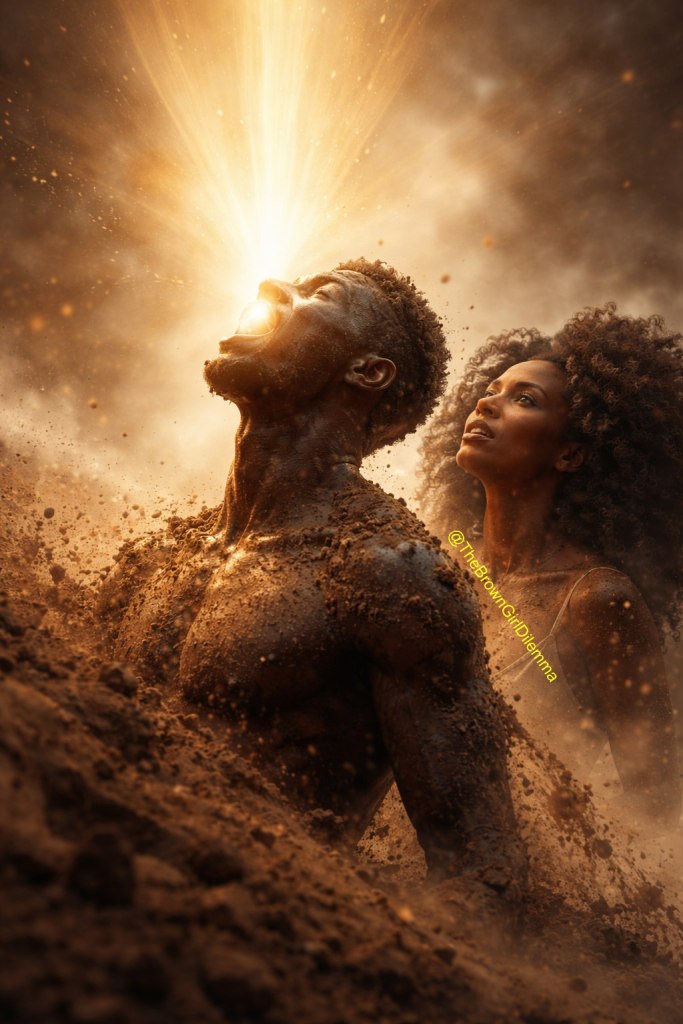
We are Dust with his Breath

In the beginning of creation, humanity is introduced not as an accident of nature but as a deliberate act of divine intention. Scripture teaches that God formed man from the dust of the ground and breathed into his nostrils the breath of life, and man became a living soul (Genesis 2:7, KJV). This verse establishes a foundational theological truth: without the breath of God, humanity remains lifeless matter, no different from the soil beneath our feet.

The imagery of dust is deeply symbolic. Dust represents human fragility, limitation, and mortality. It reminds us that no matter how advanced civilization becomes, humanity remains dependent on divine power for existence. The breath of God transforms dust into life, meaning that human dignity does not originate from intellect, wealth, or status, but from divine impartation (Psalm 103:14).

The breath of life is not merely biological respiration; it is spiritual animation. In Hebrew, the word for breath, ruach, also means spirit or wind, indicating that life itself is sustained by the Spirit of God. This suggests that humanity is not self-sustaining but continuously upheld by divine presence (Ezekiel 37:5).

Without God’s breath, human existence loses its sacred meaning. Modern society often elevates human autonomy and self-sufficiency, yet scripture consistently reminds us that life is borrowed, not owned. Every heartbeat and breath testifies to divine mercy rather than human control (Acts 17:25).

The Most High God of Israel is portrayed throughout scripture as the giver and sustainer of life. He is not distant from creation but intimately involved in its continuation. Job acknowledges this truth when he declares that the Spirit of God has made him and the breath of the Almighty gives him life (Job 33:4).

To cherish the Creator is to recognize the source of one’s existence. Gratitude becomes a spiritual posture when one understands that life is a divine gift rather than a human achievement. Worship, therefore, is not ritualistic obligation but an acknowledgment of existential dependence (Psalm 150:6).

Human pride often blinds people to this reality. Scientific advancement has led many to believe that life can be explained without God, yet even science cannot produce consciousness from nothing. The mystery of life still points back to divine origin rather than mechanical causation (Collins, 2006).

In biblical theology, breath is also associated with renewal and restoration. In the valley of dry bones, God commands breath to enter lifeless bodies, and they rise again, symbolizing spiritual revival and national restoration (Ezekiel 37:9–10). This narrative reinforces that without divine breath, there is no resurrection, no hope, and no future.

The breath of God also signifies moral responsibility. If life comes from God, then life belongs to God. Humanity is therefore accountable to divine standards, not self-created ethics. This challenges modern individualism, which promotes self-definition without divine authority (Romans 14:7–8).

To say “we are dust without His breath” is to affirm human humility. It dismantles the illusion of self-made identity and replaces it with sacred dependency. Even kings and empires return to dust, but God’s breath remains eternal (Ecclesiastes 12:7).

The Most High is not merely a creator but a sustainer. He does not abandon what He forms. Scripture portrays God as continually involved in the world, sustaining all things by His word and power (Hebrews 1:3). Life is not a past miracle but an ongoing one.

Cherishing the Creator involves living in awareness of divine presence. It transforms daily life into a sacred experience. Eating, breathing, thinking, and loving become acts of worship when viewed through the lens of divine origin (Colossians 3:17).

The concept of breath also connects to divine communication. God’s breath produces His word, and His word produces life. The same God who breathed into Adam later breathed scripture into prophets and apostles, making His word living and powerful (2 Timothy 3:16).

From a theological perspective, denying God as the source of life leads to spiritual alienation. When humanity forgets its Creator, it begins to worship creation, self, and materialism. This reversal of order results in moral decay and existential emptiness (Romans 1:21–25).

The breath of God also represents divine intimacy. Unlike other creatures, humanity receives life through direct divine interaction. God does not speak humans into existence; He breathes into them, suggesting relational closeness rather than distant creation (Brueggemann, 2010).

Life therefore carries sacred responsibility. If God’s breath animates humanity, then every human life possesses inherent worth, regardless of race, class, or ability. This foundation supports biblical human dignity and justice (Genesis 1:27).

The Most High God of Israel reveals Himself not only as powerful but as compassionate. He breathes life into fragile dust and remains patient with human failure. His mercy sustains those who constantly fall short of divine perfection (Lamentations 3:22–23).

Even death in scripture does not represent divine abandonment. The return of breath to God signifies transition, not annihilation. The soul returns to its source, awaiting divine judgment and restoration (Ecclesiastes 12:7).

In this sense, breath becomes eschatological. It points beyond physical life to eternal reality. God’s breath does not merely create time-bound existence but prepares humanity for everlasting communion (John 20:22).

Ultimately, the statement “we are dust without His breath” is not a message of despair but of sacred truth. It reminds humanity that life is not meaningless, accidental, or random. Life is divine, purposeful, and sustained by the Most High God of Israel.

To cherish the Creator is to live in reverence, humility, and gratitude. Every breath becomes a testimony of divine mercy, and every moment becomes an opportunity to acknowledge the One who turns dust into living souls.


References

Brueggemann, W. (2010). Genesis: Interpretation: A Bible commentary for teaching and preaching. Westminster John Knox Press.

Collins, F. S. (2006). The language of God: A scientist presents evidence for belief. Free Press.

The Holy Bible, King James Version. (1611/2017). Cambridge University Press.

Wright, N. T. (2012). How God became king: The forgotten story of the Gospels. HarperOne.

Walton, J. H. (2009). The lost world of Genesis one: Ancient cosmology and the origins debate. InterVarsity Press.


The Mirror Between Two Worlds

Between the physical and the spiritual, between what is seen and what is felt, there exists a mirror — a reflection that reveals not merely the face, but the soul. The Mirror Between Two Worlds represents the threshold where identity, morality, and divinity converge. It is the space where humanity confronts both its beauty and its brokenness, where truth and illusion battle for dominion over the heart.

Every individual lives in two realms: the material world of flesh and ambition, and the spiritual world of conscience and eternity. The mirror between them does not merely show what we appear to be, but who we have become. In this reflection, one must ask: Am I living for this world or for the one beyond?

The physical world teaches us to chase visibility — to be admired, accepted, and envied. It prizes appearance over authenticity. The spiritual world, by contrast, measures not how we look but how we love, not how high we rise but how deeply we serve. The mirror between these two worlds exposes the tension of modern existence — the war between ego and essence.

In Scripture, mirrors often symbolize revelation and reflection. The Apostle Paul wrote, “For now we see through a glass, darkly; but then face to face” (1 Corinthians 13:12, KJV). Humanity’s understanding of truth is partial, obscured by sin and self-deception. Yet as we draw nearer to God, the reflection clarifies, revealing our true image — one made in His likeness.

This mirror is not a passive object; it is alive with moral consequence. It shows both the masks we wear and the wounds we hide. Many are afraid to look too long, for the reflection exposes compromise, vanity, and spiritual neglect. But transformation begins with honest confrontation. We cannot heal what we refuse to see.

In the age of social media and self-curation, the mirror has multiplied. We are surrounded by digital reflections — selfies, filters, and public personas — each crafted to project perfection. Yet the soul, neglected and unfiltered, remains restless. The world teaches us to polish the image but ignore the spirit, to upgrade the mirror but forget the reflection.

The “two worlds” also represent time and eternity. In this life, we chase possessions, pleasure, and recognition; in the next, only righteousness will endure. The mirror between them reminds us that what is temporary often disguises itself as eternal, and what is unseen carries the greatest value. “While we look not at the things which are seen, but at the things which are not seen…” (2 Corinthians 4:18, KJV).

Every choice we make tilts the reflection toward one world or the other. When we choose truth over convenience, compassion over cruelty, faith over fear — we align with the divine reflection. But when we yield to pride, envy, or greed, the mirror darkens. It becomes clouded by self-interest, unable to reflect the light of God’s image.

For centuries, mystics and theologians have described life as a mirror of the soul. The more one polishes it through repentance and humility, the more clearly it reflects the Creator. Sin, however, scratches the glass, distorting the divine resemblance. The process of sanctification is, in essence, the cleaning of the mirror — the restoration of spiritual clarity.

In psychological terms, the mirror represents self-awareness — the courage to observe one’s own motives, biases, and brokenness. It demands vulnerability, for the truth is rarely flattering. Yet through this inner reflection, spiritual maturity is born. The unexamined soul remains divided, trapped between the two worlds.

The mirror also symbolizes duality — light and shadow, heaven and earth, the sacred and the profane. It reminds us that humans are not merely bodies seeking pleasure, but spirits seeking purpose. When the material dominates, the reflection becomes superficial; when the spiritual leads, beauty flows from within.

The tragedy of modern humanity is that many have mistaken the reflection for the reality. They worship the image — fame, status, self — and forget the source. This idolatry of the self is the ancient sin reborn in digital form. The mirror becomes an altar where the ego reigns supreme, yet leaves the soul starving.

Yet, hope endures. The mirror between worlds is not meant to condemn but to awaken. When one gazes into it with humility, the illusion fades and truth emerges. One begins to see that divine beauty is not external adornment but internal alignment — the harmony of heart, mind, and spirit under God’s light.

In every generation, prophets, poets, and philosophers have urged humanity to look inward. “Know thyself,” inscribed on the Temple of Delphi, echoes the same wisdom Christ imparted: “The kingdom of God is within you” (Luke 17:21, KJV). The mirror between two worlds, then, is not found in glass but in the heart.

The reflection we see in others often reveals what remains unresolved within us. Judgment, envy, and resentment are projections of our own unrest. Thus, relationships become mirrors too — sacred tools of revelation meant to refine rather than condemn. Each encounter is an invitation to greater understanding.

The moment we surrender vanity and face our truest reflection, transformation begins. The mirror ceases to divide the worlds and instead unites them. Heaven and earth meet within the redeemed heart — a space where spiritual truth animates physical existence.

The goal, then, is not to shatter the mirror but to see clearly through it. To live with integrity between both worlds — fully human yet divinely guided. To reflect the Creator while walking through creation.

In the end, every soul must stand before the ultimate mirror — the presence of God — where no filters, excuses, or disguises remain. There, reflection becomes revelation. And in that sacred unveiling, we will finally see ourselves as He always saw us — not divided, but whole.

References

Foster, R. (1998). Celebration of discipline: The path to spiritual growth. HarperCollins.
Lewis, C. S. (1942). The Screwtape letters. HarperOne.
Nouwen, H. (1981). The wounded healer: Ministry in contemporary society. Doubleday.
Tozer, A. W. (1991). The pursuit of God. Christian Publications.
The Holy Bible, King James Version. (1611). London: Oxford University Press.

The Bible Series: Adam & Eve

In the beginning, the Most High created the heavens and the earth, forming man from the dust and breathing into him the breath of life. Adam was created in the image of God, molded from the rich soil of the earth (Genesis 2:7, KJV). The Hebrew word for “Adam” means ruddy or of the ground, symbolizing the deep brown hue of the fertile soil. This suggests that Adam and Eve were people of color, their skin reflecting the richness of the earth from which they were formed. Their beauty was natural and divine, representing the perfection of humanity before sin entered the world.

Eve, the first woman, was taken from Adam’s rib—a profound act showing unity, love, and equality. She was not made from his head to rule over him, nor from his feet to be trampled by him, but from his side to walk with him (Genesis 2:21–22, KJV). Together, they embodied harmony, holiness, and purity in the Garden of Eden, a place untouched by corruption. The Most High gave them dominion over creation and one simple command—to abstain from eating from the Tree of the Knowledge of Good and Evil (Genesis 2:16–17, KJV).

The serpent, more subtle than any beast of the field, entered the garden with deception in his heart. This serpent, influenced by Satan, twisted the Most High’s words, planting doubt and rebellion in Eve’s mind. He said, “Ye shall not surely die: For God doth know that in the day ye eat thereof, then your eyes shall be opened” (Genesis 3:4–5, KJV). This manipulation was the seed of sin—the desire to know more than what God allowed, the craving for power and independence from divine authority.

Eve, captivated by what she saw, took the fruit and ate it, then gave it to Adam. The sin was not merely eating forbidden fruit but disobedience—the rejection of divine wisdom for self-gratification. Their eyes were opened, but instead of enlightenment, they found shame. They realized their nakedness and tried to cover themselves with fig leaves, symbolizing the birth of human guilt and fear.

Sin entered the world that day, not through the act itself, but through the spirit of rebellion against the Most High. Humanity was no longer innocent. What was once pure became tainted by pride, lust, and self-will. Their decision shifted the course of history, separating humanity from God and introducing death, pain, and corruption into the world.

The trees in the garden carried deep symbolism. In ancient Hebraic understanding, trees often represented elders or sources of knowledge. To eat from a tree was to partake in wisdom or counsel. Adam and Eve’s choice to eat from the forbidden tree meant seeking counsel apart from the Most High. They exchanged divine guidance for worldly wisdom—a mistake humanity continues to repeat.

The serpent’s deception exposed his true nature as the accuser and destroyer. His goal was to corrupt the image of God within man by appealing to desire and pride. He presented sin as enlightenment and rebellion as freedom. But true freedom comes only through obedience to the Creator, not rebellion against Him.

Adam and Eve’s fall did not only affect them but all of creation. Romans 5:12 (KJV) explains, “Wherefore, as by one man sin entered into the world, and death by sin; and so death passed upon all men.” This marked the beginning of a fallen world where toil, sorrow, and mortality replaced peace and eternal life.

Before the fall, Adam and Eve enjoyed direct fellowship with the Most High. Afterward, they hid among the trees, afraid to face Him. This separation reflected the spiritual death that accompanied their physical existence. Humanity’s bond with God was broken, requiring redemption that would only be fulfilled through Yahusha HaMashiach (Jesus Christ).

Even in judgment, the Most High showed mercy. He clothed them with coats of skins (Genesis 3:21, KJV), foreshadowing the sacrificial system and the ultimate covering through the Messiah’s blood. Though they were cast out of Eden, His love and plan for restoration never ceased.

The color of Adam and Eve, formed from the dust, connects deeply to Africa—the cradle of civilization. The fertile brown and red soils of the East are a reflection of the divine artistry that shaped the first humans. Science and scripture align in this, confirming that humanity’s origins are rooted in a melanated people from the rich lands of the East.

The sin of Adam and Eve also represents the human struggle between spirit and flesh. Their story is not simply about fruit but about the nature of temptation—how desire can cloud obedience, and how curiosity can lead to destruction. The devil still whispers the same lie today: that fulfillment can be found apart from the Most High.

Eve’s vulnerability was not weakness; it was human emotion exploited by deception. Adam’s failure was not ignorance; it was willful disobedience. Together, they symbolize the dual nature of humanity—the intellect and the emotion—both capable of leading astray without divine order.

The Most High’s question, “Where art thou?” (Genesis 3:9, KJV), was not one of location but relationship. Humanity had drifted from its Creator. That question still echoes through time, calling each generation back to repentance and restoration.

From their disobedience came pain in childbirth, toil in labor, and conflict between good and evil. Yet from their lineage came redemption. Eve was called the mother of all living, and through her seed came the promise of salvation. The Most High declared that the seed of the woman would bruise the serpent’s head (Genesis 3:15, KJV), a prophecy fulfilled in Yahusha’s victory over sin and death.

The devil’s act in Eden was the beginning of his war against mankind, but the Most High’s love has always been greater than the serpent’s lies. Though humanity fell, grace arose. The story of Adam and Eve is a mirror to our own lives—every choice we make is a step toward obedience or rebellion.

Their sin introduced death, but it also introduced grace. Through their fall, the Most High revealed His mercy, teaching that even when we fail, He provides a way back. The curse became a path to redemption, and the garden became a memory of what will one day be restored.

Adam and Eve’s story teaches that sin always promises elevation but delivers shame. The devil’s lies have not changed—they simply wear modern faces. But the same God who clothed Adam and Eve still covers us today with His righteousness.

In the end, Adam and Eve’s journey is humanity’s story: created in divine image, tested by temptation, fallen by choice, yet redeemed by grace. The Most High looked beyond their sin and saw their potential for repentance. Through their story, we learn that though sin changed humanity, God’s love never changed. He still calls us to return, to walk in righteousness, and to live by the Spirit rather than the flesh. For in Him alone is true life restored.

The Origins of White Skin

The study of human pigmentation, particularly the origins of white skin, intertwines anthropology, genetics, and evolutionary biology. Understanding how and why skin color diversified requires an exploration of migration patterns, environmental adaptation, and genetic mutations that shaped the physical diversity among humankind. This essay will explore the scientific, historical, and sociocultural dimensions of white skin evolution through an integrative scholarly lens.

The terms “white” and “black” are social and symbolic designations, not literal reflections of human pigmentation. Scientifically and anthropologically, all humans fall along a spectrum of brown skin tones determined by melanin concentration, hemoglobin visibility, and other pigmentary factors.

In biological terms, skin color arises from three main pigments: melanin, carotene, and hemoglobin. Melanin, produced by melanocytes, gives skin its brown to dark brown shades. Carotene adds yellow or golden undertones, while hemoglobin contributes pink to red hues visible through lighter skin. Therefore, so-called “white” people actually possess light beige or pinkish skin tones, influenced by low melanin levels and higher visibility of underlying blood vessels (Jablonski, 2021).

Similarly, “black” skin is not black in the literal sense but represents varying concentrations of eumelanin that create rich brown tones ranging from bronze to deep espresso. Under sunlight, darker skin often reveals golden, red, or blue undertones rather than pure blackness. This continuous gradation underscores that human pigmentation exists along a chromatic continuum, not binary categories.

The labels white and black originated during European colonial expansion to reinforce social hierarchies, not biological realities. In the 17th and 18th centuries, racial theorists used color as a metaphor for moral and intellectual worth—“white” symbolizing purity and civilization, and “black” denoting savagery and sin (Smedley & Smedley, 2011). These associations, rooted in ideology rather than anatomy, shaped enduring racial constructs that persist today.

Modern genetics and anthropology confirm that all humans share over 99.9% identical DNA, and differences in skin color are governed by a handful of genes (Norton et al., 2007). Thus, color terminology reflects cultural identity and historical power dynamics more than any genuine biological division.

In truth, all people are various shades of brown—from the lightest ivory to the deepest mahogany—demonstrating our shared origin and diversity within unity. As the biblical verse reminds, “And hath made of one blood all nations of men” (Acts 17:26, KJV). Science and scripture converge here: humanity’s distinctions are aesthetic and adaptive, not hierarchical.

Early human populations originated in sub-Saharan Africa, where high ultraviolet radiation levels favored dark skin pigmentation rich in melanin. Melanin serves as a natural barrier protecting the skin from UV-induced damage and degradation of folate, an essential nutrient for reproductive success (Jablonski & Chaplin, 2010). Thus, the earliest Homo sapiens possessed dark skin as a biological adaptation to equatorial sunlight.

As human groups migrated northward out of Africa roughly 60,000 years ago, they encountered regions with lower UV exposure. In these environments, dark pigmentation became less advantageous. To maintain adequate vitamin D synthesis—a process reliant on UV-B radiation—lighter skin gradually evolved through natural selection (Norton et al., 2007).

One of the most significant genetic factors in light skin evolution is the SLC24A5 gene. A single nucleotide change in this gene (Ala111Thr) is strongly associated with light pigmentation among Europeans (Lamason et al., 2005). This mutation, which likely arose around 8,000 years ago, spread rapidly due to selective pressures in northern latitudes where sunlight was weaker.

Another key gene, SLC45A2, also contributes to depigmentation in European populations (Stokowski et al., 2007). Together with TYR and OCA2 genes, these variants represent a cluster of evolutionary adaptations that reshaped melanin production, producing the light skin phenotypes common in Europe.

The emergence of white skin was not instantaneous but gradual. Genetic modeling suggests multiple independent depigmentation events occurred among non-African populations. East Asians, for example, developed lighter skin through different genetic pathways (notably the DCT and MFSD12 genes), demonstrating convergent evolution (Yamaguchi et al., 2018).

Archaeogenetic evidence indicates that early Europeans, such as the Mesolithic hunter-gatherers of Western Europe, still had dark skin and blue eyes (Olalde et al., 2014). It was only during the Neolithic agricultural revolution—when farming spread from the Near East—that genes for lighter skin became dominant in Europe.

This agricultural transition likely accelerated depigmentation. Diets deficient in vitamin D due to reduced consumption of animal products made lighter skin advantageous for efficient synthesis of the vitamin from limited sunlight (Hofmanová et al., 2016). Thus, whiteness as a phenotype arose through both environmental and dietary adaptation.

Cultural evolution soon intersected with biological change. As populations developed hierarchies, skin color became symbolically charged—first as a marker of regional origin, later as a social construct of superiority and purity (Smedley & Smedley, 2011). The scientific origins of white skin were therefore overlaid by ideological meanings during the rise of European colonialism.

European societies, beginning in the Renaissance and Enlightenment periods, reinterpreted physical difference through racial taxonomy. Thinkers like Linnaeus and Blumenbach used skin color to classify humanity, cementing whiteness as the “norm” of civilization (Eze, 1997). These frameworks distorted evolutionary diversity into hierarchical racial structures.

The biological reality, however, undermines these racialized assumptions. Modern genomic data reveal that skin color variation represents a small portion of overall genetic diversity among humans—roughly 0.1% of total DNA difference (Lewontin, 1972). Thus, “race” is more a sociopolitical invention than a biologically discrete category.

The theological narrative also influenced perceptions of white skin. In medieval Europe, depictions of Adam and Eve as white reinforced Eurocentric conceptions of divine image-bearing, contrasting with African and Semitic biblical origins (Goldenberg, 2003). This ideological whiteness would later justify slavery, colonialism, and systemic inequality.

Anthropologically, lighter skin in Eurasia should be seen not as superiority but as regional adaptation. It parallels the Inuit’s dietary vitamin D compensation or the dark skin retention of equatorial peoples despite varying UV exposure—each reflecting environmental equilibrium rather than hierarchy (Jablonski, 2021).

The adaptation process reveals the remarkable plasticity of the human genome. Mutations in pigmentation genes often occurred within a few thousand years—a rapid pace in evolutionary terms—demonstrating the strong influence of climate and diet on phenotype (Liu et al., 2015).

Moreover, studies of ancient DNA reveal that pigmentation genes continued evolving even in historical times. For example, the allele for light eyes and skin (HERC2/OCA2) rose in frequency in Europe during the Bronze Age (Mathieson et al., 2015). This continuous selection underscores skin color as a dynamic trait rather than a fixed racial essence.

Socially, the valorization of whiteness became a cultural invention with far-reaching consequences. Colonial narratives equated light skin with intelligence, civility, and divine favor—distortions that persist in global colorism today (Hunter, 2013). The origin of white skin, therefore, cannot be divorced from the ideologies it later inspired.

Biomedically, understanding the genetics of pigmentation informs research into health disparities. Lighter skin correlates with higher risks of UV-related cancers and folate deficiency, while darker skin populations in northern latitudes face vitamin D deficiencies (Nina et al., 2019). Both extremes highlight the adaptive trade-offs of human evolution.

The story of white skin also illustrates humanity’s shared ancestry. Despite visible differences, all modern humans trace their lineage to a common African origin roughly 200,000 years ago (Stringer, 2016). Skin color differences merely represent evolutionary responses along a continuum of adaptation.

From a spiritual-humanistic perspective, these findings reaffirm the unity of mankind. As the Apostle Paul declared, “And hath made of one blood all nations of men” (Acts 17:26, KJV). Scientific inquiry thus harmonizes with scriptural truth: diversity is divine design, not division.

Contemporary discussions on race and identity must therefore distinguish between biological pigmentation and sociocultural constructs. Whiteness as an identity emerged not from genetics but from power, empire, and ideology—constructed upon natural adaptation but weaponized through social stratification.

Ultimately, the origins of white skin testify to human resilience and adaptability. Our ancestors’ capacity to evolve physically, migrate globally, and adapt spiritually underscores the interconnectedness of all humanity under one Creator.

Science continues to demystify color, revealing that beneath the epidermis lies a shared human essence. In understanding how white skin evolved, we come closer to transcending the myths it inspired and embracing the unity embedded in our DNA.

References

Eze, E. C. (1997). Race and the Enlightenment: A reader. Blackwell.
Goldenberg, D. M. (2003). The curse of Ham: Race and slavery in early Judaism, Christianity, and Islam. Princeton University Press.
Hofmanová, Z., et al. (2016). Early farmers from across Europe directly descended from Neolithic Aegeans. Proceedings of the National Academy of Sciences, 113(25), 6886–6891.
Hunter, M. (2013). Race, gender, and the politics of skin tone. Routledge.
Jablonski, N. G., & Chaplin, G. (2010). Human skin pigmentation as an adaptation to UV radiation. Proceedings of the National Academy of Sciences, 107(Suppl 2), 8962–8968.
Jablonski, N. G. (2021). Living color: The biological and social meaning of skin color. University of California Press.
Lamason, R. L., et al. (2005). SLC24A5, a putative cation exchanger, affects pigmentation in zebrafish and humans. Science, 310(5755), 1782–1786.
Lewontin, R. C. (1972). The apportionment of human diversity. Evolutionary Biology, 6, 381–398.
Liu, F., et al. (2015). Genetics of skin color variation. Annual Review of Genomics and Human Genetics, 16, 99–120.
Mathieson, I., et al. (2015). Genome-wide patterns of selection in ancient Eurasians. Nature, 528(7583), 499–503.
Nina, G., et al. (2019). Pigmentation and health: The evolutionary legacy of skin color adaptation. Nature Reviews Genetics, 20(10), 705–718.
Norton, H. L., et al. (2007). Genetic evidence for the convergent evolution of light skin in Europeans and East Asians. Molecular Biology and Evolution, 24(3), 710–722.
Olalde, I., et al. (2014). Derived immune and ancestral pigmentation alleles in a 7,000-year-old Mesolithic European. Nature, 507(7491), 225–228.
Smedley, A., & Smedley, B. D. (2011). Race in North America: Origin and evolution of a worldview. Westview Press.
Stokowski, R. P., et al. (2007). A genomewide association study of skin pigmentation in a South Asian population. American Journal of Human Genetics, 81(6), 1119–1132.
Stringer, C. (2016). The origin and evolution of Homo sapiens. Philosophical Transactions of the Royal Society B, 371(1698), 20150237.
Yamaguchi, Y., et al. (2018). Diverse pathways to depigmentation: Evolution of light skin in different human populations. Pigment Cell & Melanoma Research, 31(3), 338–350.