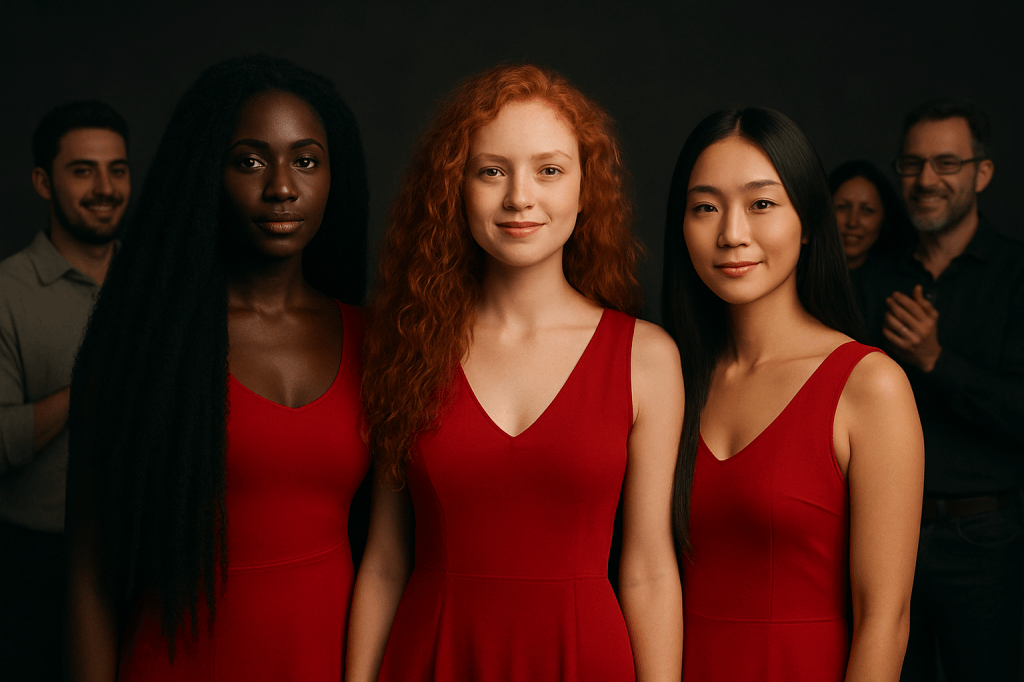
Tag Archives: lookism

Lookism: Man Looketh on the Outward Appearance, but the LORD Looketh on the Heart

Lookism is the societal bias that judges people primarily by their physical appearance. It elevates those deemed conventionally attractive while marginalizing those who do not fit narrowly defined standards. While human perception often values symmetry, skin tone, body shape, or facial features, scripture reminds us that God’s measure of worth differs fundamentally: He examines the heart (1 Samuel 16:7).

The Psychology of Lookism

Human beings make rapid judgments based on appearance, often within seconds. These evaluations affect social interactions, opportunities, and perceptions of competence. Research shows that attractive individuals receive preferential treatment in education, employment, and social settings, a phenomenon known as the “halo effect” (Langlois et al., 2000).

Cultural Standards of Beauty

Lookism is culturally constructed. Different societies prioritize different physical traits, and media perpetuates narrow ideals, often favoring Eurocentric features or lighter skin tones. These standards are fluid and historically contingent, not universal indicators of worth or beauty.

Facial Harmony and Symmetry

Scientific studies reveal that perceived attractiveness is strongly linked to facial harmony and symmetry, not merely skin tone or superficial features (Rhodes, 2006). Symmetry signals health and genetic fitness, which influences human attraction across cultures.

The Eye of the Beholder

Attraction is subjective. What one person finds beautiful, another may not. This variability emphasizes that societal biases are not absolute truths but reflect collective preferences shaped by media, culture, and personal experience.

Consequences of Lookism

The prioritization of appearance can lead to discrimination, low self-esteem, and social exclusion. Those outside conventional beauty standards often experience prejudice, while attractive individuals are granted unearned advantages. Lookism perpetuates inequality and undermines the intrinsic value of all humans.

Skin Tone and Colorism

Within lookism, colorism—a bias favoring lighter skin—is pervasive. However, light skin does not guarantee attractiveness, just as dark skin is not inherently less beautiful. True beauty is determined by proportional features, expression, and presence, not melanin content (Hunter, 2007).

Inner Beauty vs. Outer Appearance

While human culture emphasizes outward appearance, scripture highlights the primacy of the heart. God values character, kindness, and integrity over superficial traits. True attractiveness incorporates moral and spiritual qualities alongside physical features.

Biblical Perspective

1 Samuel 16:7 instructs, “Man looketh on the outward appearance, but the LORD looketh on the heart.” This passage underscores that divine judgment prioritizes intentions, character, and spiritual alignment over physical attributes.

Lookism and Gender

Lookism affects both men and women but manifests differently. Women often face heightened scrutiny of body shape, facial features, and youthfulness, while men may experience bias based on muscularity, height, or facial symmetry. Faith calls both genders to focus on godly character rather than societal validation.

The Media’s Role

Advertising, film, and social media amplify lookism by promoting idealized, often unattainable images. Filters, photo editing, and selective representation reinforce unrealistic standards, distorting perceptions of beauty.

Impact on Self-Esteem

Repeated exposure to biased standards fosters insecurity, comparison, and self-rejection. Individuals may equate their worth with appearance, neglecting their spiritual, emotional, and moral development.

Resisting Lookism

Awareness is the first step to resisting lookism. By understanding the cultural and psychological mechanisms behind appearance bias, individuals can cultivate self-acceptance and celebrate diverse forms of beauty.

Faith-Based Resistance

Prayer, scripture meditation, and community support help believers resist societal pressures. By anchoring self-worth in God’s assessment rather than public opinion, one can live confidently without succumbing to superficial standards.

Redefining Beauty

True beauty transcends symmetry, facial features, or skin tone. It encompasses kindness, wisdom, humility, and spiritual alignment. Lookism is a human construct, but divine beauty is timeless and inclusive.

Role Modeling and Mentorship

Mentors and role models who exemplify godly character and confidence help counteract the effects of lookism, especially for younger generations navigating social pressures.

Encouraging Diversity

Celebrating diverse appearances—different skin tones, body types, and facial features—challenges societal biases and reflects the richness of God’s creation.

Lookism and Society

Addressing lookism requires collective effort. Education, media representation, and conscious social practices can shift cultural norms to value character and capability over superficial appearance.

Personal Reflection and Growth

Believers are called to self-reflection, assessing whether they have internalized lookist biases. Recognizing the heart as the true measure fosters humility, gratitude, and equitable treatment of others.

Conclusion

Lookism privileges the outward and often misjudges intrinsic worth. Scripture reminds us that God’s perception is rooted in the heart. By embracing this perspective, individuals can resist societal pressure, celebrate authentic beauty, and cultivate moral and spiritual excellence, reflecting divine priorities in a world obsessed with appearances.


References

More Than Skin Deep: The Fight Against Lookism.

This photograph is the property of its respective owner. No copyright infringement intended.

In a society increasingly obsessed with physical appearance, the phenomenon of lookism—the discrimination or bias based on how one looks—permeates nearly every aspect of life. From hiring practices and social interactions to media representation and personal relationships, individuals are often judged not by their character or intellect, but by the superficial metrics of beauty, skin tone, and body shape. For Black communities and other marginalized groups, this bias intersects with historical legacies of colorism, Eurocentric standards of beauty, and systemic oppression, compounding the psychological and social toll. Yet, the human experience is far richer than what the eye can perceive; our value, identity, and potential extend well beyond mere appearances. This essay confronts the pervasive culture of lookism, examining its roots, manifestations, and consequences, while advocating for a deeper understanding of worth that transcends the skin.

In contemporary society, the valuation of individuals based on physical appearance has become both pervasive and pernicious. Lookism—the systemic bias favoring certain facial features, body types, skin tones, and other physical attributes—functions as an often invisible form of discrimination. While it may appear superficial, its consequences permeate employment, education, social relationships, and mental health. For marginalized communities, particularly Black people, lookism intersects with colorism, historical oppression, and racialized beauty standards, magnifying its impact.

The roots of lookism are historical, entwined with social hierarchies and colonialism. European colonial powers imposed ideals of whiteness as superior, embedding racialized beauty standards into law, media, and social norms. Enslaved Africans in the Americas were subjected not only to physical bondage but also to a devaluation of natural features—skin tone, hair texture, and facial structures—creating lasting psychological and cultural wounds (Hunter, 2007).

Colorism, a subset of lookism, privileges lighter skin over darker skin within the same racial or ethnic group. For Black communities, this bias is deeply internalized, influencing mate selection, career advancement, and social perception. Research shows that lighter-skinned individuals are often perceived as more competent, attractive, and socially acceptable, while darker-skinned individuals are subject to prejudice and exclusion (Russell, Wilson, & Hall, 1992).

Lookism is not solely about skin tone. Height, body shape, facial symmetry, hair texture, and other physical characteristics are equally evaluated against culturally constructed ideals. Psychologists have shown that people unconsciously associate beauty with intelligence, morality, and success—a cognitive bias known as the “halo effect” (Nisbett & Wilson, 1977). Consequently, those deemed “less attractive” face subtle but measurable disadvantages in life opportunities.

Media perpetuates these biases by idealizing Eurocentric features in film, television, advertising, and social media. Black actors and models are often expected to conform to these standards through skin-lightening, hair straightening, or cosmetic surgery. Such pressures reinforce the notion that natural Black beauty is insufficient, undermining self-esteem and cultural pride (Taylor, 2002).

The psychological toll of lookism is profound. Studies in social psychology indicate that chronic exposure to appearance-based discrimination contributes to anxiety, depression, and low self-worth. Dark-skinned Black women, in particular, report feelings of invisibility and rejection, even within their own communities, due to entrenched color hierarchies (Hunter, 2005).

Biblical scripture speaks to the limitations of superficial judgment. In 1 Samuel 16:7 (KJV), it is written: “…Man looketh on the outward appearance, but the LORD looketh on the heart.” This verse underscores the spiritual truth that intrinsic value resides within character, integrity, and faith rather than outward form. The fight against lookism is thus both a social and spiritual endeavor.

The workplace provides a clear arena in which lookism manifests. Studies show that resumes with photographs or names suggestive of certain racial or ethnic backgrounds receive fewer callbacks. Attractive candidates are more likely to be promoted, while those deemed less aesthetically pleasing are systematically overlooked, regardless of skill or experience (Hamermesh & Biddle, 1994).

Education is similarly affected. Teachers and peers may unconsciously favor students who fit conventional beauty standards, granting them more attention, encouragement, and opportunities. This bias shapes self-perception, academic achievement, and long-term socioeconomic mobility, demonstrating that the consequences of lookism are cumulative (Langlois et al., 2000).

Social media amplifies lookism in unprecedented ways. Platforms like Instagram and TikTok reward images aligned with popular beauty ideals, while algorithms disproportionately promote content featuring lighter skin, Eurocentric features, or conventionally thin bodies. The resulting feedback loop reinforces internalized beauty hierarchies and societal discrimination (Tiggemann & Slater, 2014).

In relationships, lookism influences attraction and partnership dynamics. Research on dating preferences indicates that darker-skinned individuals, particularly women, are often desexualized or stigmatized. Men with darker skin may be perceived as less desirable, while lighter-skinned counterparts are fetishized or privileged. These patterns echo historical practices of slavery and segregation, demonstrating the persistence of racialized beauty bias (Hunter, 2007).

Cultural resistance to lookism is both historical and contemporary. Figures like Marcus Garvey, Maya Angelou, and Lupita Nyong’o have celebrated natural Black beauty, challenging entrenched ideals and affirming pride in African features, hair textures, and skin tones. Their work illustrates the transformative power of representation and visibility in combating appearance-based discrimination.

Psychological strategies for resisting lookism include cultivating self-compassion, rejecting external validation, and fostering community affirmation. Programs promoting diversity in media, workplace equity initiatives, and educational campaigns can reduce the impact of appearance-based bias. Recognizing the systemic nature of lookism is essential to dismantling its influence (Cokley et al., 2013).

Intersectionality is key to understanding lookism’s full impact. Gender, race, class, and disability intersect with physical appearance to produce compounded disadvantage. Dark-skinned women, for instance, experience a “double bind” of sexism and colorism, while Black men face societal expectations around masculinity and attractiveness that limit their perceived value (Crenshaw, 1991).

Lookism also has generational implications. Children absorb societal standards from media, peers, and family, internalizing hierarchical valuations of beauty. This perpetuates cycles of self-rejection, colorism, and prejudice, making the fight against lookism an urgent matter of social justice (Jones, 2000).

From a theological perspective, combating lookism aligns with the principle of imago Dei—the belief that all humans are created in the image of God (Genesis 1:27). This doctrine affirms the inherent dignity of every person, regardless of outward appearance, and calls for ethical treatment based on intrinsic worth rather than superficial evaluation.

Historically, communities of color have developed resilience strategies to counteract lookism. Black churches, cultural organizations, and activist groups have emphasized self-worth, pride in natural features, and the celebration of heritage. Such collective reinforcement strengthens identity and provides a counter-narrative to oppressive beauty hierarchies (Hughes et al., 2016).

Lookism’s influence in popular culture continues to evolve. While representation of diverse bodies and features has improved, subtle biases remain embedded in casting, advertising, and beauty standards. True progress requires systemic change, including media accountability, educational reform, and cultural affirmation of all forms of beauty.

Scholars, activists, and faith leaders advocate a multi-pronged approach to defeating lookism: challenging internalized biases, reforming structural inequities, and promoting media literacy. By valuing character, intellect, and spiritual depth above appearance, society can create a more equitable and humane environment (Hunter, 2007; Taylor, 2002).

In conclusion, the fight against lookism is a struggle to recognize human worth beyond superficiality. For Black communities and all marginalized groups, it is both a social and spiritual imperative to confront these biases, affirm intrinsic dignity, and cultivate a culture in which beauty is not a barrier to opportunity, love, or respect. As 1 Samuel 16:7 reminds us, true judgment lies not in the eye, but in the heart.


References

Cokley, K., McClain, S., Enciso, A., & Martinez, M. (2013). An examination of the impact of minority status stress and impostor feelings on the mental health of diverse ethnic minority college students. Journal of Multicultural Counseling and Development, 41(2), 82–95.

Crenshaw, K. (1991). Mapping the margins: Intersectionality, identity politics, and violence against women of color. Stanford Law Review, 43(6), 1241–1299.

Hamermesh, D. S., & Biddle, J. E. (1994). Beauty and the labor market. American Economic Review, 84(5), 1174–1194.

Hughes, D., Johnson, D. J., & Stevenson, H. C. (2016). Stress and resilience in African American youth: Contextual and cultural considerations. Journal of Child and Family Studies, 25, 1–15.

Hunter, M. (2005). Race, gender, and the politics of skin tone. Routledge.

Hunter, M. (2007). The persistent problem of colorism: Skin tone, status, and inequality. Sociology Compass, 1(1), 237–254.

Jones, C. (2000). The psychology of skin color: Social consequences and self-perception. Greenwood Publishing Group.

Langlois, J. H., Kalakanis, L., Rubenstein, A. J., Larson, A., Hallam, M., & Smoot, M. (2000). Maxims or myths of beauty? A meta-analytic and theoretical review. Psychological Bulletin, 126(3), 390–423.

Nisbett, R. E., & Wilson, T. D. (1977). The halo effect: Evidence for unconscious alteration of judgments. Journal of Personality and Social Psychology, 35(4), 250–256.

Russell, K., Wilson, M., & Hall, R. (1992). The color complex: The politics of skin color among African Americans. HarperCollins.

Taylor, S. A. (2002). Skin tone, status, and self-esteem among African Americans. Journal of Black Studies, 33(5), 674–694.

Tiggemann, M., & Slater, A. (2014). NetGirls: The Internet, Facebook, and body image concern in adolescent girls. International Journal of Eating Disorders, 47(6), 630–643.

Faces of Injustice: How Lookism Shapes Opportunity and Identity

Lookism is the preferential treatment of individuals based on physical appearance. This bias, often subtle and socially accepted, permeates workplaces, education, media, and social interactions, shaping both opportunities and identity.

At its core, lookism is a form of discrimination, privileging those who meet culturally defined standards of attractiveness while marginalizing those who do not (Hamermesh & Biddle, 1994). This bias intersects with race, gender, age, and socioeconomic status, compounding inequality.

The labor market reflects stark evidence of lookism. Research shows that attractive individuals are more likely to be hired, earn higher salaries, and receive favorable performance evaluations compared to their less conventionally attractive peers (Hamermesh & Parker, 2005).

Education is not immune. Studies suggest that teachers unconsciously favor students who appear attractive, often granting more attention, encouragement, and positive feedback. This early advantage shapes self-esteem and academic outcomes (Langlois et al., 2000).

Media perpetuates and normalizes lookism. Television, film, and social media elevate specific facial features, body types, and skin tones as ideal, creating a feedback loop where social value is linked to conformity with these norms (Dion et al., 1972).

Gendered pressures amplify lookism. Women, in particular, face scrutiny over facial aesthetics, body shape, and grooming. Men are increasingly subject to expectations of muscularity and fitness. Nonconformity often results in social or professional penalties (Cash & Pruzinsky, 2002).

Lookism intersects with race and colorism. Marginalized communities frequently face compounded biases, where attractiveness is measured against Eurocentric or socially dominant standards, resulting in systemic disadvantage (Hunter, 2007).

The concept of “beauty privilege” illustrates structural advantages. Attractive individuals receive preferential treatment in hiring, legal outcomes, social interactions, and romantic contexts, demonstrating how appearance influences life trajectories (Mobius & Rosenblat, 2006).

Implicit bias reinforces lookism. Even well-intentioned individuals may unconsciously favor attractive people, believing them to be more competent, friendly, or deserving, which perpetuates systemic inequity (Eagly et al., 1991).

Facial features influence perception of trustworthiness, dominance, and intelligence. Studies demonstrate that these snap judgments affect hiring, promotions, and social capital, often independently of actual skills or character (Todorov et al., 2005).

Cosmetic interventions highlight societal complicity. Individuals may alter appearance to conform to social norms, reflecting the pressure to negotiate identity within a lookist framework (Sarwer & Crerand, 2004). This underscores the pervasive impact of aesthetic standards.

Economic inequality intersects with lookism. Those lacking resources to enhance appearance—through grooming, wardrobe, or cosmetic treatments—often face compounded disadvantages in professional and social spheres (Hamermesh, 2011).

Lookism shapes identity from a young age. Children internalize messages about attractiveness, associating social approval and self-worth with appearance. This internalization influences self-esteem, aspirations, and interpersonal relationships (Grabe, Ward, & Hyde, 2008).

Employment discrimination based on appearance is often legally unaddressed. Unlike race, gender, or disability, attractiveness is not protected, leaving individuals vulnerable to systemic bias without formal recourse (Hamermesh & Biddle, 1994).

Media representation of beauty affects social identity. When marginalized groups are underrepresented or misrepresented, individuals may feel pressure to alter features or style to align with dominant ideals, impacting cultural and personal identity (Hunter, 2007).

Body image and facial aesthetics influence social mobility. Attractive individuals gain access to professional networks, mentorship, and client-facing roles more readily, highlighting the tangible impact of lookism on life outcomes (Mobius & Rosenblat, 2006).

The workplace often rewards appearance over performance. Attractive employees receive higher evaluations, even when performance metrics are identical, demonstrating systemic inequity rooted in visual bias (Hamermesh & Parker, 2005).

Digital media reinforces lookism through filters and editing. Altered images normalize unattainable beauty standards, perpetuating self-comparison, insecurity, and social stratification based on appearance (Fardouly et al., 2015).

Intersectionality compounds the effects of lookism. Women of color, LGBTQ+ individuals, and persons with disabilities face unique pressures, navigating societal ideals while confronting systemic discrimination on multiple fronts (Crenshaw, 1991).

Addressing lookism requires awareness, education, and systemic change. Policies, media literacy, and advocacy for inclusive representation can mitigate the inequities tied to appearance, fostering a more equitable society (Langlois et al., 2000).

Ultimately, the faces we see—and the judgments we make—carry consequences far beyond first impressions. Confronting lookism demands challenging societal biases, expanding definitions of beauty, and ensuring that opportunity and identity are determined by merit, not appearance.


References

  • Cash, T. F., & Pruzinsky, T. (2002). Body image: A handbook of theory, research, and clinical practice. Guilford Press.
  • Crenshaw, K. (1991). Mapping the margins: Intersectionality, identity politics, and violence against women of color. Stanford Law Review, 43(6), 1241–1299.
  • Dion, K., Berscheid, E., & Walster, E. (1972). What is beautiful is good. Journal of Personality and Social Psychology, 24(3), 285–290.
  • Eagly, A. H., Ashmore, R. D., Makhijani, M. G., & Longo, L. C. (1991). What is beautiful is good, but…: A meta-analytic review of research on the physical attractiveness stereotype. Psychological Bulletin, 110(1), 109–128.
  • Fardouly, J., Diedrichs, P. C., Vartanian, L. R., & Halliwell, E. (2015). Social comparisons on social media: The impact of Facebook on young women’s body image concerns and mood. Body Image, 13, 38–45.
  • Grabe, S., Ward, L. M., & Hyde, J. S. (2008). The role of the media in body image concerns among women: A meta-analysis of experimental and correlational studies. Psychological Bulletin, 134(3), 460–476.
  • Hamermesh, D. S. (2011). Beauty pays: Why attractive people are more successful. Princeton University Press.
  • Hamermesh, D. S., & Biddle, J. E. (1994). Beauty and the labor market. American Economic Review, 84(5), 1174–1194.
  • Hamermesh, D. S., & Parker, A. (2005). Beauty in the classroom: Instructors’ pulchritude and putative pedagogical productivity. Economics of Education Review, 24(4), 369–376.
  • Hunter, M. L. (2007). The persistent problem of colorism: Skin tone, status, and inequality. Sociology Compass, 1(1), 237–254.
  • Langlois, J. H., Kalakanis, L., Rubenstein, A. J., Larson, A., Hallam, M., & Smoot, M. (2000). Maxims or myths of beauty? A meta-analytic and theoretical review. Psychological Bulletin, 126(3), 390–423.
  • Mobius, M. M., & Rosenblat, T. S. (2006). Why beauty matters. American Economic Review, 96(1), 222–235.
  • Sarwer, D. B., & Crerand, C. E. (2004). Body image and cosmetic medical treatments. Body Image, 1(1), 99–111.
  • Todorov, A., Mandisodza, A. N., Goren, A., & Hall, C. C. (2005). Inferences of competence from faces predict election outcomes. Science, 308(5728), 1623–1626.

Beyond the Mirror: Confronting Society’s Obsession with Beauty.

Highlighting the societal fixation on physical appearance.

Humanity has spent centuries gazing into mirrors—both literal and metaphorical—seeking affirmation, identity, and value through physical appearance. In every culture, era, and social structure, beauty has been elevated to a pedestal, shaping status, desirability, and self-worth. Yet this fascination, while often disguised as harmless admiration, conceals a deeper social pathology: beauty obsession has become a cultural religion, and the body its altar. Beneath the polished surface lies insecurity, competition, and moral decay.

Modern beauty culture did not emerge in isolation. From ancient Egypt’s kohl-lined eyes to Greek statues idealizing human form, societies historically revered aesthetics. Yet the global commercialization of beauty transformed admiration into addiction. With social media, beauty is no longer occasional reflection—it is constant surveillance. People do not merely look in mirrors; they live in them. Makeup, filters, cosmetic procedures, and body-sculpting industries have risen to multi-billion-dollar empires feeding on human insecurity.

The Bible warns against this vanity, declaring, “Man looketh on the outward appearance, but the LORD looketh on the heart” (1 Samuel 16:7, KJV). God’s standard rebukes humanity’s superficial compass. Inner virtue, not outer polish, reflects true spiritual identity. Yet culture celebrates the opposite: the external image as ultimate currency. Appearances dominate hiring decisions, social opportunities, romantic selection, and even perceptions of intelligence and morality.

Beauty obsession produces invisible wounds. It breeds envy, self-hatred, and a relentless striving that never satisfies. Social comparison theory suggests that individuals evaluate themselves in relation to others (Festinger, 1954). In an age of hyper-curated beauty, comparison has become inescapable. Countless individuals suffer under the pressure of unrealistic, digitally-enhanced standards that no living body can match.

Media platforms function as mirrors multiplied. Influencer culture rewards symmetry, youth, skinniness, lightness, smoothness, and sexualized aesthetics. Those outside its mold are ignored, ridiculed, or pressured to “improve” themselves. Studies show that exposure to idealized beauty imagery increases depression, anxiety, and body dissatisfaction (Perloff, 2014). Beauty is not merely admired—it is demanded.

The obsession is further fueled by capitalism. Beauty sells. Advertisers weaponize insecurity, convincing consumers that with more products, procedures, and perfection, they can earn love, relevance, and success. Beauty becomes a perpetual chase, a treadmill with no finish line. When worth is tied to appearance, identity becomes unstable—fragile as glass, breakable with age, weight change, or a single critical comment.

Scripture cautions against this vanity, “Favour is deceitful, and beauty is vain” (Proverbs 31:30, KJV). Beauty can deceive because it can mask wickedness. History offers countless examples of attractive individuals lacking morals, compassion, or integrity. Yet society often excuses harmful behaviors when accompanied by physical beauty. Humanity confuses presentation with purity.

This obsession erodes spiritual sight. If value rests in physical perfection, one neglects the soul—character, purpose, wisdom, and righteousness. Christ’s appearance, described without worldly appeal (Isaiah 53:2, KJV), demonstrates that divine greatness is not measured by physical aesthetics. Salvation came through substance, not style. Thus, God subverts human vanity through humility.

Beauty culture disproportionately harms women, conditioning them from childhood to equate femininity with attractiveness. Yet men increasingly crumble under muscularity and grooming pressures. Youth, particularly girls, face identity crises shaped by digital perfection, leading to rising rates of body dysmorphia, eating disorders, and cosmetic surgery performed even in adolescence.

Racialized beauty standards further deepen harm. Eurocentric features, lighter skin, straight hair, and certain facial structures are globally elevated as “ideal,” marginalizing melanated and ethnic appearances. Colorism, rooted in colonial beauty hierarchies, links beauty to privilege and proximity to whiteness (Hunter, 2007). Beauty obsession thus intersects with racism, classism, and cultural imperialism.

Aging bodies endure additional marginalization. Youth is worshipped, wrinkles demonized, and experience disregarded. Yet scripture teaches, “The hoary head is a crown of glory” (Proverbs 16:31, KJV). Aging is a sacred testament to survival, wisdom, and grace, not a blemish to erase. Modern culture treats age not as honor, but as decay—erasing the dignity God assigns.

Beauty fixation distorts love. Relationships built on attraction often crumble when appearance changes. True covenantal love, however, sees beyond flesh. Godly love is rooted in integrity, kindness, loyalty, and spirit. To love someone’s face but not their soul is not love—it is aesthetic attachment. Beauty may ignite interest, but only character sustains connection.

The church, too, is challenged not to absorb worldly standards. When beauty, wealth, or charisma determine leadership admiration or marital worth, spiritual discernment suffers. Believers must guard against substituting style for substance. Holiness is not glamorous; righteousness is not filtered.

To confront beauty obsession requires spiritual awakening. Individuals must reclaim identity rooted in divine creation, not worldly validation. “I will praise thee; for I am fearfully and wonderfully made” (Psalm 139:14, KJV). Worth is intrinsic, not conditional. True beauty radiates from spirit—love, humility, integrity, peace, and service.

Education and community transformation are necessary. Teaching media literacy, affirming diverse and natural beauty, and resisting comparison culture empower liberation. Parents, leaders, and creators must model self-acceptance and celebrate character over cosmetics. Healing comes through unlearning lies and embracing truth.

Practically, confronting beauty obsession involves nurturing the soul: prayer, scripture reflection, meaningful purpose, and community rooted in faith. When the soul grows, surface anxieties shrink. Like a tree with strong roots, inner identity withstands outer pressures.

Ultimately, society must redefine beauty not as surface perfection but as spiritual radiance. Beauty becomes meaningful when aligned with righteousness, wisdom, dignity, compassion, and strength. When humanity sees through God’s lens, it transcends the shallow mirror of flesh.

To look beyond the mirror is to return to divine design. We are not bodies with souls—we are souls with bodies. Flesh fades; spirit endures. In eternity, no filter remains—only truth. May our eyes be trained not to idolize bodies but to honor image-bearers of God.

Thus, the challenge is not merely to confront beauty obsession but to ascend above it. Society must reclaim vision that values substance, celebrates divine craftsmanship, and recognizes that real beauty begins where the mirror ends.


References

Festinger, L. (1954). A theory of social comparison processes. Human Relations, 7(2), 117–140.
Hunter, M. (2007). The persistent problem of colorism: Skin tone, status, and inequality. Sociology Compass, 1(1), 237–254.
Perloff, R. (2014). Social media effects on young women’s body image concerns. Sex Roles, 71(11-12), 363–377.
King James Bible

The Tyranny of Appearance: Unmasking Lookism.

Emphasizing the Oppressive Nature of Judging by Looks

Photo by Svetlana Bidun on Pexels.com

Lookism, the discrimination rooted in physical appearance, is one of the most universal yet most silently accepted forms of prejudice. While racism, sexism, and classism have been widely interrogated, lookism often remains unchallenged, veiled behind the mistaken belief that beauty standards are harmless preferences. Yet history, culture, media, and social psychology reveal that prioritizing physical appearance has shaped societies, governed opportunities, and distorted human worth. It is a tyranny—quiet, subtle, and deeply embedded in human consciousness.

Scripture attests that outward beauty, while visible, is neither a marker of virtue nor a determinant of divine favor: “For the LORD seeth not as man seeth; for man looketh on the outward appearance, but the LORD looketh on the heart” (1 Samuel 16:7, KJV). This timeless truth challenges the world’s fixation on surface value and warns against shallow judgment.

Lookism intersects with class, colorism, and body politics. Those deemed “attractive” are often granted unearned privileges: better employment opportunities, greater romantic attention, more lenient societal treatment. Studies in social cognition repeatedly demonstrate that “attractive” individuals are perceived as more competent, trustworthy, and intelligent (Dion et al., 1972). Society’s gaze has become a gatekeeper to success, reinforcing social hierarchies built upon arbitrary and culturally constructed ideals.

The oppressive nature of lookism is particularly evident in media structures. From Hollywood casting decisions to influencer algorithms, beauty, as commercially defined, determines visibility. Dark-skinned individuals, plus-sized bodies, aging faces, and those with non-Eurocentric features are disproportionately excluded or tokenized. This manufactured scarcity of diverse beauty reinforces internalized shame and self-doubt, a learned inferiority (hooks, 1992).

Throughout history, appearance has been manipulated as a tool of power. Ancient rulers adorned themselves in opulence to legitimize rule. Colonial powers weaponized “whiteness” and Eurocentric features to justify domination. The beauty hierarchy is not neutral—it has been political, economic, and spiritual in its impact. Physical appearance became a false theology, worshipped and pursued with near-religious fervor.

Yet Scripture warns against this idolatry: “Whose adorning let it not be that outward adorning… but let it be the hidden man of the heart” (1 Peter 3:3-4, KJV). The biblical standard elevates virtue, humility, and righteous character above external ornamentation. True beauty, in divine understanding, flows from moral integrity and spiritual substance.

Psychologically, the tyranny of appearance perpetuates insecurity. Social comparison theory explains how individuals continually evaluate themselves against perceived standards (Festinger, 1954). When beauty norms become unattainable, self-worth erodes. This breeds anxiety, depression, body dysmorphia, and obsessive self-modification behaviors. The human spirit becomes hostage to the mirror.

Moreover, lookism devalues aging, treating time-worn faces as burdens rather than evidence of experience and wisdom. In contrast, scripture commands honor toward elders (Proverbs 16:31 KJV). Modern culture’s rejection of aging bodies reflects not evolution but spiritual decline, prioritizing fleeting flesh over enduring character.

Lookism also distorts interpersonal relationships. Attraction becomes commodified; love becomes filtered through superficial criteria. People are pursued or rejected not for their essence but for their aesthetics. This dynamic undermines authentic companionship and spiritual connection, commodifying the human form and reducing people to consumable images.

Women in particular bear the brunt of beauty oppression. They are encouraged from childhood to self-police appearance, internalize objectification, and equate value with desirability. Yet men, too, increasingly suffer under hyper-masculine beauty pressures. Lookism has global reach, touching every gender, nation, and age group. It is a universal chain.

The digital era magnifies this tyranny. Filters, angle manipulation, and body editing apps create a simulation reality. Identity becomes curated performance, not authentic existence. The self becomes sculpted for validation rather than growth. What was once vanity becomes digital worship—self as idol, society as deity.

Spiritually, lookism is deception. It blinds humanity to intrinsic worth and dulls compassion. Christ Himself came without earthly beauty or glamorous form: “He hath no form nor comeliness… no beauty that we should desire him” (Isaiah 53:2, KJV). Salvation arrived not through aesthetic majesty, but through humility and sacrificial love. This narrative dismantles beauty supremacy at its core.

To unmask lookism is to reclaim spiritual sight. It requires us to retrain perception—to see souls before faces and character before symmetry. Biblical wisdom teaches discernment, reminding us that beauty can be deceptive: “Favour is deceitful, and beauty is vain: but a woman that feareth the LORD, she shall be praised” (Proverbs 31:30, KJV).

Education is a crucial tool in dismantling the tyranny of appearance. Teaching media literacy, affirming diverse beauty, and restoring value to character-based identity can break generational conditioning. Beauty must be reframed as plural, dynamic, and sacred—not oppressive, commercial, and exclusionary.

Healing requires community affirmation and spiritual grounding. We must cultivate spaces where individuals are valued for their divine imprint, not external structure. Appearance may catch the eye, but truth captures the heart. True restoration emerges when identity rests not in flesh but in faith and purpose.

Ultimately, unmasking lookism is liberation. It returns humanity to God’s original design, where dignity is inherent and worth flows from the soul. It dethrones vanity and enthrones virtue. It frees the eyes to see rightly and the spirit to love purely.

In a world obsessed with the exterior, righteousness calls us deeper. As Christ commanded, He who has eyes, let him see—not flesh, but essence; not beauty, but truth.


References

Dion, K., Berscheid, E., & Walster, E. (1972). What is beautiful is good. Journal of Personality and Social Psychology, 24(3), 285-290.

Festinger, L. (1954). A theory of social comparison processes. Human Relations, 7(2), 117-140.

hooks, b. (1992). Black Looks: Race and Representation. South End Press.

King James Bible

Beauty Bias: The Silent Oppressor

Beauty has always been more than skin deep. Across societies, the standards of attractiveness are not merely aesthetic preferences—they are mechanisms of privilege, discrimination, and social control. Those who meet societal ideals are often rewarded, while those who diverge face subtle and overt marginalization. This phenomenon, widely referred to as beauty bias, operates silently but powerfully, influencing career trajectories, social opportunities, and interpersonal relationships (Hamermesh & Biddle, 1994).

From an early age, children learn who is “desirable” and who is not. Research shows that teachers often unconsciously favor students deemed more attractive, offering them more attention and positive reinforcement (Langlois et al., 2000). This early conditioning establishes a lifelong connection between appearance and social advantage. In many ways, it mirrors the biblical admonition that God judges the heart rather than outward appearance (1 Samuel 16:7, KJV). Yet society’s persistent fixation on outward beauty undermines this spiritual principle.

In professional spaces, beauty bias manifests as a measurable advantage in hiring, promotion, and salary. Attractive individuals are often perceived as more competent, intelligent, and socially adept, even when qualifications are identical (Riniolo et al., 2006). For Black women and men, this bias is compounded by colorism, where lighter skin tones receive preferential treatment within and outside their communities (Hunter, 2007). The resulting inequity is both economic and psychological, reinforcing systemic barriers.

Media and advertising perpetuate and normalize narrow beauty standards. From fashion magazines to television commercials, the celebration of Eurocentric features marginalizes those who do not conform. These representations create a cultural hierarchy that equates beauty with moral worth and social value (Wolf, 1991). The spiritual dimension of this bias cannot be overstated: scripture repeatedly warns against superficial judgment (Matthew 23:27-28, KJV), highlighting the danger of equating external beauty with inner virtue.

The psychological toll of beauty bias is profound. Individuals who fail to meet societal ideals experience lower self-esteem, higher rates of depression, and social anxiety (Cash & Pruzinsky, 2002). For adolescents, particularly girls, these pressures intensify as social media amplifies curated images of perfection. The silent oppressor thus infiltrates the mind, shaping identity, self-perception, and life choices.

Beauty bias intersects with race, gender, and socioeconomic status. Black women, for instance, face a dual burden: discrimination based on both race and deviation from Western beauty norms. Studies indicate that darker-skinned Black women earn less and are less likely to be considered for leadership positions than lighter-skinned peers (Hannon, 2019). In workplaces, schools, and social spaces, these compounded biases reinforce cycles of marginalization.

Cultural institutions often codify beauty bias. Lawsuits against companies for discrimination based on appearance reveal a troubling reality: while race, gender, and age are protected, appearance often remains a loophole for inequity (Eagly & Makhijani, 1992). The lack of formal recognition allows beauty bias to operate invisibly, shaping lives without accountability.

Historically, beauty bias has been weaponized to enforce social hierarchies. Colonialism and slavery manipulated perceptions of beauty to privilege Eurocentric features, fostering internalized inferiority among colonized populations (Hunter, 2007). This historical layering explains why contemporary beauty bias often overlaps with colorism and racialized ideals, particularly in the African diaspora.

In religious contexts, beauty bias is also evident. The biblical story of Leah and Rachel (Genesis 29:17, KJV) reflects societal preferences for outward beauty, highlighting how cultural values can distort human relationships and worth. Rachel’s favor due to her appearance sparked envy and relational tension, mirroring modern experiences of beauty-based preferential treatment.

Social media has amplified beauty bias to unprecedented levels. Algorithms prioritize images conforming to conventional attractiveness, creating a feedback loop of validation for some and exclusion for others (Fardouly et al., 2015). The constant exposure to idealized appearances magnifies the pressure to conform, often at the expense of mental health and authentic self-expression.

Education and intervention are key to combating beauty bias. Awareness campaigns and inclusive media representation can help dismantle harmful stereotypes. Research underscores the importance of cultivating environments where competence, character, and creativity are valued over appearance (Hosoda et al., 2003). This approach aligns with spiritual teachings emphasizing inner virtue over external form (Proverbs 31:30, KJV).

Beauty bias is not limited to women. Men also face societal pressures to conform to physical ideals, affecting employment opportunities, social acceptance, and self-perception (Grammer & Thornhill, 1994). These expectations create a gendered dimension to bias, showing that societal obsession with appearance impacts everyone, albeit differently.

Consumer culture intensifies beauty bias through commodification of attractiveness. Cosmetic procedures, fashion, and fitness industries profit from insecurities created by narrow beauty ideals (Wolf, 1991). This economic exploitation transforms appearance into currency, perpetuating inequality and reinforcing the silent oppressor.

Intersectionality offers a critical lens to understand beauty bias. Kimberlé Crenshaw’s framework illustrates how overlapping identities—race, gender, age, and class—shape the intensity and impact of appearance-based discrimination (Crenshaw, 1991). Black women, low-income individuals, and non-conforming genders often face compounded pressures that limit access to opportunities and social mobility.

The workplace remains a battleground for beauty bias. Studies show that attractive employees are often evaluated more favorably during performance reviews and receive more promotions, regardless of skill level (Hamermesh & Biddle, 1994). These inequities exacerbate existing disparities in income and professional advancement, particularly for marginalized groups.

Mental health consequences extend beyond self-esteem. Individuals targeted by beauty bias may develop body dysmorphic disorder, eating disorders, and chronic stress, creating long-term psychological harm (Cash & Pruzinsky, 2002). Addressing beauty bias, therefore, is not merely an aesthetic concern but a public health imperative.

Media representation can challenge beauty bias. Initiatives highlighting diverse body types, skin tones, and features disrupt conventional hierarchies and provide validation for marginalized groups (Hunter, 2007). Representation matters because it shapes cultural norms, informs perceptions of worth, and challenges the silent oppressor embedded in social consciousness.

Biblical scripture offers guidance on resisting societal fixation on appearance. In 1 Peter 3:3-4 (KJV), the apostle emphasizes inner beauty and a gentle spirit over external adornment, urging believers to cultivate virtues that endure beyond fleeting aesthetics. Such spiritual insight directly counters the societal obsession with physical attractiveness.

Ultimately, beauty bias operates as a form of structural and cultural oppression. It silently privileges some while disadvantaging others, creating invisible barriers in education, employment, social interaction, and personal development. Recognizing and addressing this bias requires intentionality, cultural critique, and systemic intervention.

By elevating character, competence, and inner virtue over superficial standards, societies can mitigate the silent oppressor of beauty bias. Through education, media representation, and spiritual alignment with biblical principles, individuals and institutions can begin to dismantle these inequities, creating a world where worth is measured by substance rather than appearance.


References

  • Cash, T. F., & Pruzinsky, T. (2002). Body image: A handbook of theory, research, and clinical practice. Guilford Press.
  • Crenshaw, K. (1991). Mapping the margins: Intersectionality, identity politics, and violence against women of color. Stanford Law Review, 43(6), 1241–1299.
  • Eagly, A. H., & Makhijani, M. G. (1992). Gender and the evaluation of leaders: A meta-analysis. Psychological Bulletin, 111(1), 3–22.
  • Fardouly, J., Diedrichs, P. C., Vartanian, L. R., & Halliwell, E. (2015). Social comparisons on social media: The impact of Facebook on young women’s body image concerns and mood. Body Image, 13, 38–45.
  • Grammer, K., & Thornhill, R. (1994). Human facial attractiveness and sexual selection: The role of symmetry and averageness. Journal of Comparative Psychology, 108(3), 233–242.
  • Hamermesh, D. S., & Biddle, J. E. (1994). Beauty and the labor market. American Economic Review, 84(5), 1174–1194.
  • Hannon, P. A. (2019). Colorism in the workplace: Skin tone and employment outcomes. Journal of Black Studies, 50(4), 350–372.
  • Hosoda, M., Stone-Romero, E. F., & Coats, G. (2003). The effects of physical attractiveness on job-related outcomes: A meta-analysis of experimental studies. Personnel Psychology, 56(2), 431–462.
  • Hunter, M. L. (2007). The persistent problem of colorism: Skin tone, status, and inequality. Sociology Compass, 1(1), 237–254.
  • Langlois, J. H., Kalakanis, L., Rubenstein, A. J., Larson, A., Hallam, M., & Smoot, M. (2000). Maxims or myths of beauty? A meta-analytic and theoretical review. Psychological Bulletin, 126(3), 390–423.
  • Riniolo, T. C., Johnson, K. D., Sherman, S. J., & Trezza, G. (2006). Is beauty best? Physical attractiveness and the accumulation of social resources. Personality and Social Psychology Bulletin, 32(9), 1157–1169.
  • Wolf, N. (1991). The beauty myth: How images of beauty are used against women. HarperCollins.

Judged by the Flesh: The Hidden Cost of Lookism.

In a world that increasingly prioritizes aesthetics, lookism—discrimination based on physical appearance—has emerged as a subtle yet powerful social ill. Unlike overt forms of prejudice, lookism operates quietly, influencing hiring practices, social interactions, and access to opportunities. Society often equates attractiveness with competence, likability, and even moral character, creating systemic advantages for those deemed “good-looking” and profound disadvantages for those who do not meet conventional beauty standards (Langlois et al., 2000).

The roots of lookism are both cultural and biological. Evolutionary psychology suggests humans have historically relied on physical cues to assess health, fertility, and social dominance. Yet, while some preference for symmetry or health markers may have biological origins, contemporary standards are deeply cultural, shaped by media, fashion, and globalized beauty ideals. This creates a hierarchy where certain facial features, body types, and skin tones are valorized, while others are marginalized.

Research consistently shows that physical appearance influences professional outcomes. Attractive individuals are more likely to be hired, earn higher salaries, and receive positive performance evaluations, regardless of skill or experience. This phenomenon, sometimes called “beauty premium,” highlights the insidious economic consequences of lookism. Those who fall outside idealized beauty norms experience not only diminished opportunities but also the psychological burden of feeling undervalued or invisible (Hamermesh & Biddle, 1994).

Lookism intersects with race, gender, and class, compounding disadvantage. For example, women of color often face both racialized and beauty-based discrimination, navigating a society that celebrates Eurocentric features as ideal. Black women, in particular, contend with colorism, hair politics, and features historically stigmatized, intensifying the harm of lookism within their communities and society at large.

Social media has intensified lookism by elevating curated images and digital standards of beauty. Platforms like Instagram and TikTok prioritize visual appeal, rewarding those with aesthetically pleasing appearances while marginalizing others. This “algorithmic bias” perpetuates unrealistic beauty ideals, fostering low self-esteem, body dysmorphia, and a relentless comparison culture (Fardouly et al., 2015).

Lookism also operates in interpersonal relationships. Attractive individuals often receive more attention, affection, and social favor, while those deemed less attractive are frequently dismissed, underestimated, or socially excluded. This bias extends beyond conscious prejudice; implicit cognition studies reveal that humans subconsciously associate beauty with positive traits such as intelligence, morality, and sociability (Dion et al., 1972).

Educational environments are not immune. Teachers may unknowingly favor attractive students, granting them more attention, encouragement, or leniency. This early bias can shape self-perception and academic outcomes, reinforcing societal inequities and perpetuating cycles of privilege and marginalization (Ritts et al., 1992).

The psychological toll of lookism is significant. Individuals who are judged harshly for their appearance are at increased risk of depression, anxiety, and social withdrawal. Persistent exposure to appearance-based discrimination erodes self-worth and fosters internalized bias, where individuals adopt society’s negative judgments as personal truths. These effects are particularly acute during adolescence, when identity and self-esteem are most malleable.

Lookism’s influence extends to healthcare. Research demonstrates that patients perceived as attractive are more likely to receive attentive care, quicker diagnoses, and greater empathy from healthcare providers, whereas those considered unattractive may experience neglect or misdiagnosis. Such disparities reflect the deep, often unconscious, ways physical appearance shapes life outcomes (Hamermesh & Biddle, 1994).

Media representation reinforces lookism through selective portrayal. Television, film, and advertising disproportionately feature individuals who conform to narrow standards of beauty, marginalizing diverse bodies, skin tones, and facial features. These representations not only validate societal bias but also communicate implicit messages about worth, desirability, and success.

Even in romantic relationships, lookism exerts influence. Cultural narratives and dating algorithms often prioritize conventional attractiveness, reinforcing the notion that beauty is synonymous with value. This commodification of physical appearance can overshadow qualities like character, intellect, and emotional compatibility, perpetuating superficial standards of partnership.

Workplace lookism has legal and ethical implications. Although anti-discrimination laws protect against race, gender, and age biases, physical appearance is not universally protected, leaving “appearance discrimination” largely unchecked. Employees who deviate from conventional attractiveness norms face subtle penalties—missed promotions, social exclusion, or biased performance evaluations.

Despite its pervasive nature, interventions against lookism are possible. Awareness campaigns, diversity initiatives, and inclusive media representation can challenge ingrained perceptions of beauty. Organizations that prioritize skill, character, and diversity over appearance foster equitable opportunities and reduce the hidden costs of aesthetic bias.

Cultural critique also plays a role in mitigating lookism. Scholars and activists have highlighted the intersectionality of appearance-based bias with race, gender, and socioeconomic status, emphasizing the need to dismantle systems that equate beauty with virtue or competence. These critiques encourage society to value individuals holistically rather than superficially.

Psychological resilience can counteract the personal effects of lookism. Encouraging self-compassion, emphasizing skill development, and cultivating communities that value diverse appearances help mitigate the internalization of appearance-based discrimination. Programs that celebrate body positivity and aesthetic diversity have shown positive effects on self-esteem and mental health outcomes.

Historically, beauty standards have been mutable, illustrating that what is considered attractive is socially constructed rather than inherent. Renaissance, Victorian, and modern ideals vary dramatically, underscoring the arbitrary nature of lookism and the potential for cultural change. Understanding this fluidity empowers individuals to question and resist oppressive aesthetic norms.

Social media literacy is increasingly critical. Users must recognize curated imagery, filters, and digital enhancements as non-representative of reality. Educating young people on the mechanics of social media influence can reduce the internalization of unattainable beauty ideals and mitigate the mental health consequences of lookism.

It is also essential to address intra-community lookism, such as colorism or hair politics, which reinforce discriminatory hierarchies within marginalized groups. These forms of appearance-based bias perpetuate inequality and hinder collective empowerment, demonstrating that the effects of lookism are both broad and intimate.

Finally, combating lookism requires systemic change alongside personal resilience. Policies promoting inclusion, media representation of diverse appearances, and education that challenges aesthetic hierarchies are crucial for reducing the hidden costs of judging by the flesh. Without intentional action, society risks perpetuating inequities that undermine social cohesion, self-worth, and justice.

In conclusion, lookism is a pervasive, often invisible form of discrimination that shapes opportunities, relationships, and self-perception. Recognizing its impact and implementing cultural, institutional, and individual interventions are essential steps toward a more equitable society. As society becomes increasingly conscious of bias in all forms, addressing lookism is critical for cultivating justice, dignity, and authentic human value.

References

  • Dion, K., Berscheid, E., & Walster, E. (1972). What is beautiful is good. Journal of Personality and Social Psychology, 24(3), 285–290.
  • Fardouly, J., Diedrichs, P. C., Vartanian, L. R., & Halliwell, E. (2015). Social comparisons on social media: The impact of Facebook on young women’s body image concerns and mood. Body Image, 13, 38–45.
  • Hamermesh, D. S., & Biddle, J. E. (1994). Beauty and the labor market. American Economic Review, 84(5), 1174–1194.
  • Langlois, J. H., Kalakanis, L., Rubenstein, A. J., Larson, A., Hallam, M., & Smoot, M. (2000). Maxims or myths of beauty? A meta-analytic and theoretical review. Psychological Bulletin, 126(3), 390–423.
  • Ritts, V., Patterson, M., & Tubbs, M. (1992). Expectations, impressions, and judgments of physically attractive students: A review. Review of Educational Research, 62(4), 413–426.

Judged by the Flesh: The Hidden Cost of Lookism.

In a world that increasingly prioritizes aesthetics, lookism—discrimination based on physical appearance—has emerged as a subtle yet powerful social ill. Unlike overt forms of prejudice, lookism operates quietly, influencing hiring practices, social interactions, and access to opportunities. Society often equates attractiveness with competence, likability, and even moral character, creating systemic advantages for those deemed “good-looking” and profound disadvantages for those who do not meet conventional beauty standards (Langlois et al., 2000).

The roots of lookism are both cultural and biological. Evolutionary psychology suggests humans have historically relied on physical cues to assess health, fertility, and social dominance. Yet, while some preference for symmetry or health markers may have biological origins, contemporary standards are deeply cultural, shaped by media, fashion, and globalized beauty ideals. This creates a hierarchy where certain facial features, body types, and skin tones are valorized, while others are marginalized.

Research consistently shows that physical appearance influences professional outcomes. Attractive individuals are more likely to be hired, earn higher salaries, and receive positive performance evaluations, regardless of skill or experience. This phenomenon, sometimes called “beauty premium,” highlights the insidious economic consequences of lookism. Those who fall outside idealized beauty norms experience not only diminished opportunities but also the psychological burden of feeling undervalued or invisible (Hamermesh & Biddle, 1994).

Lookism intersects with race, gender, and class, compounding disadvantage. For example, women of color often face both racialized and beauty-based discrimination, navigating a society that celebrates Eurocentric features as ideal. Black women, in particular, contend with colorism, hair politics, and features historically stigmatized, intensifying the harm of lookism within their communities and society at large.

Social media has intensified lookism by elevating curated images and digital standards of beauty. Platforms like Instagram and TikTok prioritize visual appeal, rewarding those with aesthetically pleasing appearances while marginalizing others. This “algorithmic bias” perpetuates unrealistic beauty ideals, fostering low self-esteem, body dysmorphia, and a relentless comparison culture (Fardouly et al., 2015).

Lookism also operates in interpersonal relationships. Attractive individuals often receive more attention, affection, and social favor, while those deemed less attractive are frequently dismissed, underestimated, or socially excluded. This bias extends beyond conscious prejudice; implicit cognition studies reveal that humans subconsciously associate beauty with positive traits such as intelligence, morality, and sociability (Dion et al., 1972).

Educational environments are not immune. Teachers may unknowingly favor attractive students, granting them more attention, encouragement, or leniency. This early bias can shape self-perception and academic outcomes, reinforcing societal inequities and perpetuating cycles of privilege and marginalization (Ritts et al., 1992).

The psychological toll of lookism is significant. Individuals who are judged harshly for their appearance are at increased risk of depression, anxiety, and social withdrawal. Persistent exposure to appearance-based discrimination erodes self-worth and fosters internalized bias, where individuals adopt society’s negative judgments as personal truths. These effects are particularly acute during adolescence, when identity and self-esteem are most malleable.

Lookism’s influence extends to healthcare. Research demonstrates that patients perceived as attractive are more likely to receive attentive care, quicker diagnoses, and greater empathy from healthcare providers, whereas those considered unattractive may experience neglect or misdiagnosis. Such disparities reflect the deep, often unconscious, ways physical appearance shapes life outcomes (Hamermesh & Biddle, 1994).

Media representation reinforces lookism through selective portrayal. Television, film, and advertising disproportionately feature individuals who conform to narrow standards of beauty, marginalizing diverse bodies, skin tones, and facial features. These representations not only validate societal bias but also communicate implicit messages about worth, desirability, and success.

Even in romantic relationships, lookism exerts influence. Cultural narratives and dating algorithms often prioritize conventional attractiveness, reinforcing the notion that beauty is synonymous with value. This commodification of physical appearance can overshadow qualities like character, intellect, and emotional compatibility, perpetuating superficial standards of partnership.

Workplace lookism has legal and ethical implications. Although anti-discrimination laws protect against race, gender, and age biases, physical appearance is not universally protected, leaving “appearance discrimination” largely unchecked. Employees who deviate from conventional attractiveness norms face subtle penalties—missed promotions, social exclusion, or biased performance evaluations.

Despite its pervasive nature, interventions against lookism are possible. Awareness campaigns, diversity initiatives, and inclusive media representation can challenge ingrained perceptions of beauty. Organizations that prioritize skill, character, and diversity over appearance foster equitable opportunities and reduce the hidden costs of aesthetic bias.

Cultural critique also plays a role in mitigating lookism. Scholars and activists have highlighted the intersectionality of appearance-based bias with race, gender, and socioeconomic status, emphasizing the need to dismantle systems that equate beauty with virtue or competence. These critiques encourage society to value individuals holistically rather than superficially.

Psychological resilience can counteract the personal effects of lookism. Encouraging self-compassion, emphasizing skill development, and cultivating communities that value diverse appearances help mitigate the internalization of appearance-based discrimination. Programs that celebrate body positivity and aesthetic diversity have shown positive effects on self-esteem and mental health outcomes.

Historically, beauty standards have been mutable, illustrating that what is considered attractive is socially constructed rather than inherent. Renaissance, Victorian, and modern ideals vary dramatically, underscoring the arbitrary nature of lookism and the potential for cultural change. Understanding this fluidity empowers individuals to question and resist oppressive aesthetic norms.

Social media literacy is increasingly critical. Users must recognize curated imagery, filters, and digital enhancements as non-representative of reality. Educating young people on the mechanics of social media influence can reduce the internalization of unattainable beauty ideals and mitigate the mental health consequences of lookism.

It is also essential to address intra-community lookism, such as colorism or hair politics, which reinforce discriminatory hierarchies within marginalized groups. These forms of appearance-based bias perpetuate inequality and hinder collective empowerment, demonstrating that the effects of lookism are both broad and intimate.

Finally, combating lookism requires systemic change alongside personal resilience. Policies promoting inclusion, media representation of diverse appearances, and education that challenges aesthetic hierarchies are crucial for reducing the hidden costs of judging by the flesh. Without intentional action, society risks perpetuating inequities that undermine social cohesion, self-worth, and justice.

In conclusion, lookism is a pervasive, often invisible form of discrimination that shapes opportunities, relationships, and self-perception. Recognizing its impact and implementing cultural, institutional, and individual interventions are essential steps toward a more equitable society. As society becomes increasingly conscious of bias in all forms, addressing lookism is critical for cultivating justice, dignity, and authentic human value.

References

  • Dion, K., Berscheid, E., & Walster, E. (1972). What is beautiful is good. Journal of Personality and Social Psychology, 24(3), 285–290.
  • Fardouly, J., Diedrichs, P. C., Vartanian, L. R., & Halliwell, E. (2015). Social comparisons on social media: The impact of Facebook on young women’s body image concerns and mood. Body Image, 13, 38–45.
  • Hamermesh, D. S., & Biddle, J. E. (1994). Beauty and the labor market. American Economic Review, 84(5), 1174–1194.
  • Langlois, J. H., Kalakanis, L., Rubenstein, A. J., Larson, A., Hallam, M., & Smoot, M. (2000). Maxims or myths of beauty? A meta-analytic and theoretical review. Psychological Bulletin, 126(3), 390–423.
  • Ritts, V., Patterson, M., & Tubbs, M. (1992). Expectations, impressions, and judgments of physically attractive students: A review. Review of Educational Research, 62(4), 413–426.

Psychological and Emotional Depths of Racism, Colorism, and Lookism.

Photo by Ali Drabo on Pexels.com

Racism, colorism, and lookism represent a triad of psychological violence that shapes human experience, distorting both identity and emotional well-being. These constructs intertwine to create hierarchies of worth rooted in superficial attributes—skin color, facial symmetry, and physical appearance—while leaving lasting scars on the psyche of those marginalized by them. Their effects extend far beyond social exclusion; they penetrate the self-concept, dismantling the foundations of self-esteem and belonging.

Racism is not merely an external act of discrimination—it is an internalized poison that teaches individuals to view themselves through the eyes of their oppressors. When a person of African descent absorbs racist messages about inferiority or hyper-visibility, a split occurs between their authentic self and their socially imposed identity. This psychological rupture, described by W.E.B. Du Bois (1903) as “double consciousness,” forces Black individuals to exist between two conflicting perceptions: who they truly are and how they are seen.

Colorism deepens this fracture by introducing an internal hierarchy within racial groups, privileging lighter skin as more beautiful, intelligent, or desirable. Rooted in colonial history, colorism functions as an inherited trauma that reinforces Eurocentric standards of worth. Studies have shown that darker-skinned individuals face harsher judgments in employment, education, and romantic desirability (Hunter, 2007). This creates an invisible caste system within the same racial identity, perpetuating cycles of low self-esteem and division.

The emotional consequences of colorism are profound, particularly for women. Dark-skinned women are often depicted as less feminine or less worthy of love, a stereotype perpetuated by media and societal norms. The absence of representation or the presence of negative portrayals leads to what psychologists term “internalized colorism”—a form of self-loathing or constant comparison to lighter peers. This condition manifests in depression, anxiety, and body dysmorphia, echoing generations of colonial degradation.

Men, too, are not immune to this system of valuation. In a world where light skin and European features are exalted, darker-skinned men are frequently stereotyped as aggressive or undesirable unless they attain wealth or fame. This conditional acceptance feeds into what scholars call “compensatory masculinity,” where self-worth becomes tied to external achievements rather than intrinsic identity (Majors & Billson, 1992). The psychological toll is heavy, fostering performance-based validation instead of authentic self-acceptance.

Lookism—the discrimination based on physical appearance—intersects with both racism and colorism, reinforcing social hierarchies of attractiveness that favor Eurocentric beauty ideals. The psychological effects of lookism can be as damaging as racial prejudice, leading to social anxiety, isolation, and chronic insecurity. Individuals who deviate from mainstream beauty standards often develop what psychologists refer to as “appearance-based self-worth,” where self-esteem fluctuates based on perceived attractiveness.

Racism, colorism, and lookism collectively weaponize the human gaze. The eyes of others become a source of judgment and trauma, transforming the act of being seen into an emotional burden. Frantz Fanon (1952) described this phenomenon in Black Skin, White Masks, recounting how the colonial gaze reduces the Black body to an object of otherness. Such dehumanization fractures the self, replacing the joy of identity with the anxiety of perception.

The family, often a place of refuge, can also become the site where these hierarchies are reinforced. Generations of internalized color preference lead parents to praise lighter children or to discourage darker-skinned ones from embracing their natural features. This subtle form of intra-racial discrimination plants seeds of insecurity early in life. Over time, these messages crystallize into adult self-doubt and relational struggles, perpetuating a cycle of self-denial.

In the context of love and relationships, colorism and lookism operate as silent dictators of desirability. Studies show that both men and women subconsciously associate lighter skin and Eurocentric features with higher social status and compatibility (Maddox & Gray, 2002). For darker individuals, this creates a psychological dilemma—wanting to be loved authentically yet fearing rejection for something immutable.

The emotional depth of these issues cannot be understood without addressing media influence. Hollywood, fashion, and advertising have historically upheld narrow definitions of beauty, centering whiteness as the ideal. Even when diversity is celebrated, it is often curated within acceptable limits—favoring lighter tones, looser curls, and symmetrical features. This reinforces the narrative that true beauty requires proximity to whiteness.

Social media, though often praised for democratizing visibility, has amplified lookism. Platforms that reward filtered perfection encourage constant comparison and digital self-surveillance. The curated self replaces the authentic self, and validation becomes addictive. For Black and brown users, the algorithm often mirrors historical biases—prioritizing lighter-skinned influencers or Eurocentric aesthetics.

Psychologically, this environment breeds what some researchers term “mirror trauma”—a form of emotional distress that arises from seeing distorted versions of oneself reflected in culture and technology. The self becomes fragmented between the reality of one’s body and the idealized digital fantasy that gains approval. Over time, this can lead to emotional numbness, perfectionism, and identity confusion.

The intersection of racism, colorism, and lookism also shapes social mobility. Those who visually conform to beauty norms often experience what sociologists call “aesthetic privilege.” This unearned advantage affects job opportunities, income levels, and even criminal sentencing outcomes. Studies reveal that lighter-skinned Black individuals are more likely to receive lenient treatment in the justice system (Viglione, 2018). Beauty thus becomes currency—a silent economy of worth rooted in colonial logic.

In educational settings, these biases shape teacher expectations and peer interactions. Research indicates that darker-skinned students are disciplined more harshly and perceived as less capable, even when their performance matches that of their lighter peers. These early experiences internalize inferiority, breeding self-doubt and academic disengagement (Hannon et al., 2013).

From a psychological standpoint, the internalization of beauty hierarchies functions as a form of self-surveillance—a mental colonization where individuals police their own features. This creates what bell hooks (1992) described as “aesthetic trauma,” where Black individuals struggle to see themselves as beautiful outside of white validation. Healing from this requires unlearning centuries of visual propaganda.

Spiritually, the damage runs deeper still. Many who grow up under the shadow of colorism question their divine worth. They subconsciously associate lighter skin with purity or godliness, reflecting how colonial religion once depicted holiness through whiteness. Reclaiming one’s spiritual identity, therefore, becomes an act of resistance—seeing oneself as made in the image of the Creator, not the colonizer.

Healing from these intertwined oppressions requires collective re-education. Communities must confront how they perpetuate colorist and lookist narratives through jokes, preferences, or casting choices. Recognizing these patterns allows for intentional change, transforming inherited bias into self-awareness.

Therapeutically, interventions must address both the individual and societal dimensions of appearance-based trauma. Cognitive-behavioral therapy can help reframe distorted beliefs about worth, while cultural therapy reconnects individuals to ancestral pride and historical truth. For many, embracing natural hair, melanin, or cultural fashion becomes a symbolic act of psychological liberation.

Emotionally, the journey toward self-acceptance involves mourning—grieving the years lost to self-hate, rejection, or invisibility. This grief process allows for rebirth, where identity is no longer contingent upon comparison but rooted in divine and cultural truth.

Art, literature, and music serve as tools of resistance. From Nina Simone’s defiant “To Be Young, Gifted and Black” to contemporary movements like #MelaninMagic, creative expression reclaims narrative control. These acts remind the world—and the self—that beauty is not a European export but a human inheritance.

The emotional healing of colorism and lookism requires a mirror reimagined—not one that distorts but one that reflects truth. Each shade, each feature, carries ancestral memory and divine intention. When individuals learn to see themselves as sacred art, the gaze of oppression loses power.

Ultimately, the psychological liberation from racism, colorism, and lookism is both personal and collective. It demands that we dismantle the systems that define beauty as hierarchy and worth as appearance. True freedom begins not when others affirm us, but when we affirm ourselves beyond their gaze.

References

Du Bois, W. E. B. (1903). The souls of Black folk. Chicago: A.C. McClurg.

Fanon, F. (1952). Black skin, white masks. Grove Press.

Hannon, L., Defina, R., & Bruch, S. (2013). The relationship between skin tone and school suspension for African Americans. Race and Social Problems, 5(4), 281–295.

hooks, b. (1992). Black looks: Race and representation. South End Press.

Hunter, M. (2007). The persistent problem of colorism: Skin tone, status, and inequality. Sociology Compass, 1(1), 237–254.

Majors, R., & Billson, J. M. (1992). Cool pose: The dilemmas of Black manhood in America. Lexington Books.

Maddox, K. B., & Gray, S. A. (2002). Cognitive representations of Black Americans: Reexploring the role of skin tone. Personality and Social Psychology Bulletin, 28(2), 250–259.

Viglione, J. (2018). The impact of skin tone on the criminal justice process. Race and Justice, 8(2), 175–200.

✨ The Dark Side of Pretty: Colorism, Eurocentrism, and Beauty Hierarchies ✨

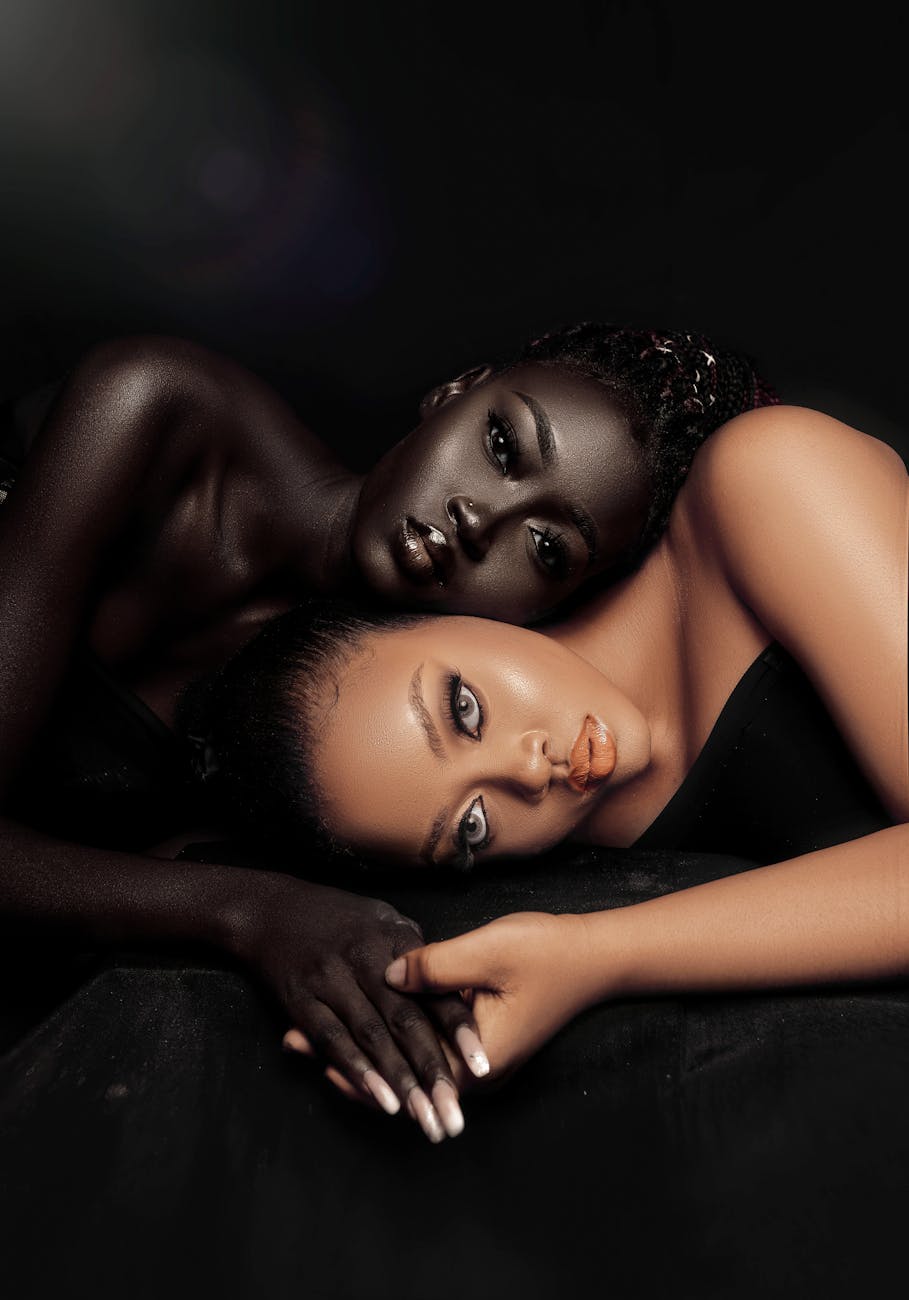
Photo by kings ent shot on Pexels.com

Beauty, often seen as a source of admiration and power, has a dark side when filtered through systems of racial hierarchy. For Black women in particular, beauty is not just about personal appearance but about social acceptance, economic opportunity, and psychological well-being. Within this context, colorism—preferential treatment based on skin tone—and Eurocentrism—the elevation of European features as the standard of attractiveness—create a rigid beauty hierarchy that disadvantages those with darker complexions. This dynamic reflects centuries of colonialism and slavery, where proximity to whiteness became a marker of value (Hunter, 2007).

Colorism emerged as a direct byproduct of slavery and colonial rule. During enslavement, lighter-skinned Black people, often the mixed-race children of enslaved women and white masters, were sometimes given preferential treatment, lighter work, or even opportunities for education. This fostered a social divide that persists today, manifesting in stereotypes that depict lighter skin as more refined or desirable while darker skin is associated with inferiority (Glenn, 2008). This artificial hierarchy continues to influence perceptions of beauty, love, and even employment opportunities in contemporary society.

Eurocentrism deepens the wound by setting white or European features—straight hair, thin noses, light eyes, and pale skin—as the “universal” ideal. Media, advertising, and Hollywood have historically reinforced these ideals, casting white women as leading symbols of femininity and beauty while relegating Black women to marginal or exotic roles. The outcome is a systematic erasure of African aesthetics and a psychological pressure for Black women to conform through skin-lightening, hair-straightening, or even surgical alteration (Russell, Wilson, & Hall, 2013).

The consequences of this hierarchy are profound. Studies show that darker-skinned Black women are more likely to face hiring discrimination, receive harsher prison sentences, and are less likely to be married than lighter-skinned Black women (Maddox & Gray, 2002). These outcomes demonstrate that beauty bias is not superficial but deeply intertwined with structural racism and sexism. In this sense, beauty becomes political—a mechanism through which inequality is reproduced.

Psychologically, colorism and Eurocentrism damage self-esteem, body image, and mental health. Internalized racism leads many Black women to devalue their natural features, creating a cycle of insecurity and shame. The “hierarchy of pretty” conditions individuals to associate lighter skin with worthiness and darker skin with deficiency, echoing the “doll tests” of the 1940s, in which Black children often chose white dolls as “pretty” and “good” while rejecting dolls that looked like themselves (Clark & Clark, 1947). This internalized bias demonstrates how deeply beauty hierarchies infiltrate self-perception.

Resistance, however, is emerging through movements like #BlackGirlMagic, the natural hair movement, and broader global calls for inclusivity in fashion and media. By celebrating diverse representations of Blackness—dark skin, natural hair, African facial features—these movements seek to dismantle Eurocentric beauty norms. Social media has amplified these efforts, giving Black women a platform to assert their own narratives and aesthetics, counteracting centuries of erasure.

Biblically, worth is not found in skin tone or physical beauty but in the character and spirit of an individual. Scripture reminds us that “man looketh on the outward appearance, but the Lord looketh on the heart” (1 Samuel 16:7, KJV). This teaching directly challenges the superficial hierarchies of society, encouraging a return to valuing substance over appearance. When understood in this light, overcoming colorism requires both spiritual reorientation and social change—rejecting man-made hierarchies for divine truth.

Ultimately, the dark side of “pretty” exposes how beauty standards are neither innocent nor universal but constructed tools of power. Colorism and Eurocentrism have entrenched damaging hierarchies that oppress Black women, especially those with darker skin. The way forward lies in cultural resistance, psychological healing, and a biblical reclaiming of worth beyond appearances. True beauty, when stripped of colonial and racial distortions, is diverse, multifaceted, and rooted in the dignity of every human being created in the image of God.


📚 References

  • Clark, K. B., & Clark, M. P. (1947). Racial identification and preference in Negro children. Readings in Social Psychology.
  • Glenn, E. N. (2008). Yearning for lightness: Transnational circuits in the marketing and consumption of skin lighteners. Gender & Society, 22(3), 281–302.
  • Hunter, M. (2007). The persistent problem of colorism: Skin tone, status, and inequality. Sociology Compass, 1(1), 237–254.
  • Maddox, K. B., & Gray, S. A. (2002). Cognitive representations of Black Americans: Reexploring the role of skin tone. Personality and Social Psychology Bulletin, 28(2), 250–259.
  • Russell, K., Wilson, M., & Hall, R. (2013). The color complex: The politics of skin color among African Americans. Anchor Books.