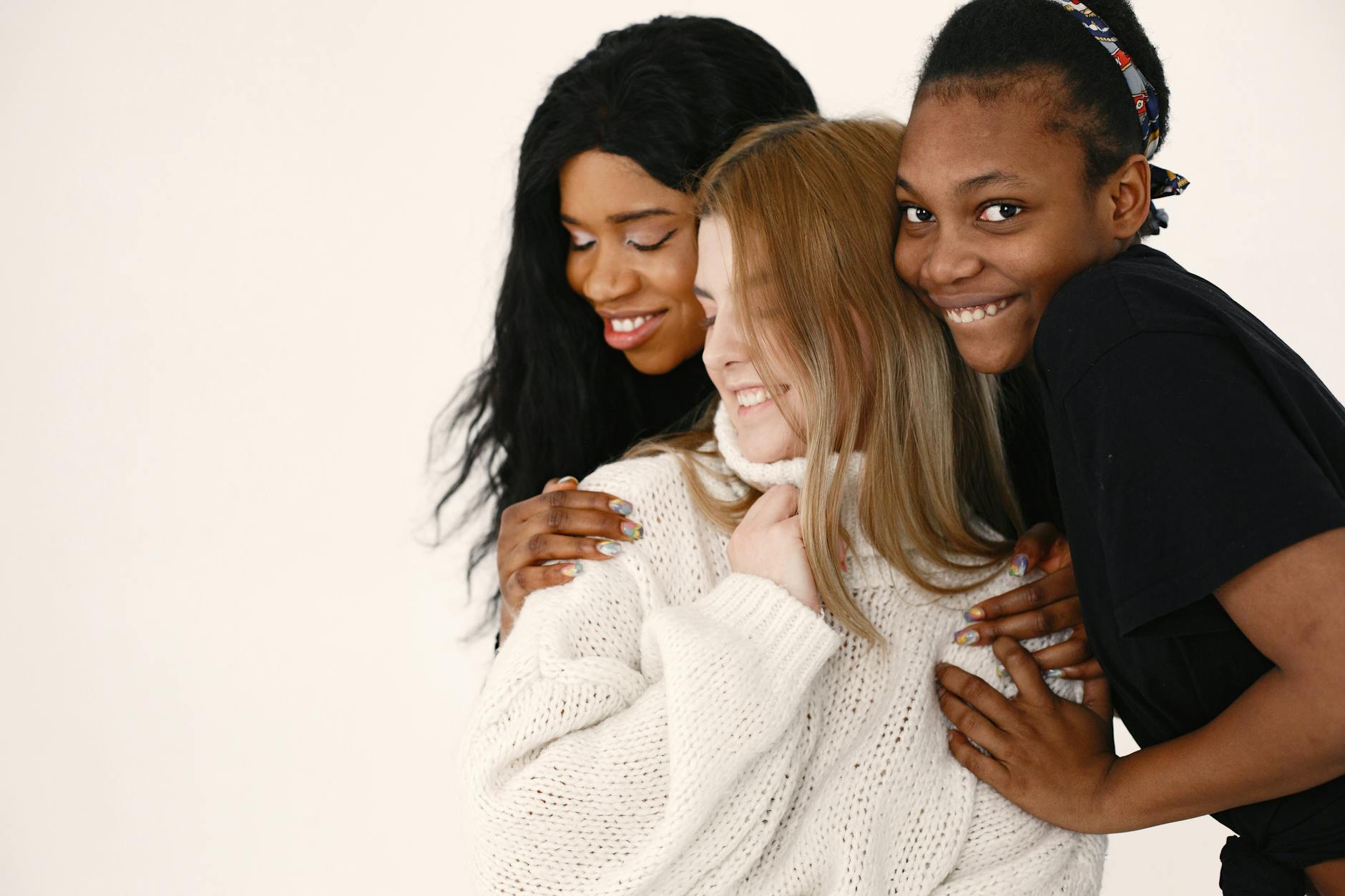
Tag Archives: light vs dark

Color-Coated Casting in the Entertainment and Fashion Industries.

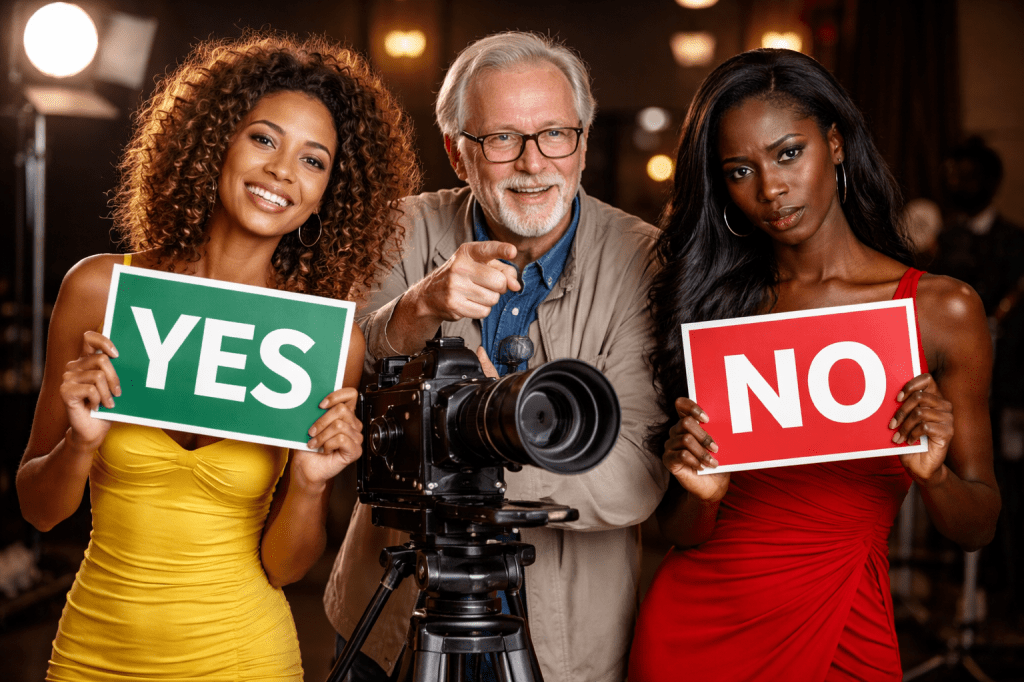
Color-coated casting—commonly understood as colorism within media industries—remains one of the most insidious and underexamined forms of discrimination affecting Black entertainers. It operates not through outright exclusion alone, but through selective inclusion, where lighter skin is consistently privileged over darker skin within the same racial group. This hierarchy shapes who is seen, who is celebrated, and ultimately, who is remembered.

The origins of colorism in entertainment can be traced to the historical aftermath of slavery and colonialism, where proximity to whiteness was associated with privilege, safety, and access. During early American theater and film, Black representation was either absent or distorted through caricature. As Black actors slowly entered the industry, lighter-skinned individuals were often chosen because they aligned more closely with Eurocentric ideals of beauty and acceptability.

By the Golden Age of Hollywood, these biases had become institutionalized. Studios, largely controlled by white executives, curated an image of Blackness that was palatable to white audiences. This meant casting individuals who visually softened racial difference—lighter skin, looser curls, and more “ambiguous” features—while excluding darker-skinned actors from leading roles.

Color-coated casting has had a profound impact on the fashion industry, where models of darker skin tones have historically been underrepresented or relegated to niche categories such as “ethnic” or “urban.” Runways, magazine covers, and high-profile campaigns have favored lighter-skinned or biracial models, who are perceived as more commercially viable or “relatable” to global audiences. This preference not only limits opportunities for darker-skinned models but also reinforces narrow beauty standards that equate desirability with proximity to whiteness. Even when darker-skinned models are featured, they are often styled, photographed, or digitally lightened to align with these Eurocentric aesthetics, sending the implicit message that darker tones are less acceptable. Iconic Black models such as Naomi Campbell and Alek Wek have challenged these norms, yet the industry continues to grapple with systemic bias, showing that talent alone is not enough to overcome deeply entrenched colorism. This practice affects not only careers but also the perception of beauty in society at large, shaping cultural ideals and influencing consumer preferences.

The practice persists today under the guise of “marketability.” Industry decision-makers often argue that lighter-skinned actors have broader appeal, particularly in international markets. This economic justification masks a deeper issue: the continued prioritization of whiteness as the universal standard.

The experiences of Lupita Nyong’o powerfully illustrate this reality. Before her rise to global acclaim, she has spoken openly about being told she was “too dark” for television. Even after winning an Academy Award, she encountered a narrow range of roles, many of which were rooted in historical trauma rather than contemporary complexity.

Similarly, Halle Berry, despite becoming the first Black woman to win the Academy Award for Best Actress, has acknowledged the persistent lack of substantial roles for Black women. Her success did not dismantle the system; rather, it exposed how rare such breakthroughs are.

Actresses like Viola Davis have also addressed colorism directly, noting that darker-skinned women must often work twice as hard for half the recognition. Davis has spoken about how her appearance influenced the types of roles she was offered, often being cast in characters defined by struggle rather than desirability.

In contrast, lighter-skinned or racially ambiguous actresses such as Zendaya and Zoë Saldana have frequently been positioned as the “face” of diversity. While their success is valid, it also reflects the industry’s preference for representations of Blackness that align more closely with Eurocentric aesthetics.

Colorism extends beyond film into the fashion industry, where beauty standards are even more rigid. Darker-skinned models have historically been underrepresented on runways, in advertising campaigns, and on magazine covers. When they are included, they are often styled in ways that exoticize rather than normalize their beauty.

There have also been documented cases where the skin tones of Black celebrities, including Beyoncé, were digitally altered in post-production to appear lighter. This practice reinforces harmful messages about which shades of Blackness are considered acceptable or aspirational.

For Black men, colorism manifests differently but remains equally impactful. Darker-skinned male actors are often typecast into roles that emphasize physicality, aggression, or hardship, while lighter-skinned men are more likely to be portrayed as romantic leads or emotionally complex characters.

Actors such as Idris Elba have broken through some of these barriers, yet even his career reflects a pattern where recognition often comes with roles that emphasize strength and intensity rather than vulnerability or softness.

In sports, the effects of colorism are visible in media representation and endorsement deals. Lighter-skinned athletes are frequently marketed as more relatable or marketable, while darker-skinned athletes are reduced to their physical abilities. This dynamic perpetuates stereotypes that extend far beyond the playing field.

The responsibility for color-coated casting lies in multiple layers of power. Studio executives, casting directors, fashion editors, and brand managers all contribute to maintaining these standards. However, these decisions are also influenced by broader societal biases that have been conditioned over centuries.

Media ownership plays a critical role. When decision-making power is concentrated among individuals who benefit from existing hierarchies, there is little incentive to challenge them. This lack of diversity behind the scenes directly impacts the diversity seen on screen and on runways.

Audience conditioning is another factor. Generations of viewers have been exposed to narrow representations of beauty, leading to internalized preferences that reinforce industry practices. This creates a feedback loop where demand and supply continuously validate one another.

Importantly, colorism is not solely imposed from outside the Black community. It can also be perpetuated internally, as historical conditioning has influenced perceptions of beauty and worth within the community itself. This internalization complicates efforts to dismantle the system.

Despite these challenges, resistance has emerged. Movements advocating for darker-skinned representation have gained momentum, and more creators are intentionally casting actors who reflect the full spectrum of Black identity.

Actresses, models, and public figures are increasingly using their platforms to challenge beauty norms and demand equitable treatment. Their voices have sparked critical conversations about inclusion, authenticity, and representation.

However, progress remains uneven. While there are more opportunities than in previous decades, systemic change has been slow, and colorism continues to shape casting decisions in subtle yet significant ways.

Ultimately, color-coated casting is not just about who gets hired—it is about whose stories are told, whose beauty is validated, and whose humanity is fully recognized. Until the industry confronts its biases at both structural and cultural levels, true equity will remain out of reach.

References (APA Style)

Berry, H. (2002). Academy Award acceptance speech and subsequent interviews on representation.

Davis, V. (2016). Emmy acceptance speech and interviews on race and colorism in Hollywood.

Hunter, M. (2007). The persistent problem of colorism: Skin tone, status, and inequality. Sociology Compass, 1(1), 237–254.

Nyong’o, L. (2014). Speech at Essence Black Women in Hollywood Luncheon.

Norwood, K. J. (2015). Color matters: Skin tone bias and the myth of a postracial America. Routledge.

Thompson, M. S., & Keith, V. M. (2001). The blacker the berry: Gender, skin tone, self-esteem, and self-efficacy. Gender & Society, 15(3), 336–357.

Wilder, J. (2015). Color stories: Black women and colorism in the 21st century. Temple University Press.
A Shade Too Much: Surviving Prejudice on Both Sides #thebrowngirldilemma

Photo by Mikhail Nilov on Pexels.com

To be “a shade too much” is to live in a world where skin becomes a battleground. It is to experience prejudice from both sides—discrimination from the larger society for being Black and rejection from one’s own community for not fitting an unspoken standard of acceptability. This is the painful duality of existing in a society obsessed with measuring worth by skin tone.

Colorism, the preference for lighter skin over darker skin within communities of color, has its roots in slavery and colonialism. Enslaved Africans with lighter complexions were sometimes given privileges, such as working in the house rather than the fields, which created a hierarchy that persists today (Hunter, 2007). This has left many dark-skinned individuals feeling stigmatized, while lighter-skinned people are accused of being privileged, “not Black enough,” or disconnected from the struggles of the Black experience.

For a brown-skinned or light-skinned woman, this can mean enduring a lifetime of suspicion, jealousy, or accusations of arrogance. Darker-skinned women often endure microaggressions that suggest they are less feminine or attractive (Hill, 2002). Lighter-skinned women, on the other hand, are sometimes ostracized, accused of thinking they are “better” or of benefiting from color-based favoritism. Both wounds are real, and both are deep.

The pain intensifies when the rejection comes from one’s own community. Internalized racism manifests as horizontal hostility, where oppressed people turn their pain inward and against each other rather than at the system that created the hierarchy in the first place (hooks, 1992). This creates an environment where those who are already targeted by racism must also navigate intra-community competition for validation.

Psychologically, this constant negotiation of identity can lead to identity confusion and lower self-esteem. Research has found that intraracial discrimination can have similar mental health effects as external racism, contributing to anxiety, depressive symptoms, and social withdrawal (Keith et al., 2017). It can also create a hyperawareness of one’s appearance—skin tone, hair texture, and features—making self-acceptance an ongoing battle.

Men are not exempt from this dilemma. Light-skinned men may be stereotyped as weak or “soft,” while dark-skinned men are stereotyped as threatening or aggressive (Monk, 2015). These biases affect dating dynamics, employment opportunities, and how Black men are perceived by law enforcement and media. Thus, “a shade too much” becomes not just a personal issue but a sociopolitical one with life-altering consequences.

The church should have been a refuge, but historically, colorism found its way even into pews and pulpits. During slavery, some congregations separated worshippers by complexion, privileging mixed-race members over darker-skinned members (Cone, 1997). Healing must therefore include a theological reclamation: affirming that all shades are equally made in the image of God (Genesis 1:27) and equally loved by Him.

Surviving prejudice on both sides requires a strong sense of identity. This means decoupling self-worth from shade hierarchies and rejecting the false dichotomy of “too light” versus “too dark.” It means affirming, “I am enough,” whether one is honey, caramel, chocolate, or mahogany. As Psalm 139:14 reminds us, we are “fearfully and wonderfully made.”

Community healing is crucial. Honest conversations about colorism must take place in families, schools, and churches. Mothers and fathers must be careful with the language they use around children, resisting the temptation to praise or shame one shade over another. Representation matters—children must see beautiful, intelligent, successful people across the entire spectrum of Blackness.

Media also plays a role. Dark-skinned women must be cast as heroines, CEOs, and romantic leads. Light-skinned women must be portrayed without always being reduced to exotic love interests or “pretty but empty” stereotypes. Stories must reflect the complexity of Black life beyond color-based tropes.

Spiritually, healing comes from seeing oneself as God sees us. God does not measure beauty by shade but by heart (1 Samuel 16:7). The gospel dismantles hierarchies of worth and declares every person equally valuable. In Christ, there is no “less Black” or “too Black”—there is only beloved humanity.

Surviving prejudice on both sides also requires empathy. Dark-skinned women must understand the privilege lighter-skinned women may carry, while lighter-skinned women must understand the pain and systemic disadvantage darker-skinned women often endure. Solidarity grows when both acknowledge the wound yet refuse to deepen it.

To be “a shade too much” is to reclaim one’s power and refuse to shrink for the comfort of others. It is to stand proudly, saying, “My shade is not too much—it is exactly what God intended.” In this way, survival becomes victory, and the struggle becomes a testimony.

When we heal, we break the cycle for the next generation. Children grow up free to love their skin and each other. The burden of proving one’s worth fades, replaced by collective pride. Then we will no longer ask, “Am I too light?” or “Am I too dark?” Instead, we will declare together: We are enough.


References

  • Cone, J. H. (1997). God of the oppressed. Orbis Books.
  • Hill, M. (2002). Skin color and the perception of attractiveness among African Americans: Does gender make a difference? Social Psychology Quarterly, 65(1), 77–91.
  • hooks, b. (1992). Black looks: Race and representation. South End Press.
  • Hunter, M. (2007). The persistent problem of colorism: Skin tone, status, and inequality. Sociology Compass, 1(1), 237–254.
  • Keith, V. M., Lincoln, K. D., Taylor, R. J., & Jackson, J. S. (2017). Discrimination, racial identity, and psychological well-being among African Americans. Cultural Diversity and Ethnic Minority Psychology, 23(2), 165–175.
  • Monk, E. P. (2015). The cost of color: Skin color, discrimination, and health among African-Americans. American Journal of Sociology, 121(2), 396–444.

The Mulatto: The Complex Legacy of Mixed-Race Identity in Slavery.

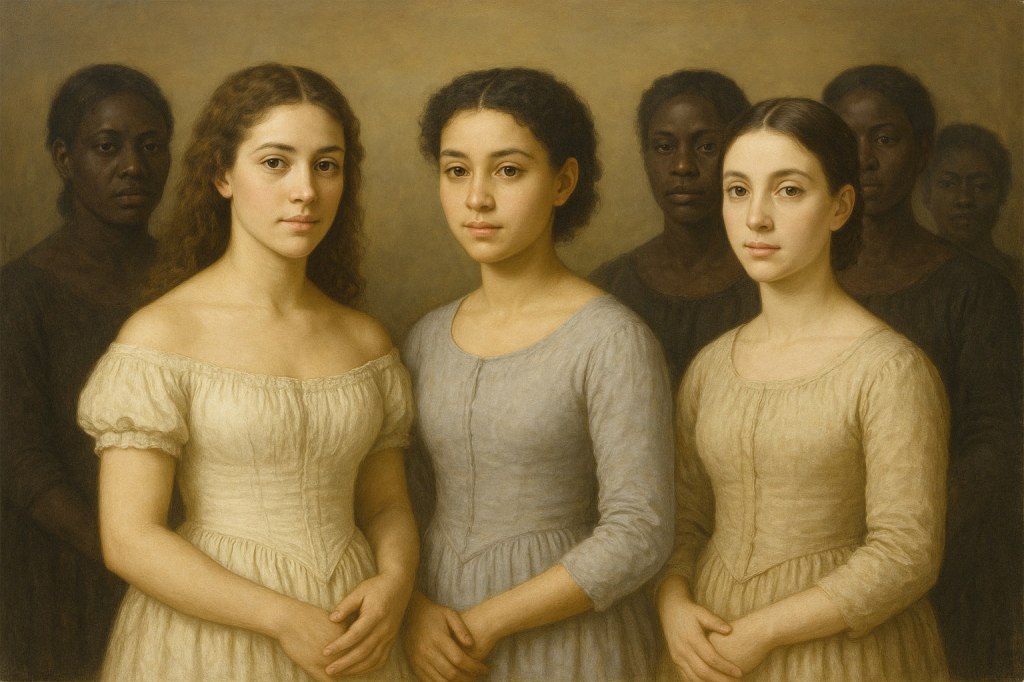
During the transatlantic slave trade and the centuries of chattel slavery that followed in the Americas, a tragic and complex racial hierarchy emerged. At its center was the “Mulatto”—a person of mixed African and European ancestry. The term itself, derived from the Spanish and Portuguese mulato, meaning “young mule,” was intended to signify something unnatural—a mix between species. This offensive origin reveals the dehumanizing way in which enslaved people were viewed, even those who bore the blood of their enslavers.

Mulattoes often came into existence through non-consensual sexual relationships between white male slave owners and enslaved African women. These unions were rarely romantic or voluntary; they were products of exploitation, coercion, and the unchecked power of white patriarchy. The children of these unions occupied an ambiguous social status. They were visibly lighter and sometimes given privileges over darker-skinned Africans, yet they were still enslaved and denied full humanity.

Economically, lighter-skinned slaves were often valued more highly in the slave markets. Auction records from New Orleans, Charleston, and the Caribbean show that Mulattoes, Quadroons, and Octoroons—terms denoting fractions of African ancestry—were sold for higher prices due to their perceived proximity to whiteness. In some cases, a beautiful light-skinned woman could fetch thousands of dollars—sometimes twice the price of a strong field laborer (Berry, 2007).

The hierarchy extended as follows: a Mulatto was half African, half European; a Quadroon was one-quarter African; and an Octoroon was one-eighth African. Each degree of whiteness supposedly brought refinement, beauty, and docility, qualities European buyers associated with superiority. This false racial science was a cornerstone of both slavery and early American eugenics.

Quadroon and Octoroon women, especially in New Orleans and parts of Louisiana, were sometimes groomed for what was known as the “plaçage” system. Under this arrangement, wealthy white men entered into unofficial unions with mixed-race women who were often educated, well-dressed, and trained in European manners. These relationships were not legal marriages but resembled concubinage. In exchange for companionship, these women received homes, money, and privileges denied to field slaves (Clark, 2013).

Plantation wives often felt deep resentment and humiliation over their husbands’ relationships with these women. The presence of mixed-race children—who sometimes lived in close proximity to the white household—served as constant reminders of betrayal. Historical letters and diaries reveal the rage, jealousy, and psychological torment many white women endured as they silently tolerated this hypocrisy (White, 1999).

Mulattoes, Quadroons, and Octoroons often worked inside the master’s home as cooks, maids, and nurses rather than in the fields. Their lighter complexion was falsely associated with higher intelligence and beauty. They became symbols of white men’s domination over both Black bodies and the institution of the family. This system reinforced colorism—a social order that persists even today.

Despite their elevated positions, these individuals lived under the same oppressive laws as all enslaved Africans. The “one-drop rule” in America classified anyone with African ancestry as Black, ensuring that even the lightest Octoroon remained enslaved if born to an enslaved mother. This legal principle ensured that slavery perpetuated itself across generations, regardless of physical appearance.

Mulattoes also faced rejection from both sides of society. They were often too “Black” to be accepted by whites, and too “white” to be fully trusted by darker-skinned slaves. This liminal identity created a painful dual consciousness—one that mirrored W.E.B. Du Bois’s later description of the “two-ness” of being both Black and American.

The valuation of mixed-race people as commodities is evident in slave ledgers and advertisements. For example, in the 1850s, a young Octoroon woman could sell for up to $3,000—a staggering sum when a skilled field hand might sell for $1,000 (Johnson, 1999). The intersection of race, beauty, and sex created a disturbing marketplace of human trafficking.

In urban centers like New Orleans, Charleston, and Havana, mixed-race women became central to elite social scenes. Some even gained temporary freedoms or wealth, though their status was always precarious. Freedom papers could be revoked, and any sign of rebellion risked severe punishment.

The plantation economy used these women as both workers and instruments of control. Their presence created divisions among enslaved people—divisions based on skin tone that mirrored European racial ideologies. This psychological warfare weakened unity among the enslaved, reinforcing white supremacy.

Christianity was also manipulated to justify this system. Slaveholders preached obedience while violating every moral tenet of the Bible. Yet enslaved people, including Mulattoes, found in Scripture the promise of deliverance. The story of Moses, the Exodus, and Deuteronomy 28 became powerful symbols of hope and identity.

After emancipation, colorism continued to shape Black communities. Some mixed-race families gained social advantages through education, passing, or wealth. Others were caught between worlds—accepted by neither the white elite nor the broader Black population.

The legacy of the Mulatto is thus deeply ambivalent. It reveals both the violence of racial oppression and the resilience of identity. The beauty, intelligence, and strength of mixed-race descendants are testimonies not to European “refinement” but to African endurance and divine grace.

The language of “Quadroon” and “Octoroon” has since been rejected as racist pseudoscience. Yet the scars of this history remain visible in modern discussions of beauty standards, social hierarchy, and representation in media.

For plantation wives, the mixed-race presence was a symbol of both moral failure and racial anxiety. For white men, it represented unchecked power. For the enslaved, it was a daily reminder of a world built on sexual exploitation and systemic cruelty.

Ultimately, the story of the Mulatto is not about privilege but pain—a reflection of how slavery corrupted family, faith, and love. It reveals the perverse intersection of race and desire that shaped America’s social fabric.

Today, scholars revisit these histories not merely to recount suffering, but to reclaim truth. The bloodlines of the enslaved, the Mulatto, the Quadroon, and the Octoroon tell a story of survival—one written not by choice, but by resilience and faith in freedom’s promise.

References

Berry, D. R. (2007). The Price for Their Pound of Flesh: The Value of the Enslaved from Womb to Grave, in the Building of a Nation. Beacon Press.

Clark, E. (2013). The Strange History of the American Quadroon: Free Women of Color in the Revolutionary Atlantic World. University of North Carolina Press.

Johnson, W. (1999). Soul by Soul: Life Inside the Antebellum Slave Market. Harvard University Press.

White, D. G. (1999). Ar’n’t I a Woman?: Female Slaves in the Plantation South. W.W. Norton & Company.

Healing the Wounds of Colorism: Black Women vs. the Beauty Standard

Photo by Gustavo Fring on Pexels.com

Colorism in the Black community cannot be understood without revisiting slavery in the Americas. Enslavers deliberately separated light-skinned and dark-skinned Black people to maintain social hierarchy. Those with lighter skin, often the mixed-race children of enslaved women and white masters, were sometimes placed in domestic work within the “big house,” while darker-skinned enslaved people were relegated to field labor (Hunter, 2007). This hierarchy reinforced the false notion that proximity to whiteness was preferable. This early wound became a generational trauma, setting the stage for how Black women would be divided, compared, and judged long after slavery’s abolition.

The term colorism itself was popularized by Alice Walker in 1983, who defined it as “prejudicial or preferential treatment of same-race people based solely on skin color” (In Search of Our Mothers’ Gardens). While racism placed all Black people at a disadvantage, colorism operated within the community as a painful internalization of Eurocentric ideals. It continues to shape representation in beauty industries, film, and popular culture. At its root, colorism is tied to the current global beauty standard, which overwhelmingly favors fair skin, straight hair, slim facial features, and light eyes — characteristics historically associated with white women (Wilder, 2015).

Dr. Frances Cress Welsing, in The Isis Papers (1991), argued that colorism reflects white supremacy’s psychological strategy of self-preservation. She theorized that whiteness seeks to maintain dominance by promoting its features as superior, while devaluing darker skin and Afrocentric traits. This belief system ensures that Black women, regardless of their natural beauty, are positioned as “other” in the global imagination. Thus, white women have long been upheld as the epitome of beauty in mainstream media — from Marilyn Monroe to modern icons like Scarlett Johansson.

The wounds of colorism for Black women are deep and multilayered. They include internalized shame, family divisions, lowered self-esteem, and unequal treatment in workplaces, schools, and dating markets. The comparison between Black women and the beauty standard can be mapped out clearly:

Black Women’s TraitsEurocentric Beauty Standard
Darker or richly melanated skinFair or light skin
Kinky, coily, or natural hairStraight, silky hair
Full lips and broad nosesThin lips and narrow noses
Curvier body typesSlimmer, less curvaceous figures (though often appropriated later)
Diversity of tones, textures, and featuresHomogenized white ideals

Celebrities across racial lines have commented on this imbalance. For instance, Lupita Nyong’o has spoken openly about her struggles with self-acceptance in a world that glorifies light skin (Nyong’o, 2014). Viola Davis, too, has highlighted how her darker skin limited her Hollywood opportunities. On the other hand, white celebrities such as Adele and even Kim Kardashian have acknowledged the ways Black women’s aesthetics are appropriated without acknowledgment or respect. This dynamic reinforces the reality: Black women are often celebrated when their features are borrowed but devalued when they appear naturally.

While Black women’s phenotypic traits, such as melanin-rich skin, fuller lips, natural hair textures, and curvier body types, have been pathologized, Eurocentric features—light skin, narrow noses, thin lips, and straight hair—have been uplifted as the global beauty standard. Research suggests this dynamic is rooted in the colonial and slaveholding eras, where lighter skin was equated with privilege and proximity to whiteness (Hunter, 2007; Russell, Wilson, & Hall, 2013). The persistence of these standards contributes to psychological distress, self-esteem challenges, and ongoing struggles with identity formation among Black women (Wilder, 2015).

Psychologically, the effects of colorism manifest as internalized racism, body dysmorphia, depression, and self-doubt. Studies in evolutionary psychology suggest that symmetry and certain ratios (e.g., the golden ratio) are universally associated with beauty (Little, Jones, & DeBruine, 2011). However, these scientific standards do not negate cultural bias. Western media elevates one aesthetic as “universal,” ignoring the truth that beauty is also culturally constructed. This erasure pressures Black women to conform or modify themselves — through skin-lightening, straightening hair, or cosmetic surgery — to gain validation in systems not designed for them.

The question remains: how can Black women heal? Healing begins with redefining the standard. Movements like #BlackGirlMagic, natural hair advocacy, and diverse media representation are shifting narratives. The Black community must actively dismantle colorist language, uplift darker-skinned women, and celebrate the full range of Black beauty. Scholars argue that collective affirmation, media literacy, and intergenerational dialogue are keys to undoing centuries of psychological conditioning (Walker, 1983; Wilder, 2015).

Ultimately, the Bible offers a radical counter-narrative to the lies of colorism. Scripture declares: “I will praise thee; for I am fearfully and wonderfully made” (Psalm 139:14, KJV). The Song of Solomon even uplifts dark beauty: “I am black, but comely, O ye daughters of Jerusalem” (Song of Solomon 1:5, KJV). These verses remind Black women that their worth and beauty come not from Eurocentric systems but from the Creator who made them. Healing the wounds of colorism means reclaiming identity, refusing false cages of comparison, and walking boldly in God-given beauty.


References

  • Hunter, M. (2007). The Persistent Problem of Colorism: Skin Tone, Status, and Inequality. Sociology Compass, 1(1), 237-254.
  • Little, A. C., Jones, B. C., & DeBruine, L. M. (2011). Facial attractiveness: Evolutionary based research. Philosophical Transactions of the Royal Society B: Biological Sciences, 366(1571), 1638-1659.
  • Walker, A. (1983). In Search of Our Mothers’ Gardens: Womanist Prose. Harcourt.
  • Wilder, J. (2015). Color Stories: Black Women and Colorism in the 21st Century. Praeger.
  • Welsing, F. C. (1991). The Isis Papers: The Keys to the Colors. C.W. Publishing.
  • Nyong’o, L. (2014). Speech at Essence Black Women in Hollywood Luncheon.

The Legacy of the Willie Lynch Letter: Historical Premise, Racial Division, and Its Ongoing Impact on Black Identity.

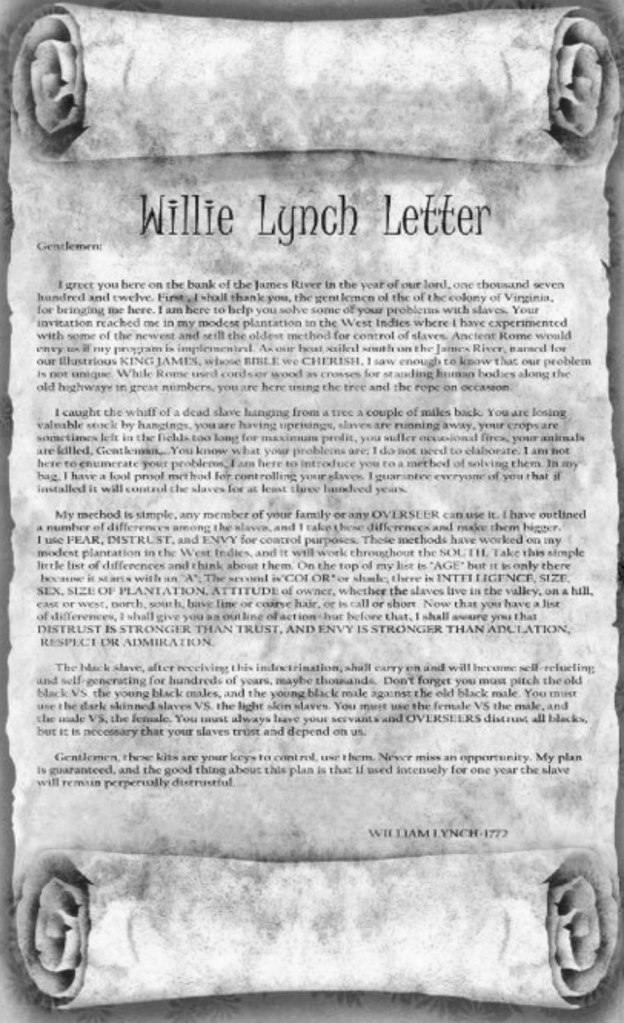
The Willie Lynch Letter—widely circulated as a blueprint for controlling enslaved Africans in America—is often cited in discussions surrounding the systemic psychological manipulation and division within the Black community. Although its authenticity has been heavily disputed, the letter remains symbolically powerful. Allegedly delivered by a British slave owner named Willie Lynch in 1712 on the banks of the James River in Virginia, the letter outlines methods to control slaves for generations by instilling division based on skin color, hair texture, age, gender, and other factors. Despite questions surrounding its historical veracity, the themes it presents remain painfully relevant in 2025.


Alleged Origins and Content of the Willie Lynch Letter

According to the document, Willie Lynch was invited from the West Indies to Virginia to share his “expertise” on slave management. The letter begins with Lynch addressing a group of slave owners, promising them a foolproof method to control their slaves for hundreds of years. He outlines a strategy rooted in psychological division, promoting distrust and disunity among slaves through systemic manipulation of differences—particularly skin color (“light vs. dark”), age (“old vs. young”), gender (“male vs. female”), and even hair texture (“nappy vs. straight”).

One of the most notable concepts from the letter is the separation of the enslaved into house Negroes and field Negroes. House slaves, often lighter-skinned due to being the children of white slave masters, were given relatively better living conditions, cleaner clothes, and closer proximity to their enslavers. They were often used to control or report on the darker-skinned field Negroes, who performed brutal labor in plantations under the hot sun. This intra-racial division served the slaveholders by preventing collective rebellion, as envy, mistrust, and intra-group conflict undermined unity.


Historical Debate: Fact or Fiction?

There is considerable scholarly consensus that the Willie Lynch Letter is a hoax. Historians point to linguistic inconsistencies, anachronisms (such as the use of the term “reflex” and modern grammar structures not used in the 18th century), and the lack of historical evidence of a person named Willie Lynch delivering such a speech in 1712. In fact, no credible record of Lynch’s existence or the letter’s origins exists in the colonial archives (Gates, 2003). Nevertheless, the Willie Lynch Letter endures in cultural consciousness because it reflects real strategies historically used to oppress and manipulate African-descended people in America.


Psychological Residue: Division by Design

Despite its dubious authorship, the letter’s ideology of engineered division has echoed throughout centuries of Black experience in the United States. The division by skin tone, known as colorism, has become deeply embedded within the community. Lighter-skinned individuals have often been afforded more social privilege, greater representation in media, and are sometimes perceived as more intelligent or attractive due to Eurocentric beauty standards (Hunter, 2007). This psychological warfare, seeded in slavery, continues to influence hiring practices, dating preferences, and self-esteem in the modern Black population.

Similarly, the division between field Negroes and house Negroes was metaphorically revived in the 1960s during the civil rights movement, particularly in Malcolm X’s speeches. Malcolm used these terms to describe the difference between the “complacent” Black elite who were comfortable within the white establishment (house Negroes) and the oppressed masses pushing for revolutionary change (field Negroes). His framing highlighted the enduring class-based and psychological divisions that hinder Black unity (X, 1963).


Relevance in 2025: The Lingering Divide

In 2025, the spirit of the Willie Lynch Letter remains manifest in subtle and overt ways. Intra-racial tensions still exist around complexion, hair texture, education, economic status, and gender roles. The media continues to elevate lighter-skinned, Eurocentric Black beauty while marginalizing darker-skinned individuals. Black women with natural hair still face discrimination in professional environments, despite the 2019 CROWN Act (Creating a Respectful and Open World for Natural Hair) aiming to combat hair-based bias (Davis, 2020).

Moreover, systemic racism is far from over. Police brutality, educational disparities, housing discrimination, and wage inequality remain daily realities for many African Americans. Movements like Black Lives Matter emerged as a response not just to violence, but also to the broader dehumanization of Black lives. Although progress has been made, including increased Black representation in politics, media, and academia, the legacy of divide-and-conquer tactics continues to erode unity and foster mistrust.


Conclusion

The Willie Lynch Letter, though likely a fabricated artifact, stands as a mirror reflecting real strategies historically employed to psychologically enslave African Americans through division and manipulation. Whether or not Willie Lynch himself existed, the ideology expressed in the letter has been tragically effective in shaping intergenerational trauma and conflict within the Black community. Recognizing and dismantling these residual effects is critical for healing and unity. In 2025, the challenge is no longer only external oppression, but also internalized division. Understanding our history—both factual and symbolic—is a necessary step toward liberation and solidarity.


References

  • Davis, A. (2020). Hair discrimination and the CROWN Act: A legislative response to anti-Black grooming policies. UCLA Law Review, 67(1), 1–25.
  • Gates, H. L. Jr. (2003). The ‘Willie Lynch Letter’: The Making of a Myth. The Root. Retrieved from https://www.theroot.com
  • Hunter, M. (2007). The Persistent Problem of Colorism: Skin Tone, Status, and Inequality. Sociology Compass, 1(1), 237–254.
  • Malcolm X. (1963). Message to the Grassroots. Speech delivered at King Solomon Baptist Church, Detroit.