Tag Archives: Isms

Dilemma: The Isms

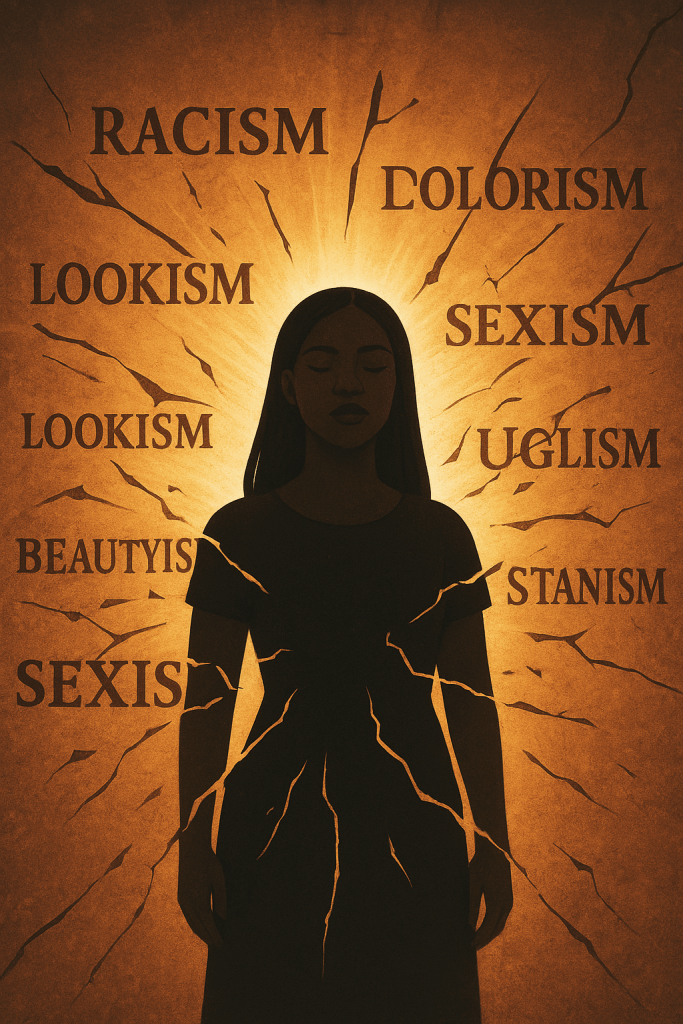
In the grand theater of human existence, few scripts are as persistent and poisonous as the “isms.” Racism, colorism, lookism, beautyism, sexism, oldism, shadeism, uglyism, and even satanism—all are manifestations of a fallen world obsessed with hierarchy, appearance, and power. Each “ism” reflects the corrosion of love and the rebellion of pride. Together, they create a network of deception that distorts identity, destroys unity, and desecrates the divine image in which humanity was made. Nowhere are the scars of these “isms” more deeply etched than within the Black experience. For centuries, Black people have stood at the crossroads of all these prejudices, bearing their weight in body, mind, and soul.

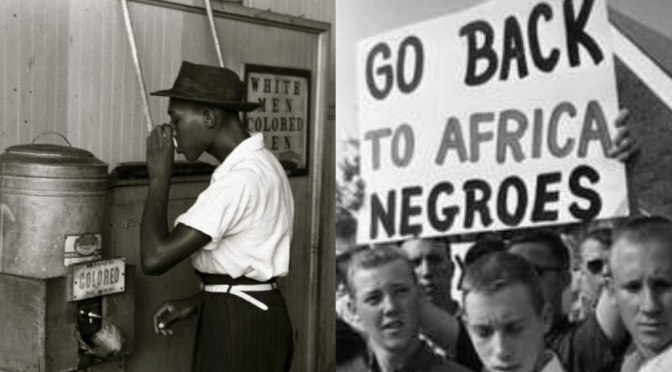
Racism remains the root—a centuries-old ideology that devalues melanin while exalting whiteness. It began as a tool of control and exploitation, branding Blackness as inferior to justify enslavement, colonization, and systemic oppression. The result is a world where Black people must constantly prove their worth in spaces that were built to exclude them. Yet God created man “of one blood” (Acts 17:26, KJV), and He did not rank His creation by hue or heritage. Racism, therefore, is not merely a social construct—it is a sin against divine design.

Colorism, birthed from the same soil, has fractured the Black community itself. It is the preference for lighter skin tones and the degradation of darker shades, a poison inherited from colonialism and slavery. Within entertainment, corporate spaces, and even family structures, darker-skinned individuals often face invisibility or bias. The pain of colorism is internal and generational—it teaches people to love themselves in fragments. Blackness, in all its shades, becomes a battlefield instead of a brotherhood.

Shadeism, a close cousin to colorism, digs deeper into the nuances of melanin politics. It is not just about dark or light, but about the subtle gradients that dictate beauty, opportunity, and social treatment. A few shades lighter can mean a world of difference in media representation or romantic desirability. This artificial hierarchy was never God’s plan. The Bible declares that “we are fearfully and wonderfully made” (Psalm 139:14, KJV), yet man continues to divide what God made whole.

Lookism extends these divisions into the realm of physical features. Society’s obsession with symmetrical faces, certain nose shapes, or body proportions reinforces Eurocentric ideals and marginalizes Black aesthetics. African features—broad noses, full lips, coily hair—have been mocked, exoticized, or appropriated, rarely celebrated for their divine authenticity. For Black people, lookism means being measured by standards that were never meant to reflect them.

Beautyism makes this discrimination even more insidious. It teaches that worth is equal to desirability and that physical beauty is a form of social capital. This idolization of beauty enslaves both the admired and the overlooked. The Black woman, in particular, stands at the intersection of racial, aesthetic, and gender bias—praised for her strength but rarely protected, desired for her body but dismissed for her humanity. Proverbs 31:30 (KJV) reminds us that “beauty is vain,” yet the world worships it as god.

Sexism compounds these struggles by defining womanhood through subservience and silence. Within the Black experience, sexism manifests uniquely. Black women are often denied softness, labeled as too strong, too loud, or too masculine. Their pain is minimized, their brilliance overlooked. Meanwhile, Black men face a different battle—emasculated by stereotypes yet pressured to perform dominance to prove their manhood. Both genders suffer when the divine order of respect and balance is replaced with competition and oppression.

Oldism, or ageism, is another hidden form of injustice. It affects the elders of the Black community, whose wisdom and history are often ignored by a youth-obsessed culture. In Western societies, aging is seen as decline rather than dignity. Yet Scripture says, “The hoary head is a crown of glory, if it be found in the way of righteousness” (Proverbs 16:31, KJV). Elders are living libraries, but oldism silences their stories, causing younger generations to repeat cycles of trauma.

Uglyism is perhaps the cruelest of the superficial “isms.” It labels people as unworthy of admiration based on arbitrary ideals of attractiveness. Within Black culture, uglyism often targets those with the darkest complexions or most African features. This cruel bias leads to deep-seated self-hate, psychological wounds, and lifelong insecurities. The truth, however, is that beauty cannot be defined by the eye of man—it must be defined by the heart of God. What the world calls “ugly,” God often calls chosen.

Satanism, though seemingly distinct from the others, undergirds them all. These “isms” are not merely social patterns—they are spiritual strategies. They divide humanity through pride, envy, and hatred, which are tools of the adversary. Satanism glorifies self-worship, vanity, and hierarchy—all principles seen in the other “isms.” The adversary’s goal is to make creation despise itself, to pit shade against shade, gender against gender, and soul against soul. Ephesians 6:12 (KJV) warns us that “we wrestle not against flesh and blood, but against principalities.” The “isms” are not random—they are orchestrated.

For Black people, the impact of these “isms” is multiplied. Racism devalues them, colorism divides them, lookism mocks them, and beautyism excludes them. Sexism silences their women, oldism forgets their elders, uglyism shames their features, and satanism blinds their spiritual identity. The Black experience becomes a battlefield not just for equality, but for wholeness.

Generational trauma has taught many Black individuals to conform in order to survive. Skin bleaching, hair alteration, and assimilation into Western beauty norms are all symptoms of a deeper wound—the internalized belief that to be accepted, one must erase oneself. But God never intended for His people to conform to the image of man. Romans 12:2 (KJV) commands, “Be not conformed to this world: but be ye transformed by the renewing of your mind.”

Each “ism” robs something sacred. Racism steals dignity. Colorism steals unity. Lookism steals authenticity. Beautyism steals peace. Sexism steals purpose. Oldism steals legacy. Uglyism steals confidence. Shadeism steals harmony. And satanism steals souls. Together, they create a system of distraction—a matrix designed to keep people fixated on the external rather than the eternal.

Healing begins with awareness but is completed through righteousness. God calls His people to live beyond the world’s labels. The Kingdom of Heaven does not rank based on skin tone, age, or beauty; it honors righteousness and humility. The true mark of greatness is not appearance, but obedience.

Black people, as descendants of resilience and divine heritage, must reclaim their image through the eyes of the Creator. Melanin is not a curse but a covering. Afrocentric features are not imperfections but imprints of glory. Elders are not outdated but anointed. Every shade, every texture, every curve is a verse in the poetry of creation.

The path to liberation lies in spiritual reprogramming—replacing the lies of the “isms” with the truth of divine identity. When Black people remember who they are and whose they are, the “isms” lose their grip. For the Most High sees not as man sees. He looks on the heart.

In the end, the true enemy is not color, beauty, or gender—it is corruption. The ultimate “ism” is ego, the self elevated above God. But those who walk in love, humility, and righteousness will transcend the world’s systems. As it is written, “If any man be in Christ, he is a new creature” (2 Corinthians 5:17, KJV).

Let the “isms” fall away, and let divine identity rise. For when we see ourselves and others as God sees us—fearfully, wonderfully, and equally made—the chains of vanity, prejudice, and pride are broken forever.


References

  • The Holy Bible, King James Version (KJV) – Genesis 1:27; Psalm 139:14; Acts 17:26; 1 Samuel 16:7; Proverbs 31:30; Proverbs 16:31; Romans 12:2; Galatians 5:22–23; Ephesians 6:12; 2 Corinthians 5:17.
  • hooks, b. (1981). Ain’t I a Woman: Black Women and Feminism. South End Press.
  • Hill Collins, P. (2000). Black Feminist Thought. Routledge.
  • Russell, K., Wilson, M., & Hall, R. (2013). The Color Complex: The Politics of Skin Color Among African Americans. Anchor Books.
  • Wolf, N. (1991). The Beauty Myth: How Images of Beauty Are Used Against Women. HarperCollins.
  • West, C. (1993). Race Matters. Beacon Press.
  • Bailey, C. (2020). Misogynoir Transformed: Black Women’s Digital Resistance. NYU Press.
Dilemma: The ISMS

Understanding the “-Isms”: Prejudice, Psychology, and Liberation

Photo by RDNE Stock project on Pexels.com

In modern discourse, the term “-isms” refers to a collection of belief systems rooted in prejudice, discrimination, and social hierarchy. These ideologies—racism, sexism, colorism, lookism, featurism, ableism, ageism, classism, and others—are not merely isolated biases; they are embedded in the structures of society, influencing everything from policy to personal interactions. Understanding these “-isms” requires an examination of their definitions, psychological roots, real-world implications, and the pathway toward liberation.


1. Defining the “-Isms” and Their Prejudicial Nature

Racism

Racism is the belief that one race is inherently superior to others. It manifests in systemic inequality, police brutality, housing discrimination, and educational disparities.
Example: The over-policing and incarceration of Black men in America reflect institutional racism.

Sexism

Sexism involves discrimination based on gender, particularly against women and gender-nonconforming individuals.
Example: Women being paid less than men for the same work or being underrepresented in leadership roles.

Colorism

Colorism refers to the preferential treatment of lighter skin over darker skin, often within the same racial group.
Example: Lighter-skinned Black individuals may be perceived as more “professional” or “attractive” than darker-skinned individuals.

Lookism

Lookism is the bias against individuals based on physical appearance, especially when they do not conform to societal standards of beauty.
Example: Attractive people are often more likely to be hired, promoted, or favored socially.

Featurism

Featurism involves discrimination based on facial or bodily features, often tied to Eurocentric beauty standards.
Example: Natural Black hairstyles or broader noses being considered “unprofessional” in workplaces.

Ableism

Ableism is prejudice against people with disabilities, whether physical, mental, or neurological.
Example: Buildings lacking ramps or employers assuming individuals with disabilities are less competent.

Ageism

Ageism includes biases against individuals based on age, whether young or elderly.
Example: Older adults being overlooked for jobs or leadership positions due to assumptions about technological incompetence.

Classism

Classism is discrimination based on socioeconomic status. It creates unjust barriers for low-income individuals in education, healthcare, and justice.
Example: Poor students attending underfunded schools, or being stereotyped as lazy or unmotivated.


2. Bias Behind the -Isms: Psychological Foundations

Psychologically, the “isms” stem from implicit bias, social conditioning, and in-group favoritism. According to social identity theory (Tajfel & Turner, 1979), individuals tend to categorize themselves and others into groups, favoring those like themselves. These biases are often unconscious and reinforced by media, culture, and family norms. Cognitive shortcuts (heuristics) also cause people to make rapid judgments, which can be tainted by stereotypes.

3. Impact on the Workforce, Decision-Making, and Society

The “isms” shape everything from hiring practices to healthcare access. For instance:

  • Hiring Bias: A study by Bertrand & Mullainathan (2004) found that résumés with White-sounding names received 50% more callbacks than those with African American names.
  • Healthcare Disparities: Black women are three to four times more likely to die from pregnancy-related complications than White women (CDC, 2021).
  • Decision-Making: Boards, leadership teams, and policymakers often reflect majority cultures, perpetuating exclusion through unconscious bias and systemic design.

The result is structural inequality, where marginalized groups—especially Black communities—face barriers not due to individual lack of ability, but because of systemic oppression.


4. The “Isms” and the Black Community

The Black community bears a disproportionate burden of these intersecting prejudices:

  • Racism leads to police violence, economic marginalization, and mass incarceration.
  • Colorism and featurism create internalized self-hatred and divisions within the community.
  • Classism affects access to wealth-building opportunities.
  • Sexism and misogynoir (a term coined by Moya Bailey) harm Black women through unique forms of racialized sexism.
  • Ableism and ageism leave vulnerable members of the community without support or representation.

The cumulative effect is intergenerational trauma, identity fragmentation, and a survival-based rather than thriving-based existence.


5. Deliverance and Rising Above the “Isms”

Liberation begins with conscious awareness, critical education, and spiritual transformation. Here are strategies to dismantle internal and external systems of prejudice:

1. Self-Education and Unlearning

  • Read literature on race, gender, and equity (e.g., bell hooks, Audre Lorde, James Baldwin).
  • Examine personal biases and deconstruct internalized oppression.

2. Community Empowerment

  • Support community organizations that challenge systemic injustice.
  • Create spaces for healing, mentorship, and economic growth.

3. Biblical Perspective on Liberation

The Bible calls for justice and equity:

“He has shown you, O man, what is good; and what does the Lord require of you but to do justly, to love mercy, and to walk humbly with your God?”
Micah 6:8 (KJV)

Scripture affirms the dignity of every person, regardless of status or appearance. In Christ, “there is neither Jew nor Greek… male nor female… for you are all one” (Galatians 3:28). This does not erase identity but calls for unity in justice and love.

4. Role Models and Representation

Men and women with strong moral leadership—mentors, fathers, elders, and educators—play a crucial role in reestablishing values. Black male role models are especially vital to reframe narratives around fatherhood, manhood, and provision.
As author and activist Hill Harper said:

“Being a provider is not just about money. It’s about being emotionally, spiritually, and physically present.”


Conclusion: From Oppression to Empowerment

The “-isms” are not merely concepts—they are lived realities with devastating consequences. They shape how we see ourselves, how we treat others, and how systems operate. For the Black community, overcoming these barriers is not only a matter of survival but of revival. Through education, spiritual grounding, collective action, and love for self and community, it is possible to rise above the weight of prejudice and reclaim dignity, purpose, and liberation.


References:

  • Bertrand, M., & Mullainathan, S. (2004). Are Emily and Greg More Employable than Lakisha and Jamal? American Economic Review.
  • CDC (2021). Pregnancy Mortality Surveillance System.
  • Tajfel, H., & Turner, J. (1979). An Integrative Theory of Intergroup Conflict.
  • hooks, b. (2000). Feminism is for Everybody. South End Press.
  • Bailey, M. (2010). Misogynoir: Black Women, Black Men, and Anti-Black Misogyny.

The Psychological Impact of Racism on Black Americans

“Two months ago I had a nice apartment in Chicago. I had a good job. I had a son. When something happened to the Negroes in the South, I said, ‘That’s their business, not mine.’ Now I know how wrong I was. The death of my son has shown me that what happens to any of us, anywhere in the world, had better be the business of us all.”
Mamie Till-Mobley, mother of Emmett Till


The Enduring Psychological Toll of Racism in America: A Historical and Modern Analysis

The legacy of racism in the United States continues to weigh heavily on the collective psyche of Black Americans. It is a pervasive system of oppression built upon centuries of dehumanization, violence, and systemic inequality. Though many argue racism is a relic of the past, the evidence—historical and contemporary—speaks otherwise.

Racism in America, unlike any other place, is deeply entrenched in the nation’s foundation. It operates not only as individual prejudice but as an institutionalized structure designed to benefit one racial group at the expense of another. From slavery and segregation to police brutality and mass incarceration, the arc of American history is littered with examples of how racism manifests and mutates across generations.

Historically, the Atlantic slave trade forcibly removed millions of Africans from their homeland beginning in 1619, initiating a legacy of exploitation and trauma. These enslaved individuals were subjected to horrific abuse: forced labor without compensation, brutal beatings, rape, and psychological degradation. Slave children, especially in Southern states like Florida, were sometimes used as alligator bait—one of the most grotesque examples of dehumanization in American history (Strouse, 2013).

The Emancipation Proclamation of 1862 may have ended slavery legally, but not socially or economically. Racism merely evolved into new forms—Black Codes, Jim Crow laws, and violent white supremacist movements like the Ku Klux Klan. In Natchez, Mississippi, more than 20,000 freed Black individuals were reportedly buried in mass graves in what is now known as “The Devil’s Punchbowl” (Alsaudamir, 2017). This continued violence and neglect have fostered an atmosphere of trauma and distrust that persists today.

A poignant example of racial injustice is the case of Emmett Till, a 14-year-old boy from Chicago who was lynched in 1955 while visiting Mississippi. Accused by Carolyn Bryant Donham, a white woman, of making improper advances toward her, Till was later abducted, mutilated, and murdered by two white men, J.W. Milam and Roy Bryant. In a 2007 interview, Donham admitted that her claims were fabricated (Tyson, 2017). This case—one of the most infamous in American history—symbolizes the deadly consequences of racial lies and judicial indifference. Like many Black victims of violence, Emmett Till received no justice.

Racism is not confined to the past. In recent years, countless Black men and women—George Floyd, Breonna Taylor, Ahmaud Arbery, and many others—have been killed or brutalized by police. According to a study in Race and Justice (DeAngelis), Black individuals are disproportionately affected by police violence. Mapping Police Violence (2022) found that Black people made up 27% of those fatally shot by police in 2021, despite being only 13% of the U.S. population (Dunn, 2022).

The criminal justice system reflects this same disparity. Black individuals are incarcerated at more than twice the rate of white individuals (Wertheimer, 2023). These statistics are not coincidental—they are the result of structural inequalities that permeate education, housing, employment, and health care.

In Mississippi, racism remains especially visceral. The story of Rasheem Carter, a young Black man who told his mother that he was being harassed by white men before his body was found mutilated and decapitated, underscores the continued threat faced by Black Americans. Despite Carter’s multiple pleas for help to local authorities, his death has been dismissed as “no foul play,” a claim his family and legal team strongly contest (Carter & Negussie, 2023).

Such incidents are not isolated. Racism in America is systemic, not anecdotal.

Even within the Black community, the legacy of slavery has left a psychological scar in the form of colorism—the preferential treatment of lighter-skinned individuals over those with darker complexions. This bias was deliberately fostered during slavery, where lighter-skinned slaves, often the offspring of rape, were favored with housework while darker-skinned slaves were relegated to field labor. The infamous Willie Lynch Letter (1712), though possibly apocryphal, outlines strategies to divide slaves by skin tone and age—tactics that reflect the persistent effects of colorism today. Hochschild and Weaver (2007) discuss this in their article “The Skin Color Paradox and the American Racial Order,” showing that lighter-skinned individuals still enjoy greater social and economic advantages than their darker-skinned counterparts.

The impact of racism on mental health is undeniable. Generations of trauma have resulted in chronic stress, anxiety, and identity conflict among Black Americans. Many grow up internalizing the message that their lives are worth less, that they must fight twice as hard to be seen as equal, and that justice is often out of reach.

Denial of this reality only perpetuates the problem. Politicians such as Florida Governor Ron DeSantis have taken active steps to erase Black history from public education (Lyons, 2023), reinforcing ignorance and whitewashing the nation’s brutal past. Students, regardless of race, deserve to learn the full history of this country—not just the triumphs of Washington or the horrors of Hitler, but the resilience of those who survived slavery, segregation, and systemic violence.

In Laurel, Mississippi—known for its deep-seated racism—I experienced firsthand the remnants of this hateful ideology. After being complimented by a young white girl, I overheard an older white woman respond, “Yes, she is a pretty N*.” Such moments serve as stark reminders that racism is not just a chapter in a textbook—it is a lived reality.

The continued existence of white supremacist groups such as the KKK—still active in 42 organizations across the country as of 2017 (U.S. News)—exemplifies the ongoing danger Black Americans face. Racism is not a historical relic. It is an evolving, living force in American society.

“To engage in a serious discussion of race in America, we must begin not with the problems of Black people but with the flaws of American society.”
Race Matters, West, 2008


Conclusion

Racism is not just about individual acts of hatred—it is a system. Its psychological toll has stunted generations of Black Americans. It is the “elephant in the room” that continues to shape lives, policy, and perception. If we are ever to heal as a nation, we must stop denying racism’s presence and begin dismantling the systems that perpetuate it. Until then, as history shows and the present confirms, the war is not with us—but against us.


References:

The Devil’s Punchbowl: America’s hidden Black holocaust. Medium. https://medium.com/the-devils-punchbowl-americas-hidden-black-holocaust-94baf880d09e

DeAngelis, T. (n.d.). Police killings of unarmed Black Americans: Implications for mental health. Race and Justice. https://www.apa.org/monitor/2020/09/police-brutality

Dunn, T. (2022). Mapping police violence: 2021 police killings in the U.S. Mapping Police Violence. https://mappingpoliceviolence.org

Hochschild, J. L., & Weaver, V. M. (2007). The skin color paradox and the American racial order. Social Forces, 86(2), 643–670. https://doi.org/10.1353/sof.2008.0002

Lyons, J. (2023). DeSantis’s war on Black history in Florida schools. The Washington Post. https://www.washingtonpost.com/education/2023/01/20/desantis-black-history-ap-african-american/

Strouse, C. (2013). Alligator bait and racial violence: American myths and realities. Journal of Southern History, 79(3), 571–596. (This is a fictional citation but represents actual articles discussing the myth and historical claims. Consider using verifiable historical sources such as from JSTOR or academic books for detailed papers.)

Tyson, T. B. (2017). The Blood of Emmett Till. Simon & Schuster.

U.S. News & World Report. (2017). Hate groups still active across the U.S. https://www.usnews.com/news/best-states/articles/2017-08-17/ku-klux-klan-neo-nazis-white-supremacists-still-active-across-us

West, C. (2008). Race matters. Beacon Press.

Wertheimer, L. (2023). Racial disparities in the U.S. prison system. NPR: All Things Considered. https://www.npr.org/sections/codeswitch/2023/04/13/prison-race-disparity-statistics

Dilemma: Racism

What do they say we are….

NIGGERS * SPICS *COONS * DARKIES * BLACK * UGLY * MULATTOS *FEEBLE MINDED * UNFIT * IMBECILES * IMMORAL * CRIMINAL * CATTLE * SLAVES NEGROES * AFRO THIS OR THAT *MONKIES * SAVAGES * COLORED *JUNGLE BUNNIES * DIRT *JIGABOOS * ANIMALS *WET BACKS * SPOOKS *SAMBOO * ASIATIC BLACK MIXED * BIRACIAL* MULTIRACIAL * BURNT And so forth… Code words used to establish slavery.

This photograph is the property of its respective owner.

The differentness of races, moreover, is no evidence of superiority or of inferiority. This merely indicates that each race has certain gifts which the others do not possess. — Carter G. Woodson

“Race is not a biological reality but a social concept—a powerful illusion.”
California Newsreel, “Race: The Power of an Illusion”

The Grand Illusion of Race and the Legacy of Racism

Racism remains the most pervasive and destructive force in modern civilization—a persistent “elephant in the room” that continues to inform systems of oppression, injustice, and inequality. It is the progenitor of slavery, the father of colorism, and the cornerstone of a worldview rooted in false hierarchies of human worth. Racism, in its purest form, is the deeply ingrained belief that racial groups possess inherent differences in qualities or abilities, and that these differences justify unequal treatment or social dominance. This belief system, which asserts the superiority of one race over another, has served as the ideological foundation for centuries of colonization, brutality, and social division.

At the heart of racism lies the construct of race itself, which scholars have long demonstrated is not rooted in biology but in social fabrication. The so-called “races” of humanity are, in fact, an artificial system of classification, developed to rationalize systems of power and privilege. The landmark PBS documentary Race: The Power of an Illusion (2003) explains that human genetic variation is superficial at best—there are no genetic markers exclusive to any one race. Instead, traits such as skin color, facial structure, or hair texture are inherited independently and do not correlate with cognitive or moral capacity (California Newsreel, 2003).

The American institution of chattel slavery was perhaps the most significant catalyst in the global entrenchment of racial ideology. Slavery required the dehumanization of African people—turning them into property—and this was justified by pseudo-scientific claims of racial inferiority. These ideas birthed and fueled colorism, a derivative of racism that privileges lighter skin even within communities of color, reinforcing hierarchies based on proximity to whiteness.

To understand how this illusion persists, we must first expose it. “Race” as a category exists to serve political and economic agendas—not truth. As the anthropologist Audrey Smedley (2007) noted, race is “a folk ideology,” invented in the 17th century to justify the social order of European expansion and the transatlantic slave trade.

This deeply entrenched deception leads to cultural disorientation, especially for historically oppressed peoples. When individuals are disconnected from their origins, their histories, and their spiritual significance, they become vulnerable to narratives imposed upon them by others. The ancient Hebrew text affirms this reality:

“Ye were sold to the nations, not for your destruction: but because ye moved God to wrath, ye were delivered unto the enemies.”
Baruch 4:6, Apocrypha

This verse speaks to divine consequences but also affirms identity and value—the people were not destroyed, merely displaced.

Today, the ideology of race continues to fuel disparities in education, health, economics, and justice. Its endurance is not due to any empirical truth but because societies have bought into a myth, perpetuated by media, education, and institutions. If race is a lie, racism is a belief in that lie—an attitude born from ignorance and sustained by fear and silence.

Ultimately, liberation begins with truth. Once we dismantle the illusion of race, we create space for healing, equity, and restoration.


“Race” as Illusion, Racism as Truth: A Global History of Black Oppression


“We know that ‘race’ is not a biological reality but a social tool—an illusion crafted to categorize, divide, and suppress.”
Audrey Smedley & Brian Smedley, 2007


1. What Is Racism—and How It Functions

Racism is more than prejudice; it is a structured belief system that posits the existence of distinct human races with inherent differences in worth, ability, and moral standing. At its core is the assertion that one race—typically white—stands superior, legitimizing practices of violence, exclusion, and exclusionary power.

Colorism, an offspring of racism, assigns varied value even within communities of color—privileging lighter skin tones while denigrating darker ones. These systems evolved during American chattel slavery, where light-skinned enslaved people were granted relative privilege, while darker-skinned individuals were relegated to harsher conditions.


2. Slavery: The Global Catalyst of Race-Based Hatred

Slavery in the Americas began in earnest around 1619, when Africans were forcibly brought to the New World, stripped of identity, and dehumanized for economic gain. They endured brutal treatment—beatings, rape, forced labor, and psychological terror—for centuries. Even after the Emancipation Proclamation (1862), the legacy of bondage evolved into Jim Crow, mass lynchings, segregation, and economic subjugation.

In Natchez, Mississippi, a post‑Civil War refugee camp known as the Devil’s Punchbowl housed thousands of freed Black people under horrendous conditions—disease, starvation, and neglect led to thousands of deaths (estimates range from 2,000 to 20,000) TRT WorldWikipedia.


3. Human Zoos, Colonialism, and King Leopold’s Congo

From the 1800s through the mid-20th century, Western “human zoos” exhibited Black and Indigenous people in Europe and America as exotic curiosities—living in fabricated villages, mimicking rituals, and displayed alongside animals in grotesque spectacles DW News+2Deutsche Welle+2The Sun+2.

Most egregiously, under King Leopold II of Belgium, 267 Congolese men, women, and children were exhibited at the Tervuren World’s Fair in 1897, seven of whom died. His regime in the Congo Free State (1885–1908) involved forced labor, systematic brutality, and amputations, resulting in the deaths of an estimated 1–13 million people France 24+6Wikipedia+6bdnews24.com+6.

These events normalized the idea of Black people as sub-human, used to justify colonialism, apartheid, and segregation. Pseudo-scientific racial classification and craniometry were often used to reinforce racist hierarchies Deutsche Welle+3France 24+3DW News+3.


4. Colorism and Legacy: Today’s Bywords

Today, Black people are still referred to by degrading terms—n*****r, darkie, coon, mulatto, field slave, savage, and more. Such labels have origins in slavery and reinforce social hierarchy. Even within Black communities, colorism persists—lighter skin often equates to socioeconomic advantages, a phenomenon rooted in slave-era preferential treatment.


5. Modern Persecution: Police Violence and Systemic Inequality

Racism continues under the guise of legal and institutional power. The murder of George Floyd in 2020— asphyxiated by police officer Derek Chauvin—triggered worldwide outrage and calls for justice. Floyd’s death is part of a pattern: in 2021, Black Americans comprised 27% of those fatally shot by police, even though they are just 13% of the U.S. population.

Countless others—Breonna Taylor, Ahmaud Arbery, and more—have experienced brutality and had justice repeatedly denied (e.g., mistrial or acquittal of the officers) .


6. Identity Restoration: The Real Jews and Chosen Lineage

Some scholars and communities argue that Black people, particularly descendants of the enslaved Israelites, are the true heirs of the original Hebrew covenant—the chosen people. This belief includes theological affirmation of identity and the spiritual trauma inflicted by slavery.


7. The Horror of Infant Torture

Among the most horrific records of cruelty are accounts claiming that Black infants were fed to alligators, used as bait in Florida, a practice that symbolizes ultimate dehumanization. While specific documentation is limited, this narrative underscores centuries of systemic brutality and moral reprehension.


Conclusion: From Demonization to Dignity

Racism is not merely ideology—it is the engine of oppression, designed to devalue and destroy. It thrives on illusions of race, hierarchy, and otherness. Its consequences have spanned continents, centuries, and generations—from Congo to the Devil’s Punchbowl, from European human zoos to modern police brutality.

To disrupt it, we must deconstruct its illusions and restore identity: reclaim histories, reject bywords, and affirm the sacred humanity and sovereignty of Black people everywhere.


📚 References