Tag Archives: inner beauty

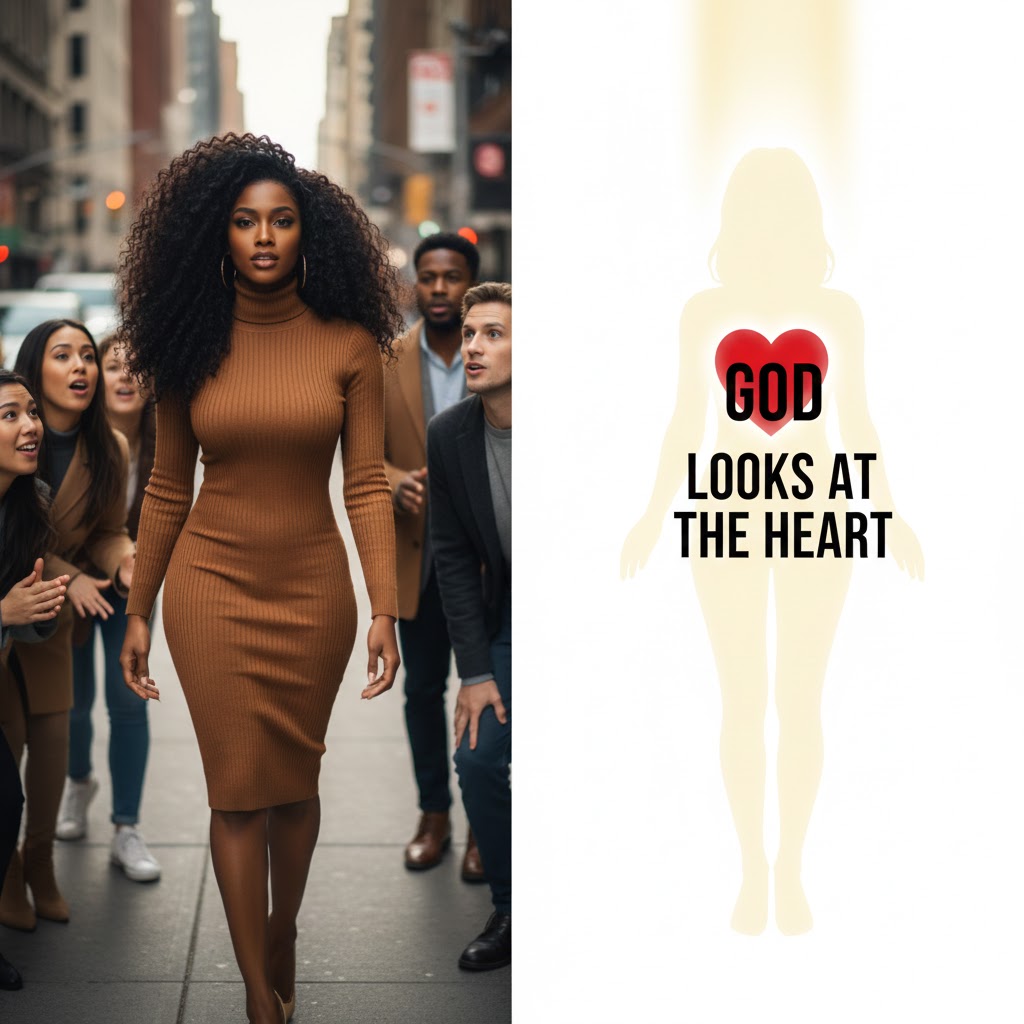
The Gospel of Beauty: For man looketh on the outward appearance, but the Lord looketh on the heart.

In a society increasingly obsessed with physical appearance, the tension between outward beauty and inner virtue has never been more pressing. Scripture repeatedly underscores that while humans are prone to judge based on external features, God evaluates the character and intentions of the heart. The Apostle Samuel’s words in 1 Samuel 16:7 (KJV) illustrate this: “But the Lord said unto Samuel, Look not on his countenance, or on the height of his stature; because I have refused him: for the Lord seeth not as man seeth; for man looketh on the outward appearance, but the Lord looketh on the heart.”

Physical beauty, while celebrated culturally, is transient. Societal standards continually shift, creating pressure to conform to ideals that are both fleeting and often unattainable. This emphasis on outward appearance fosters vanity, envy, and superficial judgment, diverting attention from moral, spiritual, and relational substance.

The Bible consistently contrasts external allure with internal virtue. Proverbs 31:30 (KJV) asserts: “Favor is deceitful, and beauty is vain: but a woman that feareth the Lord, she shall be praised.” Here, the text emphasizes reverence, wisdom, and moral integrity as enduring qualities far surpassing aesthetic appeal.

Men, too, are subject to this cultural fixation. In 1 Peter 3:3-4 (KJV), spiritual instruction guides believers: “Whose adorning let it not be that outward adorning of plaiting the hair, and of wearing of gold, or of putting on of apparel; But let it be the hidden man of the heart, in that which is not corruptible, even the ornament of a meek and quiet spirit, which is in the sight of God of great price.” True beauty emanates from humility, meekness, and spiritual devotion rather than fashion or cosmetics.

Social psychology mirrors this biblical principle. Studies on the “halo effect” show that attractive individuals are often assumed to possess positive traits; however, research also suggests that outward beauty does not predict ethical behavior, compassion, or integrity (Eagly et al., 1991). The wisdom of Scripture anticipates this insight, teaching discernment beyond superficial appearances.

Vanity and obsession with outward appearance can disrupt relationships and spiritual growth. When individuals prioritize beauty over character, they risk fostering pride, insecurity, and shallow social connections. Conversely, cultivating inner virtue promotes resilience, meaningful relationships, and spiritual fulfillment.

The Psalms reinforce the primacy of the heart over appearance. Psalm 51:10 (KJV) pleads: “Create in me a clean heart, O God; and renew a right spirit within me.” God’s concern is not outward perfection but purity of intent, ethical integrity, and contrition, qualities invisible to human eyes yet central to divine evaluation.

Biblical narratives illustrate that God often chooses those overlooked by society. Moses, a reluctant leader with apparent deficiencies in confidence; David, the youngest son of Jesse, overlooked for physical stature; and Esther, a woman of quiet virtue elevated to influence, exemplify God’s attention to character over appearance (Exodus 3, 1 Samuel 16, Esther 2).

Beauty, therefore, is not condemned but reframed. 1 Timothy 2:9-10 (KJV) instructs: “In like manner also, that women adorn themselves in modest apparel, with shamefacedness and sobriety; not with broided hair, or gold, or pearls, or costly array; But (which becometh women professing godliness) with good works.” True adornment lies in righteous actions and godly conduct.

Cultural and technological influences exacerbate the human tendency to equate beauty with value. Social media, advertising, and entertainment industries often perpetuate narrow ideals, while Scripture provides an enduring corrective: God measures worth by moral, relational, and spiritual integrity.

The New Testament further emphasizes the enduring nature of inner qualities. Galatians 5:22-23 (KJV) describes the fruit of the Spirit—love, joy, peace, longsuffering, gentleness, goodness, faith, meekness, temperance—which constitute lasting beauty far beyond physical allure.

Discerning God’s perspective requires intentional cultivation of the heart. Prayer, study of Scripture, and acts of service shift focus from external validation to divine affirmation, reinforcing humility, integrity, and spiritual maturity.

Parents and mentors have a responsibility to teach this principle. Encouraging children to value kindness, diligence, and godly character over appearance fosters resilience against societal pressures and nurtures lifelong spiritual and relational flourishing.

The dangers of valuing appearance above character are also illustrated in narrative warnings. Proverbs 31:25-26 (KJV) praises the virtuous woman: “Strength and honour are her clothing; and she shall rejoice in time to come. She openeth her mouth with wisdom; and in her tongue is the law of kindness.” Strength, honor, wisdom, and kindness surpass transient beauty in both societal and divine evaluation.

In communal life, the prioritization of inner virtue cultivates trust, empathy, and ethical behavior. A society that mirrors God’s evaluation—honoring the heart over the outward appearance—promotes justice, relational depth, and enduring value.

Christian leaders and teachers can model this principle, valuing and affirming individuals for character, service, and spiritual devotion rather than attractiveness or charm, thereby reinforcing a culture that reflects divine priorities.

Ultimately, the Gospel of Beauty calls for a reversal of conventional judgment. Human eyes may favor external traits, but God’s perspective emphasizes eternal qualities. Aligning personal and communal evaluation with this principle fosters moral clarity and spiritual depth.

Believers are reminded to cultivate discernment and humility. 1 Samuel 16:7 (KJV) serves as a perpetual guide: resist superficial judgment, prioritize inner virtue, and honor God’s assessment over societal perception.

In conclusion, while the world celebrates outward beauty, Scripture consistently teaches that God looks at the heart. True beauty is measured in character, integrity, service, and devotion. Aligning life with these principles ensures enduring worth, divine favor, and relational richness beyond the fleeting admiration of human eyes.

References

Eagly, A. H., Ashmore, R. D., Makhijani, M. G., & Longo, L. C. (1991). What is beautiful is good, but…: A meta-analytic review of research on the physical attractiveness stereotype. Psychological Bulletin, 110(1), 109–128.

Holy Bible, King James Version (KJV). 1 Samuel 16:7; Proverbs 31:30; 1 Peter 3:3-4; Psalm 51:10; 1 Timothy 2:9-10; Galatians 5:22-23; Proverbs 31:25-26.

Wolf, N. (1991). The beauty myth: How images of beauty are used against women. HarperCollins.

Langlois, J. H., Kalakanis, L., Rubenstein, A. J., Larson, A., Hallam, M., & Smoot, M. (2000). Maxims or myths of beauty? A meta-analytic and theoretical review. Psychological Bulletin, 126(3), 390–423.


The Woman Who Defines Beauty

Beauty has always been a powerful force—celebrated, debated, pursued, and misunderstood. Yet there is a rare kind of woman who does not merely possess beauty; she defines it. Her presence shifts atmospheres, her character elevates the room, and her essence transcends trends, standards, and expectations. She is the woman whose beauty radiates from the inside out, whose worth is not measured by symmetry or style, but by the depth of her spirit and the truth of her heart, reflecting the truth of Psalm 139:14 that she is “fearfully and wonderfully made.”

Her beauty begins with her inner world. Society often teaches women that beauty is a surface experience—skin, shape, hair, clothes, and presentation—but true beauty is born in the unseen places. It is the quiet strength of a disciplined mind, the softness of a healed heart, and the courage of a woman who knows her value. Inner beauty is not fragile; it is the most enduring kind of beauty because it grows with wisdom, maturity, and purpose. It echoes 1 Peter 3:4 where the hidden woman of the heart carries “a meek and quiet spirit,” which God calls precious.

This woman understands that her worth is not in her appearance alone but in her identity. She knows who she is in God, who she is becoming, and who she refuses to be. Her confidence is rooted in truth, not applause. Her glow comes from peace, not pressure. Her beauty is consistent because it is anchored in something eternal. Proverbs 31:30 declares that “beauty is vain,” yet the woman who fears the Lord is praised not for her looks but for her spirit.

The woman who defines beauty walks with grace. She does not have to announce her presence; her presence announces her. She is gentle yet powerful, humble yet impactful. Her kindness leaves imprints, her compassion changes lives, and her wisdom lights paths for others. Her voice carries the same wisdom described in Proverbs 31:26, where a virtuous woman opens her mouth with wisdom and speaks with kindness.

Her inner beauty shapes her outer expression. She dresses with thought, not for validation but as an extension of who she is. Her smile carries warmth. Her eyes speak truth. Her posture shows dignity. Her voice brings calm or conviction depending on what is needed. In this, she fulfills Matthew 5:16 by letting her light shine before others through her character and presence.

What sets this woman apart is her heart. A beautiful heart is generous, forgiving, nurturing, discerning, and full of faith. She gives without expecting recognition, listens without judgment, and loves without manipulation. Her empathy is her superpower, and her character is her crown. She models the fruit of the Spirit described in Galatians 5:22–23 through love, peace, gentleness, and goodness.

The woman who defines beauty is also resilient. She has endured storms, disappointments, betrayals, and heartbreaks, yet she rises with dignity. Her scars do not make her bitter—they make her wiser. Her challenges did not destroy her—they refined her. She becomes living proof of Romans 8:28, that God works all things for her good.

Inner beauty demands self-awareness, emotional intelligence, and self-respect. This woman invests in herself—mind, body, and spirit. She practices self-care not as indulgence but as stewardship. She protects her peace, sets boundaries, and honors her worth. This aligns with Proverbs 4:23, which teaches her to guard her heart because it shapes the course of her life.

Her beauty also reveals itself through purpose. She is driven not by vanity but by vision. Whether she leads, teaches, creates, nurtures, or serves, she moves with intention. Her life leaves a mark, not because of what she looks like but because of what she builds, heals, and inspires in others. She walks as God’s workmanship, created for purpose as Ephesians 2:10 affirms.

For this woman, beauty is not a competition—it is a calling. It is a responsibility to walk in love, truth, and excellence. She does not compare herself to others because she understands that every woman carries her own kind of beauty. She celebrates others without losing herself, expressing the love found in 1 John 4:7.

In relationships, her beauty is felt deeply. She loves with loyalty, communicates with clarity, and supports with sincerity. She does not use beauty as manipulation but as ministry—her presence comforts, encourages, and uplifts. Her love flows from the truth of 1 John 4:19, that she loves because God first loved her.

Her inner beauty becomes a light that others gravitate toward. People feel safe around her, inspired by her, and strengthened by her presence. She radiates confidence without arrogance, elegance without pretension, and strength without hardness. Her beauty is balanced and rooted in the peace that Philippians 4:7 promises.

The woman who defines beauty also knows the value of silence. She is not loud, chaotic, or desperate for attention. Her peace speaks louder than her words. Her calm becomes a sanctuary for herself and others. Her spirit remains aligned, grounded, and spiritually centered.

Her life is a garden of virtues—faith, patience, kindness, humility, gratitude, and wisdom. These qualities shape the way she thinks, speaks, and moves. They create an atmosphere of grace around her. Her beauty is a reflection of this inner garden, cultivated with intention and prayer.

She understands that outward beauty may open doors, but inward beauty keeps them open. People may be drawn to her appearance, but they stay because of her spirit. Her character creates loyalty, trust, and admiration.

Ultimately, the woman who defines beauty is a reflection of God’s handiwork. She embodies both strength and softness, purpose and peace, elegance and endurance. Her beauty is not accidental; it is divinely designed. She carries the dignity of Proverbs 31:25—“Strength and honour are her clothing.”

She is the woman who defines beauty because she has learned to define herself—not by the world’s standards, but by God’s truth. She is a living example that real beauty is not something you see; it is something you feel. It is not temporary; it is eternal.

Her legacy will not be her appearance but her impact, her love, her wisdom, her faith, and her inner radiance. Her beauty will continue to shine long after physical looks fade. She will always be the woman who defines beauty—inside and out.

Made in His Image: The Divine Reflection of a Man’s Beauty.

The Bible teaches that humanity is made in the image of God: “So God created man in his own image, in the image of God created he him; male and female created he them” (Genesis 1:27, KJV). This divine imprint reflects not only moral and spiritual qualities but also the inherent dignity and beauty of a man. True beauty in a man transcends physical appearance; it manifests in character, wisdom, integrity, and alignment with God’s will.

Physical beauty is a reflection of divine creativity. Just as God crafted nature with intricacy and balance, He has designed the human body with proportions, symmetry, and features that convey strength, harmony, and vitality. Yet, Scripture warns against idolizing outward appearance at the expense of inner character: “For the Lord seeth not as man seeth; for man looketh on the outward appearance, but the Lord looketh on the heart” (1 Samuel 16:7, KJV).

A man’s beauty is also expressed through strength tempered with humility. True masculinity honors God, protects the vulnerable, and nurtures relationships. Strength without virtue can become destructive, but strength rooted in divine guidance radiates beauty that captivates without superficiality. “A wise man is strong; yea, a man of knowledge increaseth strength” (Proverbs 24:5, KJV).

Wisdom is a cornerstone of divine beauty. The manner in which a man speaks, reasons, and governs his actions reflects God’s image. Eloquence, discernment, and prudence enhance his presence, making him admirable beyond mere physicality. “Let the wise hear, and increase in learning, and the man of understanding obtain guidance” (Proverbs 1:5, KJV).

Faithfulness and integrity also shape the reflection of God in a man. Honesty, loyalty, and moral steadfastness demonstrate an alignment with divine principles, creating a beauty that endures through trials and challenges. “He that walketh uprightly walketh surely: but he that perverteth his ways shall be known” (Proverbs 10:9, KJV).

A man’s beauty is seen in how he treats others. Gentleness, compassion, and respect for life mirror God’s character. Scripture elevates the heart’s posture over superficial appearance: “A soft answer turneth away wrath: but grievous words stir up anger” (Proverbs 15:1, KJV). True beauty lies in kindness and ethical conduct.

Discipline and self-control further reflect divine order. Physical fitness, grooming, and personal presentation demonstrate respect for the body, God’s temple: “Know ye not that your body is the temple of the Holy Ghost which is in you, which ye have of God, and ye are not your own?” (1 Corinthians 6:19, KJV). Attention to health and appearance is not vanity; it is stewardship.

Emotional intelligence enhances divine beauty. A man capable of empathy, understanding, and patience embodies a Christlike presence. Emotional stability and the ability to manage conflict are aspects of a beauty rooted in spiritual maturity. “He that is slow to anger is better than the mighty; and he that ruleth his spirit than he that taketh a city” (Proverbs 16:32, KJV).

Leadership and responsibility are part of God’s design. Men who serve as protectors, providers, and guides in families, communities, and workplaces reflect the image of God through purposeful action. Authority exercised with justice and mercy amplifies their attractiveness. “Where no counsel is, the people fall: but in the multitude of counsellors there is safety” (Proverbs 11:14, KJV).

A man’s beauty is enhanced by spiritual devotion. Prayer, worship, and obedience cultivate an inner radiance that transcends physical aesthetics. Holiness, humility, and reverence for God create a presence that commands respect and admiration. “But the path of the just is as the shining light, that shineth more and more unto the perfect day” (Proverbs 4:18, KJV).

Courage and perseverance reflect divine imprint. A man who faces adversity with faith and resilience mirrors God’s steadfastness. Enduring trials without compromising principles radiates a beauty that is both rare and compelling. “Be strong and of a good courage, fear not, nor be afraid of them: for the Lord thy God, he it is that doth go with thee” (Deuteronomy 31:6, KJV).

Humility grounds beauty in authenticity. Pride distorts perception, but humility aligns a man with divine intent. Recognizing dependence on God and valuing others’ worth enhances moral and social appeal. “Humble yourselves in the sight of the Lord, and he shall lift you up” (James 4:10, KJV).

A man’s beauty is reflected in faithful stewardship of talents. Creativity, skills, and gifts honed in service to God and community demonstrate purpose, discipline, and excellence. Such stewardship amplifies influence and inspires others. “As every man hath received the gift, even so minister the same one to another, as good stewards of the manifold grace of God” (1 Peter 4:10, KJV).

Integrity in relationships manifests divine beauty. Treating partners, family, and colleagues with respect, honesty, and honor reveals the man’s alignment with God’s image. “He that walketh uprightly walketh surely: but he that perverteth his ways shall be known” (Proverbs 10:9, KJV).

Gratitude and contentment further radiate beauty. A man who recognizes blessings and expresses thankfulness conveys joy, peace, and humility—qualities that reflect God’s goodness. “In every thing give thanks: for this is the will of God in Christ Jesus concerning you” (1 Thessalonians 5:18, KJV).

A man’s beauty is holistic, integrating body, mind, spirit, and character. Physical attractiveness may draw attention, but virtue, intelligence, and faith sustain admiration over a lifetime. “Let your light so shine before men, that they may see your good works, and glorify your Father which is in heaven” (Matthew 5:16, KJV).

Mentorship and guidance express beauty through legacy. Men who uplift others, model integrity, and teach godly principles reflect God’s image in society, passing on a standard of excellence and righteousness.

Patience and self-discipline in desires reflect divine reflection. By controlling impulses, avoiding lust, and living honorably, a man demonstrates obedience to God and moral beauty. “Flee fornication. Every sin that a man doeth is without the body; but he that committeth fornication sinneth against his own body” (1 Corinthians 6:18, KJV).

Ultimately, beauty is inseparable from purpose. Men created in God’s image are called to reflect His character, exercise wisdom, and honor Him in every facet of life. The combination of physical presence, moral excellence, spiritual devotion, and relational integrity forms a divine reflection that captivates both God and man.

A man who embraces his identity in Christ, cultivates virtue, and expresses love, humility, and strength, embodies true beauty, fulfilling the intent of being made in God’s image. This holistic expression reminds the world that man’s beauty is not superficial—it is sacred, purposeful, and eternal.

Girl Talk Series: Inner Beauty

Ladies, let’s talk heart to heart. In a world that constantly tells us our worth depends on how we look—our makeup, our clothes, our shape—the Most High reminds us of a deeper truth. Real beauty isn’t about the eyelashes, the designer labels, or the perfect selfie. It’s about the heart. Don’t let your beauty be defined by your outer appearance, because the Most High doesn’t look at what man sees; He looks upon the heart (1 Samuel 16:7, KJV). What truly captivates Him is a spirit of humility, kindness, and faith. When your heart is pure, gentle, and anchored in love for the Most High, that’s when your beauty shines the brightest. True beauty is not in your reflection—it’s in your righteousness.

In a world saturated with vanity and self-promotion, many young women are taught that their worth lies in their appearance. The length of their hair, the contour of their face, or the brand of their clothing often becomes a measure of self-esteem. Yet, the Word of God teaches a higher standard of beauty—one not defined by outer adornment, but by a gentle and meek spirit that pleases the Most High. As 1 Peter 3:3–4 (KJV) reminds us, “Whose adorning let it not be that outward adorning of plaiting the hair, and of wearing of gold, or of putting on of apparel; but let it be the hidden man of the heart.”

True beauty radiates from within, and it cannot be purchased, enhanced, or filtered. It is the quiet confidence that comes from knowing who you are in the Most High. A godly woman understands that charm is deceitful and beauty is vain, but a woman who fears the Lord shall be praised (Proverbs 31:30 KJV). Her glow comes not from highlighter or foundation, but from the light of righteousness that rests upon her countenance.

Modesty in clothing reflects humility in spirit. It does not mean neglecting self-care or beauty—it means dressing in a way that honors God and commands respect. 1 Timothy 2:9–10 (KJV) advises, “In like manner also, that women adorn themselves in modest apparel, with shamefacedness and sobriety… but (which becometh women professing godliness) with good works.” The modest woman knows her worth and does not need to reveal her body to be validated.

When a woman uses her appearance or body to manipulate others, she forfeits her dignity and power. The world may applaud seduction, but the Most High values purity and wisdom. A godly woman walks with grace, not for attention but to glorify her Creator. She understands that her body is a temple of the Holy Spirit, not a billboard for lust (1 Corinthians 6:19–20 KJV).

Kindness is one of the rarest and most captivating forms of beauty. A gentle word, a forgiving heart, and a compassionate touch leave an impression that no physical trait can surpass. The woman who treats others with respect, who uplifts instead of tearing down, embodies the love of Christ. As Proverbs 31:26 (KJV) says, “She openeth her mouth with wisdom; and in her tongue is the law of kindness.”

Meekness, often misunderstood as weakness, is in fact a strength of divine proportion. It takes tremendous power to remain humble, patient, and composed in a world that glorifies arrogance and pride. The Most High delights in the meek, for “the meek shall inherit the earth” (Matthew 5:5 KJV). A woman of meekness carries herself with quiet authority, never needing to shout her worth.

A godly personality reflects the fruit of the Spirit. She is loving, joyful, peaceful, patient, gentle, good, faithful, and self-controlled (Galatians 5:22–23 KJV). These virtues do not come from external grooming but from a heart transformed by obedience and prayer. Her presence brings calm where there is chaos and light where there is darkness.

Being “beautiful” means more than having flawless skin or a perfect smile. It means having a soul that shines with gratitude and love for the Most High. The woman who seeks His face daily finds her reflection in His Word. Her beauty deepens as her relationship with Him grows, and her heart becomes a vessel of His glory.

Many in today’s culture confuse confidence with narcissism. But confidence rooted in vanity is hollow and fragile. A narcissistic spirit thrives on admiration and dominance, while a godly spirit thrives on service and humility. True confidence flows from knowing that one is fearfully and wonderfully made (Psalm 139:14 KJV) and that her identity is secure in God’s love.

Outer beauty fades with time, but character endures forever. The woman who cultivates righteousness and integrity will still shine when her youthful glow is gone. Her laughter, wisdom, and inner peace will make her radiant even in old age. She becomes a living testimony of Proverbs 16:31 (KJV): “The hoary head is a crown of glory, if it be found in the way of righteousness.”

It is not a sin to desire beauty or to take care of one’s appearance, but it becomes dangerous when vanity consumes the soul. The woman who obsesses over perfection forgets that she was already made in divine image. She must learn to look in the mirror and see herself as the Most High does—complete, valuable, and chosen.

When you love God with all your heart, your spirit reflects His presence. That love purifies your motives, softens your speech, and strengthens your actions. Even your eyes will reveal His peace, for “the light of the body is the eye” (Matthew 6:22 KJV). The love of the Most High is the truest beauty any woman can possess.

A beautiful heart forgives, prays, and uplifts others. It does not envy another woman’s looks or achievements. It celebrates sisterhood, recognizing that all women are created uniquely for a divine purpose. A woman of inner beauty knows her value without comparing herself to anyone else.

When a woman carries herself with dignity, she teaches others how to treat her. She does not compromise her morals for attention or approval. Her quiet strength earns respect because it is rooted in righteousness, not rebellion. She knows that the Most High crowns her with honor when she walks in truth.

Inner beauty blossoms in those who spend time in God’s Word. Meditation on Scripture nurtures peace, and prayer cultivates spiritual confidence. Over time, that spiritual discipline transforms the heart, radiating outward through posture, smile, and speech. Her beauty is no longer external—it becomes divine.

A loving personality can disarm even the hardest hearts. When you are gentle and patient with others, you become a reflection of Christ’s love. A woman with inner beauty knows that every word carries power; therefore, she speaks life, not gossip or cruelty. Her words bring healing where others bring harm.

The true mark of beauty is found in how you make others feel. If people leave your presence feeling valued and uplifted, then your beauty has fulfilled its divine purpose. The godly woman uses her influence to inspire, not to intimidate; to comfort, not to compete.

In a society obsessed with appearances, the woman of God stands out because her light comes from within. Her modesty is not repression—it is revelation of her worth. Her faith is her fragrance, her kindness her adornment, and her humility her crown.

True beauty is eternal because it reflects the eternal God. A woman who lives to please Him becomes more beautiful with every act of obedience and love. Her reflection in the mirror becomes less about her features and more about His glory shining through her.

Let every daughter of Zion remember: your worth is not in your clothing, body, or popularity, but in your relationship with the Most High. Walk in modesty, speak with kindness, love without condition, and let your inner light testify of His power. For when you love God first, everything about you—inside and out—becomes beautifully divine.

References
Holy Bible, King James Version. (1611). 1 Peter 3:3–4; Proverbs 31:26, 30; 1 Timothy 2:9–10; Matthew 5:5; Galatians 5:22–23; 1 Corinthians 6:19–20; Psalm 139:14; Proverbs 16:31; Matthew 6:22.

12 Habits That Make You More Attractive

Blending KJV Scripture and Psychology

Photo by Al Ameen Saddiq on Pexels.com

Attractiveness is more than physical beauty—it is the product of character, habits, and the way we present ourselves to others. Both psychology and the Bible reveal that true charm is cultivated inwardly and expressed outwardly. Below are twelve habits that increase attractiveness in meaningful ways.


1. Confidence Without Arrogance
Confidence is magnetic because it signals security and trustworthiness. Psychological studies show that people are drawn to those who display healthy self-assurance (Swann et al., 2007). Yet arrogance repels. The Bible balances this by teaching, “For the LORD shall be thy confidence” (Proverbs 3:26, KJV). True attractiveness is rooted in confidence in God, not in pride.

2. Good Hygiene and Grooming
Attraction is heavily influenced by cleanliness. Psychologists note that proper grooming signals health and responsibility, key factors in partner selection. God Himself emphasized preparation through cleanliness: “Sanctify them today and tomorrow, and let them wash their clothes” (Exodus 19:10, KJV). A clean and well-kept appearance honors God and attracts others.

3. Kindness and Compassion
Kindness makes one unforgettable. Research demonstrates that altruistic people are rated as more attractive and more desirable long-term partners. Scripture commands, “Be ye kind one to another, tenderhearted” (Ephesians 4:32, KJV). A compassionate spirit shines brighter than external beauty, drawing people through genuine care.

4. Active Listening
In a world where many talk but few listen, giving undivided attention is profoundly attractive. Psychology shows that active listening builds intimacy and emotional closeness. The Bible advises, “Let every man be swift to hear, slow to speak” (James 1:19, KJV). Listening communicates respect and makes others feel valued, deepening relationships.

5. Positive Attitude
Negativity drains, but positivity uplifts. Studies reveal that optimism not only improves one’s own mental health but also makes others more likely to want companionship with you. The Apostle Paul reminds us, “Rejoice in the Lord alway: and again I say, Rejoice” (Philippians 4:4, KJV). A joyful spirit radiates attractiveness.

6. Good Posture and Body Language
Nonverbal communication speaks volumes. Psychology shows that confident posture, open gestures, and a relaxed demeanor make one appear approachable and appealing (Mehrabian, 1972). David declared, “I will praise thee; for I am fearfully and wonderfully made” (Psalm 139:14, KJV). Carrying oneself with dignity reflects inner assurance and God-given worth.

7. Ambition and Purpose
People are drawn to those who have goals and direction. Purpose signals maturity, responsibility, and resilience. Psychological studies confirm that ambition is an attractive trait in both men and women. Scripture affirms, “Write the vision, and make it plain” (Habakkuk 2:2, KJV). A life driven by godly purpose inspires others.

8. Sense of Humor
Laughter is a universal connector. Humor reveals intelligence, creativity, and emotional resilience. Studies show people prefer partners who make them laugh, as it eases tension and builds closeness. The Bible states, “A merry heart doeth good like a medicine” (Proverbs 17:22, KJV). A joyful spirit makes one irresistible.

9. Generosity
Giving increases attractiveness because it shows selflessness and abundance of spirit. Psychology observes that generosity signals both kindness and capability, enhancing desirability. Christ Himself declared, “Give, and it shall be given unto you” (Luke 6:38, KJV). Generosity reflects God’s love and makes relationships thrive.

10. Emotional Stability
Few traits are more attractive than peace under pressure. Emotional stability fosters trust and security, while instability repels. Psychology confirms that people seek partners who remain calm in adversity. Paul wrote, “For God hath not given us the spirit of fear; but of power, and of love, and of a sound mind” (2 Timothy 1:7, KJV). Stability brings beauty to relationships.

11. Self-Discipline
Those who exercise control over their desires and actions earn respect and admiration. Psychology links self-discipline to long-term success and relational reliability. The Apostle Paul modeled this: “But I keep under my body, and bring it into subjection” (1 Corinthians 9:27, KJV). Discipline makes one trustworthy and more attractive as a partner.

12. Spiritual Depth
Ultimately, true attractiveness flows from inner spirituality. Psychology acknowledges that shared faith and moral grounding strengthen bonds. Scripture declares, “Favour is deceitful, and beauty is vain: but a woman that feareth the LORD, she shall be praised” (Proverbs 31:30, KJV). Spiritual character sustains relationships long after physical beauty fades.

12 Habits That Make You More Attractive

Blending KJV Scripture and Psychology

  1. Confidence Without Arrogance
    • Psychology: Confidence signals competence and security (Swann et al., 2007).
    • Proverbs 3:26 (KJV): “For the LORD shall be thy confidence.”
  2. Good Hygiene and Grooming
    • Psychology: Cleanliness increases perceived attractiveness.
    • Exodus 19:10 (KJV): God commanded Israel to “wash their clothes” before meeting Him—purity matters.
  3. Kindness and Compassion
    • Psychology: Altruism makes people more desirable as partners.
    • Ephesians 4:32 (KJV): “Be ye kind one to another, tenderhearted.”
  4. Active Listening
    • Psychology: Attentive listening strengthens emotional bonds.
    • James 1:19 (KJV): “Let every man be swift to hear, slow to speak.”
  5. Positive Attitude
    • Psychology: Optimism draws others in and reduces stress.
    • Philippians 4:4 (KJV): “Rejoice in the Lord alway.”
  6. Good Posture and Body Language
    • Psychology: Open, confident posture increases attractiveness (Mehrabian, 1972).
    • Psalm 139:14 (KJV): “I will praise thee; for I am fearfully and wonderfully made.”
  7. Ambition and Purpose
    • Psychology: Drive and goals signal stability and direction.
    • Habakkuk 2:2 (KJV): “Write the vision, and make it plain.”
  8. Sense of Humor
    • Psychology: Humor signals intelligence and relatability.
    • Proverbs 17:22 (KJV): “A merry heart doeth good like a medicine.”
  9. Generosity
    • Psychology: Giving increases social bonds and attraction.
    • Luke 6:38 (KJV): “Give, and it shall be given unto you.”
  10. Emotional Stability
  • Psychology: Calmness makes relationships safe and secure.
  • 2 Timothy 1:7 (KJV): “For God hath not given us the spirit of fear; but of power, and of love, and of a sound mind.”
  1. Self-Discipline
  • Psychology: People admire those with self-control and resilience.
  • 1 Corinthians 9:27 (KJV): Paul speaks of keeping his body under discipline.
  1. Spiritual Depth
  • Psychology: Faith and moral grounding increase trust and long-term attractiveness.
  • Proverbs 31:30 (KJV): “A woman that feareth the LORD, she shall be praised.”

Conclusion
Attractiveness is not a mystery reserved for the outwardly beautiful—it is a set of habits cultivated daily. Psychology shows us that qualities like kindness, confidence, and stability foster lasting appeal. The Bible reminds us that inner beauty, rooted in godliness, outshines temporary charm. When we practice these twelve habits, we not only become more attractive to others but also align ourselves with the character God desires.

References

  • The Holy Bible, King James Version.
  • Swann, W. B., Jr., Chang-Schneider, C., & McClarty, K. L. (2007). Do people’s self-views matter? Self-concept and self-esteem in interpersonal relationships. Psychological Science, 18(3), 200–206.
  • Mehrabian, A. (1972). Nonverbal communication. Aldine-Atherton.
  • Rhodes, G. (2006). The evolutionary psychology of facial beauty. Annual Review of Psychology, 57, 199–226.
  • Byrne, D. (1971). The Attraction Paradigm. Academic Press.
  • Aron, A., Aron, E. N., & Smollan, D. (1997). Inclusion of Other in the Self Scale and the structure of interpersonal closeness. Journal of Personality and Social Psychology, 63(4), 596–612.
  • Bowlby, J. (1988). A Secure Base: Parent-child attachment and healthy human development. Basic Books.
  • Cialdini, R. B. (2009). Influence: Science and practice (5th ed.). Pearson.
  • Peterson, C., & Seligman, M. E. P. (2004). Character strengths and virtues: A handbook and classification. Oxford University Press.

What makes a Woman truly beautiful?

Photo by cottonbro studio on Pexels.com

Beauty is one of the most debated concepts in human history, yet its truest form transcends mere physical appearance. While society often emphasizes youth, skin tone, or body shape, biblical scripture and psychology reveal that true beauty lies in a woman’s inner essence, her spiritual alignment, and her impact on others.


Beauty Rooted in Character

The Bible consistently reminds us that outward attractiveness is fleeting, but inner character endures. Proverbs 31:30 (KJV) declares: “Favour is deceitful, and beauty is vain: but a woman that feareth the Lord, she shall be praised.” Here, beauty is redefined as reverence for God, moral integrity, and righteous living. A woman’s character — her honesty, patience, and humility — shines brighter than any adornment. Psychologically, researchers confirm that individuals are perceived as more attractive when they display warmth and kindness (Kniffin & Wilson, 2004).


Confidence and Self-Worth

True beauty cannot exist without confidence. A woman who understands her worth is not easily swayed by Eurocentric beauty ideals, media filters, or societal comparisons. Confidence radiates through posture, voice, and presence, shaping how others perceive her. According to Cash and Smolak (2011), self-esteem and body image significantly influence perceptions of beauty. When a woman accepts and loves her natural skin tone, hair texture, and unique features, she communicates a power that no external validation can diminish.


Compassion as a Radiant Force

Compassion is another dimension of beauty that goes beyond aesthetics. A woman’s ability to nurture, empathize, and uplift others embodies inner radiance. 1 Peter 3:3–4 (KJV) emphasizes this, stating: “Whose adorning let it not be that outward adorning of plaiting the hair, and of wearing of gold… but let it be the hidden man of the heart, in that which is not corruptible, even the ornament of a meek and quiet spirit, which is in the sight of God of great price.” Meekness and compassion beautify a woman’s spirit, making her presence restorative.


Wisdom and Purpose as Elegance

Wisdom transforms beauty into legacy. A woman of understanding and purpose carries a timeless elegance that surpasses physical allure. Ecclesiastes 3:11 reminds us that God “hath made every thing beautiful in his time.” When women walk in purpose — whether in leadership, motherhood, scholarship, or service — their beauty expands beyond themselves and impacts generations. Psychologically, meaning and purpose increase not only personal well-being but also how others perceive attractiveness (King et al., 2006).


The Harmony of Body, Mind, and Spirit

Lastly, true beauty emerges from balance. A woman who honors her body as the temple of God (1 Corinthians 6:19), renews her mind through positive thought (Romans 12:2), and nurtures her spirit through prayer reflects a glow that cannot be replicated by cosmetics. This harmony creates wholeness, and wholeness itself is beauty.


Conclusion

A truly beautiful woman is not defined solely by her physical features but by her depth of spirit, confidence, compassion, wisdom, and divine alignment. While outward beauty may draw attention, it is her inner radiance that captures hearts and endures through time. In essence, beauty is not just what she looks like, but what she lives like.


📖 References

  • Cash, T. F., & Smolak, L. (2011). Body Image: A Handbook of Science, Practice, and Prevention. Guilford Press.
  • Kniffin, K. M., & Wilson, D. S. (2004). The effect of nonphysical traits on the perception of physical attractiveness. Evolution and Human Behavior, 25(2), 88–101.
  • King, L. A., Hicks, J. A., Krull, J. L., & Gaiso, A. K. (2006). Positive affect and the experience of meaning in life. Journal of Personality and Social Psychology, 90(1), 179–196.
  • The Holy Bible, King James Version.