

Tag Archives: Happiness

The Colorism Series: Office Politics of Skin Tone.

Colorism, a system of inequality that privileges lighter skin tones over darker ones within the same racial or ethnic group, continues to shape workplace dynamics in subtle yet profound ways. Rooted in colonial hierarchies and reinforced through media representation, colorism operates as a silent determinant of perceived professionalism, beauty, and competence.

Colorism operates as a quiet yet powerful force within professional environments, shaping workplace dynamics, opportunities, and perceptions of competence. “Office politics of skin tone” reflects the subtle negotiations of power, favoritism, and bias that occur not just across racial lines, but within them.

Historically rooted in colonial hierarchies and slavery, colorism established a system where lighter skin was associated with proximity to power and privilege. These historical foundations continue to influence modern workplace structures, often in ways that are difficult to detect yet deeply impactful (Hunter, 2007).

In hiring practices, lighter-skinned candidates are frequently perceived as more “professional” or “polished,” reflecting internalized standards tied to Eurocentric beauty ideals. These perceptions are rarely explicit but are reinforced through unconscious decision-making processes.

The role of implicit bias is central to understanding how these dynamics persist. Employers and colleagues may unknowingly favor individuals who align more closely with socially constructed ideals of attractiveness and acceptability (Greenwald & Krieger, 2006).

Once hired, workplace treatment often diverges along color lines. Lighter-skinned employees may receive more mentorship opportunities, positive feedback, and visibility in high-profile projects, all of which are critical for career advancement.

Conversely, darker-skinned employees may face increased scrutiny and harsher evaluations. Their mistakes are more likely to be highlighted, while their achievements may be overlooked or minimized, contributing to slower career progression (Keith & Herring, 1991).

Public figures such as Viola Davis have spoken about being overlooked in favor of lighter-skinned counterparts, illustrating how these biases extend beyond corporate offices into broader professional industries.

Similarly, Lupita Nyong’o has addressed the barriers she faced due to her skin tone, emphasizing the global nature of colorism and its influence on professional recognition.

Office politics often involve informal networks—social gatherings, mentorship circles, and alliances—that play a crucial role in career mobility. Lighter-skinned individuals are more likely to be included in these networks, granting them access to information and opportunities not equally available to others.

Colorism also affects leadership perceptions. Lighter-skinned employees are often seen as more “leadership-ready,” a bias that influences promotion decisions and reinforces disparities in executive representation (Rosette & Dumas, 2007).

In client-facing roles, companies may consciously or unconsciously select lighter-skinned employees to represent their brand, reinforcing narrow definitions of professionalism and appeal. This practice not only marginalizes darker-skinned employees but also perpetuates harmful societal standards.

The economic implications of these dynamics are significant. Research indicates that lighter-skinned individuals within the same racial group often earn higher wages and experience greater occupational mobility (Goldsmith, Hamilton, & Darity, 2007).

The psychological toll on darker-skinned employees is profound. Constant exposure to bias and exclusion can lead to stress, decreased job satisfaction, and a sense of isolation within the workplace (Thompson & Keith, 2001).

Colorism can also create tension and division among employees, as perceived favoritism based on skin tone undermines trust and collaboration. These divisions weaken organizational culture and hinder collective success.

Despite increasing awareness of diversity and inclusion, many corporate initiatives fail to address colorism explicitly. By focusing solely on race, organizations overlook the nuanced ways in which inequality operates within racial groups.

Addressing the office politics of skin tone requires intentional strategies, including bias training that specifically addresses colorism and its manifestations in professional settings.

Transparent evaluation and promotion processes are essential in minimizing subjective judgments influenced by skin tone. Standardized criteria can help ensure that decisions are based on performance rather than perception.

Mentorship and sponsorship programs that prioritize equity can help bridge the gap, providing darker-skinned employees with access to the guidance and opportunities necessary for advancement.

Representation at all levels of leadership is also critical. When diverse skin tones are visible in positions of power, it challenges existing biases and redefines standards of professionalism and success.

Faith-based perspectives offer an additional lens, reminding individuals and organizations that true worth is not determined by outward appearance but by character and integrity (1 Samuel 16:7, KJV).

Ultimately, dismantling the office politics of skin tone requires both individual accountability and systemic change. It demands a commitment to recognizing and challenging biases, fostering inclusivity, and redefining standards of excellence.

Only through deliberate action can workplaces move toward equity—where opportunity is not influenced by complexion, and all individuals are valued for their contributions rather than the shade of their skin.

In many professional environments, lighter-skinned individuals are often unconsciously associated with traits such as approachability, intelligence, and trustworthiness. These perceptions are not accidental but are deeply embedded in historical frameworks that elevated proximity to whiteness as a social advantage (Hunter, 2007).

Scholarly research has consistently demonstrated that lighter-skinned employees, particularly women, are more likely to be hired, promoted, and perceived favorably by employers. This phenomenon reflects what implicit bias scholars identify as unconscious attitudes that influence decision-making processes without deliberate intent (Greenwald & Krieger, 2006).

Within corporate spaces, beauty standards often mirror Eurocentric ideals, privileging straighter hair textures, lighter complexions, and narrower facial features. These standards influence not only hiring decisions but also workplace culture, shaping who is deemed “polished” or “presentable.”

The experiences of darker-skinned women highlight the emotional and professional toll of colorism. Actresses such as Lupita Nyong’o and Viola Davis have publicly discussed how colorism has affected their careers, shedding light on the broader systemic biases that extend beyond Hollywood into corporate America.

Colorism also intersects with gender, creating compounded disadvantages for dark-skinned women. They are often subjected to harsher scrutiny, lower performance evaluations, and fewer leadership opportunities compared to their lighter-skinned counterparts (Keith & Herring, 1991).

In contrast, lighter-skinned employees may benefit from what researchers term the “halo effect,” where physical appearance positively influences perceptions of unrelated traits such as competence and leadership ability (Dion, Berscheid, & Walster, 1972).

The preference for lighter skin can manifest in workplace social dynamics, where lighter-skinned individuals are more likely to be included in networking opportunities, mentorship relationships, and informal social circles that are critical for career advancement.

Historically, these biases can be traced back to slavery and colonial systems, where lighter-skinned individuals were often given preferential treatment due to their proximity to whiteness, sometimes receiving domestic roles instead of field labor. These historical patterns have evolved but not disappeared (Hunter, 2007).

In modern workplaces, colorism may appear in performance reviews, where darker-skinned employees are described with more negative or neutral language, while lighter-skinned employees receive more positive descriptors, even when performance levels are comparable.

Additionally, customer-facing roles often reveal colorist preferences, with lighter-skinned employees more frequently placed in positions that represent the company externally, reinforcing narrow standards of acceptability and professionalism.

The psychological impact of colorism in the workplace cannot be overlooked. Darker-skinned employees may experience decreased self-esteem, increased stress, and a heightened need to overperform to counteract biased perceptions (Thompson & Keith, 2001).

Colorism also affects wage disparities. Studies have shown that lighter-skinned individuals within the same racial group can earn significantly higher wages than their darker-skinned peers, highlighting the economic implications of this bias (Goldsmith, Hamilton, & Darity, 2007).

Corporate diversity initiatives often fail to address colorism explicitly, focusing instead on broader racial categories. This oversight allows intra-racial inequalities to persist unchallenged within organizations.

Media representation continues to reinforce workplace colorism by consistently elevating lighter-skinned individuals as the standard of success and desirability. This cultural messaging influences both employers and employees, shaping expectations and behaviors.

Despite these challenges, there has been a growing movement to confront colorism in professional spaces. Advocacy, research, and open dialogue are beginning to expose these biases and push organizations toward more equitable practices.

Leadership plays a critical role in dismantling colorism. Organizations that actively train managers to recognize and mitigate implicit bias are better positioned to create inclusive environments where all employees can thrive.

Mentorship and sponsorship programs that intentionally include darker-skinned employees can help counteract systemic disadvantages, providing access to opportunities that might otherwise be withheld.

Policy changes, such as standardized hiring practices and transparent promotion criteria, are essential in reducing the influence of subjective biases tied to skin tone.

Ultimately, addressing colorism in the workplace requires a cultural shift that challenges deeply ingrained notions of beauty, professionalism, and worth. It demands accountability from individuals and institutions alike.

By acknowledging and confronting colorism, workplaces can move toward a more just and equitable future—one where success is determined by ability and character rather than the shade of one’s skin.


References

Dion, K., Berscheid, E., & Walster, E. (1972). What is beautiful is good. Journal of Personality and Social Psychology, 24(3), 285–290. https://doi.org/10.1037/h0033731

Goldsmith, A. H., Hamilton, D., & Darity, W. (2007). From dark to light: Skin color and wages among African Americans. Journal of Human Resources, 42(4), 701–738.

Greenwald, A. G., & Krieger, L. H. (2006). Implicit bias: Scientific foundations. California Law Review, 94(4), 945–967.

Hunter, M. (2007). The persistent problem of colorism: Skin tone, status, and inequality. Sociology Compass, 1(1), 237–254.

Keith, V. M., & Herring, C. (1991). Skin tone and stratification in the Black community. American Journal of Sociology, 97(3), 760–778.

Thompson, M. S., & Keith, V. M. (2001). The blacker the berry: Gender, skin tone, self-esteem, and self-efficacy. Gender & Society, 15(3), 336–357.

Rosette, A. S., & Dumas, T. L. (2007). The hair dilemma: Conform to mainstream expectations or emphasize racial identity. Duke Journal of Gender Law & Policy, 14(2), 407–421.

From Colorism to Confidence: Redefining the Brown Girl Dilemma. #TheBrownGirlDilemma

Photo by Sherman Trotz on Pexels.com

The “brown girl dilemma” is rooted in centuries of systemic bias, historical oppression, and cultural preference for lighter skin tones. Colorism—the discrimination based on skin tone within a racial or ethnic group—has shaped the lives of brown-skinned women across the globe. From social exclusion to media misrepresentation, these biases have influenced not only self-perception but opportunities for education, career advancement, and personal relationships. Yet, amidst these challenges, brown girls are reclaiming confidence, redefining beauty standards, and embracing identity in its full spectrum.

Historical Foundations of Colorism

Colorism is not a modern phenomenon. Its roots trace back to slavery, colonization, and hierarchical caste systems. During slavery in the Americas, lighter-skinned enslaved women often received preferential treatment in domestic roles, while darker-skinned women were relegated to field labor (Hunter, 2007). Similarly, European colonization imposed racial hierarchies that prized European features and lighter skin. These historical practices laid the foundation for intergenerational bias that continues to affect brown girls today.

Internalized Bias and Self-Perception

Internalized colorism manifests as a distorted sense of beauty and self-worth. Brown girls often grow up absorbing messages that equate fairness with success, desirability, and intelligence. This internalization leads to self-doubt and a desire to conform to Eurocentric ideals. Psychology research indicates that repeated exposure to biased media and societal standards contributes to low self-esteem and body dissatisfaction among girls of color (Thompson, 1996).

Media Representation and Its Limits

Media has long been complicit in perpetuating colorism. Television, film, and advertising have historically favored lighter-skinned actresses, models, and influencers, relegating darker-skinned women to supporting roles or caricatured stereotypes. While representation of darker-skinned women is increasing, tokenism remains a problem. Brown girls often feel that their presence is conditional upon fitting narrowly defined ideals of beauty and behavior.

Cultural Expectations and Marriage Markets

In many societies, skin tone continues to dictate social and romantic opportunities. In South Asia, India, and Latin America, fairness remains a highly prized attribute in marriage markets, reinforcing a hierarchy that disadvantages darker-skinned women. The perpetuation of these standards teaches brown girls from a young age that their natural complexion may be less valued—a lesson that must be unlearned for confidence to flourish.

Hair, Features, and Policing of Identity

Colorism intersects with other aspects of appearance, including hair texture and facial features. Brown girls often face pressure to straighten hair, contour facial features, or lighten skin to conform to dominant standards. These pressures reinforce the notion that natural features are inadequate, perpetuating cycles of self-alteration and identity policing. Recognizing and rejecting these pressures is a vital step toward confidence.

Psychological Toll of Bias

The brown girl dilemma affects mental health. Studies link colorism to higher levels of anxiety, depression, and social withdrawal in women of color (Monk, 2014). Living under constant scrutiny and comparison erodes confidence, making the path toward self-acceptance challenging. Addressing these effects requires both individual resilience and structural changes in media, education, and workplace representation.

The Role of Faith

Faith provides a foundation for reframing beauty and self-worth. Biblical texts such as Song of Solomon 1:5—“I am black, but comely”—affirm the inherent beauty of darker skin tones. Psalm 139:14 reminds believers that they are “fearfully and wonderfully made.” For brown girls, spiritual affirmation can counter cultural messages of inferiority, offering a source of confidence rooted in divine design rather than societal approval.

Representation as Empowerment

Positive representation plays a critical role in redefining the brown girl dilemma. Figures like Lupita Nyong’o, Viola Davis, and Issa Rae have publicly embraced their melanin-rich skin and natural features. Their visibility challenges entrenched beauty hierarchies, creating spaces where brown girls can see themselves as worthy, beautiful, and powerful. Representation, when authentic, shifts the cultural narrative from scarcity to abundance.

Intersectionality and the Dilemma

The brown girl dilemma cannot be separated from broader systems of oppression. Gender, race, and class intersect with skin tone to compound discrimination. Darker-skinned women often face limited access to education and employment, increased policing, and marginalization within both majority and minority communities. Understanding these intersections allows for holistic approaches to empowerment and confidence-building.

Community and Collective Affirmation

Building confidence requires collective affirmation. Peer groups, mentorship programs, and social networks that celebrate brown skin provide crucial reinforcement against societal bias. Through storytelling, mentorship, and representation, communities can normalize brown beauty and challenge internalized colorism. Collective affirmation transforms confidence from a personal achievement into a shared cultural value.

Education and Conscious Awareness

Education about colorism and its historical roots empowers brown girls to critically analyze societal messages. Awareness fosters resilience, enabling girls to reject harmful comparisons and embrace their unique beauty. Curricula that include diverse histories and cultural contributions help dismantle Eurocentric standards, cultivating a sense of pride and belonging.

Reclaiming Beauty Standards

Redefining the brown girl dilemma involves reclaiming beauty on one’s own terms. By celebrating melanin-rich skin, natural hair, and diverse features, brown girls reject narrow societal definitions. Beauty is reframed as holistic, encompassing strength, intelligence, character, and cultural heritage—not merely conformity to whiteness.

Social Media as a Tool

While social media can perpetuate colorism, it has also become a tool for empowerment. Hashtags like #MelaninPoppin, #BrownSkinGirlMagic, and #BlackGirlJoy create virtual spaces that celebrate brown beauty. These digital movements allow girls to connect, share experiences, and redefine standards collectively, fostering a sense of pride and belonging.

Mentorship and Role Models

Mentorship is essential in building confidence. Brown girls benefit from seeing older women navigate spaces of visibility and authority while embracing their natural features. Role models provide practical guidance, emotional support, and inspiration, showing that brown skin is not a limitation but a source of strength.

Spiritual Practice and Identity Formation

Spiritual practice reinforces confidence by aligning identity with divine purpose. Prayer, meditation, and scriptural study cultivate resilience and self-worth. When brown girls internalize spiritual truths affirming their inherent value, they are better equipped to withstand societal pressures and redefine their place in a world that often marginalizes them.

Breaking Cycles of Internalized Bias

Addressing internalized colorism is crucial. Families and communities play a role in either perpetuating or dismantling bias. Encouraging positive affirmation, rejecting discriminatory comments, and celebrating diverse shades within families ensures that confidence is nurtured across generations. Breaking cycles of internalized bias transforms personal identity and collective culture.

Fashion, Style, and Self-Expression

Fashion and personal style offer brown girls avenues for self-expression and empowerment. Choosing clothing, hairstyles, and beauty routines that reflect personal identity—rather than conforming to narrow societal expectations—becomes a form of resistance. Confidence grows when self-expression is celebrated as a declaration of individuality and pride.

Activism and Advocacy

Empowerment extends beyond personal confidence to advocacy. Brown girls who challenge colorism, engage in media representation campaigns, or educate peers about historical biases embody proactive resistance. Activism transforms confidence into agency, ensuring that the brown girl dilemma is addressed at systemic levels, not just personal ones.

Toward Holistic Confidence

Confidence for brown girls is multifaceted, combining psychological resilience, spiritual grounding, community support, and cultural pride. Holistic approaches ensure that empowerment is sustainable, addressing both internalized messages and external biases. By embracing all aspects of identity, brown girls can thrive authentically.

Conclusion: Redefining the Dilemma

The journey from colorism to confidence is ongoing but achievable. By understanding the historical, psychological, and spiritual dimensions of bias, brown girls can reclaim their narratives and redefine beauty. Representation, mentorship, community affirmation, and spiritual grounding equip them to stand boldly in their melanin-rich skin. The brown girl dilemma is no longer a limitation—it is an opportunity to assert identity, pride, and resilience in a world that once sought to diminish them.


References

  • Collins, P. H. (2000). Black feminist thought: Knowledge, consciousness, and the politics of empowerment. Routledge.
  • Hunter, M. (2007). The persistent problem of colorism: Skin tone, status, and inequality. Sociology Compass, 1(1), 237–254.
  • Monk, E. P. (2014). Skin tone stratification among Black Americans, 2001–2003. Social Forces, 92(4), 1313–1337.
  • Thompson, C. (1996). Black women, beauty, and hair as a matter of being. Women’s Studies, 25(6), 667–678.
  • The Holy Bible, King James Version.

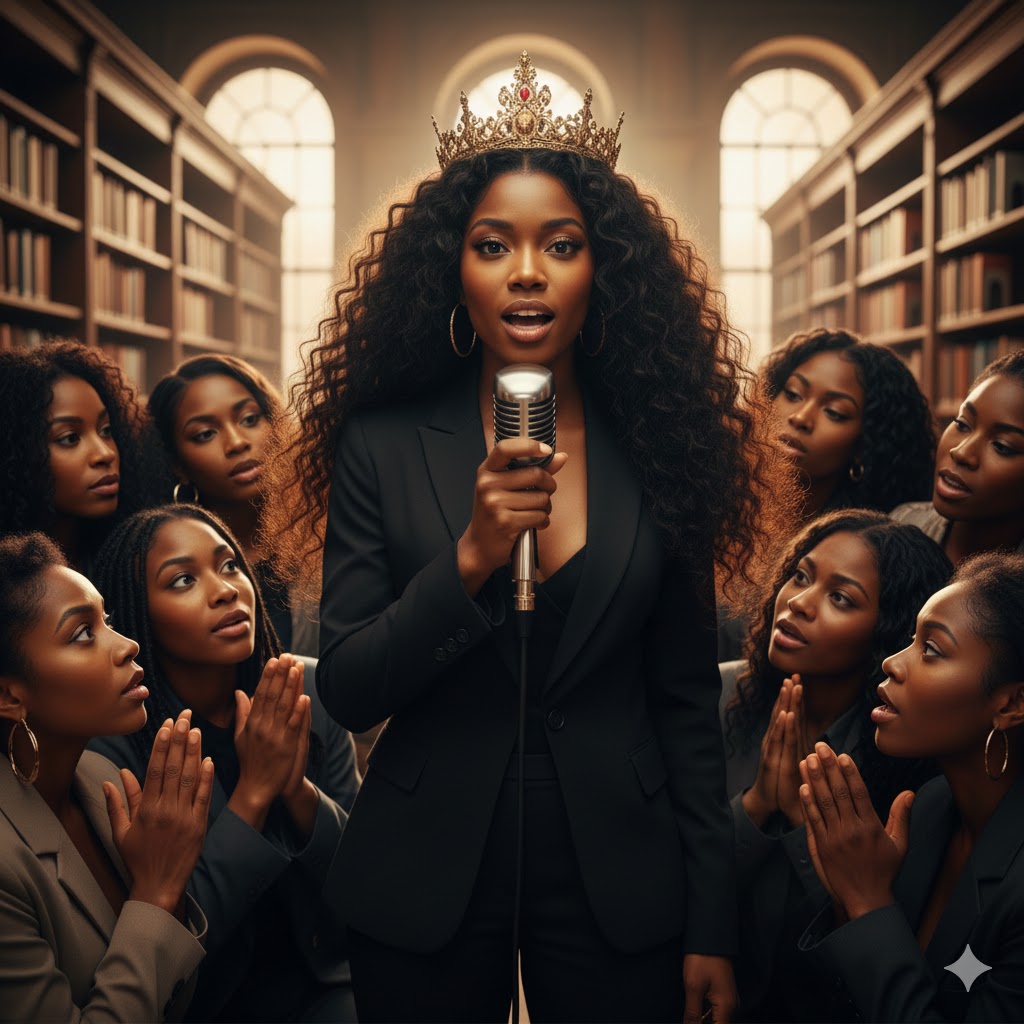
👑 Girl Talk Series: Crowns, Confidence & Calling

Hello Ladies – a crown is more than decoration—it is a declaration. When a woman places a crown on her head, even symbolically, she asserts royalty, identity, and worth. Scripture affirms a woman crowned in dignity: “Strength and honour are her clothing; and she shall rejoice in time to come” (Prov. 31:25, KJV). Ladies, before the world ever defined beauty or worth, God already crowned you in His purpose.

Many women admire crowns without recognizing that they already wear one inwardly. A woman aligned with God carries a spiritual diadem, not a borrowed vanity. “Thou shalt also be a crown of glory in the hand of the Lord” (Isa. 62:3, KJV). The crown is His, but the purpose is yours.

Confidence today is often manufactured through trends, influencers, or aesthetics, yet biblical confidence is nurtured through God’s voice, not echo chambers. “The Lord is my light and my salvation; whom shall I fear?” (Psa. 27:1, KJV). Real confidence begins without fear, not without opposition.

Many women struggle with insecurity because their identity was placed in mirrors instead of meaning. But scripture secures femininity deeper than reflection: “For we are his workmanship, created in Christ Jesus unto good works” (Eph. 2:10, KJV). A woman is crafted, not accidental.

Covenantal confidence does not walk loudly—it walks anchored. Social confidence boasts, but spiritual confidence bows. “Humble yourselves in the sight of the Lord, and he shall lift you up” (James 4:10, KJV). Lift comes after posture, not performance.

Calling is not something chased, but something uncovered through obedience. Many women run after purpose while running from submission. Yet scripture explains alignment brings assignment: “Commit thy works unto the Lord, and thy thoughts shall be established” (Prov. 16:3, KJV).

God’s calling for women includes mentorship, nurture, emotional articulation, and spiritual inheritance transmission. But not every voice online stewards identity correctly. “Take heed what ye hear” (Mark 4:24, KJV). Listening determines shaping.

A woman who walks without calling will eventually walk toward validation markets—likes, praise, trends, competition. But calling frees a woman from comparison prison. “The Lord is the portion of mine inheritance” (Psa. 16:5, KJV). Purpose comes pre-inherited under God.

Many ladies were taught to seek crowns socially—beauty crowns, success crowns, marriage crowns—but not to seek the God who crowns covenantally. Yet scripture promises the most important crowning: “He crowneth thee with lovingkindness and tender mercies” (Psa. 103:4, KJV). Mercy is the first crown, not reward.

The world celebrates outspoken women, but often mocks obedient women. Yet scripture centers quiet strength as divine feminine power: “A meek and quiet spirit… is in the sight of God of great price” (1 Pet. 3:4, KJV).

Many ladies seek confidence through economic or romantic elevation, not realizing divine positioning precedes earthly inheritance. God uplifts womanhood through righteousness, not rivalry. Christ uplifts through covenant, not conquest.

A crowned woman must still carry accountability. Crowns do not remove correction. “Whom the Lord loveth he correcteth” (Prov. 3:12, KJV). If He corrects you, you are not lost, you are loved.

Confidence without covenant becomes vanity, but confidence under covenant becomes testimony. God makes women glorious by spiritual alignment, not social applause. “The Lord shall establish thee an holy people unto himself” (Deut. 28:9, KJV). Purpose stays holy when covenant stays intact.

Many ladies carry a diagnosis of insecurity, father-wounds, fractured religious history, and relational trust ruptures, and bring those unmet needs online to influencers who monetize what God should have fathered. Scripture warns against replacing the shepherd with sectors. “Woe unto the shepherds that destroy and scatter the sheep” (Ezek. 34:2, KJV).

A woman healed under God does not deny femininity; she redefines it through scripture, not trends. She carries faith’s original blueprint, not digital doctrine. Identity was God-instated before platform-marketed.

Girls must stop believing that confidence is the absence of tears, softness, or uncertainty. Strength is not emotional burial; it is emotional clarity surrendered to God. God welcomes the tears that influencers shame. “The Lord is nigh unto them that are of a broken heart” (Psa. 34:18, KJV).

The voices online divide men into alpha/beta ranks, yet scripture reverses the ranking system entirely. “The Lord looketh on the heart” (1 Sam. 16:7, KJV). Purpose is internal rulership, not external hierarchy.

The crisis in modern feminine purpose is that many want crowns without process, confidence without covenant, influence without instruction. Yet scripture confirms true feminine inheritance flows only through divine ordering.

A crowned woman must eventually step into a calling that endures longer than applause. Influence is seasonal, calling is eternal. God began a purpose in you intentionally, and scripture promises the follow-through: “He which hath begun a good work in you will perform it” (Phil. 1:6, KJV).

Covenantal womanhood disciples nurture, guidance, humility, covenant, assignment, and inheritance—not opinion gladiatorship or grievance markets. The internet has microphones; God has mantles.

The real power of a crowned woman is not dominating rooms—but discerning them. “Give not that which is holy unto the dogs” (Matt. 7:6, KJV). Discernment is feminine spiritual rulership.

Purpose-seeking ends only when noise bows to knowledge, grievances bow to God, insecurity bows to identity, trends bow to scripture, and womanhood bows to a covenant that does not scatter under social duress. Godliness is not a trend; it is an eternal feminine inheritance installed by the spirit over the stage.

Therefore, ladies, wear your crowns spiritually first. Walk in God’s confidence before social confidence. Uncover calling through obedience rather than ideological markets. Your crown is not your burden—lack of covenant is. But once covenant returns, crowns become testimonies, confidence becomes inheritance, and calling becomes performed destiny.


📚 References

The Holy Bible, King James Version. (1611). Cambridge University Press.

hooks, b. (2004). The Will to Change: Men, Masculinity, and Love. Washington Square Press.

Tatum, B. D. (1997). Why Are All the Black Kids Sitting Together in the Cafeteria? Basic Books.