
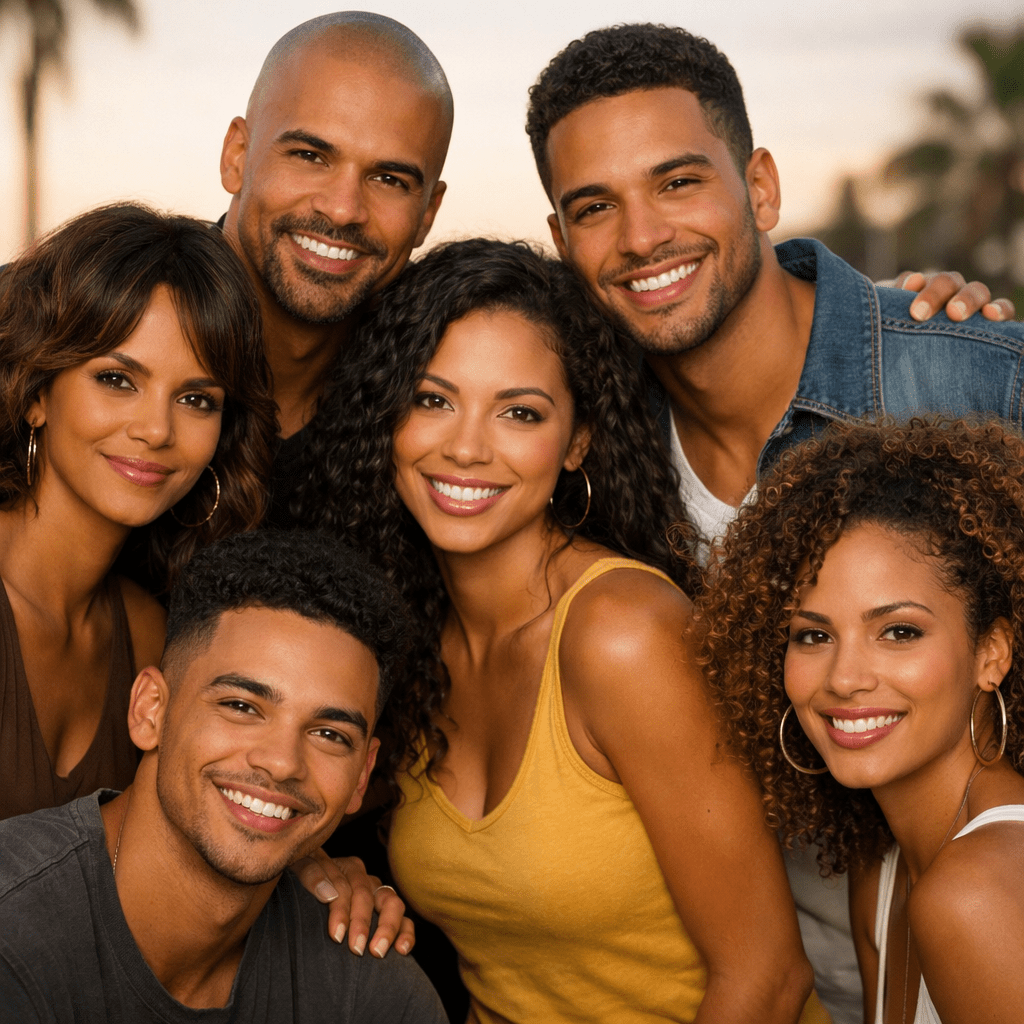
Biracial identity exists at the intersection of history, power, love, and survival. To be biracial is not merely to possess ancestry from two racial groups; it is to navigate a world that has long been obsessed with classification, hierarchy, and visual difference. The biracial experience exposes the artificiality of race while simultaneously revealing how deeply race structures social life.
Historically, biracial people did not emerge from a vacuum of harmony. In many societies—particularly in the Americas—biracial populations grew out of colonialism, enslavement, sexual violence, coercion, and unequal power relations. European colonization of Africa and the Americas produced racial mixing under conditions that were often violent and asymmetrical, leaving biracial descendants to inherit complex legacies rather than simple origin stories.
In the United States, the “one-drop rule” legally and socially erased biracial identity for centuries. Anyone with African ancestry was classified as Black, regardless of appearance or cultural upbringing. This rigid racial binary denied biracial people the right to self-definition and reinforced white supremacy by preserving racial purity narratives (Davis, 2001). Biracial identity, therefore, has always been political.
Modern biracial individuals often face a paradox: being hyper-visible and invisible at the same time. They may be exoticized for ambiguous features while simultaneously pressured to “choose a side.” This demand reflects society’s discomfort with complexity. Biracial people challenge the illusion that race is biological rather than social, revealing it instead as a constructed system maintained through perception and power.
Psychologically, biracial identity development can involve unique challenges. Research shows that biracial individuals often experience identity invalidation, social exclusion, and questioning of authenticity from both racial groups (Rockquemore & Brunsma, 2002). These experiences can lead to internal conflict, but they can also foster adaptability, cultural fluency, and critical awareness.
Media representation has played a significant role in shaping public perceptions of biracial people. Often portrayed as symbols of progress or “post-racial” society, biracial individuals are burdened with unrealistic expectations to reconcile racial divisions they did not create. This narrative obscures ongoing racism and places emotional labor on those already navigating complex identities.
Within the Black community, conversations around biracial identity are especially layered. Colorism, proximity to whiteness, and historical trauma influence how biracial people are perceived and received. While some biracial individuals benefit from lighter skin privilege, others are fully racialized as Black regardless of mixed ancestry. These dynamics reveal that privilege is not evenly distributed among biracial populations.
Culturally, biracial identity is not a monolith. A biracial person raised in a Black household may experience identity differently from someone raised in a white or multicultural environment. Language, neighborhood, religion, and socialization often matter more than genetics alone. Identity, therefore, is lived—not simply inherited.
Genetically, science confirms what sociology has long suggested: race has no biological foundation. Human genetic variation exists on a continuum, with more diversity within so-called racial groups than between them (Lewontin, 1972; Templeton, 2013). Biracial individuals embody this truth, challenging rigid racial thinking through their very existence.
Spiritually and ethically, biracial identity raises questions about belonging, unity, and human dignity. Many faith traditions affirm that humanity shares a common origin, contradicting ideologies that divide people by phenotype. From this perspective, biracial people are not anomalies but reminders of shared humanity.
In contemporary society, biracial individuals are increasingly claiming the right to self-definition. Rather than being boxed into externally imposed categories, many embrace fluid, contextual, and intersectional identities. This shift reflects a broader cultural reckoning with race, power, and history.
Ultimately, the biracial experience exposes both the cruelty and the creativity of human societies. It reveals how deeply people cling to racial boundaries—and how easily those boundaries are crossed. To understand biracial identity is to confront uncomfortable truths about history while imagining more honest, inclusive futures.
Biracial people do not exist to resolve racial tension or symbolize harmony. They exist because people did—and do—love, exploit, resist, survive, and endure. Their stories deserve complexity, respect, and truth.
References
Davis, F. J. (2001). Who is Black? One nation’s definition. Pennsylvania State University Press.
Lewontin, R. C. (1972). The apportionment of human diversity. Evolutionary Biology, 6, 381–398.
Rockquemore, K. A., & Brunsma, D. L. (2002). Beyond Black: Biracial identity in America. Sage Publications.
Templeton, A. R. (2013). Biological races in humans. Studies in History and Philosophy of Science Part C: Studies in History and Philosophy of Biological and Biomedical Sciences, 44(3), 262–271.
 THE BROWN GIRL DILEMMA