
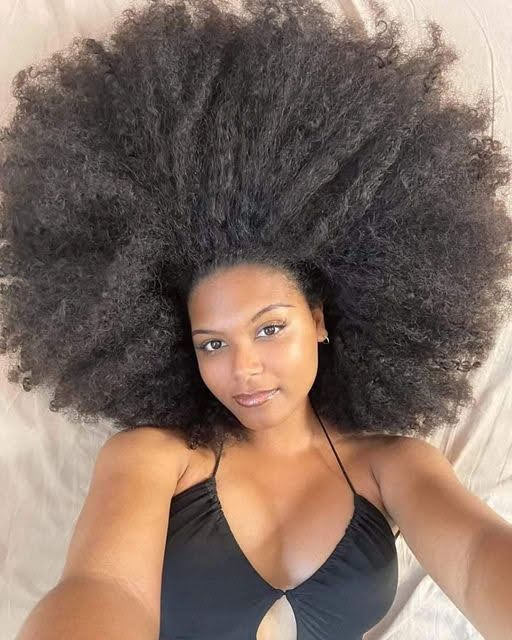
Black hair has always held profound significance, serving as a marker of identity, spirituality, and cultural heritage. In Africa, long before colonialism and slavery, hair was a crown of glory, symbolizing lineage, social status, and community belonging (Byrd & Tharps, 2014). For Black people, hair has never been merely aesthetic—it carries history, resistance, and sacred meaning.
In pre-colonial African societies, hair was a living language. Intricate braids, cornrows, and twists conveyed age, marital status, tribal affiliation, and even wealth (Banks, 2000). Hairstyling was often a communal ritual, strengthening social bonds and passing down ancestral knowledge from one generation to the next.
Biblical references further elevate the significance of hair. 1 Corinthians 11:15 (KJV) states, “If a woman have long hair, it is a glory to her: for her hair is given her for a covering.” For Black women, this verse resonates as a recognition of God’s gift, linking hair to divine identity and dignity.
The transatlantic slave trade violently disrupted African hair culture. Enslaved Africans were forced to shave their heads upon arrival in the Americas to erase tribal identities and assert control (Roach, 2018). Hair, once a source of pride, was weaponized as a tool of oppression.
During slavery, hair texture and style were stigmatized. Terms like “kinky” or “woolly” carried derogatory weight, while straightened textures were celebrated. This created layers of internalized racism and colorism that persist in the African diaspora (Thompson, 2009).
Despite oppression, Black hair became a form of resistance. Enslaved women braided escape routes into cornrows, transforming hairstyles into literal maps for freedom (Painter, 2006). Hair thus became a silent yet potent tool of survival and ingenuity.
In the post-slavery era, hair care emerged as a site of entrepreneurship and empowerment. Madam C.J. Walker, often cited as America’s first Black female millionaire, revolutionized hair care for Black women, blending beauty with economic independence (Walker, 1910). While some methods promoted straightening, the enterprise symbolized self-determination.
The 1960s and 1970s saw a radical reclamation of natural hair. The Afro emerged not just as a style but as a political statement aligned with the Civil Rights and Black Power movements. Wearing natural hair boldly rejected Eurocentric standards and asserted African heritage (Craig, 2002).
The natural hair movement also underscored self-love and cultural pride. Public figures and artists embraced their textures as a counter-narrative to centuries of discrimination, emphasizing that Black beauty is not defined by whiteness but by heritage and authenticity.
Black men’s hair has historically carried symbolic weight as well. Styles such as dreadlocks connected spiritual identity with biblical Nazarite traditions, as exemplified in Samson’s story (Judges 16:17, KJV). Hairstyle became a reflection of spiritual and cultural consciousness.
Despite progress, Black hair remains a contested space. Discrimination persists in workplaces and schools, with natural hairstyles often deemed “unprofessional.” The CROWN Act, legislated in several U.S. states, combats this hair-based discrimination, affirming that hair is not only cultural but also legal terrain (CROWN Act, 2019).
Social media has amplified cultural reclamation, providing platforms for tutorials, education, and storytelling. Sites like YouTube and TikTok have created virtual salons, where younger generations can learn protective styling, hair care, and embrace natural textures (Banks, 2000).
Culturally, Black hair has influenced music, film, and fashion, from the Afros of the 1970s to contemporary locs and twists. Icons such as Cicely Tyson, Erykah Badu, and Lupita Nyong’o have reshaped societal notions of beauty, making Black hair a visible emblem of pride (Thompson, 2009).
Hair is intertwined with spiritual symbolism. Isaiah 61:3 (KJV) promises beauty for ashes, suggesting that reclaiming one’s hair after oppression is a reflection of God’s restorative power. For many, embracing natural hair is an act of faith and spiritual resilience.
Throughout history, Black hair has navigated multiple pressures: assimilation, Eurocentric beauty standards, and societal prejudice. Yet it has remained a central marker of Black identity, resilience, and artistic expression.
Today, the diversity of Black hair textures and styles—from twists, braids, locs, and afros—represents freedom, creativity, and cultural continuity. Hair care practices have evolved, but the symbolism endures: hair is power, pride, and self-expression.
Black hair also plays a role in community and mentorship. Stylists pass down ancestral techniques, creating spaces where history, skill, and storytelling converge. Hair salons have historically functioned as cultural hubs for connection, resistance, and affirmation (Banks, 2000).
The history of Black hair reflects the broader African diaspora’s struggle and triumph. From forced shaving during slavery to today’s celebration of curls and locs, hair chronicles a journey from erasure to reclamation, from shame to glory.
In essence, Black hair is sacred, political, and cultural. It embodies resilience, identity, spirituality, and creativity. Hair is glory restored, a living testament to survival and divine beauty.
References
- Banks, I. (2000). Hair matters: Beauty, power, and Black women’s consciousness. NYU Press.
- Byrd, A., & Tharps, L. (2014). Hair story: Untangling the roots of Black hair in America. St. Martin’s Press.
- Craig, M. L. (2002). Ain’t I a beauty queen?: Black women, beauty, and the politics of race. Oxford University Press.
- CROWN Act. (2019). Creating a Respectful and Open World for Natural Hair. California State Legislature.
- Painter, N. I. (2006). Exodusters: Black migration to Kansas after Reconstruction. Knopf.
- Roach, M. (2018). Hair and identity in the African diaspora. Journal of Black Studies, 49(5), 435–456.
- Thompson, C. (2009). Black women, beauty, and hair: How hair matters in identity formation. Women’s Studies Quarterly, 37(3/4), 101–123.
- Walker, M. C. J. (1910). Secrets of success. Independent Business Publisher.
 THE BROWN GIRL DILEMMA