
A Scholarly and Biblical Reflection
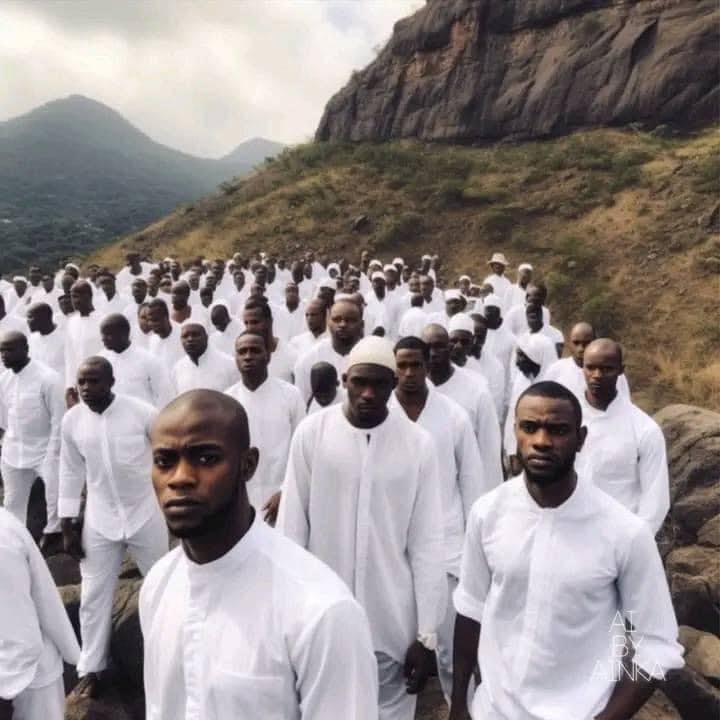
The story of Black people is a story of survival, resilience, and faith. It is a narrative that begins long before the transatlantic slave trade, rooted in the ancient civilizations of Africa. From the Nile Valley kingdoms to the bustling empires of West Africa, Black history is marked by contributions to science, governance, art, and spirituality. The chronicles of Black people must be told with both historical precision and spiritual reverence, for this is not merely a sociological story but a testament to God’s providence.
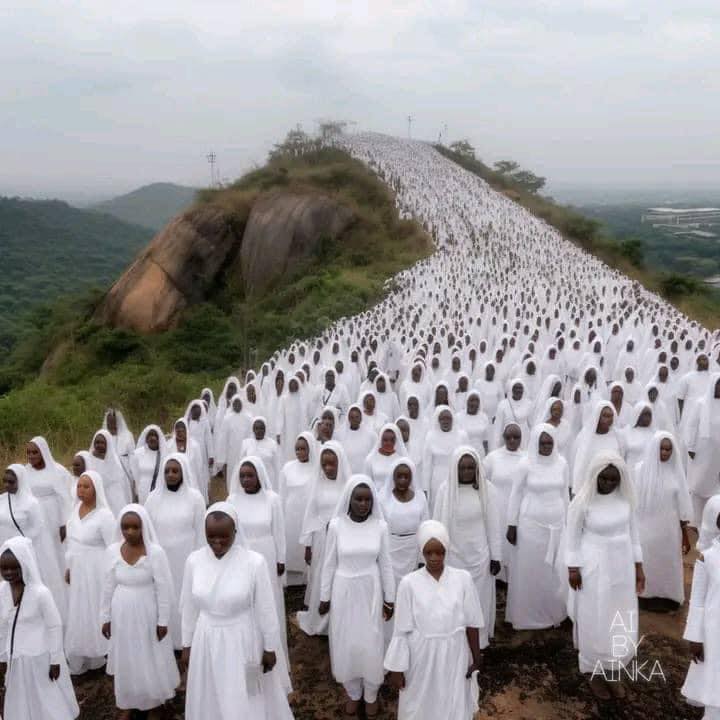
The Dispersion of the Israelites: From Jerusalem to Africa to the Americas
The destruction of Jerusalem in 70 AD marked a decisive turning point in the history of the descendants of Abraham, Isaac, and Jacob. The city’s fall under the Roman general Titus was catastrophic, shattering the center of Jewish religious and cultural life. The event is well documented by the first-century historian Flavius Josephus in The Wars of the Jews, where he recounts the siege, famine, and mass slaughter that befell the city. Over a million Jews perished, and tens of thousands were taken captive and sold into slavery across the Roman Empire.
Jesus had foretold this tragedy decades earlier. In Luke 21:20–24 (KJV), He warned: “And when ye shall see Jerusalem compassed with armies, then know that the desolation thereof is nigh… and they shall fall by the edge of the sword, and shall be led away captive into all nations.” This prophecy described both the violent fall of Jerusalem and the global scattering of the Hebrew people.
While some captives were sold into Roman markets and forced into gladiatorial games, others fled southward to escape the bloodshed. Historical and anthropological evidence suggests that many of these refugees crossed into Egypt and migrated further into the African interior, seeking refuge in areas beyond Roman control. This migration connected them to pre-existing Jewish communities in Africa, some of which dated back to the Babylonian exile (Ben-Jochannan, 1974).
Egypt became one of the first major destinations for fleeing Israelites. It was geographically close, and Egypt already had a significant Jewish population dating back to the time of Jeremiah (Jeremiah 43:7, KJV). From there, many continued their journey into regions like Nubia, Ethiopia, and eventually West Africa. This southward migration is critical to understanding the later presence of Hebrew communities in West and Central Africa by the time of European colonization.
Scholars of African history have traced the presence of Israelite-descended tribes among groups such as the Yoruba, Igbo, and Ashanti, noting parallels in circumcision practices, dietary laws, and names of God similar to Hebrew (Williams, 1930). Oral traditions among the Igbo, for instance, claim descent from “Eri,” a name associated with a son of Gad, one of the twelve tribes of Israel (1 Chronicles 7:7, KJV).
Deuteronomy 28:64 (KJV) foretold that disobedience to God’s covenant would result in scattering “from the one end of the earth even unto the other.” This scattering, or diaspora, became visible not only in the Middle East but across Africa. By the late medieval period, sizable populations of Israelite-descended people were living along the West African coast — precisely the regions where the transatlantic slave trade would later strike the hardest.
The transatlantic slave trade, beginning in the 15th century, represented the fulfillment of another sobering prophecy: Deuteronomy 28:68 (KJV): “And the LORD shall bring thee into Egypt again with ships… and there ye shall be sold unto your enemies for bondmen and bondwomen, and no man shall buy you.” The reference to ships is striking because the original enslavement in Egypt required no sea voyage. This indicated a new, future captivity involving maritime transport — which history now recognizes as the Middle Passage.
The Middle Passage was one of the most brutal chapters in human history. Africans — including descendants of those Israelite migrants — were shackled, crammed into ships, and subjected to horrific conditions. Mortality rates were staggering. Yet even in this, biblical prophecy was echoed: “Thy sons and thy daughters shall be given unto another people, and thine eyes shall look, and fail with longing for them all the day long” (Deuteronomy 28:32, KJV).
Once in the Americas, enslaved Africans were stripped of language, culture, and names. The erasure of identity fulfilled Psalm 83:4 (KJV): “They have said, Come, and let us cut them off from being a nation; that the name of Israel may be no more in remembrance.” The loss of cultural memory was intentional, designed to sever the people from their heritage and prevent rebellion.
Despite the oppression, faith survived. Many Africans retained fragments of Hebrew traditions, which fused with Christianity under enslavement. Spirituals like “Go Down, Moses” reflected the enslaved people’s identification with Israel in Egypt and their hope for divine deliverance.
Modern genetics has added another layer to this chronicle. Y-DNA haplogroup E1B1A, dominant among West and Central African men, has been linked by geneticists to lineages that originated in the Levant and Northeast Africa thousands of years ago (Chiaroni et al., 2009). This genetic marker supports the idea that many African-descended people in the Americas share ancestry with ancient Hebrew populations.
Psychologically, this historical trajectory inflicted deep trauma. Dr. Joy DeGruy (2005) describes this as Post-Traumatic Slave Syndrome, noting how the legacy of slavery has shaped family structures, identity, and mental health among descendants. Yet she also highlights resilience — the capacity to endure and rebuild despite generational wounds.
Biblically, the oppression of God’s people has never been the end of their story. Prophets foretold a regathering of Israel. Isaiah 11:11–12 (KJV) declares: “And it shall come to pass in that day, that the Lord shall set his hand again the second time to recover the remnant of his people… from Egypt, and from Pathros, and from Cush.” This points to a future restoration of those scattered into Africa.
Many scholars and theologians believe that the present-day awakening of African-descended people to their Hebraic identity is part of this prophetic fulfillment. This rediscovery is not merely academic — it is spiritual, calling descendants back to covenant faithfulness.
The cultural memory of Africa also remains important. Reconnecting to African languages, music, and traditions is a form of healing. It reclaims what colonization attempted to erase and reaffirms the dignity of a people made in God’s image (Genesis 1:27, KJV).
The Black church has historically been a space where this restoration work could take place. It has served as a vessel for memory, a hub for civil rights activism, and a platform for preaching hope. The church kept alive the dream of liberation when society denied it.
Economically, the descendants of these scattered Israelites continue to face systemic inequalities. Yet building generational wealth, pursuing education, and reclaiming land ownership align with biblical principles of restoration (Leviticus 25:10, KJV).
This chronicle also has a global dimension. Descendants of the transatlantic slave trade exist not only in the United States but in Brazil, the Caribbean, Central America, and beyond. Each community preserves pieces of the ancestral puzzle that, when put together, reveal a shared heritage.
Spiritually, there is a call to return to the God of Abraham, Isaac, and Jacob — to seek Him with all the heart. Deuteronomy 30:3–4 (KJV) promises that if Israel returns, “the LORD thy God will turn thy captivity, and have compassion upon thee… and will return and gather thee from all the nations.”
The story is therefore not one of perpetual despair but of divine restoration. God has preserved a remnant through centuries of scattering and oppression. Today’s rediscovery of identity is a signpost that the prophetic timeline is moving toward completion.
In conclusion, the journey of the descendants of Abraham, Isaac, and Jacob from Jerusalem to Africa to the Americas is one of tragedy, endurance, and hope. It fulfills both biblical prophecy and historical record. The same God who allowed the scattering also promises the gathering. The chronicles of this people are not finished — they continue to unfold as a testimony of divine faithfulness.
Africa is widely regarded as the cradle of civilization. Archaeological and genetic evidence point to early human development on the African continent (Stringer, 2016). The great kingdoms of Egypt, Kush, Mali, Ghana, and Songhai demonstrate that Africa was not a passive participant in history but a leader in early advancements. The Bible itself situates Africa within the redemptive story. Egypt (Mizraim), Ethiopia (Cush), and Libya (Put) are mentioned throughout Scripture, affirming that Africa was never on the periphery of God’s plan (Genesis 10:6-7, KJV).
The Hebrew Scriptures frequently reference Cush and its people with honor. The prophet Amos asks, “Are ye not as children of the Ethiopians unto me, O children of Israel?” (Amos 9:7, KJV). This verse reminds us that Blackness was never a mark of inferiority in the biblical narrative but part of God’s diverse creation. Moses married a Cushite woman (Numbers 12:1, KJV), and when Miriam spoke against her, God punished Miriam with leprosy — a divine rebuke against prejudice.
Despite this rich heritage, the colonization of Africa disrupted cultural memory. European imperial powers divided Africa’s resources and enslaved millions of its people, initiating one of the most devastating forced migrations in history. The transatlantic slave trade ripped families apart and subjected African men, women, and children to centuries of dehumanization (Thornton, 1998). Yet even in the holds of slave ships, faith survived. Spiritual songs and oral traditions became a way to encode hope and resistance.
The Middle Passage was one of the most horrific chapters in human history. Enslaved Africans endured overcrowded, disease-ridden ships where death was common. Yet many sang songs to God, cried out for deliverance, and clung to ancestral prayers. Psalm 137:1-4 (KJV) captures this sentiment: “By the rivers of Babylon, there we sat down, yea, we wept, when we remembered Zion.” For many, Africa became their Zion — a lost homeland.
On the plantations of the Americas, Black people forged a theology of survival. They identified with Israel in Egypt, believing that God would one day send a Moses to deliver them. The spiritual “Go Down, Moses” was not merely a song but a coded declaration of faith and hope. This is the birth of the Black church — the first autonomous institution for African Americans and a cornerstone of cultural preservation and liberation theology (Raboteau, 2004).
The Black church became a center of education, community organizing, and political mobilization. It taught enslaved and freed people to read, often beginning with the Bible. It was here that enslaved Africans learned that the God of Scripture heard the cry of the oppressed (Exodus 3:7, KJV). This knowledge empowered them to resist oppression and to fight for freedom.
The Emancipation Proclamation of 1863 did not end the struggle but opened a new chapter. Reconstruction was a period of rebuilding, yet white supremacist terror sought to erase Black progress through lynchings, Jim Crow laws, and systemic disenfranchisement (Litwack, 1998). Despite this, Black people built schools, businesses, and thriving communities such as Tulsa’s Greenwood District — known as “Black Wall Street.”
The destruction of Black Wall Street in the 1921 Tulsa Massacre illustrates the lengths to which white supremacy would go to crush Black economic independence. But even after this devastation, the spirit of Black entrepreneurship persisted. The chronicles of Black people show that each time they were pushed down, they rose again.
The Harlem Renaissance of the 1920s and 1930s represented a cultural reawakening. Writers like Langston Hughes, Zora Neale Hurston, and Claude McKay celebrated Black life, art, and identity. Jazz and blues became global art forms, showcasing the genius of Black creativity. This was a time of reclaiming dignity and rewriting the narrative of Black existence.
Psychologists argue that this reclaiming of cultural pride is vital for collective healing (Cross, 1991). Internalized racism and generational trauma can only be countered by affirming the value and beauty of Black identity. This is why movements such as “Black is Beautiful” in the 1960s were so revolutionary — they directly challenged centuries of psychological conditioning that taught Black people to despise themselves.
The Civil Rights Movement of the 1950s and 1960s was a modern-day Exodus. Leaders such as Dr. Martin Luther King Jr. drew explicitly from Scripture, declaring that justice would “roll down like waters” (Amos 5:24, KJV). Rosa Parks’ quiet defiance sparked a movement that changed the course of American history. Freedom was not handed over — it was fought for with blood, sweat, and prayer.
Globally, the chronicles of Black people include the fight against apartheid in South Africa, led by Nelson Mandela and Desmond Tutu. Their vision of reconciliation reminds us that liberation is not just about political freedom but about healing the soul of a nation. This mirrors Christ’s teaching on forgiveness and peacemaking (Matthew 5:9, KJV).
Today, Black people continue to face systemic racism, police brutality, and economic inequality. Movements like Black Lives Matter have emerged as a modern prophetic voice, declaring that Black life is sacred and must be protected. These movements echo the biblical cry for justice: “Learn to do well; seek judgment, relieve the oppressed” (Isaiah 1:17, KJV).
The chronicles of Black people also celebrate contributions to science, medicine, and technology. Figures like Dr. Charles Drew (blood banking pioneer), Katherine Johnson (NASA mathematician), and George Washington Carver (agricultural innovator) remind the world that Black brilliance is boundless.
The psychological toll of oppression cannot be ignored. Intergenerational trauma affects mental health, creating cycles of poverty and pain (DeGruy, 2005). Yet faith remains a powerful coping mechanism. Prayer, church fellowship, and cultural rituals provide a framework for resilience and post-traumatic growth.
One of the most beautiful elements of the Black chronicle is the music. Spirituals, gospel, blues, hip-hop, and Afrobeats all carry a spiritual and cultural memory. These art forms express lament, hope, joy, and resistance — much like the Psalms of David. They remind us that joy is an act of defiance in the face of suffering (Psalm 30:5, KJV).
Another vital thread is the restoration of African history and genealogy. DNA testing has allowed many to trace their roots back to specific tribes and regions in Africa, reestablishing a sense of belonging. This mirrors the biblical importance of genealogy in affirming identity (Matthew 1:1-17, KJV).
Education remains a battleground. Efforts to suppress Black history in schools are attempts to silence the chronicles of Black people. But God commands His people to remember and teach future generations (Deuteronomy 6:7, KJV). Preserving history is an act of obedience and survival.
Economically, supporting Black businesses and practicing financial literacy are modern forms of resistance. Proverbs 13:22 (KJV) declares, “A good man leaveth an inheritance to his children’s children.” Building generational wealth is a way to break the cycles of systemic poverty.
Spiritually, the chronicle calls for faithfulness. It is not enough to remember the past; there must be a commitment to living in righteousness and seeking God’s kingdom (Matthew 6:33, KJV). Black people have always been a deeply spiritual people, and this must remain central to the path forward.
Ultimately, the chronicles of Black people testify to a God who sustains His children. Through slavery, segregation, and suffering, He has preserved a remnant who continue to sing, create, build, and resist. The story is not over — it is still being written by a new generation determined to walk in freedom.
The final chapter will be one of restoration. Revelation 7:9 (KJV) envisions a great multitude “of all nations, and kindreds, and people, and tongues” standing before the throne. In that day, Blackness will no longer be despised but celebrated as part of the redeemed tapestry of humanity.
References
- Cross, W. E. (1991). Shades of Black: Diversity in African-American Identity. Temple University Press.
- DeGruy, J. (2005). Post Traumatic Slave Syndrome: America’s Legacy of Enduring Injury and Healing. Joy DeGruy Publications.
- Litwack, L. F. (1998). Trouble in Mind: Black Southerners in the Age of Jim Crow. Vintage.
- Raboteau, A. J. (2004). Slave Religion: The “Invisible Institution” in the Antebellum South. Oxford University Press.
- Stringer, C. (2016). The origin and evolution of Homo sapiens. Philosophical Transactions of the Royal Society B, 371(1698).
- Thornton, J. (1998). Africa and Africans in the Making of the Atlantic World, 1400-1800. Cambridge University Press.
- Ben-Jochannan, Y. A. A. (1974). Africa: Mother of Western Civilization. Alkebu-Lan Books.
- Chiaroni, J., Underhill, P. A., & Cavalli-Sforza, L. L. (2009). Y chromosome diversity, human expansion, drift, and cultural evolution. PNAS, 106(48), 20174–20179.
- Josephus, Flavius. (75 AD). The Wars of the Jews.
- Williams, J. (1930). Hebrewisms of West Africa. Lushena Books.
- The Holy Bible, King James Version.






 THE BROWN GIRL DILEMMA