
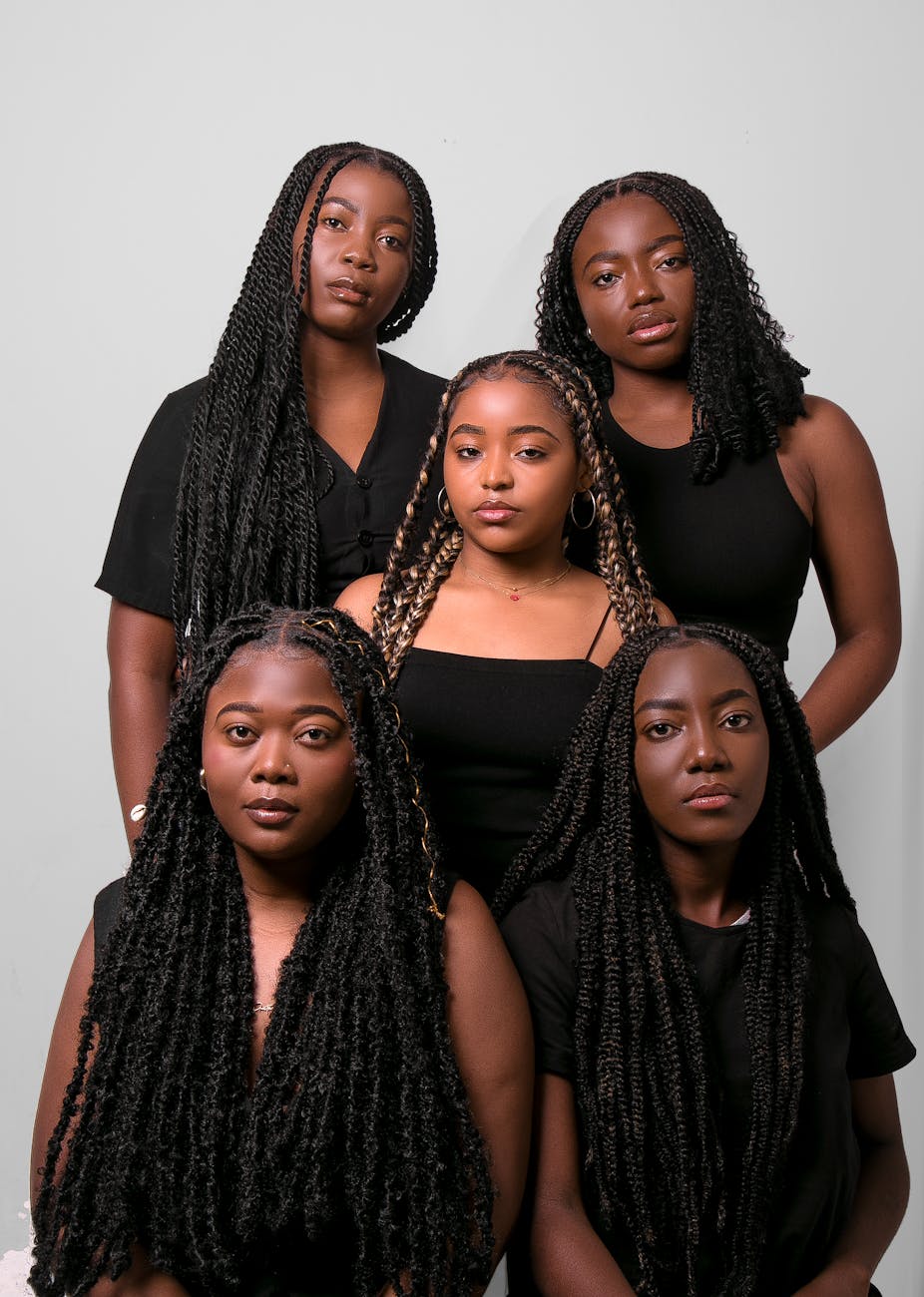
What Is Featurism?
Featurism is a form of discrimination based on the preference for certain facial features over others, often rooted in Eurocentric beauty standards. Coined by author and scholar Dr. Chika Okeke-Agulu, featurism refers specifically to how people—especially within racially marginalized communities—are treated based on how closely their features align with dominant ideals of attractiveness. In the context of the Black community, this means that features like smaller noses, lighter eyes, finer bone structures, and looser hair textures are often favored over broader noses, tightly coiled hair, and darker skin tones.
Featurism overlaps with colorism and texturism, but it is distinct in its focus on facial characteristics. This discrimination often occurs intraracially, meaning that Black people themselves may prefer, praise, or uplift individuals who embody more “European” features while subtly or overtly devaluing others who possess typically African traits.
How Featurism Affects the Black Community
Featurism reinforces internalized racism and perpetuates low self-esteem, especially in Black children and women. The media, family, school, and even dating preferences often communicate the message that “certain Black looks” are more desirable than others. For example, a Black woman with a slim nose and curly, looser-textured hair may be seen as more attractive or “marketable” than one with a wide nose, fuller cheeks, or tightly coiled hair.
This hierarchical valuing of features can:
- Impact mental health, leading to anxiety, shame, and body dysmorphia.
- Influence economic opportunities, especially in entertainment, modeling, and corporate environments.
- Undermine community solidarity, creating divisions between those who “look more African” and those who are perceived as “closer to white.”
The Universal Standard of Beauty
Historically, the so-called universal standard of beauty has been built on Eurocentric ideals: light skin, straight or loosely curled hair, small noses, large eyes, and symmetrical facial structure. This standard was exported globally through colonialism, media imperialism, and Western consumerism.
As a result, features such as:
- Big eyes
- Small or narrow noses
- Full but controlled lips
- Smooth, light or olive-toned skin
…have become globally preferred. Even in non-European cultures, beauty standards have been shaped to reflect these traits. For example, in Asia and Latin America, skin-lightening and nose-narrowing are multi-billion-dollar industries.
Quotes on Featurism and Beauty
- Audre Lorde: “If I didn’t define myself for myself, I would be crunched into other people’s fantasies for me and eaten alive.”
- Lupita Nyong’o: “I remember a time when I too felt unbeautiful. I put on the TV and only saw pale skin. I got teased and taunted about my night-shaded skin… And my one prayer to God was that I would wake up lighter-skinned.”
- Dr. Yaba Blay: “We have internalized these standards of beauty to the point that we police each other and ourselves. That’s the tragedy of featurism and colorism.”
When Was the Term Featurism Introduced?
The term featurism gained popularity through cultural critics and writers in the early 2000s, although it had been discussed implicitly in literature and sociology for decades. Scholar Chika Okeke-Agulu and writer Michaela Angela Davis were among the early voices to articulate it explicitly in relation to Black identity and intraracial discrimination. More recently, featurism has been analyzed alongside terms like “texturism” and “colorism” as part of a broader critique of anti-Black beauty hierarchies.
Are Wider Noses and Fuller Lips Undesirable?
While wider noses and fuller lips are traditionally African features and should be celebrated, they have been historically stigmatized in Western and colonial societies. Black people were often caricatured in minstrel shows, cartoons, and racist scientific journals as having “animalistic” or “primitive” traits, particularly wide noses and big lips.
Yet, ironically, in the modern beauty market, these features have been appropriated and commercialized. Full lips, for instance, are now in high demand—thanks in part to cosmetic enhancements and social media trends. However, when these features appear on Black people, they are still frequently subjected to ridicule, while the same traits on non-Black individuals are praised.
This double standard further illustrates the power dynamics of race and beauty: it’s not the feature itself, but who is wearing it.
How Were Black People Conditioned to Think White Features Are Superior?
The belief in the superiority of white features is a byproduct of colonialism, slavery, and white supremacy. Enslaved Africans were taught—through violence, religion, and visual culture—that whiteness was synonymous with purity, intelligence, and power, while Blackness symbolized sin, ugliness, and inferiority.
In post-slavery society, these beliefs were perpetuated by:
- European beauty ads and magazines
- Hollywood and media portrayals of beauty
- Intergenerational trauma and colorist family dynamics
- Colonial education systems that promoted Eurocentric aesthetics and erased African identities
Conclusion: Toward a Reclamation of African Beauty
Featurism is not just about beauty—it’s about power. The ability to define what is “beautiful” is inseparable from cultural dominance. As the Black community continues to reclaim its voice, hair, skin, and heritage, it must also decolonize its ideas about what features are beautiful. African features are not a curse to be erased, but a legacy to be honored.
Celebrating broad noses, full lips, tightly coiled hair, and rich melanin is not just an act of self-love—it is an act of resistance against a system that once tried to erase us.
References
- Blay, Y. (2011). (1)ne Drop: Shifting the Lens on Race. BLACKprint Press.
- Lorde, A. (1984). Sister Outsider: Essays and Speeches. Crossing Press.
- Nyong’o, L. (2014). Speech at the Essence Black Women in Hollywood Luncheon.
- Pilgrim, D. (2012). The Brute Caricature. Jim Crow Museum of Racist Memorabilia. Ferris State University.
- Tate, S. A. (2009). Black Beauty: Aesthetics, Stylization, Politics. Ashgate.
- Okeke-Agulu, C. (2005). Postcolonial Modernism: Art and Decolonization in Twentieth-Century Nigeria. Duke University Press.
 THE BROWN GIRL DILEMMA