
“Let the world see what they did to my boy.”
— Mamie Till-Mobley, mother of Emmett Till
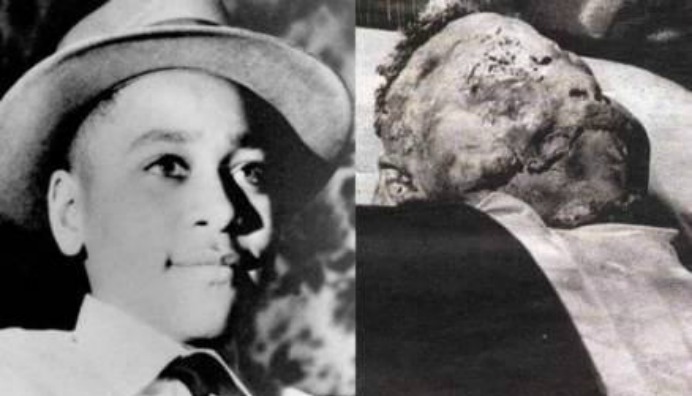
The Face of Deception: Revisiting the Lynching of Emmett Till and the Lie That Cost a Life
In one of the most chilling and defining moments of the American civil rights movement, 14-year-old Emmett Louis Till became a symbol of racial injustice, brutality, and the deadly consequences of false accusations. In 1955, a white woman, Carolyn Bryant Donham, falsely accused the teenager of making inappropriate advances toward her—a lie that ultimately led to his abduction, torture, and lynching at the hands of her husband and his half-brother.
The truth behind that lie would not fully surface for more than six decades.
A Lie That Cost a Life
In the summer of 1955, Emmett Till traveled from his hometown of Chicago, Illinois to Money, Mississippi, to visit relatives. While there, he entered Bryant’s Grocery and Meat Market, where he encountered Carolyn Bryant, a 21-year-old white woman and the wife of store owner Roy Bryant.
What happened next has been the subject of myth, outrage, and decades of distortion. Carolyn Bryant initially claimed that Till had made lewd remarks, grabbed her hand, and whistled at her—an unthinkable offense in the Jim Crow South, where racial segregation and white supremacy ruled.
Three nights later, Roy Bryant and his half-brother, J.W. Milam, forcibly entered the home of Till’s great-uncle, Mose Wright, and abducted Emmett at gunpoint. Till was brutally beaten, tortured, shot in the head, and his mutilated body was tied with barbed wire to a 75-pound cotton gin fan and dumped in the Tallahatchie River. His corpse was discovered three days later.
When Emmett’s body was returned to Chicago, his mother, Mamie Till-Mobley, made the courageous decision to hold an open-casket funeral, stating, “I wanted the world to see what they did to my boy.”
Photos of Till’s disfigured face, published in Jet Magazine, shocked the nation and galvanized the growing civil rights movement.
Decades Later: The Confession of a Lie
In 2007, author Timothy B. Tyson, while researching for his book The Blood of Emmett Till (Simon & Schuster, 2017), interviewed Carolyn Bryant Donham, who for the first time admitted that parts of her original story were untrue. She confessed that Emmett Till never physically touched or threatened her. Tyson wrote:
“She said, ‘Nothing that boy did could ever justify what happened to him.’“
This admission came more than 50 years too late. Neither Roy Bryant nor J.W. Milam ever faced justice; in fact, they openly confessed to the murder in a paid interview with Look Magazine in 1956, after being acquitted by an all-white jury. Double jeopardy laws protected them from being retried.
Donham’s late-life admission confirms what Black Americans had long known—that a white woman’s false testimony could mean a Black boy’s death, with impunity. The tragic irony is that justice was not delayed—it was denied.
A Pattern Still Seen Today
While Emmett Till’s story occurred nearly 70 years ago, it echoes in the modern era. The pattern of young Black men being killed due to suspicion, fear, or false accusation remains tragically relevant. From Trayvon Martin to Ahmaud Arbery, the legacy of racialized violence continues.
False accusations from white women have had lasting, deadly consequences—not just in the 20th century, but throughout American history. The archetype of the “dangerous Black man” and the “damsel in distress” has been weaponized to justify lynchings, wrongful imprisonments, and systemic injustice.
Even today, we are reminded that accountability for racial violence is rare, and white supremacy often wears a deceptively polite face.
The Historical Significance
The murder of Emmett Till became a catalyst for the civil rights movement. Just 100 days after his death, Rosa Parks refused to give up her seat on a segregated bus in Montgomery, Alabama, later saying:
“I thought of Emmett Till, and I couldn’t go back.”
His story is not just a tale of brutality; it is a reminder of the importance of truth, memory, and resistance. Carolyn Bryant Donham died in 2023, never having faced charges, but the truth she tried to suppress lives on—and so does the movement Emmett inspired.
Conclusion: A Legacy That Demands Remembrance
To forget Emmett Till is to repeat the sins of the past. His death was not merely a result of racism, but of a deliberate lie—a lie told by a woman whose conscience may have long been seared by guilt, yet who lived free while his mother buried her only son.
As Mamie Till-Mobley urged, “Let the world see.” We must continue to see, to remember, and to demand justice not only for Emmett, but for every victim of racial injustice past and present.
References:
- Tyson, Timothy B. The Blood of Emmett Till. Simon & Schuster, 2017.
- Devery S. Anderson. Emmett Till: The Murder That Shocked the World and Propelled the Civil Rights Movement. University Press of Mississippi, 2015.
- Jet Magazine, Sept. 15, 1955 – Funeral photos.
- Look Magazine, January 1956 – Interview with Milam and Bryant.
- Vanity Fair. “The Woman Who Killed Emmett Till.” Jan 26, 2017.
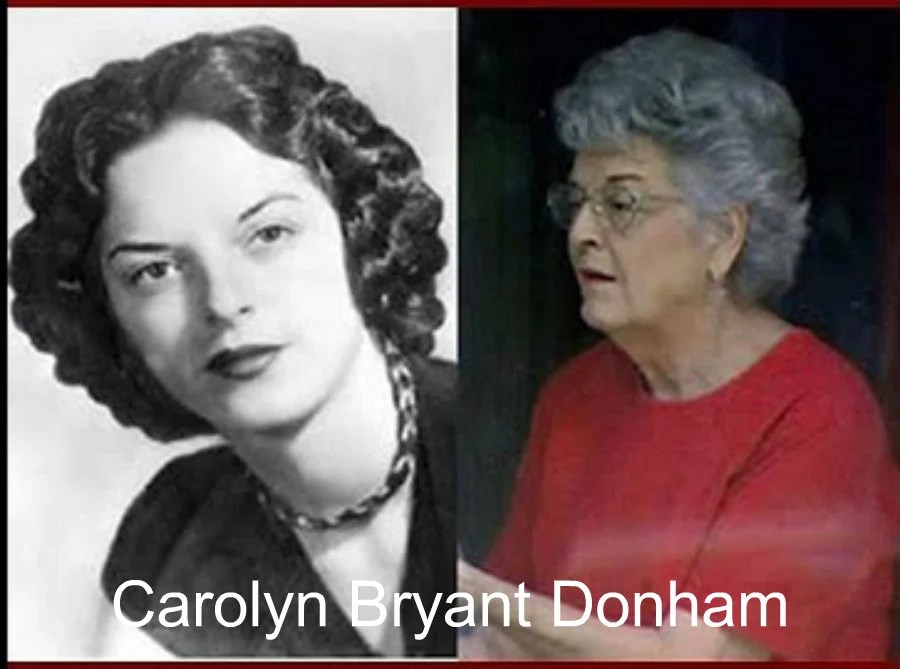
Carolyn Donham accused Emmet Till of flirting with her in 1955 revealing for the first time that those claims were fabricated.
r
 THE BROWN GIRL DILEMMA