
Tag Archives: Egypt

Egypt: The Place of Bondage — Is it Babylon?

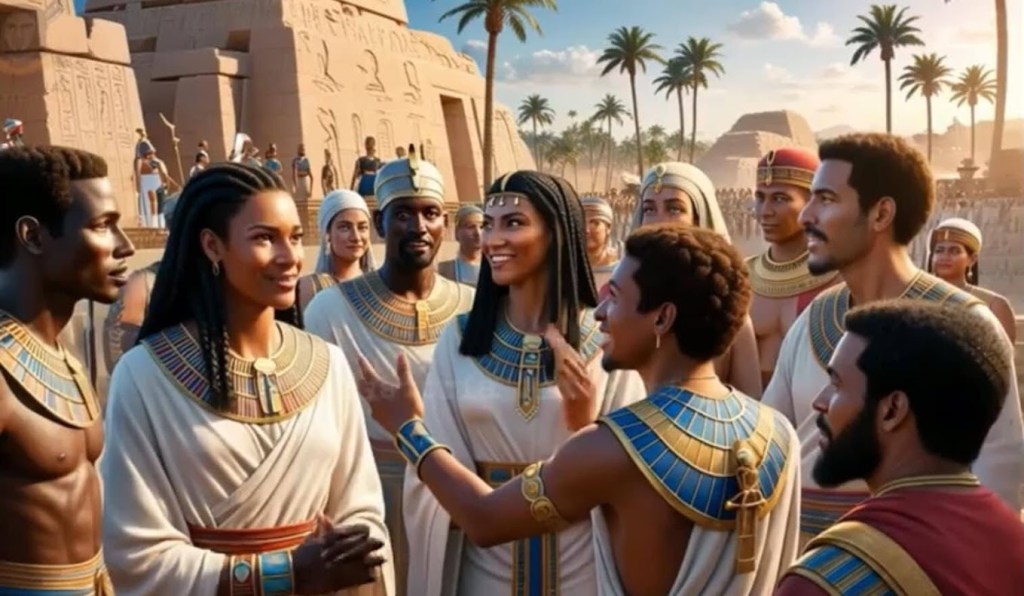
In the Bible, Egypt (Hebrew: Mitzrayim) is often used symbolically as the place of bondage, suffering, and enslavement for the children of Israel. Literally, it refers to the land where Israel was enslaved under Pharaoh until God delivered them through Moses (Exodus 12–14). However, later biblical writers often used “Egypt” metaphorically to represent any place of oppression and captivity.

For example, Deuteronomy 28:68 (KJV) says:

“And the Lord shall bring thee into Egypt again with ships, by the way whereof I spake unto thee, thou shalt see it no more again: and there ye shall be sold unto your enemies for bondmen and bondwomen, and no man shall buy you.”

This prophecy has been interpreted by many, especially within Black Hebraic and Israelite circles, as pointing not just to literal Egypt, but to a second bondage — one involving ships, mass enslavement, and dispersal. The transatlantic slave trade is often connected to this verse because millions of Africans were taken in slave ships and sold across the Americas.


Babylon: Symbol of Captivity

Babylon, on the other hand, represents a different type of bondage in Scripture. The historical Babylon was where Judah was exiled after the Babylonian conquest (2 Kings 25). Spiritually, Babylon is often used in the Bible as a symbol of worldly power, idolatry, and moral corruption. In Revelation, “Mystery Babylon” is described as a global power that seduces nations and persecutes the saints (Revelation 17–18).

Thus, Babylon often symbolizes spiritual captivity — being under the influence of a corrupt, ungodly world system — while Egypt often symbolizes physical captivity and hard labor.


Egypt and Babylon in Prophecy

Isaiah 52:4 (KJV) says:

“Thus saith the Lord God, My people went down aforetime into Egypt to sojourn there; and the Assyrian oppressed them without cause.”

This shows that God saw Egypt and later oppressors as part of the same narrative: foreign domination of His people.

Revelation 11:8 (KJV) offers a fascinating connection:

“And their dead bodies shall lie in the street of the great city, which spiritually is called Sodom and Egypt, where also our Lord was crucified.”

Here, Egypt is used spiritually to describe a future place of bondage. Some interpreters suggest that the modern systems of oppression, mass incarceration, debt slavery, and economic exploitation are a type of spiritual Egypt — a continuation of that same cycle of bondage.


Egypt vs. Babylon: A Biblical Comparison

AspectEgypt (Mitzrayim)Babylon
Meaning“Mitzrayim” in Hebrew means “narrow place, straits” — a place of confinement.“Babel/Babylon” means “confusion by mixing” — a place of spiritual corruption.
Historical RolePhysical place of slavery where Israel was held in bondage under Pharaoh (Exodus 1–14).Ancient empire that conquered Judah and exiled its people (2 Kings 25).
SymbolismRepresents physical captivity, forced labor, oppression, and hardship.Represents spiritual captivity, idolatry, worldliness, and moral decay.
Key ScriptureExodus 20:2 – “I am the LORD thy God, which have brought thee out of the land of Egypt, out of the house of bondage.”Revelation 17–18 – “Mystery, Babylon the Great, the Mother of Harlots and Abominations of the Earth.”
Prophetic MeaningIn Deuteronomy 28:68, Egypt can symbolize a future return to bondage, often linked to slavery via ships (transatlantic slave trade).In Revelation, Babylon is seen as a future or present global system of economic and spiritual oppression.
Form of BondagePhysical — slavery, chains, forced labor, economic exploitation (sharecropping, prison labor).Spiritual — false religion, cultural indoctrination, economic control, moral confusion.
Modern ParallelsDebt slavery, mass incarceration, racial oppression, systemic poverty.Consumerism, secularism, media manipulation, moral compromise.
End-Times RoleRepresents the final “house of bondage” from which God’s people must be delivered (Deut. 30:3).Represents the world empire God will judge before the Kingdom is restored (Rev. 18:2–4).
Call to ActionExodus 3:10 – “Come now therefore, and I will send thee unto Pharaoh, that thou mayest bring forth my people…” (Deliverance from oppression).Revelation 18:4 – “Come out of her, my people, that ye be not partakers of her sins…” (Separation from spiritual corruption).

This chart makes it clear that Egypt = physical bondage and Babylon = spiritual/worldly bondage — and that both still exist in different forms today.

Hebraic-Israelite Perspective

Many teachers in the Israelite movement equate Egypt in Deuteronomy 28 with America (or the West in general), viewing it as the modern “house of bondage.” Similarly, they sometimes equate America with “Mystery Babylon” in Revelation, because it is seen as a dominant empire that exports culture, idolatry, and economic exploitation worldwide.

From this view, Egypt = the condition of physical bondage, while Babylon = the system of spiritual, economic, and cultural captivity. Together, they describe both the external and internal struggles of the children of Israel in the modern era.


Summary

  • Egypt (Mitzrayim) = The house of bondage (Exodus 20:2), symbolizing physical slavery and hard labor.
  • Babylon = Spiritual captivity, idolatry, and global oppression, as seen in Revelation’s “Mystery Babylon.”
  • Today’s world can be seen as both Egypt (economic bondage through debt, wage slavery, mass incarceration) and Babylon (spiritual and cultural enslavement through media, moral decay, and false worship).

In short, Egypt in prophecy represents the condition of oppression, and Babylon represents the system of oppression. They overlap in meaning — both point to captivity, but one is physical and one is spiritual.

References

Biblical References

  • Exodus 1–14 – Narrative of Israel’s bondage in Egypt and deliverance through Moses.
  • Exodus 20:2 (KJV) – “I am the LORD thy God, which have brought thee out of the land of Egypt, out of the house of bondage.”
  • Deuteronomy 28:68 (KJV) – Prophecy of returning to Egypt “again with ships.”
  • Isaiah 52:4 (KJV) – Mentions Israel’s oppression in Egypt and by Assyria.
  • 2 Kings 25 – Historical account of Judah’s exile to Babylon.
  • Jeremiah 50:8 (KJV) – “Remove out of the midst of Babylon, and go forth out of the land of the Chaldeans.”
  • Revelation 11:8 (KJV) – Describes the “great city… spiritually called Sodom and Egypt.”
  • Revelation 17–18 (KJV) – Prophecy concerning Mystery Babylon and her final destruction.
  • Revelation 18:4 (KJV) – “Come out of her, my people, that ye be not partakers of her sins…”

Scholarly & Theological Sources

  • Assmann, J. (1997). Moses the Egyptian: The memory of Egypt in Western monotheism. Harvard University Press.
  • Collins, J. J. (2016). The Bible after Babel: Historical criticism in a postmodern age. Eerdmans.
  • Hayes, J. H., & Holladay, C. R. (2007). Biblical exegesis: A beginner’s handbook (3rd ed.). Westminster John Knox Press.
  • Keener, C. S. (2014). Revelation (NIV Application Commentary). Zondervan.
  • Wright, N. T. (2012). How God became King: The forgotten story of the Gospels. HarperOne.
  • Walton, J. H. (2006). Ancient Near Eastern thought and the Old Testament. Baker Academic.

The Bible Series: Joseph’s Journey – Integrity in the Face of Temptation.

Joseph, son of Jacob, is one of the most remarkable figures in the Old Testament, celebrated for his steadfast integrity, unwavering faith, and divine insight. His life illustrates the intersection of human vulnerability and God’s providence, revealing how integrity can sustain one through trials, temptation, and betrayal. Joseph’s journey begins in Canaan, as the favored son of Jacob, where his early dreams of prominence foreshadowed a destiny shaped by divine orchestration (Genesis 37:3-11, KJV).

The beauty of Joseph, as described in Scripture, was not merely physical. Genesis 39:6 (KJV) notes that “the LORD blessed the Egyptian’s house for Joseph’s sake; and the blessing of the LORD was upon all that he had in the house, and in the field.” His countenance, demeanor, and charisma reflected a harmony of spiritual favor and personal presence. This external attractiveness was intertwined with moral and spiritual virtues, making him admired by those around him while simultaneously inciting envy.

Joseph’s beauty and favored status with his father generated jealousy among his brothers. Their resentment led to betrayal: Joseph was sold into slavery, stripped of familial protection, and sent to Egypt (Genesis 37:28, KJV). From the outset, Joseph’s life demonstrates a paradox familiar to many of God’s faithful: blessings can attract both opportunity and opposition. His response to betrayal set the tone for the integrity that would define his journey.

In Egypt, Joseph’s initial trials were compounded by Potiphar’s household. Despite being a slave in a foreign land, he quickly distinguished himself through diligence, wisdom, and reliability (Genesis 39:4, KJV). His integrity was evident in his work ethic and his ability to maintain trust, establishing his reputation for righteousness. Joseph’s commitment to ethical conduct, even in servitude, exemplifies the principle that integrity is not situational but rooted in character.

The pivotal test of Joseph’s moral fortitude came through temptation. Potiphar’s wife attempted to seduce him repeatedly, but Joseph steadfastly resisted, declaring, “How then can I do this great wickedness, and sin against God?” (Genesis 39:9, KJV). This declaration highlights the inseparable link between faith and moral action. Joseph’s refusal was not merely a personal decision; it was an affirmation of his loyalty to God above human desire.

Joseph’s rejection of sin had immediate consequences. Falsely accused, he was imprisoned despite his innocence (Genesis 39:20, KJV). Yet even in confinement, Joseph’s integrity and divine favor were evident. He quickly gained the trust of the prison keeper and earned responsibility over all inmates, demonstrating that virtuous character transcends circumstance (Genesis 39:22-23, KJV).

The narrative of Joseph illustrates a recurrent biblical theme: integrity often carries cost but yields long-term reward. While betrayal and false accusation caused temporary suffering, these challenges positioned Joseph for greater divine purpose. The testing of his character cultivated patience, wisdom, and humility—qualities necessary for leadership in the broader trajectory of God’s plan (Genesis 41:39-41, KJV).

Joseph’s gift of interpreting dreams was another arena in which integrity intersected with divine favor. When he accurately interpreted the dreams of Pharaoh’s cupbearer and baker, his insight reflected spiritual discernment and reliance on God rather than self-interest (Genesis 40:8, KJV). His interpretations were not for personal gain but a faithful service to God, a hallmark of his unwavering moral compass.

The story emphasizes the theme of providence. Although Joseph’s brothers acted out of malice, God’s hand was evident in every event, preparing Joseph for leadership over Egypt and the preservation of Israel during famine (Genesis 50:20, KJV). Joseph’s integrity, patience, and moral clarity enabled him to serve effectively, demonstrating that ethical steadfastness aligns with divine destiny.

In the broader context of temptation, Joseph’s life is instructive for understanding the relationship between desire, discipline, and divine alignment. Resisting immediate gratification or ethical compromise often requires foresight, trust, and moral courage. Joseph’s ability to maintain integrity in the face of repeated provocations exemplifies a spiritual principle that transcends historical and cultural context.

Joseph’s life also illustrates the interplay between humility and influence. Despite his elevated position, he consistently attributed success to God rather than personal skill or cunning (Genesis 41:16, KJV). Integrity in leadership, as Joseph demonstrates, involves recognizing one’s dependence on divine guidance while exercising authority responsibly.

His relationship with his brothers later reveals the transformative power of integrity. Rather than seeking revenge, Joseph extended forgiveness and provision during famine (Genesis 45:4-11, KJV). His ability to maintain righteousness while exercising authority shows how moral character enhances leadership, fostering reconciliation and social restoration.

Joseph’s stewardship in Egypt demonstrates the practical application of integrity. He managed resources wisely, planned for future scarcity, and implemented equitable policies to sustain a nation (Genesis 41:46-57, KJV). Integrity, in Joseph’s example, is not passive virtue but active diligence and wise governance.

Temptation recurs in Joseph’s story beyond sexual advances, extending to political and social pressures. He navigated complex relationships with Pharaoh, Egyptian officials, and foreign emissaries, maintaining ethical discernment while fulfilling divine purpose. Joseph’s life illustrates that integrity requires consistency across all spheres of life, not just in moments of overt moral challenge.

Theological reflections on Joseph highlight that integrity is integrally linked to trust in God. His unwavering faith and ethical conduct in the midst of hardship align with Psalm 112:1-3 (KJV), which praises the man who fears the Lord, highlighting the blessings of righteousness, security, and influence. Joseph embodies the principle that personal integrity attracts divine favor and societal trust.

Joseph’s narrative also underscores the redemptive potential of suffering. His trials, though painful, shaped character, fortified patience, and deepened reliance on God (Romans 5:3-5, KJV). Integrity in adversity does not prevent trials but transforms them into instruments of spiritual and practical preparation.

Joseph’s capacity for foresight, mercy, and resourcefulness reflects the holistic nature of integrity. He combined ethical steadfastness with practical wisdom, demonstrating that moral character is both internal and relational—affecting not only oneself but entire communities.

The beauty of Joseph is reflected in the congruence of his physical presence, moral character, and spiritual alignment. He was handsome in appearance, attractive in demeanor, and noble in spirit (Genesis 39:6, KJV). This holistic beauty symbolizes the harmony between divine favor, human virtue, and natural gifts—a reflection of God’s grace in shaping character and presence simultaneously.

Ultimately, Joseph’s journey teaches that integrity is not situational; it is a lifelong practice rooted in God-centered values. It involves courage to resist temptation, patience through trials, wisdom in leadership, and humility before God. His life affirms that divine purpose is inseparable from ethical consistency, and that steadfastness in virtue enables both personal fulfillment and communal restoration.

Joseph’s story serves as a model for believers navigating moral challenges today. His journey reminds us that temptation is inevitable, suffering may be unjust, and yet, with faith and integrity, one can fulfill God’s calling. The alignment of character, courage, and divine guidance creates a life that not only endures trials but also shapes history for generations.

The Life of Joseph:

  • Joseph born to Rachel; favored son; given a coat of many colors
  • Include a small icon of a colorful coat

Dreams of Prominence (Genesis 37:5-11) – Green

  • Joseph shares dreams of leadership; brothers’ jealousy begins
  • Icon: Sun, moon, and stars representing dreams

Betrayal by Brothers (Genesis 37:18-28) – Red

  • Brothers sell Joseph into slavery; deception
  • Icon: Hands exchanging silver coins

Potiphar’s House / First Temptation (Genesis 39:1-12) – Red

  • Joseph excels as a slave; resisted Potiphar’s wife
  • Icon: House with a warning symbol

Imprisonment (Genesis 39:19-23) – Red

  • Falsely accused and imprisoned, retains integrity
  • Icon: Prison bars

Cupbearer and Baker Dreams (Genesis 40:1-23) – Green

  • Joseph interprets dreams in prison; God’s gift revealed
  • Icon: Scroll or dream bubble

Pharaoh’s Dreams & Promotion (Genesis 41:1-41) – Green

  • Interprets Pharaoh’s dreams; appointed ruler of Egypt
  • Icon: Egyptian crown

Famine Management (Genesis 41:46-57) – Blue

  • Implements food storage plan; demonstrates wisdom and integrity
  • Icon: Grain or storehouse

Reunion with Brothers (Genesis 42:1-38; 45:1-15) – Blue

  • Forgives brothers; provides for family; maintains righteousness
  • Icon: Handshake or olive branch

Jacob’s Family Settles in Egypt (Genesis 46:1-34) – Blue

  • Entire family preserved; God’s plan fulfilled
  • Icon: Tent or family group

Joseph’s Death and Legacy (Genesis 50:22-26) – Green

  • Maintains faith until death; prophetic blessing for Israel
  • Icon: Tomb or folded hands

Through his life, Joseph illustrates the timeless principle that God’s providence operates in concert with human integrity. By faithfully maintaining righteousness, resisting temptation, and trusting divine timing, one embodies the essence of spiritual calling, reflecting both the beauty of virtue and the power of God’s design.


References

The Holy Bible, King James Version.

Childs, B. S. (2001). Introduction to the Old Testament as Scripture. Fortress Press.

Hamilton, V. P. (1990). The Book of Genesis, Chapters 18–50. Eerdmans.

Sailhamer, J. H. (1992). Genesis: The Expositor’s Bible Commentary. Zondervan.

Motyer, J. A. (2008). The Message of Genesis 1–11. InterVarsity Press.

Kitchen, K. A. (2003). On the Reliability of the Old Testament. Eerdmans.