Tag Archives: digital-marketing

AI and Dating

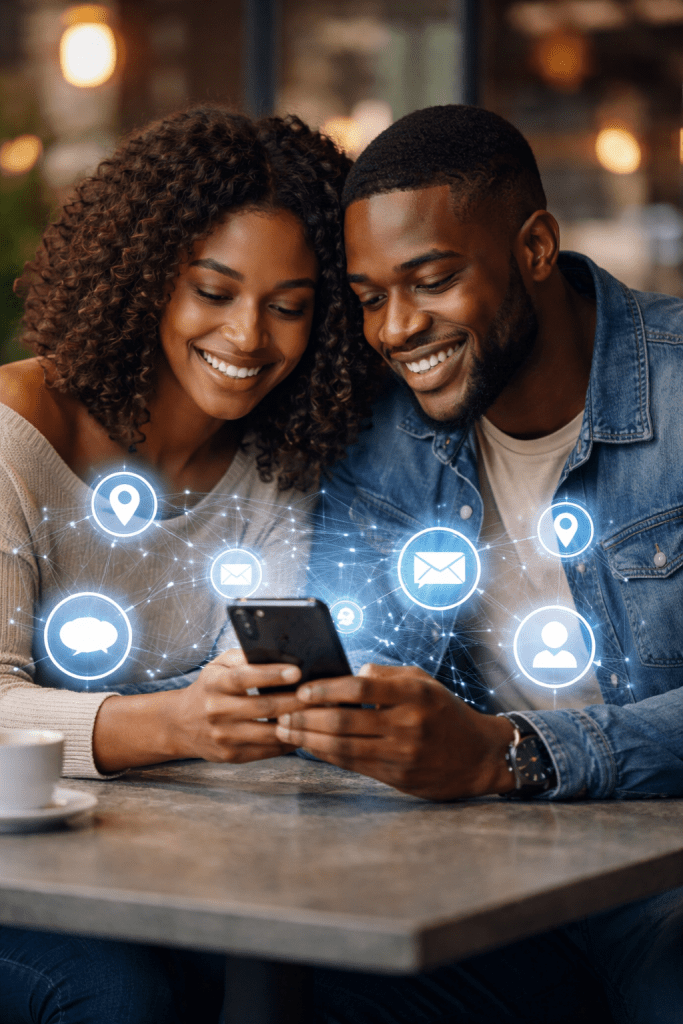
AI and dating represent a new chapter in how human beings seek connection, compatibility, and companionship. Artificial intelligence refers to computer systems designed to simulate aspects of human intelligence, such as learning, pattern recognition, and decision-making. In the context of dating, AI is used to analyze behavior, preferences, communication styles, and values to help people form more compatible matches.

Unlike traditional dating methods rooted in proximity, family networks, or chance encounters, AI-driven dating relies on data. Algorithms examine user input, past interactions, and psychological indicators to predict relational compatibility. This shift marks a movement from intuition-led matching to evidence-informed pairing.

One of the primary promises of AI in dating is efficiency. AI reduces the overwhelming nature of modern dating by filtering options and narrowing choices. Rather than endlessly scrolling through profiles, users are presented with matches that are more closely aligned with their stated and demonstrated preferences.

AI can also improve self-awareness. Many platforms use reflective questions, behavioral feedback, and pattern analysis to help users understand their dating habits, attachment styles, and relational blind spots. This can encourage personal growth alongside the selection of a partner.

Compared to traditional online dating, AI goes beyond static profiles and surface-level traits. Online dating typically relies on photos, short bios, and user-selected preferences, which are often aspirational rather than accurate. AI, by contrast, evaluates behavior over time, including communication patterns and decision-making tendencies.

AI-driven systems can also reduce some forms of bias present in human judgment. By focusing on compatibility metrics rather than immediate attraction alone, AI has the potential to elevate values such as shared goals, emotional intelligence, and communication alignment.

For individuals with limited social circles, demanding careers, or geographic isolation, AI offers access to a wider pool of potential partners. This expanded reach can be particularly beneficial for people seeking intentional, long-term relationships rather than casual encounters.

AI may also support safety in dating. Some platforms use AI to detect harassment, deception, or harmful behavior by analyzing language patterns and reported activity. This creates a more moderated environment compared to unregulated social interactions.

Despite its benefits, AI in dating is not without danger. Overreliance on algorithms can reduce human agency, causing individuals to trust machine recommendations more than their own discernment. Relationships, however, involve mystery, growth, and unpredictability that no algorithm can fully capture.

Another concern is emotional detachment. When dating becomes overly optimized, people may begin to treat partners as data points rather than whole human beings. This commodification risks undermining empathy, patience, and grace.

Privacy is also a significant issue. AI dating platforms collect sensitive personal data, including emotional responses, preferences, and behavioral patterns. Misuse or breaches of this information pose ethical and psychological risks.

AI can unintentionally reinforce existing biases if trained on flawed or limited datasets. If societal inequalities are embedded in the data, algorithms may replicate or amplify them, particularly in areas related to race, class, and attractiveness norms.

There is also the danger of false precision. Compatibility scores may create an illusion of certainty, leading users to prematurely dismiss potentially meaningful relationships that do not meet algorithmic thresholds.

The difference between AI and traditional online dating lies in depth and adaptability. Online dating platforms typically remain static, while AI systems evolve, learning from user behavior and refining recommendations over time. This adaptability can enhance accuracy but also increase dependency.

AI cannot replace emotional wisdom, spiritual discernment, or moral alignment. While it can suggest compatibility, it cannot evaluate character over time, test commitment under pressure, or measure sacrificial love.

Healthy use of AI in dating requires balance. AI should function as a tool, not an authority. It can assist in introductions and insights, but human judgment must remain central in deciding relational direction.

From a relational ethics perspective, intentional dating still requires honesty, accountability, and respect. AI does not absolve individuals from personal responsibility or moral conduct.

AI also raises questions about divine order and human agency. For faith-centered individuals, technology must be subordinated to values, prayer, and discernment rather than replacing them.

When used wisely, AI can serve as a benefit rather than a barrier. It can reduce noise, highlight compatibility, and encourage intentionality, especially for those seeking marriage or a long-term partnership.

Ultimately, AI and dating reflect humanity’s ongoing attempt to reconcile technology with intimacy. The success of AI in dating will not be determined by algorithms alone, but by whether users remain committed to authenticity, dignity, and meaningful connection.


References

Ansari, A. (2015). Modern romance. New York, NY: Penguin Press.

Finkel, E. J., Eastwick, P. W., Karney, B. R., Reis, H. T., & Sprecher, S. (2012). Online dating: A critical analysis from the perspective of psychological science. Psychological Science in the Public Interest, 13(1), 3–66.

Guzman, L., & Lewis, A. (2020). Artificial intelligence and intimacy: Ethical considerations in digital matchmaking. Journal of Social and Personal Relationships, 37(8–9), 2401–2419.

Hutson, J. A., Taft, J. G., Barocas, S., & Levy, K. (2018). Debiasing desire: Addressing bias and discrimination on intimate platforms. Proceedings of the ACM on Human-Computer Interaction, 2(CSCW), 1–18.

Turkle, S. (2011). Alone together: Why we expect more from technology and less from each other. New York, NY: Basic Books.

The Rise of Black Digital Influence: Culture, Commerce, and Community

The digital era has ushered in unprecedented opportunities for Black voices to shape culture, commerce, and community globally. Platforms such as TikTok, Instagram, YouTube, and podcasts have provided unprecedented visibility, allowing Black creators to redefine aesthetics, narratives, and influence in ways previously constrained by traditional gatekeepers.

Black digital influence is first and foremost cultural. Social media has amplified Afrocentric beauty, hairstyles, fashion, and music, creating a global dialogue that celebrates Black identity. From natural hair movements to streetwear trends, Black creators are driving culture forward while reclaiming representation.

Historically, Black creativity was often commodified without proper recognition or compensation. Digital platforms now allow Black creators to assert ownership, narrate their stories, and monetize their craft independently, transforming cultural influence into economic empowerment.

The rise of Black influencers in music exemplifies this cultural and commercial convergence. TikTok, in particular, has propelled songs by Black artists to viral status, shaping charts, influencing mainstream media, and allowing independent artists to compete with major labels.

Fashion and beauty industries have experienced profound disruption. Black models, designers, and stylists utilize social media to challenge Eurocentric beauty standards, normalize diversity, and directly market products to global audiences. Platforms bypass traditional gatekeeping, giving Black creatives control over brand narrative.

Black digital influence also serves as a form of historical and cultural education. Creators use social media to teach African and African American history, genealogy, and social justice issues, providing accessible knowledge and fostering community awareness.

Podcasts and YouTube channels led by Black hosts have become platforms for intellectual discourse, storytelling, and entrepreneurship. Figures such as Tiffany Aliche (the Budgetnista) or content creators focusing on Black history and culture expand knowledge while creating wealth and visibility.

Entrepreneurship has flourished through digital influence. Black-owned businesses now reach global markets via e-commerce, digital marketing, and online services. The ability to sell directly to consumers allows creators to bypass traditional barriers in retail and finance.

Digital finance, including cryptocurrency and NFTs, has further expanded avenues for Black economic empowerment. Innovators are using blockchain technology to create wealth, preserve intellectual property, and invest in community-driven projects, demonstrating the convergence of technology and culture.

Social media has amplified activism. Movements like #BlackLivesMatter have demonstrated the power of digital platforms in mobilizing communities, influencing legislation, and shaping global conversations around racial justice and accountability.

The rise of Black digital influence also strengthens intergenerational knowledge transfer. Younger creators draw on ancestral narratives, cultural memory, and historical resilience while innovating content, products, and platforms for a modern audience.

Representation is another critical aspect. Black digital creators provide aspirational figures for youth, illustrating that cultural pride, entrepreneurship, and intellectual contribution can coexist with influence and wealth in a digital-first world.

Digital influence is not without challenges. Algorithmic bias, cyberbullying, content theft, and platform censorship can disproportionately affect Black creators. Navigating these obstacles requires both strategic knowledge and community solidarity.

Black digital communities have formed networks of support. Collaborative projects, cross-promotion, and mentorship among creators amplify reach and provide protection against exploitation, ensuring sustainability of influence and commerce.

Cultural appropriation remains a concern. Black creators must continually assert ownership over cultural products and narratives, educating global audiences while safeguarding the integrity of Black cultural expression.

Despite challenges, Black digital influence demonstrates resilience, creativity, and innovation. It transforms pain into art, oppression into opportunity, and visibility into empowerment. Black creators are setting trends, defining aesthetics, and reclaiming narratives at an unprecedented pace.

The intersection of faith and digital influence is also notable. Some creators incorporate spiritual guidance, moral frameworks, and community values into their content, blending cultural empowerment with ethical leadership.

Black digital entrepreneurship challenges traditional economic barriers. Influencers, content creators, and business owners leverage platforms to build brands, create jobs, and circulate wealth within Black communities, contributing to broader social and economic mobility.

Globalization amplifies Black influence. Creators in the diaspora connect with audiences worldwide, fostering cross-cultural exchange, solidarity, and shared identity, illustrating the universal impact of Black creativity and innovation.

Ultimately, the rise of Black digital influence reflects the ongoing evolution of Black excellence. It merges culture, commerce, and community into a powerful force for visibility, education, and empowerment, creating a legacy that is both digital and enduring.


References

Gates, H. L. (2011). In search of our roots: How 19 extraordinary African Americans reclaimed their past. Crown.

West, C. (2017). Race matters. Beacon Press.

Tutu, D., & Tutu, M. (2014). The book of forgiving: The fourfold path for healing ourselves and our world. HarperOne.

Noble, S. U. (2018). Algorithms of oppression: How search engines reinforce racism. NYU Press.

McKelvey, F., & Mulla, D. (2022). Digital Blackness: The power and politics of Black social media. Routledge.

Walker, K., & Brooks, C. (2021). Black digital entrepreneurship: Culture, commerce, and community. Palgrave Macmillan.

How to Become a Brand Ambassador. #socialmedia #brandambassador

A brand ambassador is a person who represents a company’s products or services, promoting them in a positive light to increase awareness, sales, and loyalty. Becoming a brand ambassador requires strategic planning, consistent personal branding, and professional networking. Understanding the requirements of brands, knowing how to approach them, and maintaining credibility are essential for success.

The first step is to define your niche. Brands often look for ambassadors whose lifestyle, interests, or expertise align with their product. For example, a fitness brand seeks athletes or fitness influencers, while a luxury fashion label may target individuals with a glamorous aesthetic. Clearly defining your niche ensures that you are seen as a credible and authentic representative.

List of Top Brands to Work With as a Brand Ambassador

Luxury Fashion & Accessories:

  • Hermès
  • Gucci
  • Louis Vuitton
  • Prada
  • Chanel

Beauty & Skincare:

  • Fenty Beauty (Rihanna)
  • Sephora
  • MAC Cosmetics
  • Estée Lauder
  • L’Oréal

Sports & Activewear:

  • Nike
  • Adidas
  • Under Armour
  • Puma
  • Reebok

Tech & Electronics:

  • Apple
  • Samsung
  • Microsoft
  • Google
  • Sony

Lifestyle & Food:

  • Starbucks
  • Red Bull
  • Coca-Cola
  • Amazon (various programs)
  • Airbnb

Automotive & Luxury Vehicles:

  • Mercedes-Benz
  • BMW
  • Tesla
  • Porsche
  • Lexus

Emerging & Digital Brands:

  • Canva
  • Glossier
  • Peloton
  • TikTok (creator programs)
  • Shopify

Building a personal brand is crucial. A strong, consistent presence on social media platforms, blogs, or professional portfolios communicates professionalism and influence. Maintaining high-quality content, authentic engagement, and a coherent aesthetic attracts the attention of brands. According to Forbes (2021), “A personal brand that is consistent and authentic increases visibility and credibility with potential partners.”

Engagement is more important than follower count. Brands prioritize individuals who foster genuine interaction with their audience, as active engagement often leads to higher conversion rates. Metrics such as likes, comments, shares, and click-through rates can be presented when approaching brands, demonstrating value beyond raw numbers.

To get noticed, networking is essential. Attend industry events, workshops, or online forums where brand representatives or marketing professionals are present. Building relationships through professional interactions increases the likelihood of being considered for ambassador roles. LinkedIn and industry-specific platforms are particularly effective for connecting with brand managers.

When approaching a brand, research thoroughly. Understand the company’s products, target audience, mission, and values. Tailoring your proposal to align with their goals demonstrates preparation and professionalism. Brands are more likely to respond positively to ambassadors who understand their market positioning.

Crafting a proposal or pitch is the next step. Highlight your influence, engagement metrics, personal alignment with the brand, and creative ideas for promoting their products. Be concise, professional, and visually appealing. Providing examples of past collaborations or campaign success stories adds credibility.

Contracting with a brand requires careful consideration. Most brand ambassador programs outline responsibilities, compensation, exclusivity clauses, and duration. Ensure you review contracts thoroughly or seek professional advice to avoid unfavorable terms. Legal clarity protects your interests and maintains a professional relationship.

Negotiating compensation is part of the process. Some brands offer free products, while others provide monetary payment, affiliate commissions, or event fees. Understand your value, and be prepared to present a clear case for why your influence merits fair compensation.

Content creation is a core responsibility. Ambassadors must produce high-quality visuals, videos, or posts that showcase the product authentically. Creativity, consistency, and alignment with brand guidelines are critical. Failure to maintain quality can jeopardize the partnership.

Authenticity is essential for long-term success. Audiences are adept at detecting insincerity. Only endorse products you genuinely believe in or use. Brands prefer ambassadors who naturally fit their image rather than those solely motivated by profit.

Some of the best brands to endorse include global lifestyle companies like Nike, Adidas, Hermès, Gucci, Sephora, Apple, and luxury automotive brands, depending on your niche and audience demographics. Selecting brands strategically ensures your promotions resonate with your followers.

Understanding platform-specific strategies increases effectiveness. Instagram, TikTok, and YouTube favor visually compelling content, while LinkedIn and blogs are suited for professional endorsements. Tailor your approach to each platform to maximize engagement.

Consistency in posting and maintaining engagement is vital. Regular updates, authentic storytelling, and timely responses to comments enhance credibility. Brands often monitor consistency before renewing or expanding ambassador agreements.

Tracking results demonstrates your impact. Keep analytics of engagement, conversions, website clicks, or affiliate sales. Presenting data-driven evidence strengthens your reputation as a reliable partner for future campaigns.

Collaboration with other influencers or ambassadors can expand reach. Co-promotions and shared campaigns increase visibility and reinforce authority in your niche. Networking within the ambassador community often opens doors to more prestigious partnerships.

Professionalism extends beyond social media. Timely communication, adherence to deadlines, and respectful negotiation contribute to long-term relationships with brands. Your reputation as reliable and professional is as valuable as your audience size.

Continuous learning is key. Study marketing trends, social media algorithms, and audience behavior. Staying informed helps adapt strategies, ensuring you remain attractive to brands and competitive in the industry.

Brand ambassadors must also understand ethical considerations. Transparency with audiences, including disclosure of sponsorships or affiliate partnerships, builds trust and complies with legal regulations like FTC guidelines.

Finally, patience and persistence are essential. Success rarely happens overnight. Consistent effort, relationship-building, and strategic self-promotion gradually establish you as a sought-after brand ambassador.

By combining a strong personal brand, niche expertise, authentic engagement, and professionalism, anyone can position themselves for ambassador roles. Understanding contracts, selecting brands strategically, and tracking impact ensures not only initial opportunities but long-term growth in the industry.

References

Forbes. (2021). How to build your personal brand as an influencer. Forbes. https://www.forbes.com/sites/forbesagencycouncil/2021/03/08/how-to-build-your-personal-brand-as-an-influencer/

Business Insider. (2022). What is a brand ambassador and how to become one. Business Insider. https://www.businessinsider.com/brand-ambassador

Influencer Marketing Hub. (2023). Brand ambassador programs: How to get noticed and get hired. Influencer Marketing Hub. https://influencermarketinghub.com/brand-ambassador-programs/

Entrepreneur. (2022). 10 tips to become a successful brand ambassador. Entrepreneur. https://www.entrepreneur.com/article/brand-ambassador-tips

Federal Trade Commission (FTC). (2021). Disclosures 101 for social media influencers. https://www.ftc.gov/tips-advice/business-center/guidance/disclosures-101-social-media-influencers

HubSpot. (2022). The ultimate guide to influencer marketing and brand ambassadorship. HubSpot. https://blog.hubspot.com/marketing/influencer-marketing

Social Media Examiner. (2023). How to become a brand ambassador in 2023. Social Media Examiner. https://www.socialmediaexaminer.com/how-to-become-a-brand-ambassador/

    How to Become a Brand Ambassador?

    Photo by Godisable Jacob on Pexels.com

    In today’s digital marketplace, brand ambassadors have become essential in shaping consumer perceptions and driving brand loyalty. A brand ambassador is an individual who represents, endorses, and promotes a company’s products or services, often leveraging personal influence to increase visibility and trust (Keller, 2013). With the rise of social media, ambassadors have become a central marketing strategy, bridging the gap between businesses and consumers through authentic representation.

    Understanding the Role of a Brand Ambassador

    A brand ambassador is more than a spokesperson—they embody the values, image, and culture of a brand. Ambassadors often create content, attend events, and interact with communities to increase brand awareness and credibility (Freberg, Graham, McGaughey, & Freberg, 2011). Unlike traditional advertising, ambassadors provide relatable and humanized promotion, which enhances consumer trust.

    Step-by-Step Guide: How to Become a Brand Ambassador

    1. Define Your Personal Brand

    • Identify your niche (fashion, fitness, beauty, tech, lifestyle, etc.).
    • Highlight your unique values, personality, and style.
    • Keep your message consistent across all platforms.

    📌 Tip: Ask yourself—what do I want to be known for?


    2. Build and Strengthen Your Online Presence

    • Choose 1–2 main platforms (Instagram, TikTok, YouTube, LinkedIn).
    • Post high-quality content consistently (photos, videos, reels, blogs).
    • Engage with your audience—reply to comments, start conversations, run polls.

    📌 Tip: Engagement rate matters more than follower count.


    3. Create Authentic Content

    • Share lifestyle posts that naturally include your favorite brands.
    • Tell stories instead of just advertising—authenticity builds trust.
    • Showcase your creativity (unboxings, tutorials, “day in the life,” reviews).

    📌 Tip: Brands notice when you already support them without being paid.


    4. Grow Your Network

    • Tag brands in your posts.
    • Use hashtags strategically.
    • Collaborate with other influencers or ambassadors.
    • Attend local events, trade shows, and networking opportunities.

    📌 Tip: Relationships matter—brands scout through social engagement.


    5. Reach Out to Brands

    • Create a professional media kit (bio, audience demographics, engagement stats, sample posts).
    • Send polite pitches to brands you love.
    • Sign up for influencer/ambassador platforms like AspireIQ, BrandSnob, or Influenster.

    📌 Tip: Start with smaller or local brands before approaching global ones.


    6. Be Professional and Reliable

    • Meet deadlines for sponsored posts.
    • Follow brand guidelines (logos, hashtags, tag requirements).
    • Stay respectful and ethical online—brands look for positive reputations.

    📌 Tip: Treat this like a job, not just free products.


    7. Measure and Show Results

    • Track engagement (likes, shares, saves, comments, link clicks).
    • Share insights with brands to prove your value.
    • Use analytics tools (Instagram Insights, TikTok Analytics, Google Analytics).

    📌 Tip: Brands are more likely to rehire ambassadors who show measurable results.


    8. Stay Authentic and Evolve

    • Never promote products you don’t believe in—audiences can sense inauthenticity.
    • Keep learning new marketing trends.
    • Grow with your audience and diversify your content.

    📌 Tip: Authentic ambassadors get the longest partnerships.


    Quick Checklist:

    • Personal brand defined
    • Social media optimized
    • Consistent, authentic content
    • Active networking and collaborations
    • Professional media kit created
    • Pitches sent to brands
    • Track results and improve
    • Long-term authenticity maintained

    Building a Strong Personal Brand

    The first step toward becoming a brand ambassador is cultivating a strong personal brand. Personal branding involves crafting a consistent and authentic identity that highlights one’s unique strengths, style, and values (Montoya & Vandehey, 2002). Individuals must showcase professionalism, creativity, and relatability across their platforms, as companies often seek ambassadors whose personal image aligns with their brand’s mission.

    Developing an Online Presence

    A strong online presence is crucial. Social media platforms such as Instagram, TikTok, and YouTube serve as vital spaces for showcasing content, growing an audience, and demonstrating influence (Djafarova & Trofimenko, 2019). Engagement is more valuable than sheer follower count, as brands look for ambassadors who can foster genuine connections with audiences. Consistency in posting, storytelling, and interaction helps build credibility and visibility.

    Networking and Brand Partnerships

    Networking plays a critical role in becoming a brand ambassador. Attending industry events, engaging with companies online, and collaborating with other influencers can open doors to partnerships. Many brands scout potential ambassadors by monitoring individuals who already support and promote their products authentically (Schau & Gilly, 2003). Thus, aspiring ambassadors should organically incorporate their favorite brands into content before seeking official partnerships.

    Brand Ambassador vs. Spokesmodel

    1. Definition & Role

    • Brand Ambassador
      • A long-term representative who embodies the brand’s values and lifestyle.
      • Promotes the brand across multiple platforms (social media, events, personal networks).
      • Focuses on building relationships and creating authentic engagement.
    • Spokesmodel
      • A hired face or personality used in advertisements, campaigns, or promotional events.
      • Represents the brand in a professional, sometimes short-term contract.
      • Focuses on appearance, presentation, and scripted brand messaging.

    2. Relationship with the Brand

    • Brand Ambassador → Often has an ongoing partnership. They become part of the brand identity and may use the product in daily life.
    • Spokesmodel → Usually hired for specific campaigns, commercials, or events. The relationship is transactional and tied to image/appearance.

    3. Marketing Approach

    • Brand Ambassador → Relies on authenticity, word-of-mouth marketing, and personal influence. Often leverages social media to connect with followers.
    • Spokesmodel → Relies on visual appeal, professionalism, and advertising campaigns (TV, print, digital).

    4. Skills & Requirements

    • Brand Ambassador
      • Strong social media presence.
      • Relatable personality and communication skills.
      • Ability to engage communities and foster trust.
    • Spokesmodel
      • Photogenic and camera-ready presence.
      • Modeling or public speaking skills.
      • Ability to represent the brand’s desired look and voice.

    5. Example

    • Brand Ambassador → Serena Williams partnering with Nike not only to model apparel but to embody strength, resilience, and excellence in women’s sports.
    • Spokesmodel → Tyra Banks modeling for CoverGirl ads—serving as the face of a beauty campaign without ongoing lifestyle integration.

    In short:

    • A brand ambassador promotes a brand authentically and long-term, often through lifestyle and social media influence.
    • A spokesmodel is a professional “face” of the brand for ads or campaigns, usually short-term and more image-focused.

    Professionalism and Longevity

    Sustaining a career as a brand ambassador requires professionalism, reliability, and adaptability. Ambassadors must meet deadlines, maintain ethical standards, and continuously evolve with trends in digital marketing (Khamis, Ang, & Welling, 2017). Those who maintain authenticity while delivering measurable impact often establish long-term relationships with companies, enhancing both personal and brand credibility.

    Conclusion

    Becoming a brand ambassador is a journey that requires authenticity, consistency, and professionalism. By building a strong personal brand, developing a digital presence, and fostering genuine relationships with both audiences and companies, individuals can position themselves as valuable assets in today’s marketing landscape. As businesses increasingly rely on personal influence over traditional advertising, opportunities for aspiring ambassadors continue to expand.


    References

    • Djafarova, E., & Trofimenko, O. (2019). ‘Instafamous’–credibility and self-presentation of micro-celebrities on social media. Information, Communication & Society, 22(10), 1432-1446.
    • Freberg, K., Graham, K., McGaughey, K., & Freberg, L. A. (2011). Who are the social media influencers? A study of public perceptions of personality. Public Relations Review, 37(1), 90-92.
    • Keller, K. L. (2013). Strategic Brand Management: Building, Measuring, and Managing Brand Equity. Pearson.
    • Khamis, S., Ang, L., & Welling, R. (2017). Self-branding, ‘micro-celebrity’ and the rise of Social Media Influencers. Celebrity Studies, 8(2), 191-208.
    • Montoya, P., & Vandehey, T. (2002). The Brand Called You: Make Your Business Stand Out in a Crowded Marketplace. McGraw Hill.
    • Schau, H. J., & Gilly, M. C. (2003). We are what we post? Self‐presentation in personal web space. Journal of Consumer Research, 30(3), 385-404.

    Affiliate Marketing 101: Strategies, Tips, and Tools to Earn Online.

    Affiliate marketing is a performance-based marketing strategy where you promote someone else’s products or services and earn a commission for each sale or action generated through your unique referral link. Essentially, you act as a middleman connecting the product with the customer.

    It benefits three parties:

    1. The Merchant: Gains more sales or leads without upfront marketing costs.
    2. The Affiliate (You): Earns a commission for driving traffic or sales.
    3. The Customer: Finds products through trusted recommendations.

    In today’s digital world, affiliate marketing has emerged as one of the most popular ways to earn income online. At its core, affiliate marketing is a performance-based strategy where individuals, known as affiliates, promote products or services and earn a commission for every sale, click, or action generated through their unique referral links. It creates a win-win scenario: merchants increase their sales without upfront costs, affiliates earn money by promoting products, and customers gain access to trusted recommendations. For those looking to build a sustainable online income, understanding the fundamentals of affiliate marketing is essential.

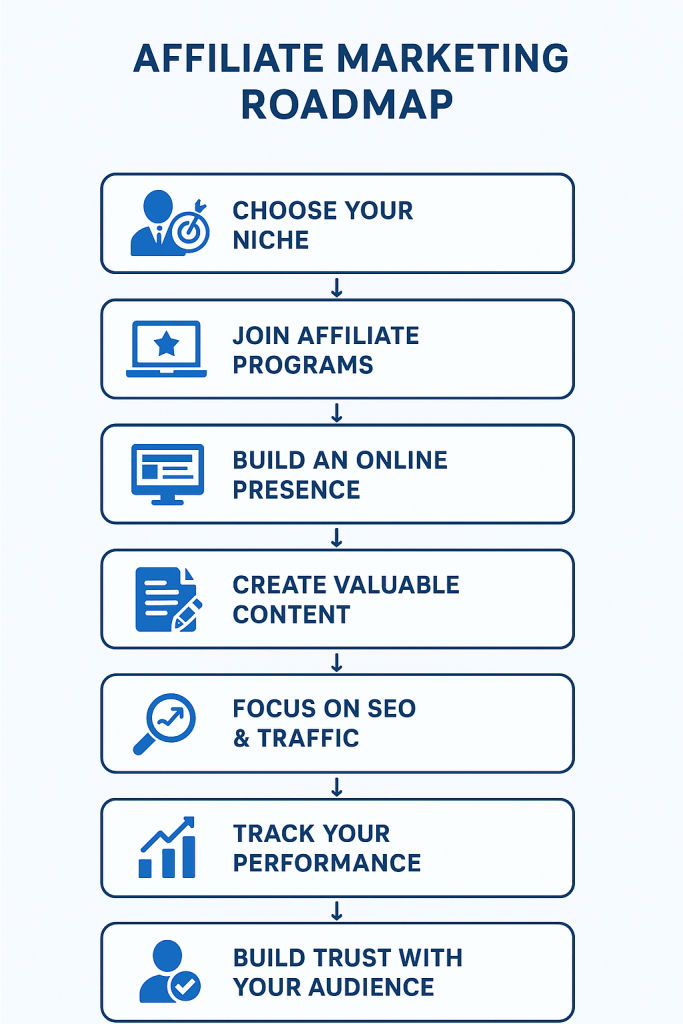
    The first step to getting started in affiliate marketing is choosing a niche. A niche is a specific area of interest or industry, such as beauty, fitness, technology, travel, or personal finance. By focusing on a niche, affiliates can build authority and trust with their audience, ensuring that promotions resonate effectively. Once a niche is selected, the next step is to join reputable affiliate programs. Popular networks include Amazon Associates, ShareASale, CJ Affiliate, ClickBank, and Rakuten Marketing. Each platform offers unique benefits, from a wide variety of products to higher commission rates on digital goods, making it possible for affiliates to choose programs that align with their niche and audience.

    Choose Your Niche:
    Focus on a specific industry or topic you are passionate about, such as beauty, fitness, finance, tech, or travel. A clear niche builds trust and authority with your audience.

    Select Affiliate Programs/Companies:
    Start with reputable companies and networks. Popular options include:

    • Amazon Associates – Easy to join; wide range of products.
    • ShareASale – Thousands of merchants in various niches.
    • CJ Affiliate (Commission Junction) – High-quality brands and reliable tracking.
    • ClickBank – Digital products, often higher commissions.
    • Rakuten Marketing – Big brands and global reach.

    Build an Online Presence:
    You’ll need a platform to promote products:

    • Blog or Website: SEO content drives organic traffic.
    • Social Media: Instagram, TikTok, or Pinterest for visual promotions.
    • YouTube: Tutorials and reviews can be highly effective.
    • Email Marketing: Build a subscriber list for recurring promotions.

    Affiliate Marketing Tips & Tricks: Quick-Start Guide

    1. Choose Your Niche Wisely

    • Pick a topic you are passionate about.
    • Focus on a specific audience to build authority.

    2. Join Reputable Affiliate Programs

    • Amazon Associates – Wide variety of products.
    • ClickBank – High commissions on digital products.
    • ShareASale / CJ Affiliate / Rakuten – Access to quality brands.

    3. Build an Online Presence

    • Start a blog, YouTube channel, or social media profile.
    • Use email lists to reach your audience directly.

    4. Create Valuable Content

    • Tutorials, reviews, comparison guides, and “how-to” articles.
    • Incorporate affiliate links naturally—don’t force them.

    5. Focus on SEO & Traffic

    • Optimize your website for search engines to attract organic visitors.
    • Use paid ads strategically for faster results.

    6. Track Your Performance

    • Use analytics to monitor clicks, conversions, and top-performing products.
    • Adjust strategies based on what works best.

    7. Build Trust with Your Audience

    • Be honest about affiliate links.
    • Share genuine experiences and product recommendations.

    8. Diversify & Scale

    • Join multiple affiliate programs to avoid relying on one source.
    • Reinvent and expand your content to reach more audiences.

    9. Be Patient & Consistent

    • Earnings grow over time with effort, testing, and optimization.
    • Focus on quality and value rather than quick profits.

    10. Learn from Successful Affiliates

    • Follow top affiliates in your niche.
    • Study strategies that consistently convert traffic into sales.

    Building a strong online presence is crucial for affiliate marketing success. Affiliates can leverage blogs, websites, social media platforms, YouTube channels, and email marketing to reach potential customers. Content marketing, such as product reviews, tutorials, comparison guides, and “how-to” articles, allows affiliates to provide value while naturally integrating affiliate links. Search engine optimization (SEO) further amplifies reach by attracting organic traffic, while paid advertisements on Google, Facebook, or Instagram can target highly specific audiences to increase conversions. Trust is key; affiliates who provide genuine recommendations and showcase real experiences often see higher engagement and sales.

    Content Marketing: Create valuable content like product reviews, “how-to” guides, and comparison articles.

    SEO Optimization: Rank your content in search engines to attract free organic traffic.

    Paid Ads: Facebook Ads, Google Ads, or influencer partnerships to drive targeted traffic.

    Email Campaigns: Promote products to a dedicated audience with newsletters and promotions.

    Social Proof & Trust: Use testimonials, case studies, and real experiences to boost credibility.

    Successful affiliate marketers employ a combination of strategies to maximize earnings. Tracking performance through analytics enables affiliates to determine which products and promotional methods yield the best results. Diversifying income streams by joining multiple programs and promoting various products reduces risk and increases potential revenue. Email marketing campaigns to a loyal subscriber list can generate recurring income, and integrating social proof—such as testimonials, case studies, or user-generated content—helps establish credibility. Affiliates who prioritize quality over quantity and remain transparent about affiliate links build long-term relationships with their audience.

    Pick products you personally trust and align with your audience.

    Focus on quality over quantity; promote fewer, high-value products.

    Track your performance with analytics to see what converts.

    Diversify income streams with multiple affiliate programs.

    Always disclose affiliate links; honesty builds trust with your audience.

    The earning potential in affiliate marketing varies widely based on niche, traffic, and conversion rates. Beginners might earn between $50 and $500 per month, intermediate affiliates can generate $500–$5,000 monthly, and experienced marketers with multiple platforms and email lists can earn upwards of $50,000 per month. Physical products typically offer lower commissions (1%–10%), while digital products can provide higher rates (30%–75%). The key to success lies in patience, consistency, and reinvesting earnings to scale one’s efforts gradually.

    • Commissions vary by product and program:
      • Physical products: ~1%–10% per sale (Amazon).
      • Digital products: ~30%–75% per sale (ClickBank).
    • Income depends on traffic, conversion rates, and niche:
      • Beginners: $50–$500/month
      • Intermediate: $500–$5,000/month
      • Advanced: $5,000–$50,000+/month (top affiliates often scale with multiple websites and email lists)

    Tip: Start small, reinvest earnings, and scale gradually for sustainable income.

    In conclusion, affiliate marketing offers a flexible and potentially lucrative way to earn online, provided one approaches it with strategy, integrity, and dedication. By selecting the right niche, collaborating with reputable programs, establishing a robust online presence, and implementing targeted marketing strategies, aspiring affiliates can establish a sustainable source of income. With continuous learning, testing, and adaptation, affiliate marketing not only provides financial opportunities but also allows individuals to share valuable products and services with audiences around the world.

    👉 These REFERENCES provide both academic depth and real-world industry insights.

    Books & Academic Sources

    • Chaffey, D., & Ellis-Chadwick, F. (2019). Digital Marketing (7th ed.). Pearson.
    • Evans, D. S., & Schmalensee, R. (2016). Matchmakers: The New Economics of Multisided Platforms. Harvard Business Review Press.
    • Strauss, J., & Frost, R. (2016). E-Marketing (7th ed.). Routledge.

    Industry & Professional Sources

    Statistics & Earnings Potential

    • Statista. (2023). Affiliate Marketing – Statistics & Facts. Retrieved from https://www.statista.com
    • Business Insider Intelligence. (2021). The Affiliate Marketing Report.

    👉 These references provide both academic depth and real-world industry insights.

    Building a Personal Brand as a Brown Woman.

    Photo by Anna Nekrashevich on Pexels.com

    In the contemporary landscape, personal branding has emerged as a critical strategy for professional growth, social influence, and cultural representation. For Brown and Black women, the stakes are even higher. Building a personal brand goes beyond self-promotion; it is an act of reclaiming narrative authority in a society that has often misrepresented or silenced their voices. Personal branding, therefore, becomes a tool of visibility, resilience, and empowerment. This essay examines the personal branding strategies of two iconic Black women: Oprah Winfrey and Issa Rae. By comparing their approaches across generations and platforms, this analysis highlights the evolving dynamics of branding, authenticity, and representation.

    The Power of Self-Definition

    Personal branding begins with self-definition—the process of clarifying identity, values, and purpose. For Brown women, this is particularly important given the intersectional challenges of racism, sexism, and colorism. Building a brand requires intentional resistance against stereotypes that often confine women of color to narrow roles. Instead, personal branding allows them to craft narratives of multidimensionality: as leaders, creatives, entrepreneurs, and change-makers. The cases of Oprah Winfrey and Issa Rae reveal that the ability to define oneself, rather than be defined by others, is the foundation of lasting influence.

    Oprah Winfrey: Authenticity as a Brand Pillar

    Oprah Winfrey represents the archetype of authentic branding. Rising from poverty in rural Mississippi to becoming a billionaire media mogul, her story embodies resilience and transformation. Throughout her career, Oprah cultivated a brand rooted in vulnerability, empathy, and empowerment. By openly discussing her struggles with trauma, weight, and self-worth, she established a deep emotional connection with audiences (Konieczka, 2019). This authenticity became the cornerstone of her influence, allowing her to transcend cultural barriers and emerge as a global figure of inspiration.

    Expansion into Multimedia Empire

    Oprah’s brand expanded beyond her iconic talk show into publishing (O, The Oprah Magazine), television (OWN: The Oprah Winfrey Network), philanthropy (The Oprah Winfrey Leadership Academy for Girls), and digital platforms. Each extension of her brand reinforced her identity as a figure of empowerment, wisdom, and compassion. Importantly, Oprah leveraged her personal brand to amplify others, launching the careers of authors like Iyanla Vanzant and Dr. Phil. Her model demonstrates that for Brown women, personal branding can function as a multiplier effect—empowering not only the individual but also their community.

    Issa Rae: The Digital Blueprint

    In contrast, Issa Rae represents the millennial and digital-native approach to personal branding. Her breakout project, The Misadventures of Awkward Black Girl (2011), began as a YouTube web series. It disrupted mainstream media portrayals of Black women by showcasing vulnerability, humor, and awkwardness—traits often denied to women of color (Everett, 2019). Rae’s use of digital platforms exemplifies how social media democratizes branding, allowing creators to bypass traditional gatekeepers and directly connect with audiences. Her success illustrates how authenticity, relatability, and representation can generate strong brand loyalty in the digital age.

    Transition to Mainstream Media

    Issa Rae’s leap from YouTube to HBO with Insecure marked a significant evolution in her brand. While staying true to her digital roots, Rae successfully navigated into mainstream entertainment without losing her cultural authenticity. Her brand emphasizes representation, often centering the complexities of Black womanhood, relationships, and identity. Unlike Oprah’s brand, which often appeals to a universal ethos of resilience and inspiration, Rae’s brand thrives on specificity—portraying stories that resonate with a generation of Black women navigating contemporary realities (Harris, 2020).

    Community Building Through Branding

    Both Oprah and Issa Rae exemplify how personal branding can extend beyond individual success to community impact. Oprah built platforms to amplify other voices through her talk show and publishing ventures. Similarly, Issa Rae has leveraged her brand to uplift Black creatives by launching Raedio, a music platform, and collaborating with production teams to ensure diversity in Hollywood. This shows that personal branding, for Brown women, often becomes a form of cultural activism—challenging systemic exclusion while creating opportunities for others.

    Generational Shifts in Branding Strategies

    A generational comparison reveals key shifts in branding strategies. Oprah’s rise relied heavily on broadcast television, a centralized medium that demanded broad appeal. Her brand was universal, designed to resonate across diverse demographics. In contrast, Issa Rae’s rise leveraged decentralized, digital platforms where niche communities thrive. Her brand thrives on specificity and cultural authenticity rather than universal appeal. This reflects broader societal changes: where Oprah had to code-switch for mainstream acceptance, Rae capitalized on digital spaces that rewarded cultural specificity.

    The Role of Authenticity in Both Journeys

    Despite generational differences, authenticity remains the common denominator in both women’s brands. Oprah’s openness about her struggles with poverty and trauma humanized her brand. Rae’s willingness to embrace awkwardness and vulnerability challenged stereotypes about Black women. Authenticity, then, emerges as the most powerful branding tool for Brown women navigating industries shaped by racialized and gendered perceptions. Authenticity transforms personal branding from a mere marketing strategy into a form of empowerment.

    Comparative Overview

    CategoryOprah WinfreyIssa Rae
    Era & Platform1980s–2000s, Broadcast TV & Print Media2010s–present, Digital & Streaming Platforms
    Brand FoundationAuthenticity, Empathy, EmpowermentAuthenticity, Humor, Cultural Specificity
    Signature StyleTalk show host, media mogul, philanthropistWriter, producer, actress, digital creative
    Expansion StrategyMagazine, OWN Network, Book Club, PhilanthropyYouTube, HBO series, Raedio (music platform)
    Audience ReachGlobal, universal appeal across demographicsMillennials, Gen Z, niche cultural communities
    Community ImpactLaunched careers of authors, created school for girlsCreated opportunities for Black creatives in Hollywood
    ChallengesNavigating racism & sexism in mainstream TVBreaking into Hollywood as a digital-native Black woman
    Legacy/InfluenceGlobal cultural icon, reshaped daytime televisionModel for digital-first, culturally authentic branding

    Personal Branding as Resistance

    For Brown women, branding is inherently political. In societies where media has historically perpetuated negative or narrow stereotypes, self-branding becomes an act of resistance. Oprah redefined the role of a Black woman in daytime television by centering empathy and empowerment. Issa Rae redefined portrayals of young Black women in scripted television by normalizing their complexities. Both women demonstrate that personal branding is not only about visibility but about reshaping cultural narratives and resisting erasure.

    Implications for Future Generations

    The branding journeys of Oprah and Issa Rae offer valuable lessons for future generations of Brown women. Oprah illustrates the power of authenticity, resilience, and legacy-building through mainstream platforms. Issa Rae illustrates the importance of digital entrepreneurship, cultural specificity, and grassroots community building. Together, their stories reveal that personal branding is not monolithic but adaptable—shaped by time, technology, and cultural context. Future Brown women leaders can draw from both models to navigate new industries and claim their space with confidence.

    Conclusion

    Building a personal brand as a Brown woman is an act of empowerment, resistance, and cultural affirmation. Oprah Winfrey and Issa Rae, though separated by generation and platform, both demonstrate the transformative potential of personal branding when rooted in authenticity and intentionality. Oprah pioneered a universal, broadcast-centered brand that reshaped global narratives about Black women. Issa Rae built a digital-first, culturally specific brand that amplified representation in new media landscapes. Together, they highlight that personal branding is not merely about individual success but about reshaping collective identity, amplifying marginalized voices, and leaving a legacy for generations to come.


    References

    • Everett, A. (2019). Digital diaspora: Race, gender and space in digital media culture. SUNY Press.
    • Harris, T. (2020). Issa Rae and the power of representation in media branding. Journal of Black Media Studies, 7(2), 145–160.
    • Konieczka, S. (2019). Oprah Winfrey as a cultural icon: Branding authenticity and empowerment. Journal of Popular Culture, 52(1), 1–19.

    The Art of Etiquette: 30 Essential Rules for Cultured Conduct

    Photo by Monstera Production on Pexels.com

    Introduction

    Etiquette, derived from the French word étiquette meaning “ticket” or “label,” refers to the established code of polite behavior in society. Far beyond superficial manners, proper etiquette demonstrates respect, cultural competence, emotional intelligence, and self-discipline. Whether at the dinner table, in a business meeting, or walking down the street, etiquette shapes how we are perceived and how we influence others. This guide presents 30 timeless rules of etiquette across various social domains to help individuals embody grace, professionalism, and cultural decorum.


    I. Dining Etiquette (Table Manners)

    1. Wait to Begin Until Everyone Is Served
      It is proper to wait until everyone has their plate before eating unless the host insists otherwise.
    2. Use Utensils from the Outside In
      Formal place settings are organized by course; start with the outermost utensils and work your way in.
    3. Napkin on the Lap
      As soon as you sit down, place the napkin on your lap. It stays there throughout the meal.
    4. Don’t Reach Across the Table
      Ask politely for items to be passed rather than stretching over others’ plates.
    5. Chew with Your Mouth Closed
      No talking with food in your mouth, no loud chewing, and no slurping.
    6. Excusing Yourself
      Politely say, “Excuse me,” if you must leave the table—never announce personal matters like bathroom use.
    7. Pass Salt and Pepper Together
      Even if someone only asks for one, both are passed together in formal etiquette.
    8. Cut One Bite at a Time
      Only cut the piece of meat you are about to eat, rather than slicing the whole portion at once.
    9. Hold Wine Glass by the Stem
      Holding the bowl of a wine glass warms the wine and leaves smudges.
    10. Tipping Servers
      In the U.S., it’s customary to tip 15–20% of the bill to express gratitude for service.

    II. Social and Party Etiquette

    1. RSVP Promptly
      Respond to invitations quickly, even if you cannot attend. It shows consideration for planning.
    2. Bring a Host Gift
      When invited to someone’s home, arrive with a small gift—wine, dessert, or flowers are appropriate.
    3. Introduce Others by Name and Relevance
      Always facilitate social introductions with full names and a helpful context (e.g., “This is my friend Sarah, a graphic designer”).
    4. Don’t Monopolize Conversations
      Practice active listening. Be aware of body language cues that suggest disinterest or exclusion.
    5. Avoid Politics and Controversy in New Company
      Unless you know the group well, steer clear of divisive subjects at social gatherings.

    III. Business and Professional Etiquette

    1. Arrive on Time
      Punctuality is a sign of respect. In professional settings, arrive 5–10 minutes early.
    2. Dress Appropriately for the Industry
      Know the dress code—business formal, business casual, or creative casual—and present yourself accordingly.
    3. Use Professional Greetings
      Always say “Good morning,” “Good afternoon,” and greet colleagues by name. A firm handshake and eye contact matter.
    4. Respect Hierarchy and Titles
      Refer to superiors with appropriate titles unless invited to use first names.
    5. Follow Up with a Thank You
      After meetings or interviews, send a follow-up message expressing gratitude and summarizing key takeaways.

    IV. Personal Appearance and Dressing Etiquette

    1. Dress Modestly and Neatly
      Cleanliness and grooming are fundamental. Wrinkled, stained, or revealing clothes undermine credibility.
    2. Fragrance Should Be Subtle
      Perfume or cologne should never overpower the room or cause discomfort to others.
    3. Shoes Should Match the Occasion
      Choose footwear that is appropriate—polished dress shoes for business, clean casual shoes for informal outings.
    4. Accessories Should Enhance, Not Distract
      Avoid excessive jewelry or loud fashion statements unless the environment encourages it.
    5. Always Maintain Good Posture
      How you carry yourself speaks before you say a word—stand tall, shoulders back.

    V. Gestures, Body Language, and Public Behavior

    1. Don’t Point with Fingers
      It’s considered rude in many cultures. Use an open hand or nod to direct attention.
    2. Keep Personal Space
      Respect the “social distance” bubble—typically 2–3 feet in casual and business settings.
    3. Silence Cell Phones in Public Settings
      Phones should be on silent or vibrate during meetings, meals, or cultural events.
    4. Walking in Public
      Walk on the right side of the path or hallway, keep pace with traffic, and yield to elders or those with mobility needs.
    5. Standing in Public
      Avoid blocking doorways, escalators, or walkways. If you stop to speak, move aside.

    Conclusion

    Proper etiquette reflects the inner character and social awareness of an individual. It is not a rigid set of outdated rules but a fluid language of respect, poise, and cultural sensitivity. Whether navigating a formal dinner, corporate boardroom, or sidewalk, practicing etiquette affirms dignity—both your own and that of others. As Emily Post once said, “Manners are a sensitive awareness of the feelings of others. If you have that awareness, you have good manners.”


    References

    • American Psychological Association. (2023). Etiquette and professionalism. https://www.apa.org
    • Post, P., & Post Senning, D. (2011). Emily Post’s Etiquette, 18th Edition. William Morrow.
    • Forni, P. M. (2002). Choosing Civility: The Twenty-five Rules of Considerate Conduct. St. Martin’s Press.
    • Vanderbilt, T. (2008). Traffic: Why We Drive the Way We Do (and What It Says About Us). Knopf.
    • The Protocol School of Washington. (2024). Etiquette training resources. https://www.psow.edu