
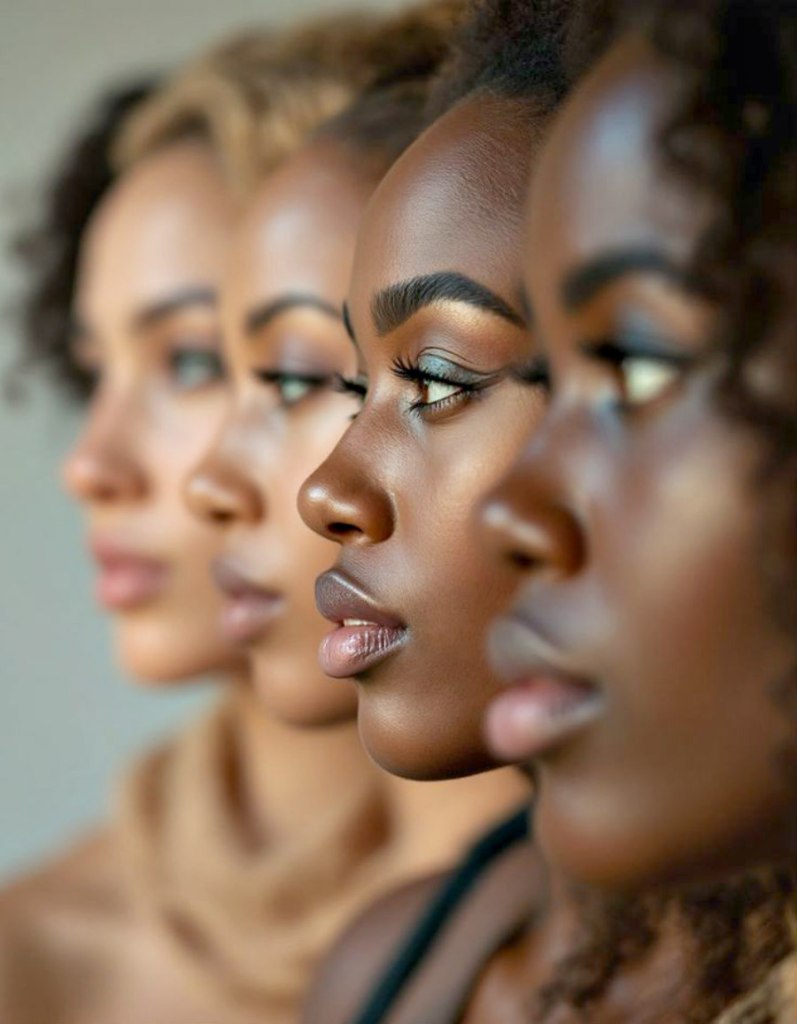
Color is more than skin deep—it is history etched into flesh. Every shade of brown tells a story of migration, enslavement, colonization, and resistance. The complexion of the African diaspora is both a map and a mirror, reflecting the global journey of a people who endured fragmentation yet remained whole in spirit. To understand the modern brown identity, one must first confront the historical chains that bound it—chains not only of iron but of ideology.
The origins of color-based hierarchy began with colonization. As European empires expanded, they encountered people with darker skin across Africa, Asia, and the Americas. Instead of celebrating difference, they weaponized it. Color became the currency of control—an outward symbol of who was to rule and who was to serve. The darker the hue, the lower the worth assigned. Thus, the global structure of colorism was born—not from truth, but from the convenience of power.
In the transatlantic slave trade, complexion became both identifier and punishment. Enslaved Africans were categorized by skin tone—those with lighter complexions, often the offspring of white masters and Black mothers, were sometimes granted minor privileges within the plantation hierarchy. This created an internalized schism within the enslaved community, one that would persist for centuries: the illusion that proximity to whiteness meant elevation.
The colonial powers extended this pigmentocracy beyond the Americas. In India, the British reinforced pre-existing caste notions through their preference for lighter skin. In the Caribbean, Spanish and French colonizers created entire systems of racial classification—mulatto, quadroon, octoroon—each reflecting how deeply skin tone was tied to social mobility. The hierarchy of color became global, shaping not just how others saw us, but how we saw ourselves.
Psychologically, this division created generational trauma. People of color internalized shame toward their own reflection. Light skin became aspiration; dark skin became condemnation. This self-hatred was nurtured through education, religion, and beauty standards that praised the pale while vilifying the deep brown. The chains of complexion were mental as much as material.
Even after emancipation, the residue of these systems lingered. In post-slavery America, organizations like the “Blue Vein Societies” admitted only those whose skin was light enough to reveal blue veins beneath. Meanwhile, darker-skinned individuals faced exclusion not only from white spaces but from within their own communities. Colorism became an invisible whip that outlasted the plantation.
The entertainment and beauty industries deepened this divide. For decades, Hollywood and advertising glorified lighter-skinned Black actors and models as the standard of beauty. The “brown paper bag test” haunted social circles, while bleaching creams became symbols of internalized oppression. The damage was generational—entire lineages raised to equate lightness with desirability and darkness with deficiency.
Yet, despite this oppression, resistance rose. The Black Power Movement of the 1960s ignited a revolution of self-love. Phrases like “Black is Beautiful” challenged centuries of conditioning. Dark-skinned men and women began to see themselves as embodiments of royal lineage rather than colonial inferiority. The celebration of afros, natural features, and brown skin was not vanity—it was vindication.
The legacy of colorism, however, remains. Today, social media exposes how deeply color bias persists even among people of African descent. Lighter tones often receive more visibility and validation, while darker tones are marginalized or fetishized. The struggle is no longer about survival alone—it is about recognition and restoration. The modern brown identity must therefore wrestle with both pride and pain.
Historically, the Bible has been misused to justify racial hierarchies. European colonizers reimagined biblical figures as white, erasing their Afro-Asiatic origins. This spiritual bleaching further detached brown people from divine identity. But scripture tells another story—one of people from lands “black as the tents of Kedar” (Song of Solomon 1:5, KJV). Reclaiming that truth is central to healing the psychological scars of color-based oppression.
Sociologically, the “brown identity” today exists as both unity and complexity. Across the globe, people of African, Latin, Indigenous, and South Asian descent share the struggle against colorism. The brown identity is no longer regional—it is diasporic. It symbolizes the shared inheritance of colonial trauma and the collective awakening to self-worth.
Culturally, music, film, and literature have become tools of reclamation. Artists like Nina Simone, Toni Morrison, and Kendrick Lamar have used their platforms to affirm the depth and beauty of brownness. Through art, the brown identity becomes more than skin—it becomes song, rhythm, and revolution. It speaks to both the pain of being unseen and the power of being undeniable.
Psychologically, decolonizing beauty remains the next frontier. It requires that we dismantle the subconscious hierarchies implanted by colonialism. That means redefining professionalism, beauty, and intelligence beyond Eurocentric standards. It means teaching children that melanin is not a mark of shame but a medal of divine craftsmanship. Healing begins when brown becomes holy again.
Spiritually, melanin carries symbolism that transcends science. It absorbs light, transforms energy, and protects life. In that sense, it mirrors the spiritual essence of the brown-skinned people—absorbing pain, transforming it into art, faith, and resilience. The ability to survive centuries of oppression while radiating strength is itself a form of divine alchemy.
The future of the brown identity depends on solidarity. Bridging the internal divides between light and dark, between Afro-Latino and African American, between African and Caribbean, is crucial. The enemy was never one another—it was the system that taught us to distrust our own reflection. True liberation means seeing beauty in every shade of our spectrum.
Education plays a vital role in this transformation. Schools must teach the real history of how complexion was politicized. When young people learn that colorism was engineered to divide and conquer, they gain the power to reject it. Knowledge becomes liberation; truth becomes therapy.
Economically, representation still matters. When brands, corporations, and media campaigns embrace all shades of brown authentically—not tokenistically—they contribute to cultural healing. Every dark-skinned model, every brown-skinned CEO, every melanated hero on screen chips away at centuries of erasure. Visibility becomes victory.
Ultimately, the modern brown identity is an act of reclamation. It is the conscious decision to love the skin that history taught us to hate. It is choosing pride over pain, unity over division, and truth over imitation. It is the realization that every shade of brown carries the fingerprint of God and the legacy of survival.
The chains of complexion may have shaped our past, but they do not define our future. Today’s brown identity stands as both memory and movement—a declaration that what was once weaponized can now be worshiped. In embracing our full spectrum, we unshackle not just our image but our spirit. The brown identity, once bound by hierarchy, now rises as heritage—unbroken, unashamed, and undeniably divine.
References
- The Holy Bible, King James Version (Song of Solomon 1:5).
- hooks, b. (1992). Black Looks: Race and Representation. South End Press.
- Russell, K., Wilson, M., & Hall, R. (1992). The Color Complex: The Politics of Skin Color Among African Americans. Doubleday.
- Hall, S. (1997). Representation: Cultural Representations and Signifying Practices. Sage.
- Davis, A. (1981). Women, Race, & Class. Random House.
- Hill Collins, P. (2000). Black Feminist Thought. Routledge.
- Morrison, T. (1992). Playing in the Dark: Whiteness and the Literary Imagination. Vintage.
- Tate, S. (2009). Black Beauty: Aesthetics, Stylization, Politics. Routledge.
- Craig, M. L. (2002). Ain’t I a Beauty Queen?: Black Women, Beauty, and the Politics of Race. Oxford University Press.
- West, C. (1993). Race Matters. Beacon Press.
 THE BROWN GIRL DILEMMA