
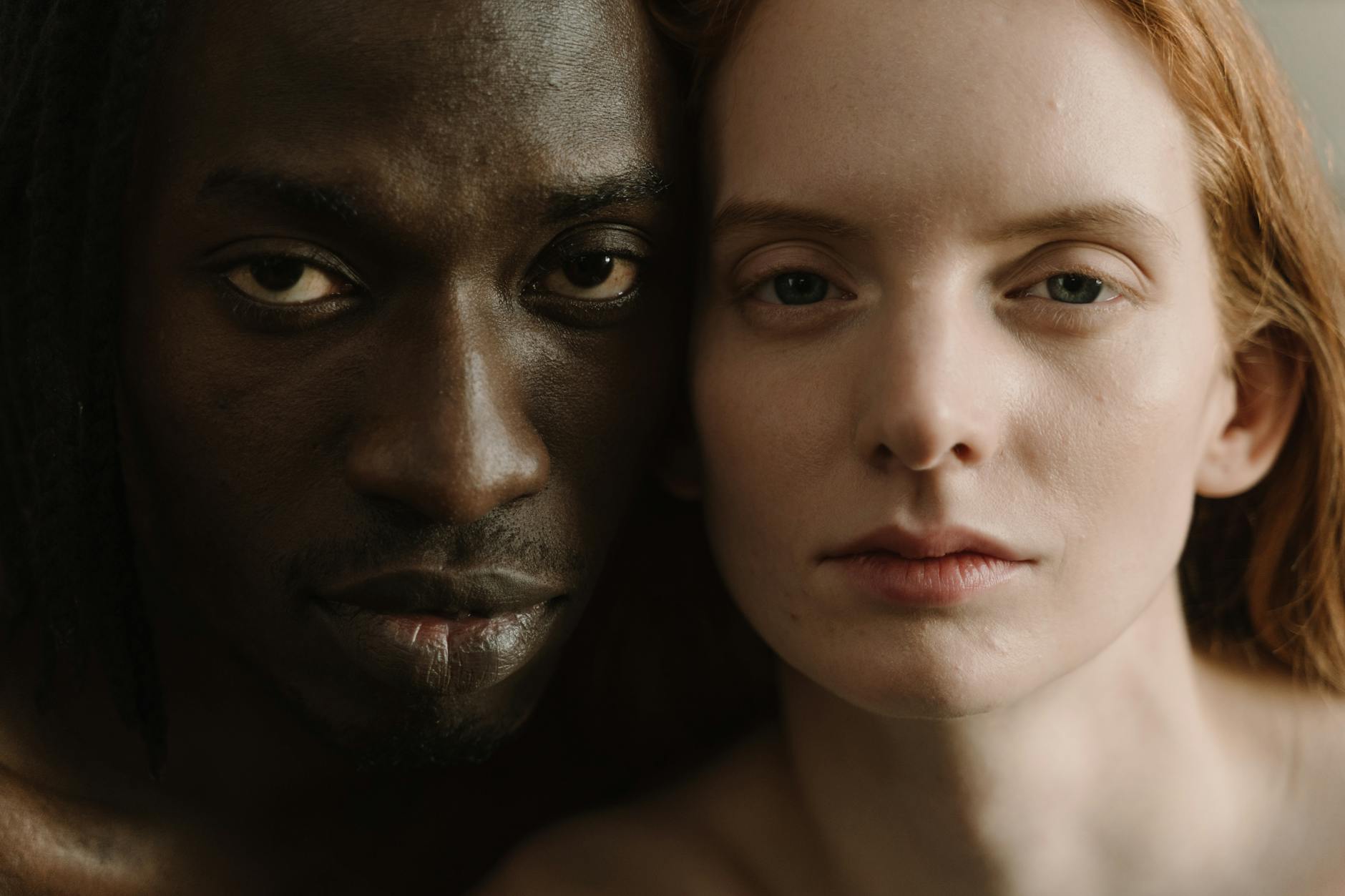
Colorism, the system of discrimination that privileges lighter skin tones over darker ones within the same racial or ethnic group, has deep and lasting effects on personal relationships, particularly in the realms of attraction and marriage. Rooted in slavery, colonialism, and Eurocentric beauty ideals, colorism continues to shape how individuals perceive desirability, compatibility, and social status in romantic relationships. These biases not only affect who people date and marry but also reinforce systemic inequities across generations.
Historically, the origins of colorism in America can be traced back to slavery, when lighter-skinned enslaved people—often the offspring of white slave owners and Black women—were given preferential treatment, including less physically demanding work and occasional access to education (Hunter, 2007). This distinction laid the foundation for associating lighter skin with privilege, desirability, and higher social standing. These values, rooted in white supremacy, carried over into post-slavery society and became embedded in ideas of beauty and mate selection.
Attraction, often seen as a deeply personal and subjective experience, is not immune to these social hierarchies. Numerous studies have shown that lighter-skinned individuals are frequently perceived as more attractive, feminine, or masculine in socially acceptable ways (Hill, 2002). In media and popular culture, lighter-skinned Black women are often cast in roles of love interests or wives, while darker-skinned women are more likely to be portrayed as aggressive, hypersexual, or undesirable. These portrayals reinforce biases that influence dating preferences across racial and cultural lines.
For men, colorism influences partner selection by shaping perceptions of status and desirability. Men who select lighter-skinned partners may be viewed as having achieved higher social standing, as these choices align with Eurocentric standards of beauty and social capital (Monk, 2014). Conversely, women with darker skin tones often report being overlooked, rejected, or fetishized in the dating market, facing unique struggles in establishing romantic relationships that validate their worth.
The Influence of Skin Tone on Attraction and Marriage Patterns
Section 1: Dating Preferences by Skin Tone
| Skin Tone | Perceived Attractiveness | Dating Market Opportunities | Notes |
|---|---|---|---|
| Light | High | More options, higher social mobility | Often favored in media and social circles (Hunter, 2002) |
| Medium | Moderate | Moderate options | May face mixed perceptions in social and professional settings |
| Dark | Lower (due to societal bias) | Fewer options, often fetishized or overlooked | Psychological effects include lower self-esteem, feelings of invisibility (Keith & Herring, 1991) |
Section 2: Marriage Patterns by Skin Tone
| Skin Tone | Likelihood to Marry | Spouse Socioeconomic Status | Notes |
|---|---|---|---|
| Light | Higher | Often higher SES partners | “Marriage market capital” based on social perceptions (Goldsmith et al., 2007) |
| Medium | Moderate | Mixed SES partners | Varies by social circle and geographic location |
| Dark | Lower | Often lower SES partners | Colorism influences social and economic outcomes; may experience delayed marriage or less partner choice |
Section 3: Psychological & Spiritual Impacts
- Dark-skinned women: Increased risk of low self-esteem, body image dissatisfaction, internalized colorism, and rejection in dating.
- Light-skinned women: Higher social capital but may experience imposter syndrome or pressure to maintain image.
- Spiritual perspective: KJV Bible emphasizes God looks at the heart, not outward appearance (1 Samuel 16:7).
- Community impact: Need for affirmations, media representation, and celebration of all skin tones (#MelaninMagic, #BlackGirlMagic).
Section 4: Key Takeaways
- Colorism is a systemic influence shaping dating and marriage patterns.
- Light skin often provides social advantages, while dark skin faces bias even in elite or professional circles.
- Internalized biases affect self-esteem, relationships, and life choices.
- Spiritual and community affirmation are essential tools to counteract colorism.
Marriage patterns reflect the cumulative impact of these biases. Studies have found that lighter-skinned women are more likely to marry, and they tend to marry partners with higher socioeconomic status compared to their darker-skinned counterparts (Goldsmith, Hamilton, & Darity, 2007). These trends suggest that skin tone operates as a form of “marriage market capital,” where lighter-skinned individuals are afforded more opportunities for upward mobility through marriage. For darker-skinned individuals, limited marriage prospects can exacerbate social and economic inequality.
Colorism also affects interracial marriages. Black women with lighter skin tones are statistically more likely to marry outside their race compared to darker-skinned Black women, in part because lighter skin is perceived as more aligned with mainstream beauty ideals (Hunter, 2002). This trend reflects how racialized beauty hierarchies shape romantic choices not only within the Black community but also in broader society.
Case Study 1: Beyoncé and Jay-Z
Beyoncé, often cited as one of the most powerful and admired Black women in the world, is light-skinned with a caramel complexion. Her marriage to Jay-Z, who himself comes from a slightly lighter-skinned African American background, reflects a dynamic where skin tone and status intersect. While their union is also grounded in shared values and artistic collaboration, some scholars note that lighter skin and societal beauty standards likely amplified Beyoncé’s social capital, increasing her visibility, desirability, and access to elite circles (Hunter, 2007).
Case Study 2: Lupita Nyong’o and Relationships
Lupita Nyong’o, a darker-skinned actress who gained international acclaim for her role in 12 Years a Slave, has spoken about facing colorism within Hollywood and dating circles. Her experience highlights how darker-skinned Black women often encounter fetishization or erasure in romantic contexts. Despite her global recognition, societal biases still shape the perception of desirability, illustrating that colorism is not limited to casual dating but extends into perceptions of high-status partners.
Case Study 3: Michael B. Jordan and Dating Preferences
Actor Michael B. Jordan, who is lighter-skinned compared to some of his peers, has often been paired romantically with women in Hollywood who are either lighter-skinned or mixed-race. Media narratives around these pairings frequently emphasize their beauty and perceived “marketability,” underscoring how skin tone remains a silent influencer in high-profile relationships. Such pairings demonstrate colorism’s subtle but persistent influence on attraction even among successful Black individuals.
Psychologically, these patterns create damaging effects on self-esteem and self-worth. Dark-skinned women often internalize rejection as a reflection of their inherent value, leading to feelings of invisibility, unworthiness, or bitterness toward the dating process. Conversely, lighter-skinned women may grapple with imposter syndrome, questioning whether their desirability is based on genuine love or simply their proximity to whiteness. Both experiences reflect the way colorism undermines authentic human connection in relationships.
Spiritually, colorism directly contradicts biblical teachings on love and marriage. Scripture emphasizes that love is not based on outward appearances but on the heart and character: “But the Lord said unto Samuel, Look not on his countenance, or on the height of his stature; because I have refused him: for the Lord seeth not as man seeth; for man looketh on the outward appearance, but the Lord looketh on the heart” (1 Samuel 16:7, KJV). Likewise, Proverbs 31 highlights the value of a virtuous woman over fleeting physical attributes. These verses affirm that God’s standard for attraction and marriage is rooted in righteousness and inner beauty, not skin tone or social status.
To break free from colorism’s hold on attraction and marriage patterns, both individuals and communities must confront their internalized biases. Media must continue diversifying portrayals of love and beauty, ensuring that darker-skinned individuals are celebrated as desirable, worthy partners. Within Black communities, fostering affirmations that embrace the full spectrum of melanin can help dismantle generational hierarchies. Spiritually, returning to God’s standard of love and marriage can provide healing, as couples root their unions not in skin tone but in faith, commitment, and character.
In conclusion, colorism continues to shape attraction and marriage patterns in profound ways, reinforcing inequities and damaging self-perceptions. By acknowledging these influences, embracing self-worth, and prioritizing character and faith, individuals can create relationships that reflect true love, equality, and divine worth.
References
- Goldsmith, A. H., Hamilton, D., & Darity, W. (2007). From dark to light: Skin color and wages among African-Americans. Journal of Human Resources, 42(4), 701–738.
- Hill, M. E. (2002). Skin color and the perception of attractiveness among African Americans: Does gender make a difference? Social Psychology Quarterly, 65(1), 77–91.
- Hunter, M. (2002). If you’re light you’re alright: Light skin color as social capital for women of color. Gender & Society, 16(2), 175–193.
- Hunter, M. (2007). The persistent problem of colorism: Skin tone, status, and inequality. Sociology Compass, 1(1), 237–254.
- Monk, E. P. (2014). Skin tone stratification among Black Americans, 2001–2003. Social Forces, 92(4), 1313–1337.
- The Holy Bible, King James Version.
 THE BROWN GIRL DILEMMA