
Tag Archives: black author

AUTHOR SPOTLIGHT: Toni Morrison

The Conjurer of Black Memory, Love, and Liberation
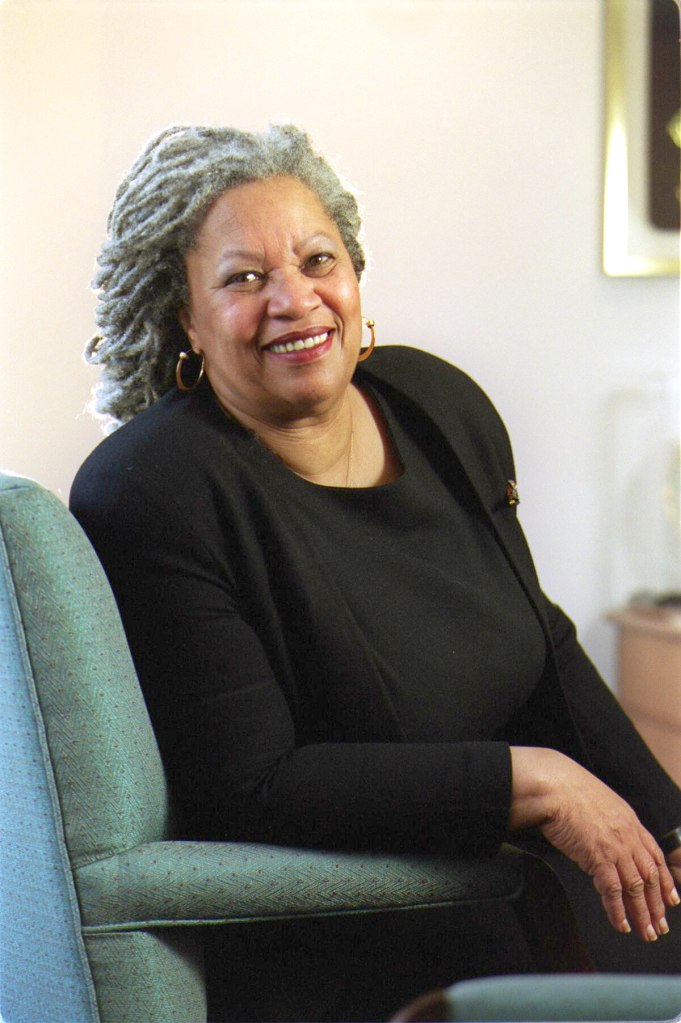
Photo credit: PATRICK KOVARIK/AFP/GettyImages)

Toni Morrison, born Chloe Ardelia Wofford on February 18, 1931, in Lorain, Ohio, was one of the most brilliant literary voices of the 20th century. A Nobel Laureate, Pulitzer Prize winner, editor, teacher, and cultural icon, Morrison reshaped American literature by centering the Black experience, especially the inner lives of Black women. Through lyrical prose, spiritual depth, and historical honesty, she offered the world powerful stories that honored the complexities of race, identity, trauma, and love. Her legacy continues to influence generations of readers, writers, and thinkers who see themselves reflected in the truth of her words.


Early Life and Inspiration

Morrison was raised in a working-class African American family during the Great Depression. Her parents, George and Ramah Wofford, emphasized education, oral tradition, and Black pride. From a young age, she was immersed in African American folklore, spirituals, and storytelling. Though she grew up in an integrated town, Morrison understood the weight of racism, particularly through her father’s deep mistrust of white people, which stemmed from his own experiences in the segregated South.

She attended Howard University, where she changed her name to Toni, a shortened version of her baptismal name, Anthony. She later earned a master’s degree in English from Cornell University. After marrying Harold Morrison, a Jamaican architect, she had two sons—Harold and Slade—but the marriage ended in divorce. She raised her children as a single mother while working as a senior editor at Random House, becoming the first Black woman to hold that position. It was during this time that she began writing fiction, often waking up before dawn to write while her children slept.


Becoming a Writer and Literary Vision

Toni Morrison’s decision to write stemmed from a deep desire to see Black life reflected with honesty, beauty, and dignity. She once said, “If there’s a book you really want to read, but it hasn’t been written yet, then you must write it.” Her debut novel, The Bluest Eye (1970), told the tragic story of a young Black girl who longs for blue eyes and acceptance in a world that devalues her Blackness. This set the tone for Morrison’s career—exploring themes of internalized racism, generational trauma, and spiritual survival.

Morrison’s writing style was uniquely poetic, non-linear, and rich in symbolism. She often wove together the mystical and the mundane, the historical and the personal, allowing her stories to transcend time while remaining grounded in the Black American experience. Her characters were deeply human—flawed, sacred, wounded, and strong—and she never apologized for writing to a Black audience. Morrison rejected the white gaze, choosing instead to write “without explaining to white people,” thereby creating authentic narratives that affirmed Black identity and voice.


Beloved and Tar Baby: Inspirations and Impact

Two of her most profound works, Tar Baby (1981) and Beloved (1987), exemplify Morrison’s commitment to excavating Black history and identity. Tar Baby explores the tensions between wealth and cultural memory, beauty standards, assimilation, and the spiritual consequences of disconnection from one’s roots. The novel, inspired by African American folklore, offers a complex meditation on what it means to be free—and what it costs to belong.

Beloved, widely regarded as her masterpiece, was inspired by the true story of Margaret Garner, an enslaved woman who killed her child rather than allow her to be captured and returned to slavery. Morrison transforms this historical account into a haunting ghost story that examines the psychological legacy of slavery. The novel, for which she won the Pulitzer Prize in 1988, presents memory not just as a personal experience, but as a communal reckoning. In 2006, The New York Times Book Review named Beloved the best American novel of the previous 25 years.


Challenges as a Black Woman and Author

Despite her immense talent, Morrison faced numerous challenges. As a Black woman in the predominantly white publishing world, she endured marginalization, tokenism, and skepticism. Her work was sometimes dismissed as “too Black” or “too political,” and her insistence on centering Black stories without catering to white sensibilities was considered radical. Nevertheless, she stood firm. Morrison refused to let racism and sexism shape her craft, stating, “The very serious function of racism is distraction. It keeps you from doing your work.” Her light skin may have shielded her from some overt forms of discrimination, but it did not spare her the structural barriers and cultural resistance faced by Black women in the literary world.


Awards, Recognition, and Cultural Influence

Morrison’s literary genius was eventually acknowledged with the highest honors. In 1993, she became the first African American woman to receive the Nobel Prize in Literature. She also received the Pulitzer Prize, the Presidential Medal of Freedom (2012), more than 30 honorary degrees, and a place in the canon of great American writers. Her work appeared in curricula across the world, and she was celebrated in pop culture through appearances on Oprah’s Book Club, interviews, documentaries, and film adaptations. In 2023, she was honored with a U.S. postage stamp—an enduring symbol of national recognition.

Beyond literature, Morrison became a cultural voice for justice and liberation. She used her platform to speak against racism, economic injustice, and the erasure of Black stories. She was revered for her intellect, her elegance, and her unwavering commitment to truth.


Private Life and Motherhood

Toni Morrison remained fiercely private about her personal life, though her love for her sons was evident in her interviews and dedications. Her son Slade Morrison, who predeceased her in 2010, co-wrote several children’s books with her. Her home life, though quiet, informed much of her writing. She infused her narratives with the rhythms of family life, the strength of single mothers, and the wisdom of matriarchs. Her experiences as a working mother, editor, and teacher were not separate from her art—they were its foundation.


Advice to Black Women and Lasting Legacy

Morrison’s advice to Black women was simple, bold, and liberating: “You are your best thing.” She believed in the power of Black women to define themselves, to love themselves fiercely, and to resist erasure. She encouraged them to create, to remember, and to live without apology.

Her legacy continues to thrive. Writers like Ta-Nehisi Coates, Jesmyn Ward, and Chimamanda Ngozi Adichie cite her as a major influence. Her novels are still taught in classrooms, her interviews quoted in protest signs, and her words invoked in moments of cultural reckoning. Morrison wrote not just with intellect, but with anointing.


Conclusion

Toni Morrison was not simply a writer—she was a witness, a warrior, and a woman of vision. Through her novels, she preserved the spiritual and historical truths of Black America. She showed the world that Black lives are rich with depth, pain, joy, and beauty. Her ability to transform suffering into art and memory into liberation makes her one of the most important literary voices in history. In honoring her, we honor a tradition of truth-telling and the endless power of the written word.


References

Morrison, T. (1970). The Bluest Eye. Holt, Rinehart and Winston.
Morrison, T. (1981). Tar Baby. Alfred A. Knopf.
Morrison, T. (1987). Beloved. Alfred A. Knopf.
The Nobel Foundation. (1993). Nobel Lecture: Toni Morrison.
Obama, B. (2012). Presidential Medal of Freedom Recipients. White House Archives.
New York Times Book Review. (2006). The Best Work of American Fiction of the Last 25 Years.
Winfrey, O. (1998). Oprah’s Book Club: Beloved. Harpo Productions.
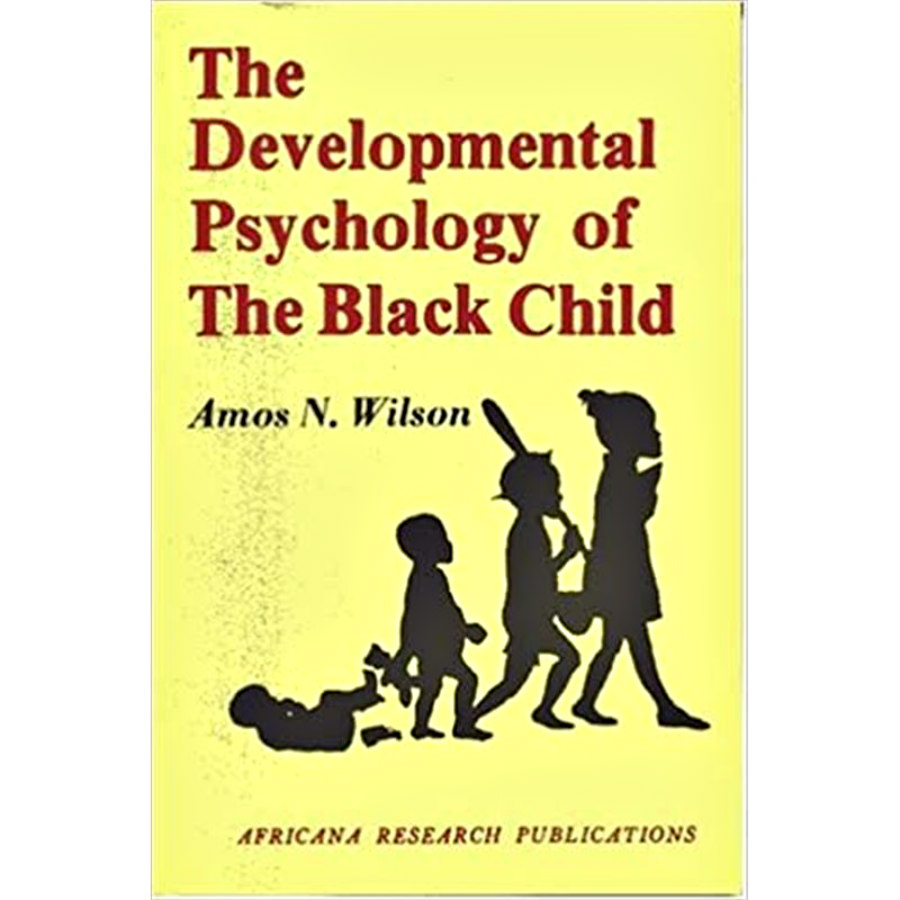
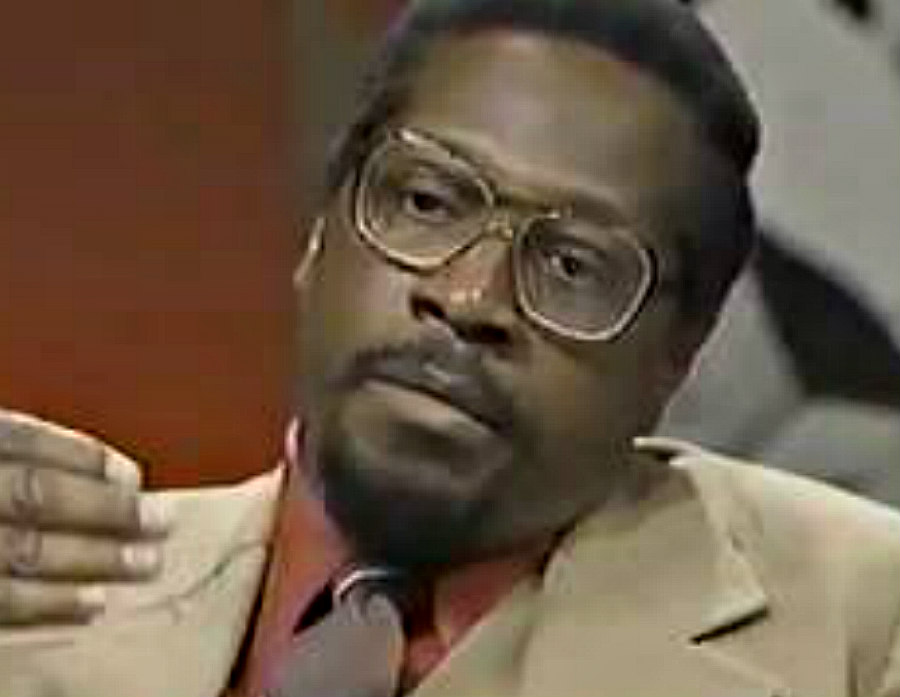
BOOK Review: The Developmental Psychology of the Black Child by Dr. Amos N. Wilson

Dr. Amos N. Wilson, one of the most profound and revolutionary minds in Black psychology and education. His work remains foundational for those seeking liberation from white supremacy and insight into the mental development of African-descended people.


🌟🌟🌟🌟🌟 5/5

Dr. Amos N. Wilson: Revolutionary Psychologist and Defender of the Black Mind
Featuring a 5-Star Review of The Developmental Psychology of the Black Child


Who Was Dr. Amos Wilson? Biography and Legacy

Dr. Amos N. Wilson (1941–1995) was a brilliant psychologist, educator, author, and Pan-African scholar whose life work was dedicated to the mental liberation of Black people—especially Black children. Born in Hattiesburg, Mississippi, during the Jim Crow era, Wilson experienced firsthand the devastating effects of racism, segregation, and educational neglect in America.

He earned his undergraduate degree at Morehouse College, one of the most prestigious Historically Black Colleges and Universities (HBCUs), and later received his Ph.D. in clinical psychology. He worked professionally as a psychologist, not a psychiatrist (a psychiatrist is a medical doctor who prescribes medication, whereas psychologists focus more on therapy, behavior, and educational assessments).

Wilson taught at City College of New York, worked in social services, and was a youth advocate in the community. Though he kept much of his personal life private, he was married and had children, whom he referenced as part of his lived experience raising and analyzing Black youth in America.


His Revolutionary Impact on Psychology

Dr. Wilson was one of the leading figures in African-centered psychology, challenging the Eurocentric models that labeled Black children as “deficient,” “disruptive,” or “inferior.” He argued that psychological development cannot be separated from the socioeconomic and political environment in which a child lives.

Wilson criticized the mainstream education system and mental health industry for misdiagnosing and mislabeling Black children, particularly Black boys, with learning disabilities and behavior disorders. His goal was to replace white-dominated models of psychology with Africentric, culturally-grounded frameworks rooted in history, identity, and liberation.


🧠 Five-Star Book Review

Title: The Developmental Psychology of the Black Child
By Dr. Amos N. Wilson
Rating: ⭐⭐⭐⭐⭐ (Essential, Groundbreaking, Liberatory)

This book is an intellectual masterpiece and a foundational text in the field of Black child psychology. Dr. Wilson wrote it to expose the harmful assumptions of traditional child development theories, which were based almost entirely on white children from middle-class environments. He argued that applying these same metrics to Black children—who face systemic racism, cultural marginalization, and poverty—creates a false narrative of inferiority.


Purpose and Discoveries of the Book

Dr. Wilson’s goal was to help educators, psychologists, and parents understand that Black children are different not in deficiency, but in experience and cultural expression. He carefully analyzed:

  • Cognitive development
  • Speech and language acquisition
  • Behavioral traits
  • Academic performance
  • Cultural identity formation

His central discovery was that Black children learn and grow differently, not because of biological inferiority, but due to environmental racism, cultural mismatch in classrooms, and lack of Afrocentric nurturing. The book includes data, case studies, and critiques of standardized testing, intelligence tests, and biased teacher expectations.

“The major problem facing Black children is not low IQ but low expectations and miseducation.”
—Dr. Amos N. Wilson


His Solutions: What Would Make a Difference?

Wilson was not just critical—he was constructive. He outlined practical, Afrocentric solutions to enhance the development of Black children:

  • Culturally relevant curriculum rooted in African history and identity
  • Black-controlled educational institutions
  • Parental involvement with strong cultural pride
  • Black psychologists and teachers trained in Africentric developmental theory
  • Community unity and collective responsibility

He argued that true education should not merely prepare Black children to fit into white society, but to transform and liberate it.


Dr. Wilson’s Views on Racism in America

Wilson taught that racism is not about feelings but systems. He saw white supremacy as a global power structure designed to protect white genetic survival, wealth, and dominance. He often said that Black people’s problems are political and economic in nature and must be solved through organized Black power, not begging for white validation or inclusion.

“Racism is a power relationship… White people are not superior, but they control the institutions of life and death.”
—Dr. Amos Wilson

His explosive voice, piercing intellect, and relentless truth-telling made him feared by white academia and loved by conscious Black communities. He was labeled “radical,” “controversial,” and “divisive,” because he exposed the core of systemic racism and called for Black self-determination.


His Activism and Public Influence

Though not a marcher or politician, Dr. Wilson was a radical intellectual activist. His activism was in the classroom, the lecture hall, and the page. He spoke passionately at Black conferences, on college campuses, and through media outlets like The Black Dot, Gil Noble’s Like It Is, and other grassroots platforms.

His voice—booming, baritone, authoritative, and deeply Black—could shake a room and awaken minds. He challenged both white systems and Black complacency.

“If you don’t understand white supremacy—what it is and how it works—everything else you think you know will only confuse you.”
—A quote often attributed to both Wilson and Neely Fuller Jr., reflecting their shared ideology.


Are Black Children Different from White Children?

Yes—not in intrinsic capability, but in cultural experience, linguistic patterns, and the societal context they are born into. Wilson emphasized:

  • Black children often demonstrate early creativity, rhythm, advanced speech patterns, and kinesthetic learning styles.
  • They are often punished for their brilliance—seen as “hyper,” “loud,” or “defiant”—when in fact they are expressive, inquisitive, and socially advanced.
  • Standardized testing, Eurocentric curricula, and white teacher bias suppress their natural intelligence and creativity.

He argued that white children are socialized into supremacy, while Black children are often miseducated into submission. The solution, Wilson insisted, was not integration but institution-building, cultural restoration, and psychological freedom.


Final Thoughts: A Genius We Must Not Forget

Dr. Amos N. Wilson was a towering intellect, an educator of the soul, and a protector of Black youth. He didn’t just critique the system—he built a blueprint for liberation. His work remains more relevant than ever in an age of continued police violence, educational neglect, and cultural confusion.

He was respected because he was fearless—a man who told the truth when it wasn’t popular. He gave his life to the mind and left behind mental ammunition for Black survival and progress.


References

  • Wilson, A. N. (1978). The Developmental Psychology of the Black Child. Afrikan World Infosystems.
  • Wilson, A. N. (1998). Blueprint for Black Power: A Moral, Political, and Economic Imperative for the Twenty-First Century.
  • Akbar, N. (1991). Visions for Black Men.
  • Kambon, K. (2003). Cultural Misorientation: The Greatest Threat to the Survival of the Black Race in the 21st Century.
  • Asa G. Hilliard III and Wade W. Nobles, colleagues and fellow pioneers in Afrocentric psychology.