
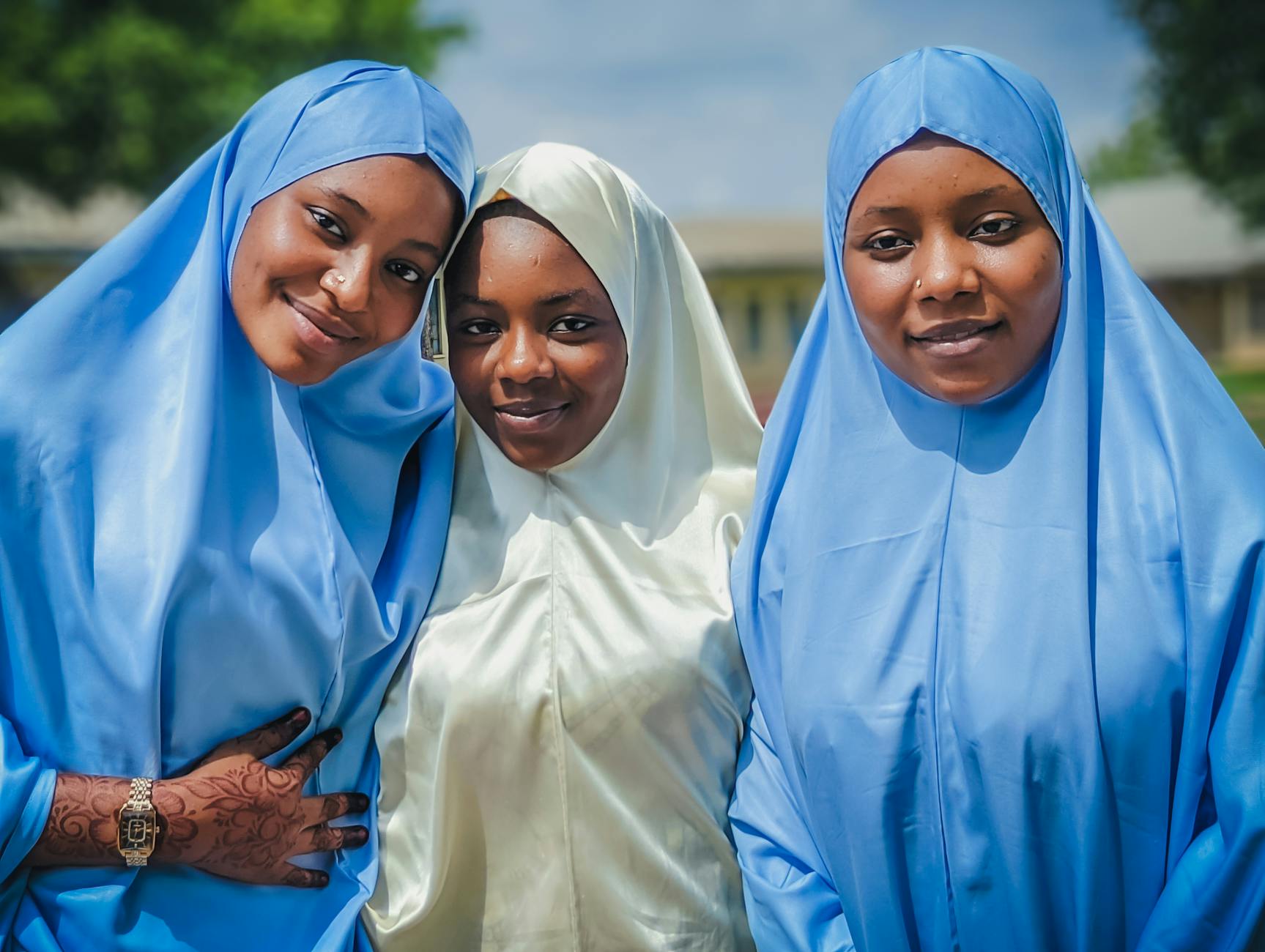
Black beauty is a multifaceted phenomenon shaped by evolution, history, psychology, and cultural representation. It is both a biological inheritance and a cultural expression, a story of resilience inscribed in the body and articulated through identity and artistry. To examine the science of Black beauty is to recognize how biology and culture work together to produce a radiance that has endured despite systemic erasure and oppression.
From a biological standpoint, the features associated with African ancestry are the products of adaptation and survival. Melanin-rich skin evolved to protect against harmful ultraviolet rays, preserving essential nutrients like folate while allowing for sufficient vitamin D synthesis (Jablonski & Chaplin, 2010). Similarly, tightly coiled hair acts as a natural regulator, shielding the scalp from heat while allowing airflow for cooling (Robins, 2009). These traits, often marginalized in Western standards, reflect evolutionary brilliance and resilience.
Facial diversity within African-descended populations further illustrates this complexity. Broader nasal passages facilitate air regulation in warmer climates, while fuller lips and diverse bone structures reveal the genetic depth of African populations, which are the most genetically varied in the world (Tishkoff et al., 2009). This diversity highlights that Black beauty cannot be confined to a single standard, but instead exists as a spectrum of biological expressions foundational to humanity itself.
Psychology, however, reveals how beauty is experienced and judged in society. For centuries, Eurocentric standards have distorted perceptions of beauty, leading to colorism, hair discrimination, and internalized racism within Black communities (Hunter, 2007). Such biases caused lasting psychological harm, shaping how individuals viewed themselves. Yet movements such as “Black is Beautiful” and the natural hair renaissance have countered these narratives, reframing beauty as pride in melanin, hair texture, and African aesthetics (Byrd & Tharps, 2014).
Cultural representation plays a powerful role in this redefinition. Historically, Black people were excluded from mainstream beauty imagery or depicted through degrading stereotypes. Icons like Cicely Tyson and Angela Davis challenged these norms by embracing natural hair and Afrocentric styles that carried political meaning. In the 21st century, Lupita Nyong’o and Rihanna’s Fenty Beauty expanded global beauty standards, affirming darker skin tones and inclusive cosmetics as worthy of admiration (Tate, 2009). Representation thus shifts beauty from marginalization to empowerment.
Historically, beauty within Black communities has also functioned as survival and resistance. Enslaved Africans braided hair not only as an aesthetic practice but also as a means of preserving cultural memory and transmitting coded messages for liberation (Byrd & Tharps, 2014). In these contexts, beauty was never superficial but deeply tied to resilience, dignity, and the struggle for freedom. This historical reality underscores how Black beauty is inseparable from cultural expression and survival.
Spiritually, beauty is defined by values deeper than the physical. Biblical scripture emphasizes inner beauty: “Whose adorning let it not be that outward adorning… but the hidden man of the heart” (1 Peter 3:3–4, KJV). For Black people, whose beauty was historically devalued, spiritual strength and inner radiance provided a foundation for self-worth and endurance. Thus, Black beauty extends beyond the surface, embodying faith, character, and the divine imprint of creation.
In conclusion, the science of Black beauty reveals it as both biological and cultural. Evolution crafted traits that ensured survival, while cultural expression transformed those traits into symbols of pride, identity, and resistance. From biology to psychology, from history to spirituality, Black beauty reflects resilience and radiance. It is a testimony not only to adaptation but also to the enduring power of a people who continue to shape global definitions of what it means to be beautiful.
References
- Byrd, A., & Tharps, L. (2014). Hair story: Untangling the roots of Black hair in America. St. Martin’s Press.
- Hunter, M. (2007). The persistent problem of colorism: Skin tone, status, and inequality. Sociology Compass, 1(1), 237–254.
- Jablonski, N. G., & Chaplin, G. (2010). Human skin pigmentation as an adaptation to UV radiation. Proceedings of the National Academy of Sciences, 107(Suppl 2), 8962–8968.
- Robins, A. H. (2009). Biological perspectives on human pigmentation. Cambridge University Press.
- Tate, S. A. (2009). Black beauty: Aesthetics, stylization, politics. Ashgate.
- Tishkoff, S. A., et al. (2009). The genetic structure and history of Africans and African Americans. Science, 324(5930), 1035–1044.
 THE BROWN GIRL DILEMMA