Tag Archives: bible

Smart Money Series: Financial Sins That Keep You Poor

Scripture makes it clear that prosperity is not merely material but spiritual, and true wealth begins with the condition of the soul. The Bible teaches that “Beloved, I wish above all things that thou mayest prosper and be in health, even as thy soul prospereth” (3 John 1:2, KJV). This establishes that financial outcomes are deeply connected to spiritual alignment, values, and obedience to God’s principles.

One of the greatest financial sins is materialism, which places possessions above purpose and wealth above God. Jesus warned that no one can serve both God and money, for one will always dominate the heart (Matthew 6:24). Materialism shifts trust from divine provision to human accumulation, producing anxiety, greed, and spiritual emptiness rather than true prosperity.

Another major cause of financial stagnation is neglecting the poor, widows, and orphans. Scripture repeatedly emphasizes that generosity toward the vulnerable is not optional but central to righteousness. Proverbs teaches that those who give to the poor lend to the Lord, and God Himself repays (Proverbs 19:17). Ignoring the needy blocks spiritual flow and hardens the heart against divine compassion.

God ties personal prosperity to social responsibility. When individuals hoard resources and ignore injustice, they disconnect from God’s economic system. Isaiah condemns religious practice without care for the oppressed, declaring that true worship includes feeding the hungry and sheltering the poor (Isaiah 58:6–10). Financial blessing is connected to ethical stewardship, not selfish accumulation.

Slothfulness is another financial sin that leads to poverty. The Bible consistently warns that laziness produces lack, while diligence produces increase. “The soul of the sluggard desireth, and hath nothing: but the soul of the diligent shall be made fat” (Proverbs 13:4). Waiting passively for opportunity rather than actively pursuing work reflects spiritual and practical irresponsibility.

God honors movement, effort, and initiative. The diligent person seeks multiple opportunities, learns new skills, and refuses stagnation. Scripture teaches that those who do not work should not expect to eat, reinforcing the moral obligation of productivity (2 Thessalonians 3:10). Faith is not inactivity; it is obedience in action.

Another destructive financial pattern is going into debt. Debt is portrayed in scripture as a form of bondage, not blessing. “The borrower is servant to the lender” (Proverbs 22:7). Debt compromises freedom, limits future choices, and places financial authority into the hands of others.

Debt is also a spiritual issue because it reflects misplaced trust. Instead of relying on God’s provision and disciplined stewardship, individuals often rely on credit, loans, and consumption. Romans instructs believers to owe no one anything except love, emphasizing freedom from financial entanglements (Romans 13:8).

Many remain poor because they are trapped in consumer culture and comparison, often called “keeping up with the Joneses.” This mindset pressures individuals to spend beyond their means to maintain social image. Scripture warns that life does not consist in the abundance of possessions (Luke 12:15).

Comparison destroys contentment and breeds dissatisfaction. Instead of seeking God’s purpose, individuals chase lifestyles that God never assigned to them. This leads to unnecessary spending, chronic debt, and emotional stress rather than peace and stability (Hebrews 13:5).

Another financial sin is failing to seek God’s will for one’s life. Many pursue careers, businesses, and goals based solely on money, not divine calling. Scripture teaches that God has specific plans for each person, and ignoring those plans leads to frustration and misalignment (Jeremiah 29:11).

When people do not allow God to lead them, they often work hard in directions that produce little fruit. Proverbs teaches that many plans exist in the human heart, but only the Lord’s purpose will prevail (Proverbs 19:21). Prosperity flows most naturally when one walks in divine assignment.

Jesus taught that financial provision follows spiritual priority. “Seek ye first the kingdom of God, and his righteousness; and all these things shall be added unto you” (Matthew 6:33). This principle reverses worldly economics by placing obedience before income.

Many remain poor because they seek money first and God last. This inversion creates stress, fear, and instability. Kingdom economics teach that provision is a byproduct of alignment, not obsession with wealth.

Another overlooked sin is withholding generosity. Giving is not loss but circulation. Scripture teaches that those who scatter increase, while those who withhold tend toward poverty (Proverbs 11:24–25). Generosity keeps resources flowing and the heart soft.

From a theological perspective, generosity reflects trust in God rather than attachment to money. The poor widow in scripture gave her last offering and was praised for her faith (Mark 12:41–44). True wealth is measured by trust, not accumulation.

Financial poverty is often sustained by fear-based decision-making. Fear leads to hoarding, risk avoidance, and a lack of investment in growth. God commands believers not to fear, for fear contradicts faith and limits potential (2 Timothy 1:7).

Faith requires movement, discipline, and obedience. The servant who buried his talent out of fear was condemned, while those who invested were rewarded (Matthew 25:14–30). Fear preserves poverty; faith produces increase.

Financial Practices That Lead to Freedom (Biblical Guide)

Put God first in your finances
Seek God’s kingdom before chasing money. Pray over your income, decisions, and direction. Alignment comes before increase (Matthew 6:33).

Prosper your soul first
Work on your spiritual life, mindset, discipline, and emotional health. Financial habits follow soul habits (3 John 1:2).

Reject materialism
Stop measuring success by what you own or show. Possessions are tools, not identity (Luke 12:15).

Give to the poor and vulnerable
Support the poor, widows, fatherless, and those in need. Giving keeps resources circulating and opens spiritual flow (Proverbs 19:17).

Live below your means
Don’t spend everything you earn. Build margin and resist lifestyle inflation (Proverbs 21:20).

Avoid unnecessary debt
Debt limits freedom and future choices. Pay down what you owe and stop borrowing for wants (Proverbs 22:7).

Owe no one except love
Aim for financial independence and relational peace (Romans 13:8).

Work diligently and actively
Seek opportunities, side work, skill-building, and multiple streams when needed. Faith requires movement (Proverbs 13:4).

Reject laziness and stagnation
Don’t wait for perfect conditions. Start where you are with what you have (Ecclesiastes 11:4).

Stop comparing yourself to others
Don’t try to keep up with lifestyles that aren’t yours (Hebrews 13:5).

Follow God’s will for your life
Choose purpose over paycheck. Prosperity flows easier in divine assignment (Proverbs 19:21).

Create a budget and plan
Write your vision and manage your money intentionally (Proverbs 16:3).

Build savings and emergency funds
Prepare for seasons of uncertainty like Joseph did in Egypt (Genesis 41:34–36).

Practice generosity consistently
Giving is not loss; it is circulation and trust (Proverbs 11:24–25).

Invest in growth, not just consumption
Learn, study, train, and improve your skills (Proverbs 1:5).

Make decisions in faith, not fear
Fear leads to hoarding and missed opportunities (2 Timothy 1:7).

Take responsibility for your choices
Blame keeps you stuck; accountability creates freedom (Galatians 6:5).

Serve others with your gifts
Money follows value, and value comes from service (Matthew 25:29).

Keep a grateful heart
Gratitude protects you from pride and greed (1 Thessalonians 5:18).

Trust God as your true source
Jobs, businesses, and income are channels—God is the source (Deuteronomy 8:18).

Ultimately, financial sin is not merely about money but about misalignment with God’s order. Poverty persists when individuals reject divine principles of stewardship, generosity, discipline, and obedience. Prosperity flows when life aligns with God’s will.

True wealth begins in the soul. When the soul prospers, behavior changes, priorities shift, and financial patterns transform. Poverty is not always economic—it is often spiritual, rooted in values, beliefs, and disconnection from divine wisdom.

The Bible does not promise luxury, but it does promise provision. God’s system is not built on exploitation, comparison, or debt, but on trust, diligence, generosity, and obedience. Financial freedom is ultimately a byproduct of spiritual alignment with the Most High.


References

The Holy Bible, King James Version. (1611/2017). Cambridge University Press.

Blomberg, C. L. (1999). Neither poverty nor riches: A biblical theology of material possessions. InterVarsity Press.

Keller, T. (2009). Counterfeit gods: The empty promises of money, sex, and power. Dutton.

Wright, C. J. H. (2004). Old Testament ethics for the people of God. InterVarsity Press.

Willard, D. (1998). The divine conspiracy: Rediscovering our hidden life in God. HarperOne.

We are Dust with his Breath

In the beginning of creation, humanity is introduced not as an accident of nature but as a deliberate act of divine intention. Scripture teaches that God formed man from the dust of the ground and breathed into his nostrils the breath of life, and man became a living soul (Genesis 2:7, KJV). This verse establishes a foundational theological truth: without the breath of God, humanity remains lifeless matter, no different from the soil beneath our feet.

The imagery of dust is deeply symbolic. Dust represents human fragility, limitation, and mortality. It reminds us that no matter how advanced civilization becomes, humanity remains dependent on divine power for existence. The breath of God transforms dust into life, meaning that human dignity does not originate from intellect, wealth, or status, but from divine impartation (Psalm 103:14).

The breath of life is not merely biological respiration; it is spiritual animation. In Hebrew, the word for breath, ruach, also means spirit or wind, indicating that life itself is sustained by the Spirit of God. This suggests that humanity is not self-sustaining but continuously upheld by divine presence (Ezekiel 37:5).

Without God’s breath, human existence loses its sacred meaning. Modern society often elevates human autonomy and self-sufficiency, yet scripture consistently reminds us that life is borrowed, not owned. Every heartbeat and breath testifies to divine mercy rather than human control (Acts 17:25).

The Most High God of Israel is portrayed throughout scripture as the giver and sustainer of life. He is not distant from creation but intimately involved in its continuation. Job acknowledges this truth when he declares that the Spirit of God has made him and the breath of the Almighty gives him life (Job 33:4).

To cherish the Creator is to recognize the source of one’s existence. Gratitude becomes a spiritual posture when one understands that life is a divine gift rather than a human achievement. Worship, therefore, is not ritualistic obligation but an acknowledgment of existential dependence (Psalm 150:6).

Human pride often blinds people to this reality. Scientific advancement has led many to believe that life can be explained without God, yet even science cannot produce consciousness from nothing. The mystery of life still points back to divine origin rather than mechanical causation (Collins, 2006).

In biblical theology, breath is also associated with renewal and restoration. In the valley of dry bones, God commands breath to enter lifeless bodies, and they rise again, symbolizing spiritual revival and national restoration (Ezekiel 37:9–10). This narrative reinforces that without divine breath, there is no resurrection, no hope, and no future.

The breath of God also signifies moral responsibility. If life comes from God, then life belongs to God. Humanity is therefore accountable to divine standards, not self-created ethics. This challenges modern individualism, which promotes self-definition without divine authority (Romans 14:7–8).

To say “we are dust without His breath” is to affirm human humility. It dismantles the illusion of self-made identity and replaces it with sacred dependency. Even kings and empires return to dust, but God’s breath remains eternal (Ecclesiastes 12:7).

The Most High is not merely a creator but a sustainer. He does not abandon what He forms. Scripture portrays God as continually involved in the world, sustaining all things by His word and power (Hebrews 1:3). Life is not a past miracle but an ongoing one.

Cherishing the Creator involves living in awareness of divine presence. It transforms daily life into a sacred experience. Eating, breathing, thinking, and loving become acts of worship when viewed through the lens of divine origin (Colossians 3:17).

The concept of breath also connects to divine communication. God’s breath produces His word, and His word produces life. The same God who breathed into Adam later breathed scripture into prophets and apostles, making His word living and powerful (2 Timothy 3:16).

From a theological perspective, denying God as the source of life leads to spiritual alienation. When humanity forgets its Creator, it begins to worship creation, self, and materialism. This reversal of order results in moral decay and existential emptiness (Romans 1:21–25).

The breath of God also represents divine intimacy. Unlike other creatures, humanity receives life through direct divine interaction. God does not speak humans into existence; He breathes into them, suggesting relational closeness rather than distant creation (Brueggemann, 2010).

Life therefore carries sacred responsibility. If God’s breath animates humanity, then every human life possesses inherent worth, regardless of race, class, or ability. This foundation supports biblical human dignity and justice (Genesis 1:27).

The Most High God of Israel reveals Himself not only as powerful but as compassionate. He breathes life into fragile dust and remains patient with human failure. His mercy sustains those who constantly fall short of divine perfection (Lamentations 3:22–23).

Even death in scripture does not represent divine abandonment. The return of breath to God signifies transition, not annihilation. The soul returns to its source, awaiting divine judgment and restoration (Ecclesiastes 12:7).

In this sense, breath becomes eschatological. It points beyond physical life to eternal reality. God’s breath does not merely create time-bound existence but prepares humanity for everlasting communion (John 20:22).

Ultimately, the statement “we are dust without His breath” is not a message of despair but of sacred truth. It reminds humanity that life is not meaningless, accidental, or random. Life is divine, purposeful, and sustained by the Most High God of Israel.

To cherish the Creator is to live in reverence, humility, and gratitude. Every breath becomes a testimony of divine mercy, and every moment becomes an opportunity to acknowledge the One who turns dust into living souls.


References

Brueggemann, W. (2010). Genesis: Interpretation: A Bible commentary for teaching and preaching. Westminster John Knox Press.

Collins, F. S. (2006). The language of God: A scientist presents evidence for belief. Free Press.

The Holy Bible, King James Version. (1611/2017). Cambridge University Press.

Wright, N. T. (2012). How God became king: The forgotten story of the Gospels. HarperOne.

Walton, J. H. (2009). The lost world of Genesis one: Ancient cosmology and the origins debate. InterVarsity Press.

Dilemma: Fear

Fear is one of the oldest human emotions, woven into the survival instincts of the body and the spiritual consciousness of the soul. It alerts, warns, and protects, yet when fear governs the heart, it becomes a tyrant rather than a teacher. In today’s world, fear has shifted from momentary danger to a constant psychological atmosphere, shaping how people think, plan, and hope.

Modern fears are no longer limited to immediate threats. Many live under the weight of persistent uncertainty—fear of not having enough food, fear of financial collapse, fear of illness, fear of violence, and fear of what tomorrow may bring. These anxieties quietly influence decisions and erode peace, even when danger has not yet arrived.

Scripture acknowledges fear as a real human experience, not an imaginary weakness. Throughout the Bible, men and women of faith faced famine, war, exile, and loss. Their fears were not dismissed; instead, God addressed them directly. This reveals that fear itself is not sin, but what one does with fear determines its outcome.

Economic instability has revived ancient fears of scarcity. Rising food prices, supply shortages, and global disruptions have caused many to wonder how they will eat, provide, or survive. These fears echo biblical times when famine tested faith and obedience. Yet Scripture reminds believers that provision does not originate in systems alone but in God Himself.

The Bible speaks directly to the fear of lack. “Therefore I say unto you, Take no thought for your life, what ye shall eat, or what ye shall drink… Is not the life more than meat?” (Matthew 6:25, KJV). This passage does not deny physical need but challenges fear-driven obsession, calling the heart back to trust.

War is another dominant fear of the modern age. News cycles are filled with violence, rumors of war, and global conflict. The Bible foretold such times, stating, “And ye shall hear of wars and rumours of wars: see that ye be not troubled” (Matthew 24:6, KJV). Fear increases when events are misunderstood, but scripture frames these moments within divine sovereignty.

Fear also thrives in the anticipation of loss. Many fear losing loved ones, freedom, stability, or identity. This fear is often intensified by trauma and historical memory, particularly among communities that have repeatedly endured displacement and injustice. Fear becomes generational when wounds are left unhealed.

God repeatedly addresses His people with the phrase “fear not.” This command appears not as a rebuke, but as reassurance. “Fear thou not; for I am with thee: be not dismayed; for I am thy God” (Isaiah 41:10, KJV). The absence of fear is rooted not in circumstances improving, but in God’s presence remaining.

Fear has the power to distort perception. When fear dominates, problems appear larger than they are, and solutions seem unreachable. Scripture counters this distortion by reminding believers that strength does not originate in human ability alone. “God hath not given us the spirit of fear; but of power, and of love, and of a sound mind” (2 Timothy 1:7, KJV).

The fear of the future is particularly paralyzing. Questions about what will happen next—economically, politically, spiritually—consume many minds. Yet the Bible reframes the future as known by God even when hidden from man. “Take therefore no thought for the morrow: for the morrow shall take thought for the things of itself” (Matthew 6:34, KJV).

Spiritual fear often arises when people feel abandoned or forgotten. In moments of despair, fear whispers that God is distant. Scripture responds decisively: “When thou passest through the waters, I will be with thee” (Isaiah 43:2, KJV). Fear loses authority when presence is assured.

The Apostle Paul described fear through the lens of spiritual warfare and resilience. “We are troubled on every side, yet not distressed; we are perplexed, but not in despair; persecuted, but not forsaken; cast down, but not destroyed” (2 Corinthians 4:8–9, KJV). This passage acknowledges pressure while affirming survival and divine preservation.

Fear often intensifies when control is lost. Humans attempt to manage fear by controlling outcomes, but this strategy usually deepens anxiety. Scripture invites surrender instead. “Cast thy burden upon the LORD, and he shall sustain thee” (Psalm 55:22, KJV). Burdens are lifted not by strength alone, but by trust.

Children today inherit a world saturated with fear—climate anxiety, violence, instability, and digital overload. God’s message to the next generation remains unchanged. “Fear not, little flock; for it is your Father’s good pleasure to give you the kingdom” (Luke 12:32, KJV). Fear is met with promise, not panic.

Faith does not deny danger; it reframes it. Biblical faith stands in the presence of fear without bowing to it. Courage is not the absence of fear but obedience in spite of it. This distinction is vital in understanding biblical strength.

The fear of death is one of humanity’s deepest dilemmas. Scripture confronts this fear with eternal perspective. “Yea, though I walk through the valley of the shadow of death, I will fear no evil” (Psalm 23:4, KJV). Death is acknowledged, but fear is rejected because God remains present.

Communal fear spreads rapidly, especially during crises. Scripture warns against collective panic, urging discernment and faith. “Say ye not, A confederacy… neither fear ye their fear, nor be afraid” (Isaiah 8:12, KJV). God calls His people to resist fear-driven alliances and reactions.

Fear can either drive people away from God or push them closer to Him. The biblical pattern shows that fear, when surrendered, becomes a doorway to deeper dependence. “The LORD is my light and my salvation; whom shall I fear?” (Psalm 27:1, KJV). Fear is challenged by relationship.

Ultimately, fear reveals what the heart trusts most. When fear rules, trust is misplaced. When trust is restored, fear loses its grip. Scripture consistently redirects fear toward reverence for God rather than terror of circumstances.

The dilemma of fear remains real, but it is not final. God’s word repeatedly speaks life into fearful hearts, reminding humanity that though the world shakes, He does not. Fear may cast one down, but in God, they are never destroyed.


References

The Holy Bible, King James Version. (1611/2017). Cambridge University Press.

Matthew 6:25–34, KJV
Matthew 24:6, KJV
Isaiah 41:10, KJV
Isaiah 43:2, KJV
2 Timothy 1:7, KJV
Psalm 55:22, KJV
2 Corinthians 4:8–9, KJV
Luke 12:32, KJV
Psalm 23:4, KJV
Psalm 27:1, KJV

20 Practical Principles for Godly Dating

Godly dating is a relationship approach rooted in spiritual principles, prioritizing character, faith, and long-term compatibility over fleeting attraction or personal convenience. It involves intentionally seeking a partner who shares core values, a commitment to moral integrity, and a desire to honor God in their actions, decisions, and interactions. Unlike casual dating, godly dating emphasizes emotional and physical boundaries, open communication, and mutual respect, fostering growth and accountability for both individuals. The purpose is not merely companionship or romantic pleasure but preparation for a covenantal, lifelong partnership—often marriage—that reflects God’s design for love, unity, and shared purpose.

Godly dating is about more than attraction—it’s a journey of intentional love guided by faith and values. It’s choosing partners who share your principles, honor God in their actions, and prioritize character over convenience. Boundaries, honesty, and mutual respect are the foundation, while prayer and discernment guide decisions. This approach teaches patience, emotional maturity, and alignment of life goals, preparing individuals for a healthy, lasting, and spiritually grounded relationship.

In a world of fleeting connections, godly dating reminds us that love is best nurtured with intention, integrity, and divine guidance. By dating with purpose, you not only find a partner but build a relationship that grows in harmony, trust, and shared faith—a love that honors God and enriches both lives.

In godly dating, prayer, spiritual guidance, and discernment play key roles. Decisions are made thoughtfully, avoiding impulsive choices driven by societal pressures or superficial attraction. Partners are encouraged to cultivate patience, grace, and understanding, recognizing that true compatibility emerges from aligned character, vision, and values rather than chemistry alone. Financial responsibility, emotional maturity, and honesty are also essential, as godly dating seeks to build a foundation for sustainable, stable relationships that honor both individuals and God’s principles.

  1. Prioritize spiritual alignment – date someone who shares your faith and core values. Flee fornication, stay holy and pure.
  2. Practice patience – wait for the right person rather than settling for convenience.
  3. Set healthy boundaries – emotional, physical, and financial boundaries protect both partners.
  4. Communicate openly – honesty and transparency are essential from the start.
  5. Seek mutual respect – honor your partner’s dignity, opinions, and differences.
  6. Engage in prayer together – invite God’s guidance into your dating journey.
  7. Observe character – watch actions more than words; integrity matters most.
  8. Avoid rushed intimacy – physical or emotional closeness should develop gradually.
  9. Evaluate shared vision – discuss life goals, family planning, and career aspirations early.
  10. Practice forgiveness – misunderstandings will arise; grace fosters growth and trust.
  11. Involve accountability – trusted mentors or leaders can offer guidance and perspective.
  12. Build emotional intelligence – understand your feelings and empathize with your partner.
  13. Maintain financial wisdom – discuss money habits and stewardship before commitment.
  14. Identify red flags early – dishonesty, abuse, or disrespect should never be ignored.
  15. Avoid distractions – social media or peer pressure should not dictate dating decisions.
  16. Focus on long-term growth – choose relationships that edify both partners spiritually and emotionally.
  17. Celebrate individuality – maintain personal goals, hobbies, and friendships.
  18. Learn from past relationships – reflect on lessons without letting past hurt dictate choices.
  19. Keep accountability in conflicts – disagreements should be resolved with respect and humility.
  20. Seek covenantal commitment – date with the intention of discerning marriage or lifelong partnership.

Godly dating transforms the pursuit of love into a disciplined, intentional, and spiritually guided journey. It teaches that meaningful relationships are cultivated through respect, patience, and shared faith, not convenience or impulsivity. By prioritizing character, values, and long-term purpose, godly dating prepares individuals for healthy, fulfilling, and enduring partnerships. Ultimately, it emphasizes that love guided by divine principles is not only emotionally rewarding but also spiritually enriching, shaping individuals to grow together in harmony, integrity, and mutual devotion.

References
Holy Bible, King James Version. (2017). Hendrickson Publishers. (Original work published 1611).
Cloud, H., & Townsend, J. (2018). Boundaries in dating. Zondervan.
Chapman, G. (2015). The five love languages: How to express heartfelt commitment to your mate. Northfield Publishing.
Keller, T. (2017). The meaning of marriage: Facing the complexities of commitment with the wisdom of God. Dutton.
Fowler, J. W. (2019). Stages of faith: The psychology of human development and the quest for meaning. HarperOne.

Dilemma: Porneia

Photo by RDNE Stock project on Pexels.com

In the modern age, sexual immorality has become pervasive, often normalized in media, relationships, and culture. The Greek term porneia, translated as fornication or sexual immorality in the KJV Bible, encompasses all acts outside the bounds of God’s covenant of marriage. Understanding the spiritual, emotional, and societal consequences of porneia is essential for living a life that honors God.

Porneia is not merely a physical act but a sin of the heart. Jesus taught that lustful thoughts carry the weight of sin: “Ye have heard that it was said by them of old time, Thou shalt not commit adultery: But I say unto you, That whosoever looketh on a woman to lust after her hath committed adultery with her already in his heart” (Matthew 5:27–28, KJV).

Fornication defiles the body, which is the temple of the Holy Spirit. “Flee fornication. Every sin that a man doeth is without the body; but he that committeth fornication sinneth against his own body” (1 Corinthians 6:18, KJV). Sexual sin damages not only spiritual health but also emotional and relational well-being.

The allure of porneia is often subtle. Culture glorifies lust, convenience, and gratification, making temptation pervasive. However, the Word of God provides clarity and instruction: “Abstain from all appearance of evil” (1 Thessalonians 5:22, KJV). Avoiding tempting situations is essential for holiness.

Fornication breaks covenant trust. Sexual activity outside marriage undermines intimacy, creates guilt, and damages relationships. God designed sex to unify husband and wife in a sacred bond, as emphasized in Hebrews 13:4: “Marriage is honourable in all, and the bed undefiled: but whoremongers and adulterers God will judge” (KJV).

Self-control is vital in combating porneia. The fruit of the Spirit includes temperance, which empowers believers to resist sexual temptation. “But the fruit of the Spirit is love, joy, peace, longsuffering, gentleness, goodness, faith, Meekness, temperance: against such there is no law” (Galatians 5:22–23, KJV).

Awareness and acknowledgment are the first steps toward overcoming sexual immorality. Denial or rationalization only strengthens the sin. Confession to God and accountability to trustworthy mentors is crucial: “If we confess our sins, he is faithful and just to forgive us our sins, and to cleanse us from all unrighteousness” (1 John 1:9, KJV).

Guarding the eyes and mind protects against lust. Television, the internet, social media, and entertainment are powerful tools that can either corrupt or preserve purity. Proverbs 4:23 advises, “Keep thy heart with all diligence; for out of it are the issues of life” (KJV).

Marriage is the divinely ordained context for sexual expression. God designed intimacy to be enjoyed within commitment, love, and covenant faithfulness. Ephesians 5:3 reminds, “But fornication, and all uncleanness, or covetousness, let it not be once named among you, as becometh saints” (KJV).

The consequences of porneia extend beyond the spiritual realm. Emotional damage, broken trust, and relational instability often follow sexual immorality. Wise counsel and accountability can prevent further harm.

Prayer is a critical weapon in resisting temptation. Turning to God for strength, wisdom, and protection is essential in the fight against lust. “Watch and pray, that ye enter not into temptation: the spirit indeed is willing, but the flesh is weak” (Matthew 26:41, KJV).

Community and fellowship strengthen resistance. Engaging with believers who uphold biblical standards provides encouragement, mentorship, and accountability in pursuing purity. Hebrews 10:24–25 emphasizes the importance of mutual encouragement.

Spiritual disciplines such as fasting, meditation, and scripture study empower believers to renew the mind and strengthen resolve against porneia. Romans 12:2 teaches, “And be not conformed to this world: but be ye transformed by the renewing of your mind, that ye may prove what is that good, and acceptable, and perfect, will of God” (KJV).

Boundaries are essential. Avoiding compromising situations, unhealthy relationships, and negative influences reduces opportunities for temptation and sin. Discipline and wisdom guide conduct in alignment with God’s will.

Understanding desire through a biblical lens fosters proper stewardship of sexuality. Sexual energy is not sinful but is to be expressed within God’s design for intimacy and covenantal love.

Repentance and restoration are always available. No matter the depth of past sin, God’s mercy is accessible to those who sincerely turn from immorality. Hosea 14:1–2 urges, “Return, O Israel, unto the Lord thy God; for thou hast fallen by thine iniquity…Take with you words, and turn to the Lord” (KJV).

Education and awareness protect younger generations. Teaching biblical standards of purity, respect, and self-control equips children and youth to navigate sexual temptation with integrity.

Encouraging accountability partnerships is effective. Trusted friends, mentors, or spiritual guides help maintain commitment to purity and resist relapse into immorality.

The struggle against porneia is ongoing. It requires vigilance, prayer, discipline, and faithfulness. “Watch ye, stand fast in the faith, quit you like men, be strong” (1 Corinthians 16:13, KJV).

Ultimately, victory over sexual immorality reflects alignment with God’s Word. By fleeing temptation, embracing accountability, and seeking holiness, believers honor God, strengthen relationships, and live lives of integrity.


References

The Holy Bible, King James Version. (1769/2017). Cambridge University Press.

Grudem, W. (2004). Systematic theology: An introduction to biblical doctrine. Inter-Varsity Press.

Yarhouse, M. A., & Tan, E. S. (2010). Sexuality and the Christian: Contemporary issues and pastoral practice. IVP Academic.

Fee, G. D. (2011). Paul’s letter to the Corinthians: New International Commentary on the New Testament. Eerdmans.

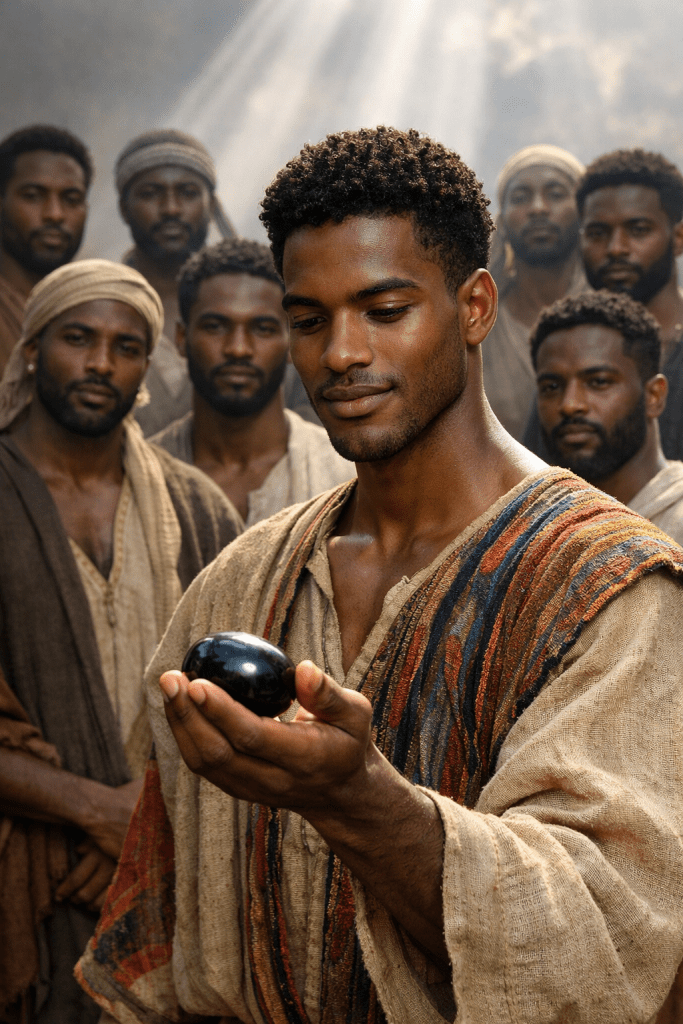
The Onyx Stone: A Family Affair — Joseph and His Brothers.

Onyx, dark as the midnight sky yet polished with hidden light,
a stone of mystery shaped by time and pressure,
a gem that carries both beauty and burden,
whispering of destinies forged through suffering,
and of souls refined in the fire of betrayal.

Onyx holds deep symbolic meaning in the biblical tradition, representing endurance, spiritual depth, and divine remembrance. In Scripture, onyx is one of the stones set in the high priest’s breastplate, engraved with the names of the tribes of Israel, signifying that each tribe was carried before God in sacred memory.

Joseph, the eleventh son of Jacob and the firstborn of Rachel, stands as one of the most compelling figures among the twelve tribes of Israel. His life narrative is not merely historical but theological, illustrating divine providence, generational conflict, and the mystery of chosenness within a fractured family system.

According to rabbinic and later symbolic traditions, Joseph is associated with the onyx stone, reflecting both his dark trials and radiant destiny. Onyx becomes a metaphor for Joseph’s life—polished through suffering, yet ultimately exalted through divine purpose.

Joseph’s story begins with favor, as he is given the coat of many colors by his father, a garment symbolizing distinction, authority, and emotional preference. This visible sign of love ignites jealousy among his brothers, sowing the seeds of betrayal long before the act itself unfolds.

The dreams Joseph receives intensify this conflict. In his visions, the sun, moon, and stars bow before him, along with sheaves of grain belonging to his brothers. These dreams are not merely youthful imagination but prophetic revelations that foreshadow his future role as a ruler and preserver of life.

Yet divine insight does not shield Joseph from human cruelty. His brothers, consumed by envy, conspire against him, stripping him of his garment and casting him into a pit before selling him to Midianite traders for silver, effectively turning family into traffickers and blood into profit.

This act of betrayal reflects one of the Bible’s deepest moral tensions: how God’s purpose often unfolds through human sin. Joseph is innocent, yet he becomes the vessel through which divine redemption will later flow, revealing the paradox of suffering as preparation.

Joseph’s descent into Egypt marks the beginning of his transformation. Though enslaved, he maintains integrity, resisting moral compromise even when falsely accused and imprisoned. His righteousness becomes a quiet rebellion against despair.

In prison, Joseph’s gift of dream interpretation resurfaces, proving that divine calling cannot be silenced by circumstance. His spiritual insight becomes the very instrument that elevates him from prisoner to prince.

Pharaoh’s dreams of famine and abundance position Joseph as a savior figure, entrusted with authority over Egypt’s economy. He rises not by lineage but by wisdom, embodying the principle that divine favor transcends social status.

Joseph’s beauty is also noted in Scripture, described as fair in form and appearance, making him both desired and tested. His physical attractiveness parallels his spiritual calling, showing how outward beauty can coexist with inner discipline.

When famine strikes, Joseph’s brothers unknowingly come before him in search of food, fulfilling the very dreams they once mocked. Their bowing becomes not an act of submission to a man, but to the divine orchestration behind his life.

Joseph’s emotional response reveals the complexity of forgiveness. He weeps privately, torn between memory and mercy, justice and compassion. His power is not in revenge, but in restraint.

The moment of reconciliation becomes one of the Bible’s most profound theological revelations. Joseph declares that what his brothers meant for evil, God intended for good, reframing trauma as testimony.

This declaration does not erase the pain of betrayal but redeems it. Joseph becomes the preserver of the family that once sought his destruction, turning the wound into a wellspring of survival.

Onyx, in this context, becomes more than a gemstone; it is a symbol of Joseph himself—darkened by suffering, refined by pressure, and set in divine memory as part of Israel’s eternal identity.

The family affair of Joseph is not merely about sibling rivalry but about generational inheritance, divine election, and moral responsibility. His story challenges the illusion of fairness and exposes the deeper logic of providence.

Joseph’s life reveals that destiny is not destroyed by betrayal, but often activated by it. The pit becomes the passageway, the prison becomes the platform, and the wound becomes the witness.

Through Joseph, the tribe associated with onyx emerges as a testament to spiritual endurance. He becomes a living stone in the architecture of Israel’s story, bearing both the scars of rejection and the seal of divine favor.

Onyx thus stands as a sacred metaphor for Joseph’s journey, reminding readers that God often engraves glory upon the darkest surfaces, and that what is polished by suffering may one day shine in sovereignty.


References
The Holy Bible, King James Version. (2017). Hendrickson Publishers. (Original work published 1611).
Exodus 28:9–12, 28:20 (KJV).
Genesis 37–50 (KJV).
Alter, R. (2018). The Hebrew Bible: A translation with commentary. W. W. Norton & Company.
Sarna, N. M. (1989). Genesis: The traditional Hebrew text with the new JPS translation. Jewish Publication Society.
Brown, F., Driver, S. R., & Briggs, C. A. (2001). The Brown-Driver-Briggs Hebrew and English lexicon. Hendrickson.

Sanctified Romance: Why Courtship Still Matters.

Sanctified romance is the pursuit of love in a manner that honors God, protects purity, and prepares the heart for covenant rather than convenience. In a culture driven by instant gratification and casual intimacy, courtship stands as a countercultural model rooted in intentionality, holiness, and obedience to divine order. Scripture consistently calls believers to relationships marked by sanctification rather than self-indulgence (1 Thessalonians 4:3–5, KJV).

Courtship matters because it restores purpose to romantic pursuit. Unlike casual dating, which often centers on emotional enjoyment or physical attraction, courtship is oriented toward discernment and marriage. Proverbs 19:21 reminds us that while human plans may be many, it is the Lord’s counsel that prevails. Courtship places God’s will above personal desire.

Purity is central to sanctified romance. God’s design reserves sexual intimacy for marriage, where it is protected and honored. Hebrews 13:4 declares that marriage is honorable and the bed undefiled, underscoring that any romantic pursuit must guard the body and heart from fornication. Courtship intentionally creates space for obedience.

Courtship teaches discipline over desire. Feelings are acknowledged but not allowed to rule behavior. Scripture warns that the heart can be deceitful (Jeremiah 17:9), which is why boundaries are essential. Sanctified romance chooses restraint not because desire is evil, but because obedience is greater.

In courtship, intention replaces ambiguity. Each party understands the goal is to evaluate compatibility for marriage, not to fill emotional voids or seek validation. Jesus taught that integrity begins with clarity: “Let your communication be, Yea, yea; Nay, nay” (Matthew 5:37, KJV). Courtship reflects this honesty.

Prayer is foundational in sanctified romance. Courtship invites God into the process rather than asking Him to bless decisions already made. Proverbs 3:5–6 instructs believers to trust in the Lord and acknowledge Him in all ways, including matters of the heart. Prayer aligns desire with divine wisdom.

Courtship also restores accountability. Involving family, spiritual mentors, or trusted community provides protection against self-deception and temptation. Ecclesiastes 4:12 teaches that a threefold cord is not quickly broken, illustrating the strength found in godly oversight.

Sanctified romance values character over chemistry. Physical attraction may spark interest, but courtship evaluates spiritual fruit, moral integrity, and consistency. The Bible emphasizes inner beauty and godly character, reminding us that favor is deceitful and beauty is vain, but the fear of the Lord endures (Proverbs 31:30).

Courtship honors emotional purity as well. Guarding the heart prevents premature attachment that can cloud judgment. Proverbs 4:23 commands diligence in protecting the heart because it influences every area of life. Courtship slows emotional intimacy until commitment is established.

The modern dating culture often encourages physical closeness before spiritual alignment. Courtship reverses this order, placing faith, values, and purpose first. Jesus taught that wisdom builds on a firm foundation, not shifting sand (Matthew 7:24–25). Courtship builds on obedience.

Sanctified romance acknowledges temptation but does not flirt with it. Scripture commands believers to flee fornication, not negotiate with it (1 Corinthians 6:18). Courtship minimizes situations that provoke lust by maintaining appropriate settings and boundaries.

Courtship also fosters mutual respect. Each individual is treated as a future spouse, not an object of pleasure or emotional convenience. Philippians 2:3 encourages humility and consideration of others above oneself, a principle deeply embedded in courtship.

Waiting is a spiritual discipline cultivated through courtship. Song of Solomon 2:7 warns against awakening love before its time. Sanctified romance trusts God’s timing, believing that delayed gratification produces lasting joy rather than regret.

Courtship protects against relational manipulation. Without clear boundaries, relationships can drift into emotional dependency or sexual compromise. Sanctified romance calls for honesty, restraint, and respect, reflecting God’s character rather than human impulse.

Courtship prepares individuals for covenant. Marriage is not merely romantic; it is a lifelong commitment before God. Amos 3:3 asks whether two can walk together unless they are agreed, highlighting the importance of shared faith and values cultivated during courtship.

Sanctified romance also refines self-control. Galatians 5:22–23 identifies temperance as fruit of the Spirit. Courtship allows believers to grow in spiritual maturity, demonstrating love that waits rather than consumes.

Courtship glorifies God by reflecting His order. God is not the author of confusion (1 Corinthians 14:33). Clear expectations, boundaries, and accountability bring peace and clarity to romantic pursuit.

In a world that normalizes fornication and emotional excess, courtship stands as a testimony of obedience. Romans 12:1–2 calls believers to present their bodies as living sacrifices and to resist conformity to worldly patterns. Courtship embodies this transformation.

Sanctified romance does not deny desire; it redeems it. Desire submitted to God becomes purposeful, disciplined, and life-giving. Courtship channels affection toward covenant rather than chaos.

Courtship still matters because it reflects God’s heart for holiness, protection, and covenant love. It safeguards purity, honors divine timing, and prepares individuals for marriage that glorifies God. In choosing courtship, believers choose obedience over impulse and sanctification over satisfaction, trusting that God’s design is always worth the wait (Psalm 37:4).


References (KJV Bible)

1 Thessalonians 4:3–5
Hebrews 13:4
Proverbs 3:5–6; 4:23; 19:21; 31:30
Jeremiah 17:9
Matthew 5:37; 7:24–25
Ecclesiastes 4:12
Song of Solomon 2:7
1 Corinthians 6:18; 14:33
Philippians 2:3
Galatians 5:22–23
Romans 12:1–2
Amos 3:3
Psalm 37:4

The Differences Between Courting, Dating, Friendships, and Suitationships: A Biblical Perspective.

The modern landscape of relationships often blurs the lines between friendship, dating, courting, and suitationships. From a biblical perspective, these distinctions are critical, as they guide God’s people in navigating relational boundaries, guarding purity, and honoring His design for marriage (Genesis 2:24; Proverbs 4:23). Understanding these differences helps believers avoid the sin of fornication and maintain sanctified relationships.

Friendships are the most foundational relational structure. They involve trust, accountability, and shared values, but they remain non-romantic and non-sexual. Proverbs 27:17 reminds us, “Iron sharpeneth iron; so a man sharpeneth the countenance of his friend.” Friendships can be cross-gender or same-gender, but the key is that emotional intimacy does not become sexualized. Friends can support each other spiritually, emotionally, and practically without crossing God’s boundaries.

Dating, in contrast, is often recreational or social in modern culture, yet it can be biblically perilous if not approached with intentionality. Dating usually involves emotional attraction and companionship with the possibility of romantic involvement. Without boundaries, dating frequently leads to temptation, lust, and the sin of fornication (1 Corinthians 6:18; Matthew 5:28). Biblical dating should be approached cautiously, with a goal of discernment rather than entertainment.

Courting is more intentional and goal-oriented than casual dating. Courting focuses on seeking God’s will in choosing a spouse. It involves deliberate prayer, accountability, and guidance from family or spiritual mentors. Courting prioritizes character over appearance, purpose over passion, and purity over pleasure. Song of Solomon 2:7 emphasizes waiting and guarding the heart: “I charge you, O ye daughters of Jerusalem, by the roes, and by the hinds of the field, that ye stir not up, nor awake my love, till he please.”

A suitationship is a modern term for a relationship that mimics the appearance of courtship but lacks the commitment or spiritual accountability. It is often ambiguous, confusing, and prone to compromise. Suitationships can involve emotional and sexual intimacy without clear commitment, leading to fornication, heartbreak, and spiritual compromise (Hebrews 13:4). They are dangerous because they blur the line between friendship, courtship, and marriage.

The Bible repeatedly calls believers to purity before marriage. 1 Thessalonians 4:3–5 instructs, “For this is the will of God, even your sanctification, that ye should abstain from fornication; That every one of you should know how to possess his vessel in sanctification and honour.” Any relationship that encourages sexual intimacy outside of marriage is contrary to God’s will.

Friendships are safe relational spaces for practicing emotional intimacy without sexual risk. Proverbs 13:20 reminds us, “He that walketh with wise men shall be wise: but a companion of fools shall be destroyed.” Choosing friends who honor God strengthens discernment and guards against relational compromise.

Dating, if approached without boundaries, often conflates physical desire with emotional attachment. Physical attraction is powerful, but when it is prioritized over spiritual alignment, it can lead to lust and fornication. Matthew 5:28 warns, “Whosoever looketh on a woman to lust after her hath committed adultery with her already in his heart.” Boundaries, accountability, and prayer are essential to avoid sin in dating.

Courting, in contrast, emphasizes long-term relational goals. It intentionally seeks compatibility, shared faith, and mutual respect. Courting often involves family or mentor oversight, accountability partners, and clear expectations regarding physical boundaries. The goal is not casual enjoyment but preparation for holy matrimony (Proverbs 31:10–12).

Suitationships, however, often lack accountability. They can appear as dating or courting, yet they offer no guarantee of commitment or sanctity. Emotional manipulation, selfish desires, and sexual compromise are common. Individuals may deceive themselves with notions of “love” while engaging in sinful behavior (Jeremiah 17:9).

Friendships and platonic relationships allow individuals to practice relational skills, develop discernment, and cultivate Christlike character. They provide opportunities for mentorship, encouragement, and mutual spiritual growth. James 1:5 reminds us to seek wisdom from God, and wise friendships can provide that insight.

Dating should be approached with intentionality and accountability, distinguishing it from mere recreational interactions. Couples seeking God’s guidance should establish clear boundaries, avoid private settings conducive to temptation, and maintain open communication with spiritual mentors (Proverbs 22:3).

Courting respects God’s design for sexual intimacy and marriage. Song of Solomon 8:4 reiterates, “I charge you, O daughters of Jerusalem… that ye stir not up, nor awake my love, till he please.” This principle reinforces patience, self-control, and obedience to God’s timing in relationships.

Suitationships undermine biblical principles by promoting ambiguity, emotional dependency, and sexual compromise. Without the structure of courtship, individuals risk emotional and spiritual harm. The Bible warns against deceptive relationships that mask sin under the guise of love (2 Corinthians 11:14–15).

Purity requires intentional boundaries. Whether in friendships, dating, or courtship, believers must guard their hearts and bodies. Proverbs 4:23 advises, “Keep thy heart with all diligence; for out of it are the issues of life.” Guarding the heart includes avoiding situations that encourage sexual temptation or emotional manipulation.

Fornication is consistently condemned in Scripture. 1 Corinthians 6:18 instructs, “Flee fornication. Every sin that a man doeth is without the body; but he that committeth fornication sinneth against his own body.” Both casual dating and suitationships are high-risk contexts for sexual sin.

Courting prioritizes God’s approval over human approval. It recognizes that true love seeks holiness, not merely emotional satisfaction. 1 John 5:3 states, “For this is the love of God, that we keep his commandments: and his commandments are not grievous.” Love that honors God abstains from sexual sin.

Friendships, while non-romantic, can also serve as relational training grounds. They teach respect, communication, and humility. They model healthy interactions and prepare individuals for more serious courtship relationships (Philippians 2:3–4).

Dating without intention, and suitationships, are often fueled by self-interest, lust, and convenience. Hebrews 13:4 reminds us that “Marriage is honourable in all, and the bed undefiled: but whoremongers and adulterers God will judge.” Those seeking God’s best must approach relationships with sanctity in mind.

Friendships

Positives:

  • Builds trust and emotional intelligence.
  • Provides accountability and spiritual support (Proverbs 27:17).
  • Encourages wisdom through healthy influence.
  • Safe environment to practice relational skills without sexual temptation.
  • Can foster long-term partnerships if spiritual compatibility is observed.

Negatives:

  • Can become emotionally co-dependent if boundaries are weak.
  • Cross-gender friendships may sometimes lead to temptation without proper vigilance.
  • Over-reliance on a friend may displace trust in God.
  • If advice is ungodly, it can mislead decision-making.

2. Dating

Positives:

  • Offers a way to explore compatibility and shared interests.
  • Can provide emotional connection and mutual support.
  • Helps identify personal preferences and deal-breakers in relationships.
  • Opportunity to develop communication and relational skills.

Negatives:

  • High risk of sexual temptation and fornication (1 Corinthians 6:18).
  • Emotional attachment may develop faster than spiritual alignment.
  • Can encourage superficial judgment based on appearance or attraction.
  • Without boundaries, dating can become manipulative or emotionally draining.
  • Often influenced by societal norms rather than God’s principles.

3. Courting

Positives:

  • Goal-oriented toward marriage and godly partnership.
  • Prioritizes character, faith, and spiritual alignment.
  • Encourages purity, accountability, and prayerful decision-making (1 Thessalonians 4:3–5).
  • Builds trust and intimacy gradually in a safe, spiritual environment.
  • Supported by family or mentors, reducing risk of deception or compromise.

Negatives:

  • Requires patience, which may feel slow compared to modern dating culture.
  • Can be misunderstood as “old-fashioned” or rigid by peers.
  • Emotional challenges may arise if one party is less spiritually mature.
  • Rejection or ending a courtship may feel particularly difficult due to spiritual investment.

4. Suitationships

Positives:

  • Provides companionship and emotional closeness temporarily.
  • Can create a sense of intimacy without formal commitment.
  • Offers opportunities to test emotional compatibility superficially.

Negatives:

  • Lack of clear boundaries or commitment increases the risk of fornication (Hebrews 13:4).
  • Often emotionally confusing and manipulative.
  • Encourages selfishness, not sacrificial love.
  • Can lead to repeated heartbreak and spiritual compromise.
  • May normalize sin by blurring lines between friendship, dating, and courtship.

Summary:

  • Friendships = safest for growth and spiritual formation.
  • Dating = moderate risk; requires strict boundaries and spiritual oversight.
  • Courting = biblically ideal; goal-directed, accountable, and purity-focused.
  • Suitationships = highest risk; spiritually and emotionally dangerous, prone to fornication.

In conclusion, courting is the biblical ideal for pre-marital romantic relationships, as it focuses on intentionality, accountability, spiritual alignment, and purity. Friendships provide safe relational development, dating requires caution and boundaries, and suitationships often lead to spiritual compromise. Guarding the heart, maintaining purity, and seeking God’s guidance remain central to honoring Him in every relational context (Proverbs 3:5–6).

Dilemma: The Slave Bible

The history of the Slave Bible reveals one of the most calculated spiritual manipulations in modern history—an intentional distortion of sacred scripture used to justify racial domination and suppress liberation. Far from promoting Christian faith in its fullness, the Slave Bible was engineered as a tool of control, ensuring that enslaved Africans would encounter a theology of obedience rather than a gospel of freedom.

Christianity was introduced to enslaved Africans under coercive conditions. European slaveholders claimed religious benevolence while simultaneously denying enslaved people access to the full biblical text. Literacy itself was criminalized; laws across the American South forbade enslaved Africans from learning to read, as literacy was directly linked to resistance, organization, and revolt (Williams, 2005).

The Slave Bible, formally titled Parts of the Holy Bible, Selected for the Use of the Negro Slaves, in the British West-India Islands (1807), was produced by Anglican missionaries affiliated with the Society for the Conversion of Negro Slaves. This was not a complete Bible but a heavily redacted version designed to serve plantation interests rather than spiritual truth (Thompson, 1998).

Of the 1,189 chapters in the Protestant Bible, approximately 90 percent of the Old Testament was removed, along with nearly half of the New Testament. Entire books central to liberation theology—Exodus, Deuteronomy, Joshua, Judges, and large portions of the prophets—were omitted because they emphasized deliverance from bondage and divine justice against oppressors.

Exodus was especially dangerous to slaveholders. The story of Israel’s deliverance from Egypt offered enslaved Africans a clear theological parallel: a God who hears the cries of the oppressed, confronts empire, and breaks chains. By removing Exodus 1–20 almost entirely, slaveholders eliminated the most explicit biblical narrative of emancipation (Raboteau, 2004).

Passages affirming equality before God were likewise excised. Galatians 3:28—“There is neither Jew nor Greek, bond nor free”—was absent. So too were scriptures condemning manstealing, such as Exodus 21:16 and 1 Timothy 1:10, which explicitly define kidnapping humans as a crime punishable by death under Mosaic law.

What remained were verses emphasizing submission, obedience, and silence. Ephesians 6:5—“Servants, be obedient to them that are your masters”—was retained without its broader theological context. Colossians and 1 Peter were selectively edited to reinforce a one-sided doctrine of servitude stripped of moral accountability for masters.

This selective theology created a distorted Christ—one who demanded submission but never confronted injustice. The radical Jesus who overturned tables, rebuked elites, and proclaimed freedom to the captives (Luke 4:18) was minimized or erased entirely.

The suppression of biblical literacy extended beyond redaction. Enslaved Africans caught with books or attempting to read scripture independently faced brutal punishment. Slaveholders understood that the Bible, when read holistically, posed a direct threat to the institution of slavery (Douglass, 1845/2003).

Despite these restrictions, enslaved Africans developed clandestine religious practices. “Hush harbors” and secret prayer meetings allowed them to reinterpret scripture orally, often preserving the liberation themes that slaveholders sought to erase. Oral theology became a form of resistance and survival (Raboteau, 2004).

Enslaved preachers often re-centered Exodus, Revelation, and prophetic justice through song, spirituals, and coded language. Songs like Go Down, Moses were not merely hymns but theological declarations of impending freedom and divine judgment against Pharaoh-like systems.

The Slave Bible also reveals the racialization of God. White supremacy reimagined Christianity as inherently European, positioning whiteness as godly and Blackness as cursed—often through misinterpretations of the so-called “Curse of Ham,” a doctrine now widely rejected by scholars (Haynes, 2002).

This theological distortion had lasting psychological consequences. By weaponizing scripture, slaveholders attempted to sever enslaved Africans from a God of justice and reframe oppression as divine order. This contributed to generational trauma and religious confusion within Black communities.

Yet, history shows that the strategy ultimately failed. Enslaved Africans did not abandon God; they reclaimed Him. Black Christianity emerged as a counter-theology—one rooted in liberation, survival, and divine reversal of power structures.

The legacy of the Slave Bible demands critical reflection today. It exposes how scripture can be manipulated when removed from historical, linguistic, and ethical context. It also warns against any theology that aligns God with the empire rather than the oppressed.

Modern scholarship recognizes the Slave Bible as evidence not of Christian faithfulness, but of moral corruption. It stands as a testament to how religion can be weaponized when truth threatens power.

Importantly, the Slave Bible also affirms why unrestricted access to scripture matters. When people read the Bible for themselves, they encounter a God who repeatedly sides with the marginalized, condemns exploitation, and demands justice.

The full biblical canon—especially the prophets, the law, and the teachings of Christ—cannot coexist with chattel slavery without contradiction. This is precisely why it had to be edited.

Today, the Slave Bible is preserved in museums not as a sacred text, but as a warning. It reminds us that oppression often fears education more than rebellion and that truth, once uncovered, cannot remain chained.

Ultimately, the story of the Slave Bible is not just about what was removed, but about what endured. Faith survived censorship. Hope survived mutilation. And the God of the oppressed could not be erased—even when His words were.


References

Douglass, F. (2003). Narrative of the life of Frederick Douglass, an American slave (Original work published 1845). Penguin Classics.

Haynes, S. R. (2002). Noah’s curse: The biblical justification of American slavery. Oxford University Press.

Raboteau, A. J. (2004). Slave religion: The “invisible institution” in the antebellum South (Updated ed.). Oxford University Press.

Thompson, V. B. (1998). The making of the African diaspora in the Americas, 1441–1900. Longman.

Williams, J. E. (2005). Religion and violence in early American slavery. Routledge.

Society for the Conversion of Negro Slaves. (1807). Parts of the Holy Bible, selected for the use of the Negro slaves, in the British West-India Islands. London: Law and Gilbert.

The Holy Bible, King James Version. (1611/1769). Cambridge University Press.

The Dating Playbook: Sacred Signals

Dating, when viewed through a sacred lens, is not a game of conquest but a process of discernment. Scripture teaches that relationships are meant to glorify God, not gratify unchecked desire. In a culture that normalizes fornication and emotional excess, sacred dating requires intentional boundaries and spiritual clarity.

The foundation of the dating playbook is placing God first. “Seek ye first the kingdom of God, and his righteousness” (Matthew 6:33, KJV) establishes divine order. When God leads, attraction is governed by wisdom rather than impulse, and desire is submitted to purpose.

Sacred signals begin with self-consecration. Purity is not merely physical abstinence but mental and emotional discipline. Scripture warns that lust conceived in the heart precedes sin in action (Matthew 5:28, KJV). Guarding the mind is essential to guarding the body.

Fornication is explicitly condemned in Scripture, not to restrict joy but to protect the covenant. “Flee fornication” (1 Corinthians 6:18, KJV) is a command rooted in love, acknowledging that sexual sin carries spiritual, emotional, and generational consequences.

Sacred dating emphasizes restraint over urgency. Rushing intimacy clouds discernment and forges soul ties before character is revealed. Patience allows truth to surface without the distortion of physical bonding.

A godly relationship values clarity over ambiguity. Intentions are stated early, avoiding emotional manipulation and prolonged confusion. “Let your communication be, Yea, yea; Nay, nay” (Matthew 5:37, KJV) reflects righteous transparency.

Sacred signals include respect for boundaries. A partner who pressures purity reveals misalignment with God’s will. Love that honors God will also honor limits, understanding that self-control is evidence of spiritual maturity (Galatians 5:22–23, KJV).

Community accountability is a biblical safeguard. Wise counsel from elders, mentors, and faith-filled peers provides protection against deception and self-delusion. “In the multitude of counsellors there is safety” (Proverbs 11:14, KJV).

Prayer is not an accessory to dating—it is the compass. Prayer invites God into the process, aligning hearts and exposing motives. Relationships birthed in prayer are sustained by grace rather than passion alone.

Sacred dating evaluates fruit, not fantasy. Consistency, humility, repentance, and obedience to God matter more than charisma or chemistry. “By their fruits ye shall know them” (Matthew 7:20, KJV).

Emotional purity matters as much as physical purity. Oversharing, dependency, and premature intimacy can create counterfeit closeness. Sacred signals preserve emotional wholeness until the covenant provides covering.

Waiting is not weakness; it is worship. Honoring God with the body acknowledges that it is His temple (1 Corinthians 6:19–20, KJV). Delay becomes devotion when obedience is chosen over appetite.

Sacred dating prepares for marriage, not experimentation. Each interaction is weighed against the question: Does this union help us serve God more faithfully? Purpose, not pleasure, remains the measuring rod.

When purity is kept, peace follows. Even if a relationship ends, obedience ensures there is no regret rooted in compromise. God honors those who honor Him (1 Samuel 2:30, KJV).

The dating playbook concludes with trust. God is not withholding love—He is refining it. Sacred signals guide believers away from harm and toward covenant, where love is holy, disciplined, and enduring.


References

The Holy Bible, King James Version. (1769/2017).

Cloud, H., & Townsend, J. (1992). Boundaries in dating. Zondervan.

Piper, J. (2009). This momentary marriage. Crossway.

Wheat, E. (2003). How to save your marriage before it starts. Zondervan.