Tag Archives: attraction

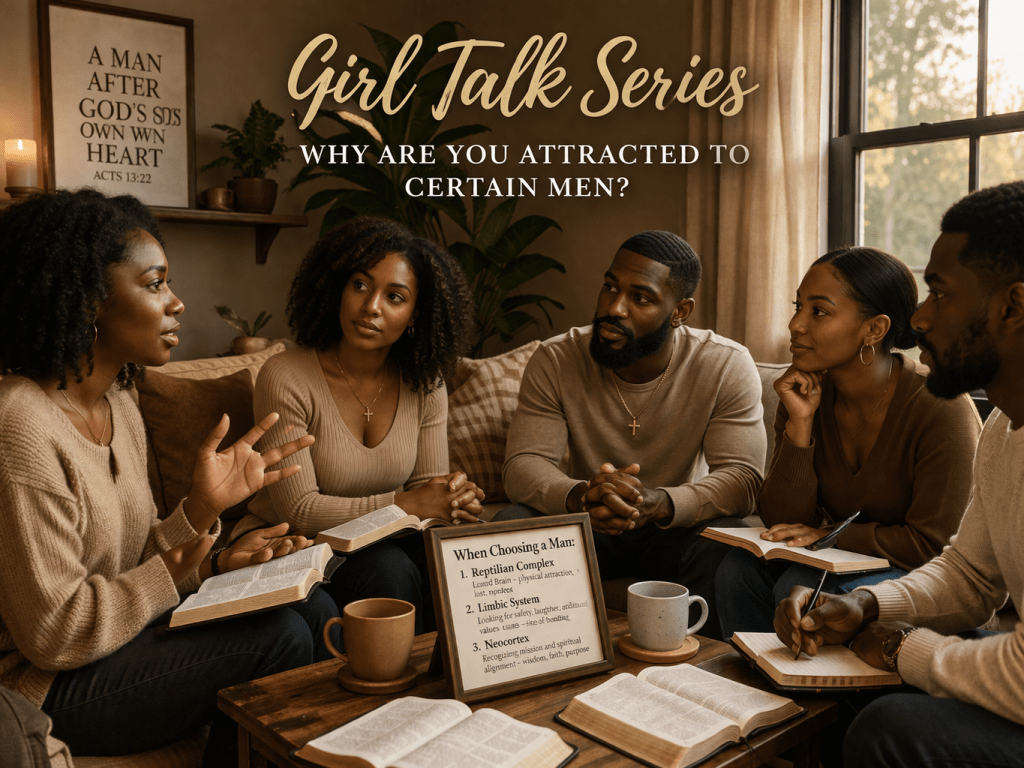
Girl Talk Series: Why Are You Attracted to Certain Men?

Before anything else, choose a man after God’s own heart—one who honors the Most High not only in words but in discipline, restraint, and obedience. A man who understands covenant will not rush intimacy, but will wait for marriage, valuing you beyond the flesh. A king is not defined by status, but by character, leadership, and reverence for God. Attraction must begin with alignment, not just desire.

Many women believe attraction is purely emotional or physical, but it is deeply neurological and spiritual. The men you feel drawn to are often reflections of patterns formed in your mind, shaped by experience, environment, and sometimes unresolved wounds. Attraction is not random—it is a response.

To understand this fully, we must explore the three primary parts of the brain involved in attraction and relationship decision-making: the reptilian complex, the limbic system, and the neocortex. Each plays a distinct role in how you perceive, feel, and choose a partner.

The reptilian complex, often called the “lizard brain,” is the most primitive part of the brain. It governs survival instincts—impulses like sexual desire, dominance, and immediate gratification. When you feel an intense, almost uncontrollable attraction to a man based solely on his physical presence or energy, this part of your brain is activated.

This is where many women must exercise caution. The reptilian brain does not discern character, morality, or spiritual alignment. It is concerned with chemistry, not covenant. It will pull you toward what feels good in the moment, even if it leads to long-term consequences.

Next is the limbic system, the emotional center of the brain. This is where bonding, attachment, and feelings of safety are formed. The limbic system is drawn to men who make you feel seen, heard, protected, and emotionally secure. Laughter, shared values, and emotional connection are processed here.

However, even the limbic system can be deceived. Trauma, past relationships, and childhood experiences can distort what “feels safe.” Sometimes, what feels familiar is not healthy—it is simply known. This is why some women repeatedly choose the same type of man, even when the outcome is painful.

The third and most advanced part is the neocortex—the center of reasoning, discernment, and higher thinking. This is where you evaluate a man’s purpose, mission, and spiritual alignment. The neocortex asks: Does he have vision? Does he honor God? Is he disciplined? Is he capable of leading a family?

A woman operating in her full relationship capacity does not allow the reptilian brain to lead. She acknowledges the feeling but submits it to the wisdom of the neocortex. She understands that attraction without alignment is a setup for heartbreak.

True discernment comes when all three parts of the brain are in order. The reptilian complex is controlled, the limbic system is healed, and the neocortex is engaged. This creates balance—where desire, emotion, and wisdom work together instead of against each other.

Spiritual alignment must be the foundation. A man who does not love God cannot lead you spiritually. If he lacks discipline in his own life, he cannot provide structure in a relationship. A kingdom-minded woman must seek a kingdom-minded man.

Sexual discipline is one of the clearest indicators of a man’s character. A man who pressures you for sex outside of marriage is operating from the flesh, not from spiritual maturity. Self-control is a fruit of the Spirit, and without it, a relationship will lack stability.

The flesh—often associated with the lower impulses of the reptilian brain—can cloud judgment. It convinces you that chemistry is compatibility, when in reality, compatibility is built on shared values, vision, and purpose.

Cultural influences also play a role in attraction. The Media often glorifies toxic traits—dominance without discipline, confidence without character, and desire without responsibility. These images can shape what the mind perceives as attractive.

In contrast, a godly man may not always trigger the same immediate intensity, but he provides something far greater: peace, consistency, and spiritual covering. What is calm is often overlooked in favor of what is exciting.

Healing is essential in refining attraction. A woman who has done the inner work will begin to desire differently. She will no longer be drawn to chaos but to clarity, not to confusion but to consistency.

Your standards must be intentional. Attraction should not be the only requirement; it should be one of many. Character, integrity, faith, and purpose must outweigh physical appeal.

Community and accountability also influence your choices. Surrounding yourself with wise counsel can help you see what you might overlook when emotions are involved.

It is also important to recognize that attraction can grow. What begins as respect and admiration can develop into deep love when nurtured properly. Not every meaningful connection starts with intensity.

Ultimately, understanding your brain helps you understand your choices. You are not simply “falling” for someone—you are responding to internal systems that can be trained, healed, and guided.

When you align your mind, emotions, and spirit, your attraction will reflect your growth. You will choose not from impulse, but from intention.

And in that place of clarity, you will no longer ask, “Why am I attracted to certain men?”—because your standards, your healing, and your faith will already have the answer.

References

Amen, D. G. (1998). Change Your Brain, Change Your Life. New York, NY: Times Books.

Fisher, H. (2004). Why We Love: The Nature and Chemistry of Romantic Love. New York, NY: Henry Holt.

Goleman, D. (1995). Emotional Intelligence. New York, NY: Bantam Books.

The Holy Bible, King James Version. (1611).

Siegel, D. J. (2012). The Developing Mind: How Relationships and the Brain Interact to Shape Who We Are. New York, NY: Guilford Press.


The Male Files: A Black Man’s Kryptonite – A Black Woman’s Beauty

Beauty has long been recognized as a potent force in human interaction. For many men, especially in the Black community, a woman’s beauty can act almost like kryptonite, eliciting admiration, attention, and sometimes compromised judgment. Understanding this dynamic is crucial for both men and women in navigating relationships with clarity and purpose.

When a woman is exceptionally beautiful, men often go out of their way to please her. Gifts, attention, and favors can flow more readily, as men feel compelled to demonstrate worthiness in the presence of physical attraction. In some cases, a man may prioritize her desires, sometimes even bending his principles to earn approval or affection.

It is common for beauty to create disproportionate influence. The “whole paycheck” metaphor illustrates that men may invest significant resources—time, energy, money—into a woman whose appeal commands their attention. While generosity is virtuous, disproportionate devotion driven by superficial attraction can misalign priorities and expose vulnerabilities.

Men respond differently depending on their values and spiritual grounding. A man guided by God seeks to honor the woman while maintaining integrity, balance, and personal accountability. He recognizes beauty, yet does not allow physical appearance to overshadow spiritual, emotional, or intellectual compatibility.

Attraction is indeed important. Physical appeal often initiates interest, fosters desire, and creates intimacy. However, attraction alone is insufficient for long-term relational stability. Godly men look beyond mere beauty, seeking qualities like character, wisdom, faith, and compatibility. Proverbs 31 describes the virtuous woman as more valuable than rubies, emphasizing substance over superficiality.

Beautiful women often receive heightened attention, yet a godly man is careful to navigate admiration without succumbing to lustful intent. 1 Corinthians 6:18–20 reminds men to flee fornication and honor God with their bodies, highlighting that desire must be tempered by discipline and reverence.

The influence of beauty can sometimes obscure true intentions. Men may act charitably, make promises, or overextend themselves to impress a woman, revealing that unchecked attraction can be both a motivator and a vulnerability. Awareness of this dynamic is essential for both sexes.

While beauty can captivate, godly men prioritize alignment with God’s will. A woman’s faith, humility, wisdom, and moral character weigh more than her looks. Spiritual and emotional depth sustains relationships in ways that physical attraction alone cannot.

Men often measure potential long-term compatibility by observing how a woman treats others, her approach to life, and her capacity for self-discipline. Beauty may open the door, but character sustains the connection. A woman who exercises grace, patience, and integrity appeals more profoundly than appearance alone.

A beautiful woman can influence decisions subtly or overtly. Men may defer to her preferences, indulge her desires, or even compromise their principles to maintain favor. This dynamic illustrates the power of beauty but also serves as a cautionary tale: influence must be mutual and grounded in respect.

Attraction motivates men to provide and protect. Financial support, acts of service, and demonstrations of care are often heightened in the presence of beauty. While provision is virtuous, the underlying intent must align with integrity, not obsession or coercion.

Godly men seek partnership, not possession. True desire is to cultivate mutual growth, foster respect, and build a life aligned with spiritual principles. They understand that beauty is fleeting, yet faithfulness, wisdom, and godly character endure.

Beauty can amplify a woman’s voice, making her opinions more persuasive or influential. Men often respond to this heightened presence by listening attentively, adjusting behaviors, or seeking approval. This dynamic requires both awareness and accountability, ensuring that attraction does not compromise discernment.

In intimate contexts, godly men exercise self-control. They recognize the temptation that beauty presents but act with restraint, valuing purity, commitment, and spiritual alignment. Waiting for marriage to consummate a relationship exemplifies this principle, safeguarding emotional and spiritual integrity.

Men also observe whether beauty is accompanied by humility. Confidence is attractive, but arrogance can be a deterrent. A godly man values a woman who is aware of her beauty but remains grounded, kind, and considerate toward others.

Physical attractiveness can open doors to opportunities and attention, yet a discerning man seeks to understand the heart. Proverbs 31:30 emphasizes that charm is fleeting, but a woman who fears the Lord is to be praised. True admiration involves respect for both outer and inner qualities.

Men sometimes overestimate the power of beauty, believing it can solve relational or emotional challenges. A godly man recognizes that beauty is a blessing, but relational health is sustained through communication, shared values, and spiritual alignment.

The influence of beauty extends to social perception. Men may elevate a beautiful woman in their minds, attributing qualities or assuming compatibility based on appearance. Godly discernment, prayer, and reflection help ensure that attraction does not cloud judgment.

Ultimately, a black man’s kryptonite—beauty—must be navigated with wisdom. Godly men admire, respect, and honor beauty without surrendering integrity. They provide, encourage, and protect, but never at the expense of principle or spiritual alignment.

Beauty is powerful, yet it is not the ultimate measure of a woman’s worth. A godly man seeks alignment with God’s will, values virtue above physical appearance, and understands that lasting partnership is built on faith, trust, and shared purpose. True love embraces both admiration for the external and reverence for the soul.

References

The Holy Bible, King James Version.

Proverbs 31:10–31
1 Corinthians 6:18–20
1 Timothy 5:8
Proverbs 3:5–6
Ephesians 5:25–33
Galatians 5:22–23

Psychology Today. (2016). Why physical attractiveness influences behavior.

Twenge, J. M., & Campbell, W. K. (2009). The Narcissism Epidemic: Living in the Age of Entitlement. Free Press.

Anderson, E. (2012). The Social Dynamics of Black Male Attraction. Oxford University Press.

Girl Talk Series: Good-Looking Men

This photograph is the property of its respective owner. No copyright infringement intended.

Beware Ladies! Attraction is powerful. A handsome face, a confident walk, and a smooth voice can make a woman ignore warning signs she would never tolerate in an average-looking man. Society teaches women to trust chemistry, but Scripture teaches women to trust character. Beauty may open the door, but it cannot keep you safe once you are inside.

Many women mistake excitement for compatibility. They feel chosen because a good-looking man noticed them, not realizing that charm is not commitment. Looks can distract from laziness, emotional immaturity, hidden addictions, financial instability, and moral weakness. A man can look like a blessing and still be a lesson.

Pretty boy syndrome is real. Some men have learned that their appearance gives them access without effort. They are pursued instead of pursuing purpose. They are admired instead of held accountable. Over time, this produces men who expect to be served rather than to serve.

The danger is not that a man is attractive, but that attraction becomes the standard. When desire leads, discernment dies. You begin to justify red flags because he is “fine,” overlook disrespect because he is “popular,” and accept the bare minimum because he is “wanted by others.”

God never told women to choose based on visuals. He told them to choose based on the fruit. “Ye shall know them by their fruits” (Matthew 7:16, KJV). A man’s lifestyle reveals his true nature long before his words do.

A woman who chooses only on looks is choosing risk over wisdom. She is gambling her future on genetics instead of godliness. And when beauty fades, she is left with whatever character he actually built.

Good-looking men have always held a certain power in society. From movie stars to social media influencers, attractive men are often admired, pursued, and even excused for behavior that would not be tolerated in others. Beauty creates access, but it does not guarantee character.

In many cultures, women are subtly taught to prioritize physical attraction when choosing a partner. The man must be tall, well-built, stylish, and charming. While attraction is natural, Scripture never presents looks as a reliable foundation for love or marriage.

The Bible consistently warns against judging by outward appearance. “Man looketh on the outward appearance, but the Lord looketh on the heart” (1 Samuel 16:7, KJV). God’s evaluation system is inverted from society’s. What impresses humans rarely impresses heaven.

Pretty boy syndrome describes a man whose entire identity is built around being admired. His value comes from validation, not virtue. He invests more in his image than in his integrity, more in attention than in responsibility.

Many good-looking men are never forced to develop depth. They receive affirmation without accountability. As a result, some grow into emotionally shallow adults who rely on charm instead of communication, and flirting instead of commitment.

Fornication thrives in image-based relationships. When desire is prioritized over discipline, sex becomes entertainment instead of covenant. The body becomes a product, and intimacy is reduced to a transaction.

Sexual thoughts are not neutral. Scripture teaches that lust is not harmless fantasy but internal adultery of the heart. A relationship rooted in lust cannot produce spiritual safety, only emotional instability.

The lazy handsome man is a hidden danger. He looks impressive but lacks ambition, vision, or purpose. He may dress well, but does not work well. He may be admired publicly while privately depending on women financially.

Some attractive men become womanizers, moving from relationship to relationship, feeding off attention like currency. They confuse access with entitlement and affection with ownership.

Sugar baby culture reflects a deeper moral decay. Men using money to access women’s bodies and women using beauty to access men’s wallets both reduce relationships to exchange rates, not sacred bonds.

Using women for money is another form of spiritual poverty. A man who exploits a woman’s resources while offering no leadership, stability, or sacrifice is not a partner; he is a parasite.

A man with no substance eventually becomes exhausting. Beauty fades, but emptiness remains. When a crisis comes, charm cannot provide protection, and attraction cannot provide wisdom.

Godly character, however, produces security. A man who fears God is governed by discipline, accountability, and humility. He does not need constant validation because his identity is rooted in purpose, not popularity.

Biblical masculinity is defined by responsibility, not desirability. A godly man builds, covers, leads, protects, and serves. He does not compete with women, manipulate emotions, or avoid commitment.

The obsession with looks often leads women into relationships that feel exciting but end painfully. The dopamine of attraction wears off, and what remains is the reality of character.

Looks versus money is a false dilemma. Both fade without integrity. A handsome man without discipline becomes a liability. A wealthy man without morals becomes dangerous. Neither beauty nor wealth can replace virtue.

What truly fares better is character. A man who loves God will eventually develop wisdom, stability, and emotional maturity. These qualities age well. They compound over time.

Choosing a man based on godly character does not mean ignoring attraction, but it means refusing to let attraction lead. Desire must follow discernment, not replace it.

A man who honors God honors boundaries. He does not pressure for sex, rush intimacy, or treat purity as unrealistic. He understands that self-control is strength, not repression.

The right man is not the one who looks good on your arm, but the one who looks good in God’s eyes. He may not be the most admired, but he will be the most reliable.

What to look for according to Godly Wisdom

Fear of God
Does he respect God’s authority, or only his own desires?

Character over charisma
How does he treat people when he gains nothing from them?

Emotional maturity
Can he communicate without manipulation, silence, or anger?

Self-control
Does he control his desires, or are they controlling him?

Work ethic and responsibility
Does he build, or does he depend?

Financial discipline
Is he a steward or a spender?

Sexual boundaries
Does he honor purity or pressure intimacy?

Leadership
Does he take initiative or avoid accountability?

Consistency
Is he the same in private as he is in public?

Integrity
Does his word match his actions?

Vision and purpose
Does he know where he is going in life?

Spiritual alignment
Does he strengthen your walk with God or distract from it?

Respect for women
Does he see women as partners or as resources?

Conflict resolution
Can he handle disagreement without control or cruelty?

Teachability
Can he receive correction or does he become defensive?


Final Warning

A good-looking man can attract you.
A godly man can protect you.

Beauty can make you feel chosen.
Character determines whether you are kept.

Never let desire decide what discernment should. The face may impress your eyes, but only the heart can build your future.

In the end, a woman must decide what kind of future she wants. Temporary excitement or lasting peace. Visual pleasure or spiritual safety. A good-looking man may impress the world, but only a godly man can build a home.


References

The Holy Bible, King James Version. (2017). Hendrickson Publishers.

Cloud, H., & Townsend, J. (2009). Boundaries in Dating. Zondervan.

Lewis, C. S. (2001). Mere Christianity. HarperOne.

Nouwen, H. J. M. (1992). The Return of the Prodigal Son. Doubleday.

Willard, D. (1998). The Divine Conspiracy. HarperOne.

Piper, J. (2009). This Momentary Marriage. Crossway.

Physical Attraction

Physical attraction is a powerful human experience that influences desire, connection, and decision-making. Scripture does not deny its existence, but it does warn against allowing attraction to govern behavior apart from wisdom and holiness. When physical attraction is unchecked, it can override discernment and lead individuals away from God’s design.

The origin of physical attraction is rooted in creation itself. God created humanity with the capacity to recognize beauty and form bonds. In Genesis, Adam’s recognition of Eve reveals that attraction was present before sin: “This is now bone of my bones, and flesh of my flesh” (Genesis 2:23, KJV). Attraction, in its original form, was pure and covenantal.

However, the fall of man distorted attraction. After sin entered the world, desire became disordered and self-centered. Scripture notes this shift when God said, “Thy desire shall be to thy husband, and he shall rule over thee” (Genesis 3:16, KJV). Attraction moved from harmony to tension, vulnerability, and misuse.

Physical attraction becomes dangerous when it is divorced from purpose. Lust replaces love when desire seeks gratification without responsibility. Jesus clarified this danger by teaching, “Whosoever looketh on a woman to lust after her hath committed adultery with her already in his heart” (Matthew 5:28, KJV). Lust transforms attraction into sin at the level of thought.

The eyes play a central role in fueling unhealthy attraction. Scripture repeatedly warns about visual temptation. Job declared, “I made a covenant with mine eyes; why then should I think upon a maid?” (Job 31:1, KJV). Guarding the eyes is a primary defense against lust-driven attraction.

Physical attraction often leads to fornication when boundaries are absent. Fornication is condemned throughout Scripture because it corrupts the body and soul. Paul commands believers to “Flee fornication” (1 Corinthians 6:18, KJV), emphasizing urgency rather than resistance. Attraction without restraint quickly becomes transgression.

The danger of physical attraction lies in its ability to silence wisdom. Strong desire can cloud judgment and override godly counsel. Proverbs warns, “He that trusteth in his own heart is a fool” (Proverbs 28:26, KJV). When attraction governs decisions, spiritual consequences often follow.

Attraction can also lead individuals to form unequal or ungodly relationships. Desire may cause people to overlook character, faith, or moral alignment. Scripture cautions believers not to be “unequally yoked together with unbelievers” (2 Corinthians 6:14, KJV), reminding us that attraction is not a reliable measure of compatibility.

The culture often celebrates lust while minimizing its cost. Yet Scripture exposes the end result: “The end thereof are the ways of death” (Proverbs 14:12, KJV). Lust promises pleasure but delivers bondage, guilt, and spiritual distance from God.

Physical attraction can become a form of idolatry when beauty or desire replaces obedience to God. Anything that rules the heart competes with God’s authority. The Bible commands, “Thou shalt have no other gods before me” (Exodus 20:3, KJV). Attraction becomes dangerous when it takes precedence over righteousness.

Fornication creates spiritual and emotional bonds that were never intended outside of marriage. Scripture describes sexual union as becoming “one flesh” (1 Corinthians 6:16, KJV). When attraction leads to repeated fornication, it fragments the soul and dulls spiritual sensitivity.

The body is not merely a tool for pleasure but a temple for God’s Spirit. Paul reminds believers, “Know ye not that your body is the temple of the Holy Ghost?” (1 Corinthians 6:19, KJV). Yielding the body to lust dishonors both God and oneself.

Discipline is essential in managing physical attraction. The Bible teaches self-control as a fruit of the Spirit. “A city that is broken down, and without walls, is a man that hath no rule over his own spirit” (Proverbs 25:28, KJV). Without discipline, attraction becomes a gateway to sin.

Physical attraction must be subordinated to holiness. Scripture instructs believers to pursue purity actively: “That every one of you should know how to possess his vessel in sanctification and honour” (1 Thessalonians 4:4, KJV). Honor governs desire when God is at the center.

The renewal of the mind is necessary to overcome lust. The world conditions the mind to eroticize bodies and normalize excess desire. God’s word calls believers to transformation: “Be not conformed to this world: but be ye transformed by the renewing of your mind” (Romans 12:2, KJV).

God provides a righteous outlet for attraction within marriage. Sexual desire is sanctified in covenant. “Marriage is honourable in all, and the bed undefiled” (Hebrews 13:4, KJV). Outside of marriage, the same desire becomes sin and disorder.

Victory over lust requires vigilance and prayer. Jesus warned, “Watch and pray, that ye enter not into temptation” (Matthew 26:41, KJV). Spiritual awareness prevents attraction from maturing into action.

Physical attraction must be interpreted through spiritual discernment. Not every strong feeling is a divine signal. Scripture urges believers to test impulses: “Beloved, believe not every spirit, but try the spirits” (1 John 4:1, KJV). Discernment distinguishes desire from direction.

God’s commandments regarding sexuality are protective, not punitive. Obedience preserves clarity, peace, and future joy. “The law of the Lord is perfect, converting the soul” (Psalm 19:7, KJV). God’s design guards the heart from regret.

Those who walk in purity gain spiritual confidence. A clean conscience strengthens fellowship with God. “Blessed are the pure in heart: for they shall see God” (Matthew 5:8, KJV). Purity sharpens spiritual vision.

Ultimately, physical attraction must submit to Christ. Believers are called to glorify God in body and spirit. “Whether therefore ye eat, or drink, or whatsoever ye do, do all to the glory of God” (1 Corinthians 10:31, KJV). When attraction is surrendered to God, it no longer destroys but serves His purpose.


References (KJV Bible)

The Holy Bible, King James Version.
Genesis 2:23; 3:16
Exodus 20:3
Job 31:1
Proverbs 14:12; 25:28; 28:26
Psalm 19:7
Matthew 5:8, 5:28; 26:41
Romans 12:2
1 Corinthians 6:16, 6:18–19; 10:31
2 Corinthians 6:14
1 Thessalonians 4:4
Hebrews 13:4
1 John 4:1

Hearts Aligned: A Follower of Christ’s Guide to Attraction

Attraction is often reduced to chemistry, aesthetics, or fleeting emotion, but for a follower of Christ, attraction begins much deeper. It is not merely about what draws the eye, but about what aligns the heart. Biblical attraction is rooted in purpose, character, and spiritual direction rather than impulse or fantasy.

Scripture teaches that the heart is central to all relationships. What we are drawn to reflects what we value, and what we value is shaped by what we worship. When Christ is at the center of a believer’s life, attraction begins to shift away from superficial desire toward spiritual compatibility.

Physical attraction is not sinful, nor is it ignored in Scripture. God is the author of beauty, and He created human beings with the capacity to admire and desire. However, beauty is meant to be stewarded, not idolized, and physical attraction must be ordered under wisdom rather than ruling the heart.

A follower of Christ understands that attraction without alignment leads to imbalance. When two people are drawn together but moving in different spiritual directions, tension inevitably follows. Scripture warns against being unequally yoked because misalignment of faith produces strain on the soul.

True attraction grows when values intersect. Shared convictions, reverence for God, and mutual submission to His will create a foundation that chemistry alone cannot sustain. What draws two believers together should be strengthened, not threatened, by their faith.

Character is one of the most powerful forms of attraction in the Kingdom of God. Integrity, humility, patience, and self-control reveal the fruit of the Spirit at work. These qualities may not initially dazzle the senses, but they anchor the heart over time.

A Christ-centered guide to attraction emphasizes discernment over impulse. Discernment asks not only “Do I like them?” but “Do they help me love God more?” Attraction that draws one closer to righteousness is fundamentally different from attraction that pulls one into compromise.

Emotional attraction also requires stewardship. Strong feelings can cloud judgment if they are not filtered through prayer and counsel. The believer learns to submit emotions to God, trusting Him to clarify what is genuine and what is merely intense.

Spiritual attraction often reveals itself quietly. It appears in shared prayer, aligned convictions, mutual respect for boundaries, and a common hunger for God’s Word. This form of attraction deepens with time rather than burning out quickly.

The world teaches attraction based on self-gratification, but Christ teaches attraction based on self-giving love. Biblical love is patient, kind, and disciplined. It seeks the good of the other person, even when that requires restraint or waiting.

Purity plays a critical role in godly attraction. Physical boundaries protect emotional clarity and spiritual peace. When attraction is expressed within God’s design, it produces security rather than confusion and honor rather than regret.

A follower of Christ recognizes that attraction is a process, not a verdict. Initial interest is not a command to pursue at all costs. Wisdom allows space for observation, prayer, and confirmation before emotional investment deepens.

Prayer aligns attraction with God’s will. When believers bring their desires before God honestly, He refines them. What once felt urgent may be revealed as premature, and what seemed unlikely may emerge as divinely appointed.

Community also plays a role in discerning attraction. God often uses wise counsel to confirm or caution the heart. Isolation intensifies emotion, but godly counsel introduces clarity and balance.

Attraction guided by Christ is not possessive. It does not rush to claim ownership over another person’s heart. Instead, it honors free will, respects growth, and allows God to lead the pace of the relationship.

Time is a revealer of truth. When attraction is rooted in Christ, it matures rather than fades. Consistency, accountability, and shared spiritual practices strengthen the bond beyond initial excitement.

A Christ-centered approach to attraction reframes waiting as preparation rather than punishment. Waiting refines desire, exposes motives, and prepares the heart for covenant rather than convenience.

Attraction must ultimately point toward purpose. Relationships are not ends in themselves but vehicles through which God is glorified. A relationship that distracts from calling or compromises obedience cannot be sustained by godly attraction.

When hearts are aligned with Christ, attraction becomes peaceful rather than chaotic. There is clarity instead of confusion, patience instead of pressure, and hope instead of anxiety. This peace is one of the strongest confirmations of God’s guidance.

Hearts aligned in Christ are drawn together not by fear of loneliness, but by shared devotion. The relationship becomes a partnership in faith, service, and growth rather than a pursuit of validation.

In the end, a follower of Christ understands that attraction is safest when surrendered. When desire is placed in God’s hands, He orders it rightly. What He joins together is not only appealing to the heart but anchored in eternity.


References

The Holy Bible, King James Version.

Cloud, H., & Townsend, J. (2002). Boundaries in dating. Zondervan.

Stanley, A. (2011). The new rules for love, sex, and dating. Multnomah Books.

Wheat, E., & Wheat, G. (2010). Intended for pleasure. Revell.

Wilcox, B. W., & Dew, J. (2016). The relationship paradox. National Marriage Project.

The Room Fell Silent When Brown Walked In.

The room fell silent when Brown walked in—not because of fear, but because presence demanded recognition. Her brown skin radiated warmth and authority, a visual testament to a heritage that refused to be diminished. Scripture reminds us, “She is clothed with strength and dignity; and she laugheth without fear of the future” (Proverbs 31:25, KJV). In that instant, silence became respect.

Brown skin has always been more than pigment; it is history written on living canvas. Each shade carries stories of triumph, survival, and resilience. The African diaspora’s journey, marred by slavery and oppression, made beauty in brown skin revolutionary (Gates, 2011). When Brown entered, that history accompanied her quietly, demanding acknowledgment.

Her entrance defied societal norms. In a world obsessed with Eurocentric ideals of beauty, her presence challenged perceptions and reframed standards. Hunter (2007) notes that colorism often distorts self-worth, yet those who embody and embrace their melanin disrupt oppressive narratives. Brown walked in, a living refutation of shallow judgments.

Eyes turned not out of envy, but fascination. Her gaze carried a quiet authority, a recognition that she understood her worth. “For the LORD seeth not as man seeth; for man looketh on the outward appearance, but the LORD looketh on the heart” (1 Samuel 16:7, KJV). Her heart, confident and unshaken, was the source of her silent power.

Her hair crowned her with history. Coils, curls, and braids spoke to generations that survived through creativity and culture, transforming even adversity into beauty. Biblical accounts often describe hair as a symbol of strength and identity (1 Corinthians 11:15, KJV). Her hair proclaimed her ancestry without uttering a word.

Brown skin shone with subtle luminosity, reflecting both light and resilience. Social psychology suggests that self-confidence amplified by embracing one’s natural features affects perception in interpersonal dynamics (Ashikali & Dittmar, 2010). People instinctively recognized her value because she claimed it fully.

The room was not silent out of awe alone—it was humility. To see a woman wholly comfortable in her skin is rare in a society that constantly devalues her. The girl in brown skin reminds the world that authenticity is revolutionary. Her dignity demanded attention without demanding it.

In her walk, grace became power. Movement was measured, yet fluid; commanding, yet gentle. Scripture often equates poise with righteousness and moral strength (Proverbs 31:26, KJV). Brown’s entrance was a living sermon of dignity and self-possession.

Her presence transcended physicality; it was intellectual and spiritual. The room was silent because her mind radiated clarity, wisdom, and insight. In studies of leadership perception, presence and confidence are key determinants of influence (Goleman, 1998). Brown’s silence spoke louder than words.

The room’s stillness mirrored the reverence her ancestors deserved. Each step she took was imbued with lineage, a continuum from queens and scholars whose contributions were often erased (Davis, 1983). Her brown skin carried legacy with elegance.

Even the light seemed to honor her. Sunlight against her skin revealed depth and richness, symbolic of inner strength. In biblical terms, light often represents truth, divine favor, and revelation (John 8:12, KJV). Brown walked in like sunlight made flesh.

Her laughter, when it came, was deliberate and musical, breaking the silence gently. It reminded all present that while her presence commanded respect, it also invited connection. Joy radiates in those confident in their God-given beauty and purpose.

The room fell silent because the world often misunderstands such women. Strength paired with grace can intimidate, yet this is not vanity—it is an acknowledgment of God’s work in creation. “Thou art all fair, my love; there is no spot in thee” (Song of Solomon 4:7, KJV). Her beauty was complete and undeniable.

Brown’s fashion was not just adornment but declaration. Every color, pattern, and texture harmonized with her skin, asserting cultural pride and personal taste. Melanin-rich skin transforms aesthetics into statements of identity and visibility (Hunter, 2007).

In conversation, her voice commanded attention effortlessly. Eloquence, confidence, and knowledge made silence turn into listening. She embodied Proverbs 31:26: “She openeth her mouth with wisdom; and in her tongue is the law of kindness.” Words flowed, yet the room remembered the silence that preceded them.

Her impact was not temporary. Silence lingered even after she left, a testament to the lingering effect of authenticity. Leadership, presence, and identity have echoes; the room carried hers long after she passed.

Brown skin has historically been politicized, yet her presence reclaimed it as sacred and regal. The room’s silence became a microcosm of society finally seeing Black beauty as deserving of respect and admiration (Gates, 2011).

Even subtle gestures—the tilt of her head, a nod, a smile—spoke volumes. Nonverbal cues in psychology show that confidence without aggression often establishes authority (Goleman, 1998). Brown communicated power without confrontation.

The silence of the room was not emptiness; it was recognition, reflection, and reverence. It was a pause to acknowledge history, culture, and divine creation embodied in one person.

Finally, Brown’s presence affirmed a universal truth: to be wholly oneself is to command space. Her brown skin, intellect, grace, and poise reminded all that true beauty, strength, and legacy are inseparable. The room fell silent, but her story spoke loudly.


References

  • Ashikali, E., & Dittmar, H. (2010). Clothes, sex, and self-esteem: The impact of appearance-related social comparison on self-evaluation. Psychology of Women Quarterly, 34(2), 179–191.
  • Davis, A. Y. (1983). Women, race, & class. Random House.
  • Gates, H. L. Jr. (2011). Life upon these shores: Looking at African American history, 1513–2008. Knopf.
  • Goleman, D. (1998). Working with emotional intelligence. Bantam Books.
  • Hunter, M. L. (2007). The persistent problem of colorism: Skin tone, status, and inequality. Sociology Compass, 1(1), 237–254.
  • King James Bible. (1611). Proverbs 31:25-26; 1 Samuel 16:7; Song of Solomon 4:7; John 8:12; 1 Corinthians 11:15.

12 Habits That Make You More Attractive

Blending KJV Scripture and Psychology

Photo by Al Ameen Saddiq on Pexels.com

Attractiveness is more than physical beauty—it is the product of character, habits, and the way we present ourselves to others. Both psychology and the Bible reveal that true charm is cultivated inwardly and expressed outwardly. Below are twelve habits that increase attractiveness in meaningful ways.


1. Confidence Without Arrogance
Confidence is magnetic because it signals security and trustworthiness. Psychological studies show that people are drawn to those who display healthy self-assurance (Swann et al., 2007). Yet arrogance repels. The Bible balances this by teaching, “For the LORD shall be thy confidence” (Proverbs 3:26, KJV). True attractiveness is rooted in confidence in God, not in pride.

2. Good Hygiene and Grooming
Attraction is heavily influenced by cleanliness. Psychologists note that proper grooming signals health and responsibility, key factors in partner selection. God Himself emphasized preparation through cleanliness: “Sanctify them today and tomorrow, and let them wash their clothes” (Exodus 19:10, KJV). A clean and well-kept appearance honors God and attracts others.

3. Kindness and Compassion
Kindness makes one unforgettable. Research demonstrates that altruistic people are rated as more attractive and more desirable long-term partners. Scripture commands, “Be ye kind one to another, tenderhearted” (Ephesians 4:32, KJV). A compassionate spirit shines brighter than external beauty, drawing people through genuine care.

4. Active Listening
In a world where many talk but few listen, giving undivided attention is profoundly attractive. Psychology shows that active listening builds intimacy and emotional closeness. The Bible advises, “Let every man be swift to hear, slow to speak” (James 1:19, KJV). Listening communicates respect and makes others feel valued, deepening relationships.

5. Positive Attitude
Negativity drains, but positivity uplifts. Studies reveal that optimism not only improves one’s own mental health but also makes others more likely to want companionship with you. The Apostle Paul reminds us, “Rejoice in the Lord alway: and again I say, Rejoice” (Philippians 4:4, KJV). A joyful spirit radiates attractiveness.

6. Good Posture and Body Language
Nonverbal communication speaks volumes. Psychology shows that confident posture, open gestures, and a relaxed demeanor make one appear approachable and appealing (Mehrabian, 1972). David declared, “I will praise thee; for I am fearfully and wonderfully made” (Psalm 139:14, KJV). Carrying oneself with dignity reflects inner assurance and God-given worth.

7. Ambition and Purpose
People are drawn to those who have goals and direction. Purpose signals maturity, responsibility, and resilience. Psychological studies confirm that ambition is an attractive trait in both men and women. Scripture affirms, “Write the vision, and make it plain” (Habakkuk 2:2, KJV). A life driven by godly purpose inspires others.

8. Sense of Humor
Laughter is a universal connector. Humor reveals intelligence, creativity, and emotional resilience. Studies show people prefer partners who make them laugh, as it eases tension and builds closeness. The Bible states, “A merry heart doeth good like a medicine” (Proverbs 17:22, KJV). A joyful spirit makes one irresistible.

9. Generosity
Giving increases attractiveness because it shows selflessness and abundance of spirit. Psychology observes that generosity signals both kindness and capability, enhancing desirability. Christ Himself declared, “Give, and it shall be given unto you” (Luke 6:38, KJV). Generosity reflects God’s love and makes relationships thrive.

10. Emotional Stability
Few traits are more attractive than peace under pressure. Emotional stability fosters trust and security, while instability repels. Psychology confirms that people seek partners who remain calm in adversity. Paul wrote, “For God hath not given us the spirit of fear; but of power, and of love, and of a sound mind” (2 Timothy 1:7, KJV). Stability brings beauty to relationships.

11. Self-Discipline
Those who exercise control over their desires and actions earn respect and admiration. Psychology links self-discipline to long-term success and relational reliability. The Apostle Paul modeled this: “But I keep under my body, and bring it into subjection” (1 Corinthians 9:27, KJV). Discipline makes one trustworthy and more attractive as a partner.

12. Spiritual Depth
Ultimately, true attractiveness flows from inner spirituality. Psychology acknowledges that shared faith and moral grounding strengthen bonds. Scripture declares, “Favour is deceitful, and beauty is vain: but a woman that feareth the LORD, she shall be praised” (Proverbs 31:30, KJV). Spiritual character sustains relationships long after physical beauty fades.

12 Habits That Make You More Attractive

Blending KJV Scripture and Psychology

  1. Confidence Without Arrogance
    • Psychology: Confidence signals competence and security (Swann et al., 2007).
    • Proverbs 3:26 (KJV): “For the LORD shall be thy confidence.”
  2. Good Hygiene and Grooming
    • Psychology: Cleanliness increases perceived attractiveness.
    • Exodus 19:10 (KJV): God commanded Israel to “wash their clothes” before meeting Him—purity matters.
  3. Kindness and Compassion
    • Psychology: Altruism makes people more desirable as partners.
    • Ephesians 4:32 (KJV): “Be ye kind one to another, tenderhearted.”
  4. Active Listening
    • Psychology: Attentive listening strengthens emotional bonds.
    • James 1:19 (KJV): “Let every man be swift to hear, slow to speak.”
  5. Positive Attitude
    • Psychology: Optimism draws others in and reduces stress.
    • Philippians 4:4 (KJV): “Rejoice in the Lord alway.”
  6. Good Posture and Body Language
    • Psychology: Open, confident posture increases attractiveness (Mehrabian, 1972).
    • Psalm 139:14 (KJV): “I will praise thee; for I am fearfully and wonderfully made.”
  7. Ambition and Purpose
    • Psychology: Drive and goals signal stability and direction.
    • Habakkuk 2:2 (KJV): “Write the vision, and make it plain.”
  8. Sense of Humor
    • Psychology: Humor signals intelligence and relatability.
    • Proverbs 17:22 (KJV): “A merry heart doeth good like a medicine.”
  9. Generosity
    • Psychology: Giving increases social bonds and attraction.
    • Luke 6:38 (KJV): “Give, and it shall be given unto you.”
  10. Emotional Stability
  • Psychology: Calmness makes relationships safe and secure.
  • 2 Timothy 1:7 (KJV): “For God hath not given us the spirit of fear; but of power, and of love, and of a sound mind.”
  1. Self-Discipline
  • Psychology: People admire those with self-control and resilience.
  • 1 Corinthians 9:27 (KJV): Paul speaks of keeping his body under discipline.
  1. Spiritual Depth
  • Psychology: Faith and moral grounding increase trust and long-term attractiveness.
  • Proverbs 31:30 (KJV): “A woman that feareth the LORD, she shall be praised.”

Conclusion
Attractiveness is not a mystery reserved for the outwardly beautiful—it is a set of habits cultivated daily. Psychology shows us that qualities like kindness, confidence, and stability foster lasting appeal. The Bible reminds us that inner beauty, rooted in godliness, outshines temporary charm. When we practice these twelve habits, we not only become more attractive to others but also align ourselves with the character God desires.

References

  • The Holy Bible, King James Version.
  • Swann, W. B., Jr., Chang-Schneider, C., & McClarty, K. L. (2007). Do people’s self-views matter? Self-concept and self-esteem in interpersonal relationships. Psychological Science, 18(3), 200–206.
  • Mehrabian, A. (1972). Nonverbal communication. Aldine-Atherton.
  • Rhodes, G. (2006). The evolutionary psychology of facial beauty. Annual Review of Psychology, 57, 199–226.
  • Byrne, D. (1971). The Attraction Paradigm. Academic Press.
  • Aron, A., Aron, E. N., & Smollan, D. (1997). Inclusion of Other in the Self Scale and the structure of interpersonal closeness. Journal of Personality and Social Psychology, 63(4), 596–612.
  • Bowlby, J. (1988). A Secure Base: Parent-child attachment and healthy human development. Basic Books.
  • Cialdini, R. B. (2009). Influence: Science and practice (5th ed.). Pearson.
  • Peterson, C., & Seligman, M. E. P. (2004). Character strengths and virtues: A handbook and classification. Oxford University Press.

The Psychology of Human Attraction

Understanding Biblical Insight and Psychological Theories

Photo by Dellon Thomas on Pexels.com

Human attraction is one of the most complex dynamics of social life. It extends beyond physical appearance, involving biological, psychological, and spiritual dimensions. The Bible acknowledges attraction as a natural part of human relationships, yet emphasizes that it should be guided by divine principles. “Favour is deceitful, and beauty is vain: but a woman that feareth the LORD, she shall be praised” (Proverbs 31:30, KJV). Psychology, meanwhile, investigates attraction through theories of attachment, evolutionary biology, and social cognition, seeking to explain why people are drawn to one another.

One of the primary drivers of attraction is physical appearance, which has roots in both biology and culture. Evolutionary psychologists argue that features such as facial symmetry, clear skin, and body proportions are often unconsciously associated with health and fertility (Rhodes, 2006). However, Scripture warns that outward beauty alone is insufficient; it is the hidden qualities of character and spirit that sustain meaningful bonds (1 Peter 3:3–4, KJV). This balance between surface appeal and deeper substance reveals how attraction is both instinctive and moral.

Another factor is similarity and shared values. Psychology’s similarity-attraction paradigm suggests people are drawn to those with common beliefs, interests, or cultural backgrounds because these similarities reduce conflict and affirm identity (Byrne, 1971). Biblically, Amos 3:3 (KJV) reinforces this principle: “Can two walk together, except they be agreed?” Attraction rooted in shared values fosters stability, mutual respect, and spiritual harmony, making relationships more resilient.

Emotional connection and attachment styles also shape attraction. According to attachment theory (Bowlby, 1988), individuals with secure attachment styles tend to form healthier bonds, while those with insecure attachments may seek relationships that mirror unresolved childhood experiences. From a spiritual perspective, love should be rooted in selflessness and divine order: “Charity suffereth long, and is kind… seeketh not her own” (1 Corinthians 13:4–5, KJV). Thus, emotional attraction goes beyond chemistry—it is linked to healing, trust, and godly love.

Attraction is further influenced by reciprocity and availability. Psychologists note that people are more likely to be drawn to those who express mutual interest and make themselves emotionally available (Aron et al., 1997). This dynamic reflects biblical principles of mutual honor and affection: “Be kindly affectioned one to another with brotherly love; in honour preferring one another” (Romans 12:10, KJV). Relationships thrive when both parties show intentional care and openness.

7 Key Factors in the Psychology of Human Attraction

With KJV Bible + Psychology Insights

  1. Physical Appearance (First Impressions)
    • Psychology: Symmetry, grooming, and health signal vitality (Rhodes, 2006).
    • 1 Samuel 16:7 (KJV): “Man looketh on the outward appearance, but the LORD looketh on the heart.”
  2. Similarity and Shared Values
    • Psychology: People prefer partners with common beliefs and lifestyles (Byrne, 1971).
    • Amos 3:3 (KJV): “Can two walk together, except they be agreed?”
  3. Emotional Connection
    • Psychology: Attachment theory shows secure bonds build trust (Bowlby, 1988).
    • 1 Corinthians 13:4–5 (KJV): Love is patient, kind, and not self-seeking.
  4. Reciprocity (Mutual Interest)
    • Psychology: We are drawn to those who show interest in us (Aron et al., 1997).
    • Romans 12:10 (KJV): “Be kindly affectioned one to another… in honour preferring one another.”
  5. Proximity and Time Spent Together
    • Psychology: The “mere exposure effect” increases attraction with familiarity.
    • Ruth 2:10–12 (KJV): Ruth’s closeness to Boaz created favor and recognition.
  6. Emotional Availability and Support
    • Psychology: People value partners who provide safety and encouragement.
    • Ecclesiastes 4:9–10 (KJV): Two are better than one, for they lift each other up.
  7. Spiritual and Moral Character
    • Psychology: Inner qualities sustain long-term attraction beyond appearance.
    • Proverbs 31:30 (KJV): “Favour is deceitful, and beauty is vain: but a woman that feareth the LORD, she shall be praised.”

In conclusion, the psychology of human attraction reveals a profound interplay between biology, mind, and spirit. While science emphasizes appearance, similarity, and attachment, Scripture elevates attraction beyond instinct to covenantal love grounded in God’s design. Ultimately, the most enduring form of attraction is not fleeting physical beauty but the spiritual, emotional, and moral bonds that reflect God’s love. As Proverbs reminds us, true attraction rests in the fear of the Lord, which sustains love when surface qualities fade.


📚 References

  • The Holy Bible, King James Version.
  • Aron, A., Aron, E. N., & Smollan, D. (1997). Inclusion of Other in the Self Scale and the structure of interpersonal closeness. Journal of Personality and Social Psychology, 63(4), 596–612.
  • Bowlby, J. (1988). A secure base: Parent-child attachment and healthy human development. Basic Books.
  • Byrne, D. (1971). The Attraction Paradigm. Academic Press.
  • Rhodes, G. (2006). The evolutionary psychology of facial beauty. Annual Review of Psychology, 57, 199–226.

Girl Talk Series: 💍Courting Vs Dating❤️

Photo by Mika Photogenius on Pexels.com

Understanding God’s Design for Relationships

💍❤️💍

Ladies, let’s talk honestly. In today’s world, “dating” has become the norm—casual dinners, flirty texts, and oftentimes intimacy without commitment. But if we’re being real, dating often leaves women feeling used, broken, and confused because it lacks the depth of God’s design. Courting, on the other hand, is intentional. It is the path that leads to covenant, to marriage, to something holy and lasting. The difference is not just cultural—it’s biblical.

What Is Dating?

Dating, as we know it today, is largely a modern invention of Western society. It emphasizes emotional pleasure, physical attraction, and companionship without necessarily requiring long-term commitment. Psychology even warns that casual dating can create cycles of attachment and detachment, leading to emotional fatigue and insecurity (Eastwick et al., 2019). From a biblical perspective, dating as it is practiced today often encourages fornication (sexual intimacy outside of marriage), which Scripture condemns:

  • “Flee fornication. Every sin that a man doeth is without the body; but he that committeth fornication sinneth against his own body.” (1 Corinthians 6:18, KJV)
  • “Marriage is honourable in all, and the bed undefiled: but whoremongers and adulterers God will judge.” (Hebrews 13:4, KJV)

Dating thrives on the superficial—looks, charm, and temporary excitement. It does not demand accountability, family involvement, or covenantal responsibility.

What Is Courting?

Courting is entirely different. It is not about passing time; it is about preparing for marriage. Courting requires intentionality, where both a man and woman seek to know each other with the goal of covenant. This aligns with the biblical principle that a man who desires a wife should seek her honorably:

  • “Whoso findeth a wife findeth a good thing, and obtaineth favour of the Lord.” (Proverbs 18:22, KJV)
  • “Husbands, love your wives, even as Christ also loved the church, and gave himself for it.” (Ephesians 5:25, KJV)

In biblical times, courting often involved families, community, and spiritual accountability. The man demonstrated his ability to provide, protect, and lead. He didn’t just say “I love you”; he showed his intentions through consistent actions, sacrificial love, and a readiness to commit.

📊 Courting vs. Dating (Comparison Chart)

AspectCourtingDating
PurposeIntentional with the goal of marriage.Often recreational, no long-term goal.
FoundationBuilt on biblical principles, family involvement, and spiritual compatibility.Built on attraction, feelings, and social experimentation.
CommitmentExclusive, preparing for covenant marriage.Non-committal, can involve multiple partners.
Physical BoundariesEncourages purity, waiting until marriage for intimacy.Often involves casual intimacy or premarital sex.
GuidanceInvolves parents, mentors, and spiritual covering.Independent, peer-influenced, little accountability.
FocusCharacter, values, and long-term responsibility.Looks, popularity, and short-term pleasure.
Biblical View“He that findeth a wife findeth a good thing, and obtaineth favour of the LORD.” (Proverbs 18:22, KJV)“Flee fornication. Every sin that a man doeth is without the body; but he that committeth fornication sinneth against his own body.” (1 Corinthians 6:18, KJV)

Key Differences Between Courting and Dating

  • Purpose: Dating often seeks fun or companionship; courting seeks marriage.
  • Boundaries: Dating may blur sexual boundaries; courting honors purity (1 Thessalonians 4:3-4, KJV).
  • Accountability: Dating is private and hidden; courting welcomes community and family oversight.
  • Duration: Dating can be indefinite; courting is purposeful and moves toward a clear decision.

Why Courting Matters

Psychologically, women thrive when relationships are secure, consistent, and stable. Courting provides emotional safety and direction, reducing anxiety about “where things are going.” Spiritually, it aligns with God’s order—protecting your heart, body, and spirit until the covenant of marriage.


In conclusion, sis, know this: A man who is serious about you will not keep you wandering in confusion. If he is courting you, he will make his intentions clear. Dating leaves you chasing hope, but courting gives you peace because it is grounded in God’s order.