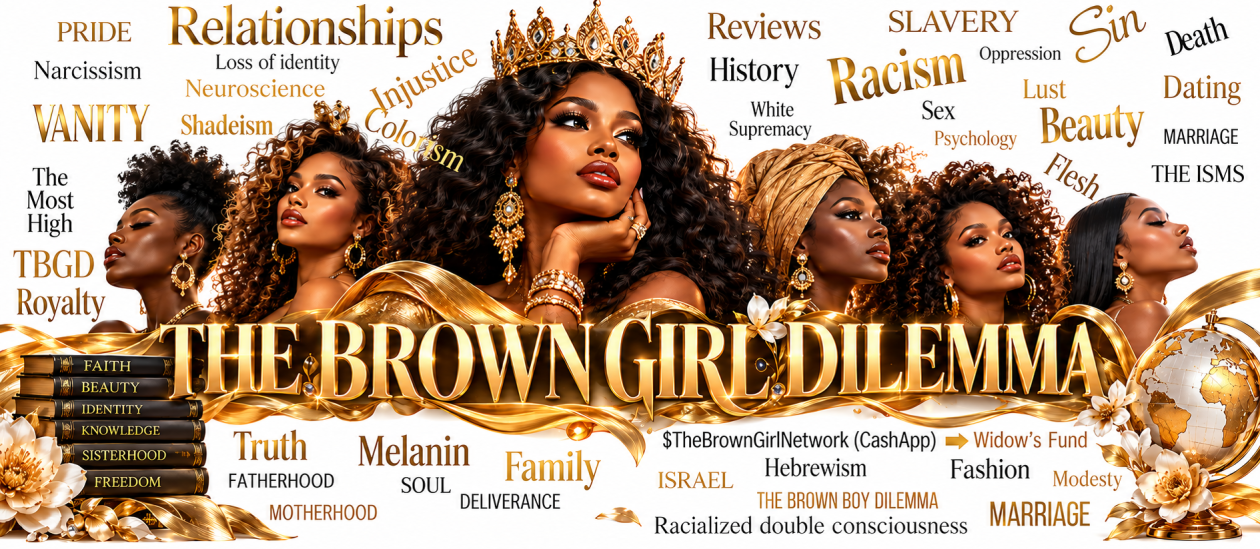

Skin tone, though often dismissed as a superficial trait, has been one of the most enduring markers of social status, identity, and belonging throughout history. Within the global African diaspora, complexion is not merely a reflection of genetics—it is a mirror of colonial legacy and a social currency shaped by centuries of racialized power structures. This study of shade, status, and self-image exposes how something as natural as melanin became a measure of worth, a divider of community, and a determinant of one’s place in the world.
The history of complexion as status can be traced to slavery and colonization. European colonizers constructed hierarchies that positioned whiteness as purity, intellect, and divinity while branding dark skin as savage, sinful, and inferior. These narratives justified systems of oppression and shaped global standards of beauty. Within enslaved societies, lighter skin was often rewarded with proximity to privilege—easier labor, access to education, and even freedom. The shade of one’s skin became a silent passport, a visual indicator of power or powerlessness.
After emancipation, this hierarchy did not dissolve—it evolved. Post-slavery societies in the Americas and the Caribbean replicated the “color caste system,” in which individuals with lighter complexions often occupied elite social classes. This system infiltrated institutions, religious circles, and even family structures. Marriages were sometimes arranged or encouraged to “improve the race,” a phrase rooted in the delusion that lighter skin was more civilized. The residue of this ideology remains embedded in modern self-image and social interaction.
The psychological effects of this hierarchy are profound. Colorism, a term first popularized by Alice Walker (1983), refers to discrimination based on skin shade within a racial or ethnic group. Unlike racism, which operates externally, colorism thrives internally—within the same community it harms. This internalized system distorts self-worth, convincing darker-skinned individuals that their beauty and brilliance are somehow diminished by their hue. Such conditioning breeds an ongoing battle between heritage and acceptance.
Self-image becomes entangled with these societal messages. From childhood, children absorb cues about which shades are celebrated and which are silenced. Dolls, textbooks, cartoons, and films have historically presented lighter-skinned or Eurocentric features as the standard of beauty. Kenneth and Mamie Clark’s (1947) famous “doll test” revealed that Black children, influenced by societal bias, often preferred white dolls, associating lightness with goodness and darkness with shame. These findings illustrate that the color hierarchy begins shaping identity at an alarmingly young age.
Sociologically, complexion intersects with economics and power. In many postcolonial nations, lighter-skinned individuals statistically enjoy higher income, education levels, and social mobility (Hunter, 2007). The workplace often rewards those who conform to Western aesthetics, while darker-skinned professionals encounter implicit bias and discrimination. This dynamic is not limited to the West; it manifests globally, from South Asia’s skin-whitening markets to Latin America’s “mestizaje” ideology. Shade has become an invisible economy, one that trades in privilege and perception.
In media and entertainment, colorism remains both blatant and subtle. Light-skinned actors and models often dominate leading roles, magazine covers, and music videos, perpetuating the illusion that beauty has a gradient. Darker-skinned women, particularly, are too often portrayed as aggressive, unrefined, or hypersexualized. This imbalance reinforces subconscious hierarchies of desirability, teaching audiences to associate status with lightness. The screen becomes a mirror that distorts rather than reflects the truth of beauty’s diversity.
Social media has complicated this dynamic. While platforms like Instagram and TikTok have amplified diverse representation, they have also introduced filters that digitally lighten complexions. This technological bias subtly reinforces the idea that paler skin is preferable. Algorithms reward certain aesthetics, shaping who becomes “influential” and who remains unseen. The digital world thus mirrors the physical one, reproducing shade-based hierarchies under the guise of modernity.
Religion and spirituality have also been implicated in the color divide. Western Christianity, influenced by Eurocentric imagery, often depicted holy figures as white, thereby associating divinity with fairness. Such portrayals shaped theological imagination, convincing generations that godliness resembled paleness. However, biblical anthropology dismantles this myth. The scriptures describe Christ as having “hair like wool” and “feet like unto fine brass” (Revelation 1:15, KJV)—a complexion symbolic of the very people whom colonial faith systems oppressed.
The intersection of shade and status is not only external but deeply internal. Psychologically, individuals navigate a spectrum of belonging—too dark for acceptance in white spaces, yet sometimes too light for validation in Black ones. This in-between identity produces emotional dissonance and alienation. The internal dialogue of color identity becomes a lifelong negotiation: balancing pride in heritage with the burden of historical perception. The mind becomes the true battlefield of complexion.
Scholars describe this tension as “pigmentocracy”—a system where skin tone predicts privilege and shapes social networks (Telles, 2014). Such hierarchies have persisted across cultures, from Brazil to India, highlighting how colonialism globalized colorism. Even in contemporary America, studies show lighter-skinned Black individuals receive more lenient sentencing in court and higher salaries in the workplace (Viglione, 2011). This demonstrates that the social psychology of skin still operates beneath the illusion of equality.
For women, the intersection of shade and gender intensifies the burden. Black feminist theorists such as bell hooks and Audre Lorde have critiqued how Eurocentric beauty ideals marginalize darker-skinned women. They argue that reclaiming one’s shade is not only an act of self-love but of revolution. When a dark-skinned woman declares herself beautiful, she challenges centuries of colonial indoctrination. Her confidence becomes both spiritual and political warfare.
In men, complexion intersects with masculinity. Lighter-skinned men are often stereotyped as “softer” or more approachable, while darker-skinned men are associated with hypermasculinity or danger. This duality reveals how shade shapes not only beauty but behavior. The perception of power and aggression tied to darker tones reflects deep-seated racial fears. Understanding these stereotypes is essential to dismantling the myths that equate complexion with character.
Healing from colorism requires introspection and collective action. Psychologists emphasize that awareness is the first step—recognizing the unconscious ways shade influences thought and behavior. Family conversations about complexion must move from silence to openness, from comparison to affirmation. When parents teach children to celebrate all shades of melanin, they dismantle the psychological architecture of colonialism.
Representation remains a crucial component of healing. When children see darker-skinned heroes, models, and intellectuals celebrated, it rewires their sense of possibility. Representation does not merely provide visibility—it restores dignity. Every image of a confident, brown-skinned person in art, media, or academia becomes an act of psychological liberation. Through storytelling, music, and education, a new standard of beauty emerges—one that honors the full spectrum of melanin.
The spiritual dimension of complexion calls for a theology of diversity. When humanity understands that God created shades as expressions of divine creativity, color hierarchies lose their power. Genesis 1:27 declares that man and woman were made in God’s image—an image reflected in every hue of the human spectrum. Recognizing this truth heals the soul where science and sociology cannot reach.
Economically, dismantling colorism requires inclusive opportunities. Hiring practices, media representation, and marketing campaigns must intentionally embrace diversity in tone. When institutions reward authenticity instead of assimilation, they create spaces where every shade can thrive without apology. Economic empowerment becomes both reparative and restorative.
The study of shade, status, and self-image ultimately reveals the depth of human conditioning. The hierarchy of complexion was never about skin—it was about control. To redefine beauty, one must confront the systems that created ugliness. Self-image, therefore, becomes a site of liberation where truth replaces illusion. When individuals learn to see their shade not as a burden but as a badge of survival, they reclaim the narrative of their own reflection.
In the end, the confession of complexion is both scholarly and spiritual: the recognition that color was never meant to divide but to display the infinite creativity of the Creator. Every hue, from deepest ebony to lightest bronze, tells a story of resilience, resistance, and rebirth. To study shade is to study survival. To love one’s reflection is to defy history’s lies. The ultimate self-image, then, is one that sees the divine in every color that the sun kisses into existence.
References
Clark, K. B., & Clark, M. P. (1947). Racial identification and preference in Negro children. In T. M. Newcomb & E. L. Hartley (Eds.), Readings in social psychology (pp. 169–178). Holt.
Hunter, M. (2007). The persistent problem of colorism: Skin tone, status, and inequality. Sociology Compass, 1(1), 237–254. https://doi.org/10.1111/j.1751-9020.2007.00006.x
Telles, E. (2014). Pigmentocracies: Ethnicity, race, and color in Latin America. University of North Carolina Press.
Viglione, J. (2011). Do skin color and gender matter? The influence of race, gender, and skin tone on sentencing decisions. Journal of Criminal Justice, 39(5), 379–389. https://doi.org/10.1016/j.jcrimjus.2011.06.010
Walker, A. (1983). In search of our mothers’ gardens: Womanist prose. Harcourt Brace Jovanovich.
Wilkerson, I. (2020). Caste: The origins of our discontents. Random House.