
Category Archives: wisdom

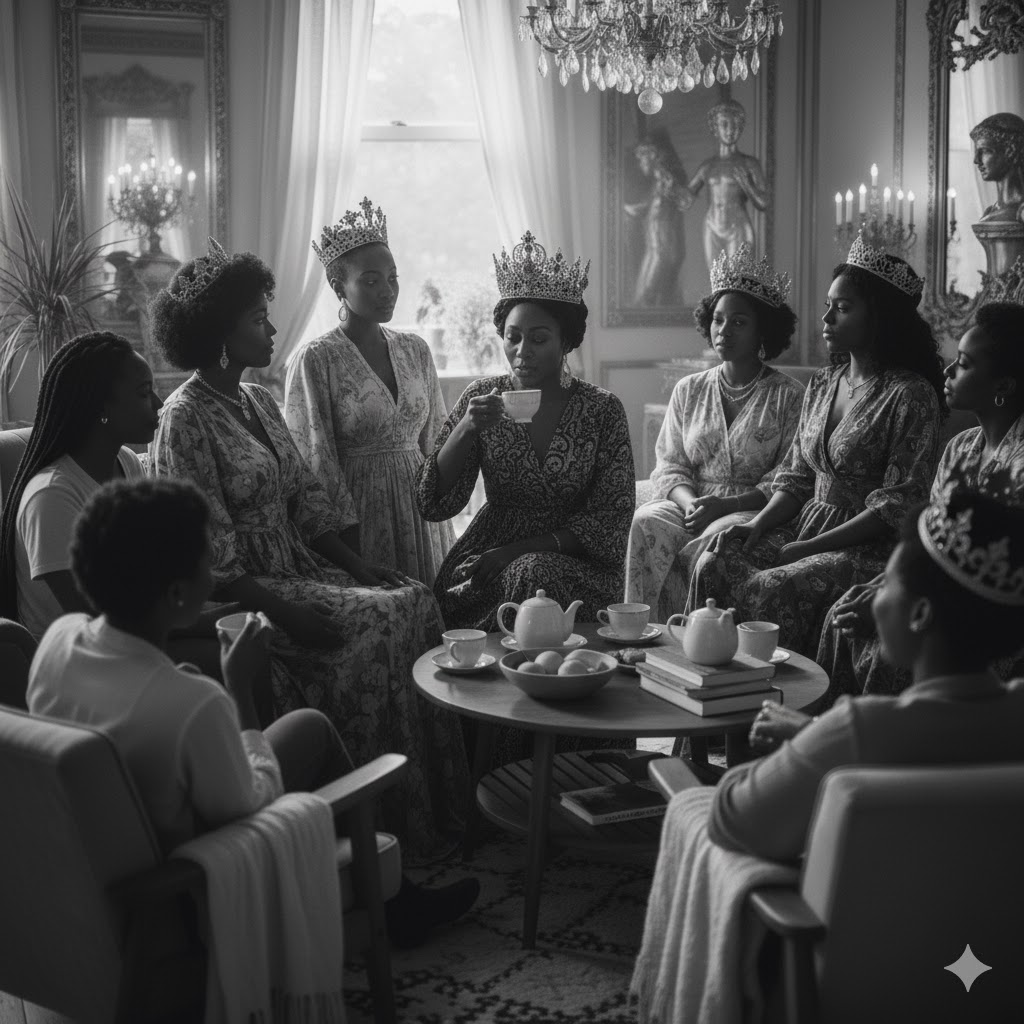
She Speaks: Wisdom for the Modern Queen.

In a world where women are often pressured to conform, the voice of a modern queen is both revolutionary and restorative. She Speaks: Wisdom for the Modern Queen centers on cultivating discernment, confidence, and purpose, enabling women to navigate life with grace, authority, and spiritual alignment. A modern queen speaks with intentionality, guided by wisdom, faith, and experience.

Wisdom begins with self-awareness. A queen understands her strengths, acknowledges her weaknesses, and continually seeks growth. Proverbs 4:7 (KJV) emphasizes, “Wisdom is the principal thing; therefore get wisdom: and with all thy getting get understanding.” Knowledge paired with discernment empowers her to make decisions that reflect integrity and purpose.

Faith anchors her voice. A modern queen relies on God’s guidance in all matters, knowing that divine counsel surpasses human opinion. Isaiah 11:2 (KJV) reminds us that the Spirit of wisdom and understanding, counsel and might, knowledge and fear of the LORD, equips leaders to act decisively and justly.

Confidence is cultivated through experience, reflection, and resilience. Life’s challenges test her character, but a queen responds with poise and strength. Psalm 27:1 (KJV) affirms, “The LORD is my light and my salvation; whom shall I fear? The LORD is the strength of my life; of whom shall I be afraid?” Confidence rooted in God transcends societal pressures and fear of judgment.

Discernment allows her to recognize truth from deception. A queen evaluates situations carefully, seeks wise counsel, and avoids impulsive decisions. Proverbs 3:21-23 (KJV) teaches that discretion preserves life and protects the path of the faithful.

Leadership is a hallmark of modern queenship. She influences others not through coercion, but by example, integrity, and empowerment. Titus 2:3-5 (KJV) underscores the importance of guiding others with wisdom and nurturing mentorship, creating a legacy of impact.

Communication is central to her power. The modern queen speaks with clarity, conviction, and compassion. Her words build up, instruct, and inspire. Proverbs 16:24 (KJV) reminds us, “Pleasant words are as an honeycomb, sweet to the soul, and health to the bones.” Her voice is a tool for encouragement, advocacy, and transformation.

Emotional intelligence strengthens her reign. A queen manages her emotions, empathizes with others, and maintains grace under pressure. Proverbs 15:1 (KJV) teaches, “A soft answer turneth away wrath: but grievous words stir up anger.” Emotional mastery enables influence without domination.

Vision guides her actions. The modern queen is strategic, goal-oriented, and proactive in shaping her life and community. Habakkuk 2:2 (KJV) encourages writing the vision clearly, ensuring clarity and focus in pursuit of purpose.

Resilience is cultivated through adversity. Challenges and setbacks are inevitable, yet a queen transforms trials into growth, strength, and wisdom. James 1:2-4 (KJV) emphasizes that trials produce perseverance, which matures character and prepares one for greater responsibility.

Legacy is a measure of true queenship. A modern queen empowers others, uplifts communities, and inspires the next generation. Proverbs 31:28 (KJV) celebrates women whose children rise up and call her blessed, reflecting the enduring influence of wisdom and virtue.

Self-care and personal boundaries are essential. A queen values her mental, physical, and spiritual well-being, ensuring she can serve effectively without depletion. 1 Corinthians 6:19-20 (KJV) reminds her that her body is a temple, requiring stewardship and care.

Integrity defines her reputation. A queen’s word, actions, and character are aligned, fostering trust and respect. Proverbs 10:9 (KJV) affirms, “He that walketh uprightly walketh surely: but he that perverteth his ways shall be known.” Consistency in integrity reinforces influence.

Courage is inherent in her voice. A modern queen confronts injustice, advocates for the marginalized, and pursues truth, even when it is unpopular or risky. Joshua 1:9 (KJV) encourages strength and fearlessness, reminding her that God’s presence fortifies her steps.

Humility balances her authority. While she exudes confidence and influence, a queen remains teachable, reflective, and grounded in service. Philippians 2:3-4 (KJV) instructs valuing others above self, fostering leadership rooted in love rather than pride.

Gratitude shapes her perspective. Recognizing blessings, mentors, and divine guidance cultivates contentment, joy, and poise. 1 Thessalonians 5:18 (KJV) teaches giving thanks in all circumstances as a pathway to wisdom and serenity.

Adaptability allows her to thrive amid change. A queen navigates evolving circumstances with grace, learning from experiences and remaining steadfast in purpose. Ecclesiastes 3:1 (KJV) emphasizes that there is a season for every purpose under heaven, underscoring discernment in timing and action.

Faithful relationships enhance her kingdom. Surrounding herself with wise counsel, supportive allies, and spiritually aligned peers reinforces growth, accountability, and collective impact. Proverbs 13:20 (KJV) reminds her that association shapes destiny.

Modern Queen Wisdom: Principles & Practice

PrincipleScripture Reference (KJV)Actionable StepsReflection Prompt
Self-AwarenessProverbs 4:7Identify your strengths and weaknesses; journal personal insightsHow well do I know my strengths, and where do I need growth?
Faith & Spiritual GroundingIsaiah 11:2Daily prayer, Bible study, and meditation on God’s guidanceHow am I seeking God’s wisdom in my decisions today?
ConfidencePsalm 27:1Step into leadership roles; affirm your worth dailyWhen have I doubted myself, and how can I act with faith instead?
DiscernmentProverbs 3:21-23Pause before decisions; seek counsel from trusted mentorsAm I acting with clarity or reacting impulsively?
LeadershipTitus 2:3-5Mentor others, serve your community, lead by exampleHow am I using my influence to uplift others?
CommunicationProverbs 16:24Speak truth with kindness; actively listenAre my words building up or tearing down those around me?
Emotional IntelligenceProverbs 15:1Practice empathy, manage emotions, and resolve conflicts calmlyHow do I handle frustration or disagreement with grace?
VisionHabakkuk 2:2Set clear, measurable goals for personal and professional growthWhat steps am I taking to fulfill my long-term purpose?
ResilienceJames 1:2-4Reflect on challenges; identify lessons and growth opportunitiesHow have I grown stronger through adversity?
LegacyProverbs 31:28Contribute positively to family, community, and cultureWhat lasting impact do I want to leave?
Self-Care & Boundaries1 Corinthians 6:19-20Prioritize mental, physical, and spiritual health; set limitsWhere in my life do I need to say “no” to protect my well-being?
IntegrityProverbs 10:9Align actions with values; keep commitmentsAre my actions consistent with the woman I aspire to be?
CourageJoshua 1:9Face fears boldly; take principled standsWhat fear is holding me back from my God-given purpose?
HumilityPhilippians 2:3-4Seek counsel; acknowledge contributions of othersHow can I remain teachable while leading confidently?
Gratitude1 Thessalonians 5:18Daily reflections on blessings; express thanksWhat am I grateful for today, and how does it shape my perspective?
AdaptabilityEcclesiastes 3:1Embrace change; learn from new experiencesHow do I respond to change: with fear or with faith?
Faithful RelationshipsProverbs 13:20Surround yourself with mentors and spiritually aligned peersAre my relationships supporting my growth and purpose?

Vision, courage, integrity, and wisdom converge in her voice. The modern queen embodies the ability to inspire, empower, and lead, modeling strength for future generations. Her influence extends beyond herself, shaping families, communities, and culture.

Ultimately, She Speaks: Wisdom for the Modern Queen is both a guide and a declaration. It empowers women to embrace authority rooted in wisdom, faith, and integrity. Her voice is her crown, her discernment her scepter, and her legacy an eternal testimony to the power of godly queenship.


References

Holy Bible, King James Version. (1611). Thomas Nelson.

Guthrie, D. (1994). The NIV application commentary: Proverbs. Grand Rapids, MI: Zondervan.

Wright, C. J. H. (2002). Old Testament ethics for the people of God. Downers Grove, IL: InterVarsity Press.

Harris, T. (2019). Black girls rising: A roadmap to excellence and empowerment. Chicago, IL: University of Chicago Press.

Rooks, N. (2021). Hair politics: Beauty, culture, and Black identity. New York, NY: Beacon Press.


Validation is a Prison in the Mind: Public Opinions.

Photo by Lisa from Pexels on Pexels.com

Human desire for approval is ancient, but in the digital era it has evolved into a culture-wide psychological chain. The hunger for validation—once rooted in community and kinship—now manifests in likes, shares, and public perception. This need becomes imprisonment when external opinions dictate identity, behavior, and worth (Baumeister & Leary, 1995).

Public validation operates like a currency. Individuals trade authenticity for applause, editing themselves to fit social expectations. When the measure of self comes from others, identity becomes fragile and contingent. Instead of asking Who am I?, many ask, What do they think? The self fractures under performance pressure.

This prison thrives in a comparison culture. Digital exposure amplifies judgment—real or imagined. People’s sense of worth becomes tied to metrics of visibility rather than intrinsic value (Twenge, 2017). Constant evaluation erodes confidence and cultivates anxiety.

Social media intensifies this trap. Curated images and narratives create unrealistic standards, pushing individuals to seek constant approval to mirror perceived perfection (Chou & Edge, 2012). Identity becomes theatrical: one plays the role others reward, not the role one is called to live.

Scripture warns against fear of public opinion: “The fear of man bringeth a snare” (Proverbs 29:25, KJV). Fear enslaves; it binds decisions to external praise instead of internal purpose. When validation is the god, authenticity becomes the sacrifice.

Seeking validation feeds insecurity instead of healing it. Approval offers temporary relief, not transformation. Like addiction, the more validation one receives, the more one needs to maintain emotional equilibrium (Andreassen et al., 2017). The soul starves chasing crumbs of affirmation.

The prison bars are not physical—they are psychological. They take shape through self-monitoring, image control, and emotional dependence on external responses (Leary, 2010). The individual becomes a prisoner to perception rather than a steward of truth.

Identity shaped by crowd opinion is inherently unstable. Public sentiment is fickle. Praise today becomes critique tomorrow. Those who anchor self-worth to shifting crowds experience emotional volatility and erosion of self-trust (Deci & Ryan, 2000). Where there is no internal foundation, outside voices rule.

This validation trap harms relationships. People stop engaging genuinely, interacting instead for applause, recognition, or status. Love turns into performance; friendship becomes audience management. Community loses authenticity and depth (Putnam, 2000).

The prison also affects spiritual grounding. Scripture calls believers to seek approval from God, not man: “For do I now persuade men, or God?” (Galatians 1:10, KJV). Spiritual identity is rooted in divine truth, not social metrics. Public validation competes with God’s affirmation.

Psychologically, external validation weakens autonomy. Self-determination theory emphasizes intrinsic motivation as the key to well-being (Deci & Ryan, 2000). Dependence on others’ approval undermines inner motivation, leading to emptiness and emotional fragility.

Public opinion often promotes conformity, not growth. Fear of judgment prevents risk, innovation, and truth-telling. Progress is stifled when voices censor themselves to avoid backlash (Noelle-Neumann, 1974). Conformity breeds mediocrity.

Cognitive dissonance emerges when individuals know who they are privately but act differently publicly. This gap creates psychological discomfort, stress, and identity confusion (Festinger, 1957). The prison forces a split between truth and performance.

Cultural pressure also reinforces self-objectification. People become objects to be seen rather than souls to be known. This dehumanization fuels low self-esteem and body dissatisfaction, especially among women and marginalized communities (Fredrickson & Roberts, 1997).

True confidence does not beg for applause. It exists without spotlight. It aligns with purpose rather than popularity. As Scripture reminds, “Man looketh on the outward appearance, but the Lord looketh on the heart” (1 Samuel 16:7, KJV). Divine perspective liberates from human judgment.

Freedom begins with self-recognition: acknowledging the internal need for approval and dismantling its power. Practicing solitude, silence, and introspection strengthens internal voice over external noise.

True liberation requires re-anchoring worth. When value is rooted in spiritual identity, purpose, and character, public opinion loses power. The self becomes whole—no longer fractured by applause or rejection.

To escape the validation prison, one must embrace authenticity. Those who speak truth, live purposefully, and pursue inner fulfillment do not need public permission. They move with conviction, not crowd consensus.

Ultimately, public validation is a fragile foundation. External applause cannot sustain the soul. Freedom comes when identity is anchored in truth, not perception; divine approval, not social metrics. The liberated soul lives boldly, loves deeply, and walks purpose-filled—unshackled from the prison of public opinion.


References

Andreassen, C. S., et al. (2017). The relationship between addictive use of social media and symptoms of psychiatric disorders. Psychological Reports, 120(4).
Baumeister, R., & Leary, M. (1995). The need to belong. Psychological Bulletin, 117(3).
Chou, H., & Edge, N. (2012). Facebook use and social comparison. Cyberpsychology, Behavior, and Social Networking, 15(2).
Deci, E., & Ryan, R. (2000). Self-determination theory and well-being. American Psychologist, 55(1).
Festinger, L. (1957). A theory of cognitive dissonance. Stanford University Press.
Fredrickson, B., & Roberts, T. (1997). Objectification theory. Psychology of Women Quarterly, 21(2).
Leary, M. (2010). The curse of the self: Self-awareness, egotism, and the quality of human life. Oxford University Press.
Noelle-Neumann, E. (1974). The spiral of silence. Journal of Communication, 24(2).
Putnam, R. (2000). Bowling alone: The collapse and revival of American community. Simon & Schuster.
Twenge, J. (2017). iGen. Atria Books.

💍💍 Warning: The Types of People You Should Not Marry 💍💍

Photo by Jasmine Carter on Pexels.com

Marriage is one of the most serious covenants a believer can enter, and the Word of God warns us to be discerning about who we bind ourselves to in this sacred union. Unlike the shifting trends of culture, biblical marriage is not a temporary arrangement, but a divine covenant designed to reflect Christ’s love for the Church (Ephesians 5:25–27, KJV). When two become one flesh, they are no longer individuals walking separately, but a union meant to endure until death (Genesis 2:24, KJV). For this reason, it is crucial to understand the types of people Scripture and wisdom warn us against marrying.

1. Marrying into Addiction
A spouse bound by addiction—whether drugs, alcohol, gambling, or other destructive habits—cannot fully devote themselves to God or to their partner. Addiction enslaves the body and spirit, clouding judgment and tearing families apart. Proverbs 20:1 (KJV) declares, “Wine is a mocker, strong drink is raging: and whosoever is deceived thereby is not wise.” Psychology also confirms that addiction erodes trust, financial stability, and intimacy in marriage, making it a weight too heavy for a covenant to thrive under.

2. Lover of Self (The Narcissist)
Paul warned in 2 Timothy 3:2 (KJV) that in the last days, men shall be “lovers of their own selves, covetous, boasters, proud, blasphemers.” A narcissistic spouse is consumed with self-worship, lacking the humility and empathy necessary for sacrificial love. Psychology identifies narcissism as destructive to marriage because it produces manipulation, lack of accountability, and emotional abuse. True love is selfless, not self-absorbed (1 Corinthians 13:4–5, KJV).

3. The Prideful Person
Pride is the root of rebellion against God. Proverbs 16:18 (KJV) warns, “Pride goeth before destruction, and an haughty spirit before a fall.” A prideful spouse refuses correction, dismisses godly counsel, and places themselves above God’s will. Such a marriage will be built on shaky ground, for pride leaves no room for the humility and submission that marriage requires (Ephesians 5:21, KJV).

4. The Lustful Person
A person who demands sexual intimacy before marriage reveals a heart not surrendered to God. 1 Corinthians 6:18 (KJV) instructs us to “flee fornication,” for sexual sin is a defilement against our own body. If someone cannot honor God and you in purity before marriage, they will likely dishonor the covenant after marriage as well. Psychology also affirms that couples who rush into sexual intimacy before building emotional and spiritual foundations often face higher divorce rates.

5. The Nonbeliever (Unequally Yoked)
Paul is explicit in 2 Corinthians 6:14 (KJV): “Be ye not unequally yoked together with unbelievers.” Marrying someone who does not share your faith will cause division in values, priorities, and spiritual growth. Marriage is difficult enough with unity, but when one spouse walks in light and the other in darkness, conflict is inevitable. The covenant is designed to walk together toward eternity, not to pull one another apart.

6. The Spiritually Lukewarm (Double-Minded)
Revelation 3:16 (KJV) warns that the lukewarm will be spewed out of God’s mouth. A spiritually stagnant or double-minded person lacks stability, leaving their spouse vulnerable to discouragement and compromise. James 1:8 (KJV) says, “A double minded man is unstable in all his ways.” Marrying such a person means living with inconsistency, spiritual apathy, and lack of growth.

7. Marriage is a Covenant, Not a Game
Marriage was never meant to be trial and error, nor a disposable arrangement. Malachi 2:16 (KJV) declares that God hates divorce. The modern world may treat relationships as temporary, but in God’s eyes, marriage is binding until death. It is a covenant not only between two individuals but before the Lord Himself.

8. Biblical Examples of Marriage
We see the beauty of covenant in Adam and Eve (Genesis 2:23–24), Isaac and Rebekah (Genesis 24), and Ruth and Boaz (Ruth 4). These unions were marked by divine appointment, faith, and mutual devotion. While not all biblical marriages were perfect, the pattern reveals that God orchestrates marriage for His glory, not for fleeting desires.

9. Two Becoming One Flesh
Genesis 2:24 (KJV) declares, “They shall be one flesh.” This one-flesh covenant is spiritual, physical, and emotional. To enter lightly is to risk not only your future but your eternal walk with God. Marriage binds two souls, joining destinies, families, and legacies.

10. The Warning of Marriage
The warning is clear: who you marry will either draw you closer to God or pull you away from Him. Marriage can be a path to eternal truth or a snare leading to destruction. The wrong spouse can lead to misery, infidelity, and even spiritual death. God is not playing with us when He commands us to be discerning.

Green Flags (Qualities of a Godly Spouse)

  • Loves God above all else (Matthew 22:37, KJV)
  • Walks in humility and is teachable (Philippians 2:3, KJV)
  • Practices self-control and purity (1 Thessalonians 4:3–4, KJV)
  • Consistent in prayer, Word, and worship (Joshua 1:8, KJV)
  • Shows fruit of the Spirit: love, joy, peace, patience, kindness (Galatians 5:22–23, KJV)
  • Willing to sacrifice and serve (Ephesians 5:25, KJV)
  • Listens and communicates with honesty and gentleness (Proverbs 15:1, KJV)
  • Values covenant, not convenience (Malachi 2:14, KJV)

Red Flags (Types You Should Not Marry)

  • Addicted to substances or destructive behaviors (Proverbs 23:20–21, KJV)
  • Self-absorbed, arrogant, or narcissistic (2 Timothy 3:2, KJV)
  • Prideful, refuses correction or accountability (Proverbs 16:18, KJV)
  • Pressures you into sexual sin (1 Corinthians 6:18, KJV)
  • Does not believe in Christ or rejects faith (2 Corinthians 6:14, KJV)
  • Spiritually stagnant, lukewarm, or double-minded (James 1:8, KJV)
  • Dishonest or manipulative (Proverbs 12:22, KJV)
  • Treats marriage as a casual contract instead of a covenant (Matthew 19:6, KJV)

Final Thought:
If the person you’re considering for marriage draws you closer to God, strengthens your walk, and exhibits the fruit of the Spirit, that is a green flag. If they pull you into sin, pride, or spiritual compromise, that is a red flag. Choose wisely, for marriage is a covenant that echoes into eternity.

11. Waiting on the Right One
Psalm 27:14 (KJV) urges us, “Wait on the Lord: be of good courage, and he shall strengthen thine heart: wait, I say, on the Lord.” Waiting does not mean idleness; it means preparation. God’s timing is perfect, and His chosen spouse will align with His will. Rushing ahead only leads to regret.

12. Preparing for Marriage Biblically
Preparation involves prayer, fasting, studying God’s Word, and developing the fruit of the Spirit (Galatians 5:22–23, KJV). A godly spouse is drawn to godly character, not superficial charm. Preparing also means financial stewardship, emotional maturity, and spiritual strength.

13. Psychology on Marriage
Psychological research confirms that stable marriages are built on trust, communication, shared values, and emotional regulation. Couples who invest in personal growth before marriage often experience healthier relationships. This aligns with Scripture, which calls believers to be “transformed by the renewing of your mind” (Romans 12:2, KJV).

14. Marriage as Walking Together Eternally
Marriage is a journey toward eternity with God. Amos 3:3 (KJV) asks, “Can two walk together, except they be agreed?” A spouse is not just a partner for this life but one who influences your eternal direction. Marriage should lead both toward Christ, not away from Him.

15. Walking Not Toward Eternal Hell
If marriage joins you with someone unfaithful to God, you risk walking together toward destruction. 1 Corinthians 15:33 (KJV) warns, “Be not deceived: evil communications corrupt good manners.” Choosing wrongly is not just about emotional pain; it is about eternal consequences.

16. God’s Covenant vs. Emotional Change
Unlike fleeting emotions, God’s covenant endures. Love may feel different in seasons, but covenant keeps the union strong. Emotions may waver, but the vow before God is unbreakable. This is why discernment before marriage is essential.

17. Guarding Your Heart in Courtship
Proverbs 4:23 (KJV) declares, “Keep thy heart with all diligence; for out of it are the issues of life.” Courtship must be intentional, prayerful, and chaste. Guarding your heart prevents premature intimacy, emotional entanglement, and regret.

18. The Role of Counsel
Proverbs 11:14 (KJV) says, “In the multitude of counsellors there is safety.” Seeking wise counsel from godly leaders and elders ensures discernment in marriage choices. Psychology also affirms that mentorship and premarital counseling improve marital success rates.

19. The Blessing of Godly Marriage
When aligned with God’s will, marriage becomes a wellspring of joy, companionship, and sanctification. Ecclesiastes 4:9–10 (KJV) declares, “Two are better than one; because they have a good reward for their labour. For if they fall, the one will lift up his fellow.” This blessing cannot be experienced with the wrong partner.

20. Final Warning
Marriage is not a playground for emotions but a holy covenant. Choose wisely, wait faithfully, and prepare diligently. God is not mocked, and entering marriage lightly can lead to ruin. But when two walk together in eternal truth, marriage becomes a reflection of Christ’s everlasting covenant with His people—a bond unbroken by time, trial, or temptation.

📚 References

American Psychological Association. (2020). Publication manual of the American Psychological Association (7th ed.). APA.

American Psychological Association. (n.d.). Addiction. In APA dictionary of psychology. Retrieved from https://dictionary.apa.org/addiction

American Psychological Association. (n.d.). Narcissistic personality disorder. In APA dictionary of psychology. Retrieved from https://dictionary.apa.org/narcissistic-personality-disorder

Balswick, J. O., & Balswick, J. K. (2014). The family: A Christian perspective on the contemporary home (4th ed.). Baker Academic.

Fowers, B. J., & Olson, D. H. (1992). Four types of premarital couples: An empirical typology based on PREPARE. Journal of Family Psychology, 6(1), 10–21. https://doi.org/10.1037/0893-3200.6.1.10

Stanley, S. M., Rhoades, G. K., & Markman, H. J. (2006). Sliding versus deciding: Inertia and the premarital cohabitation effect. Family Relations, 55(4), 499–509. https://doi.org/10.1111/j.1741-3729.2006.00418.x

Waite, L. J., & Gallagher, M. (2000). The case for marriage: Why married people are happier, healthier, and better off financially. Broadway Books.


📖 Biblical References (KJV)

  • Amos 3:3
  • Ecclesiastes 4:9–10
  • Ephesians 5:21–27
  • Galatians 5:22–23
  • Genesis 2:23–24
  • James 1:8
  • Malachi 2:14–16
  • Matthew 19:6
  • Proverbs 4:23; 11:14; 12:22; 15:1; 16:18; 20:1; 23:20–21
  • Psalm 27:14
  • Revelation 3:16
  • Romans 12:2
  • 1 Corinthians 6:18; 13:4–5; 15:33
  • 2 Corinthians 6:14
  • 2 Timothy 3:2
  • 1 Thessalonians 4:3–4