Category Archives: virtuous woman

The Virtuous Woman Code

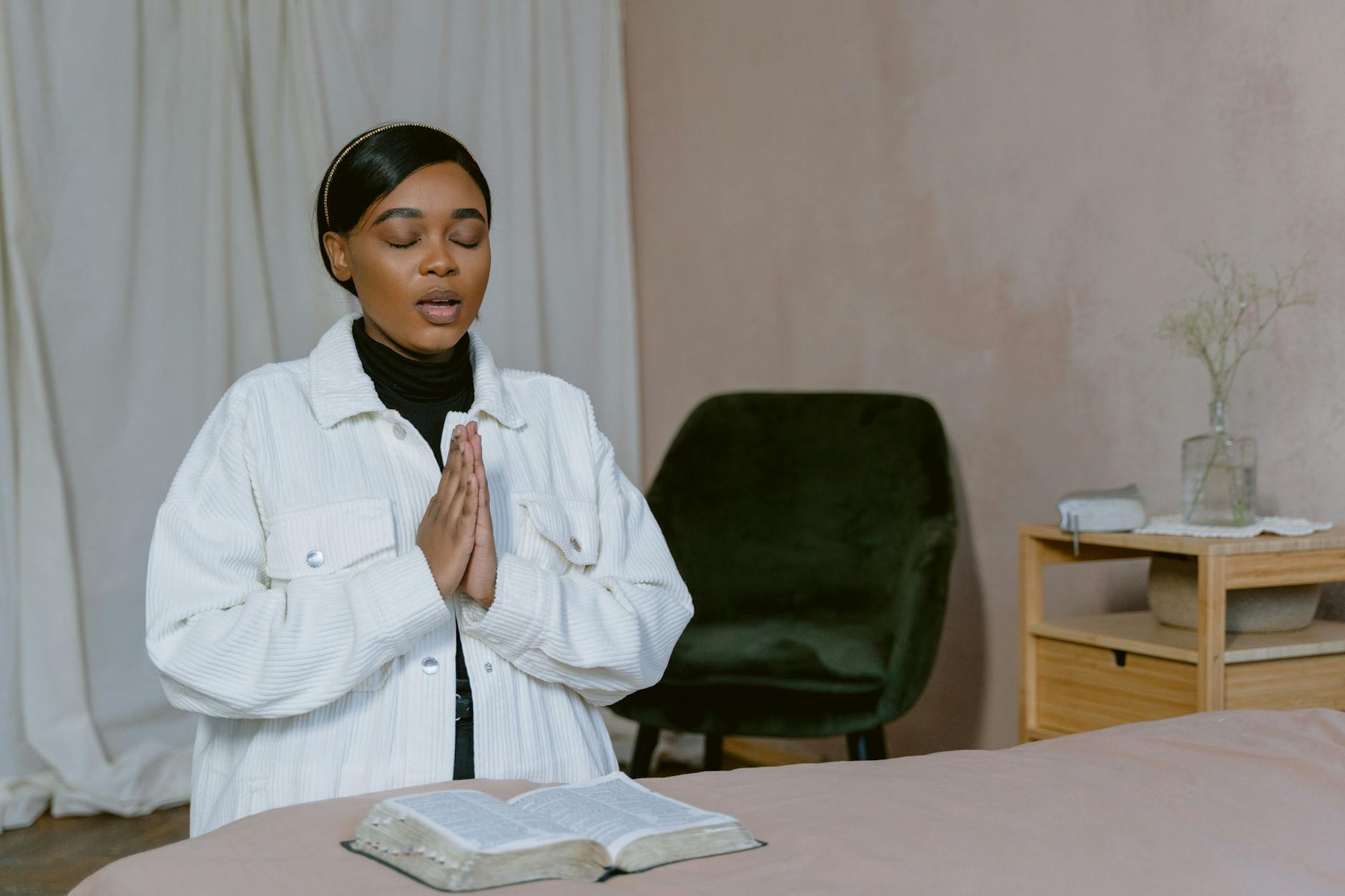
Photo by Fotoboy on Pexels.com

The virtuous woman is a reflection of God’s glory and wisdom. She embodies strength, grace, and unwavering faith, serving as a beacon to her family and community. Proverbs 31:30 declares, “Favor is deceitful, and beauty is vain: but a woman that feareth the Lord, she shall be praised.” Her worth is measured not by fleeting appearances but by her devotion to God.

A virtuous woman is a woman of faith. Her life is anchored in trust and obedience to God’s Word. She prays consistently, seeking His guidance in all matters, knowing that her strength comes from Him. Philippians 4:6 exhorts, “Be careful for nothing; but in every thing by prayer and supplication with thanksgiving let your requests be made known unto God.”

She is a woman of integrity. Her actions align with her words, and her character remains steadfast under pressure. Proverbs 11:3 affirms, “The integrity of the upright shall guide them: but the perverseness of transgressors shall destroy them.” Integrity allows her to lead by example, inspiring trust and respect.

A virtuous woman is diligent in her responsibilities. She manages her household, nurtures her family, and contributes to her community with wisdom and skill. Proverbs 31:27 highlights, “She looketh well to the ways of her household, and eateth not the bread of idleness.” Her diligence reflects her commitment to God’s order and purpose.

Humility defines her demeanor. She does not seek acclaim but honors God through service and modesty. James 4:10 reminds, “Humble yourselves in the sight of the Lord, and he shall lift you up.” Humility cultivates wisdom, patience, and relational harmony.

A virtuous woman is compassionate. She extends mercy and kindness to those in need, embodying Christ’s love. Micah 6:8 instructs, “He hath shewed thee, O man, what is good; and what doth the Lord require of thee, but to do justly, and to love mercy, and to walk humbly with thy God?” Compassion strengthens her community and her testimony.

She exercises self-control, governing her emotions and desires with wisdom. Proverbs 25:28 warns, “He that hath no rule over his own spirit is like a city that is broken down, and without walls.” Through self-discipline, she maintains peace and integrity in her personal and family life.

A virtuous woman is wise in counsel. She listens, discerns, and offers guidance rooted in Scripture. Proverbs 31:26 teaches, “She openeth her mouth with wisdom; and in her tongue is the law of kindness.” Her counsel uplifts, corrects, and instructs with love.

She values education and growth, seeking knowledge that strengthens her mind and spirit. Proverbs 4:7 encourages, “Wisdom is the principal thing; therefore get wisdom: and with all thy getting get understanding.” Her pursuit of understanding equips her for leadership and influence.

Faithfulness marks her relationships. She honors her commitments and fosters trust in her marriage, family, and friendships. Luke 16:10 states, “He that is faithful in that which is least is faithful also in much.” Her loyalty reflects her reverence for God and His covenant principles.

A virtuous woman is a steward of her resources. She manages finances and possessions responsibly, ensuring provision for her family and generosity toward others. Proverbs 31:16 reveals, “She considereth a field, and buyeth it: with the fruit of her hands she planteth a vineyard.” Stewardship demonstrates wisdom and foresight.

She exemplifies courage, facing life’s challenges with faith and resilience. Joshua 1:9 encourages, “Be strong and of a good courage; be not afraid, neither be thou dismayed: for the Lord thy God is with thee whithersoever thou goest.” Courage strengthens her spirit and inspires those around her.

Patience is her companion. She understands that God’s timing is perfect and that growth comes through trials. Romans 5:3-4 teaches, “…tribulation worketh patience; And patience, experience; and experience, hope.” Patience enables her to persevere and remain steadfast in faith.

She cultivates purity of heart and mind. Philippians 4:8 instructs, “Whatsoever things are true, whatsoever things are honest, whatsoever things are just, whatsoever things are pure, whatsoever things are lovely…think on these things.” Her thoughts and actions honor God and protect her influence.

A virtuous woman nurtures spiritual growth in others. She mentors younger women, teaches her children, and encourages her peers in righteousness. Titus 2:3-5 instructs older women to guide the young, reflecting a legacy of godly mentorship.

She is confident in her God-given identity. She does not compare herself to others but embraces her unique gifts and purpose. Proverbs 31:25 affirms, “Strength and honour are her clothing; and she shall rejoice in time to come.” Confidence grounded in God produces joy and stability.

Her speech is uplifting, avoiding gossip and negativity. Proverbs 31:26 emphasizes, “She openeth her mouth with wisdom; and in her tongue is the law of kindness.” Words of encouragement and truth build up her household and community.

A virtuous woman is faithful in worship. She prioritizes communion with God through prayer, study, and obedience. Psalm 122:1 declares, “I was glad when they said unto me, Let us go into the house of the Lord.” Worship shapes her character and aligns her heart with God’s will.

She demonstrates perseverance in adversity, trusting God to sustain her through trials. James 1:12 assures, “Blessed is the man that endureth temptation: for when he is tried, he shall receive the crown of life, which the Lord hath promised to them that love him.” Her steadfastness models faith under pressure.

Ultimately, the virtuous woman’s life is a testimony of God’s wisdom, grace, and guidance. Proverbs 31:30 summarizes, “Favor is deceitful, and beauty is vain: but a woman that feareth the Lord, she shall be praised.” Her legacy is eternal, shaped by devotion, integrity, and love.


🌺 The Radiance of Righteousness: How Modesty and Purity Shapes True Beauty 🌺

Photo by M Zass on Pexels.com

In a culture obsessed with appearance, it is easy to forget that true beauty is more than skin deep. The Bible emphasizes that the foundation of beauty is righteousness and purity. Proverbs 20:7 (KJV) states: “The just man walketh in his integrity: his children are blessed after him.” Purity of heart, integrity, and moral discipline are the qualities that radiate true beauty, far surpassing fleeting physical charm.

Purity, both in thought and action, shapes how a person interacts with the world. Psychologically, individuals who demonstrate honesty, self-control, and moral consistency inspire trust and admiration in others (Miller & Lynam, 2001). A pure heart allows one to form healthy relationships, make ethical decisions, and maintain a reputation that is respected and lasting. In essence, righteousness makes someone attractive in ways that superficial beauty cannot.

Modesty is a concept that encompasses humility, self-respect, and restraint in one’s behavior, speech, appearance, and attitude. It involves presenting oneself in a way that does not draw unnecessary attention or provoke vanity, pride, or lust. Modesty is both an inner disposition (a humble heart) and an outer expression (behavior, dress, and speech).

From a biblical perspective, modesty is closely tied to humility and godliness. The Bible teaches:

  • “Whose adorning let it not be that outward adorning… But let it be the hidden man of the heart, in that which is not corruptible, even the ornament of a meek and quiet spirit, which is in the sight of God of great price” (1 Peter 3:3–4, KJV).
  • “Likewise, ye wives, be in subjection to your own husbands; that, if any obey not the word, they also may without the word be won by the conversation of the wives” (1 Peter 3:1, KJV). Here, modesty includes behavior that reflects respect, wisdom, and self-control.

Modesty also extends to speech and conduct, meaning avoiding boastfulness, arrogance, or sexual provocation. It is not shame or self-denial, but a way of valuing oneself and others properly, emphasizing inner character over outward appearance.

In practice, a modest person dresses, speaks, and acts in a way that honors God, respects others, and reflects self-discipline, while keeping the focus on character, not vanity.

The Bible provides clear examples of women whose inner purity defined their beauty. Abigail, though not described for her looks, prevented disaster through wisdom and discernment (1 Samuel 25:32–33 KJV). Her righteous choices protected lives and earned respect, proving that true beauty is measured by the impact of one’s character. Similarly, Mary, the mother of Jesus, was called “highly favoured” (Luke 1:28 KJV) because of her obedience and humility, demonstrating that God prizes purity of heart above outward appearance.

Modern examples also illustrate the radiance of righteousness. Consider a young woman in her community who mentors at-risk youth, guiding them with integrity and love. Her physical appearance may be unnoticed by many, but her influence and moral courage leave a lasting impression. Similarly, a businesswoman who maintains honesty in her dealings, even under pressure, inspires trust and admiration, reflecting the beauty of righteousness in practical life.

Purity is not just about morality—it also shapes social and emotional health. Psychology highlights that self-regulation, ethical conduct, and living according to one’s values contribute to well-being and social success (Baumeister et al., 2007). Individuals who cultivate purity and integrity tend to experience lower stress and stronger, more meaningful relationships. This aligns perfectly with biblical teachings that emphasize the blessings of a righteous life.

Joseph, in the Old Testament, faced temptation in Potiphar’s house yet refused to sin against God (Genesis 39:9 KJV). His purity not only protected his soul but positioned him for future leadership and blessing. Similarly, Daniel’s adherence to God’s laws, despite being in a foreign and morally challenging environment, earned him favor and respect (Daniel 6:4 KJV). These examples show that righteousness amplifies inner beauty and establishes a lasting legacy.

A woman of purity influences her family and community positively. As a mother, she instills values of honesty and integrity; as a friend, she encourages uprightness; as a wife, she nurtures trust and faithfulness. Proverbs 31:26 (KJV) says: “She openeth her mouth with wisdom; and in her tongue is the law of kindness.” Her words, actions, and moral discipline reflect God’s radiance, making her beauty enduring.

Ultimately, “The Radiance of Righteousness” teaches that beauty rooted in purity and godly character is eternal. While makeup fades and fashion changes, righteousness endures and leaves a transformative impact on others. True beauty is revealed when a person’s heart aligns with God’s will, their choices reflect integrity, and their life shines with moral courage, blessing everyone they encounter.


References

  • The Holy Bible, King James Version.
  • Baumeister, R. F., Vohs, K. D., & Tice, D. M. (2007). The strength model of self-control. Current Directions in Psychological Science, 16(6), 351–355.
  • Miller, J. D., & Lynam, D. R. (2001). Structural models of personality and their relation to antisocial behavior: A meta-analytic review. Journal of Personality, 69(2), 335–368.
  • Koenig, H. G. (2012). Religion, spirituality, and health: The research and clinical implications. ISRN Psychiatry, 2012, 278730. https://doi.org/10.5402/2012/278730

👑 The Crown of Character: Why Virtue Is a Woman’s Greatest Adornment 👑

Photo by John Ray Ebora on Pexels.com

Beauty is often measured by what the eye can see—youthful features, stylish clothing, or physical charm. Yet Scripture teaches that the most valuable adornment a woman can wear is not jewelry, makeup, or clothing, but virtue and godly character. Proverbs 31:10–11 (KJV) reminds us: “Who can find a virtuous woman? for her price is far above rubies. The heart of her husband doth safely trust in her, so that he shall have no need of spoil.” True beauty is eternal because it is rooted in the heart, reflecting God’s glory.

Psychology supports this insight, showing that traits such as honesty, empathy, patience, and humility greatly enhance perceptions of attractiveness (Riggio & Widaman, 1984). A woman who radiates virtue draws people toward her not through appearance alone, but through trustworthiness and kindness. These qualities build long-lasting relationships, nurture families, and create positive social environments—things outward beauty cannot guarantee.

The Bible provides many examples of women whose virtue elevated them above mere appearance. Ruth’s loyalty to Naomi and commitment to God’s ways made her a woman of lasting honor, despite her humble beginnings (Ruth 1:16–17 KJV). Likewise, Abigail, known for both wisdom and discretion, prevented bloodshed and won favor in the eyes of God and men (1 Samuel 25:32–33 KJV). These women exemplify how virtue functions as a crown, visible in deeds, speech, and moral courage.

Peter emphasized that adornment of the heart surpasses outward embellishments: “Whose adorning let it not be that outward adorning… But let it be the hidden man of the heart… a meek and quiet spirit, which is in the sight of God of great price” (1 Peter 3:3–4 KJV). The “hidden man of the heart” represents qualities such as grace, humility, and steadfastness—virtues that no fashion or makeup can replicate.

In modern life, the principle of character as adornment remains relevant. A mother who teaches her children patience and respect, a friend who offers counsel with wisdom and discretion, or a professional who works with integrity demonstrates beauty that outlasts appearances. Virtue shapes reputation, inspires trust, and leaves a legacy that endures long after physical beauty fades.

Psychological research also confirms that people are drawn to moral character. Acts of kindness, courage, and fairness increase interpersonal attraction and social cohesion (Seligman, 2011). Unlike superficial glamour, virtue strengthens bonds and builds communities. A virtuous woman becomes a stabilizing and inspiring presence in her family, workplace, and social circles.

The crown of character is cultivated through prayer, obedience, and consistent moral choices. Women who fear the Lord, walk in integrity, and demonstrate patience and humility grow in virtue daily. Proverbs 31:26 (KJV) says: “She openeth her mouth with wisdom; and in her tongue is the law of kindness.” Her speech, her actions, and her faith become ornaments far richer than gold or pearls.

Ultimately, a woman’s greatest adornment is not seen in mirrors or reflected in applause—it is revealed in her steadfastness, love, and virtue. Godly character outshines all temporary beauty, bringing glory to Him and blessing to everyone she encounters. True adornment is eternal, and the crown of virtue is a testimony that reflects the heart of God.


References

  • The Holy Bible, King James Version.
  • Riggio, R. E., & Widaman, K. F. (1984). The interrelationships of self-esteem, locus of control, and attractiveness. Personality and Social Psychology Bulletin, 10(2), 241–247.
  • Seligman, M. E. P. (2011). Flourish: A Visionary New Understanding of Happiness and Well-being. New York: Free Press.
  • Koenig, H. G. (2012). Religion, spirituality, and health: The research and clinical implications. ISRN Psychiatry, 2012, 278730. https://doi.org/10.5402/2012/278730

The WIFE: The Heart of the House

The wife stands as the quiet pulse of a home, the rhythm that keeps the household alive even when no one notices the steady beat. Her presence carries warmth, order, and sacred purpose. She is not merely an occupant within the walls—she is the heart that gives the house life.

A wife’s strength is often subtle, revealed in the way she hosts peace within her spirit. She cultivates gentleness, dignity, and wisdom, manifesting the essence of biblical womanhood. Her devotion to God frames the foundation of her responsibilities, making her a vessel of divine influence.

In Scripture, the wife is described as a “help meet,” not a subordinate, but a divine counterpart—one crafted by Yah to stand alongside her husband in destiny. Her partnership is purposeful, and her voice is essential to the spiritual climate of the home.

The heart of a house is not loud; it beats quietly. In the same way, a wife’s presence fills the home with unseen blessings. Her prayers shift atmospheres. Her discernment guides decisions. Her patience cultivates growth within the family.

She embodies spiritual intuition, often sensing danger or blessing before it manifests. Her connection to God enables her to perceive what the natural eye may overlook. Through her, families learn to listen for the soft whisper of the Holy Spirit.

A wife is also the keeper of emotional climate. Her words can soothe storms or stir waters. Proverbs teaches that “a wise woman builds her house,” revealing that her speech, discretion, and grace contribute to the home’s foundation of peace.

Her nurturing nature forms the emotional architecture of her children’s hearts. Through affection, boundaries, and prayer, she shapes future generations. Her legacy rests not only in her actions but in the character she molds in her children.

A wife carries the delicate balance of strength and softness. She is resilient yet tender, unwavering yet compassionate. Her smile becomes a refuge for her family, and her presence becomes a stabilizing force when life becomes uncertain.

She is also the embodiment of loyalty and devotion. Through seasons of abundance and seasons of lack, through joys and sorrows, a godly wife remains anchored in covenant. Her love is not casual—it is covenantal, mirroring God’s steadfast love.

In her role, the wife becomes the silent intercessor of the home. She prays for her husband’s strength, for her children’s safety, and for her family’s spiritual covering. Her prayers ascend like incense, unseen but powerful.

Her labor—both physical and emotional—builds the home’s foundation. From managing daily tasks to offering emotional support, her work often goes unnoticed, yet it remains indispensable. She is the quiet commander of order and harmony.

The wife’s wisdom often acts as the spiritual compass of the household. Like Abigail, she brings clarity and protection; like Ruth, she walks in loyalty; like Esther, she intercedes with courage. These examples illuminate the sacred assignment given to godly women.

Her beauty is not solely external but radiates from her spirit. A wife who walks in righteousness shines with an inner glow. Scripture reminds us that favor is deceitful and beauty is vain, but a woman who fears the Lord shall be praised.

As the heart of the home, she helps regulate emotional flow. She becomes the balancing force between encouragement and correction, comfort and discipline. Her discernment guides her in nurturing what is healthy and pruning what is harmful.

When her husband grows weary, she becomes a breath of strength. When her children face challenges, she becomes their support system. Her ability to carry the burdens of those she loves makes her the emotional heartbeat of the home.

She also reflects the nature of the Holy Spirit—comforter, nurturer, teacher. The wife teaches by example and leads with compassion. Through her spiritual sensitivity, she invites God’s presence into every corner of the home.

Her hospitality turns a house into a sanctuary. She creates spaces where love thrives, where family feels safe, and where guests feel welcome. Her hands shape the environment, reflecting her inner peace and devotion.

A wife’s calling is not confined to domestic responsibilities; it includes spiritual leadership alongside her husband. She partners with him in prayer, plans, and visions, strengthening the family’s spiritual trajectory.

Her capacity to forgive demonstrates profound spiritual maturity. Whether reconciling after disagreements or extending grace to her children, her forgiveness becomes a model of God’s love in human form.

Though the world often underestimates the depth of her role, Scripture elevates it. A wife is portrayed as a crown to her husband, a rare jewel, and a blessing from the Lord. Her life adds value and honor to the entire household.

She is also a cultivator of joy. Through celebrations, traditions, and thoughtful gestures, she infuses delight into daily life. Her creativity makes the home feel alive with meaning.

A godly wife seeks constant growth in wisdom, faith, and character. She understands that her spiritual health influences her household, so she prioritizes intimacy with God. Her devotion becomes the well from which her family drinks.

Her identity is rooted not in societal expectations but in divine purpose. She is not measured by comparison but by the calling placed within her by God. Her worth surpasses material measures.

She also stands as a pillar of emotional stability during transitions, losses, and challenges. Her presence reassures the family that God remains faithful, no matter the season. Her faith becomes the anchor when storms arise.

As the heart of the house, the wife embodies unconditional love. Her compassion flows freely, reflecting Christ’s love. Her commitment strengthens the family’s foundation and blesses future generations.

Even in moments of fatigue or discouragement, her perseverance reveals her spiritual strength. She continues to nurture, guide, and pray because she sees the larger vision for her family’s destiny.

The wife’s influence remains even when her children become adults. Her teachings echo in their decisions, her prayers shield them, and her love remains a guiding force. Her legacy extends beyond her lifetime.

She is the living testimony of Proverbs 31—diligent, wise, strong, and gracious. Her life illustrates the beauty of covenant, devotion, and faith-driven leadership. She stands as both queen and servant of her home.

As the heart of the house, she reminds the family of God’s steadfast love. She reflects His compassion, His order, and His peace. Through her, the home becomes a sanctuary, a place where spiritual growth flourishes.

Ultimately, the wife is not simply part of the home—she is the home’s heartbeat. Through her prayers, her wisdom, her strength, and her unwavering love, she ensures that the house is not merely lived in, but truly alive.


References

Holy Bible, King James Version. (1611). Thomas Nelson.

Grudem, W. (2006). Evangelical feminism and biblical truth. Crossway.

Pearse, M. (2014). The Proverbs 31 woman: Virtue and influence in biblical womanhood. Baker Academic.

Piper, J., & Grudem, W. (Eds.). (2021). Recovering biblical manhood and womanhood: A response to evangelical feminism. Crossway.

Stanton, E. (2020). Sacred femininity: The theological roots of biblical womanhood. Zondervan.

Marriage, Role, and Partnership

  • Proverbs 18:22 — He who finds a wife finds a good thing.
  • Genesis 2:18–24 — The wife as helper suitable; unity in marriage.
  • Ephesians 5:22–24 — Wives submitting unto their husbands as unto the Lord.
  • Colossians 3:18 — Submission fitting in the Lord.
  • 1 Peter 3:1–6 — Wives operating in quiet strength and godly character.
  • Titus 2:3–5 — Women as keepers of the home, sober, loving husbands and children.
  • 1 Corinthians 7:3–4 — Mutual responsibility within the marriage covenant.
  • Proverbs 14:1 — A wise woman builds her home.

Character, Virtue & Conduct

  • Proverbs 31:10–31 — The virtuous woman: strength, wisdom, stewardship, and fear of the Lord.
  • 1 Timothy 2:9–10 — Modesty, good works, feminine character.
  • Galatians 5:22–23 — Fruits of the Spirit shaping a wife’s behavior.
  • 1 Samuel 25:3 — Abigail as wise, discerning, gracious.
  • Ruth 1:16–17; 3:11 — Ruth’s loyalty and virtuous reputation.

Love, Support & Family Structure

  • Song of Solomon 1:15; 4:7 — The beauty of love and affection in marriage.
  • Proverbs 12:4 — A virtuous woman is a crown to her husband.
  • Ecclesiastes 4:9–12 — Partnership, unity, strength together.
  • 1 Corinthians 13:4–7 — Love’s character—patient, kind, steadfast.
  • Psalm 128:3 — Wife as a fruitful vine, blessing the home.

Motherhood & Teaching the Children

  • Proverbs 31:26–28 — Mother’s wisdom; children rise and call her blessed.
  • 2 Timothy 1:5 — Influence of a godly mother (Lois and Eunice).
  • Deuteronomy 6:6–7 — Teaching children diligently in the ways of the Lord.
  • Isaiah 66:13 — A mother’s comfort reflecting God’s heart.

Spiritual Strength & Devotion

  • Psalm 46:5 — God in the midst of her; she shall not be moved.
  • Psalm 37:5 — Trusting her life to the Lord.
  • Philippians 4:6–7 — Prayer, peace, emotional steadiness.
  • Joshua 1:9 — Courage and strength in the Lord.
  • Matthew 6:33 — Seeking God first in the home.

Respect, Honor & Communication

  • Proverbs 15:1 — Soft answer turning away wrath.
  • Proverbs 25:11 — A word fitly spoken.
  • James 1:19 — Quick to hear, slow to speak.
  • Ephesians 4:29 — Words that edify.

Wife’s Role, Virtue, and Character

  • Proverbs 31:10–31 — The virtuous woman; strength, wisdom, industry, and honor.
  • Proverbs 12:4 — A virtuous woman is a crown to her husband.
  • Proverbs 14:1 — A wise woman builds her home.
  • Proverbs 19:14 — A prudent wife is from the Lord.
  • Titus 2:3–5 — Character, discretion, holiness, love for husband and children.
  • 1 Peter 3:1–6 — Submissive spirit, inner beauty, quiet strength.

Marriage, Respect, and Partnership

  • Ephesians 5:22–24, 33 — Wives respecting and honoring their husbands.
  • Colossians 3:18 — Wives submitting unto husbands as is fit in the Lord.
  • 1 Corinthians 7:3–5 — Mutual care and marital duty.
  • Genesis 2:18, 21–24 — Wife as helper fit for the man; the two become one flesh.
  • Matthew 19:4–6 — Marriage covenant and unity before God.
  • 1 Peter 3:7 — How husbands should honor wives (useful for balance in the article).
  • Ruth 1:16–17 — Loyalty, covenant spirit, faithfulness (applied typologically).

Motherhood, Home, and Nurturing

  • Proverbs 31:27–28 — Care for the household and children rising to bless her.
  • 1 Timothy 5:14 — Younger women to guide the home.
  • Psalm 127:3–5 — Children as a heritage of the Lord.
  • Proverbs 22:6 — Training up a child.
  • Exodus 20:12 — Foundation for respect within the home.

Prayer, Faith, and Spiritual Strength

  • 1 Samuel 1:9–28 — Hannah’s prayer life, devotion, and sacrifice.
  • Luke 1:45 — Blessed is she that believed.
  • Psalm 46:5 — “God is in the midst of her; she shall not be moved.”
  • Matthew 6:6 — Personal devotion and prayer.
  • James 5:16 — Effectual, fervent prayer of the righteous.

Modesty, Dignity, and Godly Conduct

  • 1 Timothy 2:9–10 — Women adorning themselves modestly with good works.
  • 1 Peter 3:3–4 — Beauty of a meek and quiet spirit.
  • Proverbs 31:25 — Strength and honor are her clothing.

Wisdom, Speech, and Behavior

  • Proverbs 31:26 — She opens her mouth with wisdom.
  • Psalm 37:30–31 — The mouth of the righteous speaks wisdom.
  • James 1:19 — Slow to speak, slow to wrath.
  • Proverbs 15:1 — Soft answer turns away wrath.

Love, Faithfulness, Covenant

  • Song of Solomon 2:16 — “My beloved is mine, and I am his.”
  • Song of Solomon 6:3 — Covenant intimacy and devotion.
  • Malachi 2:14–16 — The wife as companion in covenant.
  • 1 Corinthians 13:4–8 — Charity/love in the home.

What Is a Virtuous Woman According to God?

A virtuous woman is not defined by the world’s fleeting standards of beauty, success, or popularity—she is defined by her character, her obedience to God, and the fruit she bears through a righteous life. Scripture paints a portrait not of perfection, but of discipline, devotion, and dignity. Her worth is rooted in the Most High, not in temporary validation from people or social status. “Favour is deceitful, and beauty is vain: but a woman that feareth the LORD, she shall be praised” (Proverbs 31:30, KJV).

At her core, a virtuous woman fears God. This fear is not terror, but reverence—an awareness that God is sovereign, holy, and worthy of obedience. Her life is guided by scripture, not culture. She seeks God’s approval above all, understanding that her value comes from Him alone. “The fear of the LORD is the beginning of wisdom” (Proverbs 9:10, KJV).

She builds rather than tears down. Her tongue carries kindness and wisdom, not gossip, bitterness, or destruction. “She openeth her mouth with wisdom; and in her tongue is the law of kindness” (Proverbs 31:26, KJV). Even in disagreement, she speaks truth with humility, not pride. She knows that the power of life and death is in the tongue.

A virtuous woman is diligent. She does not live idly or irresponsibly, but uses her gifts wisely. Productivity, stewardship, and discipline mark her life. “She looketh well to the ways of her household, and eateth not the bread of idleness” (Proverbs 31:27, KJV). She is a woman of purpose, not procrastination.

Her confidence is quiet and spiritual—not loud, boastful, or rooted in vanity. There is a strength in her softness and a power in her peace. She does not compete with other women or seek attention through external means. “Whose adorning… let it be the hidden man of the heart… even the ornament of a meek and quiet spirit, which is in the sight of God of great price” (1 Peter 3:3-4, KJV).

Purity is her treasure. She values holiness over sensuality, modesty over attention, sacredness over lust-filled influence. Her body is a temple, not a tool for validation. “Know ye not that ye are the temple of God?” (1 Corinthians 3:16, KJV). She understands her femininity as divine—not a weapon, but a gift.

A virtuous woman supports righteousness in her marriage and in her relationships. She honors a godly husband, contributes to peace in the home, and strengthens unity rather than fueling division. “Every wise woman buildeth her house: but the foolish plucketh it down with her hands” (Proverbs 14:1, KJV). She understands partnership and spiritual alignment.

Her love is rooted in sacrifice, loyalty, and truth—not control, desperation, or emotional neediness. “Charity suffereth long, and is kind… seeketh not her own… rejoiceth in truth” (1 Corinthians 13:4-6, KJV). She loves like Christ—steadfast, faithful, and patient.

A virtuous woman is generous and compassionate. She cares for the needy and extends grace to others. “She stretcheth out her hand to the poor; yea, she reacheth forth her hands to the needy” (Proverbs 31:20, KJV). Her heart is not hardened by the world—she remains tender and servant-minded.

She is wise in choosing companions and influences. She guards her spirit and her peace, avoiding environments and relationships that corrupt character. “Be not deceived: evil communications corrupt good manners” (1 Corinthians 15:33, KJV). She values peace more than popularity.

Her identity is rooted in Christ. She does not measure herself by comparison or trends. She seeks growth, healing, humility, and spiritual maturity, knowing her heavenly Father will perfect her in time. “Being confident of this very thing, that he which hath begun a good work in you will perform it” (Philippians 1:6, KJV).

A virtuous woman is rare, but she is rising in this generation. She is not flawless—she is faithful. She is not worldly—she is wise. She is not loud—she is luminous. She represents the beauty of holiness, the grace of God, and the strength of a surrendered life. “Who can find a virtuous woman? for her price is far above rubies” (Proverbs 31:10, KJV).

May every daughter of Zion strive to walk in this calling—not through self-effort, but through the Spirit of the Most High. True beauty begins in the soul, grows through obedience, and shines through righteousness.

Lessons from Biblical Women for Modern Life. #virtuouswomen #womenoffaith

Photo by Tima Miroshnichenko on Pexels.com

Throughout Scripture, women emerge not only as mothers and wives but also as leaders, visionaries, and vessels of divine purpose. From the Old Testament to the New, their stories carry timeless lessons that transcend culture and era. Today, when modern women wrestle with identity, leadership, motherhood, career, and faith, the examples of biblical women provide profound guidance.

Deborah: Leadership with Wisdom and Courage

Deborah, prophetess and judge over Israel (Judges 4–5, KJV), stands as a model of godly leadership. She led Israel in a time of oppression, guiding military strategies while delivering God’s word with authority. Her story teaches modern women that leadership grounded in wisdom, humility, and obedience to God can transform communities. Today, women called to leadership—whether in the church, workplace, or home—can embrace Deborah’s example of courage without compromising grace.

Ruth: Loyalty and Faithfulness

The Moabite woman Ruth demonstrates loyalty and faith even in loss. Her declaration to Naomi, “Thy people shall be my people, and thy God my God” (Ruth 1:16, KJV), reveals a devotion beyond cultural barriers. Ruth’s faithfulness positioned her to be part of the lineage of Christ. Modern life, marked by broken relationships and fleeting commitments, can be enriched by Ruth’s example of perseverance, loyalty, and choosing integrity over convenience.

Esther: Courage to Speak Truth to Power

Queen Esther exemplifies bravery and discernment. Though hesitant at first, she risked her life to plead for her people, embodying the truth that “for such a time as this” (Esther 4:14, KJV), God positions His people to act. In today’s world, where systemic injustice and moral compromise abound, Esther’s courage encourages modern women to speak truth, defend the vulnerable, and use influence for the greater good.

Hannah: Prayer and Perseverance

Hannah’s story (1 Samuel 1, KJV) reveals the power of persistent prayer. Mocked and burdened by barrenness, she poured out her soul to the Lord and was blessed with Samuel, who became a prophet. Her testimony underscores the importance of resilience in prayer and trust in God’s timing. For modern women facing personal struggles—infertility, grief, or unmet desires—Hannah’s perseverance shows that God listens and answers in His divine season.

Mary, Mother of Jesus: Humility and Obedience

Mary’s acceptance of God’s will—“Be it unto me according to thy word” (Luke 1:38, KJV)—reflects radical obedience. Despite the social risks, she embraced her calling as the mother of the Messiah. Her humility and faith inspire modern women to surrender personal ambitions when God calls, trusting that His plans are greater than fear or societal judgment.

Mary Magdalene: Transformation and Devotion

Delivered from seven demons (Luke 8:2, KJV), Mary Magdalene became a devoted follower of Christ and the first to witness His resurrection. Her story shows the transformative power of grace and unwavering devotion. In an age where women often battle stigmas and labels, her example reminds us that past struggles do not disqualify anyone from becoming a faithful servant and witness of Christ.

Modern Application: Living Their Legacy

These women teach lessons still relevant today: Deborah challenges women to lead with wisdom; Ruth teaches loyalty and integrity; Esther embodies courage; Hannah reveals perseverance in prayer; Mary, mother of Jesus, exemplifies humility and obedience; Mary Magdalene represents redemption and devotion. Each narrative emphasizes that biblical womanhood is not passive but active, powerful, and divinely purposed.

In modern life, these lessons remind women to ground their identity in God’s word, resist societal pressures, and walk with strength clothed in faith. Their stories are not distant tales but living testimonies of how faith, character, and obedience bring transformation across generations.


References

  • The Holy Bible, King James Version.
  • Myers, A. C. (Ed.). (1987). The Eerdmans Bible Dictionary. Eerdmans.
  • Trible, P. (1984). Texts of terror: Literary-feminist readings of biblical narratives. Fortress Press.
  • Brenner, A. (1995). The feminist companion to the Bible. Sheffield Academic Press.
  • Day, P. L. (2007). Gender and difference in ancient Israel. Fortress Press.

What a Woman Brings to the Table: 5 Things a Woman Adds to a Man.

Photo by Ogo Johnson on Pexels.com

When discussing what a woman brings to the table, the conversation often drifts toward material possessions, finances, or career success. Yet, from a biblical and psychological perspective, what a woman contributes goes far beyond money or status. Scripture reminds us that “whoso findeth a wife findeth a good thing, and obtaineth favour of the Lord” (Proverbs 18:22, KJV). A woman’s value lies not merely in what she owns but in the spiritual, emotional, and moral enrichment she provides for her husband. A godly woman brings with her the favor of God, which positions the man under divine blessing and guidance. Her presence becomes a spiritual covering, reminding him that his household is not built by chance but by divine purpose.

A woman also elevates a man’s reputation. The Bible says, “Her husband is known in the gates, when he sitteth among the elders of the land” (Proverbs 31:23, KJV). This verse highlights how a woman’s character and influence raise a man’s standing in the community. Consider Coretta Scott King, who preserved and amplified Dr. Martin Luther King Jr.’s legacy through her own dignified activism and grace. Her presence not only supported his mission during his lifetime but ensured his name remained honorable after his passing. In a similar way, a virtuous woman today ensures that her husband’s name is respected and honored through her conduct.

Furthermore, a woman is the embodiment of quality virtue. The virtuous woman of Proverbs 31 is described as being “far above rubies” (Proverbs 31:10, KJV). She contributes wisdom, grace, and strength, which act as stabilizing forces in a man’s life. Priscilla Shirer, a modern-day Bible teacher and speaker, exemplifies this by being a voice of encouragement to her husband and family while ministering to thousands worldwide. Her ability to teach Scripture and walk in integrity uplifts her household and inspires others. A woman like this sharpens her man’s character, encouraging him to walk in righteousness.

A godly woman is also the main player of dignity within the relationship. Proverbs 31:25 declares, “Strength and honour are her clothing.” Dignity sets the tone for the marriage, influencing how the man treats his wife and how the home functions. Women like Michelle Obama embody this dignity by representing their husbands with class and wisdom, inspiring respect not only for themselves but for their entire families. When a man sees his wife walking in dignity, it calls him to walk in honor as well, reminding him of his worth and responsibility.

One of the most profound things a woman brings to the table is the ability to raise a man’s legacy. She is a builder of generations, shaping children and nurturing future leaders. Psalm 127:3 tells us, “Lo, children are an heritage of the Lord: and the fruit of the womb is his reward.” Women such as Sarah Jakes Roberts illustrate this principle well, mentoring young women while raising children who carry forward faith-based values. A godly woman multiplies a man’s influence through her ability to pass on faith, wisdom, and cultural heritage to the next generation.

In addition, a woman is called to be her husband’s safe place—his resting zone and comfort. Genesis 2:18 says, “It is not good that the man should be alone; I will make him an help meet for him.” This helpmate role is one of partnership, not subservience. In a world that demands so much of men, a woman’s presence offers emotional safety and reassurance that he is loved not just for his performance but for who he truly is. This is the type of quiet strength we see in Ruth, who stood by Boaz, and in modern examples of wives who hold their husbands steady through seasons of trial.

When a man asks, “What do you bring to the table?” it is often a question born of insecurity, past hurt, or a desire for clarity in choosing a life partner. Some men ask this to measure a woman’s material worth, but a spiritually mature man asks this to discern her character, values, and ability to walk with him toward their shared purpose. The question should not be used to belittle women but to spark mutual reflection on what both partners are contributing to build a healthy and godly union.

Ultimately, what a woman should bring to the table is herself—whole, healed, and aligned with God’s purpose. She should bring faith, wisdom, dignity, nurture, and peace. When she does, she empowers the man to walk boldly in his calling and reflects the image of the church as the bride of Christ. Together, they display the beauty of God’s design for marriage, where two become one (Genesis 2:24), complementing each other’s strengths and weaknesses, and building a legacy that honors God.

References

  • Proverbs 18:22 (KJV)
  • Proverbs 31:10, 23, 25 (KJV)
  • Proverbs 27:17 (KJV)
  • Psalm 127:3 (KJV)
  • Genesis 2:18, 24 (KJV)