Category Archives: The Slave Files

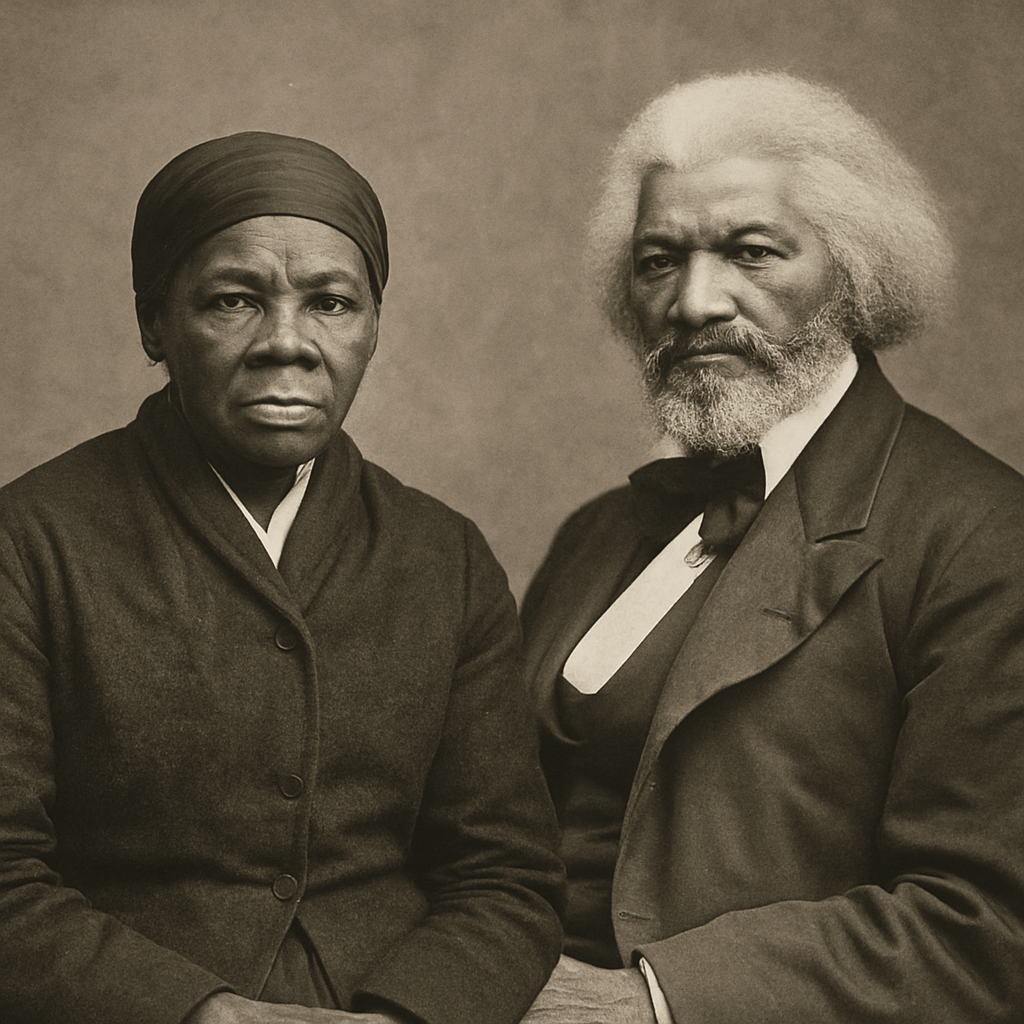
The Slave Files: Harriet Tubman & Frederick K.C. Douglass

Harriet Tubman and Frederick K.C. Douglass remain towering figures in the memory of the enslaved, the emancipated, and the freedom-seeking. Their lives, though emerging from the same soil of Maryland slavery, unfolded into two complementary wings of liberation—one leading people through the hidden corridors of the night, the other leading a nation through the piercing clarity of truth. Their testimonies stand as a sacred record, binding faith, intellect, and courage into an enduring legacy.

Harriet Tubman was born Araminta Ross around 1822 on the Brodess plantation in Dorchester County, Maryland. Her parents, Benjamin Ross and Harriet “Rit” Green, were enslaved but deeply spiritual, planting in her a sense of identity that no system could break. Tubman was one of nine children, and she experienced the trauma of family separation early, watching her sisters being sold away. This fear of fragmentation shaped her later work—freedom meant nothing unless her family could share it.

Frederick K.C. Douglass entered the world in February 1818 as Frederick Augustus Washington Bailey. He was born in Talbot County, Maryland, to Harriet Bailey, an enslaved woman, and likely to a white father whose identity he was never officially told. He saw his mother only a handful of times before her death, forming a childhood built on absence and longing. These early wounds sharpened his understanding of slavery’s psychological violence.

Tubman married John Tubman, a free Black man, in 1844. Their marriage was strained—her desire for freedom clashed with his fear of risking his own status. When she escaped in 1849, he refused to join her. Later, she remarried Nelson Davis, a Civil War veteran, with whom she shared a quiet companionship in her later years. Though Tubman had no biological children, she adopted a daughter, Gertie, whom she raised with fierce devotion.

Douglass married Anna Murray, a free Black woman from Baltimore who played a crucial role in his escape. She saved money, supplied clothing, and believed in his potential long before the world acknowledged it. Together, they had five children: Rosetta, Lewis Henry, Frederick Jr., Charles Remond, and Annie (who died young). After Anna’s passing in 1882, Douglass later married Helen Pitts, a white abolitionist and intellectual, in a union that stirred controversy but reflected his unwavering belief in human equality.

Harriet Tubman’s education came not from books but from the wilderness, the stars, and the whispers of enslaved elders. She mastered the marshlands, the seasonal rhythms, herbal medicine, and spiritual discernment. Her literacy was in intuition, geography, and divine communication—skills that would later guide hundreds to freedom. Her “visions,” often linked to the head injury she suffered as a teen, became her compass in moments when logic alone could not ensure survival.

Douglass’s education was both miraculous and dangerous. Sophia Auld, the wife of his enslaver, began teaching him the alphabet before being ordered to stop. That prohibition ignited his hunger for knowledge. Douglass secretly traded bread for reading lessons among white boys and devoured abolitionist newspapers. Literacy became his key to mental emancipation, and later, his primary weapon in dismantling slavery’s ideological chains.

Harriet Tubman’s work on the Underground Railroad made her the most successful conductor in its history. The Railroad was not a literal railway but a clandestine network of safe houses, coded messages, abolitionist allies, free Black communities, and courageous fugitives. Tubman led at least thirteen missions into slave territory, rescuing family members, neighbors, and strangers. Her methods were sophisticated: timing journeys during winter when nights were long, using the North Star as direction, employing disguises, carrying a pistol for protection, and trusting her spiritual instincts. She never lost a single passenger.

Frederick K.C. Douglass supported the Underground Railroad from a different position. His home in Rochester, New York, became a major station, sheltering more than 400 fugitive slaves. His newspaper, The North Star, spread vital information about abolitionist efforts, and his speeches raised funds for escape missions. While Tubman moved bodies through forests and swamps, Douglass moved minds across continents.

Tubman’s Civil War contributions remain some of the most historically overlooked achievements of any American figure. She served as a nurse, spy, scout, and strategist for the Union Army. Her greatest achievement—the Combahee River Raid of 1863—freed more than 700 enslaved people in a coordinated military operation she helped plan and lead. Tubman became the first woman in U.S. history to command a military assault.

Douglass, too, played a critical role during the war. He met with Abraham Lincoln multiple times, urging equal pay for Black soldiers, fair treatment for the United States Colored Troops, and full citizenship for freedmen. His sons Lewis and Charles served in the 54th Massachusetts Regiment, embodying the family’s multi-generational commitment to liberation.

Tubman received honors in her later years, though far fewer than she deserved. She became a symbol of heroism, receiving recognition from women’s suffrage leaders like Susan B. Anthony and from Black communities nationwide. Today, schools, battleships, monuments, and proposed currency designs bear her name. Her later life was devoted to community building, including establishing the Harriet Tubman Home for the Aged in Auburn, New York.

Douglass’s list of awards and honors is extensive. He became U.S. Marshal for the District of Columbia, Recorder of Deeds, and U.S. Minister Resident to Haiti. Colleges and cities honored him, and international leaders sought his counsel. He was one of the most photographed men of the 19th century—a deliberate strategy to combat racist imagery.

Harriet Tubman’s final years were marked by illness, poverty, and continued generosity. She died in 1913 surrounded by friends and family, reportedly saying, “I go to prepare a place for you.” Frederick Douglass died in 1895 after attending a women’s rights meeting, his voice still committed to justice until his last breath.

Together, these two figures reveal the full architecture of liberation: Tubman’s embodied courage and Douglass’s intellectual fire. One delivered people from bondage by the movement of her feet, the other by the movement of his words. One freed the body; the other freed the mind. Both shattered the idea that enslaved people were powerless.

Their stories—intertwined yet unique—remain essential chapters in the history of Black resistance. Through them, we learn that freedom is neither a gift nor an accident; it is a choice, a strategy, and a sacrifice. The Slave Files preserve their testimony so that future generations might understand the cost of freedom and the magnitude of their courage.

Harriet Tubman and Frederick K.C. Douglass stand as two of the most luminous figures in the long night of American slavery. Their lives, though shaped by brutality, testify to a divine strength that transcended chains, ignorance, and fear. Together, they represent a dual legacy—one of action and one of articulation; one who liberated through movement, and one who liberated through speech. Their stories continue to ignite the moral imagination of generations seeking freedom.

Tubman and Douglass were born into the same system but carved remarkably different paths. Tubman, born Araminta Ross in Maryland, would grow into the most revered conductor of the Underground Railroad. Douglass, born Frederick Bailey, would rise from the plantations of Maryland’s Eastern Shore to become one of the greatest orators and writers in American history. Though shaped by the same soil, they blossomed into distinct instruments of liberation.

Harriet Tubman’s early years were marked by violence that left permanent scars. A blow to her head from a heavy iron weight resulted in seizures, visions, and intense headaches that accompanied her throughout her life. Yet Tubman came to understand these visions as spiritual guidance, believing God was directing her path. Her faith became her compass as she navigated both literal and spiritual darkness.

Frederick Douglass, meanwhile, discovered liberation through literacy. After being taught the alphabet by Sophia Auld, he continued learning in secret, understanding that education was the gateway to freedom. “Once you learn to read, you will be forever free,” he later wrote—words that encapsulate the transformative power of knowledge for the enslaved.

Tubman’s escape from slavery in 1849 marked the beginning of her life’s mission. She could have settled into anonymity in the North, as many fugitives did. Instead, she returned repeatedly to the South, risking recapture, torture, and death. Her journeys rescued nearly seventy people directly, and her guidance influenced hundreds more. Her courage was unmatched, her instincts uncanny, and her leadership unwavering.

Douglass’s escape in 1838 was a carefully executed strategy involving forged documents and borrowed courage. Once free, he quickly became a leading voice in abolitionist circles. His autobiography, Narrative of the Life of Frederick Douglass, published in 1845, shocked the nation. Readers immediately recognized that slavery was not merely a political issue—it was a moral catastrophe.

Despite their different approaches, Tubman and Douglass shared a deep respect for each other. Douglass once wrote to her, “The difference between us is very marked… I have wrought in the day—you in the night.” He acknowledged that while his advocacy was praised openly, Tubman’s was carried out in shadows, under threat of death. In his eyes, Tubman’s work demanded a bravery far beyond his own.

Tubman’s service extended beyond the Underground Railroad. During the Civil War, she became a scout, nurse, cook, and eventually the first woman to lead a military expedition in U.S. history. Her Combahee River Raid freed more than seven hundred enslaved people in a single night—an operation still studied in military strategy.

Douglass, on the other hand, used rhetoric to shape national consciousness. He advised presidents, debated intellectuals, and championed voting rights, education, and equality. Lincoln consulted him concerning the arming of Black soldiers, recognizing Douglass’s influence among African Americans. His speeches thundered across the country, challenging the hypocrisy of a nation founded on liberty yet built on bondage.

The spiritual dimension of both leaders cannot be overlooked. Tubman believed God spoke to her, guiding her steps and warning her of danger. Douglass grounded his activism in a Christian critique of American hypocrisy, distinguishing between the Christianity of Christ and the corrupted Christianity of slaveholders. Both found faith to be a weapon against injustice.

Though they survived slavery, neither escaped its long shadow. Tubman lived in poverty for much of her life, often giving away what little she had to others. Douglass faced threats, racially motivated attacks, and the emotional scars of family separation. Yet both persisted, refusing to allow suffering to define them.

Tubman’s commitment to her people endured long after the war. She established a home for elderly and indigent African Americans, understanding that freedom required more than legal emancipation—it required community care. Her final years were spent nurturing the very people she once risked her life to save.

Douglass continued fighting until his last breath. His speeches on Reconstruction, citizenship, and dignity shaped African American political thought for decades. He served in government roles, traveled internationally, and remained a fierce critic of injustice until his death in 1895.

Together, Tubman and Douglass embodied a complete portrait of resistance: Tubman representing movement, Douglass representing message; Tubman freeing bodies, Douglass freeing minds. Both understood that freedom required action and truth, courage and articulation, strategy and spirit.

Their stories remind us that slavery sought to erase Black humanity, but could not extinguish Black brilliance. The Slave Files record not a narrative of defeat but of victory—testimonies of those who refused to remain silent, still, or subjugated. Their lives demonstrate that even in the darkest systems, God raises deliverers.

Today, Tubman and Douglass remain symbols of what is possible when the oppressed rise with purpose. Their journeys continue to inspire activists, scholars, faith leaders, and communities across the world. The story of Black liberation is incomplete without their names etched boldly into its chapters.

Harriet Tubman and Frederick K.C. Douglass challenged a nation, awakened a conscience, and altered the trajectory of history. Their legacy is a call to action—a reminder that justice is never given, only demanded. Through them, the world learns that freedom is both a birthright and a battle.

Their stories endure not because of myth, but because of truth: these were ordinary individuals who made extraordinary choices. The Slave Files preserve their witness, ensuring that every generation understands the cost of liberation and the power of a determined spirit.

References

Blight, D. W. (2018). Frederick Douglass: Prophet of freedom. Simon & Schuster.

Bradford, S. (1869). Harriet Tubman: The Moses of her people. Lockwood & Co.

Clinton, C. (2004). Harriet Tubman: The road to freedom. Little, Brown and Company.

Douglass, F. (1845). Narrative of the life of Frederick Douglass, an American slave. Anti-Slavery Office.

Humez, J. (2003). Harriet Tubman: The life and the life stories. University of Wisconsin Press.

Larson, K. C. (2004). Bound for the promised land: Harriet Tubman, portrait of an American hero. Ballantine Books.

McFeely, W. S. (1991). Frederick Douglass. W. W. Norton.

Nell, W. C. (1855). The colored patriots of the American Revolution. Robert F. Wallcut.

Sterling, D. (Ed.). (1997). We are your sisters: Black women in the nineteenth century. W.W. Norton.

Taylor, Y. (2017). Remaking Black power: How Black women transformed an era. University of North Carolina Press.
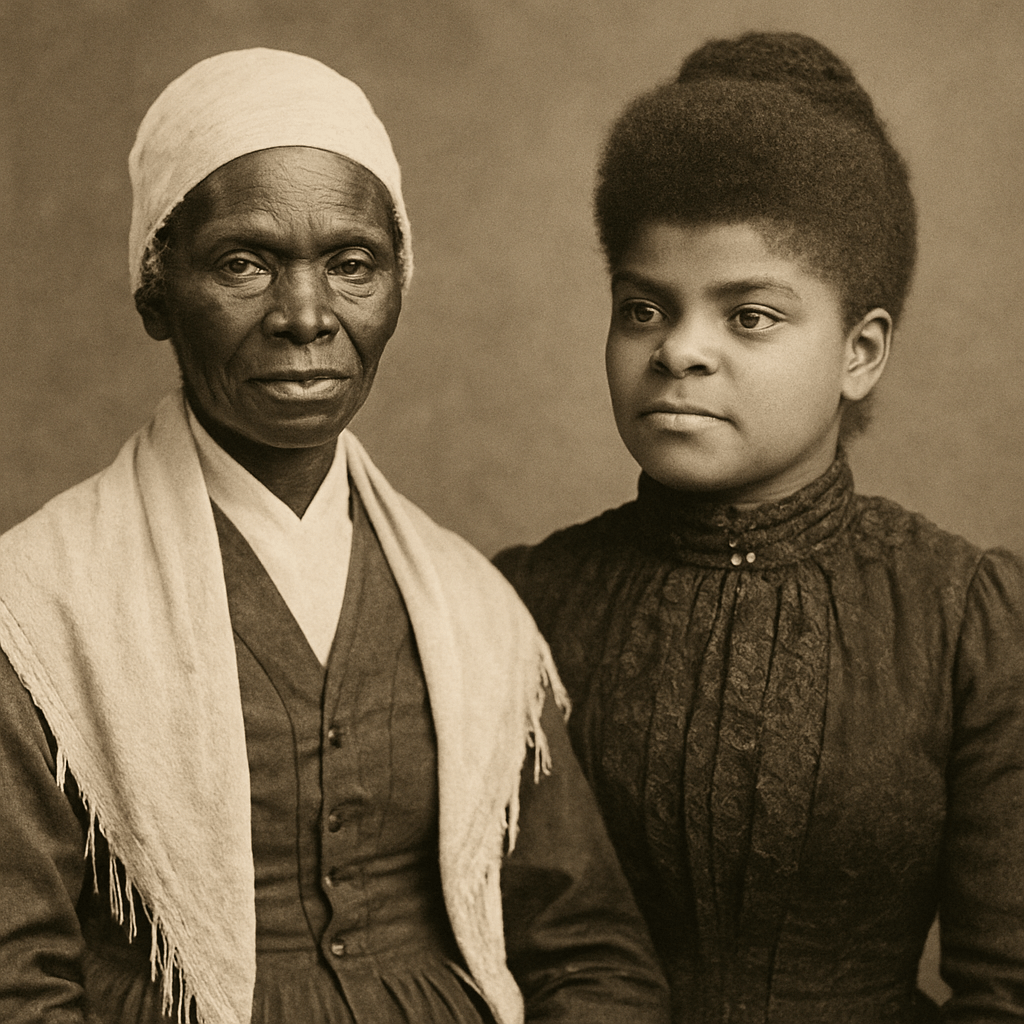
The Slave Files: Sojourner Truth & Ida B. Wells

Sojourner Truth and Ida B. Wells stand as two towering figures in the long arc of Black resistance, each shaped by the wounds of enslavement and the fire of righteous indignation. Though they lived in different generations, their lives intersected through a shared mandate: to speak truth in the face of terror, to defend the dignity of Black people, and to challenge a nation built on contradictions. Their voices became instruments of liberation, courageously confronting the systems that sought to silence them.

Sojourner Truth, born into slavery in 1797 in Ulster County, New York, came into the world as Isabella Baumfree. Her earliest memories were of being owned, sold, and separated from her family—experiences that seared into her consciousness the cruelty of American slavery. Yet she carried within her an unbreakable faith, a spiritual assurance that God had called her to something greater. Her escape from slavery in 1826 marked the beginning of a life mission grounded in preaching, abolition, womanhood, and divine justice.

Her transition from Isabella Baumfree to Sojourner Truth in 1843 signified a spiritual rebirth and a public declaration of purpose. She believed she was commissioned by God to “travel up and down the land” to testify against slavery and advocate for the rights of Black people and women. Her now-famous speech, “Ain’t I a Woman?”, delivered in 1851, challenged racial and gender hierarchies with striking clarity. Though often misquoted, the heart of the message remains a masterwork of intersectional truth spoken long before the term existed.

Sojourner Truth’s activism extended far beyond oratory. She recruited Black troops during the Civil War, advocated for land grants for freedmen, and confronted federal leaders with fearless determination. Her life encapsulated the struggle of a woman surviving slavery, reclaiming her name, and resisting systems that attempted to diminish her humanity. She became a mother of five children, though the brutalities of slavery tore them apart; her fight to regain her son Peter through the courts made her one of the first Black women to successfully challenge a white man in court.

Ida B. Wells, born into slavery in 1862 in Holly Springs, Mississippi, entered the world during the final throes of enslavement. Her parents, James and Elizabeth Wells, valued education deeply and helped establish a school for freed people after Emancipation. Their early influence shaped Ida’s intellectual discipline, but tragedy struck when both parents died during a yellow fever epidemic. At just sixteen, Ida stepped into adulthood as caretaker for her siblings, forging a resilience that would define her future.

Wells became a teacher and later a journalist, using her pen as a weapon against racial violence. Her investigative reporting on lynching remains one of the most significant journalistic contributions in American history. At a time when newspapers routinely justified mob violence, she documented the truth: that lynching was not the result of alleged crimes but a tool of racial terror and economic control. Her groundbreaking pamphlets, such as “Southern Horrors” and “The Red Record,” exposed the hypocrisy of America’s moral claims.

Her boldness came with enormous risk. In 1892, after her friends were lynched in Memphis, she wrote articles condemning the mob. White supremacists destroyed her newspaper office and threatened her life, forcing her to flee to Chicago. Yet even in exile, she refused silence. She traveled internationally, speaking in Britain and Scotland, rallying global outrage against racial violence in America. Her advocacy extended to women’s suffrage, civil rights, and the founding of the NAACP.

Ida B. Wells also lived a rich personal life. In 1895, she married attorney Ferdinand L. Barnett, and together they raised a blended family of six children. Wells balanced motherhood and activism with remarkable efficiency, often taking her infants along to speaking engagements. Her life defied the stereotype that Black women had to choose between public leadership and domestic life.

Where Sojourner Truth fought through the vernacular tradition of preaching and testimony, Wells engaged through print culture and political organizing. Both methods struck deeply at the structural injustices of their eras. Together, their contributions showcase the evolution of Black resistance—from the spiritual abolitionist rhetoric of the antebellum period to the empirical, investigative strategies of the post-Reconstruction era.

Sojourner Truth’s legacy in abolition and women’s rights left an enduring imprint on national consciousness. Her presence forced both abolitionists and suffragists to confront their own racial biases. She preached self-reliance, faith, and the sacredness of Black womanhood at a time when society offered no such validation. Her portrait, sold to fund her activism, famously bore the caption, “I sell the shadow to support the substance,” a profound commentary on self-determination.

Ida B. Wells’ legacy lives in her fearless reporting and organizing. She opened America’s eyes to the brutality of lynching, forcing the nation to reckon with its lies. Her activism laid foundational work that later movements—civil rights, women’s rights, and anti-racism campaigns—built upon. She exemplified what it meant to confront power without apology.

The Underground Railroad, though more closely associated with Tubman, also forms part of the larger backdrop against which Sojourner Truth lived. While Truth was not a conductor in the same formal sense, she provided aid, fellowship, and advocacy for freedom seekers. Her spiritual authority and abolitionist networks contributed significantly to the broader anti-slavery movement. Wells, emerging in a later era, chronicled the legacies of such movements while challenging new forms of racial oppression.

Both women were deeply rooted in spiritual conviction. Truth, shaped by charismatic religion and visions, understood her calling as divinely orchestrated. Wells, raised by devout parents, grounded her activism in moral responsibility and Christian duty. Their faith fueled their courage, their willingness to confront unjust laws, and their unwavering belief in the dignity of their people.

In the realm of education, Sojourner Truth had no formal schooling; slavery denied her literacy. Yet she leveraged her oratory, her memory, and her God-given insight to become one of the most iconic public speakers of the century. Wells, by contrast, received a formal education and became a teacher before entering journalism, using writing as her battlefield. Both approaches illuminate the diverse intellectual traditions within Black womanhood.

Their stories reveal the breadth of Black resistance—from the spiritual mother who walked out of slavery guided by divine intuition to the investigative journalist who fought systemic violence armed with facts and documentation. Each woman carved a distinct path yet arrived at a shared destination: truth-telling as liberation.

In examining their lives, we find a blueprint for modern activism. Truth teaches the power of testimony, the necessity of faith, and the courage to speak even when the world refuses to listen. Wells teaches the power of data, documentation, and organized political pressure. Together, they form a powerful dialectic—spirit and strategy, revelation and research.

Their names are etched into the annals of American memory not because the nation freely honored them but because they demanded recognition. They confronted systems designed to erase them, subvert them, or diminish their voices. Yet they persisted, creating narratives that outlived those who tried to silence them.

Today, the lives of Sojourner Truth and Ida B. Wells remain essential reading in the story of Black freedom. Their legacy informs contemporary movements for justice, from racial equity to gender rights. They bear witness to the fact that Black women have always stood at the forefront of the fight for liberation.

Ultimately, their stories remind us that freedom is never given—it is fought for. Truth and Wells fought with every tool available to them: speeches, testimonies, lawsuits, pamphlets, journalism, and relentless courage. And because of them, generations inherited a more truthful account of America and a more hopeful vision for the future.

They carved their names into history with faith, fire, and unyielding truth. And though the Slave Files record centuries of pain, it is women like Sojourner Truth and Ida B. Wells who illuminate the path of deliverance. Their legacy stands as a permanent reminder that no system of oppression can silence a voice committed to liberation.


References

Andrews, W. L. (2020). African American biography: Collective lives of resistance. Oxford University Press.
Giddings, P. (2008). Ida: A sword among lions. Amistad.
McMurray, S. (2014). Sojourner Truth: A life, a symbol. W. W. Norton.
Washington, B. T. (2019). The legacy of Black abolitionists. Beacon Press.
Wells, I. B. (1892). Southern horrors: Lynch law in all its phases. New York Age.
Wells, I. B. (1895). The red record. New York Age.
Yellin, J. F. (1996). Women and sisters: The struggle for African American liberation. Harvard University Press.

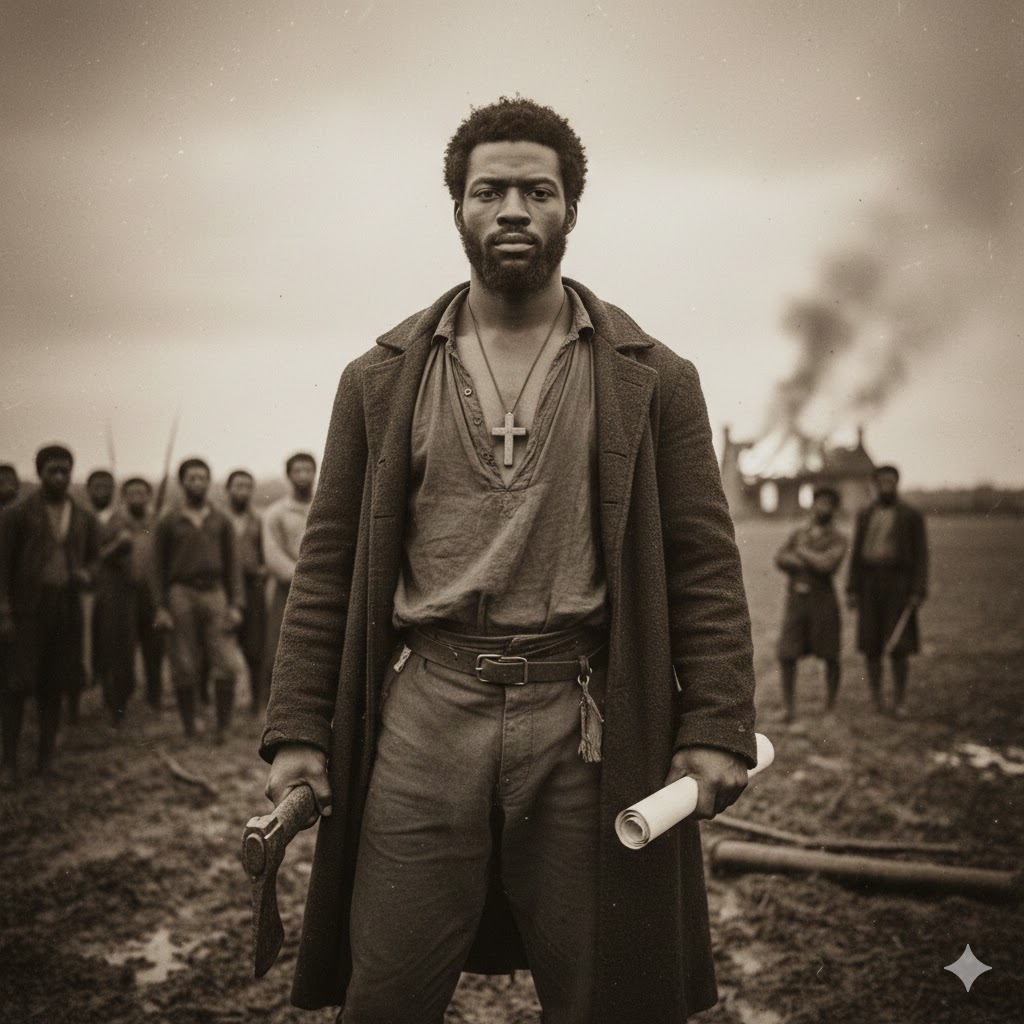
The Slave Files: Nat Turner

Nat Turner remains one of the most riveting, misunderstood, and fiercely debated figures in American history. His life, marked by enslavement, spiritual conviction, and violent rebellion, exposes the brutal underpinnings of slavery and the relentless pursuit of freedom among the enslaved. Born into bondage yet convinced that God spoke directly to him, Turner’s life becomes both a historical record and a moral indictment of an evil system built on racism, violence, and domination. His story is not merely an episode of revolt—it is a penetrating look into the psychology of oppression and the spiritual courage of a man who believed liberation was his divine mandate.

Nat Turner was born on October 2, 1800, in Southampton County, Virginia, on the Benjamin Turner plantation. Because he was enslaved, his last name “Turner” was not his by heritage but by ownership—a reminder of a system that erased African identities and imposed White surnames as marks of property. He was raised among enslaved people who maintained fragments of African culture while living under the constant threat of punishment, sale, and family separation. Early accounts describe him as highly intelligent, deeply introspective, and gifted with an unusual memory, demonstrating literary and spiritual aptitude uncommon among enslaved children, not because Black children were incapable, but because literacy was violently suppressed.

Turner’s early life was shaped by stories of Africa passed down through elders who remembered freedom. His mother and grandmother reportedly told him he was destined for greatness, strengthening his own belief that he was chosen by God. Because enslavers feared educated Black people, Turner’s intellectual and spiritual gifts were viewed as unsettling. Still, he was allowed to read and interpret scripture, which laid the foundation for his prophetic worldview. Turner believed the Holy Spirit communicated with him through visions and signs—an inner call that would later justify his resistance.

Throughout his enslavement, Turner worked on several plantations due to sale and transfer among enslavers. After Benjamin Turner’s death, Nat was passed to Samuel Turner, and later hired out to others in the region. Ultimately, he lived on the plantation of Joseph Travis—his final enslaver—where he labored in the fields, observed the conditions of fellow enslaved laborers, and cultivated a quiet but fiercely burning resentment toward the system of slavery. Though some enslavers described him as “meek” and “intelligent,” these words reveal more about the blindness of slaveholding ideology than Turner’s true convictions. Beneath the silence was clarity: he was not property but a man.

Nat Turner was married to an enslaved woman named Cherry (also recorded as “Cherie” in some sources), though records of their union are scarce due to the erasure and negligence inherent in slave documentation. They were separated by work arrangements and plantation boundaries, illustrating how marriage among enslaved people was vulnerable to sale, distance, and the will of slaveholders. Turner also had children, though their names and fates are not fully documented, a tragic reminder of how slavery destabilized Black family structures. Enslaved parenthood carried constant fear—a child could be sold, abused, or killed with no recourse.

The racism of Turner’s era was not subtle; it was law, culture, and religion weaponized. Enslavers justified their brutality through pseudo-Christian doctrine and racial myths that claimed African people were inferior. Turner, however, read the Bible for himself and saw deliverance where enslavers preached obedience. His spiritual interpretations defied the slaveholding church and pointed instead to liberation theology: God does not sanctify oppression. Turner began to see visions—blood on corn, heavenly signs, eclipses—as divine symbols that the time for judgment had come.

By 1828, Turner reported having a decisive vision in which “the Spirit spoke” and commanded him to lead a rebellion against slaveholders. He believed God chose him as a prophet, and that enslaved people would gain their freedom through an act of divine justice. This belief was not madness but a theological response to a world where law and society left no pathway to liberation. Slavery had destroyed every peaceful option—Turner saw rebellion as the only moral course.

On August 21, 1831, Nat Turner launched what would become the most significant slave rebellion in American history. Together with a group of enslaved men, he moved silently from plantation to plantation, killing approximately 55 White men, women, and children. While the violence was severe, it must be understood within the context of an institution that killed, raped, and brutalized enslaved people for centuries with complete impunity. Turner’s rebellion exposed the fear underlying slaveholding society—that enslaved people, given the chance, would fight for their freedom with the same intensity with which they had been oppressed.

The rebellion lasted nearly two days before being suppressed by militias and federal troops. What followed was even worse: White mobs and militias killed an estimated 100–200 Black people indiscriminately, many who had nothing to do with the uprising. This retaliatory slaughter revealed how deeply racism governed the South—Black life was disposable, whether rebellious or innocent.

Turner evaded capture for almost two months, hiding in woods and swamps familiar to enslaved laborers. His eventual capture on October 30, 1831, led to a swift trial. During his confinement, attorney Thomas R. Gray interviewed him, producing The Confessions of Nat Turner, a document that remains historically significant but must be read critically. While it gives insight into Turner’s thoughts, it was also shaped by White interpretation, editing, and sensationalism. Still, Turner remained confident in his divine mission, stating that he felt no regret for attempting to overthrow slavery.

On November 11, 1831, Nat Turner was hanged in Jerusalem, Virginia. His body was desecrated, and his remains scattered—a final attempt to erase him from history. But the rebellion had already shaken the South to its core. Slave laws intensified, restrictions on Black movement and literacy increased, and fear spread among White slaveholders. Yet among abolitionists and enslaved people, Turner became a symbol of courage, resistance, and the demand for freedom.

Turner’s life raises profound questions about morality, justice, and the lengths to which oppressed people must go to reclaim their humanity. His story is not merely about violence—it is about the conscience of a nation built on slavery. Whether viewed as a liberator, prophet, revolutionary, or extremist, the truth remains: Nat Turner forced America to confront the evil it tried to normalize. His biography is a testament to the enduring truth that freedom, once imagined, can never be contained.

His wife and children suffered the consequences of his rebellion in silence, surviving in a world that punished Black families for acts of resistance. Their story represents the generational trauma imposed on Black families, whose love existed under the constant threat of separation and sale. Turner’s rebellion was not just for himself—it was for them, and for millions whose cries went unrecorded.

Nat Turner’s legacy has evolved over time. To some, he is a martyr; to others, a warning. But to scholars, theologians, and descendants of the enslaved, he is a complex figure who embodies the deep wounds and righteous anger born of slavery. His rebellion is part of a larger narrative of Black resistance—from maroon communities to uprisings in the Caribbean to civil rights struggles centuries later.

Today, Turner stands as a reminder of how oppression will always birth resistance. His life forces us to examine how deeply racism shaped America’s foundations and how fiercely enslaved people fought for freedom in every generation. His story is not one of defeat but of defiance—an unbroken declaration that slavery could not crush the human spirit.

Turner’s biography invites us to grapple with the uncomfortable truth: righteousness and rebellion often walk hand in hand in the fight against injustice. His actions reflected a spiritual conviction grounded in the belief that God sides with the oppressed, not the oppressor. Whether read as prophecy or desperation, his rebellion demanded that the world acknowledge the humanity of the enslaved, whose blood built the nation.

The Slave Files on Nat Turner remind us that history is not clean, orderly, or polite. It is raw, painful, and shaped by people who refused to accept bondage as destiny. Turner’s story challenges modern readers not to sanitize the past but to confront it with honesty. The scars of slavery remain, but so does the legacy of those who fought against it with unwavering resolve.

Nat Turner was a slave, a husband, a father, a preacher, a visionary, and a revolutionary. His life cannot be reduced to a single moment of violence—it must be understood as the culmination of centuries of suffering and centuries of hope. The Slave Files preserve his memory not to glorify conflict but to honor the courage of a man who believed freedom was worth everything, even his life.

References
Aptheker, H. (1993). American Negro slave revolts. International Publishers.
Gray, T. R. (1831). The confessions of Nat Turner. Baltimore: T. R. Gray.
Greenberg, K. S. (2003). Nat Turner: A slave rebellion in history and memory. Oxford University Press.
Oates, S. B. (1975). The fires of jubilee: Nat Turner’s fierce rebellion. Harper & Row.
Tragle, H. L. (1971). The Southampton slave revolt of 1831: A compilation of source material. University of Massachusetts Press.

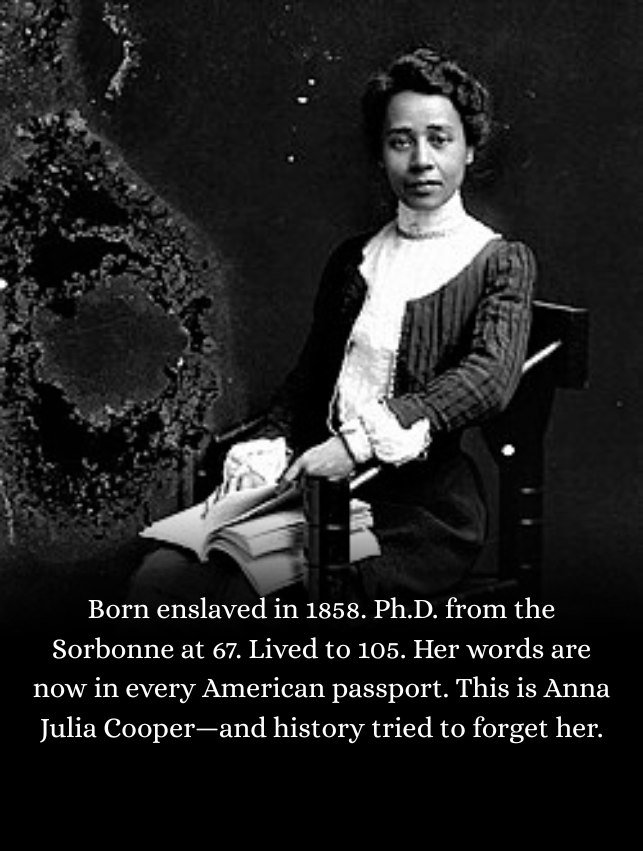
The Slave Files: Anna Julie Cooper

This photograph is the property of its respective owner. No copyright infringement intended.

Anna Julia Cooper was born on August 10, 1858 in Raleigh, North Carolina

Anna Julia Cooper was an influential African American educator, scholar, and author whose life and work left a profound impact on Black education and intellectual thought. Born in the late 19th century, she emerged during a period of systemic oppression and racial discrimination, when opportunities for African Americans—particularly women—were severely limited. Despite these obstacles, Cooper dedicated her life to uplifting her community through education, moral leadership, and scholarly contributions.

Cooper’s early life was marked by a determination to pursue learning despite societal barriers. She believed that education was a fundamental tool for liberation and empowerment. Her passion for teaching and scholarship became a central theme in her life, guiding her professional endeavors and public influence.

As an educator, Julia Cooper worked tirelessly to improve access to quality schooling for African Americans. She advocated for rigorous academic standards, the establishment of Black educational institutions, and curricula that fostered critical thinking and self-worth among students. Her efforts emphasized the transformative power of knowledge as a means to resist systemic oppression.

In addition to teaching, Cooper was a prolific writer and thinker. She authored essays and treatises on the moral, social, and intellectual development of African Americans, emphasizing the necessity of self-respect, cultural pride, and educational attainment. Her writings served as a blueprint for Black uplift during the early 20th century.

Cooper also engaged in public speaking and community organizing. She traveled widely, addressing audiences on the importance of education, civic responsibility, and moral development. Her speeches encouraged African Americans to embrace their intellectual potential and challenge societal narratives that sought to marginalize them.

Her impact extended to her mentorship of younger generations of Black scholars and educators. By providing guidance, encouragement, and access to educational resources, Cooper helped cultivate a new class of African American leaders committed to intellectual excellence and social progress.

Anna Julia Cooper’s work was informed by a deep moral and spiritual philosophy. She believed that personal character and ethical integrity were inseparable from educational and professional achievement. Her vision emphasized holistic development—intellectual, moral, and civic—as essential to individual and communal advancement.

Throughout her career, Cooper confronted racism, sexism, and social prejudice. Her ability to navigate these systemic challenges while achieving professional recognition serves as a testament to her resilience and strategic acumen. She became a symbol of Black female agency in a society structured to limit her potential.

Her legacy is visible in the educational institutions she influenced, the students she inspired, and the broader discourse on African American intellectual empowerment. Cooper’s life exemplifies the potential for knowledge and moral courage to transform communities and challenge entrenched inequalities.

Anna Julia Cooper remains a vital figure in African American history, her life and work illustrating the enduring power of education, scholarship, and leadership in advancing justice and equality. Her contributions continue to inspire educators, students, and leaders committed to intellectual rigor and moral responsibility.


References

  1. Gates, H. L., & Higginbotham, E. B. (2014). African American lives. Oxford University Press.
  2. Gutman, H. G. (1976). The black family in slavery and freedom, 1750-1925. Pantheon Books.
  3. Kelley, R. D. G. (1994). Race rebels: Culture, politics, and the Black working class. Free Press.
  4. Theoharis, J. (2018). A more beautiful and terrible history: The uses and misuses of civil rights history. Beacon Press.
  5. Wiggins, W. H. (2000). The intellectual tradition of African Americans: A historical overview. Greenwood Press.

The Slave Files: Whipped Peter (Gordon)

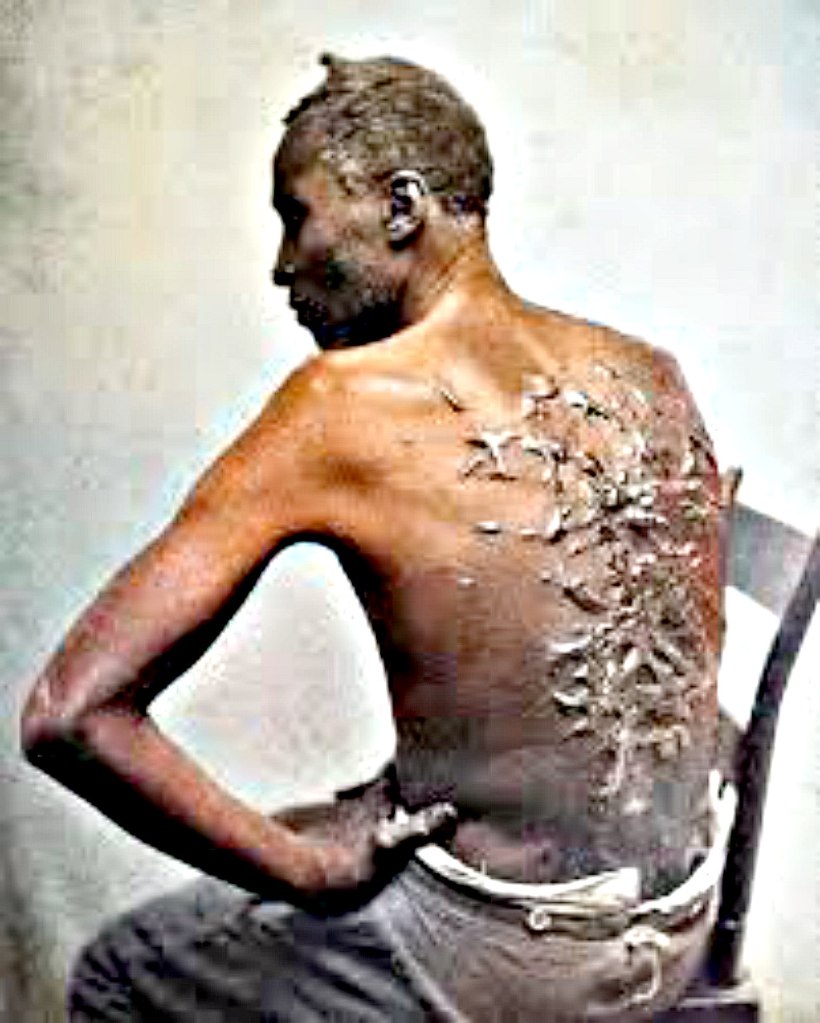
The Scourged Back

Chains that bound, yet could not break
A spirit strong, though flesh did ache.
Scarred and beaten, marked by pain,
He rose to freedom, hope his gain.

Whipped by cruelty, yet never bent,
A testament to courage, resilient.
From fields of sorrow to Union’s call,
Peter’s courage outshines it all.

Photo Credit: McPherson & Oliver. This photograph is the property of its respective owner.

Peter, also known as “Whipped Peter” or “Gordon,” was an enslaved African American man born around 1820–1825; some accounts report his birth around 1850 in Georgia. He was sold to a 3,000-acre plantation in Louisiana owned by Captain John Lyons. In late October 1862, after an altercation with his overseer, Peter was subjected to a brutal whipping that left deep, permanent scars across his back. The overseer reportedly applied salt to the wounds, a common and excruciating practice known as “salting,” intended to inflict maximum pain and humiliation.

Despite this horrific treatment, Peter survived and, in March 1863, escaped the plantation. Using onions to mask his scent from bloodhounds, he reached Union lines near Baton Rouge, Louisiana. There, photographers McPherson & Oliver captured his scarred back, producing the image known as “The Scourged Back.” This photograph circulated widely in abolitionist publications and became a poignant testament to the brutality of slavery, galvanizing public opinion against the institution.

In March 1863, Peter escaped from the plantation, covering his scent with onions to evade bloodhounds. After a perilous journey, he reached Union lines near Baton Rouge, Louisiana, where he was photographed by McPherson & Oliver, revealing the extent of his injuries. The resulting image, known as “The Scourged Back,” was widely circulated and became a poignant testament to the brutality of slavery . Following his escape, Peter enlisted in the Union Army and served in the U.S. Colored Troops, where he continued to contribute to the fight for freedom and justice. While his exact service details remain unclear, his story galvanized anti-slavery sentiments and highlighted the resilience and humanity of enslaved individuals. His story endures as a symbol of resilience, courage, and the unbreakable human spirit, reminding future generations of both the horrors of slavery and the strength required to survive and claim one’s freedom.


References for Further Reading