Category Archives: the pretty girl dilemma

Man Looketh on the Outward Appearance

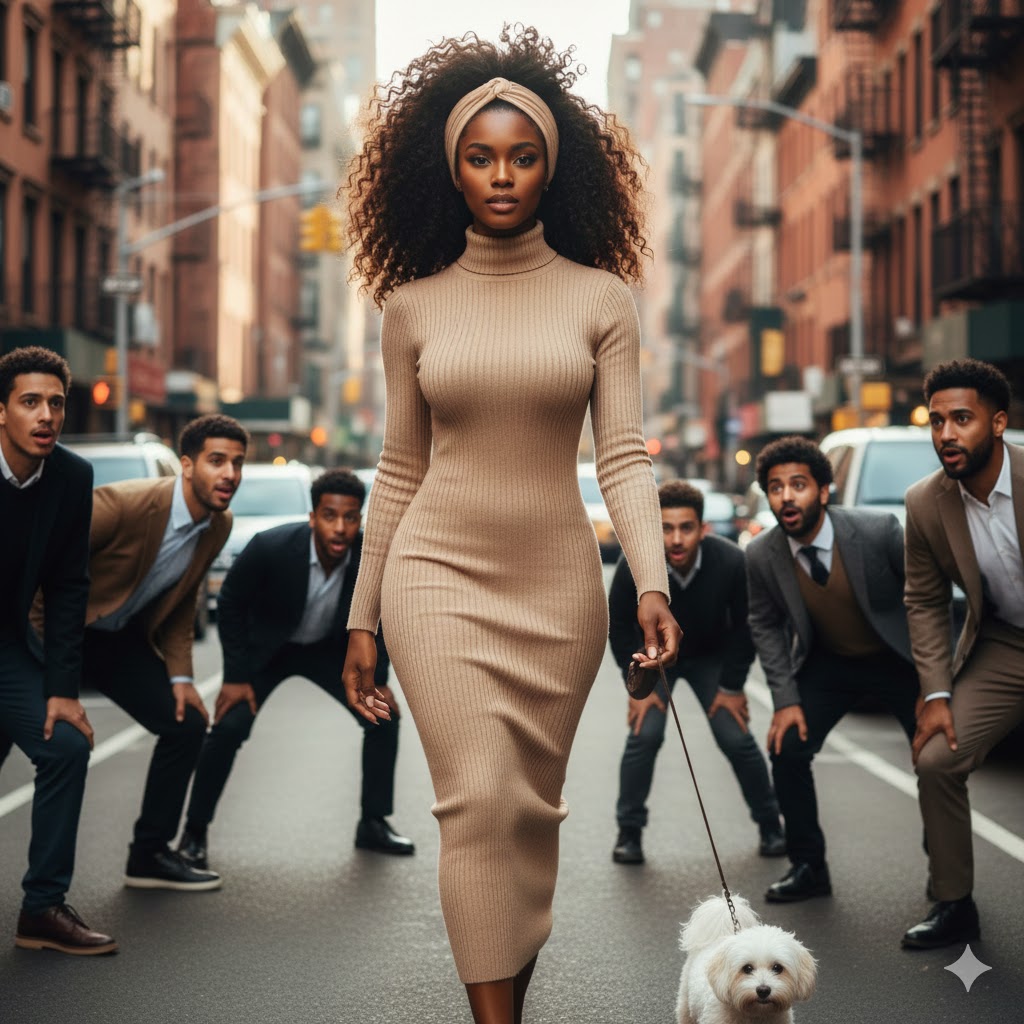
Human society has long been captivated by physical appearance, often allowing external beauty to shape judgment, social status, and opportunity. While aesthetic appeal can inspire admiration, it frequently fosters bias, favoritism, and misjudgment, obscuring true character. This tendency aligns with the biblical observation that humans often prioritize outward appearance over the qualities of the heart (1 Samuel 16:7, KJV).

The “halo effect” in psychology illustrates this phenomenon: attractive individuals are often perceived as possessing positive traits such as intelligence, honesty, and competence, regardless of their actual qualities (Dion, Berscheid, & Walster, 1972). Conversely, individuals considered less attractive may face prejudice, exclusion, or undervaluation.

Societal standards of beauty are culturally and historically contingent, often reflecting power structures and reinforcing social hierarchies (Wolf, 1991). In Western societies, Eurocentric features are frequently idealized, affecting the opportunities and treatment afforded to those who conform to these norms.

The Bible highlights the limitations of human judgment. 1 Samuel 16:7 (KJV) states: “But the Lord said unto Samuel, Look not on his countenance, or on the height of his stature; because I have refused him: for the Lord seeth not as man seeth; for man looketh on the outward appearance, but the Lord looketh on the heart.” This passage emphasizes the moral imperative to discern character beyond superficial traits.

Pretty privilege, a modern manifestation of appearance-based bias, provides tangible social and economic advantages to those deemed attractive (Langlois et al., 2000). Such privilege can influence employment, education, legal outcomes, and relational dynamics, demonstrating the profound real-world consequences of aesthetic judgment.

Cultural and media influences reinforce the emphasis on outward appearance. Advertising, film, and social media platforms promote idealized images of beauty, normalizing narrow standards and perpetuating social hierarchies based on aesthetics (Marwick, 2017; Noble, 2018).

Colorism further complicates the valuation of appearance, particularly for Black individuals. Lighter-skinned individuals are often favored in social and professional contexts, while darker-skinned individuals may experience bias or marginalization, illustrating how outward appearance intersects with racialized hierarchies (Hunter, 2007).

In professional settings, attractive employees frequently experience faster promotions, higher pay, and favorable evaluations, whereas those not meeting aesthetic norms may face subtle or overt discrimination (Hosoda, Stone-Romero, & Coats, 2003). These patterns underscore the structural influence of appearance in human society.

The psychological impact of being judged primarily by appearance is significant. Individuals may develop low self-esteem, anxiety, or social withdrawal when they perceive themselves as unattractive or devalued based on superficial traits (Langlois et al., 2000). Conversely, those advantaged by beauty may struggle with entitlement or overreliance on appearance for social validation.

Religious and ethical teachings encourage evaluating individuals based on virtue, character, and moral integrity. Proverbs 31:30 (KJV) declares: “Favor is deceitful, and beauty is vain: but a woman that feareth the Lord, she shall be praised.” True worth transcends aesthetic appeal, prioritizing internal qualities recognized by God.

The social consequences of focusing on outward appearance include distorted relationships, unjust hierarchies, and superficial assessments of merit. Favoritism and prejudice based on looks undermine fairness and relational depth.

Psychological interventions, such as awareness of implicit biases and deliberate evaluation of character, can mitigate the influence of appearance-based judgment (Eagly et al., 1991). Cultivating empathy and discernment encourages more equitable treatment and aligns human evaluation with divine principles.

Digital culture intensifies the scrutiny of physical appearance. Social media platforms amplify visual evaluation, rewarding attractiveness with likes, followers, and engagement metrics, which can reinforce self-worth and societal valuation based on appearance (Noble, 2018).

In educational contexts, students deemed attractive often receive more positive attention, encouragement, and social support, whereas less attractive students may be overlooked or underestimated. These dynamics illustrate the early socialization of appearance-based bias (Langlois et al., 2000).

The commodification of beauty in consumer culture further entrenches its influence. Cosmetics, fashion, and wellness industries profit by promoting appearance as central to social and economic value (Wolf, 1991).

Leadership and mentorship must consciously counteract the emphasis on outward appearance. Evaluating individuals based on skills, integrity, and character fosters fairness, reduces bias, and aligns with ethical and spiritual standards.

Intersectional approaches are essential to understanding how appearance-based judgment interacts with race, gender, age, and socioeconomic status. Marginalized groups often experience compounded disadvantages related to aesthetic bias (Hunter, 2007).

Ultimately, the biblical admonition reminds believers to resist superficial judgments. Aligning human assessment with God’s perspective—valuing the heart over outward appearance—encourages justice, humility, and discernment.

In conclusion, while society often privileges outward beauty, the moral and spiritual imperative is to look beyond the flesh, evaluating individuals by character, virtue, and integrity. Recognizing and mitigating appearance-based bias fosters ethical, equitable, and spiritually aligned communities.

References

Dion, K., Berscheid, E., & Walster, E. (1972). What is beautiful is good. Journal of Personality and Social Psychology, 24(3), 285–290.

Eagly, A. H., Ashmore, R. D., Makhijani, M. G., & Longo, L. C. (1991). What is beautiful is good, but…: A meta-analytic review of research on the physical attractiveness stereotype. Psychological Bulletin, 110(1), 109–128.

Hosoda, M., Stone-Romero, E. F., & Coats, G. (2003). The effects of physical attractiveness on job-related outcomes: A meta-analysis of experimental studies. Personnel Psychology, 56(2), 431–462.

Hunter, M. (2007). The persistent problem of colorism: Skin tone, status, and inequality. Sociology Compass, 1(1), 237–254.

Langlois, J. H., Kalakanis, L., Rubenstein, A. J., Larson, A., Hallam, M., & Smoot, M. (2000). Maxims or myths of beauty? A meta-analytic and theoretical review. Psychological Bulletin, 126(3), 390–423.

Marwick, A. (2017). Status update: Celebrity, publicity, and branding in the social media age. Yale University Press.

Noble, S. U. (2018). Algorithms of oppression: How search engines reinforce racism. NYU Press.

Wolf, N. (1991). The beauty myth: How images of beauty are used against women. HarperCollins.

Holy Bible, King James Version (KJV). 1 Samuel 16:7; Proverbs 31:30.

Girl Talk Series: Good-Looking Men

This photograph is the property of its respective owner. No copyright infringement intended.

Beware Ladies! Attraction is powerful. A handsome face, a confident walk, and a smooth voice can make a woman ignore warning signs she would never tolerate in an average-looking man. Society teaches women to trust chemistry, but Scripture teaches women to trust character. Beauty may open the door, but it cannot keep you safe once you are inside.

Many women mistake excitement for compatibility. They feel chosen because a good-looking man noticed them, not realizing that charm is not commitment. Looks can distract from laziness, emotional immaturity, hidden addictions, financial instability, and moral weakness. A man can look like a blessing and still be a lesson.

Pretty boy syndrome is real. Some men have learned that their appearance gives them access without effort. They are pursued instead of pursuing purpose. They are admired instead of held accountable. Over time, this produces men who expect to be served rather than to serve.

The danger is not that a man is attractive, but that attraction becomes the standard. When desire leads, discernment dies. You begin to justify red flags because he is “fine,” overlook disrespect because he is “popular,” and accept the bare minimum because he is “wanted by others.”

God never told women to choose based on visuals. He told them to choose based on the fruit. “Ye shall know them by their fruits” (Matthew 7:16, KJV). A man’s lifestyle reveals his true nature long before his words do.

A woman who chooses only on looks is choosing risk over wisdom. She is gambling her future on genetics instead of godliness. And when beauty fades, she is left with whatever character he actually built.

Good-looking men have always held a certain power in society. From movie stars to social media influencers, attractive men are often admired, pursued, and even excused for behavior that would not be tolerated in others. Beauty creates access, but it does not guarantee character.

In many cultures, women are subtly taught to prioritize physical attraction when choosing a partner. The man must be tall, well-built, stylish, and charming. While attraction is natural, Scripture never presents looks as a reliable foundation for love or marriage.

The Bible consistently warns against judging by outward appearance. “Man looketh on the outward appearance, but the Lord looketh on the heart” (1 Samuel 16:7, KJV). God’s evaluation system is inverted from society’s. What impresses humans rarely impresses heaven.

Pretty boy syndrome describes a man whose entire identity is built around being admired. His value comes from validation, not virtue. He invests more in his image than in his integrity, more in attention than in responsibility.

Many good-looking men are never forced to develop depth. They receive affirmation without accountability. As a result, some grow into emotionally shallow adults who rely on charm instead of communication, and flirting instead of commitment.

Fornication thrives in image-based relationships. When desire is prioritized over discipline, sex becomes entertainment instead of covenant. The body becomes a product, and intimacy is reduced to a transaction.

Sexual thoughts are not neutral. Scripture teaches that lust is not harmless fantasy but internal adultery of the heart. A relationship rooted in lust cannot produce spiritual safety, only emotional instability.

The lazy handsome man is a hidden danger. He looks impressive but lacks ambition, vision, or purpose. He may dress well, but does not work well. He may be admired publicly while privately depending on women financially.

Some attractive men become womanizers, moving from relationship to relationship, feeding off attention like currency. They confuse access with entitlement and affection with ownership.

Sugar baby culture reflects a deeper moral decay. Men using money to access women’s bodies and women using beauty to access men’s wallets both reduce relationships to exchange rates, not sacred bonds.

Using women for money is another form of spiritual poverty. A man who exploits a woman’s resources while offering no leadership, stability, or sacrifice is not a partner; he is a parasite.

A man with no substance eventually becomes exhausting. Beauty fades, but emptiness remains. When a crisis comes, charm cannot provide protection, and attraction cannot provide wisdom.

Godly character, however, produces security. A man who fears God is governed by discipline, accountability, and humility. He does not need constant validation because his identity is rooted in purpose, not popularity.

Biblical masculinity is defined by responsibility, not desirability. A godly man builds, covers, leads, protects, and serves. He does not compete with women, manipulate emotions, or avoid commitment.

The obsession with looks often leads women into relationships that feel exciting but end painfully. The dopamine of attraction wears off, and what remains is the reality of character.

Looks versus money is a false dilemma. Both fade without integrity. A handsome man without discipline becomes a liability. A wealthy man without morals becomes dangerous. Neither beauty nor wealth can replace virtue.

What truly fares better is character. A man who loves God will eventually develop wisdom, stability, and emotional maturity. These qualities age well. They compound over time.

Choosing a man based on godly character does not mean ignoring attraction, but it means refusing to let attraction lead. Desire must follow discernment, not replace it.

A man who honors God honors boundaries. He does not pressure for sex, rush intimacy, or treat purity as unrealistic. He understands that self-control is strength, not repression.

The right man is not the one who looks good on your arm, but the one who looks good in God’s eyes. He may not be the most admired, but he will be the most reliable.

What to look for according to Godly Wisdom

Fear of God
Does he respect God’s authority, or only his own desires?

Character over charisma
How does he treat people when he gains nothing from them?

Emotional maturity
Can he communicate without manipulation, silence, or anger?

Self-control
Does he control his desires, or are they controlling him?

Work ethic and responsibility
Does he build, or does he depend?

Financial discipline
Is he a steward or a spender?

Sexual boundaries
Does he honor purity or pressure intimacy?

Leadership
Does he take initiative or avoid accountability?

Consistency
Is he the same in private as he is in public?

Integrity
Does his word match his actions?

Vision and purpose
Does he know where he is going in life?

Spiritual alignment
Does he strengthen your walk with God or distract from it?

Respect for women
Does he see women as partners or as resources?

Conflict resolution
Can he handle disagreement without control or cruelty?

Teachability
Can he receive correction or does he become defensive?


Final Warning

A good-looking man can attract you.
A godly man can protect you.

Beauty can make you feel chosen.
Character determines whether you are kept.

Never let desire decide what discernment should. The face may impress your eyes, but only the heart can build your future.

In the end, a woman must decide what kind of future she wants. Temporary excitement or lasting peace. Visual pleasure or spiritual safety. A good-looking man may impress the world, but only a godly man can build a home.


References

The Holy Bible, King James Version. (2017). Hendrickson Publishers.

Cloud, H., & Townsend, J. (2009). Boundaries in Dating. Zondervan.

Lewis, C. S. (2001). Mere Christianity. HarperOne.

Nouwen, H. J. M. (1992). The Return of the Prodigal Son. Doubleday.

Willard, D. (1998). The Divine Conspiracy. HarperOne.

Piper, J. (2009). This Momentary Marriage. Crossway.

💄 The Power of Pretty 💄

Beauty, Influence, and Societal Dynamics

Beauty has always been more than skin deep. It functions as a subtle yet pervasive form of influence, shaping social dynamics, opportunities, and perceptions. What society labels as “pretty” carries weight, affecting lives in ways often unnoticed. From history to modern media, the influence of attractiveness impacts interpersonal relationships, professional advancement, and cultural status.

Historically, beauty standards have been codified and politicized. In Renaissance Europe, fair skin, delicate features, and symmetry were not simply aesthetic preferences but symbols of class, virtue, and morality. Across cultures, similar patterns emerge, showing that beauty consistently intersects with social capital.

Psychologically, humans respond instinctively to facial symmetry, clear skin, and proportional features, interpreting these cues as indicators of health and vitality. Pretty individuals often trigger positive biases, influencing how others perceive competence, trustworthiness, and likability.

Gender plays a significant role in how beauty is leveraged. Women, in particular, face societal pressures to maintain appearance, and attractiveness can function as social and economic currency. The “beauty premium” demonstrates that societal preference for attractive individuals can lead to higher likelihood of hiring, promotions, and social favor, yet it also subjects them to heightened scrutiny and objectification.

Appearance operates as a form of social signaling. Being conventionally attractive often conveys competence and social dominance, regardless of actual ability. This “halo effect” means pretty individuals are frequently treated more favorably, consciously or unconsciously.

Colorism adds another layer of complexity. Within communities, lighter skin and Eurocentric features are often favored, creating systemic hierarchies that reward certain appearances while marginalizing others. Beauty becomes both subjective and systemic, influencing social mobility and self-perception.

Modern media further amplifies narrow beauty ideals, presenting often unattainable standards through advertising, film, and social platforms. These images shape cultural perception, influence self-esteem, and dictate interpersonal dynamics, creating an environment where appearance is closely tied to societal validation.

Pretty individuals can consciously wield beauty as leverage. In politics, business, and entertainment, attractiveness can persuade, negotiate, and shape public opinion. Physical appearance can become an asset in both personal and professional spheres.

However, beauty also carries costs. Objectification, jealousy, and the pressure to maintain standards can create psychological and social burdens. The labor, expense, and attention required to maintain societal ideals illustrate that prettiness is as demanding as it is powerful.

Research shows that attractive individuals experience measurable advantages across professional, educational, and social contexts. In workplaces, appearance influences evaluations, promotions, and compensation. In education, students deemed attractive receive more attention and encouragement, demonstrating that beauty can affect trajectories from an early age.

In social networks, attractiveness functions as a form of social navigation. Pretty individuals often gain trust, allies, and influence more readily, using charm and appearance strategically. Digital platforms have quantified these dynamics, with likes, follows, and algorithmic visibility creating a new economy of beauty.

The psychological impact of beauty extends to both those deemed attractive and those outside dominant standards. Attractive individuals may internalize their social power, while others may experience marginalization or heightened self-awareness regarding appearance.

Leadership perception is also influenced by physical attractiveness. Attractive leaders are often judged as more competent, persuasive, and authoritative, showing a direct link between appearance and social influence. Gendered double standards exacerbate these dynamics, as women face greater scrutiny over age and deviations from beauty norms.

Contemporary movements challenging narrow Eurocentric beauty ideals empower individuals to reclaim the influence of appearance. By celebrating diverse skin tones, hair textures, body shapes, and facial features, society can begin to decouple prettiness from oppression and objectification.

Ultimately, beauty represents a form of social, psychological, and economic capital. Recognizing its influence allows individuals and communities to navigate the power of appearance with awareness, balancing advantages with responsibility and ethical consideration.

The power of pretty is undeniable, yet true liberation comes when influence is coupled with integrity, self-knowledge, and the dismantling of oppressive standards. Prettiness can empower, but its greatest expression arises when it aligns with wisdom, justice, and cultural consciousness.


References

Chou, H. T. G., & Edge, N. (2012). “They are happier and having better lives than I am”: The impact of using Facebook on perceptions of others’ lives. Cyberpsychology, Behavior, and Social Networking, 15(2), 117–121.

Dion, K., Berscheid, E., & Walster, E. (1972). What is beautiful is good. Journal of Personality and Social Psychology, 24(3), 285–290.

Elder, T., Goddeeris, J., & Williams, R. (2016). Beauty, bias, and student outcomes. Economics of Education Review, 51, 1–14.

Fredrickson, B. L., & Roberts, T. A. (1997). Objectification theory. Psychology of Women Quarterly, 21(2), 173–206.

Friedan, B. (1991). The Feminine Mystique. Norton.

Hamermesh, D. S., & Biddle, J. E. (1994). Beauty and the labor market. American Economic Review, 84(5), 1174–1194.

Hunter, M. (2007). The persistent problem of colorism: Skin tone, status, and inequality. Sociology Compass, 1(1), 237–254.

Langlois, J. H., et al. (2000). Maxims or myths of beauty? A meta-analytic and theoretical review. Psychological Bulletin, 126(3), 390–423.

Little, A. C., et al. (2007). Facial attractiveness and leadership perception. British Journal of Psychology, 98(1), 91–103.

Rhodes, G. (2006). The evolutionary psychology of facial beauty. Annual Review of Psychology, 57, 199–226.

Tiggemann, M. (2011). The impact of media on body image. In Body image: A handbook of science, practice, and prevention (pp. 169–175). Guilford Press.

Tiggemann, M., & Slater, A. (2013). NetGirls: The Internet, Facebook, and body image concern in adolescent girls. International Journal of Eating Disorders, 46(6), 630–643.

Verhulst, J., Lodge, M., & Lavine, H. (2010). The attractiveness halo: Why some candidates are more persuasive than others. Political Psychology, 31(1), 1–26.

Wolf, N. (1991). The Beauty Myth. HarperCollins.