Category Archives: the perfect human face

Masculine Perfection Series: Idris Elba

The Crown Jewel of British African Cool
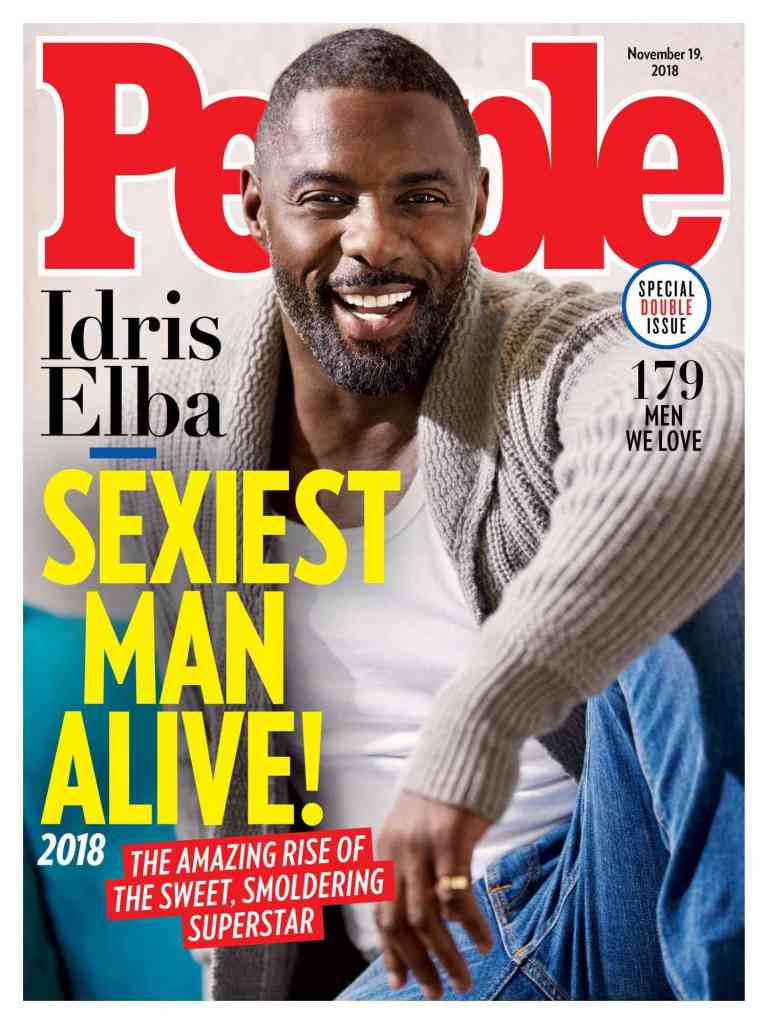
Photo Credit: People AP

Idris Elba is the epitome of modern masculinity, one of the finest men on earth who is often referred to as “tall, dark, and handsome” with a depth of talent and presence that makes hearts race across continents. With a chiseled jawline, soulful eyes, and a baritone British accent that exudes quiet power, Elba’s face ranked among the top scores on ThePerfectHumanFace.com, affirming what many have already believed: he is masculine perfection personified. But behind the looks lies a powerhouse of acting prowess, a multifaceted artist who has reshaped how Black men are portrayed on screen—dignified, dynamic, and deeply human.

Born Idrissa Akuna Elba on September 6, 1972, in London, England, to a Sierra Leonean father and a Ghanaian mother, Elba proudly carries his African heritage while representing the finest of British talent. He grew up in Hackney, East London, and began acting in his early twenties, gaining his first big break on the British TV series Bramwell. He would later gain international recognition for his iconic portrayal of Russell “Stringer” Bell on HBO’s The Wire, a role that fused intellect with danger and redefined what a Black gangster could look like on television.

Idris Elba is also a devoted family man. He has been married to model and activist Sabrina Dhowre Elba since 2019, and he is a proud father to two children. Outside of acting, he has launched a men’s skincare and wellness line called S’Able Labs, focused on inclusion, health, and self-care, co-founded with his wife. The brand reflects his belief in holistic well-being, emphasizing inner confidence alongside outer grooming.

Elba’s acting résumé is robust and decorated. He’s received Golden Globe nominations, an NAACP Image Award, a Screen Actors Guild Award, and was even appointed an Officer of the Order of the British Empire (OBE) by Queen Elizabeth II in 2016 for his services to drama. From Mandela: Long Walk to Freedom to Beasts of No Nation, and Luther to The Harder They Fall, Elba’s range has no boundaries. His favorite role, as he once shared in interviews, is John Luther—the brilliant but troubled detective he portrayed with grit and grace in the BBC series Luther.

In 2018, People Magazine named him the “Sexiest Man Alive,” a title that made global headlines. Elba accepted the honor with humility and humor, tweeting, “Who’d have thought it! Thank you People magazine. I’m honored & thankful.” Yet the title meant more than vanity—it was a rare acknowledgment of a Black man as the universal standard of male desirability. “Representation matters,” Elba has said. “To see yourself reflected as beautiful or powerful—that’s life-changing.”

Elba has been vocal about racism in Hollywood and the challenges of being a Black actor. He has criticized the lack of diversity and inclusion in the British and American entertainment industries, once stating, “Change is coming, but it’s too slow. We’re not asking for handouts—we’re asking for opportunity.” His rumored potential casting as James Bond sparked both excitement and racial backlash, highlighting the ongoing resistance to Black leads in legacy roles. Elba responded with elegance, emphasizing that representation is about inspiration, not provocation.

Standing 6’2″ tall, Elba’s presence is physically commanding and emotionally magnetic. Black women have long expressed admiration for him, not just for his looks but for his aura. Comments such as, “He’s the perfect blend of rugged and refined,” and “Idris Elba could read a phone book and still sound like Shakespeare,” are common across social media. One fan gushed, “Idris is like fine wine—smooth, complex, and only gets better with time.”

Elba’s love and respect for Black women are evident both in his interviews and in the way he uplifts his wife. In one interview he shared, “Black women have held me down since day one. My mother, my daughter, my wife—they are the definition of strength and beauty.” These sentiments further elevate his appeal, as he acknowledges and honors the role of Black women in shaping his journey.

In terms of industry differences, Elba has often compared acting in the UK and the US. He noted that in Britain, classism affects casting just as much as race, whereas in America, race is more overtly central to opportunity. “In the UK, I wasn’t black enough. In America, I was black and British, so I was exotic,” he once reflected. Regardless of geography, Elba has proven that excellence transcends borders.

In conclusion, Idris Elba is more than a pretty face—he is a symbol of global Black excellence. He represents dignity, strength, style, and substance. As both an actor and advocate, he challenges outdated narratives and forges new paths for Black men in media. Whether he’s commanding the screen or speaking truth to power, Elba remains a towering figure—physically, artistically, and culturally. He is, without question, a modern legend.


Quotes

  • “Black women have held me down since day one. My mother, my daughter, my wife—they are the definition of strength and beauty.” — Idris Elba
  • “Representation matters. To see yourself reflected as beautiful or powerful—that’s life-changing.” — Idris Elba
  • “Idris Elba is like fine wine—smooth, complex, and only gets better with time.” — Anonymous fan

References

People Magazine. (2018). Sexiest Man Alive: Idris Elba.
BBC News. (2016). Idris Elba receives OBE from Queen Elizabeth II.
The Guardian. (2020). Idris Elba on diversity in Hollywood and James Bond rumors.
Essence Magazine. (2021). Idris and Sabrina Elba Launch S’Able Labs: Skincare for All.
Vogue. (2022). Idris Elba and the Redefinition of Masculinity.
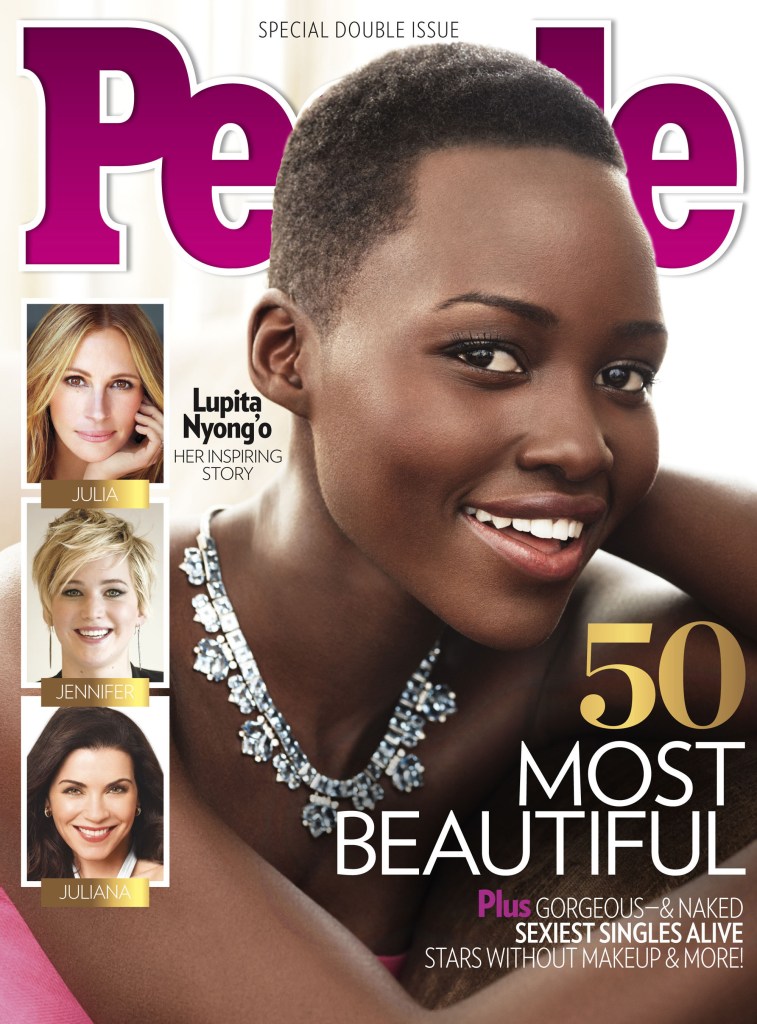
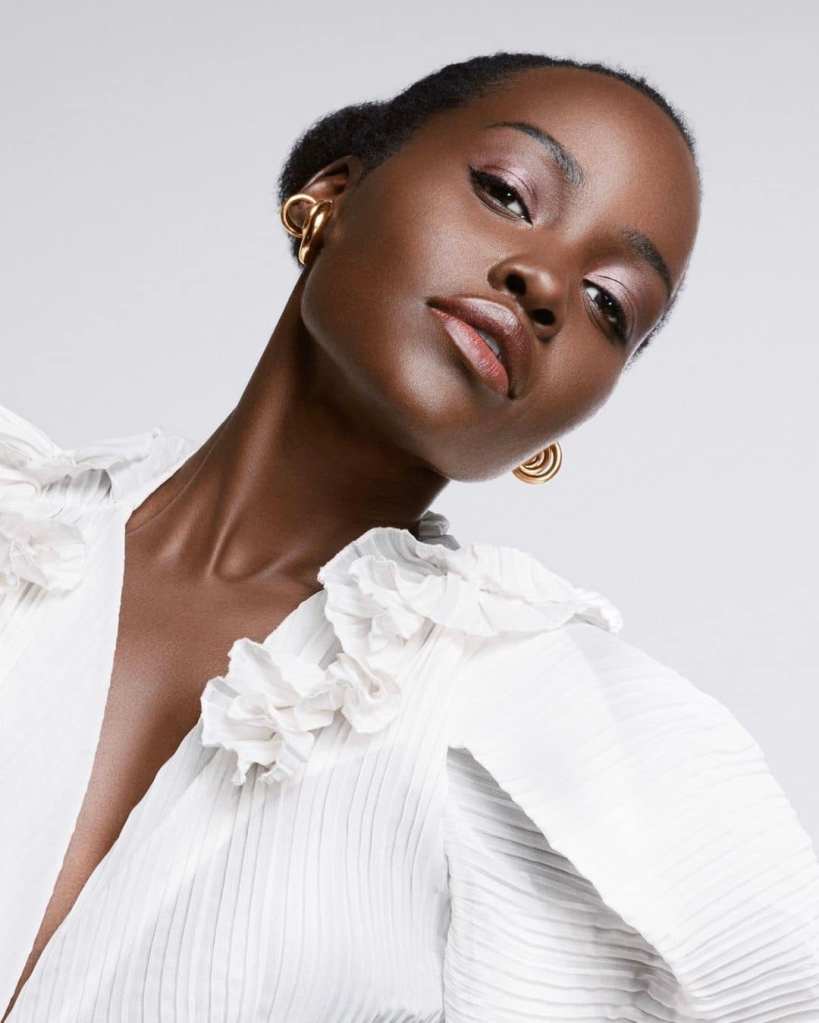
The Ebony Dolls: Lupita Nyong’o

The Ebony Doll, who redefined Beauty, is a melanated masterpiece and one of the most beautiful women on the planet.

Creator: People | Credit: AP

In a world where beauty standards have long been defined by Eurocentric ideals, the majestic beauty of Lupita Nyong’o emerged as a stunning and revolutionary figure who redefined global perceptions of beauty. With her rich, radiant chocolate skin, statuesque features, and undeniable elegance, Nyong’o stands as a powerful symbol of melanin excellence. Her presence in Hollywood and global fashion has not only elevated the aesthetic appreciation of darker-skinned women but has also created a cultural shift that challenges outdated and oppressive beauty norms. Ranked a near-perfect 10 by science (www.theperfecthumanface.com), Nyong’o is more than just beautiful—she is an embodiment of grace, intellect, and ancestral glory.

Born on March 1, 1983, in Mexico City to Kenyan parents and raised in Nairobi, Kenya, Lupita is a proud representative of the Luo ethnic group. She is the daughter of Peter Anyang’ Nyong’o, a renowned Kenyan politician and university professor. Her upbringing was immersed in culture, intellect, and activism, and this foundation would later shape her perspective as an artist. Lupita holds a Master of Fine Arts in Acting from the prestigious Yale School of Drama, where she honed her craft with a deep sense of discipline and passion.

Lancome Paris

Lupita’s career soared when she delivered a powerful performance as Patsey in the 2013 historical drama 12 Years a Slave, directed by Steve McQueen. Her role, marked by depth and raw emotion, earned her the Academy Award for Best Supporting Actress—making her the first Kenyan and the sixth Black woman in history to receive this honor. Following her Oscar win, Nyong’o became an international sensation, starring in critically acclaimed films such as Black Panther, Us, and Queen of Katwe. Her roles consistently highlight the strength, vulnerability, and complexity of Black characters, making her a champion of representation in Hollywood.

What sets Lupita apart is not merely her acting talent but her ability to embody the fullness of Black womanhood with poise and dignity. In 2014, she was named “The Most Beautiful Woman in the World” by People Magazine—a title that shattered the long-standing exclusivity of beauty in mainstream media. Her image adorned billboards and magazine covers, and her dark skin tone became a canvas of celebration rather than concealment. She proudly embraced her African heritage, stating, “My complexion is beautiful. I am enough as I am.” Her statement, though simple, resonated deeply with Black women and girls around the world who rarely saw themselves reflected in global beauty narratives.

Nyong’o has become a symbol of Black beauty, winning numerous awards, including the NAACP Image Award, the BET Award, and recognition from Essence, Time, and Elle magazines. She also made history as the first Black woman to serve as a global ambassador for Lancôme, a role that challenged the cosmetics industry to acknowledge and cater to diverse skin tones. Through her advocacy and image, Lupita has redefined what the universal standard of beauty looks like, asserting that beauty is not confined to one hue, texture, or origin.

This photograph is the property of its respective owner. No copyright infringement intended.

Black men across the globe have publicly celebrated Lupita’s beauty. Quotes from admirers online include, “Lupita Nyong’o is the kind of beauty that makes you pause, reflect, and thank God for melanin,” and “She doesn’t just walk into a room—she redefines it.” Her beauty is not only admired but revered, not merely for its aesthetic quality but for what it symbolizes: resilience, royalty, and cultural pride.

Lupita attributes her luminous skin and inner glow to natural African remedies such as shea butter, natural oils, and a minimalist skincare routine. However, her true beauty secret lies in her self-love and spiritual grounding. Her confidence, intellect, and humility illuminate her public persona and make her beauty multi-dimensional. In many interviews, she emphasizes emotional wellness and authenticity as central to her beauty and wellness philosophy.

Her beauty and presence go beyond physical attributes. She has become an important cultural icon, speaking out about colorism, self-image, and representation. Her book Sulwe, a children’s story about a young girl who learns to embrace her dark skin, has become a beloved text for families seeking to teach their children about self-love and racial pride. Through her creative work, public statements, and carefully chosen roles, Lupita has consistently elevated the narrative surrounding Black identity.

In conclusion, Lupita Nyong’o is not just a celebrated actress—she is a cultural force. As the Black Beauty of the Week, she represents a shift in global consciousness around race, beauty, and Black femininity. Her impact goes beyond red carpets and photo shoots; she is a living testament to the majesty of Blackness. With a nearly perfect beauty score of 9.98, she is proof that melanin is not only magical—it is divine. She inspires Black women to be seen, heard, and celebrated in their fullness. Lupita Nyong’o is, and always will be, a masterclass in elegance, excellence, and unapologetic Black beauty.


References

McQueen, S. (Director). (2013). 12 Years a Slave [Film]. Fox Searchlight Pictures.
People Magazine. (2014). World’s Most Beautiful Woman: Lupita Nyong’o.
Essence Magazine. (2020). Black Women in Hollywood Honoree: Lupita Nyong’o.
Time Magazine. (2014). 100 Most Influential People: Lupita Nyong’o.
Lancôme. (2014). Lupita Nyong’o Named Global Ambassador.
Nyong’o, L. (2014). Black Women in Hollywood Speech. Essence Network.

Face Value

Faces are the silent storytellers of human experience. Before a word is spoken, a glance, a smile, or a frown conveys personality, mood, and intention. Our brains are wired to interpret these cues almost instantaneously, a process critical for social interaction and survival (Willis & Todorov, 2006).

The concept of “face value” goes beyond superficial beauty. It encompasses perceived trustworthiness, competence, and warmth—all traits inferred from facial features and expressions (Oosterhof & Todorov, 2016). These judgments shape our social interactions in subtle but powerful ways.

First impressions are formed remarkably quickly. Studies show that exposure to a face for as little as 100 milliseconds is sufficient for observers to make consistent judgments about traits such as dominance and friendliness (Willis & Todorov, 2006). The rapidity of these impressions underscores the influence of visual cues on human behavior.

Facial symmetry is often associated with attractiveness and perceived health. Symmetrical features signal genetic quality, which has evolutionary roots in mate selection (Zebrowitz & Montepare, 2008). Yet symmetry alone is insufficient; expression and context shape perception as much as physical proportions.

The eyes are central to social communication. Eye contact conveys attention, engagement, and emotional openness. A steady gaze can project confidence, while avoidance may indicate discomfort or deception (Hietanen, 2018). These cues operate on both conscious and subconscious levels.

Microexpressions, fleeting facial movements lasting only a fraction of a second, reveal emotions that words may attempt to hide. Observing these subtle cues can help decode sincerity, embarrassment, or hostility (Hehman, Stolier, Keller, & Freeman, 2018).

Faces are processed along social dimensions such as trustworthiness, competence, and dominance. These dimensions are consistent across cultures, suggesting that certain facial cues universally convey social meaning (Todorov, Said, Engell, & Oosterhof, 2008).

Cultural norms influence the interpretation of facial expressions. While some expressions are universally understood, subtleties in gaze, eyebrow movement, and lip tension can carry different meanings in distinct cultural contexts (Matsumoto & Hwang, 2017).

Perceived trustworthiness is critical in both personal and professional interactions. Faces judged as more trustworthy are associated with greater cooperation in economic games and higher social influence (Little, Burriss, Jones, & Roberts, 2011). This demonstrates the functional importance of first impressions.

Dominance and leadership are also inferred from facial cues. Features such as jawline strength, brow prominence, and eye gaze influence perceptions of authority and competence (Todorov, 2017). These judgments can affect hiring decisions, voting behavior, and social hierarchies.

Emotional expression adds nuance to facial perception. Smiles increase perceived warmth and likability, while anger or frowns can signal threat or dissatisfaction (Adams & Kleck, 2005). Subtlety matters: exaggerated expressions may be dismissed as insincere.

Facial features interact with context to shape impressions. A neutral expression may appear approachable in one setting and stern in another. Lighting, posture, and background all modulate the social signal conveyed by a face (Conty & Grèzes, 2017).

The face is also a medium for identity and self-expression. Hairstyles, makeup, and adornments complement natural features and communicate personality, creativity, and cultural affiliation (Hehman & Freeman, 2023). This layering of cues enriches the social message of the face.

Perceptions of competence from faces can influence real-world outcomes. Politicians, educators, and executives with “competent-looking” faces often enjoy advantages in elections, negotiations, and leadership selection (Oosterhof & Todorov, 2016). First impressions extend far beyond casual encounters.

Faces can signal health and vitality. Skin clarity, eye brightness, and facial tone contribute to judgments of attractiveness and robustness (Zebrowitz & Montepare, 2008). These cues are processed automatically and often unconsciously.

Digital communication challenges traditional facial perception. Video calls preserve many cues, but text and emoji can only approximate the subtleties of expression. Despite this, people still infer personality traits based on avatars and profile images (Rule & Ambady, 2008).

Children develop sensitivity to facial cues early. Infants can discriminate between emotional expressions and respond to gaze direction, indicating that face-based social evaluation is innate and foundational for human interaction (Hehman et al., 2018).

Biases in facial judgment are persistent. People may stereotype or make assumptions based on facial features, which can perpetuate inequality in social and professional contexts (Todorov, 2017). Awareness of these biases is essential for fair decision-making.

Facial perception evolves with experience and social learning. Repeated interactions refine the accuracy of judgments, allowing observers to distinguish between superficial cues and genuine personality traits (Hehman & Freeman, 2023).

Ultimately, “face value” reflects a complex interplay of biology, psychology, and culture. Faces convey emotion, intention, and identity, shaping human relationships in profound ways. Understanding this silent language enhances empathy, communication, and social insight (Zebrowitz & Montepare, 2008).


References

  • Adams, R. B., & Kleck, R. E. (2005). Effects of direct and averted gaze on the perception of facially expressed emotion. Emotion, 5(1), 3–11.
  • Conty, L., & Grèzes, J. (2017). Eye contact effects on social preference and face recognition in normal ageing and in Alzheimer’s disease. Psychological Research. https://doi.org/10.1007/s00426-017-0955-6
  • Hehman, E., Stolier, R. M., Keller, M. C., & Freeman, J. B. (2018). The conceptual structure of face impressions. PNAS, 115(50), 12703–12708. https://doi.org/10.1073/pnas.1806764115
  • Hehman, E., & Freeman, J. B. (2023). The observer’s lens: The impact of personality traits and gaze on facial impression inferences. Electronics, 17(3), 17. https://doi.org/10.3390/electronics17030017
  • Hietanen, J. K. (2018). Affective eye contact: An integrative review. Frontiers in Psychology, 9, 1587. https://doi.org/10.3389/fpsyg.2018.01587
  • Little, A. C., Burriss, R. P., Jones, B. C., & Roberts, S. C. (2011). Facial appearance affects trustworthiness judgments of anonymous partners in an investment game. Evolution and Human Behavior, 32(6), 361–366.
  • Matsumoto, D., & Hwang, H. C. (2017). Cultural bases of nonverbal communication. In APA Handbook of Nonverbal Communication (pp. …). American Psychological Association.
  • Oosterhof, N. N., & Todorov, A. (2016). Personality at face value: Facial appearance predicts self and other personality judgments among strangers and spouses. Psychological Science, 27(5), 605–618. https://doi.org/10.1177/0956797616638655
  • Rule, N. O., & Ambady, N. (2008). First impressions of the face: predicting success. Social and Personality Psychology Compass, 2(3), 1498–1517.
  • Todorov, A. (2017). Face Value: The Irresistible Influence of First Impressions. Princeton University Press.
  • Todorov, A., Said, C. P., Engell, A. D., & Oosterhof, N. N. (2008). Understanding evaluation of faces on social dimensions. Trends in Cognitive Sciences, 12(12), 455–460.
  • Willis, J., & Todorov, A. (2006). First impressions: Making up your mind after a 100-ms exposure to a face. Psychological Science, 17(7), 592–598.
  • Zebrowitz, L. A., & Montepare, J. M. (2008). Social psychological face perception: Why appearance matters. Social and Personality Psychology Compass, 2(3), 1497–1517.

The Science and Psychology of Physical Beauty: An In-Depth Exploration of Attraction, Perception, and Cultural Bias

BEAUTY


I. The Mirror
A face so fair, it steals the light,
Symmetry carved from stars at night.
Lips like dawn, eyes deep as flame,
The world bends softly to her name.


II. The Gaze
He saw her once, and time stood still,
Desire danced against his will.
Yet beauty fades, as roses do—
Does love survive what once was new?


III. The Soul
But kindness lingers where gloss may go,
A light the skin can never show.
For beauty starts and ends in grace—
A gentle heart, a sacred face.

Photo by 3Motional Studio on Pexels.com

Introduction: The Allure of Physical Beauty

Physical beauty is one of the most deeply studied, universally recognized, and yet culturally complicated phenomena in human psychology. It influences attraction, social standing, professional opportunities, and even mental health. But what is beauty, really? Is it merely symmetry and smooth skin, or is it tied to power, status, race, and bias? Why are men said to be visual, and does beauty actually predict happiness—or only illusion?


1. The Science of Physical Beauty

From a biological standpoint, physical beauty often correlates with indicators of health, youth, and fertility:

  • Facial symmetry, clear skin, bright eyes, and proportional features are universally considered attractive (Rhodes, 2006).
  • These features signal genetic fitness and reproductive viability—an evolutionary principle supported by Darwinian sexual selection theory.
  • Studies using fMRI scans show our brains experience a “pleasure response” when viewing symmetrical or “beautiful” faces (Aharon et al., 2001).

Are We Born to Recognize Beauty?

Yes. Research shows that infants as young as 3 months prefer to look at faces considered attractive by adults (Langlois et al., 1991). Babies gazed longer at more symmetrical and aesthetically pleasing faces, suggesting a biological wiring for visual appeal.


2. Are Men More Visual? Beauty, Sex, and Gendered Perception

According to evolutionary psychology:

  • Men are typically more visually stimulated and often rate physical appearance higher in mate selection than women do.
  • Women may prioritize status, stability, and personality traits like empathy, confidence, and humor.

“Men fall in love with their eyes, women fall in love with their ears.” — Anonymous proverb

This doesn’t mean women don’t care about looks—but evolutionarily, men’s visual preferences tie to fertility cues, whereas women look for protection and provision.


3. Beauty’s Real-Life Consequences: Jobs, Marriage, and Privilege

Beauty can serve as a social currency:

  • Attractive people often earn more, are perceived as more competent, and are more likely to be hired (Hamermesh & Biddle, 1994).
  • Studies suggest that beautiful women are more likely to marry wealthier or higher-status men, a phenomenon dubbed the “beauty-status exchange.”

However, this isn’t without drawbacks—objectification, jealousy, and narcissistic abuse often follow.


4. Beauty and Narcissism: The Myth of Narcissus

In Greek mythology, Narcissus was a man so enamored with his own beauty that he stared at his reflection until he died.

“Narcissism is the love of self taken to an extreme—dangerous when unchecked, tragic when unreciprocated.” — Dr. Craig Malkin, Harvard psychologist

Today, social media reinforces narcissistic tendencies, especially in those praised primarily for their looks.


5. Quotes on Physical Beauty

  • Cindy Crawford: “Even I don’t wake up looking like Cindy Crawford.” (A commentary on how beauty is often curated and artificial.)
  • Halle Berry: “Beauty is not just physical—it’s the light in your heart and how you make people feel.”
  • Aishwarya Rai Bachchan: “Elegance and grace go hand in hand with beauty. It’s not just about looking good but feeling good and being kind.”

These quotes highlight the multidimensional nature of beauty.


6. What Makes a Person Physically Attractive?

Common physical attributes rated as attractive include:

  • For women: clear skin, symmetrical face, full lips, hourglass shape, long hair
  • For men: broad shoulders, strong jawline, symmetrical face, height, confidence

But what truly attracts people goes beyond looks:

  • Kindness, confidence, sense of humor, intelligence, and emotional safety rank high in long-term relationships.

7. Racial Bias in Beauty Standards

Beauty standards have been heavily influenced by Eurocentric ideals, privileging:

  • Fair skin
  • Straight hair
  • Narrow noses
  • Slim figures

This has led to colorism and fetishization of certain races.

The Psychology Today Controversy

In a 2011 Psychology Today article, evolutionary psychologist Satoshi Kanazawa claimed that Black women were “objectively less attractive”—an assertion met with global outrage. The article was removed, and Kanazawa was widely condemned. Notably, many Black men were criticized for not defending Black women, exposing internalized racism and fractured solidarity in Black communities.


8. Hierarchy of Beauty and the Blonde Ideal

In Euro-American cultures, blonde-haired, blue-eyed women often sit at the top of the beauty hierarchy—thanks to media, Hollywood, and colonial ideals.

  • Women like Grace Kelly, Marilyn Monroe, and Scarlett Johansson are often listed among the “most beautiful” globally.
  • Rankings of “The Most Beautiful Women” almost always feature celebrities, showcasing how media visibility—rather than true global consensus—drives beauty recognition.

9. Does Race Influence Attractiveness?

Research suggests racial biases do exist in dating preferences and beauty perceptions (Fisman et al., 2008). However:

  • Attraction is heavily influenced by environment, exposure, and culture, not just biology.
  • In Africa, Asia, and Latin America, local beauty standards vary greatly, favoring darker skin, fuller bodies, or other features not typically idealized in the West.

10. What Is Most Attractive Beyond Beauty?

When beauty fades (and it inevitably will), people are drawn to:

  • Character
  • Integrity
  • Spiritual connection
  • Emotional intelligence
  • Purpose and passion

As Maya Angelou once said:

“People will forget what you said, people will forget what you did, but people will never forget how you made them feel.”


Conclusion

Beauty is both biological and constructed—wired into our brains but also shaped by media, race, and societal norms. While it can open doors, true connection, emotional safety, and character keep them open. In a world obsessed with appearance, the most radical act might be to see—and love—beyond the surface.


References

  • Aharon, I., Etcoff, N., Ariely, D., Chabris, C., O’Connor, E., & Breiter, H. (2001). Beautiful faces have variable reward value: fMRI and behavioral evidence. Neuron, 32(3), 537-551.
  • Fisman, R., Iyengar, S., Kamenica, E., & Simonson, I. (2008). Racial Preferences in Dating. Review of Economic Studies, 75(1), 117–132.
  • Hamermesh, D., & Biddle, J. (1994). Beauty and the Labor Market. American Economic Review, 84(5), 1174–1194.
  • Langlois, J. H., Roggman, L. A., Casey, R. J., et al. (1991). Infant preferences for attractive faces: Rudiments of a stereotype? Developmental Psychology, 27(4), 640–649.
  • Rhodes, G. (2006). The Evolutionary Psychology of Facial Beauty. Annual Review of Psychology, 57, 199–226.
  • Malkin, C. (2015). Rethinking Narcissism: The Bad—and Surprising Good—About Feeling Special. HarperWave.

FEATURISM and the Politics of Beauty: Deconstructing the Colonial Gaze in the Black Community.

Photo by Admar Kamosso Oficial on Pexels.com

What Is Featurism?

Featurism is a form of discrimination based on the preference for certain facial features over others, often rooted in Eurocentric beauty standards. Coined by author and scholar Dr. Chika Okeke-Agulu, featurism refers specifically to how people—especially within racially marginalized communities—are treated based on how closely their features align with dominant ideals of attractiveness. In the context of the Black community, this means that features like smaller noses, lighter eyes, finer bone structures, and looser hair textures are often favored over broader noses, tightly coiled hair, and darker skin tones.

Featurism overlaps with colorism and texturism, but it is distinct in its focus on facial characteristics. This discrimination often occurs intraracially, meaning that Black people themselves may prefer, praise, or uplift individuals who embody more “European” features while subtly or overtly devaluing others who possess typically African traits.


How Featurism Affects the Black Community

Featurism reinforces internalized racism and perpetuates low self-esteem, especially in Black children and women. The media, family, school, and even dating preferences often communicate the message that “certain Black looks” are more desirable than others. For example, a Black woman with a slim nose and curly, looser-textured hair may be seen as more attractive or “marketable” than one with a wide nose, fuller cheeks, or tightly coiled hair.

This hierarchical valuing of features can:

  • Impact mental health, leading to anxiety, shame, and body dysmorphia.
  • Influence economic opportunities, especially in entertainment, modeling, and corporate environments.
  • Undermine community solidarity, creating divisions between those who “look more African” and those who are perceived as “closer to white.”

The Universal Standard of Beauty

Historically, the so-called universal standard of beauty has been built on Eurocentric ideals: light skin, straight or loosely curled hair, small noses, large eyes, and symmetrical facial structure. This standard was exported globally through colonialism, media imperialism, and Western consumerism.

As a result, features such as:

  • Big eyes
  • Small or narrow noses
  • Full but controlled lips
  • Smooth, light or olive-toned skin

…have become globally preferred. Even in non-European cultures, beauty standards have been shaped to reflect these traits. For example, in Asia and Latin America, skin-lightening and nose-narrowing are multi-billion-dollar industries.


Quotes on Featurism and Beauty

  • Audre Lorde: “If I didn’t define myself for myself, I would be crunched into other people’s fantasies for me and eaten alive.”
  • Lupita Nyong’o: “I remember a time when I too felt unbeautiful. I put on the TV and only saw pale skin. I got teased and taunted about my night-shaded skin… And my one prayer to God was that I would wake up lighter-skinned.”
  • Dr. Yaba Blay: “We have internalized these standards of beauty to the point that we police each other and ourselves. That’s the tragedy of featurism and colorism.”

When Was the Term Featurism Introduced?

The term featurism gained popularity through cultural critics and writers in the early 2000s, although it had been discussed implicitly in literature and sociology for decades. Scholar Chika Okeke-Agulu and writer Michaela Angela Davis were among the early voices to articulate it explicitly in relation to Black identity and intraracial discrimination. More recently, featurism has been analyzed alongside terms like “texturism” and “colorism” as part of a broader critique of anti-Black beauty hierarchies.


Are Wider Noses and Fuller Lips Undesirable?

While wider noses and fuller lips are traditionally African features and should be celebrated, they have been historically stigmatized in Western and colonial societies. Black people were often caricatured in minstrel shows, cartoons, and racist scientific journals as having “animalistic” or “primitive” traits, particularly wide noses and big lips.

Yet, ironically, in the modern beauty market, these features have been appropriated and commercialized. Full lips, for instance, are now in high demand—thanks in part to cosmetic enhancements and social media trends. However, when these features appear on Black people, they are still frequently subjected to ridicule, while the same traits on non-Black individuals are praised.

This double standard further illustrates the power dynamics of race and beauty: it’s not the feature itself, but who is wearing it.


How Were Black People Conditioned to Think White Features Are Superior?

The belief in the superiority of white features is a byproduct of colonialism, slavery, and white supremacy. Enslaved Africans were taught—through violence, religion, and visual culture—that whiteness was synonymous with purity, intelligence, and power, while Blackness symbolized sin, ugliness, and inferiority.

In post-slavery society, these beliefs were perpetuated by:

  • European beauty ads and magazines
  • Hollywood and media portrayals of beauty
  • Intergenerational trauma and colorist family dynamics
  • Colonial education systems that promoted Eurocentric aesthetics and erased African identities

Conclusion: Toward a Reclamation of African Beauty

Featurism is not just about beauty—it’s about power. The ability to define what is “beautiful” is inseparable from cultural dominance. As the Black community continues to reclaim its voice, hair, skin, and heritage, it must also decolonize its ideas about what features are beautiful. African features are not a curse to be erased, but a legacy to be honored.

Celebrating broad noses, full lips, tightly coiled hair, and rich melanin is not just an act of self-love—it is an act of resistance against a system that once tried to erase us.


References

  • Blay, Y. (2011). (1)ne Drop: Shifting the Lens on Race. BLACKprint Press.
  • Lorde, A. (1984). Sister Outsider: Essays and Speeches. Crossing Press.
  • Nyong’o, L. (2014). Speech at the Essence Black Women in Hollywood Luncheon.
  • Pilgrim, D. (2012). The Brute Caricature. Jim Crow Museum of Racist Memorabilia. Ferris State University.
  • Tate, S. A. (2009). Black Beauty: Aesthetics, Stylization, Politics. Ashgate.
  • Okeke-Agulu, C. (2005). Postcolonial Modernism: Art and Decolonization in Twentieth-Century Nigeria. Duke University Press.